


Committee Chairman
5 Rich Women from Sports and Who They Choose to Date
Famous female athletes, no matter which sports they excel at, will have legions of devoted fans. While they’ll be rooted in their performances on the soccer pitch, athletics track, tennis court, and many other locations, their followers will be less aware of their private lives. But what they get up to away from the public arena is just as important to forming their characters and personalities. For example, let’s examine five women who have made considerable wealth from sporting achievements but whose social lives reveal far more complex and interesting individuals. Some have even succumbed to the allure of digital dating, just like their fans, when it comes to finding someone compatible (and perhaps nowhere near as rich!)
Before naming names, it might be worth considering how a wealthy and famous sportsperson might even come across an ‘ordinary partner.’ These days, every rich woman seeking young men relies on the digital environment. She’ll add her details to an online matchmaking website or app that caters to a relationship dynamic known as ‘sugaring.’ In a nutshell, this equates to older females who gravitate to virile younger guys (rather than rich sportsmen their own age and income bracket, who might not necessarily be as fit or have the same stamina!) The discreet online communication channels offered by sugar dating sites make it easy for athletes and their fans to interact on a level playing field – as far from the prying lens of any paparazzi as it’s possible to get.
Missy Franklin
Since making her debut as a competitive swimmer at the 2012 London Olympics, Franklin has gone on to win five gold medals. Her husband, Hayes Johnson, is a former footballer.
Serena Williams
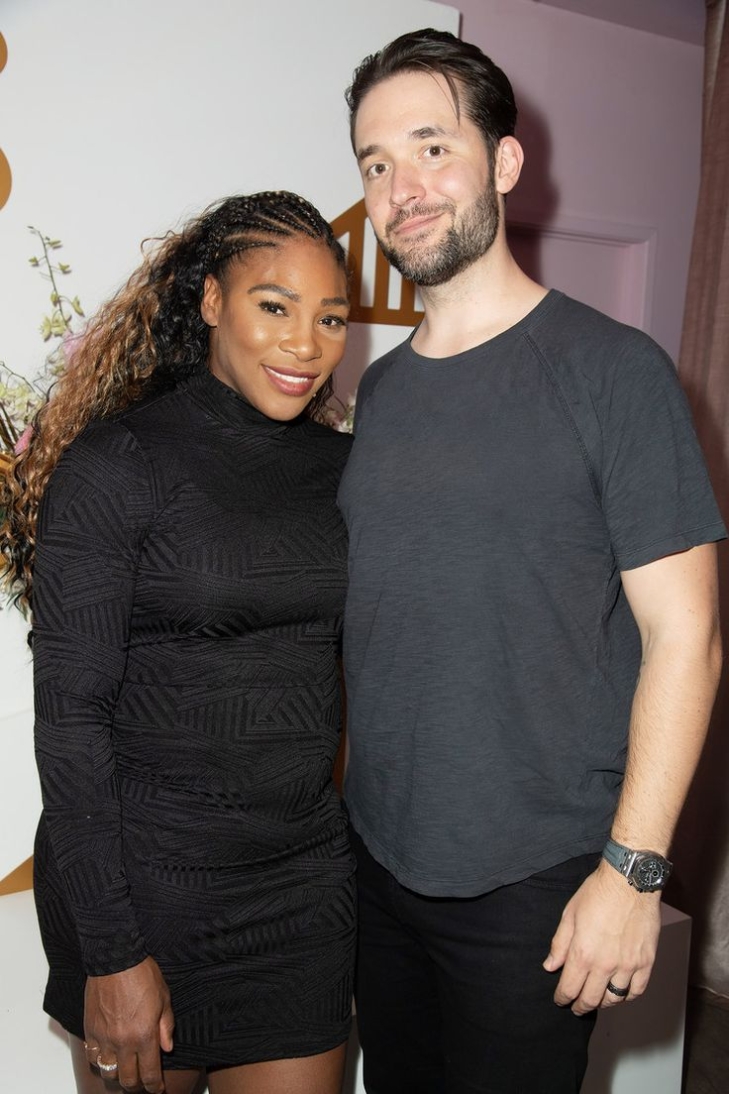
In 2016, Williams was the world’s highest-paid female athlete, earning close to $30 million in tennis competitions. Considered one of the sport’s best performers of all time, she is the epitome of a rich woman married to a younger guy, Alexis Ohanian, an IT guru.
Tara Lipinski
Pennsylvania-born Lipinski’s claim to fame is she was the youngest ever figure skater to win a US Nationals competition. She has also won Olympic gold. Her husband, Todd Kapostasy, is a sports producer.
Shawn Johnson
Since showing prowess at climbing furniture as a child, Johnson has made her name as a successful gymnast, winning many accolades. Active on social media, she has been a keen YouTuber. Perhaps she dipped into digital matchmaking before meeting her husband, Andrew East, a former footballer.
Mia Hamm
Hamm is an iconic US footballer whose glittering career has included 276 performances for the national team. Like many professional athletes, her performances took her all over the world, sometimes making it difficult to meet people socially (situations where online interaction can become a lifesaver!) However, the flirty conversations were initiated, and she eventually met her second husband, Nomar Garciaparra, a younger former baseball player.
For anyone in the public eye, especially professional athletes, the key to successful relationships is looking at the wider picture. Some will focus on their immediate vicinity, getting into romantic liaisons with people they compete, train or socialize with on the sports circuits. Others will cast a wider net. If you’re a single sportsperson seeking a relationship, you might wish to look into background aspects of various sports, as this will provide wonderful conversation subjects. Go online. Check out online media for articles that crossover sport and entertainment, such as the comedian Andy Kaufman (better known for cult comedy Taxi, being inducted into Wrestling’s Hall of Fame). When sports and celebrities merge into one, there are so many interesting stories about rich women dating men. Now check out the dating pool yourself!
Notinhalloffame NBA Cup Standings Update (270)
If you are a regular visitor at Notinhalloffame.com, you know that we created the Notinhalloffame NBA Cup, where in every regular season game, we award points (5-4-3-2-1) to the top five performers. This is the third year that we have done this, and Denver’s Nikola Jokic won the first two.
To keep everyone regularly in the loop this time, we have decided to give regular updates, starting at when the first player cracked 100 Points, and tell all of you the top ten. We will this going forward with every update as the first player breaches the elevated ten-point threshold afterward.
Here is the current top ten, based on the first player to breach 270 Notinhalloffame Cup Points:
1. Nikola Jokic, Denver Nuggets, 273 Cup Points: 67 Games, 24.9, PPG, 11.9 RPG, 9.9 APG, 1.2 SPG, 0.7 BPG, 31.9 PER, 15.1 WS. (#1 on last ranking)
The two-time defending MVP (and NIHOF Cup Champion) remains at the top, and is the first to break 250 Cup Points. Jokic is leading the league in PER (31.9), Win Shares (14.5), VORP (8.8) and Box Plus/Minus (13.3). He is also averaging a triple-double, is leading the NBA in that stat, and is second in Rebounds per Game.
2. Joel Embiid, Philadelphia 76ers, 263 Cup Points: 61 Games, 33.3 PPG, 10.2 RPG, 4.2 APG, 1.1 SPG, 1.6 BPG, 31.6 PER, 11.6 WS. (#2 on last ranking)
Embiid remains in the number two hole, and is a bona fide MVP contender, and in a dogfight with Jokic. He is currently the scoring leader (33.3) and is second in PER (31.6). Embiid is also in the top five in Wins Shares, VORP and Box Plus/Minus. Could this be the season he takes Philadelphia all the way to a title and finish “The Process?”
3. (Tie) Jayson Tatum, Boston Celtics, 248 Cup Points: 69 Games, 30.1 PPG, 8.9 RPG, 4.7 APG, 1.0 SPG, 0.8 BPG, 23.3 PER, 9.4 WS. (#3 on last ranking)
Tatum remains in the top three, and is long he is healthy for the duration, he will stay in the top five. He should finish over 30 Points per Game, which will be the first time he will do so (he is currently sixth).
3. (Tie) Giannis Antetokounmpo, Milwaukee Bucks, 248 Cup Points: 59 Games, 31.1 PPG, 11.7 RPG, 5.6 APG, 0.7 SPG, 0.8 BPG, 28.8 PER, 8.2 WS. (#4 on last ranking)
The two-time MVP would have probably been on the top had he not missed a series of Games earlier in the season. He is now a six-time All-Star, and is in the top five in both Points and Rebounds per Game.
5. Luka Doncic, Dallas Mavericks, 247 Cup Points: 61 Games, 32.9 PPG, 8.6 RPG, 8.1 APG, 1.5 SPG, 0.5 BPG, 29.3 PER, 9.8 WS. (#4 on last ranking)
Doncic is back from missing a few games due to injury, and the man who was once in the top spot held on to his rank. He is second in scoring (33.0), and was an early MVP contender, but that may not the case anymore.
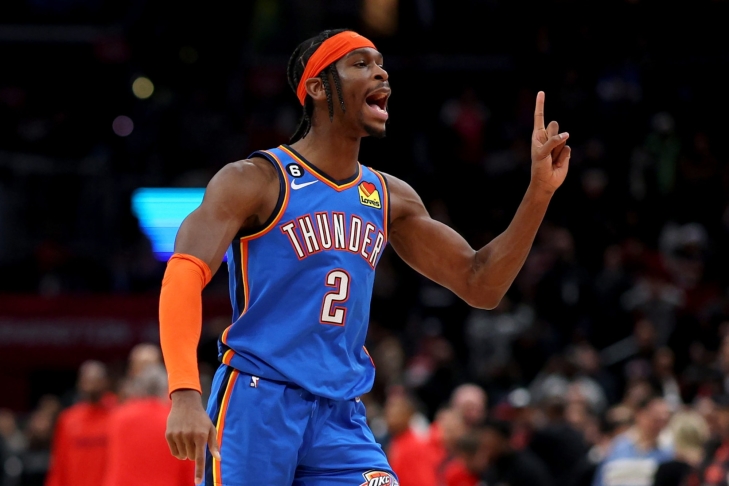
6. Shai Gilgeous-Alexander, Oklahoma City Thunder, 246 Cup Points: 64 Games, 31.3 PPG, 4.8 RPG, 5.4 APG, 1.6 SPG, 1.1 BPG, 27.2 PER, 10.6 WS. (#5 on last ranking)
Gilgeous-Alexander went to his first All-Star Game, and is shattering last year’s averages, which were already good. He is currently dealing with some nagging injuries, but you have to imagine just how pathetic the Thunder would be without SGA.
7. Julius Randle, New York Knicks, 232 Cup Points: 76 Games, 25.4 PPG, 10.0 RPG, 4.1 APG, 0.6 SPG, 0.3 BPG, 20.6 PER, 8.3 WS. (#7 on last ranking)
Randle holds in at #7, and currently has a higher PPG (25.4), than his first All-Star year two years ago (24.1).
8. Trae Young, Atlanta Hawks, 227 Cup Points: 68 Games, 26.8 PPG, 3.1 RPG, 10.0 APG, 1.2 SPG, 0.2 BPG, 22.5 PER, 6.4 WS. (#8 on last ranking)
Young is the face of an intriguing Hawks squad, but was unable to make the NBA All-Star Team. This could be the player that intrigues us he most in the next two years.
9. Domantas Sabonis, Sacramento Kings, 219 Cup Points: 73 Games, 19.2 PPG, 12.5 RPG, 7.2 APG, 0.8 SPG, 0.5 BPG, 23.3 PER, 11.6 WS. (#10 on last ranking)
Sabonis is currently the NBA leader in Rebounds per Game (12.6). He added a third All-Star this year, and is in his highest position to date.
9. Lauri Markkanen, Utah Jazz, 212 Cup Points: 65 Games, 25.7 PPG, 8.6 RPG, 1.9 APG, 0.6 SPG, 0.6 BPG, 22.5 PER, 8.3 WS. (#9 on last ranking)
Markkanen’s unexpected campaign could be a one-off or the start of something special.
Our next update will happen after the first player breaches 280 Cup Points.
Our All-Time Top 50 Toronto Blue Jays are now up
Yes, we know that this is taking a while!
As many of you know, we here at Notinhalloffame.com are slowly generating the 50 of each major North American sports team. We have a new one to unveil today, that of the Toronto Blue Jays, which means we have finally completed all of the MLB teams!
Our Top 50 lists in Baseball look at the following:
1. Advanced Statistics.
2. Traditional statistics and how they finished in the American League.
3. Playoff accomplishments.
4. Their overall impact on the team and other intangibles not reflected in a stat sheet.
Remember, this is ONLY based on what a player does on that particular team and not what he accomplished elsewhere and also note that we have placed an increased importance on the first two categories.
This list is updated up until the end of the 2022 Season.
The complete list can be found here, but as always, we announce our top five in this article. They are:
1. Dave Stieb
2. Roy Halladay
4. Carlos Delgado
We will continue our adjustments on our existing lists and will continue developing our new lists.
Look for our more material coming soon!
As always, we thank you for your support.
Our All-Time Top 50 San Diego Padres have been updated to reflect the 2022 Season

Yes, we know that this is taking a while!
As many of you know, we here at Notinhalloffame.com are slowly generating the 50 of each major North American sports team. That being said, we have existing Top 50 lists out and we always consistently look to update them when we can and based on necessity. As such, we are very happy to present our post 2022 revision of our top 50 San Diego Padres.
As for all of our top 50 players in baseball we look at the following:
1. Advanced Statistics.
2. Traditional statistics and how they finished in the National League.
3. Playoff accomplishments.
4. Their overall impact on the team and other intangibles not reflected in a stat sheet.
Last year, the Padres loaded up for a run to the World Series, but they were unable to win the pennant. 2022 yielded one new entrant to the Top 50, and some elevations.
As always, we present our top five, which had no changes.
1. Tony Gwynn
3. Jake Peavy
5. Randy Jones
You can find the entire list here.
Manny Machado, who was the runner-up for last year’s MVP exploded to #9 from #28.
The one new entrant was Jake Cronenworth, who has gone to the last two All-Star Games. He enters at #41.
We welcome your input and comments and as always, we thank you for your support.
