


Committee Chairman
Active Coaches With The Most NCAA Tournament Wins
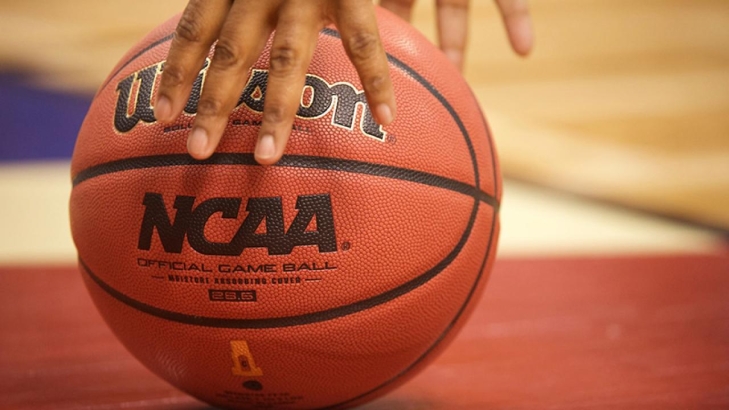
We put a great deal of emphasis on regular-season records and star players who make up the top teams. However, coaches play a significant role when it comes to predictions on NBA lines. The minds behind the success are frequently overlooked. Coaches are as important as star players or a seasoned roster. If a squad isn't well-coached, they'll likely be leaving early.
Mike Krzyzewski continued to add to his already outstanding NCAA Tournament victories as March Madness progressed, and Duke continued to smash their opponents to the end of his career. Krzyzewski has won the most games as an NCAA men's basketball coach. He made history by becoming the first men’s basketball coach to win 100 games.
The top ten active head coaches with the most NCAA tournament victories are as follow:
Mike Krzyzewski (Duke with 100 wins)
With 100 victories, Krzyzewski holds a commanding lead in this area, and he has the opportunity to add to his total before retiring at the end of the season. He has cemented himself as one of the best playoff coaches in college basketball history, with 36 National Championship participations and five national titles.
Jim Boeheim (Syracuse with 57 wins)
Ever since the 1976-77 season, Boeheim has been the coach at Syracuse, and he has been on the winning side of numerous NCAA Tournament games throughout that time. On 20 occasions, Boeheim has led Syracuse to round sixteen or further. His team won the national title in 2003, and he has made four additional Final Four outings.
John Calipari (UMass, Memphis, Kentucky with 53 wins)
Calipari has already been to NCAA Tournament 20 times throughout his stints at UMass, Memphis, and Kentucky. His postseason success has skyrocketed since he arrived at Kentucky in 2009. He led the Wildcats to the Elite Eight and the national championship in his first 12 years at the club.
Tom Izzo (Michigan State with 48 wins)
Michigan State has been a perennial NCAA Tournament contender for decades, and under Izzo’s leadership, the Spartans have made numerous deep runs. They have featured in seven Final Fours throughout that period, including a national title run in 2000.
Bill Self (Oral Roberts, Tulsa, Illinois, Kansas with 47 wins)
Since his career at Tulsa, Self has already had March Madness success. He has led three separate college teams to the Elite Eight: Kansas, Illinois, and Tulsa. He led his club to March Madness in each of his previous 24 seasons as a coach, except for 2020 due to the lockdown.
Bob Huggins (West Virginia with 33 wins)
Huggins not only led West Virginia to a Final Four appearance in 2010, but he also elevated the Cincinnati basketball program higher than they were. Huggins led the Bearcats to the NCAA Tournament 14 times during his 16-year tenure as coach. Huggins has 25 NCAA Tournament participation between three separate institutions.
Mark Few (Gonzaga with 28 wins)
Since taking over the Gonzaga team in 1999, Few has piled up NCAA Tournament victories, quickly climbing the leaderboard. The Bulldogs have advanced to the Sweet Sixteen ten times under Few’s leadership. Despite all of his postseason success, he's still looking for his first national title.
Jay Wright (Villanova with 27 wins)
Wright has been the head coach at Villanova for the past two decades, and he has transformed the program into something that no one wants to play in the NCAA Tournament. The Wildcats have been a staple of March Madness since 2005, but their performance has improved dramatically during the last six or seven years. In 2016, Wright guided Villanova to the national title, then shortly afterward, in 2018, he repeated the feat.
Rick Barnes (Tennessee with 22 wins)
Barnes has led four basketball programs to the NCAA Tournament: Providence, Clemson, Texas, and Tennessee. It's a tremendous accomplishment in and of itself, but Barnes’ biggest issue is that most of his squads have been eliminated early in March Madness.
Ben Howland (Mississippi state with 19 wins)
Howland enjoyed a lot of postseason success towards the conclusion of his tenure at Pittsburgh and most of his time at UCLA. Howland led the Bruins to three consecutive Final Four games and one national championship game from 2006 to 2008. However, when Howland took over Mississippi State, those postseason appearances vanished.
Our All-Time Top 50 Tampa Bay Rays have been revised to reflect the 2021 Season
Yes, we know that this is taking a while!
As many of you know, we here at Notinhalloffame.com are slowly generating the 50 of each major North American sports team. That being said, we have existing Top 50 lists out and we always consistently look to update them when we can and based on necessity. As such, we are very happy to present our pre-2022 revision of our top 50 Tampa Bay Rays.
As for all of our top 50 players in baseball we look at the following:
1. Advanced Statistics.
2. Traditional statistics and how they finished in the American League.
3. Playoff accomplishments.
4. Their overall impact on the team and other intangibles not reflected in a stat sheet.
Tampa had another excellent season, where they again made the playoffs, but the small market team reloaded again in the off-season, always seeking cheaper and younger talent.
As always, we present our top five, though there were no changes, and only one new addition overall. There were, however, significant elevations on the list.
3. Ben Zobrist
4. David Price
You can find the entire list here.
It is worth noting that Kiermaier was unable to overtake Price for #4, and is at #5 for the second straight year.
Second Baseman, Brandon Lowe, skyrocketed from #40 to #16, a reflection more on the short stays that players have in Tampa, than it does on Lowe’s solid 2021.
The same can be said for Joey Wendle, who also shot up from #36 to #17, but Wendle is now with the Marlins.
Austin Meadows, who was traded to Detroit during Spring Training, also jumped multiple spots, climbing from #49 to #34.
Starting Pitcher, Tyler Glasnow, who begins the year on the DL, is the lone new entry at #46.
We welcome your input and comments and as always, we thank you for your support.
27. Tyler Glasnow
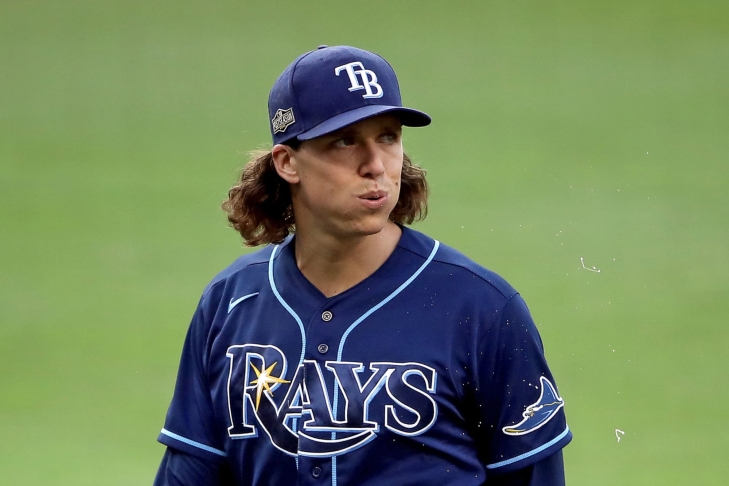
When the Tampa Bay Rays made the high-profile trade to send Chris Archer to Pittsburgh in July 2018, they weren't just rebuilding—they were fundamentally reshaping their pitching future. Austin Meadows and Shane Baz were important parts of the return, but Tyler Glasnow, standing 6-foot-8, had the most exciting potential. Although his first two months in St. Petersburg were challenging, with a 1–5 record and a 4.20 ERA over 11 starts, the front office recognized that his high-velocity, top-tier pitching was a powerful, yet volatile, asset waiting to be unleashed.
That explosion happened the following spring. Glasnow started strong in 2019, earning American League Pitcher of the Month for April. As he was establishing himself as a true ace, a serious forearm strain sidelined him for nearly four months. He came back just in time for the final stretch, ending a shortened regular season with a remarkable 6–1 record and a tiny 1.78 ERA over 12 starts.
The shortened 2020 season was tumultuous for the big right-hander. Despite a 5–1 record and a higher 4.08 ERA in the regular season, his dominant raw stuff continued to be a key asset. He struck out 91 batters in only 57.1 innings and became a key part of the postseason rotation, guiding the franchise to an American League pennant and a World Series appearance.
By 2021, Glasnow appeared unstoppable, boasting a sub-1.00 WHIP, a 5–2 record, and a 2.66 ERA. Sadly, a torn ulnar collateral ligament (UCL) in mid-June abruptly ended his rise. The Tommy John surgery that followed wiped out the rest of that season and nearly all of 2022. Demonstrating his relentless work ethic, he returned in 2023, posting a promising 10–7 record over 21 starts. He also achieved career-highs with 120 innings and 162 strikeouts, reaffirming his status as a top-tier pitcher capable of missing bats.
Facing rising arbitration costs, the Rays traded veteran right-hander Glasnow to the Dodgers before 2024. His time in St. Petersburg is a ‘what-if' due to injuries, but his record of 27–16 and 526 strikeouts over 388.1 innings reflects a peak of high efficiency that contributed to Tampa Bay's golden era.
RIP: Rayfield Wright
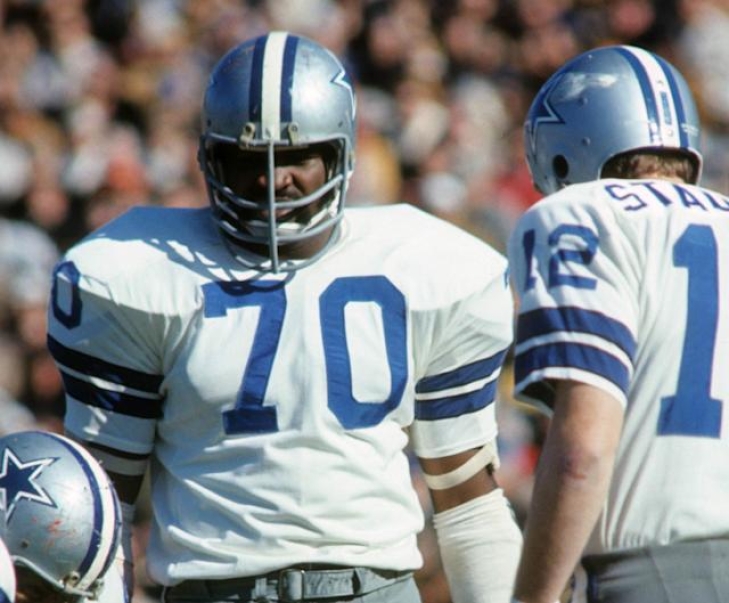
The Football world lost one of the great ones, as it was announced that former Offensive Tackle and former Dallas Cowboy, Rayfield Wright, passed away at the age of 76.
Wright came to Dallas as a seventh round pick in 1967, where in his first three seasons, he was used as an Offensive Tackle, Tight End, and occasional Defensive Tackle. By 1970, he settled in at Right Tackle, and it was there where he became one of the best at that position of all-time.
Wright was named to six consecutive Pro Bowls from 1971 to 1976, and in those first three years, he was a First Team All-Pro. His contributions would help Dallas win Super Bowl VI and Super Bowl XII.
Wright left Dallas after being released for the Philadelphia Eagles in 1980, but he never played a game for them, thus making his entire career in the NFL with the Cowboys. He would enter the Pro Football Hall of Fame in 2006, and he is also a member of the 1970s All-Decade Team. Wright was also honored with a place in the Cowboys Ring of Honor in 2004.
We here at Notinhalloffame.com would like to offer our condolences to the fans, family and friends of Rayfield Wright.
