


Committee Chairman
Our All-Time Top 50 Boston Red Sox have been revised to reflect the 2021 Season
Yes, we know that this is taking a while!
As many of you know, we here at Notinhalloffame.com are slowly generating the 50 of each major North American sports team. That being said, we have existing Top 50 lists out and we always consistently look to update them when we can and based on necessity. As such, we are very happy to present our pre-2022 revision of our top 50 Boston Red Sox.
As for all of our top 50 players in baseball we look at the following:
1. Advanced Statistics.
2. Traditional statistics and how they finished in the American League.
3. Playoff accomplishments.
4. Their overall impact on the team and other intangibles not reflected in a stat sheet.
Boston made it to ALCS where they lost to the Houston Astros, and they are again loaded in 2022. No new players entered our Top 50, and there is only one active player on the team who rose based on his 2021.
As always, we present our top five, though there were no changes.
1. Ted Williams
4. Wade Boggs
5. Cy Young
You can find the entire list here.
Current Red Sox Infielder, Xander Bogaerts, climbed to #29 from #42.
We welcome your input and comments and as always, we thank you for your support.
Top Overlooked Games That You Need to Try
The standard of computer games has only risen over the years as we get classics, expand them, make them better, and also come out with new and exciting games at the same time. As such, gamers today are absolutely spoilt for choice when deciding what they would like to play.
There are a number of exciting games, such as sporting NFL games where you can play as some of the best players in the world, shooter games, and sci-fi games that transport you to a new world. Of course, where we have classic games and games that get the recognition that they deserve, we also get some titles that fall under the radar and remain overlooked. This is a real shame because they are usually excellent games to play and have simply not been picked up because of poor timing of their release.
This article is going to go into a bit more detail about what some of these overlooked games are and why people should play them.
Many Online Casino Games
Online casino games were already seeing a huge rise in popularity, but this was accelerated in recent years as a result of the pandemic. Many people who were happy going to casinos are now more content within the confines of their own homes, enjoying some of the new and different games that have been made available.
Your favourite slots are already available on a number of different online casino websites, but the sheer number of options means that many are overlooked. Different online casino sites do not just have the game roulette or slot machines but instead have a number of variations on the classics. As such, you tend to find that a lot of amazing titles do not get the recognition they deserve, as they are competing against a number of different games at the same time.
Roulette is an incredibly popular option on these gambling sites that you should certainly consider trying. If you want to find some of the different roulette games available then be sure to check this website.
Vampyr
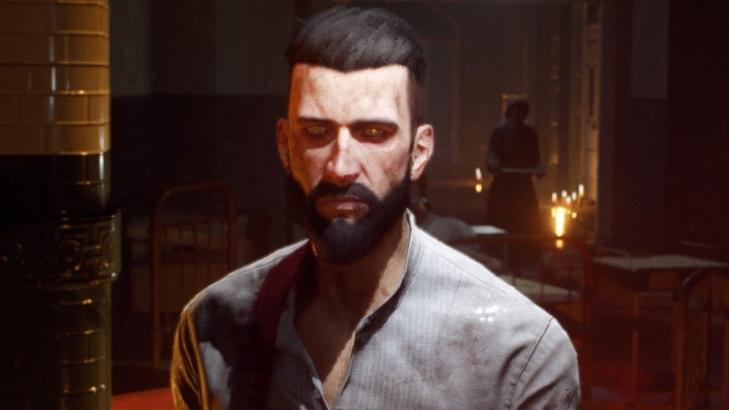
This game is one that was released on a number of consoles, including PlayStation and Xbox. This was a product of Dontnot Entertainment, which created the game Vampyr and set it just after World War I. It was an action-role-player where the player takes on the persona of a doctor who has just been turned into a vampire. The doctor is left in an incredibly awkward position, as he has to then decide whether or not he should stick to the Hippocratic Oath or feed on the living.
The world that is established within this game truly is unique as players meet an exciting range of different characters, all of whom (more or less) can be sacrificed with the intention of helping your character become stronger. There are a number of supernatural abilities at your disposal, as well as a cool and atmospheric take on London, all of which come together and make a great game to play.
The Surge
The Surge is the product of Deck13, which released the game on PlayStation, Xbox, and PC. It was very different from their previous fantasy game, Lords of the Fallen, as The Surge has a very heavy science-fiction and action RPG style to it. The game played with a limb-targeting system available, which allowed players to improve their aim on those they were trying to hit. There were also different exo-suits and upgrades for those exo-suits available, which meant that players could tailor their characters, so they were more suitable for them. There was a sequel released, which seemed to get a bit more praise, but the original was definitely overlooked and is certainly worth a play for anyone who is interested in science fiction games.
Nex Machina
Released on the PC and PlayStation, Nex Machina was developed with the designer Eugene Jarvis, who helped contribute toward what may well be one of the best arcade shooters ever made. There is no getting away from the fact that the game is incredibly difficult to play, but the controls are very smooth, the abilities are simple, and the enemies are huge. Fighting bosses can become a hectic affair, and doing it without dying a dozen times is more or less impossible, but that just adds to the excitement of the game. Nevertheless, this one fell under the radar, and not many people ended up playing it.
Conclusion
Thanks to the massive array of games available and the high standard of said games, it is common for a lot of excellent titles to get overlooked. These are discussed in more detail above and are certainly worth playing if you haven’t already.
RIP: Mike Bossy

One of the most prolific goal scorers in hockey left us as Mike Bossy lost his battle with lung cancer. He was 75 years old.
From Montreal, Bossy was a First Round Pick of the New York Islanders in 1977, and he made the team immediately, scoring 53 Goals and winning the Calder Trophy. Bossy continued to light the lamp at a lightning-like pace, leading the NHL twice, and exceeding the 50-Goal mark in his first nine seasons, and cracking 60 five times.
A five-time First Team All-Star and three-time Second Team All-Star, Bossy led the Islanders to four consecutive Stanley Cups (1980-83), and won the Conn Smythe in 1982. The sniper was also known for his classy play, winning three Lady Byng Trophies.
Bossy dealt with back problems causing his premature retirement at the age of 30 and he left the game with 573 Goals and 1,126 Points.
Bossy entered the Hockey Hall of Fame in 1991, his first year of eligibility.
We here at Notinhalloffame.com would like to extend our condolences to the fans, friends, and family of Mike Bossy.
Dave Stewart upset with the Athletics due to lack of jersey retirement communication
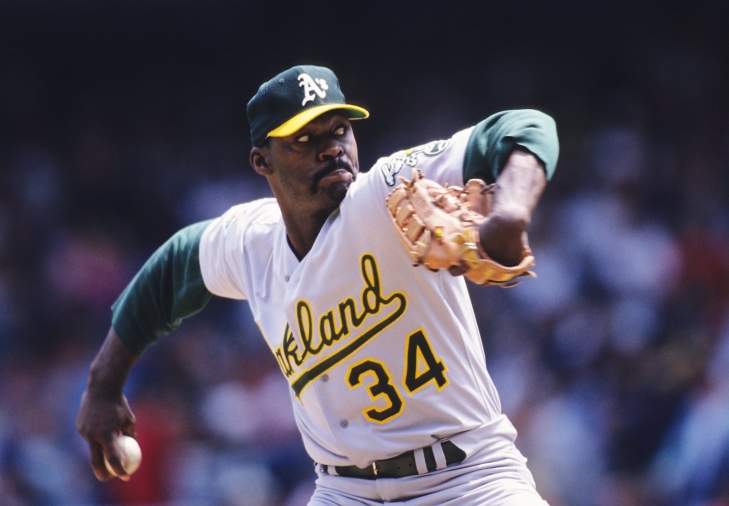
The Oakland Athletics have had their share of problems over the last few decades, as they are a small market team in an awful stadium, that are constantly the subject of relocation speculation. Add another one, as the team has upset a former superstar due to their mishandling of his impending jersey retirement.
In 2019, Oakland announced that they would retire the number 34 of Dave Stewart in 2000, but COVID postponed those plans. The team never announced any rescheduling, leading to a fan asking Stewart on Twitter when this would be happening. The former Pitcher responded:
“I have no idea what the A’s are doing. At this point they can just retire the number with no celebration as far as I’m concerned. Come to the park and it will be on display with the other retired numbers. If you find out something before I do, please let me know?”
You would think that the team would have been in contact with Stewart, as this is an embarrassment for the A’s, and a slap in the face their former star.
Hopefully, this will be rectified soon, and we can watch the man with one of the most intimidating glare on the mound do it one more time in the city he became a star.
