


Site Admin
3. Nolan Arenado
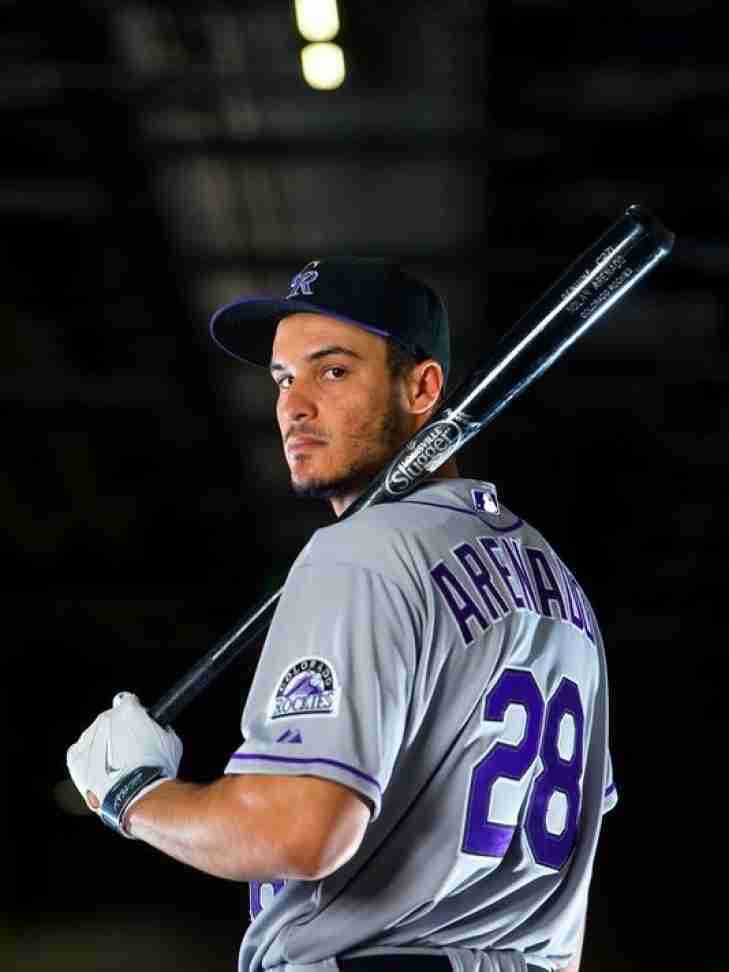
Securing a spot on the roster in 2013, Arenado immediately signaled that a new era of defensive excellence had arrived in Denver. He captured a Gold Glove as a rookie, a feat he would repeat every single year he wore a Rockies uniform, establishing a run of excellence in the field that few in the history of the sport have matched. His ability to make the impossible play look routine became his signature, but it was the evolution of his offensive game that truly elevated him to superstar status.
A massive breakout in 2015 saw his bat finally catch up to his legendary glove. That season, he claimed his first Home Run (42) and RBI (130) titles, earning a Silver Slugger and proving he could navigate the National League’s best pitching with ease. This was no fluke; he followed it up in 2016 by again leading the circuit in both categories with 41 homers and 133 RBIs. He provided the Rockies with excellence at third base that was annually validated by the voters, as he never finished lower than eighth in the MVP race between 2015 and 2019.
Refinement became the hallmark of his game as his residency continued. While the power remained elite, highlighted by a third Home Run title in 2018, he added a disciplined contact approach to his repertoire. In 2017, he eclipsed the .300 mark for the first time while driving in 130 runs, a performance that earned him a fourth-place finish in the MVP voting. Arenado was a blend of high-volume slugging and platinum-level defense, making him a perennial All-Star and the face of a franchise that leaned heavily on his two-way brilliance.
His time in Colorado concluded in 2021, when the organization opted to trade him to the St. Louis Cardinals. Arenado left the Mile High City with 235 home runs, a .293 batting average, and a trophy case overflowing with eight consecutive Gold Gloves. He departed as an icon who had spent seven seasons as the best third baseman in the National League, a player who proved that a glove could be just as valuable as a bat in the thin air of Coors Field.
6. Carlos Gonzalez
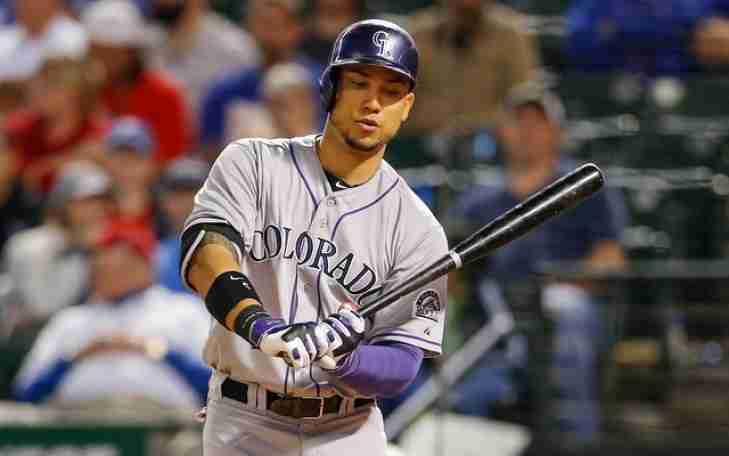
The landscape of Colorado baseball shifted in late 2008 when the Rockies acquired Carlos González from Oakland, but it was the 2010 campaign where he matured into a legitimate superstar. That year, "CarGo" authored one of the most complete individual seasons in franchise history, capturing the National League batting title with a .336 average while leading the league in hits (197) and total bases (351). He arrived as a raw, talented outfielder and instantly became an elite force, securing his first Gold Glove and Silver Slugger awards while finishing third in a crowded MVP race.
The height of his brilliance was marked by a rare combination of power and speed. From 2010 to 2013, González was a model of dynamic productivity, rattling off four consecutive "20/20" seasons, a feat of consistency that underscored his value on both sides of the ball. He possessed a beautiful, left-handed stroke that seemed perfectly tailored for the gaps of Coors Field, culminating in a massive 40-home run season in 2015 that earned him his second Silver Slugger. He was a three-time All-Star for the club, providing a high-leverage presence in the heart of a lineup that consistently challenged the best rotations in the game.
Defensive excellence remained a constant throughout his tenure, regardless of which outfield spot he occupied. A three-time Gold Glove winner, González possessed the range and instincts to shrink the outfield, eventually earning the Wilson Defensive Player of the Year Award in 2012. He was a volume-dense producer who surpassed the 1,000-hit milestone in purple pinstripes, finishing his stay with the club with 227 home runs and a robust .516 slugging percentage. He proved that you could be a home run threat and a defensive anchor simultaneously, a balance that made him one of the most valuable players of his generation.
The chapter eventually reached its conclusion following the 2018 season. After returning to the Rockies on a one-year deal that spring, he entered free agency and signed with the Cleveland Indians in early 2019.
4. Troy Tulowitzki
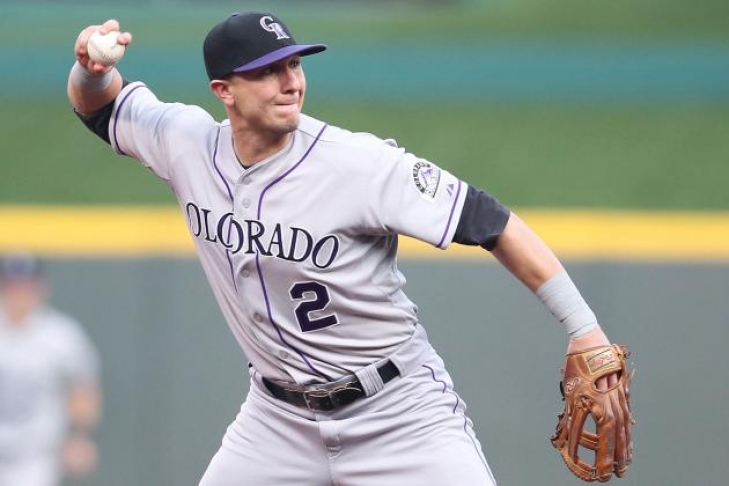
The landscape of the National League West shifted in 2007 when "Tulo" exploded onto the scene, maturing instantly into the tactical heart of the "Rocktober" miracle. He finished as the runner-up for Rookie of the Year, but it was his work in the field that truly stunned the league. He led the National League with a staggering 3.7 defensive bWAR that season, and while a Gold Glove eluded him that summer, he would later secure two of the trophies in 2010 and 2011. He arrived as a defensive specialist with a massive arm and evolved into an elite stabilizer who could shrink the cavernous infield of Coors Field.
The peak of his career was marked by a rare combination of power and precision. Tulowitzki wasn't just an "above-average" hitter; he was a middle-of-the-order force who surpassed the 20-home run mark six times in a Rockies uniform. He possessed a refined approach at the plate, maintaining a batting average over .300 in four seasons and frequently appearing in the top 10 for OPS and overall bWAR among position players. He was a five-time All-Star for the club, providing a high-leverage bat that could drive the ball into the gaps as easily as he could launch it into the bleachers.
Reliability and leadership were the hallmarks of his identity in Denver. Whether he was turning a double play with his signature jump-throw or leading the charge into the postseason, Tulowitzki was the undisputed engine of the clubhouse. He concluded his primary stay with the club as the gold standard for Colorado infielders, having compiled a resume that placed him among the elite players of his generation. He proved that you could play a premium defensive position without sacrificing an ounce of offensive production.
The chapter eventually closed on his Colorado tenure in mid-2015, when a blockbuster trade sent him to the Toronto Blue Jays. It was a move that signaled the end of an era for the Rockies, but he left the organization as a hero and arguably the most gifted player to ever wear the purple pinstripes.
2. Larry Walker
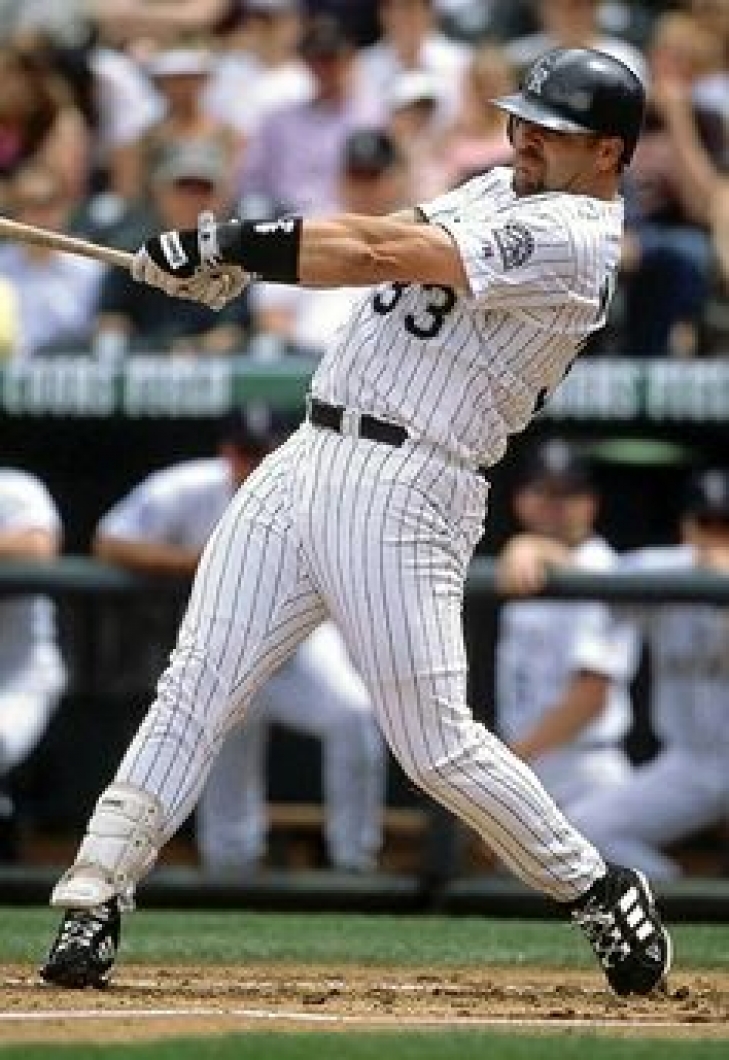
Colorado’s front office secured one of the greatest free-agent prizes in team history when it brought the Maple Ridge native to the Rockies in 1995. Walker brought a rare combination of gold-glove defense, elite speed, and a left-handed stroke that seemed perfectly calibrated for the gaps of Coors Field. He quickly matured into the most feared hitter in the "Blake Street Bombers" lineup, proving that he was a generational talent who could impact the game in every phase. He wasn't just a slugger; he was a pure baseball technician who understood how to use the entire field.
His tenure reached a historic crescendo in 1997, a season that stands as one of the most complete individual performances in the modern era. Walker captured the National League MVP award after blasting a league-leading 49 home runs and posting a staggering .366/.452/.720 slash line. This wasn't a one-off peak, but rather the start of a period of greatness. He would go on to win three batting titles in a Rockies uniform and post four separate seasons with a batting average above .350. His power numbers were undeniable, as he eclipsed a 1.000 OPS in five different campaigns, proving that his productivity was among the most elite in the sport's history.
Beyond the gaudy offensive numbers, Walker was rooted in his status as a complete athlete. He was a perennial threat on the basepaths and a defensive vacuum in right field, capturing five Gold Gloves during his time in Denver. While other players may have logged more years in a Rockies uniform, the argument for Walker as the best pure hitter to ever represent the city is bolstered by his incredible efficiency. He didn't just accumulate stats; he dominated his peers in every meaningful category, leading the league in slugging percentage twice and on-base percentage once during his stay.
The long-running debate regarding the "Coors Field effect" famously stalled his momentum with national voters for years. However, the sheer weight of his production, a career .313 average and 383 home runs, eventually shattered the stigma. In 2020, during his tenth and final year of eligibility, the call from Cooperstown finally arrived, making him the first player to enter the Hall of Fame as a member of the Rockies. The organization followed suit in 2021 by retiring his number 33, ensuring that the most decorated individual in franchise history would be forever honored.
