


Site Admin
37. Rickie Weeks
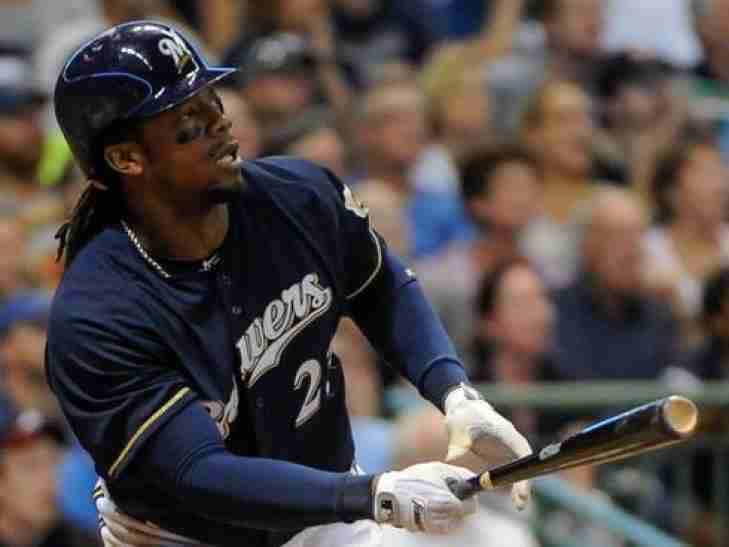
The second overall pick in 2003, Rickie Weeks, came to Milwaukee as a high-voltage prospect out of Southern University with a legendary collegiate pedigree.
After a brief debut at age 20, Weeks reached his career peak in 2010. That season, he demonstrated exceptional durability and strength, hitting 29 home runs, 83 RBIs, and scoring 112 runs. He showed complete mastery of the strike zone, setting a franchise record with 754 plate appearances and leading the National League in at-bats with 651. He proved to be a key player in high-pressure moments, with his aggressive right-handed swing serving as a cornerstone of the Brew Crew's powerful offense.
In 2011, he was voted starting second baseman for the National League All-Star Game. That year, he hit 20 home runs and 122 hits despite a significant ankle injury. This marked his third straight season with 20+ home runs (2010–2012), showing his muscle was a consistent force during the Brewers' "Beast Mode" era.
While he achieved a historic milestone with his 1,000th hit as a Brewer, his legacy was sometimes hindered by defensive struggles. He led the National League in errors at second base five times, overshadowing his offense. He then left in free agency, signing with the Seattle Mariners.
Weeks accumulated 1,009 hits, 155 home runs, and a .249 batting average with the Brewers.
41. Richie Sexson
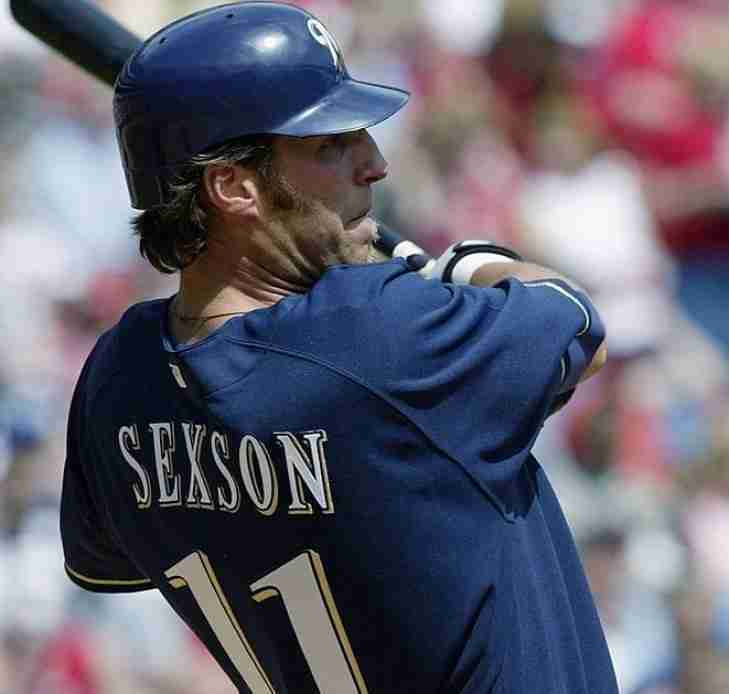
A towering 6-foot-8 presence, Richie Sexson was acquired from Cleveland in a blockbuster trade in 2000 that sent Bob Wickman and Steve Woodard the other way. While he would later play for several other franchises, he had his greatest success in the 414.
In 2001, Sexson’s first full season, he hit 45 home runs, had 125 RBI, and showcased dominance in the National League, finishing top ten in homers and RBI while earning MVP votes. On September 25, he and Jeromy Burnitz became MLB's first teammates to hit three home runs in a game. He reached 100 RBI for the first of three straight years.
Between 2002 and 2003, he remained a middle-order giant, with a slugging percentage over .500 each year for the Brewers. In 2002, he achieved recognition by earning his first All-Star selection, repeated in 2003 during a season where he matched his career-high with 45 home runs.
With his value at an absolute summit and the organization looking to restock its system, the Brewers finalized a massive nine-player trade that sent Sexson to the Arizona Diamondbacks. This deal brought a foundational package of prospects to Milwaukee, including future stars Junior Spivey, Chris Capuano, and Lyle Overbay.
As a Brewer, Sexson would go deep 133 times with a .536 Slugging Percentage.
27. Rollie Fingers
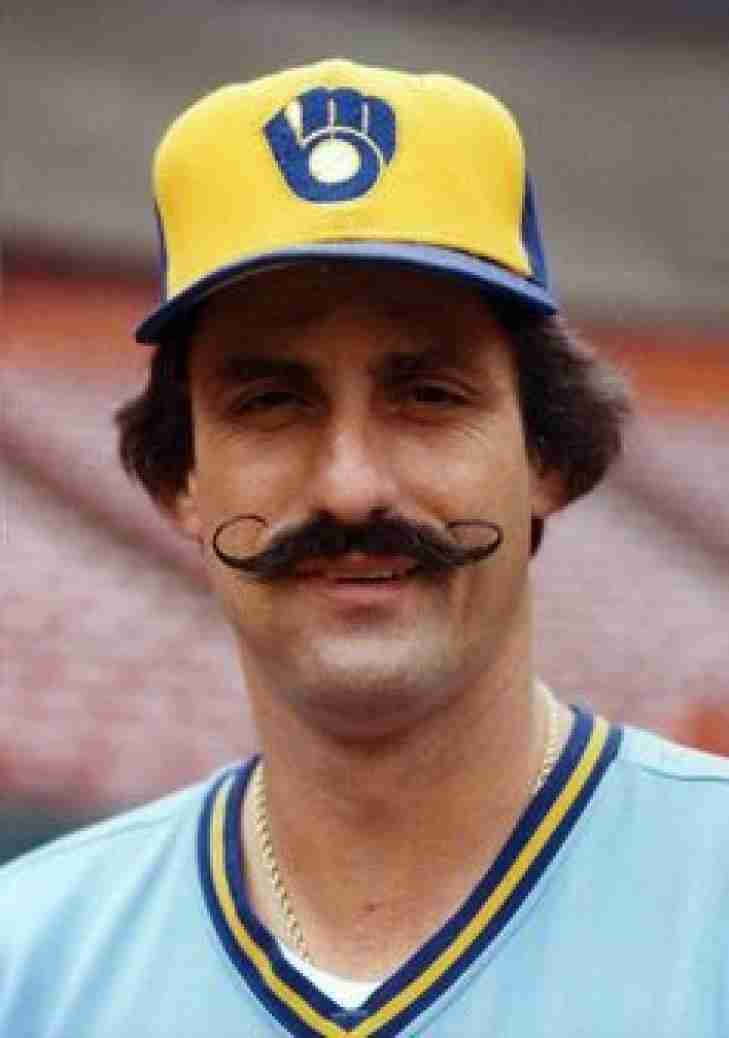
Rollie Fingers arrived in Milwaukee in December 1980 through a major trade. His journey was quick; he had been with the St. Louis Cardinals for only four days. After acquiring Fingers from San Diego in an 11-player swap on December 8th, Cardinals GM Whitey Herzog, having also acquired Hall of Famer Bruce Sutter, decided to trade Fingers to Milwaukee on December 12th.
Fingers was sent to the Brewers alongside catcher Ted Simmons and starter Pete Vuckovich in exchange for a package that included Sixto Lezcano, Lary Sorensen, and prospects David Green and Dave LaPoint. While the Cardinals eventually won the 1982 World Series against Milwaukee, the Brewers essentially "won" the trade in the short term, as they netted the next two AL Cy Young winners in Fingers (1981) and Vuckovich (1982).
During the strike-shortened 1981 season, Fingers reached an absolute summit of performance that remains the gold standard for relief pitching. He authored a minuscule 1.04 ERA and led the league with 28 saves, allowing just nine earned runs over 78 innings of work. He showcased a total command of the American League, finishing the year with a 0.872 WHIP and proving to be the foundational spark that led the Brewers to their first-ever postseason berth. This masterpiece of a campaign made history; he became the first reliever to ever win the Cy Young Award and the MVP in the same season, a dual-honor plateau that remains one of the rarest feats in the game.
Fingers reached new postseason legend during the 1982 "Harvey's Wallbangers" run. Although he missed the World Series due to a torn forearm muscle, his regular-season contributions were vital to the team’s success. He recorded 29 saves with a 2.62 ERA, anchoring a bullpen that supported the team's potent offense. After a disabled list stint that caused him to miss the entire 1983 season, he returned with resilience, recording 23 saves in 1984, showing his veteran poise remained a key asset.
As his 17-year career's high-velocity innings took their toll, he finished his playing residency where it all started—in Milwaukee's Cactus League. He left with 97 saves and a 2.54 ERA, marking the final chapter of a Hall of Fame career. In 1992, the organization retired his number 34, symbolically honoring him.
30. Moose Haas
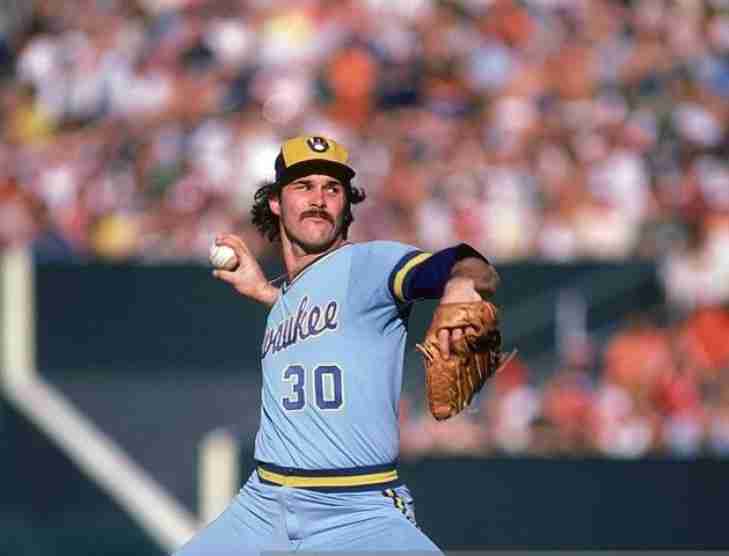
Moose Haas arrived in Milwaukee in 1976 as a second-round pick from Maryland, a 20-year-old right-hander with a nickname suggesting a hulking presence he didn't quite possess in stature—though his arm frequently told a different story. He was not the most imposing figure, but he operated with durability and a "strike-throwing" mindset that led to the franchise's most successful decade.
In 1978, Haas achieved peak efficiency by striking out 14 New York Yankees in one game, setting a franchise record that stood for over 25 years. He demonstrated control of his repertoire and famously fanned Reggie Jackson four times. An arm injury shortened that season, but he made a strong comeback in 1980, with a career-high 16 wins and 252.1 innings pitched. That year, he posted a 3.10 ERA, finishing in the league's top ten.
Haas achieved a new milestone in 1982 during the "Harvey's Wallbangers" campaign. His regular-season stats were steady, but he peaked in the postseason, winning Game 4 of the ALCS to keep Milwaukee’s hopes alive. In 1983, he led the American League in Winning Percentage (.813), with a 13-3 record and 3.27 ERA. Known for efficiency, he ranked in the top ten for BB/9 four times during his career.
Haas was traded to the Oakland Athletics in 1986. As a Brewer, Haas compiled a 91-79 record, a 4.02 ERA, and 800 strikeouts.
