


Site Admin
11. DJ LeMahieu
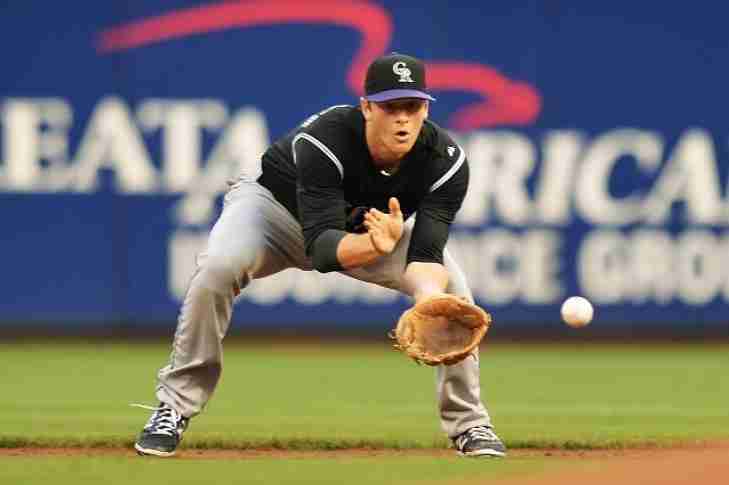
D.J. LeMahieu arrived in a 2011 trade from the Chicago Cubs, a transaction that proved to be one of the most lopsided gains in franchise history. Quickly becoming Colorado’s starting second baseman, LeMahieu possessed a specialized ability to handle difficult hops and turn high-speed double plays, earning three Gold Glove Awards and three Wilson Defensive Player of the Year honors during his stay. He wasn't just a steady glove; he was a tactical run-preventer who consistently led the league in range factor and fielding percentage, providing the Rockies' rotation with an elite security blanket.
The most impressive aspect of his tenure was an offensive surge that reached a historic crescendo during the mid-2010s. LeMahieu was a master of the opposite-field hit, a reputation earned during a 2016 campaign in which he captured the National League Batting Title with a staggering .348 average. He was a model of specialized efficiency, proving he could maintain elite contact skills while navigating Denver's unique atmospheric challenges. He became a two-time All-Star for the club, serving as a high-frequency table-setter who accumulated over 1,000 hits in a Rockies uniform and maintained a nearly .300 career average during his tenure.
The chapter reached a bittersweet conclusion in 2019 when he departed for New York as a free agent, where he continued his pattern of elite production. He left the organization as a statistical titan of the modern era, having established himself as the most decorated and respected second baseman to ever call the Mountain West home.
With the Rockies, LeMahieu compiled 1,011 hits and 348 runs scored while securing three Gold Glove Awards and the 2016 Batting Title.
15. Aaron Cook

Aaron Cook was a homegrown talent, drafted by the organization in the second round in 1997. Becoming a regular in 2002, Cook’s calling card was a specialized grip that transformed a standard two-seamer into a devastating sinker. His craftsmanship was nearly derailed in 2004 by a life-threatening pulmonary embolism, but he made an incredible recovery to win the Tony Conigliaro Award. He returned to anchor the staff during the historic "Rocktober" run of 2007, and despite missing most of the stretch with an injury, he provided the veteran poise to start Game 4 of the World Series.
The absolute high-water mark of his career arrived in 2008, a summer where he emerged as a genuine National League ace. Cook reached a statistical plateau that saw him secure a career-high 16 wins and earn his first All-Star selection. His performance in that Midsummer Classic remains a piece of club lore; he navigated three scoreless extra innings at Yankee Stadium, famously escaping a bases-loaded, no-out jam to preserve the tie. He was a model of specialized efficiency, twice recording complete games on fewer than 80 pitches, proving that his game was built on a relentless ability to induce contact and let his defense do the work.
Cook remained the tactical anchor of the Rockies' rotation through 2011, navigating the era’s physical demands with a consistent, blue-collar approach. With the Rockies, Cook compiled 72 wins, 1,312 innings pitched, and 11 complete games across 10 seasons.
12. Dante Bichette
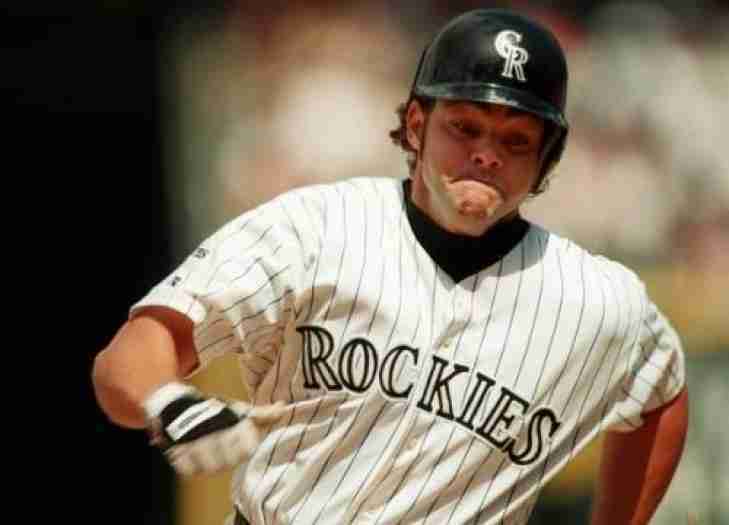
Dante Bichette’s path to Colorado was a stroke of expansion-era genius, acquired from the Brewers in exchange for Kevin Reimer just as the Rockies were coming to life. He surfaced as an instant legend, etching his name into the record books by launching the first home run in franchise history during the club’s inaugural game in 1993. He matured into a premier offensive catalyst, authoring a sensational 1995 campaign where he nearly secured the Triple Crown. That summer, he led the National League in hits, home runs, RBIs, and slugging percentage, finishing as the narrow runner-up for the MVP award in a race that captivated the Mountain West.
The most extraordinary aspect of his tenure was the sheer volume of runs he produced throughout the decade. Bichette was a master of the "big hit," a technician of the long ball who reached a remarkable level of consistency by driving in at least 100 runs in five consecutive summers. He reached a statistical summit in 1996, joining the elite 30-30 club with 31 homers and 31 stolen bases, proving that his athleticism extended well beyond the batter's box. He was a model of specialized hitting acumen, serving as a four-time All-Star for the club and maintaining a near-elite .316 batting average over his seven-year stay in the purple pinstripes.
His presence was defined by a charismatic, crowd-pleasing style and a physical approach at the plate that made him a nightmare for opposing rotations. However, the narrative of his career is uniquely balanced by defensive struggles that became legendary in their own right. While he possessed a specialized "cannon" for an arm in right field, his overall range and efficiency were frequently criticized, often resulting in advanced metrics that devalued his massive offensive contributions.
Bichette was traded to Cincinnati in 1999, but he left the organization as a pillar of its formative years. He departed Colorado with 201 home runs and 826 RBIs, benchmarks that solidified his status as one of the most prolific and beloved figures in the history of the franchise.
16. Ellis Burks
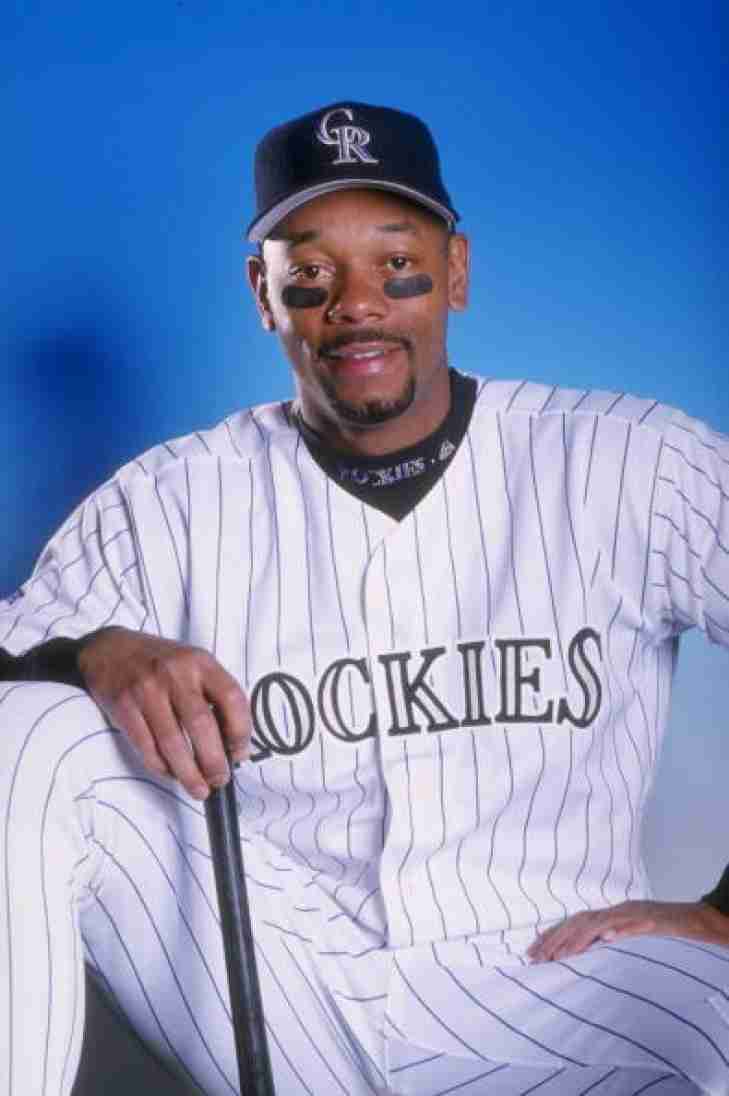
The Colorado Rockies signed Ellis Burks as a high-profile free agent to stabilize their young lineup in 1994. Though his tenure was sometimes interrupted by the physical toll of high-altitude conditions on his knees, his craftsmanship reached a level of pure dominance during a historic 1996 campaign. That summer, he authored a masterpiece of hitting, launching 40 home runs and lacing 211 hits while maintaining a staggering .344 average. He wasn't just a power threat; he was a model of specialized efficiency, leading the National League in runs scored (142) and total bases (392).
The most impressive aspect of his time in Denver was how he refined his approach to maximize the park's unique geometry. Burks was a master of the "extra-base" mindset, becoming a member of the elite 30-30 club in 1996 by pairing his 40 homers with 32 stolen bases. This performance earned him a Silver Slugger, an All-Star nod, and a third-place finish in the MVP voting, the highest of his eighteen-year career. He served as the tactical link between the raw power of Bichette and Galarraga and the speed of the leadoff spot, providing the high-leverage at-bats that defined the most feared offensive unit of the mid-90s.
Burks was traded to the San Francisco Giants in 1998, but he left the organization as a statistical titan of its formative decade. He departed Colorado with a career .306 average and an OPS just shy of 1.000, having established an offensive standard for veteran acquisitions that has rarely been equaled.
