


Site Admin
1. Todd Helton
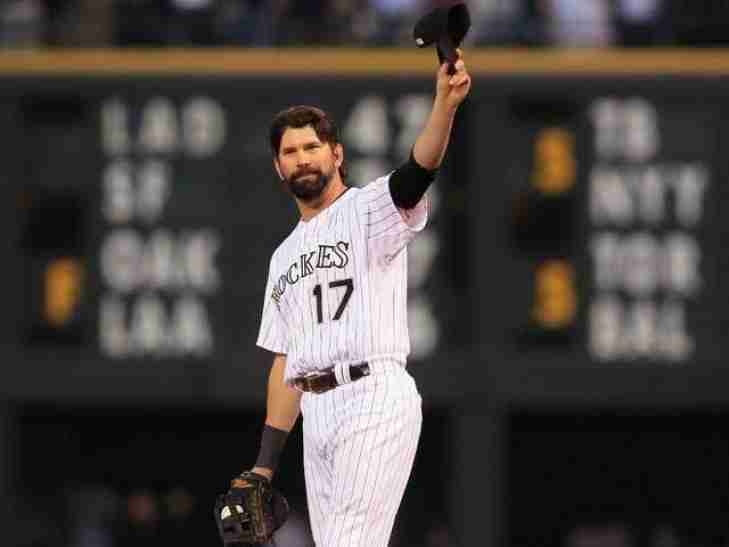
Denver’s baseball identity was essentially forged by the left-handed stroke of number 17. Drafted out of the University of Tennessee, where he had also starred as a quarterback, Helton brought a dual-threat athleticism and a surgical approach to the plate that made him an immediate icon. He occupied first base with a defensive elegance that earned him three Gold Gloves, but it was his offensive output during a historic five-year peak that turned him into a national phenomenon. He arrived as a high-pedigree prospect and instantly matured into the tactical heartbeat of the franchise.
Statistical dominance reached an almost mythical level between 1999 and 2003. During this window, "The Toddfather" authored a stretch of production that remains a benchmark for consistently eclipsing 30 home runs and 100 RBIs while maintaining a batting average well north of .320. His 2000 campaign stands as a monument to Rockies’ excellence as he swept the Triple Crown of the slash line, leading the National League in batting average (.372), on-base percentage (.463), and slugging (.698). He was a four-time Silver Slugger winner who navigated the unique hitting environment of Coors Field with a clinical precision that transcended the "altitude" debate.
Consistency became his legacy long after that initial power surge subsided. Helton remained the emotional and statistical anchor of the club for 17 seasons, leading them to their first World Series appearance in 2007. He concluded his career with 369 home runs and 1,406 runs batted in, but perhaps his most impressive feat was maintaining a career "3/4/5" slash line of .316/.414/.539 over nearly 9,500 plate appearances. He wasn't just a beneficiary of his home park; he was a pure hitter whose eye for the strike zone was among the best of his generation.
The debate over his place in Cooperstown was long and arduous, often clouded by the "Coors Field" stigma, but his undeniable volume and efficiency eventually won over the electorate. In 2024, the Hall of Fame finally called his name, validating what every fan in Colorado already knew: Helton was one of the premier first basemen of any era. This induction served as the ultimate capstone to a residency that saw him become the first Rockies player to have his number retired, a permanent tribute to the man who gave the franchise its soul.
Running Bear
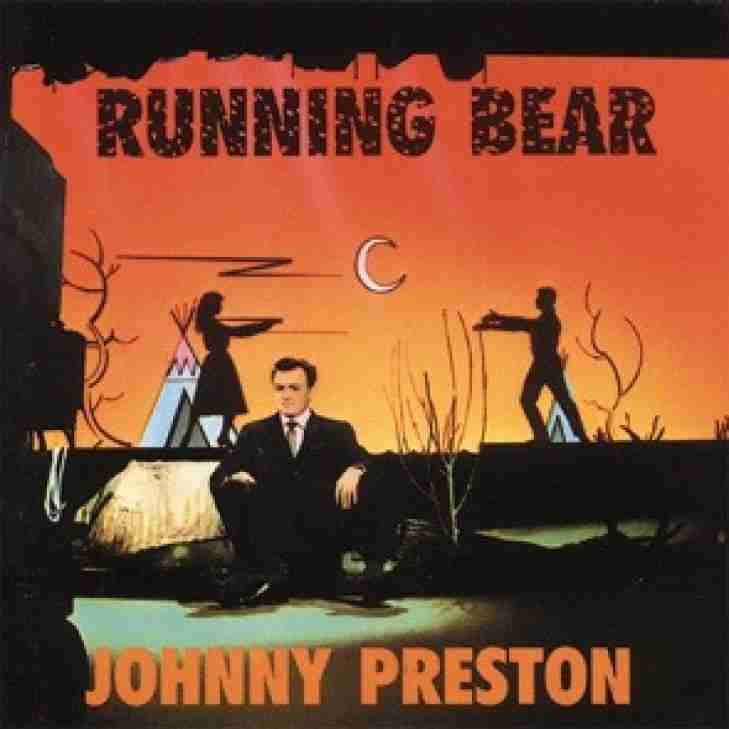
Johnny Preston
Running Bear
45. Pete Vuckovich
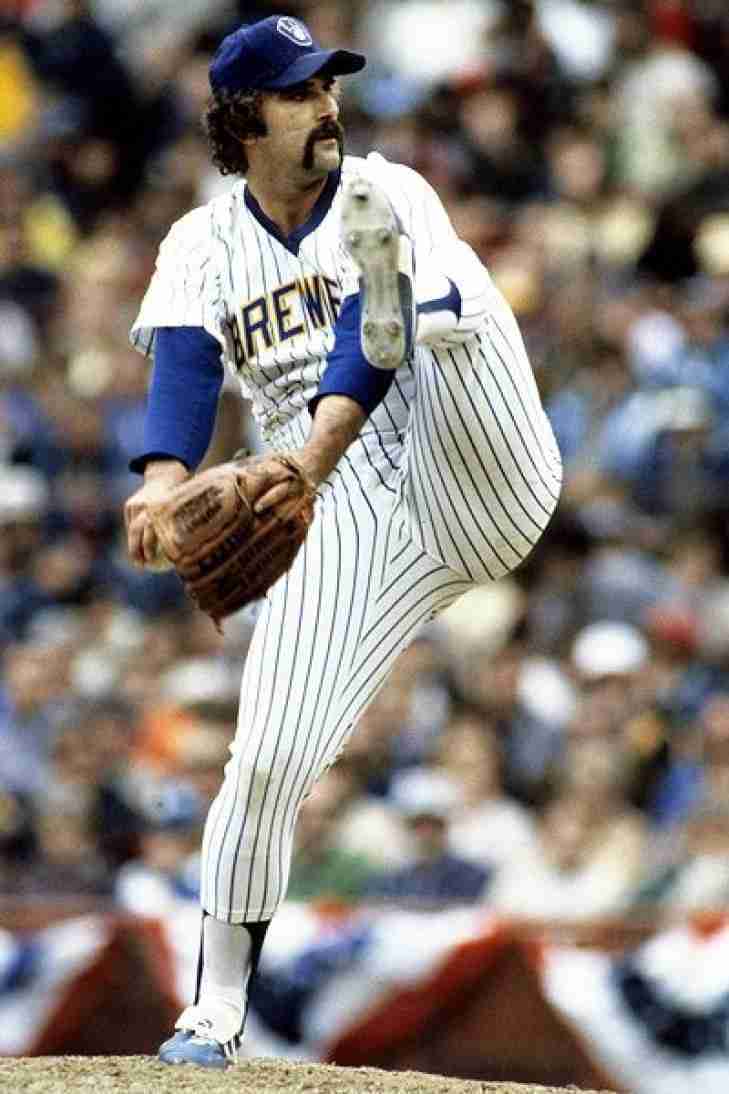
Pete Vuckovich arrived in Milwaukee in late 1980 as a key part of a major trade in baseball history. During the Winter Meetings in Dallas, the Brewers completed a seven-player deal with the St. Louis Cardinals, acquiring Vuckovich along with Hall of Famers Rollie Fingers and Ted Simmons. Milwaukee sent Sixto Lezcano, Lary Sorensen, Dave LaPoint, and prospect David Green in the trade. Although mainly remembered for the hardware it brought, Vuckovich became the team's gritty anchor, bringing “The Mad Monk” to Milwaukee.
In the 1981 strike-shortened season, Vuckovich led the American League with 14 wins and a .778 winning percentage. He played a key role in the Brewers winning the second-half title and reaching the postseason. That summer, he finished fourth in Cy Young voting, establishing himself as the rotation's most intimidating presence.
During the 1982 championship season, he posted an 18-6 record with a 3.34 ERA and earned the AL Cy Young Award. Despite a 1.502 WHIP and 102 walks, he demonstrated total command of "mound psychology,” outdueling Jim Palmer and pitching every fifth day despite a shoulder injury that was ending his career.
His shoulder injury ultimately defined the end of his pitching career in 1983, when he was limited to just three games and had to sit out the entire 1984 season. Despite these setbacks, he showed incredible resilience by making a comeback in 1985 and 1986. Although he never quite reached the same top speeds or dominance as before, he left a lasting legacy with a 40-26 record during his time with the Brewers. His achievements and spirit have earned him a place on the Brewers Wall of Honor, celebrating his commitment and grit.
In traditional wins and losses, he went 40- 26 and twice led the AL in winning percentage.
42. Dave Nilsson
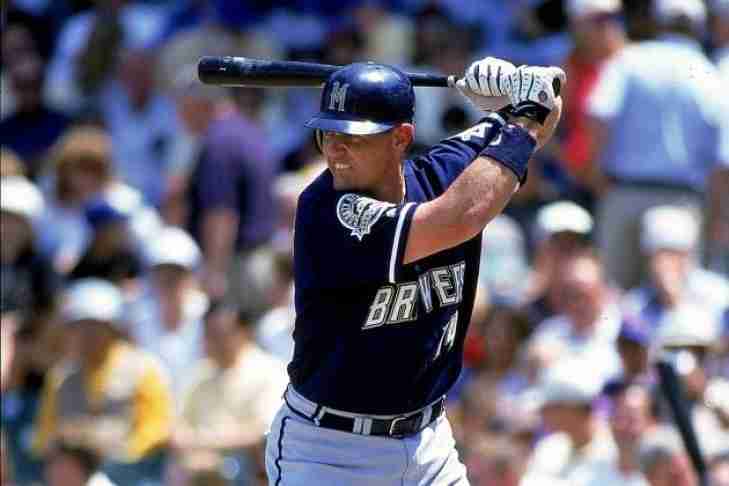
Dave Nilsson came to Milwaukee in 1992 as a left-handed catcher from Brisbane, making history as the first Australian to play in a Major League All-Star Game. His journey to this achievement was quite unique, especially when he decided to leave a lucrative contract at his peak to represent his country in the Olympics.
Following a standout debut in 1992, Nilsson peaked offensively in 1996. Despite enduring various injuries, he posted a career-best .331 batting average, along with 17 home runs and 84 RBI. That summer, he demonstrated complete control of the American League, finishing sixth in batting and becoming the first Brewer to hit two home runs in a single inning, a milestone he achieved on May 19 against the Twins.
During his final year in the Major Leagues in 1999, he delivered an outstanding first half, batting over .300 and showcasing impressive power with double digits. He reached a historic milestone by being selected for the All-Star Game, proudly representing the Brewers at Fenway Park as the first Australian All-Star ever. He wrapped up the season with 21 home runs and an impressive .309 batting average.
At just 29 and after an All-Star year, Nilsson chose to stay a free agent, declining MLB offers to play in Japan and captain Australia in the 2000 Sydney Olympics. He left Milwaukee as a ‘Lifer," with all 837 MLB games played for the Brewers, recording 789 hits and 105 home runs.
