


Site Admin
4. David Wright
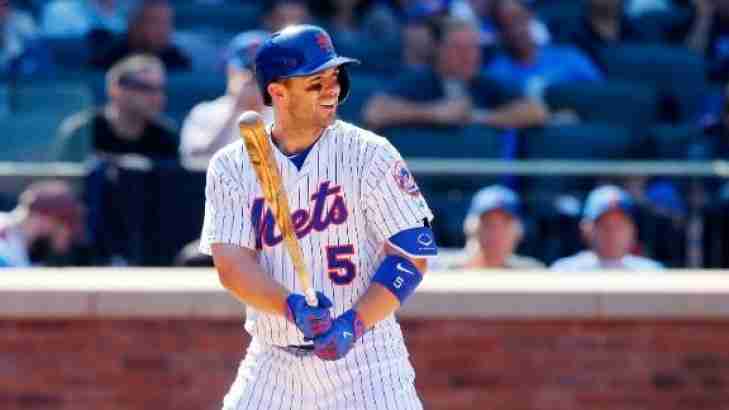
David Wright arrived in Queens in 2004 as the homegrown answer to star-studded rotations, a Virginia kid who took over the hot corner with a mix of high-frequency production and a clean-cut, charismatic style. Although some critics hesitated to rank him among the NL's top players, he proved them wrong over fourteen seasons by dismantling Mets' all-time offensive records. He was the franchise’s heart through 2006 highs and 2015 grit, earning the nickname "Captain America.”
Wright, debuting at 21, showcased a high-frequency ability to drive the ball all fields, with a .306 average and 102 RBIs in 2005. He proved a versatile threat, notably making a legendary barehanded catch in San Diego. This established him as a star capable of leading the Mets’ middle order for a decade.
During 2007-2008, he had two of the greatest seasons by a third baseman in New York history. In 2007, he joined the 30/30 club (30 home runs and 34 stolen bases), batting .325, and winning a Gold Glove and Silver Slugger. In 2008, he hit 33 homers with 124 RBIs, solidifying his role as a key offensive contributor. He was also a top MVP candidate, helping a team transitioning into Citi Field.
Between 2005 and 2012, he was a high-volume contributor who surpassed the 100-RBI mark five times and earned seven All-Star selections. While he was a technical master at the plate, he also showed the organization specialized leadership, being named the fourth captain in franchise history in 2013.
His career was tragically cut short by spinal stenosis, turning every game into a battle against his body. After leading the 2015 World Series with a key home run, his physical toll grew, causing him to miss nearly all of 2017 and 2018 seasons. Many wondered if "The Captain" would ever return to Citi Field, a harsh turn for a player known for his reliability.
The end came in September 2018. In a farewell that felt like an honoring for Mets fans, Wright returned for two final games to say goodbye to the only fanbase he ever knew. While he only recorded one plate appearance in his final start, the standing ovation lasted long enough to remind everyone that his legacy wasn't about the box score; it was about the dignity he brought to the uniform. He retired with a career .296 average and 242 home runs,
In 2023, when Wright was inducted into the Mets Hall of Fame, followed by the official retirement of his number 5 in 2025.
2. Dwight Gooden
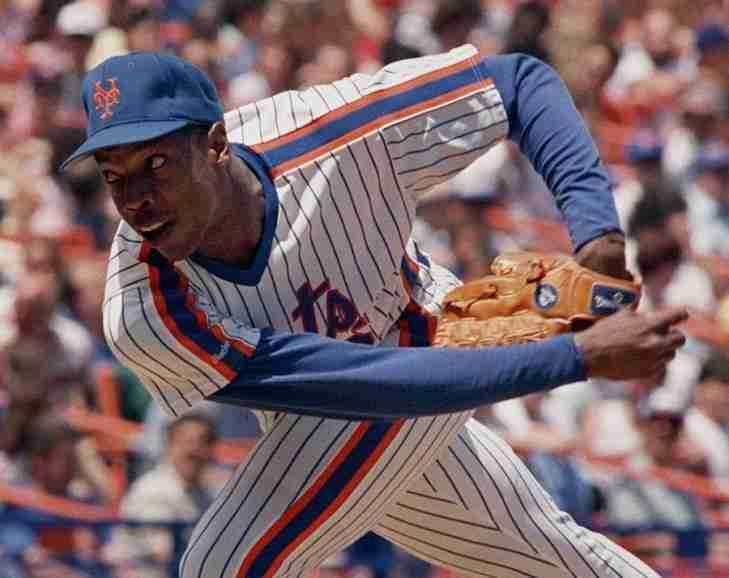
In 1984, Dwight Gooden came to Flushing as a nineteen-year-old phenom with a high-octane fastball and a curveball so sharp it was nicknamed "Lord Charles." While many fans look back at his career through the lens of a "what if" story, his initial seasons provided a brand of dominance that effectively paralyzed the National League.
In his debut season, Gooden exhibited a remarkable capacity to overpower hitters, earning the National League Rookie of the Year Award while leading the league in strikeouts (276), FIP, and WHIP. He immediately demonstrated to the organization that he was an elite talent by finishing second in the Cy Young Award voting at only 19 years of age. This exceptional breakout performance established a high-caliber baseline, rendering him the most formidable young pitcher in baseball and laying a solid foundation for a Mets rotation designed to dominate over the coming decade.
In his sophomore campaign, Gooden put forth what many consider the greatest single season by a pitcher in the modern era. That summer, he showcased a total mastery of the strike zone to capture the National League Cy Young Award, winning the Triple Crown of pitching by leading the league in wins (24), strikeouts (268), and a staggering 1.53 ERA. His 12.2 bWAR that season remains a historic outlier, reflecting a level of efficiency that saw him shave a full run off his previous year’s ERA. He was a high-caliber engine of dominance, single-handedly turning Shea Stadium into a "K-Corner" carnival every five days.
His 1985 campaign was his peak at age 20, but he was a mainstay in the late 1980s. He contributed to the 1986 World Series win, with 17 wins and veteran presence to anchor the clubhouse. Despite personal struggles affecting consistency, he achieved three more top-ten Cy Young finishes as a Met, demonstrating overlooked durability.
His tenure reached a crossroads as he shifted from a teenage superstar to a craftier right-hander. Between 1987 and 1991, Gooden was a high-volume winner, with 18 wins in 1988 and 19 in 1990. Although his raw velocity declined, his tactical value remained elite, consistently eating innings and keeping the Mets in the NL East race. He left Queens with 157 wins and 1,875 strikeouts, reflecting a career many players only dream of.
Gooden’s service ended with a bittersweet departure after the 1994 season, but his bond with Queens fans remained strong. Known as "Dr. K," he defined New York sports in the 80s. He was inducted into the Mets Hall of Fame in 2010, and his number 16 was retired in 2024, cementing his legacy. With the Mets (1984–1994), Gooden's record was 157-85, with 1,875 strikeouts and a 3.10 ERA.
1. Tom Seaver
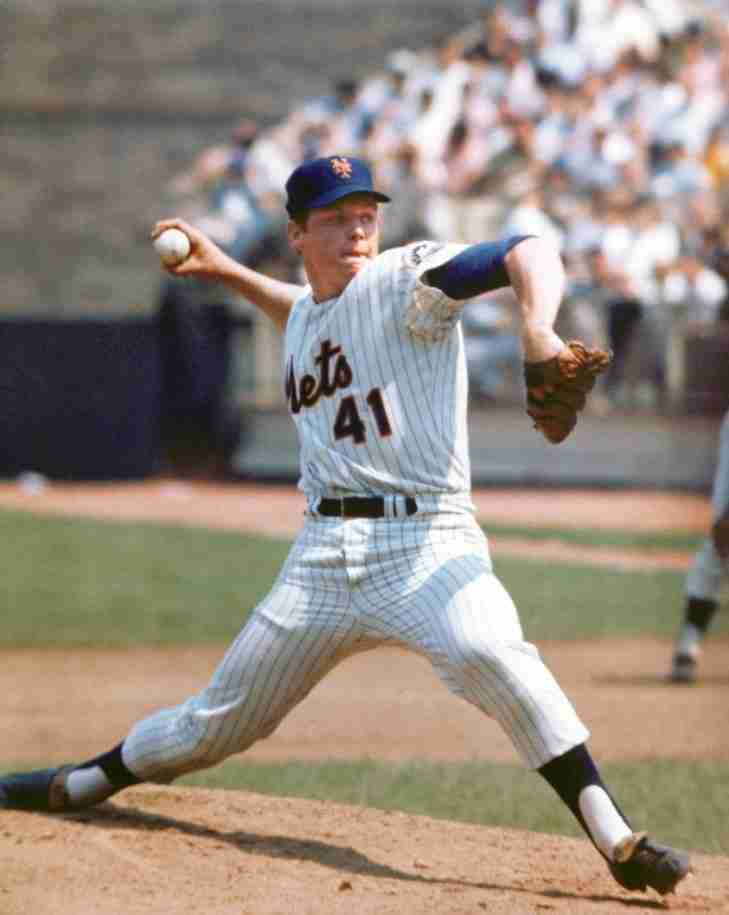
It was like a bolt of lightning when Tom Seaver arrived in Queens in 1967. He was the man who would save a franchise that had spent its first five years of existence setting records for creative ways to lose. While the Mets were still very much the "Lovable Losers" when he debuted, he immediately provided a brand of professional, high-velocity pitching that demanded a change in the clubhouse culture. For twelve total seasons in a Mets uniform, he operated as the undisputed "Franchise," standing as the foundational pillar who proved that greatness was actually possible in Flushing.
Seaver exploded on the scene as the National League Rookie of the Year for a team that still finished in the cellar. Seaver consistently dominated without run support, earning All-Star nods in his first two seasons. He proved he was not just a talented pitcher but a strategic tactician, viewing each start as a battle of wits. This established a strong foundation for a rotation that was becoming league envy.
In 1969, Seaver was the master architect of what was the greatest turnaround in baseball history. That summer, he demonstrated mastery on the mound, winning 25 games and his first NL Cy Young, leading a young team to a surprising World Series victory. He propelled the Mets from 100-loss inadequacies to champions in two years, giving the city its first baseball glory since the Dodgers and Giants left. Seriously, that year will never be forgotten.
The early 1970s saw Seaver enter a run of dominance that felt almost unfair to the rest of the league. On April 22, 1970, he performed a total demolition of the San Diego Padres, striking out 19 batters, including a record-setting ten in a row to end the game. He followed that in 1971 with what many statisticians consider his technical masterpiece: a league-leading 1.76 ERA and 289 strikeouts. Despite his 10.2 bWAR that year, the voters somehow gave the Cy Young to Fergie Jenkins, an injustice that didn’t stop Seaver from being the most feared man on any mound in New York.
His time in Queens reached another peak in 1973, a year when he carried the "Ya Gotta Believe" Mets on his back during a frantic September push. He captured his second Cy Young Award while leading the National League in ERA (2.08) and strikeouts (251), proving himself a high-stakes performer as he led the Mets through a grueling postseason all the way to Game 7 of the World Series. He demonstrated the organization his tireless durability by tossing 290 innings, serving as a human firewall against the rest of the National League's offenses.
By 1975, Seaver was firmly established as a premier superstar, capturing his third Cy Young Award with a league-best 22 wins and 243 strikeouts. Even as the team around him began to fluctuate, he remained a professional mainstay, providing a high-quality foundation by frequently driving in his own runs or pitching deep enough to save a taxed bullpen
In 1977, Seaver WAS the Mets, so what transpired during the season had a title all its own: “The Midnight Massacre”.Following a public and bitter contract dispute with Mets Chairman M. Donald Grant, who apparently treated the team’s payroll like he was personally paying in nickels, traded Seaver to the Cincinnati Reds. The trade was so unpopular that it basically caused a widespread slump in morale at Shea Stadium, as fans were forced to watch "The Franchise" pitch in a different uniform while the Mets spiraled back into the basement.
Late in his career, Seaver had a brief homecoming in 1983, showing he still had high-quality craft at age 38. He posted a 3.55 ERA over 231 innings, but the Mets' mistake in leaving him unprotected in a free agent draft led to the White Sox taking him. This forced their icon to win his 300th game in a Sox uniform, not at Shea.
In 1988, when the Mets retired his number 41, it was the final punctuation on a journey that culminated in his 1992 induction into the Baseball Hall of Fame. At the time, he entered Cooperstown with a staggering 98.8% of the vote, the highest percentage in history for over two decades. Seaver compiled 198 wins, 2,541 strikeouts, and three Cy Young Awards, and a World Series.
Stuck on You
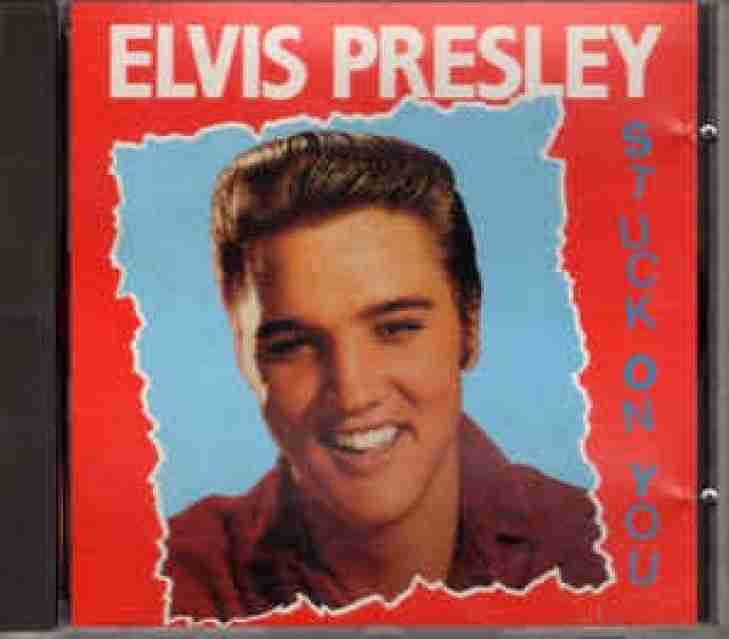
Elvis Presley
Stuck On You
