


Site Admin
21. Cleon Jones
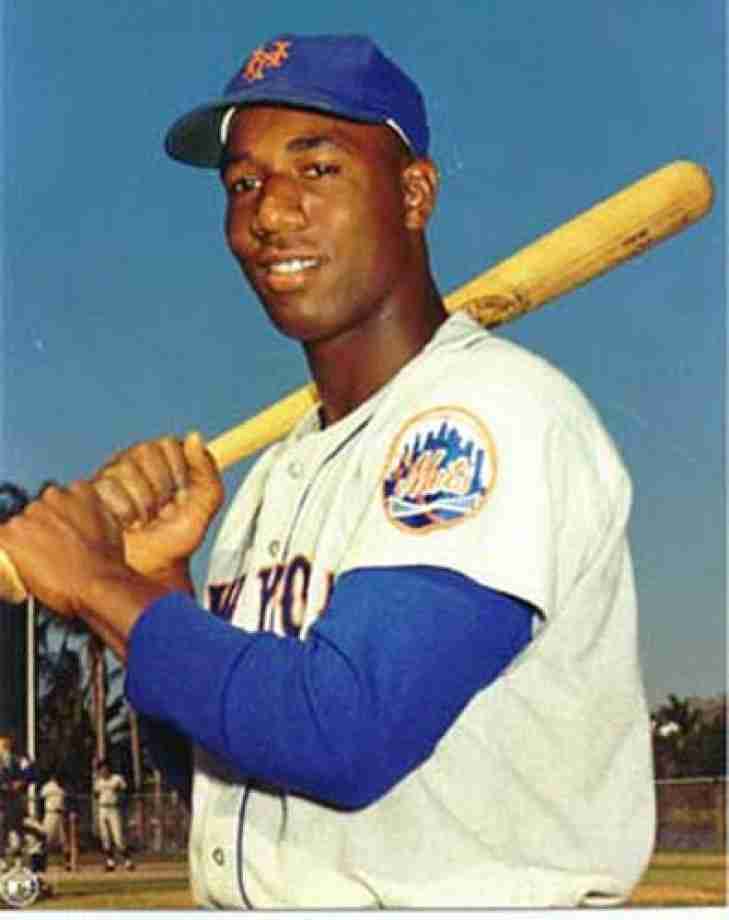
Cleon Jones entered Shea Stadium's grass in 1963 as a talented, multi-sport athlete from Alabama, who would become the key offensive force during the franchise’s initial golden era. Although history often remembers his famous kneeling catch on the outfield dirt, Jones was the driving competitive spirit of the team well before their success was celebrated.
Jones’ New York highlight peaked in 1969 when he made contact hitting, earning his first All-Star and battling for the National League batting crown. He hit .340 with a .422 on-base percentage, setting a franchise record for nearly 30 years. He was a key player with 164 hits and 75 RBI, propelling the team to 100 wins. Jones cemented his status as a New York icon through October highlights beyond his regular-season brilliance. He hit .429 in the NLCS against Atlanta and created a famous World Series moment in Game 5 when manager Gil Hodges proved Jones was hit in the foot by showing shoe polish on the baseball. Moments later, Jones scored the tying run and later made the final out in left field, sliding to his knees in ecstasy as Shea Stadium erupted.
Jones was a steady contributor who maintained high production into the next decade, batting .319 in 1971 and helping guide the Mets to the 1973 Fall Classic during the "Ya Gotta Believe" pennant run. His career in Flushing ended in July 1975 after an injury-plagued stretch and a dispute with management. Time healed wounds, and in 1991, the Mets inducted him into their Hall of Fame.
Overall, Jones compiled 1,188 hits, 93 home runs, and a .281 batting average.
22. Bud Harrelson
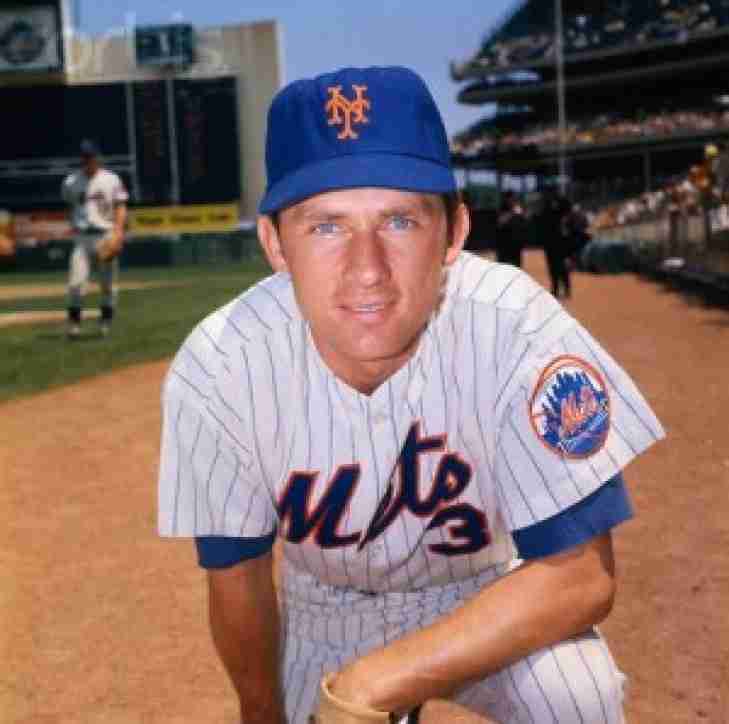
Bud Harrelson made his debut with the New York major league team in 1965. He was a small, wiry shortstop who became the key defensive player for over a decade. Though he often joked about his limited hitting ability, Harrelson was a hardworking and reliable presence for the franchise during its most celebrated victories.
Harrelson had his peak seasons in 1970 and 1971, earning consecutive All-Star titles primarily for his exceptional defense. In 1971, he demonstrated remarkable efficiency, leading Major League fielders in Defensive bWAR and winning the National League Gold Glove Award. As a consistent professional, he often made challenging plays look effortless, notably setting a franchise record by playing 54 straight error-free games at shortstop.
Harrelson, with a .234 batting average as a Met, was a high-energy spark plug at the bottom of the order. He was vital to the 1969 "Miracle Mets," helping ignite their summer run and anchoring the infield during their World Series victory over Baltimore. He demonstrated grit again in the 1973 pennant race, famously engaging in a bench-clearing NLCS brawl with Pete Rose for refusing to back down. His presence drove wins; in 1973, the Mets went 59-43 with him on the field, showing his high-leverage impact.
His run with the Mets closed just before the 1978 season when he was traded to the Philadelphia Phillies. In New York, Harrelson had 1,029 hits and was inducted into the Mets Hall of Fame in 1986. Notably, he was New York’s third-base coach that year, when they won their third World Series Championship.
23. Mookie Wilson
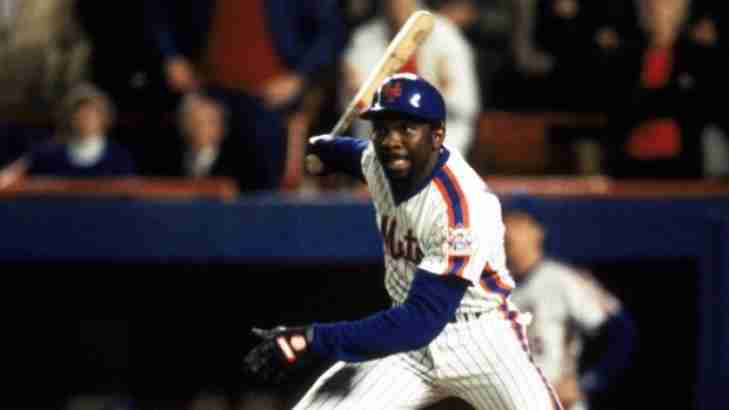
How can you not love a guy named Mookie?
You have to love him, and even if Mookie Wilson was actually named “Sour Bastard”, you would still love the guy because he had one of the most positive and infectious attitudes in Baseball and is easily one of the most popular players in Mets history.
Debuting in 1980, Wilson established himself as a key player by consistently leading the team with his speed, recording at least 20 stolen bases for seven straight seasons. His most exceptional period was between 1982 and 1984, when he became one of the top baserunners, surpassing 45 stolen bases each year and setting a franchise record with 58 in 1982. Known for his speed, he often turned singles into doubles and challenged outfielders' arms, ultimately retiring as the franchise's all-time leader in stolen bases (281) and triples (62).
While Wilson’s speed was his defining trait, he was also a highly effective hitter, with 1,112 hits and 592 runs scored for the Mets. His most significant contribution came on October 25, 1986, in the bottom of the 10th inning of Game 6 of the World Series. After a tough, ten-pitch duel with Bob Stanley, Wilson demonstrated remarkable composure by fouling off difficult pitches and working the count. Moments later, he made the famous, slow ground ball that slipped through the legs of Boston first baseman Bill Buckner—an unforgettable play that completed a dramatic three-run rally and sparked one of the most memorable moments in New York sports history.
In August 1989, the Mets shifted their outfield configuration after acquiring Juan Samuel, and the front office traded the veteran icon to the Toronto Blue Jays in exchange for pitcher Jeff Musselman. Wilson was added to the Mets Hall of Fame in 1996.
24. John Stearns
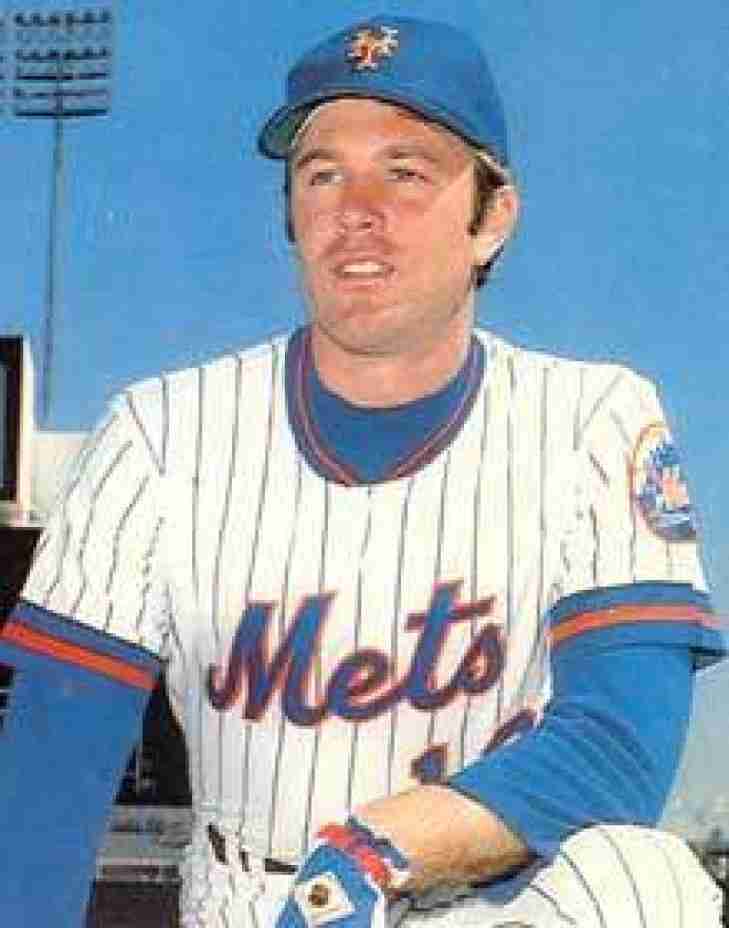
John Stearns joined the organization in December 1974 via a massive six-player blockbuster trade that sent beloved relief ace Tug McGraw to the Philadelphia Phillies. Stearns, a former standout gridiron defensive back at the University of Colorado who was also drafted into the NFL, brought a raw, contact-sport intensity to the diamond.
Stearns was a remarkable athlete, combining a strong defensive arm with impressive, speedy base-running skills. During the 1978 season, he made history by stealing 25 bases, setting a modern National League single-season record for catchers that lasted for more than twenty years. He complemented his speed with a focused batting style, achieving career highs with 15 home runs and 73 RBIs, proving himself to be a true dual-threat player.
Although the Mets faced several tough, ninety-loss seasons in the late 1970s, Stearns remained a consistent professional whose individual talent stood out among his peers. He received four notable National League All-Star selections (1977, 1979, 1980, and 1982), often being the sole representative of the team. His aggressive playing style peaked in 1982, when he achieved a career-high batting average of .293 and hit 25 doubles in only 98 games.
Elbow and shoulder ailments severely limited his playing time after 1982. He made his final big-league appearance in September 1984, marking the definitive end of a career in which he played in all but one of his 810 major-league games for the Mets. He departed Queens with 695 hits and a highly respectable .341 on-base percentage.
