


Site Admin
47. Tommie Agee
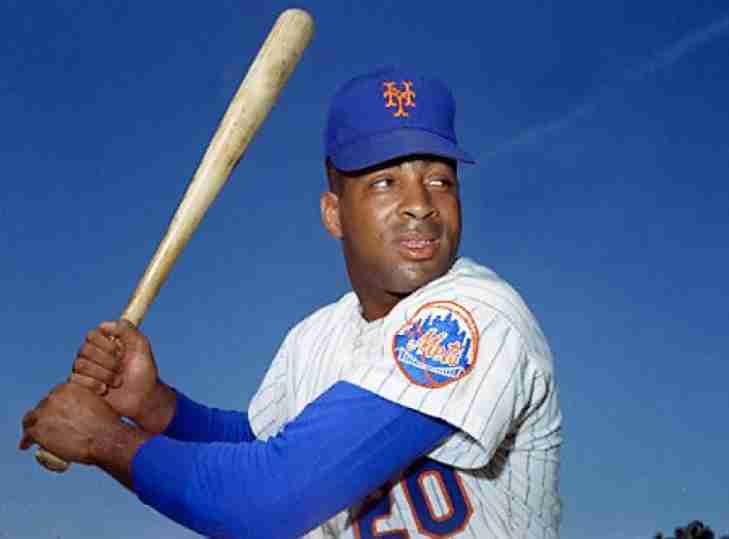
Tommie Agee arrived in New York before the 1968 season through a high-profile trade with the White Sox, bringing high expectations as a former American League Rookie of the Year. His first summer in Queens, however, was disastrous; he struggled with a severe hitting slump and was hit by a terrifying beanball from Bob Gibson, finishing with a poor .217 batting average. Despite this tough beginning, that difficult first year laid the groundwork for one of the most remarkable turnarounds in franchise history, reflecting the team's own dramatic evolution.
The 1969 season made Agee a legendary figure in Mets history. Once fully acclimated to the National League, the lively center fielder became the driving force behind the "Miracle Mets." On April 10, he hit a historic, long-distance home run off Montreal's Larry Jaster into the upper deck of left-field at Shea Stadium, a shot so iconic that the organization marked the spot with a white line on the seat to honor where it landed. Agee led the team with 26 home runs, 97 runs scored, and 76 RBIs, helping the Mets climb out of last place and finishing sixth in the National League MVP voting.
That regular-season surge was just a warm-up for his legendary showing in the 1969 World Series against the heavily favored Baltimore Orioles. In Game 3, Agee delivered what is arguably the greatest single-game performance in Fall Classic history. He started by hitting a solo home run in the first inning to set the tone, then made two incredible diving catches in center field, first robbing Elrod Hendricks in the snow-coned webbing of his glove, and later sliding across the warning track to prevent Baltimore from scoring with the bases loaded.
He maintained a high level of production into 1970, delivering a strong season with a .271 batting average, 24 home runs, 31 stolen bases, and earning a Gold Glove for his defense. Although ongoing knee injuries gradually reduced his speed and power during his last two seasons in New York, limiting his total with the franchise to 632 hits and a .329 on-base percentage, his most significant contributions were integral to the team's first championship identity.
After the 1972 season, the Mets traded him to the Houston Astros, ending his energetic five-year tenure in New York. While advanced metrics may see his career stats as humble, the franchise understood that his impact went beyond traditional box scores. Almost thirty years after his remarkable defensive plays helped win a title, the organization honored his legacy by inducting Agee into the New York Mets Hall of Fame in 2002.
44. Bob Ojeda
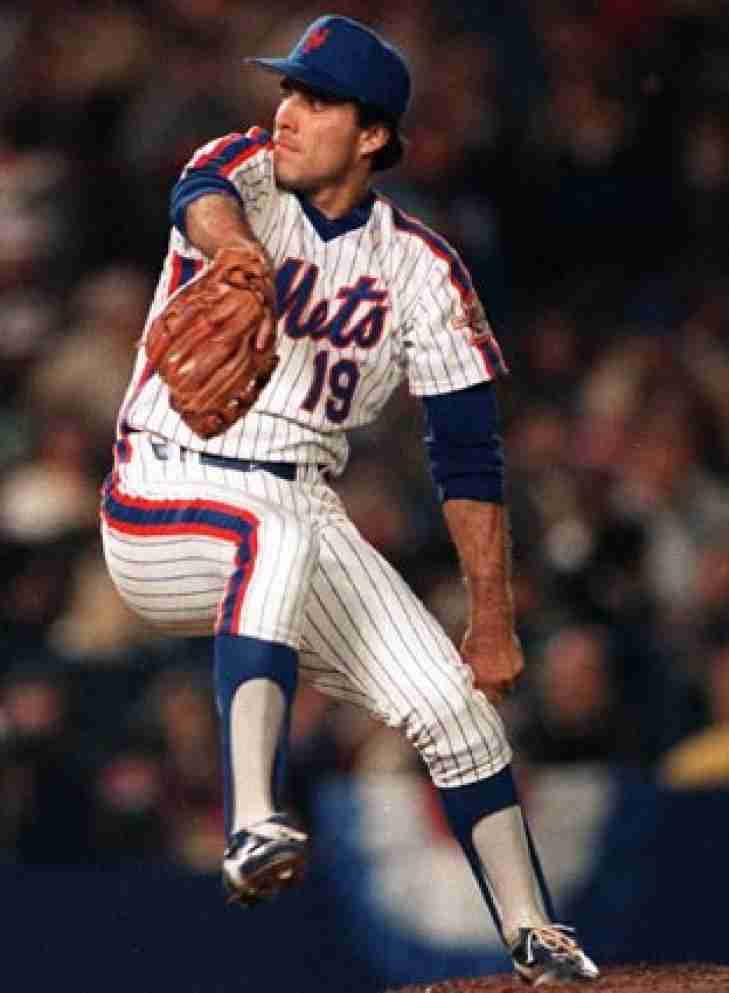
Bob Ojeda's arrival in Flushing before the 1986 season completed the roster that was on the verge of winning a championship. Traded from the Boston Red Sox in a major eight-player deal the previous December, the experienced left-hander joined a star-studded rotation that included Dwight Gooden, Ron Darling, and Sid Fernandez. Although those pitchers had higher velocity, Ojeda contributed a smart, competitive approach and a lethal changeup, providing the perfect complement to the staff.
His first summer in New York became a defining moment in his career. As the 1986 Mets dominated the National League, Ojeda stood out as the most dependable and consistent pitcher on the team, leading the league with an impressive 18-5 record. He also achieved a career-best 2.57 ERA, confounding opposing lineups over 217.1 innings and finishing fourth in the National League Cy Young Award voting.
When October arrived, destiny brought an exciting showdown against his former club in the World Series. Ojeda was a key player during that unforgettable postseason; he kept Houston quiet in the NLCS, then stepped up to start Game 3 at Fenway Park with the Mets behind two games to zero. Under huge pressure, he delivered a brilliant, one-run performance over seven innings, swinging the series in favor of the Queens team and ultimately helping them secure their second world championship.
In subsequent seasons, however, his resilience was tested by unusual and tragic events. In September 1988, while trimming hedges at his home, Ojeda endured a severe accident that cut off the top of his left middle finger. Medical professionals managed to reattach the finger, and through strong determination, he returned to the mound by mid-1989. Although he lost some sensation in his breaking pitches, he adjusted his style and achieved a steady 10-11 record with a 3.47 ERA over 31 starts in 1990.
His five-year stay in New York drew to a close after that 1990 campaign, when the front office traded him to the Los Angeles Dodgers. He departed Shea Stadium with a 51-40 record and a 3.12 ERA as a Met.
45. Frank Viola
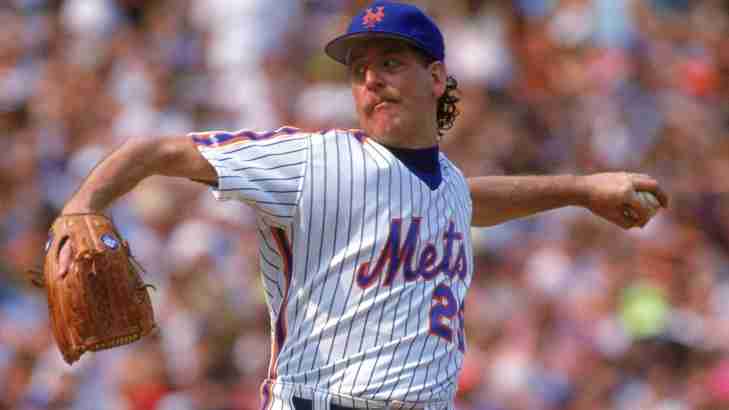
New York’s trade for Frank Viola in Queens in late July 1989 was a clear signal that the front office was pushing all its chips into the center of the table. Fresh off an AL Cy Young campaign in Minnesota, the left-handed ace landed with the Mets in a blockbuster trade that sent five players to the Twins. Viola joined a rotation already featuring Dwight Gooden and Ron Darling, instantly giving New York one of the most formidable pitching staffs in the National League.
His first complete season in Flushing in 1990 served as a distinguished exhibition of his signature changeup. Viola emerged as the primary pitcher of the staff, accumulating a substantial 249.2 innings over 35 starts. He led the National League with 20 victories, received his inaugural National League All-Star selection, and placed a close third in the Cy Young Award voting. His remarkable durability and command resulted in an impressive 2.67 ERA, ranking him second among pitchers in the senior circuit in overall value.
The momentum persisted into the 1991 campaign, during which Viola continued to serve as the focal point of the rotation amid a period of organizational transition. He achieved a second consecutive All-Star selection in July, demonstrating veteran poise at Shea Stadium and stabilizing a fluctuating pitching staff under increasing pressure. Although the team's offense underperformed around him, impeding the prospect of replicating his high win totals from the previous summer, he nonetheless contributed 13 victories and maintained a commendable 3.17 ERA over 232.2 innings.
His tenure in New York concluded promptly after the 1991 season when he transferred through free agency to join the Boston Red Sox. Although his residence in Queens lasted merely two and a half summers, Viola departed with 38 wins, a 3.31 ERA, and an enduring reputation as an elite postseason starter who provided the high-caliber performance for which the Mets had traded.
41. Kevin McReynolds
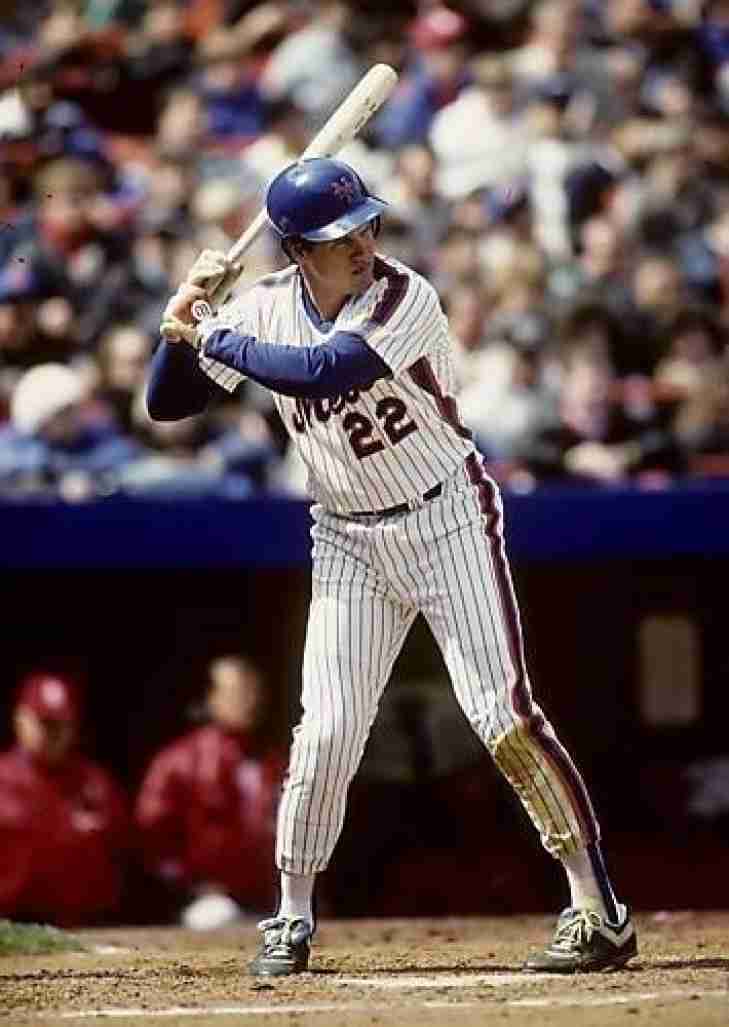
Kevin McReynolds joined the Mets in Flushing before the 1987 season, offering a calm, understated contrast to their often loud clubhouse. Traded from San Diego in a major eight-player deal that sent Kevin Mitchell to the Padres, the quiet outfielder was signed by manager Davey Johnson to support Darryl Strawberry and the defending World Series Champions in the lineup. Unlike many teammates who attracted tabloid attention, McReynolds was a steady presence in left field, providing the Mets with a reliable power threat.
His initial campaign in pinstriped blue and orange validated the trade. McReynolds adapted quickly to Shea Stadium pressure, hitting 29 home runs, driving in 95 runs, and anchoring the middle of the order. He gained a reputation for deceptive athleticism, with a sturdy frame, elite range in the outfield corners, an accurate arm that nailed runners at the plate, and a highly analytical approach to running bases.
During the 1988 season, McReynolds's precise baserunning helped the Mets win the NL East. He stole 21 bases flawlessly, setting a major league record for most successful stolen bases in a season. He also hit .288 with 27 home runs and 99 RBIs, finishing third in NL MVP voting behind Kirk Gibson and Strawberry.
The high level of production stayed consistent over the following two summers. He surpassed 20 home runs for four straight years in New York, hitting 22 in 1989, a season in which he also hit for the cycle against St. Louis, and then adding 24 more in 1990. During this time, he was one of the National League's most underrated defensive players, frequently leading all left fielders in outfield assists and total chances.
As the team's championship window closed, his initial five-year tenure ended after the 1991 season, when the front office traded him to Kansas City in the deal that brought Bret Saberhagen to Queens. However, his relationship with the franchise came full circle in 1994, when the Royals traded him back to New York for a final, brief stint before he retired. He finished his time as a Met with 791 hits and 108 home runs.
