


Site Admin
26. Gary Carter
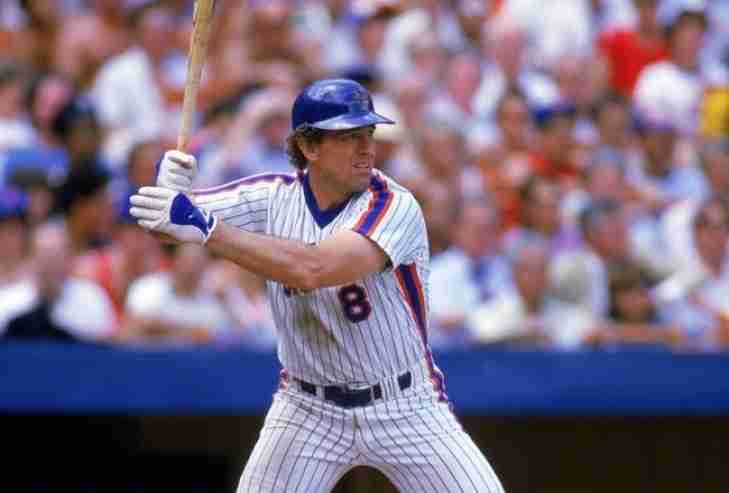
In December 1984, Gary Carter joined the Mets through a major trade with the Montreal Expos, which sent Hubie Brooks, Mike Fitzgerald, Herm Winningham, and Floyd Youmans to Canada. The Mets, an ascending team, lacked an experienced veteran behind the plate, and "The Kid”, considered the best catcher in baseball, came to New York to bring immediate championship experience.
Carter wasted no time, delivering an impressive debut in 1985 by matching his career high with 32 home runs and 100 RBIs, earning a sixth-place spot in the NL MVP voting. He built on this momentum in 1986 with a remarkable season, hitting 24 home runs and accumulating 105 RBIs, while also providing exceptional defensive intelligence that stabilized the pitching staff. His consistent ability to bat in the middle of the order earned him a well-deserved third-place finish in the MVP race, solidifying his status as one of the league's top catchers.
Beyond his basic stats, Carter became a legendary figure in New York through his pivotal moments in the 1986 postseason. He hit a walk-off single in Game 5 of the NLCS against Houston, hit two home runs in Game 4 of the World Series, and famously sparked the crucial two-out rally in the 10th inning of Game 6 with a clutch single to left field. Although he was selected as an All-Star four years in a row from 1985 to 1988 as a Met, his physical performance declined sharply during his last two years, as the demanding nature of catching heavily impacted his knees. He was released after the 1989 season.
While the rank of Carter might seem low, realistically, he was only good for the first half of his half-decade run
The Mets honored Carter with a franchise Hall of Fame induction in 2001, and he was enshrined in the Baseball Hall of Fame in 2003.
28. Jerry Grote
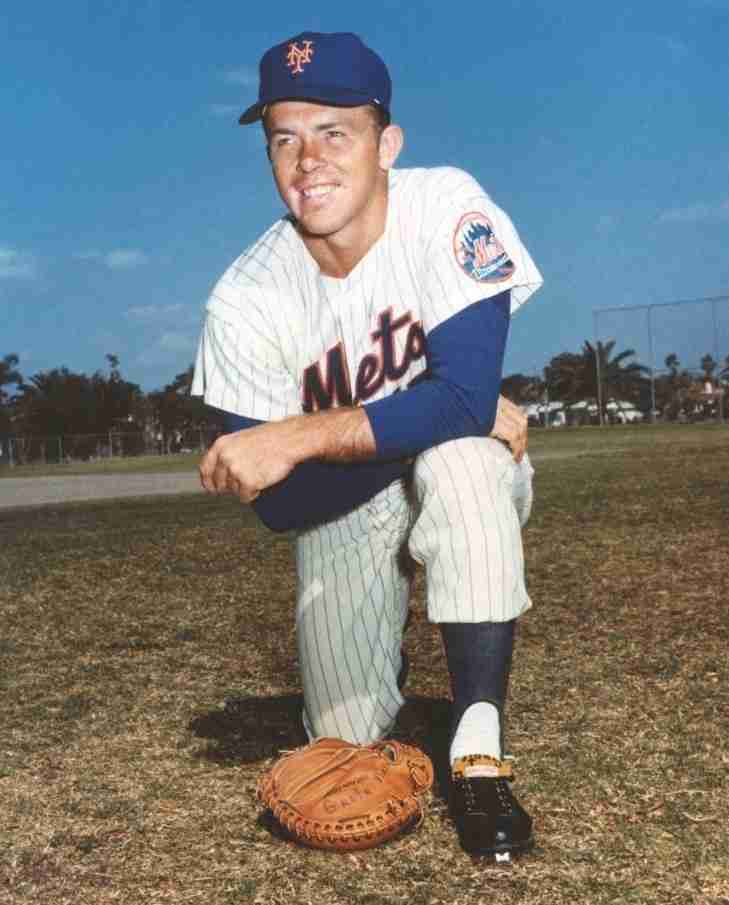
Jerry Grote secured the starting catcher position in Flushing in 1966 after an off-season trade from Houston for pitcher Tom Parsons. A tough, short-tempered Texan, Grote quickly brought a fierce, competitive spirit to an organization used to struggling at the bottom of the National League. Although his batting rarely attracted attention, he was the unchallenged defensive leader during the franchise's initial era of success. With a strong arm and a sharp baseball intellect, he dictated the game’s pace from behind the plate.
In 1969, Grote served as the defensive anchor and pitch caller for the “Miracle Mets”. That summer, he achieved a remarkable .991 fielding percentage and successfully threw out 56.3% of potential base-stealers, showcasing exceptional run prevention that ranked second in the National League. He played every inning of the 1969 postseason, skillfully guiding rising stars like Tom Seaver, Jerry Koosman, and a young Nolan Ryan through the intense pressure of October with veteran composure.
He was named a National League All-Star twice with the New York Mets, notably earning the starting spot in the 1968 midsummer classic after batting over .300 in the first half of the season, and he returned to the team in 1974. A consistent professional, he often delivered in clutch moments, accumulating 994 hits with the Mets and helping lead the team back to the World Series during the 1973 "Ya Gotta Believe" pennant race. His skill was recognized even by the game's top players; Hall of Famer Johnny Bench famously complimented his catching ability, saying that if he and Grote were on the same team, Bench would be forced to play third base.
With John Stearns waiting in the wings, Grote was traded to the Los Angeles Dodgers during the 1977 season.
The Mets inducted Grote into their Hall of Fame in 1992.
27. Ron Darling
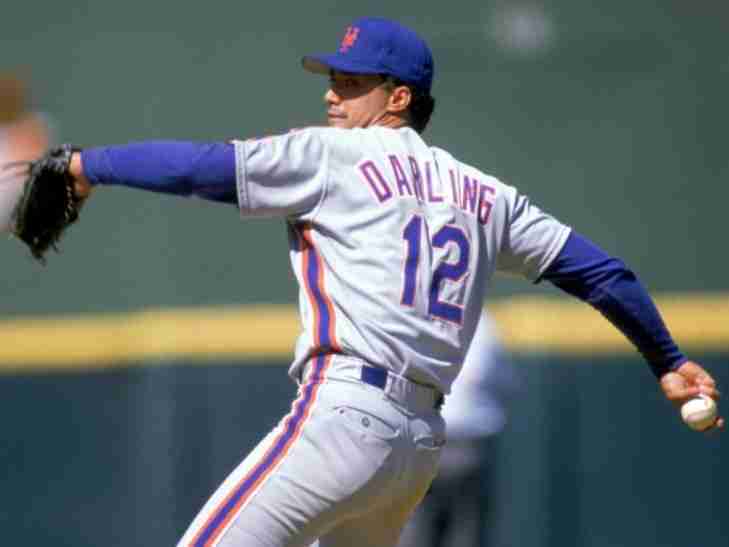
In April 1982, Ron Darling joined the majors as a minor league prospect through a valuable trade with the Texas Rangers, where he was exchanged along with pitcher Walt Terrell for infielder Lee Mazzilli. An Ivy League graduate from Yale with an outstanding athletic background, the right-hander rapidly established himself as a key member of the starting rotation. Although Dwight Gooden dominated the national headlines with his spectacular performances, Darling proved to be a reliable and steady frontline pitcher for the team.
Darling consistently delivered at least 12 wins over six consecutive seasons, leveraging a wide array of pitches and an outstanding pickoff move to weaken opposing offenses. His first major personal achievement came in 1985, when he won 16 games with a remarkable 2.90 ERA, earning his only All-Star nod and cementing his status as a leading pitcher.
He followed that surge with a masterful 1986 season, reaching a 15-6 record and lowering his ERA to 2.81, third best in the league. His performance earned him fifth place in NL Cy Young voting and helped his team win 108 games. In the Fall Classic, he pitched 17.2 innings with just three earned runs, and won Game 4 at Fenway, tying the series.
Darling still contributed significantly to the franchise's identity; he amassed a large number of wins, finishing with a career-high 17 in 1988, and earned a Gold Glove Award in 1989, recognizing him as one of the best fielding pitchers of his era. The story in New York ended when he was traded to the Montreal Expos during the 1991 season.
Darling compiled a 99-70 record, a 3.50 ERA, and 1,148 strikeouts as a Met, and in 2020, he was selected for the franchise’s Hall of Fame.
33. Johan Santana
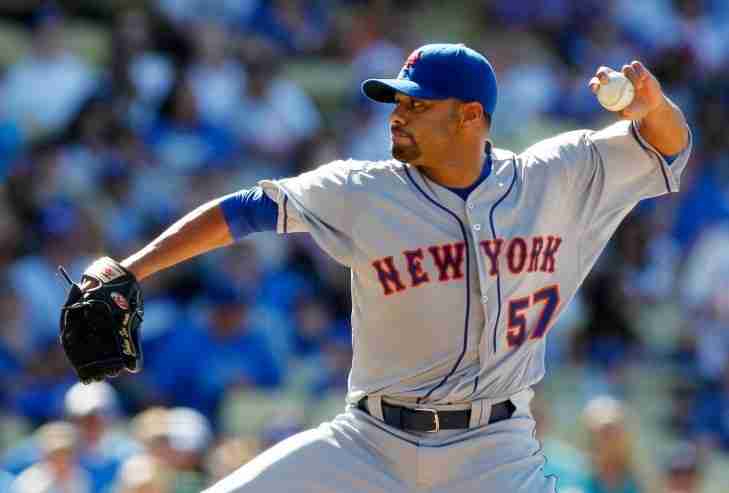
In February 2008, the Mets made a historic, franchise-changing trade with the Minnesota Twins, who sent their star left-hander Johan Santana east in exchange for Carlos Gómez, Philip Humber, Deolis Guerra, and Kevin Mulvey. The Mets quickly signed Santana to a groundbreaking six-year, $137.5 million deal, making him the highest-paid pitcher in baseball at that time. Although many historians associate his peak dominance mainly with his years in Minnesota, it's a significant oversight to ignore the incredible, impactful performances he delivered for New York before his arm injuries.
Santana delivered an outstanding debut in 2008, pitching on short rest at the end of the season and totaling a career-high 234.1 innings. That summer, he reached a peak performance by going 16-7, winning the Major League ERA title with a remarkable 2.53, and setting a franchise record for strikeouts by a left-hander with 206. He finished third in the NL Cy Young voting. Interestingly, his overall 3.18 ERA during his time with the Mets is slightly lower than his legendary years with the Twins, indicating his elite ability to prevent runs.
Severe shoulder injuries and surgeries severely impacted Santana's athletic performance, causing him to miss the entire 2011 and 2013 seasons. Despite these setbacks, he achieved legendary status in franchise history through a remarkable, high-stakes game. On June 1, 2012, after a tough comeback, he took the mound at Citi Field against the St. Louis Cardinals. Ignoring pitch count limits, he dedicated himself completely, throwing 134 intense pitches to secure the first official no-hitter in New York Mets history.
That would be his last great moment in baseball, as the injuries became too much and he retired in 2014 after missing the 2013 campaign. With the Mets, Santana had a 46-34 record.
