


Site Admin
Cathy's Clown
The Everly Brothers
Cathy’s Clown
36. Bret Saberhagen
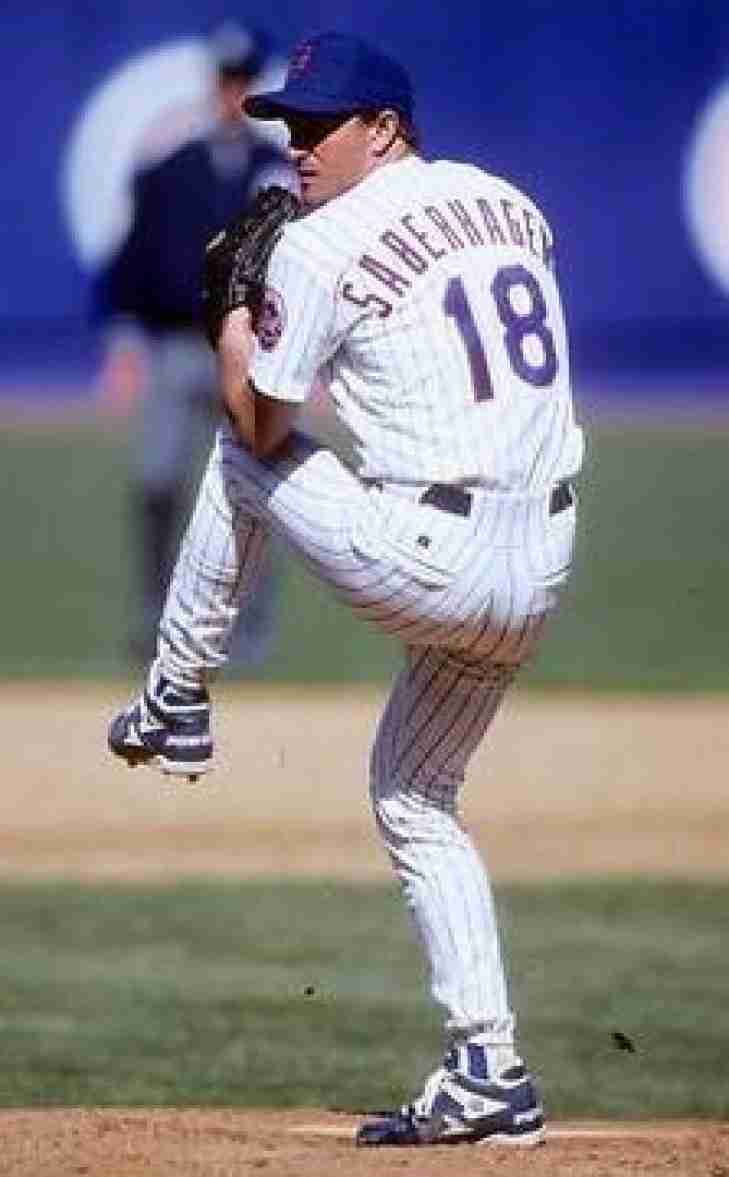
Bret Saberhagen joined the Mets in December 1991 through a blockbuster trade with the Kansas City Royals, trading Bill Pecota for Kevin McReynolds, Gregg Jefferies, and Keith Miller. With two American League Cy Young awards and a World Series MVP, he was brought in to be a co-ace with Dwight Gooden.
During the shortened 1994 strike season, Saberhagen delivered a remarkable display of pitching efficiency. Despite a hitter-friendly environment, he posted an impressive 14-4 record with a stellar 2.74 ERA. His control was nearly unmatched; he led the National League by walking only 1.04 batters per nine innings and established a major league record with an 11.00 strikeout-to-walk ratio, striking out 143 batters while issuing just 13 walks. This performance far surpassed the control metrics of his Cy Young-winning seasons in Kansas City, earning him an All-Star spot and finishing third in the NL Cy Young voting.
In July 1995, as the Mets were out of playoff contention and aimed to reduce payroll to focus on developing youth, the front office traded the veteran pitcher to the Colorado Rockies for two prospects.
As a Met, Saberhagen posted a record of 29-21 with a 3.16 ERA.
31. Jesse Orosco
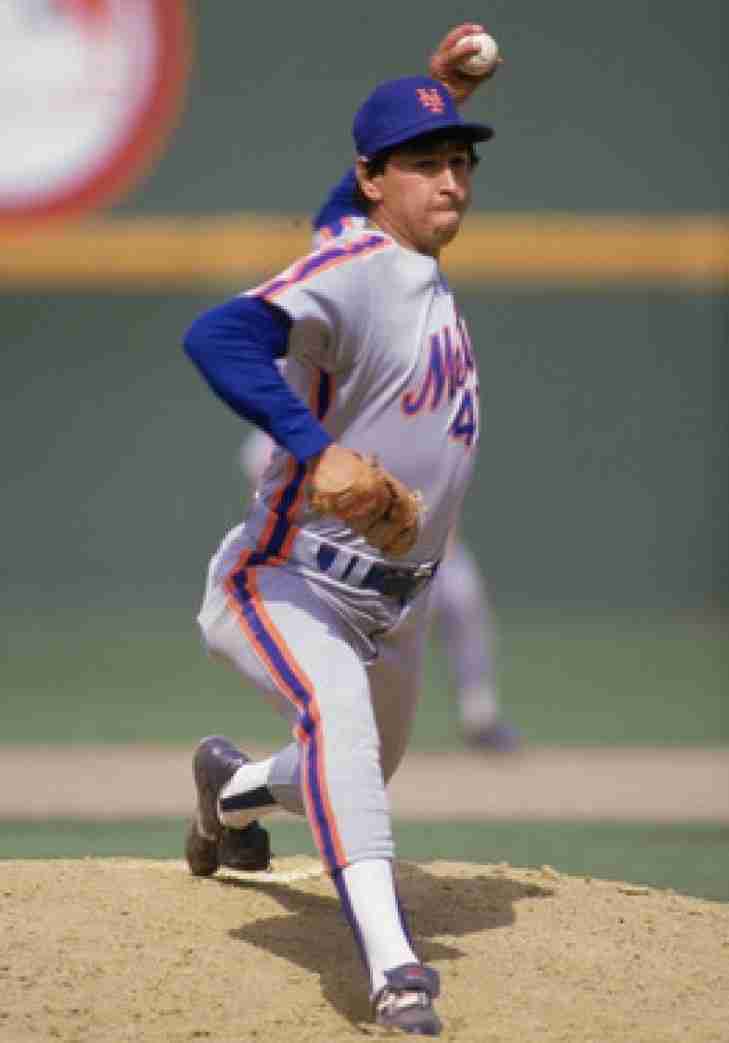
Jesse Orosco joined the Mets as a prospect in February 1979 via a trade with the Minnesota Twins, primarily to acquire veteran starter Jerry Koosman. Initially seen as a minor part of the deal, the young left-handed reliever made it onto the major league roster by April. Over his seven full seasons with the Mets, he became the quintessential example of a modern high-leverage bullpen pitcher.
By 1982, Orosco had secured a permanent place on the main roster, but his standout season came the following year. In 1983, he pitched 110 innings over 62 games, posting an impressive 13-7 record with 17 saves. His exceptional 1.47 ERA set a standard for Mets relievers, earning him his first All-Star appearance and finishing third in NL Cy Young Award voting. He maintained this high level of performance, earning a second All-Star selection in 1984 by saving a career-best 31 games and solidifying his reputation as the top left-handed closer.
Orosco achieved enduring baseball fame through his extraordinary workload during the 1986 postseason. In the NLCS against Houston, he made history as the only relief pitcher with three wins in a single playoff series. He continued his impressive run in the World Series against Boston, pitching 5.2 scoreless relief innings and providing the Mets with critical late-inning defense. Orosco is legendary in the city’s history as the pitcher who threw the final, decisive pitches in both the NLCS and the World Series. The memorable image of him striking out Marty Barrett to end Game 7, tossing his glove into the sky, and collapsing onto his knees as Gary Carter sprinted into a joyous hug is the symbol of the 1986 championship era.
The Mets traded Orosco to the Los Angeles Dodgers after the 1987 season, and the southpaw went on to pitch until 2003, but his run in New York will always define him. Orosco compiled a 47-47 record, 107 saves, and a stellar 2.73 ERA as a Met.
32. Tug McGraw
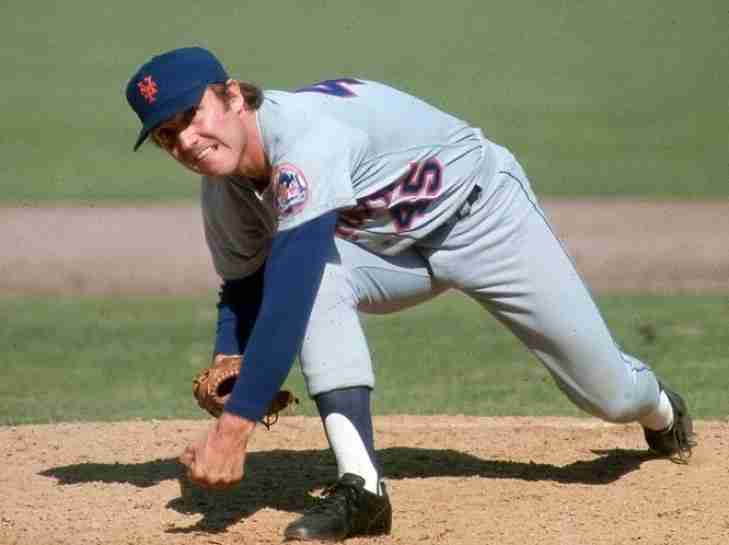
Tug McGraw debuted for the New York Mets in 1965, but it was not until 1969 that he put himself on the baseball map. Of course, many of the Mets in 1969 did the same thing!
During the 1969 season, McGraw delivered a remarkable performance, finishing with a 9-3 record, 12 saves, and a 2.24 ERA. He was exceptional in the final stretch, allowing only two earned runs in his last 34 innings to help the New York Mets catch the Chicago Cubs. While pitchers like Tom Seaver and Jerry Koosman took the spotlight in October, McGraw’s dependable left arm provided the Mets with a vital safety net from the bullpen throughout the postseason. This steadiness contributed to their surprising five-game victory over the heavily favored Baltimore Orioles, clinching the 1969 World Series title.
After winning the initial world title, McGraw established himself as one of the top late-inning pitchers in the National League. His peak years were 1971 and 1972, during which he pitched 111 innings with a remarkable 1.70 ERA in 1971. In 1972, he earned his first All-Star spot, posting a stellar 1.69 ERA and leading his team with 27 saves.
Beyond his impressive statistics, McGraw secured his place as a legendary figure by taking on the emotional leadership role in the clubhouse. During the historic late-season push in 1973, he climbed onto a locker room chair and passionately shouted the phrase that would become a lasting franchise motto: "Ya Gotta Believe!" This rallying cry was supported by his relentless work ethic and durability, as he saved 25 games to help the underdog Mets reach another World Series. His outstanding performances in 1972 and 1973 earned him widespread respect among peers, earning him votes for the National League MVP in both years.
The Mets traded McGraw to the Philadelphia Phillies in 1974, where he would play a huge part in their first World Series win in 1980. With the Mets, McGraw had a 47-55 record with 94 saves. He would later enter the Mets Hall of Fame in 1993.
