


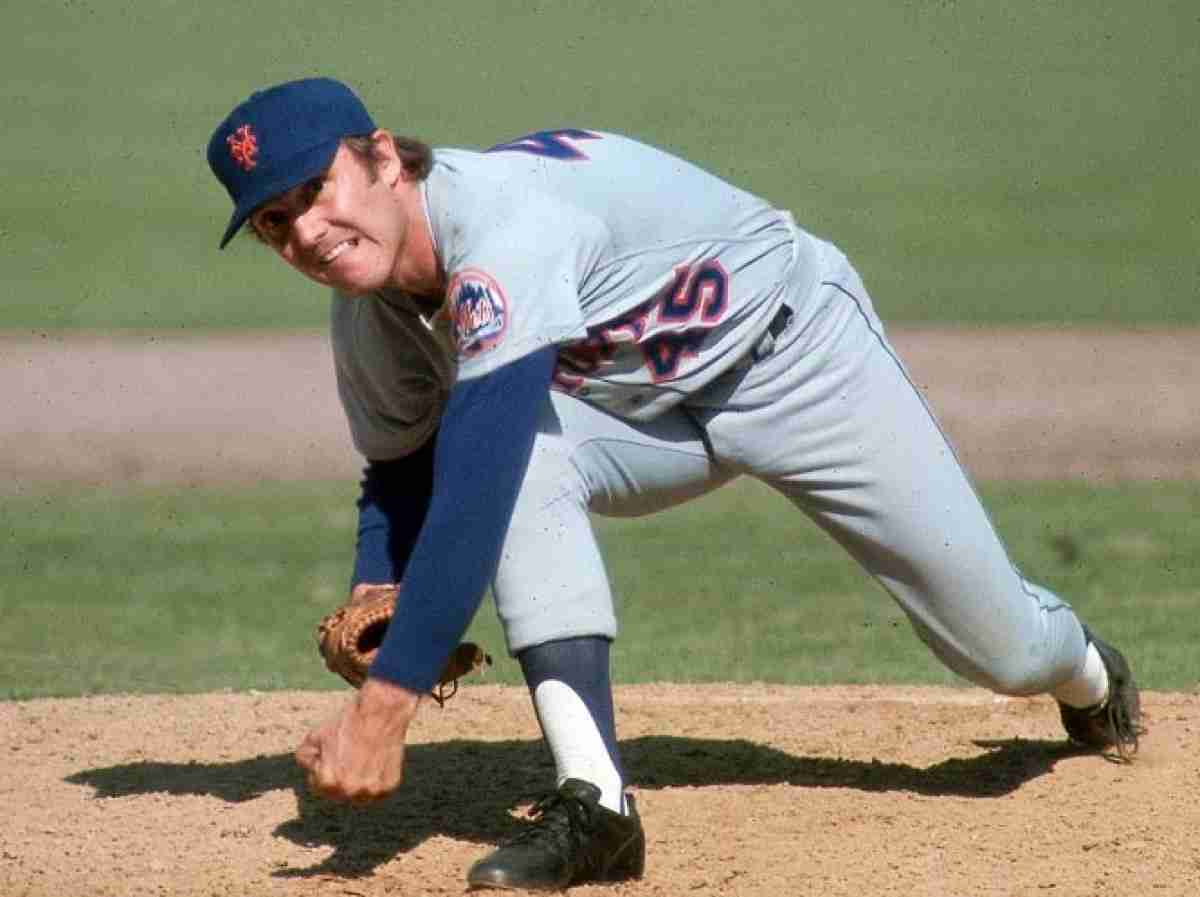


Tug McGraw debuted for the New York Mets in 1965, but it was not until 1969 that he put himself on the baseball map. Of course, many of the Mets in 1969 did the same thing!
During the 1969 season, McGraw delivered a remarkable performance, finishing with a 9-3 record, 12 saves, and a 2.24 ERA. He was exceptional in the final stretch, allowing only two earned runs in his last 34 innings to help the New York Mets catch the Chicago Cubs. While pitchers like Tom Seaver and Jerry Koosman took the spotlight in October, McGraw’s dependable left arm provided the Mets with a vital safety net from the bullpen throughout the postseason. This steadiness contributed to their surprising five-game victory over the heavily favored Baltimore Orioles, clinching the 1969 World Series title.
After winning the initial world title, McGraw established himself as one of the top late-inning pitchers in the National League. His peak years were 1971 and 1972, during which he pitched 111 innings with a remarkable 1.70 ERA in 1971. In 1972, he earned his first All-Star spot, posting a stellar 1.69 ERA and leading his team with 27 saves.
Beyond his impressive statistics, McGraw secured his place as a legendary figure by taking on the emotional leadership role in the clubhouse. During the historic late-season push in 1973, he climbed onto a locker room chair and passionately shouted the phrase that would become a lasting franchise motto: "Ya Gotta Believe!" This rallying cry was supported by his relentless work ethic and durability, as he saved 25 games to help the underdog Mets reach another World Series. His outstanding performances in 1972 and 1973 earned him widespread respect among peers, earning him votes for the National League MVP in both years.
The Mets traded McGraw to the Philadelphia Phillies in 1974, where he would play a huge part in their first World Series win in 1980. With the Mets, McGraw had a 47-55 record with 94 saves. He would later enter the Mets Hall of Fame in 1993.

Comments powered by CComment