


Site Admin
10. Jimmy Rollins
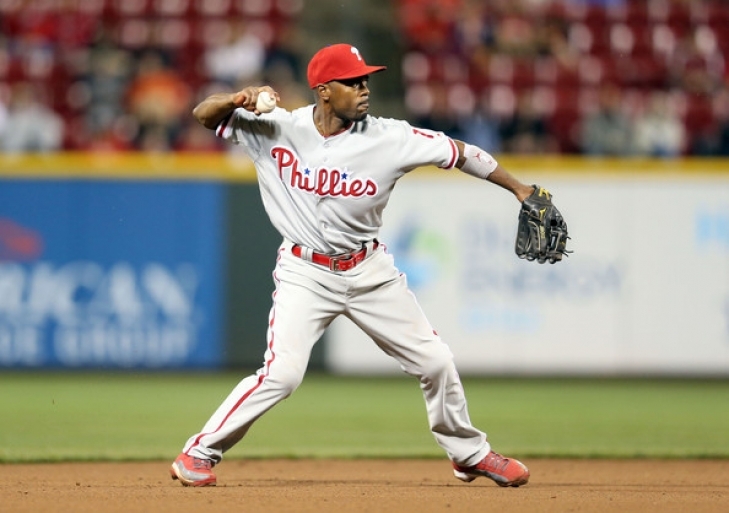
Achieving the distinction of being the sole top-ranked player on a franchise's all-time hits leaderboard is an extraordinary accomplishment for any baseball athlete. Doing so within an organization established in professional hits since 1883, an era that includes legendary figures such as Mike Schmidt, Richie Ashburn, and Ed Delahanty, approaches the realm of the surreal. Nonetheless, this is precisely the position held by James Calvin "Jimmy" Rollins. For nearly fifteen years, the dynamic shortstop has served as the rapid, passionate force behind the most enduringly successful period in the history of the Philadelphia Phillies.
Having been raised on the concrete playgrounds of Northern California, Rollins admired the esteemed Rickey Henderson. Throughout his career, he consistently incorporated that same style of intense, unrestrained chaos into the leading position of the Philadelphia Phillies' batting order. He transformed the contemporary leadoff role by integrating exceptional speed with an unexpectedly potent power-hitting capability.
Rollins transformed the basepaths into his personal laboratory, utilizing exceptional internal timing to steal 20 or more bases in 13 of his 14 complete seasons with Philadelphia, three times surpassing the notable 40-steal milestone. He was particularly effective when driving the ball into the gaps, consistently circling the bases to lead the National League in triples on four separate occasions. Similar to his childhood hero, he had the ability to shift the momentum of a game with a single swing, aggressively punishing pitchers by hitting 216 home runs while playing for the Phillies—an all-time franchise record for a switch-hitter.
Nevertheless, constraining "J-Roll" to an offensive catalyst alone underestimates his full genius. On the baseball field, he transformed the shortstop position into a demonstration of athletic mastery. Equipped with a remarkably swift initial movement, exceptional spatial awareness, and a powerful arm, Rollins proficiently deflected hits with ease, earning four National League Gold Glove Awards and establishing a franchise-record defensive standard that contributed to the stability of a championship-caliber pitching staff.
His career reached its peak during a landmark, award-winning 2007 season. In spring, Rollins confidently called the Phillies the "team to beat" in the National League East—and then spent the following six months proving his confidence true. He delivered an extraordinary regular season, playing all 162 games and achieving a rare 20-20-20-20 season (doubles, triples, home runs, and steals). He topped the senior circuit with 139 runs, hit a career-high 30 home runs, and amassed 212 hits with a solid .296 batting average, earning the 2007 National League Most Valuable Player award.
More than just an accumulator of individual hardware, Rollins was a ruthless winner. He was the vocal catalyst that drove the franchise to five consecutive division titles, back-to-back pennants, and the unforgettable 2008 World Series championship.
Advanced metric purists sometimes criticize his .324 on-base percentage as a drawback for a traditional leadoff hitter, a focus on efficiency that fuels ongoing debate over his Hall of Fame credentials. However, solely emphasizing his walk rate ignores his durability and performance in big games. He concluded his notable 15-year career with the Phillies, holding franchise records in hits (2,306) and doubles (479), and also stole 453 bases. His legacy was definitively secured with his induction into the Philadelphia Phillies Wall of Fame in 2025.
9. Chuck Klein
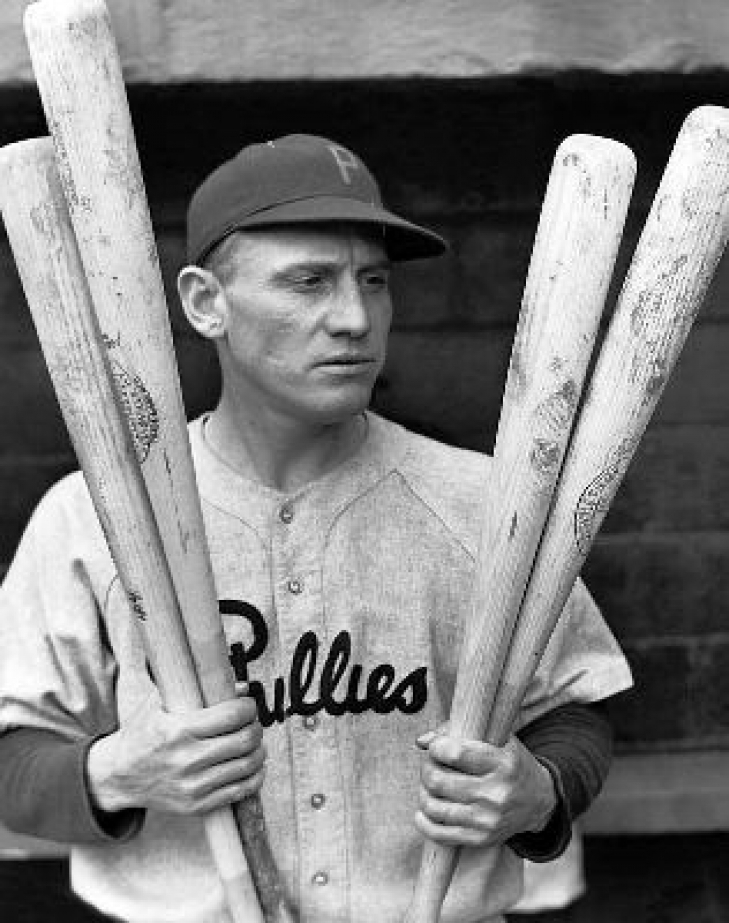
Throughout baseball's extensive history, there have been instances in which a franchise's fortunes have been significantly influenced by a fortunate administrative decision. Conventionally, Chuck Klein's prime years were characterized by his dominance over National League pitchers while representing the St. Louis Cardinals. During his prolific tenure with Fort Wayne in the Central League, Klein was firmly integrated within the Redbirds' developmental system. Nevertheless, the Cardinals simultaneously maintained ownership of the rival Dayton club, an evident violation of Major League Baseball regulations. Upon discovering this infringement, the vigilant Commissioner Kenesaw Mountain Landis mandated the liquidation of the St. Louis franchise and its player assets. Subsequently, the financially constrained Philadelphia Phillies front office submitted the highest bid, thereby markedly altering the franchise’s future trajectory.
Klein’s breakout campaign in 1929—his inaugural full season in the major leagues—remains an exemplary display of offensive prowess. He engaged the supporters at Baker Bowl with an extraordinary career-high of 43 home runs, earning the National League title. His formidable right-handed batting continued to pose a significant threat, as he further contributed by hitting an additional 40 home runs in the subsequent summer.
While his home run totals naturally fluctuated to 31, 38, and 28 over the subsequent three summers, Klein's raw output was so overwhelming that he captured three more home run titles, bringing his total to an incredible four crowns over a five-year span.
However, categorizing Klein exclusively as a one-dimensional, over-the-fence slugger entirely overlooks the true brilliance of his historical peak. Between 1929 and 1933, he demonstrated exceptional contact-hitting prowess, consistently maintaining a seasonal batting average above .330. The apogee of his multifaceted dominance was achieved during his 1933 Triple Crown pursuit, wherein he secured the National League batting title with an impressive .368 average, while also leading the circuit in on-base percentage (.422) and slugging percentage (.602). Throughout this distinguished five-year period, he recorded four seasons with an on-base percentage exceeding .400 and four campaigns with an OPS exceeding 1.000. This regular-season performance was characterized by an array of statistical outliers of historical significance, culminating in a well-deserved National League Most Valuable Player award in 1932, framed by two narrowly missed runner-up finishes.
Regrettably, Klein’s pioneering offensive clinic took place in almost complete isolation. The Philadelphia Phillies were notoriously financially struggling and consistently occupied the lower end of the standings. Acknowledging that his trade value was their sole liquid asset, the financially constrained organization transferred their franchise icon to the Chicago Cubs prior to the commencement of the 1934 season.
A severe mid-career injury in Chicago permanently sapped his explosive lower-body mechanics, leaving him a mere fraction of his former self. He eventually returned to Broad Street for a nostalgic second stint, followed by brief late-career roles in the early 1940s before finally hanging up his spikes.
Klein would enter the Baseball Hall of Fame in 1980 as a Veterans Committee Selection. With the Phillies, Klein smacked 243 Home Runs, batted .326 with 1,705 Hits. Klein's name was placed on the Philadelphia Baseball Wall of Fame in 1979.
7. Chase Utley
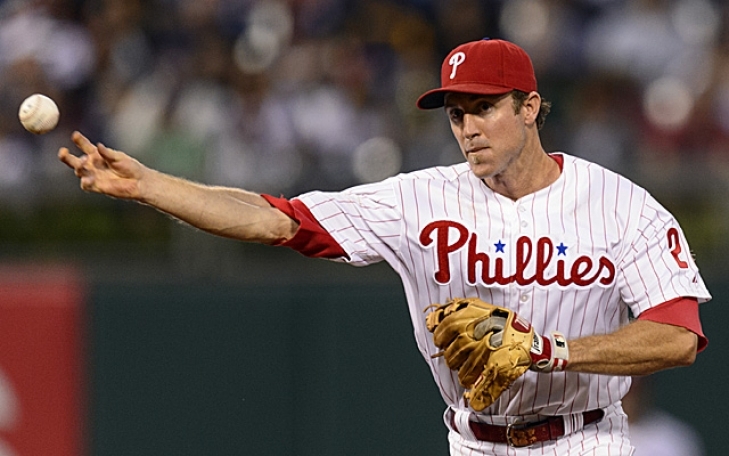
During the early 2000s, Chase Utley was discreetly progressing through the minor league ranks of the Philadelphia Phillies organization. Few anticipated that the reserved and diligent second baseman would become the driving force of the franchise's most prosperous period. Utley's initial notable achievement occurred in 2003 when he hit a grand slam for his first major league hit. He formally secured the regular second baseman position in 2005, subsequently initiating a multi-year period of peak performance. His playstyle became so remarkably dominant that it fundamentally influenced sabermetricians’ valuation of the position.
Between 2005 and 2009, Utley demonstrated consistent elite performance that matched that of the league's top stars. Despite often being overlooked by traditional MVP voters due to his lack of flashy, league-leading single-category stats, finishing no higher than seventh in MVP voting, advanced metrics proved his true dominance as a top-tier player. He ranked second or third in position player bWAR in the National League for five straight seasons, showcasing a rare blend of strong power, disciplined zone control, and an 87.5% success rate on stolen bases, making him one of the most efficient baserunners in baseball history. With seasons of 28, 32, 22, 33, and 31 home runs, he posted an impressive .282/.366/481 slash line, elevating the second base position to a position of power.
However, his statistical efficiency only captures part of his impact. Utley was an exceptional defender, often overlooked by traditional Gold Glove voters. With highly advanced positioning skills and a bold, fearless approach on the field, he ranked in the top ten for defensive bWAR six times during his career. He approached each play as if it were critical, famously advancing from second base on a simple infield grounder or executing a precise throw to home plate to maintain his team's lead.
That unwavering, blue-collar attitude was the key factor that propelled the Phillies into a dominant five-year division-winning team. In their victorious 2008 championship run, Utley was the reliable presence that kept the lineup steady, inspiring a resilient clubhouse that fought hard and refused to give up. He then delivered an exceptional performance in the 2009 World Series against the New York Yankees. Although Philadelphia lost the series in six games, Utley was a formidable force, hitting five home runs and tying Reggie Jackson’s record for most home runs in a single Fall Classic.
As the 2010s progressed, chronic knee problems started to diminish his elite physical condition, reducing his playing time but never diminishing his legendary reputation locally. When the franchise traded him to the Los Angeles Dodgers in August 2015 to rebuild the roster, he left with 1,623 hits, 233 home runs, and a lasting reputation as the consummate professional. In March 2026, the team officially announced Chase Utley as the 51st inductee into the Phillies Wall of Fame.
8. Sherry Magee
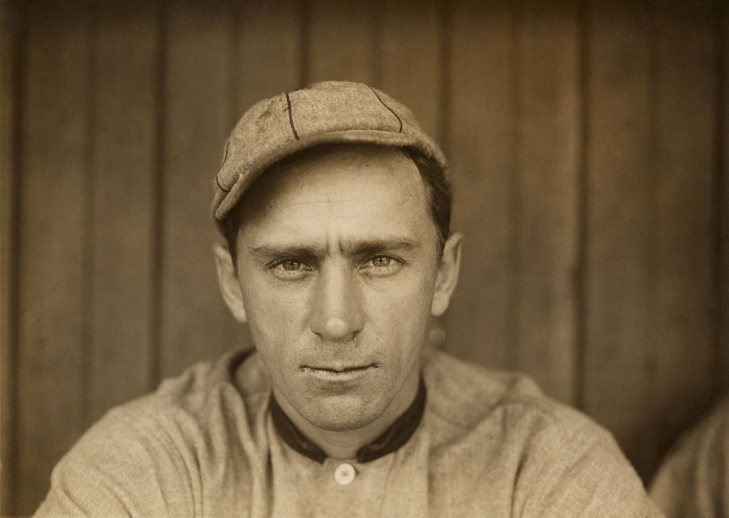
When Sherry Magee emerged as a 19-year-old rookie during the summer of 1904, the Philadelphia Phillies quickly recognized they had discovered a rare, energetic talent. Coming directly from the minor leagues, the right-handed outfielder made an immediate impact, establishing himself as a leading offensive powerhouse of the dead-ball era. In an era when offense was suppressed by heavily scuffed baseballs and large ballparks, Magee leveraged a unique combination of sharp line-drive hitting and exceptional speed on the bases.
Magee was a mainstay in Philadelphia for over ten years, consistently near the top of the National League leaderboards. During his eleven seasons with the team, he surpassed a .300 batting average five times, demonstrating both excellent contact skills and a talent for accumulating numerous extra-base hits. Six times, he ranked in the league’s top five for total hits, often frustrating pitchers at Baker Bowl by hitting doubles and triples into the gaps. In 1914, he led the National League in doubles and recorded five straight second-place finishes from 1906 to 1910. He also finished second three times in triples. Once on base, Magee was a formidable threat, finishing in the top five for stolen bases six times, including consecutive second-place finishes in 1906 and 1907.
Magee’s offensive peak was demonstrated in a historic 1910 showcase, where he would have easily won the modern MVP award. He dominated the senior circuit by leading in slash line categories and winning the National League batting title with a .331 average. Additionally, he led the league in runs scored (110) and RBIs (123), making him a formidable force for the Philadelphia offense.
All of this is impressive but it wasn’t all roses for Sherry Magee.
Yet, for all his undeniable brilliance on the diamond, Magee’s legacy carries some of the darkest, most volatile chapters in early baseball lore. He was a notoriously miserable, hot-tempered individual who seemed perpetually trapped under a dark cloud, entirely incapable of finding joy in his own success. That explosive fuse detonated permanently on July 10, 1911. Furious over a called third strike, Magee turned on umpire Bill Finneran and leveled him with a single, vicious punch, knocking the official completely unconscious on the field. The league initially handed down a severe season-ending suspension, though it was eventually scaled back to just over a month following a frantic appeal. In an era predating 24-hour media scrutiny, his toxic reputation was a constant headache for management; under modern social media floodlights, it would have been an absolute firestorm.
The organization traded the volatile star to the Boston Braves before the 1915 season, just a summer before Grover Cleveland Alexander led the team to the pennant. He left Philadelphia with 2,068 hits, 75 home runs, 430 stolen bases, 886 RBIs, and a .299 batting average.
Regardless of that, Magee was one of the greatest Philadelphia Phillies of all time. Not that he would have smiled about it. The organization placed Magee's name on the Philadelphia Baseball Wall of Fame in 2002.
