


Site Admin
30. Logan Forsythe
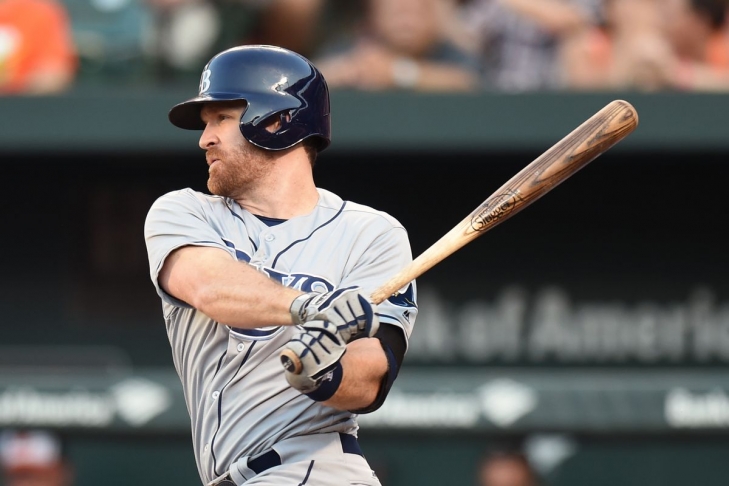
When the Tampa Bay Rays acquired Logan Forsythe from San Diego ahead of the 2014 season, they weren't searching for a conventional, single-position starter. They were looking for structural fluidity. Forsythe delivered exactly that in his initial year in St. Petersburg, appearing in at least one game at first base, second base, third base, shortstop, left field, and designated hitter. What distinguished Forsythe from standard utility players of the era, however, was that this defensive wandering wasn't a mechanism to hide a weak glove. He was fundamentally sound everywhere Kevin Cash plugged him in, never once logging a negative defensive bWAR season during his tenure with the Rays.
That rare defensive flexibility set the stage for a staggering, out-of-nowhere offensive explosion in 2015. Stepping into a full-time role primarily at second base, Forsythe put together an absolute masterpiece of a breakout campaign. He racked up 152 hits, 33 doubles, and a career-high 17 home runs while batting a robust .281. The true depth of his impact was fully illuminated by the advanced metrics: Forsythe compiled a massive 4.6 bWAR, a top-ten mark among all American League position players that summer. He had transformed from a trusted depth piece into the literal offensive engine of the ballclub.
He proved that breakout year wasn't an isolated fluke by returning in 2016 to anchor the top of the Tampa Bay lineup. Serving as the everyday leadoff hitter, Forsythe showcased even greater over-the-fence power, blasting a career-high 20 home runs across 127 games. While his pure batting average dipped slightly to .264, his disciplined eye and steady presence in the middle of the diamond kept his market value sky-high.
Recognizing that his trade value had crested and entering the final guaranteed year of his contract, the Rays front office adhered to their signature long-term playbook. That winter, they traded the veteran infielder to the Los Angeles Dodgers in exchange for top pitching prospect José De León. With the Rays, Forsythe appeared in 390 games, accumulating 354 hits, 43 home runs, and 146 RBIs.
33. Randy Winn
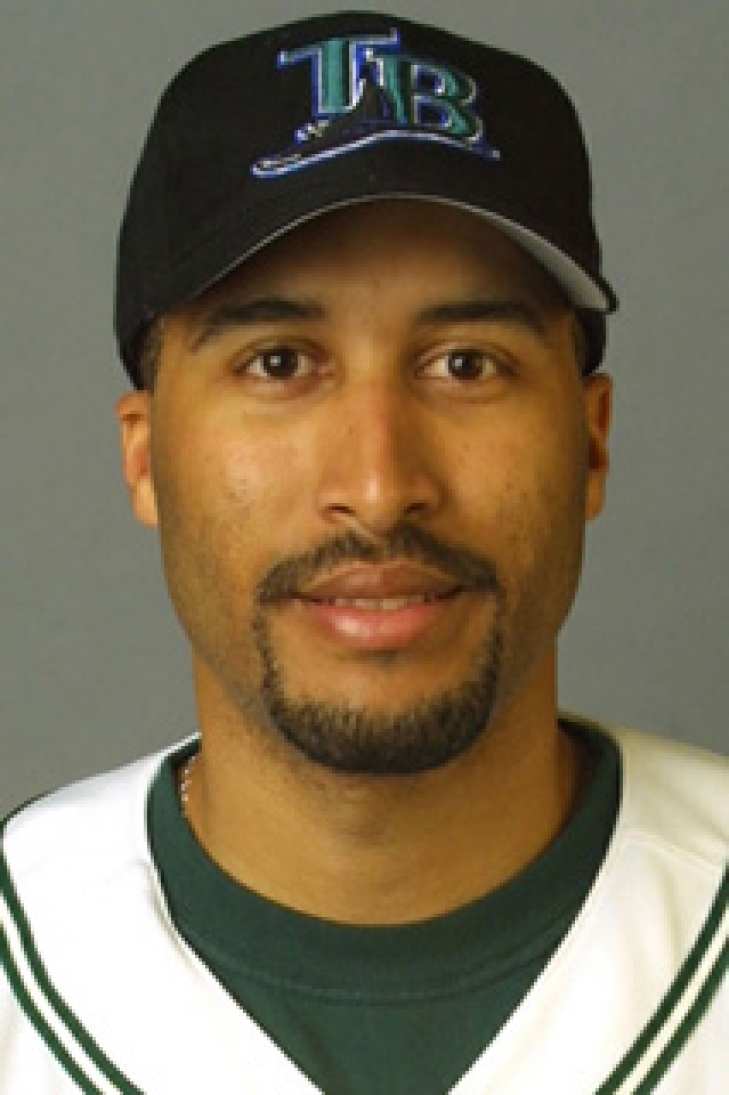
Randy Winn was a switch-hitting Outfielder who was plucked from the Florida Marlins in the Expansion Draft. Winn had yet to break into the Major League level, and his debut at Baseball's highest level occurred in Tampa.
32. Matt Garza
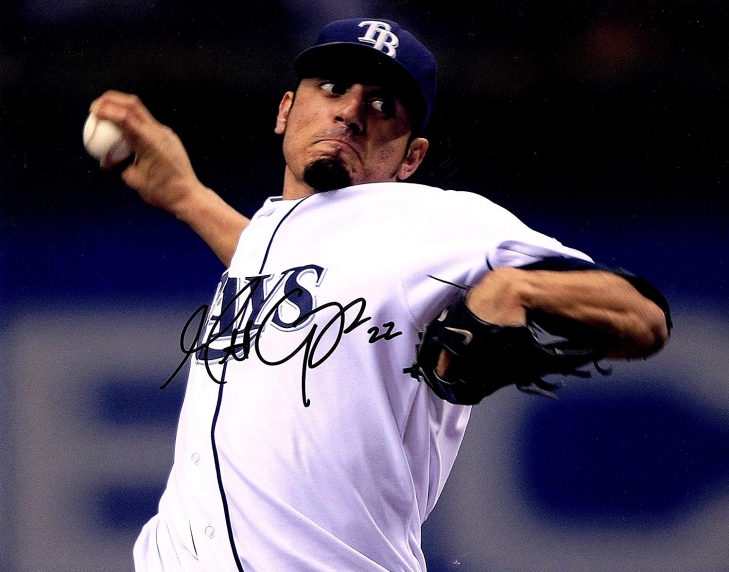
When Matt Garza arrived in St. Petersburg ahead of the 2008 season, he was a highly touted but raw piece in a multi-player trade with Minnesota. Paired with shortstop Jason Bartlett, Garza was brought in to inject fearless energy into the young rotation. He immediately delivered on that promise, grinding out 11 regular-season wins and serving as the emotional spark plug for an organization on the precipice of its first taste of October glory.
That debut season culminated in a performance that permanently etched his name into franchise lore. Facing the defending champion Boston Red Sox in a high-stakes American League Championship Series, Garza delivered an absolute masterpiece. He took the ball in two critical starts, overpowering a formidable Boston lineup to go 2–0 with a microscopic 1.38 ERA. His crowning achievement came in the decisive Game 7 at Tropicana Field, where he outdueled Jon Lester to capture the ALCS MVP and punch the Rays' historic first ticket to the World Series.
He followed that iconic postseason run by establishing himself as the staff's undisputed workhorse. Over the next two summers, Garza consistently took the ball, surpassing 200 innings in both 2009 and 2010. With a hard four-seam heater and a sharp slider, he reached an individual peak in 2010, anchoring the rotation with a career-high 15 victories.
Beyond the steady volume, that 2010 campaign featured an unforgettable milestone. On July 26th against the Detroit Tigers, Garza threw the first no-hitter in Tampa Bay franchise history. He was flawless, facing the minimum 27 batters and needing just 120 pitches to rewrite the organization's record books.
With his arbitration value soaring, the front office followed its established blueprint and traded the veteran right-hander to the Chicago Cubs that winter, leaving town with a 34–31 regular-season record and 467 strikeouts.
25. Rocco Baldelli
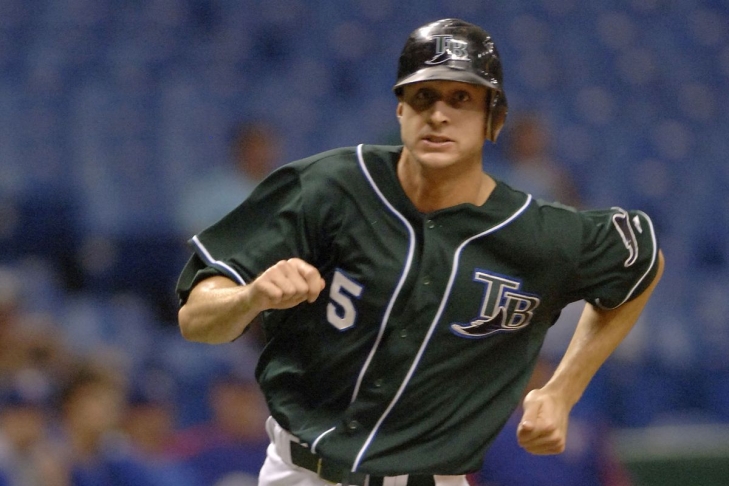
Rocco Baldelli, nicknamed the "Woonsocket Rocket," was one of the most promising early players for the Tampa Bay franchise with his five-tool talent. Making his debut in 2003, he quickly appeared to be a future star and made an immediate impact as a rookie. Baldelli excelled in his first year, accumulating 184 hits, a .289 batting average, and 27 stolen bases, which made him a formidable presence on the field. His impressive debut earned him third place in the AL Rookie of the Year voting, marking the start of what many hoped would be a remarkable career.
He continued his strong development in 2004, achieving a career-high 16 home runs and 74 RBIs. Beyond his batting power, Baldelli utilized his exceptional speed in the outfield, leading all American League center fielders in assists and range factor per game. He was a versatile player capable of impacting the game with his arm, legs, or bat.
Sadly, his promising start marked the peak of his career. Before the 2005 season, Baldelli tore his ACL, leading to a lengthy and difficult medical journey. He showed remarkable talent in 2006 during his 92-game return, hitting 16 home runs and maintaining a .302 batting average. However, ongoing issues with mysterious muscle fatigue and soft-tissue injuries, later linked to a rare metabolic and muscular disorder, kept him sidelined. Over the next two seasons, he only made occasional appearances, eventually signing with the Boston Red Sox as a free agent. He returned to St. Petersburg for a touching 10-game farewell in 2010, but injuries ultimately forced his retirement at age 29.
He finished his time with the organization having collected 531 hits and a .280 batting average. Baldelli’s sharp baseball mind outlasted his physical limits, leading him from a respected coaching role with the Rays to managing the Twins, where he won the 2019 AL Manager of the Year after a 101-win season.
