Site Admin
31. Jake Odorizzi
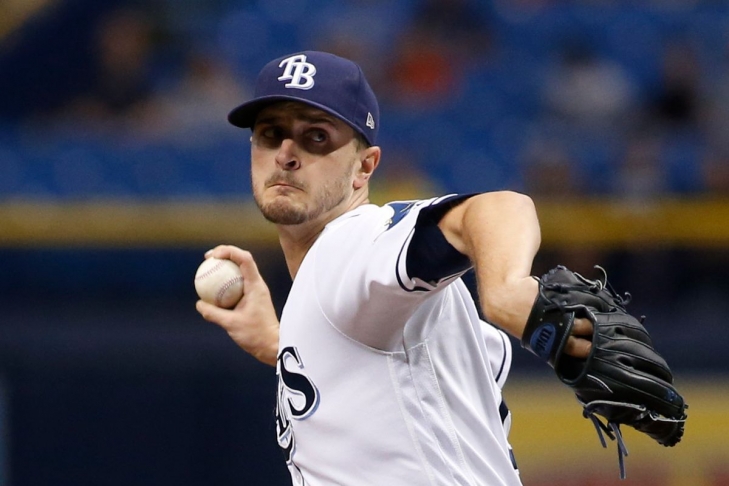
When the Tampa Bay Rays acquired Jake Odorizzi prior to the 2013 season, it was part of a franchise-altering transaction. Shipped from Kansas City alongside Wil Myers in the trade that sent James Shields to the Royals, the right-hander arrived with a pedigree that suggested he was the next great pitching prospect ready to roll off the organization’s developmental line. After spending the bulk of his first year in the state sharpening his pitch mix in Triple-A, Odorizzi grabbed a permanent spot in the rotation in 2014 and didn’t look back.
That 2014 rookie season showcased exactly what made his four-seam fastball such a lethal weapon. Attacking hitters at the top of the zone with an invisible, rising heater, Odorizzi logged an 11–13 record across 31 starts, punching out 174 batters over 168 innings. His high-strikeout style led all major league rookies and earned him an eighth-place finish in the American League Rookie of the Year voting, anchoring a staff transitioning away from its older core.
His evolution into a front-of-the-rotation stalwart reached its peak efficiency in 2015. In what was arguably his finest individual campaign in a Rays uniform, Odorizzi manipulated opposing lineups with an increasingly deceptive split-changeup, finishing with a 9–9 record and a stellar 3.35 ERA. That mark ranked eighth-best in the American League, cementing him as one of the most reliable arms in the junior circuit.
He remained the picture of stability over the next two summers, racking up identical 10-win campaigns in 2016 and 2017 while consistently eating valuable chunks of innings. With his arbitration costs escalating, the Rays executed their signature pivot, trading the veteran right-hander to the Minnesota Twins prior to the 2018 season to jumpstart their next pitching wave.
In Tampa Bay, Odorizzi made 127 appearances (123 starts). He compiled a 40–37 record with a 3.82 ERA and a 1.22 WHIP, throwing 698.1 innings and registering 639 strikeouts.
38. Roberto Hernandez
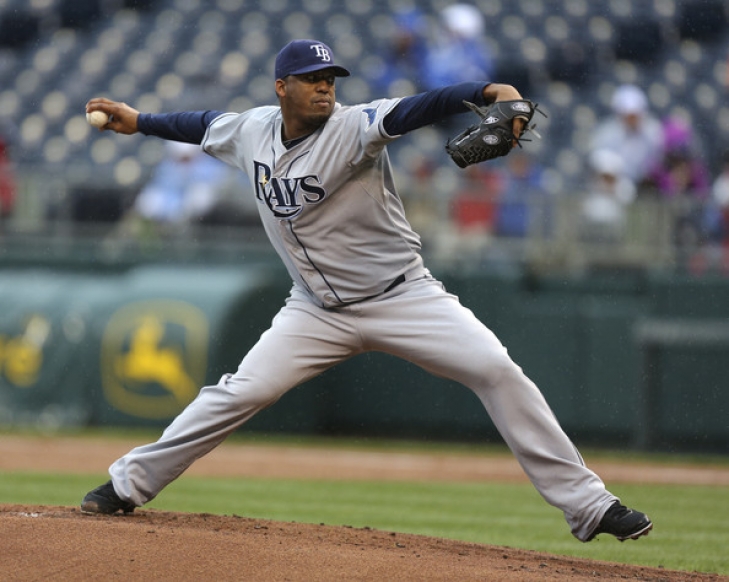
During the Tampa Bay Devil Rays’ initial roster setup before the 1998 season, they sought more than just young prospects; they needed a proven, reliable closer to secure games in the ninth inning. They found their ideal candidate in veteran Roberto Hernández. Although another pitcher with the same name later pitched for St. Petersburg, it was this original, Puerto Rican right-hander—an expert at closing games—who established the initial high standards for the franchise's bullpen.
Hernández entered the league known as one of baseball’s most reliable late-inning pitchers and quickly became a key member of the young team. After a strong debut in 1998, his performance peaked in a remarkable 1999 season. He relied on a heavy sinker in the mid-90s and a sharp forkball to dominate American League batters throughout the summer. His achievements included an All-Star selection, leading the majors with 66 games finished, and setting a career high with 43 saves—second most in the league and a franchise record for over ten years.
Although the expansion team faced typical growing pains of a new franchise, Hernández consistently remained reliable. Throughout his three-year tenure, he effectively covered the ninth inning, offering rare stability and calm leadership to a bullpen that was frequently changing.
Aiming to rebuild their young farm system, the front office traded the veteran closer to the Kansas City Royals before the 2001 season as part of a major three-team deal. His stint in St. Petersburg lasted only three years, limiting his career numbers, but he left with 101 saves and 182 games finished, making Hernández the franchise’s all-time saves leader.
41. Sean Rodriguez
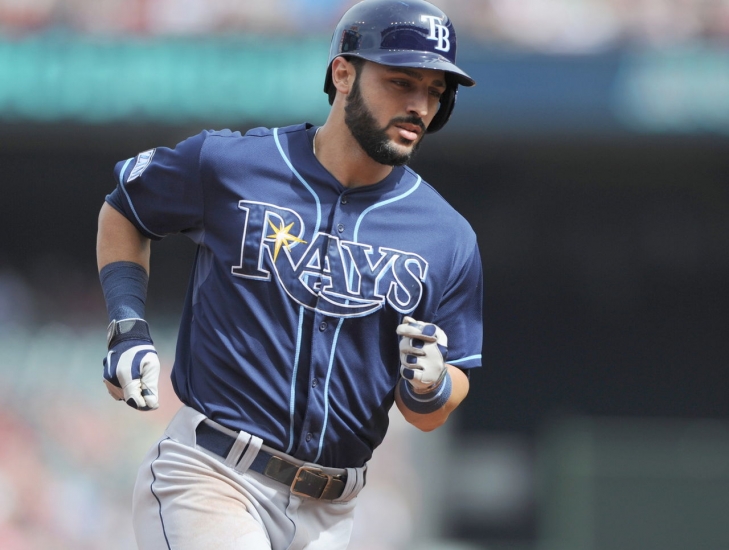
When Sean Rodriguez was traded to St. Petersburg from the Los Angeles Angels before the 2010 season, the Rays aimed to strengthen overall field coverage rather than fill a particular position. Rodriguez quickly proved himself as a true utility player, smoothly moving across the dirt and grass to play second base, third base, shortstop, first base, and all three outfield positions.
His value stemmed from exceptional defensive instincts, evident during his 2010 debut. While he lacked a fixed position, Rodriguez ranked fifth in the American League with a 2.3 defensive bWAR, making the Rays' bench a high-leverage defensive resource. Managers Joe Maddon and Kevin Cash used him as a tactical safety net, confident they could place him anywhere on the field without compromising vital positioning or arm strength.
While his pure offensive output hovered below league average—marked by a low .228 batting average and a tendency to swing through premium velocity—Rodriguez routinely offset his offensive limits with timely, occasional power. He never once eclipsed 400 at-bats in a single summer, yet his durability and defensive baseline made him an indispensable fixture whom the organization kept around for five full seasons. His knack for drawing walks in high-stress spots and pinch-hitting in late-innings double-switches kept him continuously employed as a highly valued depth piece.
After 2014, the front office traded him to the Pittsburgh Pirates. With the Rays, he had 331 hits, 40 home runs, and 172 RBIs.
The Buck Stops Here -- NFL Draft Review 2020