

50. Rick Sutcliffe
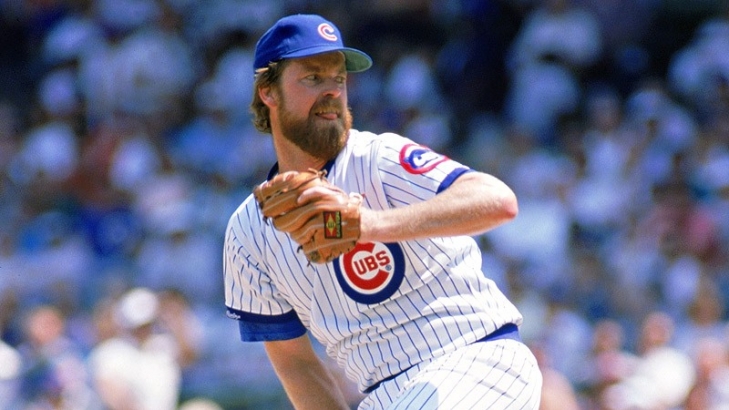
Rick Sutcliffe’s journey in Chicago began with a season-altering trade in June 1984. Sent from the Cleveland Indians while carrying a losing record and an ERA over five, he matured instantly under the afternoon sun of Wrigley Field. He arrived with a fierce competitive scowl and a downward-tilting fastball that decimated National League lineups. He didn’t just settle into the rotation; he went on a historic tear, winning 16 of his 17 decisions and serving as the emotional and tactical engine that propelled the Cubs to their first-ever NL East Title.
The absolute pinnacle of his career arrived at the conclusion of that 1984 campaign. In a feat of run suppression that remains unique in baseball history, Sutcliffe became the first player to win the Cy Young Award after spending the first two months of the season in the opposing league. He was the definition of an efficiency outlier, providing the high-leverage brilliance that galvanized a city. He followed this with continued excellence throughout the decade, earning All-Star nods in 1987 and 1989. In '87, he led the National League in wins and finished as the Cy Young runner-up, proving that his initial breakout was no flash in the pan but the start of a statistical residency.
His identity was synonymous with a blue-collar work ethic and a "big-game" persona that resonated with the Bleacher Creatures. He played with the Cubs until he left after the 1991 season for the Baltimore Orioles. As a Cub, Sutcliffe was a high-volume workhorse, accumulating 82 wins and 909 strikeouts. In recognition of his role as the ace of two division-winning squads, the organization named him to the inaugural class of the Chicago Cubs Hall of Fame in 2021.
39. Ed Reulbach
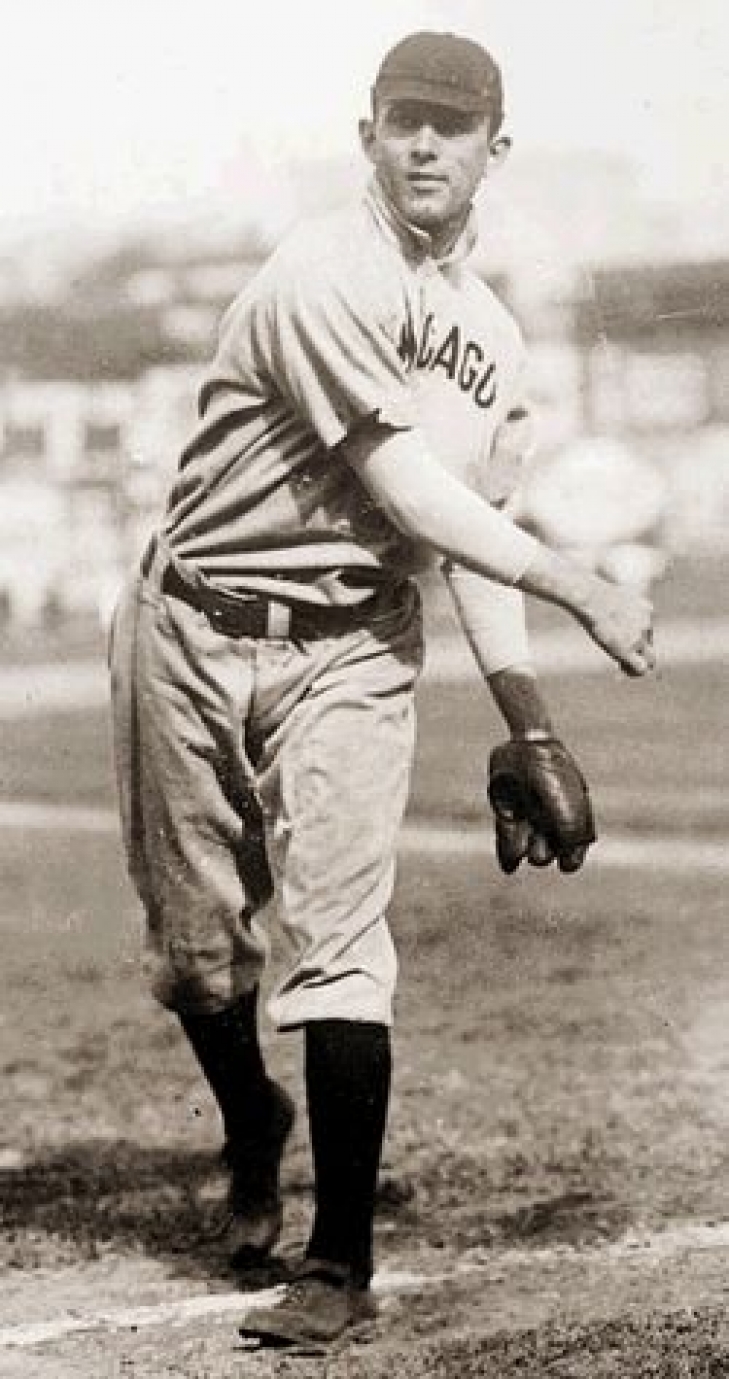
When Ed Reulbach arrived in 1905, he transitioned instantly from a standout college athlete into one of the most difficult pitchers to hit in the National League. He matured into a mainstay of the Cubs’ rotation just as the team began its historic run toward back-to-back championships in 1907 and 1908. His success was staggering; he led the National League in winning percentage for three consecutive years (1906–1908), a feat of consistency matched only by the legendary Lefty Grove. He arrived with a "shadowing" windup that hid the ball from hitters and quickly became a force who could suppress runs as well as any pitcher in the Deadball Era.
The absolute pinnacle of his career arrived during the white-hot pennant race of 1908. On a single afternoon in late September, Reulbach authored a feat that remains the only one of its kind in Major League history: he pitched and won both ends of a doubleheader against the Brooklyn Superbas, throwing two complete-game shutouts in the same day. He was a master of run prevention, finishing with an ERA under 2.00 in four of his first five seasons. This period of dominance saw him surrender fewer than 6 hits per 9 innings in 1906, a ratio of efficiency that would stand as a benchmark for over 60 years.
His identity was synonymous with the Cubs' championship pedigree. A two-time World Series winner, Reulbach was a big-game specialist who famously threw a one-hitter in the 1906 Fall Classic. He was a workhorse who rarely showed signs of fatigue, using his towering 6'1" frame and a high leg kick to overwhelm hitters. He concluded his primary stay in Chicago with 136 wins and a microscopic 2.24 ERA, leaving behind a legacy as one of the most effective and durable arms to ever call the West Side Grounds home.
The chapter eventually closed in 1913, when he moved to Brooklyn, followed by a later star turn in the Federal League. He left the organization as a statistical titan and the last surviving member of the 1907–1908 championship squads. He proved that to rule the mound, you needed more than just a live arm—you needed the intellect to outthink the hitter and the stamina to outlast the sun.
In a long-overdue tribute to his massive impact, the organization named him as an inaugural member of the Chicago Cubs Hall of Fame in 2021.
32. George Gore
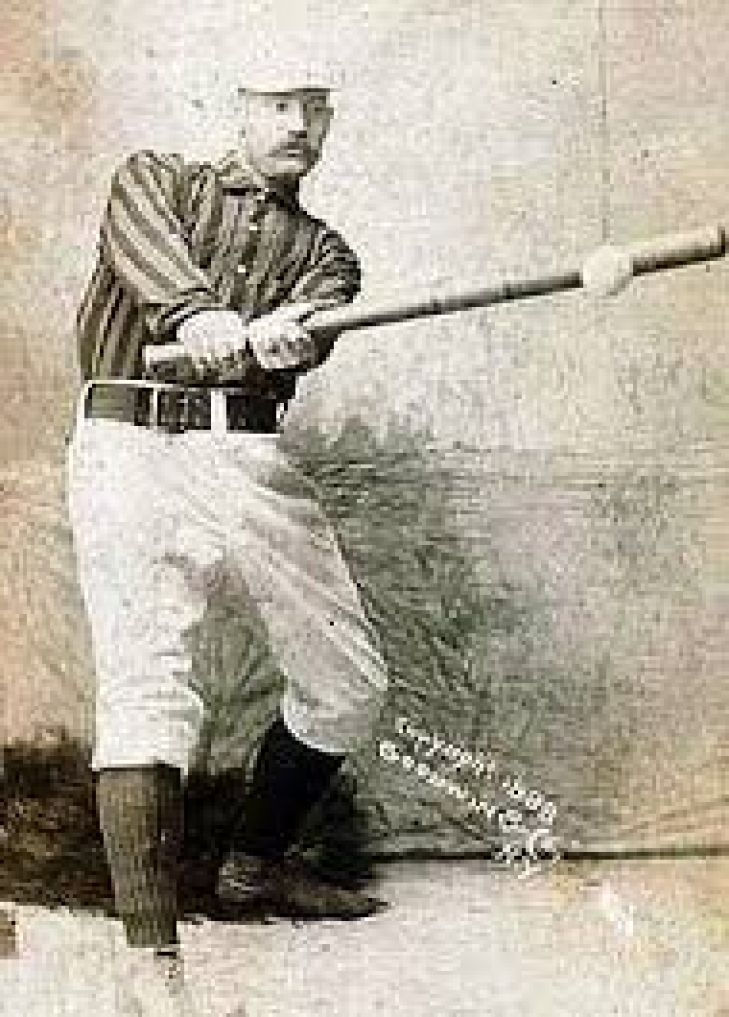
Chicago’s lineup in the 1880s derived its high-voltage energy from the man they called "Piano Legs." Gore brought a rare combination of lower-body strength and track-star speed to the top of the order, maturing instantly into the most disciplined hitter of the era. His breakout 19th-century residency reached an early crescendo in 1880, a season in which he captured a unique triple crown of efficiency, leading the National League in batting average (.341), on-base percentage (.399), and slugging percentage (.463). He arrived as a young outfielder and immediately became the engine of a dynasty.
Traditional production remained his calling card as the White Stockings captured five pennants during his seven-season stay. Gore was a master of the free passes, leading the league in walks three times and consistently ranking among the top ten in batting average. His ability to reach base and create havoc was the primary reason Chicago dominated the early National League landscape. He wasn't just a slap hitter; he possessed enough gap power to lead the league in runs scored twice, finishing his Chicago tenure with a stellar .315 batting average and a reputation as the premier table-setter of the 1880s.
His Chicago legacy was complicated by his relationship with Cap Anson. The legendary player-manager was a notorious disciplinarian who publicly alleged that Gore was "lazy" and prone to extracurricular distractions. Anson’s critiques suggested that Gore’s immense natural talent should have yielded even greater historical totals, creating a narrative of a superstar who played at only 90 percent of his true capability. Despite these internal frictions, Gore remained a high-leverage fixture in the lineup, proving that even a "relaxed" version of his talent was superior to almost every other player in the league.
Following the 1886 season, the organization moved on from their star center fielder, leading to a second chapter in New York. He left Chicago as a cornerstone of the franchise’s most successful run in its early history, a man whose legs and bat had powered the city to five championships.
49. Jake Arrieta
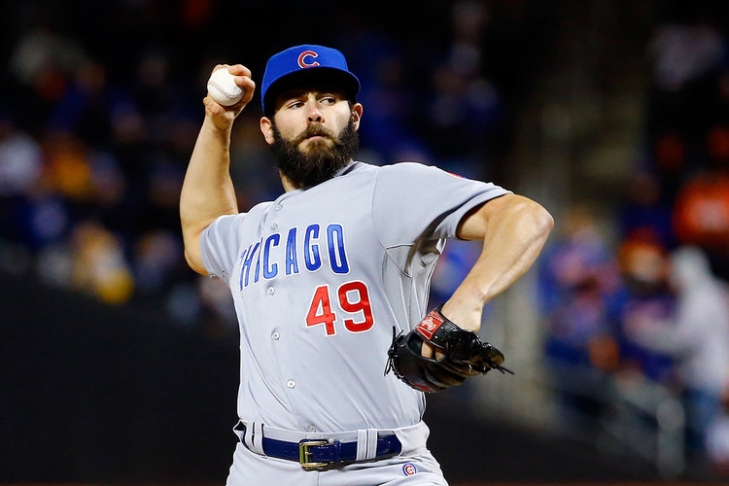
Jake Arrieta’s journey in Chicago began with a 2013 trade with the Baltimore Orioles that would eventually go down as one of the most lopsided heists in franchise history. Sent to the North Side alongside Pedro Strop in exchange for Scott Feldman and Steve Clevenger, Arrieta matured instantly under the tutelage of the Cubs' staff. He shed his inconsistencies and emerged as a statistical titan by 2014, arriving with a "cross-fire" delivery and a heavy sinker that saw him finish fifth in bWAR for pitchers during his first full season in the rotation. It was a warning shot to the rest of the league, signaling that he had unlocked a level of efficiency that few could match.
The absolute pinnacle of his career, and perhaps the most dominant second half in baseball history, arrived in 2015. That year, Arrieta was an efficiency machine, leading the National League with 22 wins while posting a microscopic 1.77 ERA and a 0.865 WHIP. He became the first Cub since Greg Maddux to capture the Cy Young Award, authored by a late-season run where he allowed just four earned runs over his final 12 starts. He followed this masterpiece by serving as the tactical engine of the 2016 championship team, earning an All-Star nod and a Silver Slugger while providing the high-leverage brilliance required to secure the Cubs' first World Series title in 108 years.
His identity was synonymous with a stoic, "workout-warrior" intensity that resonated with the Wrigley Field faithful. Arrieta was a master of the high-stakes moment, accumulating 73 wins and a 3.14 ERA during his primary stay in Chicago. Even as he moved on to Philadelphia in 2018, the connection to the North Side remained unbreakable. While his 2021 return was a difficult final chapter marked by diminishing effectiveness and an eventual release, it could not tarnish the legacy of the man who anchored the rotation during the most important era in the club's modern history.
41. Andy Pafko
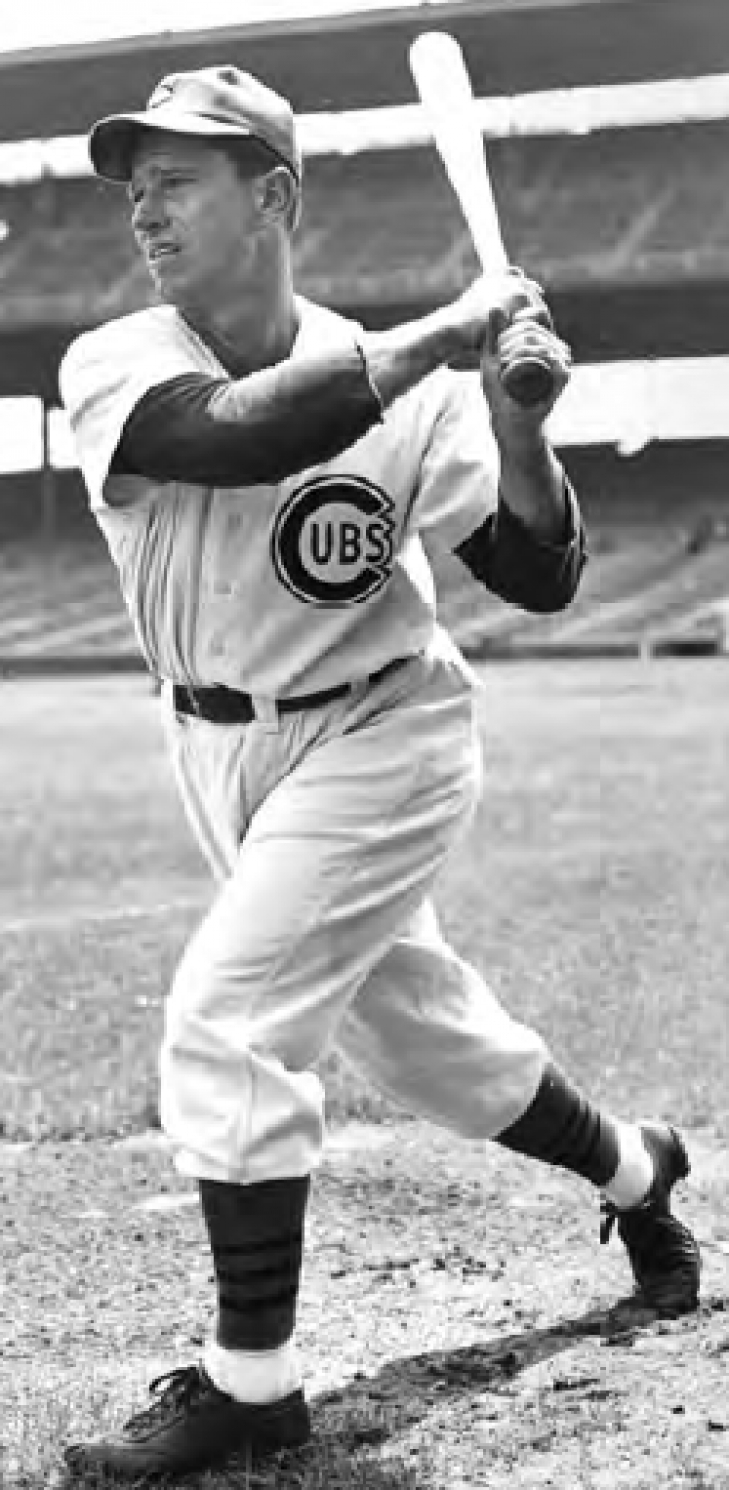
Pafko’s journey in Chicago began in 1943, but it was the 1945 campaign where he matured into a legitimate cornerstone of the franchise. That year, he tallied 159 hits and served as a vital tactical piece for a Cubs team that captured the National League Pennant. While many wartime players saw their opportunities vanish when the veterans returned from service, Pafko’s production only intensified. He arrived as a young talent and evolved into a statistical powerhouse, rattling off four consecutive All-Star selections from 1947 to 1950, proving he was one of the elite outfielders in the senior circuit.
The peak of his career was marked by a rare combination of contact and high-ceiling power. During that four-year All-Star run, Pafko eclipsed the .300 mark three times and showcased a burgeoning home run stroke, twice reaching the 30-homer plateau. He was a master of the gaps at Wrigley, a high-volume producer who understood how to drive in runs while maintaining a sophisticated .294 career average with the club. He wasn't just a placeholder; he was the primary threat in the middle of the order, providing the stability that kept the organization a factor in the post-war landscape.
His identity was synonymous with a blue-collar work ethic and a deep connection to the Chicago faithful. Pafko was an efficiency machine, accumulating 1,048 hits and 126 home runs during his stay with the Cubs. Whether he was tracking down fly balls in the shadows of the ivy or launching a late-inning blast to ignite the crowd, he played with a professional grace that earned him the respect of teammates and rivals alike. He concluded his primary journey with the organization as a symbol of an era when the game returned to its full strength, leaving behind a legacy of consistency that few have matched.
The chapter eventually closed on his time in Chicago in mid-1951, when he was sent to Brooklyn in a blockbuster deal. While he went on to play in more World Series with the Dodgers and Braves, his impact on the Cubs remained indelible. He left the organization as a statistical titan of the 40s, a man whose peak performance helped define a generation of North Side baseball.
In recognition of his massive contribution and enduring popularity, the organization named him to the inaugural class of the Chicago Cubs Hall of Fame in 2021.
44. Kiki Cuyler
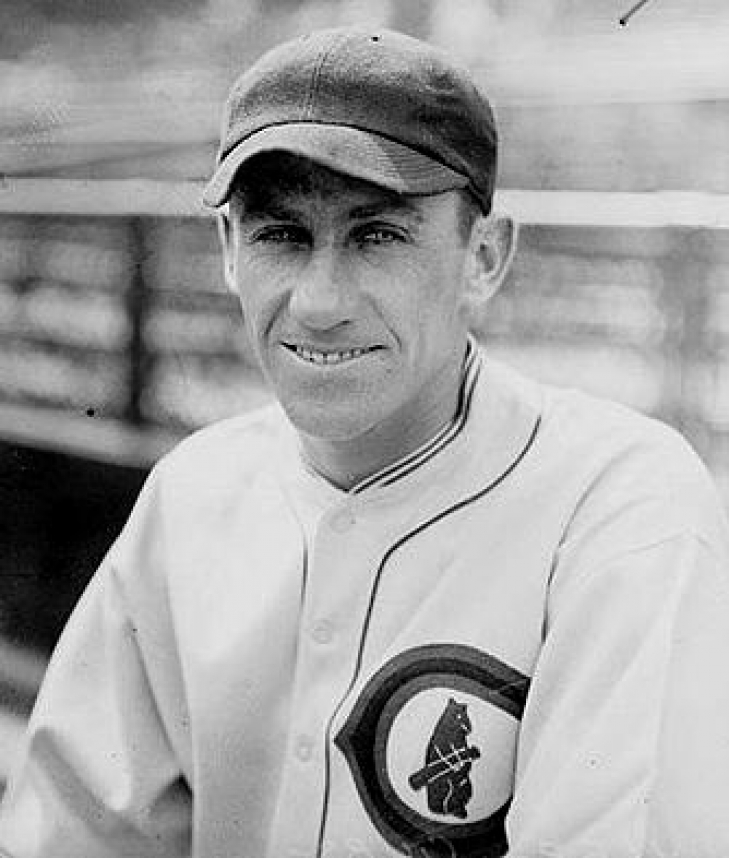
Kiki Cuyler joined the Cubs in 1928 and bypassed any need for an adjustment period, maturing instantly into the premier leadoff threat in the senior circuit. He arrived with a reputation for game-breaking speed and a disciplined eye, and he wasted no time validating the investment. His initial three-year burst in Chicago was a masterclass in aggressive baserunning, as he led the National League in stolen bases for three consecutive seasons (1928–1930). He wasn't just a track star in cleats, though; he was a refined hitter who maintained a staggering .325 career average during his stay, proving that his value was rooted in a sophisticated balance of run production and high-volume theft.
The absolute pinnacle of his efficiency arrived during the 1929 and 1930 campaigns, where he eclipsed the .350 mark in back-to-back years. These weren't just "empty" averages; Cuyler was a high-leverage producer who anchored the lineup for the 1929 National League championship squad and the 1932 pennant winners. Even as he transitioned into the veteran stage of his career, his bat remained a lethal weapon; in 1934, he led the National League in doubles, showing that his extra-base power was a permanent fixture of his game. He finished his Chicago journey with 1,199 hits, serving as a model of consistency during some of the sport’s most prolific offensive years.
The Veterans Committee recognized his historic contribution in 1968 by electing him to the National Baseball Hall of Fame. Locally, the organization ensured his legacy would remain a permanent part of the landscape by naming him to the inaugural class of the Chicago Cubs Hall of Fame in 2021.
31. Claude Passeau
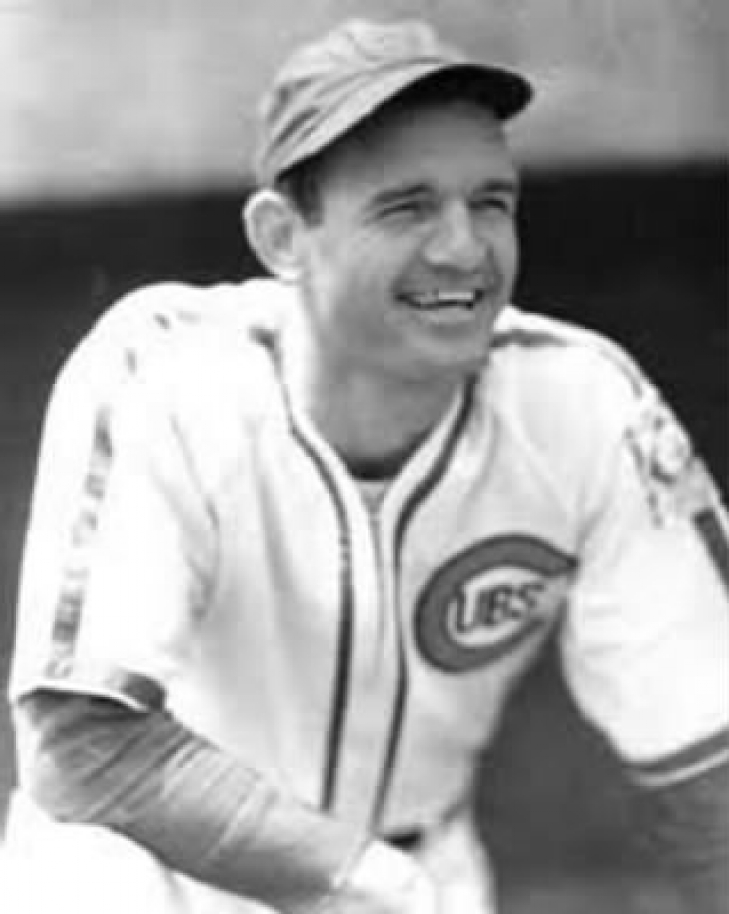
A trade with the Phillies early in the 1939 season brought Passeau to Wrigley Field, where he immediately found the footing that had eluded him in Philadelphia. He shed the "journeyman" label almost instantly, maturing into a frontline starter who commanded the strike zone with an aggressive, veteran poise. His first full year in Chicago was a revelation; in 1940, he joined the elite 20-win club, helping define the first half of the decade for the franchise.
Consistent excellence became his trademark as the residency progressed, earning him five All-Star selections during a six-year window. Passeau was the rare arm who maintained a high level even as the league’s roster landscape shifted during the war years. While his win totals were a testament to his durability, his ability to suppress runs in the most critical situations was best reflected. He was a high-leverage specialist in a starter’s role, a pitcher who the organization could trust to stop a losing streak or secure a pennant.
The defining moment of his Cubs history occurred during the 1945 World Series against the Detroit Tigers. In Game 3, Passeau authored a performance for the ages, tossing a dominant one-hit shutout that remains one of the most efficient outings in Fall Classic history. He retired the first 14 batters he faced and only allowed a single hit to Rudy York in the second inning, a display of total control that put the Cubs within reach of a title. This masterpiece cemented his legacy as a big-game titan, a player who rose to the occasion when the stakes were at their absolute peak.
Chicago remained his home for the remainder of his major league career, and he concluded his residency with 124 wins in a Cubs uniform.
24. Johnny Evers
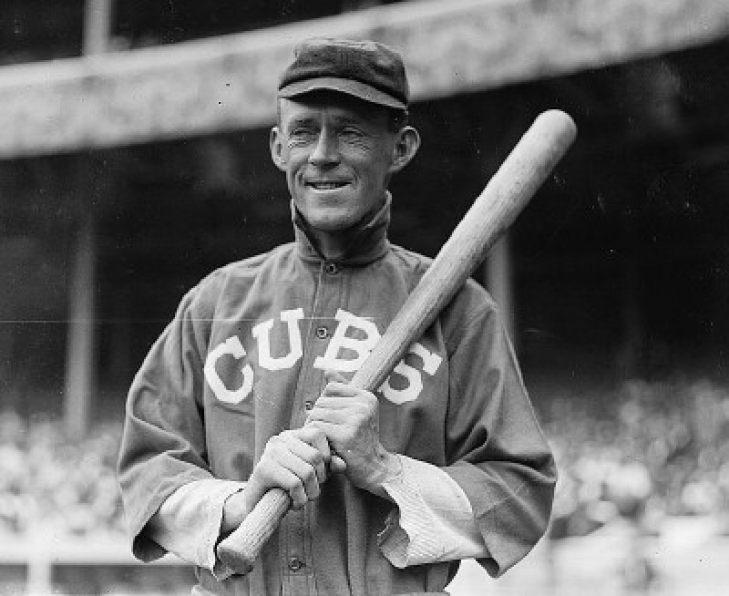
When Johnny Evers arrived in Chicago in 1902, he was a rail-thin teenager who reportedly weighed less than 100 pounds. Opposing fans initially thought he was a comedy act, but they quickly realized the "Trojan" was a fierce, surly competitor who treated every inch of the diamond like a battlefield. He locked down the starting second base job by 1903, forming a legendary, if personally frosty, partnership with Joe Tinker. While the two famously went years without speaking off the field, their synergy on the dirt anchored an infield that allowed the fewest runs in the league, proving that professional excellence doesn't always require personal friendship.
The peak of his Chicago residency was defined by the back-to-back World Series titles in 1907 and 1908. During those championship runs, Evers was a postseason titan, batting a blistering .350 in both Fall Classics. He wasn't a power hitter, but he possessed an elite batting eye that was decades ahead of its time. He led the National League in on-base percentage in 1912 with a staggering .431 mark and posted three seasons with an OBP over .400. He was the definitive figure for a small-ball age, a player who understood that a walk was just as lethal as a hit when it came to dismantling an opponent’s morale.
Evers had the reputation as the smartest man on the field. Evers was a master of the rulebook, most famously spotting that Fred Merkle had failed to touch second base in the heat of the 1908 pennant race, a heady play that eventually led the Cubs back to the World Series. However, his high-strung nature often led to "nervous prostration" and frequent clashes with umpires and management. In 1913, he was handed the keys to the dugout as player-manager, leading the club to a respectable 88 wins, but a bitter contract dispute with owner Charles Murphy led to a sudden and controversial exit.
The final walk toward the exit of his first Chicago tenure in 1914 led him to the Boston Braves, where he ironically won the MVP award and a third World Series ring in his first year away from the North Side. He eventually made a brief return to manage the Cubs again in 1921, but his legacy remained firmly rooted in those early championship years. He left the franchise with 1,340 hits and a reputation as the "crabbiest," most brilliant infielder to ever wear the uniform.
Johnny Evers was ushered into Cooperstown in 1946 by the Old Timers Committee, forever cementing the middle man of the famous trio. In 2021, the Cubs rightfully included him in their inaugural Hall of Fame class, a permanent nod to the man who proved that a sharp mind and a sharper tongue could build a dynasty.
30. Lon Warneke
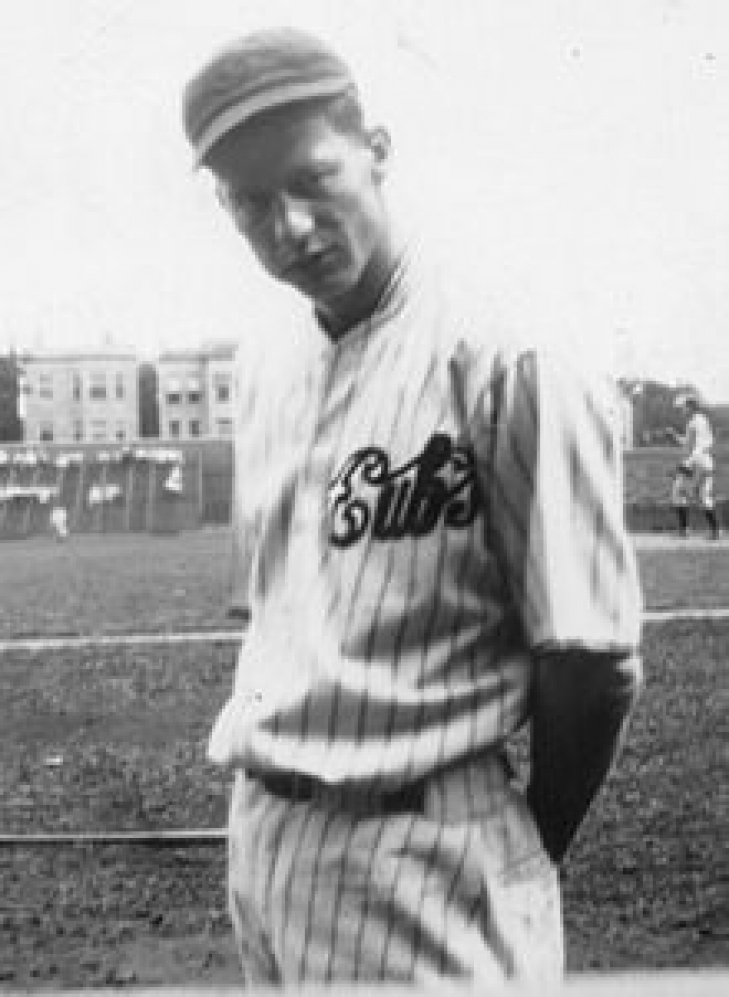
Chicago's rotation found its unlikely anchor in 1932 thanks to a keen observation from manager Rogers Hornsby. Noticing that Lon Warneke was staring at his own feet during his delivery rather than the hitter, Hornsby demanded a correction that transformed an ineffective "also-ran" into a league-wide phenomenon. The results were instantaneous and historic; in that breakout 1932 campaign, Warneke led the National League with 22 wins, a 2.37 ERA, and a 6.9 bWAR. He arrived as a struggling prospect and finished the season as the MVP runner-up, serving as the primary engine for a Cubs team that captured the National League pennant.
A period of sustained excellence followed that initial surge, as Warneke proved 1932 was no fluke. He rattled off three All-Star selections in four years and notched two more 20-win seasons, establishing himself as a model of durability in an era defined by high-scoring offenses. He had a rare combination of control and stamina, consistently placing him among the league leaders in innings pitched and complete games. He wasn't just a volume producer; he was a strategic master who used his newfound focus to navigate the most dangerous lineups of the decade.
The fans at Wrigley Field developed a deep connection with the humble right-hander, which made the news of his trade to the St. Louis Cardinals after the 1936 season particularly jarring. The move sparked significant backlash from the Chicago faithful, who had come to view Warneke as the face of the pitching staff. While he spent five productive seasons in Missouri, the allure of the North Side remained, and the organization eventually corrected its course by purchasing his contract back during the 1942 campaign.
Returning to the club to finish his career, Warneke provided a veteran presence that bridged the gap between two eras of Cubs baseball. He concluded his time in Chicago with 109 wins, a total that reflects both his early-career peak and his late-career resilience.
18. Phil Cavarretta
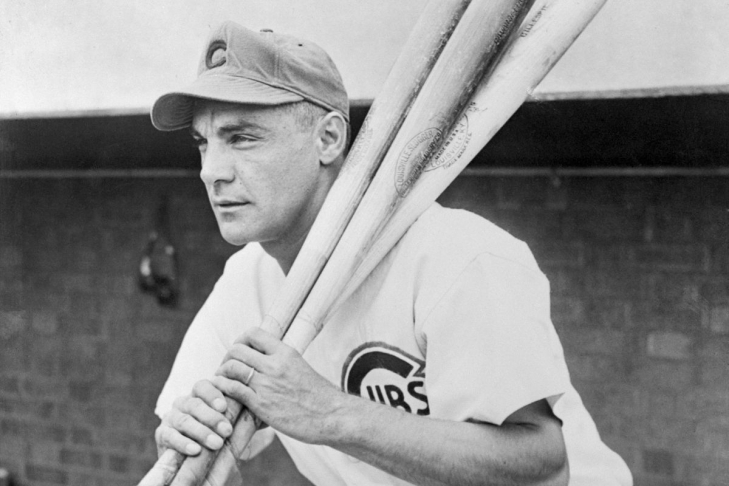
When Phil Cavarretta first stepped onto the grass at Wrigley Field in 1934, he was a mere teenager, making his debut just weeks after his 18th birthday. He arrived with the heavy burden of "future star" expectations, but for much of his early twenties, it looked like those expectations would be crushed by the training room table. Between 1936 and 1941, Cavarretta was a frequent visitor to the injury list, struggling to find the consistency or the health to stay in the lineup for a full season. He was a player in limbo, talented enough to keep, but too fragile to count on.
The arrival of the 1940s and the vacuum left by the war effort finally gave Cavarretta the opening he needed. In 1942, his body finally cooperated, and he embarked on a five-year stretch of dominance that transformed him from a "what if" into a National League icon. From 1943 to 1947, he was a fixture at the All-Star Game, providing the Cubs with a high-contact bat and a steadying presence at first base and in the outfield.
His 1945 campaign remains one of the most complete individual seasons in the organization's history. Cavarretta didn't just win the batting title; he served as the engine that drove the Cubs to the pennant, capping his MVP year with a nearly superhuman performance in the World Series. Despite the team's loss to Detroit, Cavarretta’s .423 average in the Fall Classic cemented his status as a big-game performer. He was the man who turned a wartime roster into a championship contender through sheer offensive efficiency.
The final decade of his Chicago run was characterized by a gradual transition into a "statesman" role. As his workload reduced and his legs aged, he remained a beloved figure for the Cubs faithful, eventually amassing 1,927 hits in the pinstripes. His departure was a quiet one, released after the 1953 season after twenty years in the system, but his legacy was already secured. He arrived as an 18-year-old boy and left as a 20-year veteran of the North Side wars. When the Cubs Hall of Fame opened its doors in 2021, Cavarretta’s inclusion in the inaugural class was a fitting tribute to a man who spent nearly his entire adult life representing Chicago.
22. Jimmy Ryan
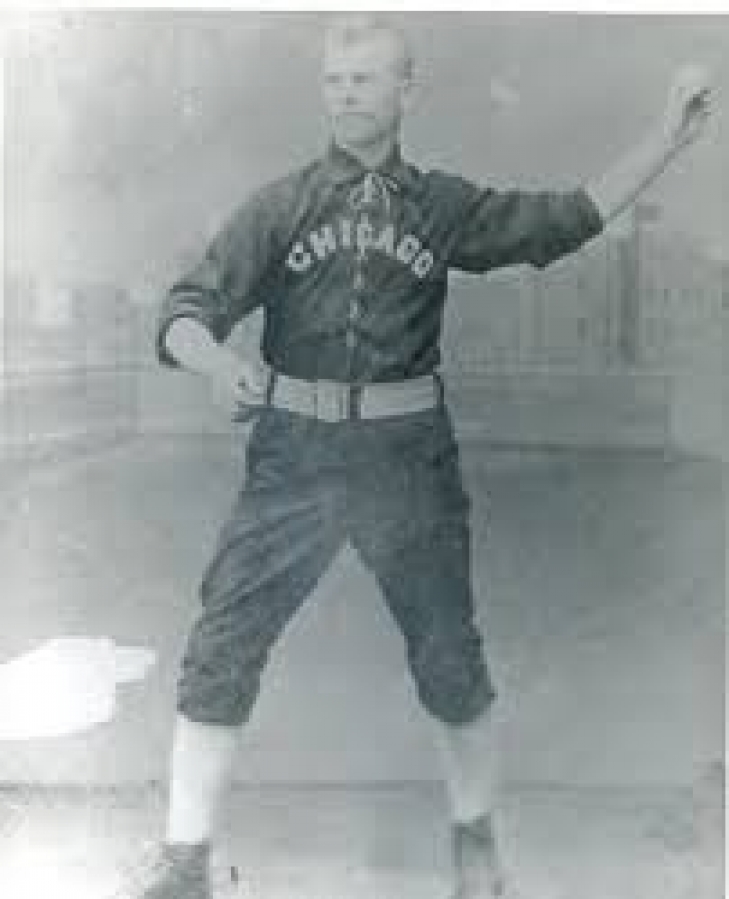
When Jimmy Ryan arrived in Chicago in 1885, he joined a White Stockings squad that was the class of the National League. He didn't take long to find his footing, quickly establishing himself as a refined hitter who could do more than just slap the ball. In an era where home run power was a rare commodity, Ryan possessed a surprising sting in his bat. His residency in Chicago was defined by an ability to adapt as the game’s rules and distances evolved, serving as the steady link between the legendary era of Cap Anson and the burgeoning talent of the late 1890s.
The high-water mark of his tenure arrived in 1888, a season in which Ryan essentially owned the offensive categories of the National League. He paced the circuit in hits, doubles, and home runs—a rare "power-speed" trifecta for the time. While he was often overshadowed by the larger-than-life personalities of his teammates, Ryan was a tactical nightmare for pitchers, finishing in the top eight in OPS six different times. He wasn't a superstar in the modern sense, but he was a "solid contributor" who played at a high level for a remarkably long time, batting .308 during his lengthy stay in Chicago.
Beyond his bat, Ryan was a versatile asset in the grass. He was a primary outfielder but possessed the arm strength and athleticism to fill in on the mound when called upon, a testament to the iron man expectations of the 19th-century game. He collected 2,084 of his 2,513 career hits in a Chicago uniform, and survived multiple name changes for the franchise, from White Stockings to Colts to Orphans, remaining the one constant in an ever-shifting dugout.
The final walk toward the exit came after the 1900 season, as the "Old Guard" of the franchise finally began to disperse. Ryan played a few final seasons elsewhere, but his identity was forever tied to the West Side grounds. His 2,500-hit club status remains an elite benchmark that few in the history of the sport have reached, yet he stayed largely under the radar for a century.
Jimmy Ryan’s legacy received a long-overdue restoration in 2021 when the Cubs named him to their inaugural franchise Hall of Fame class.
6. Sammy Sosa
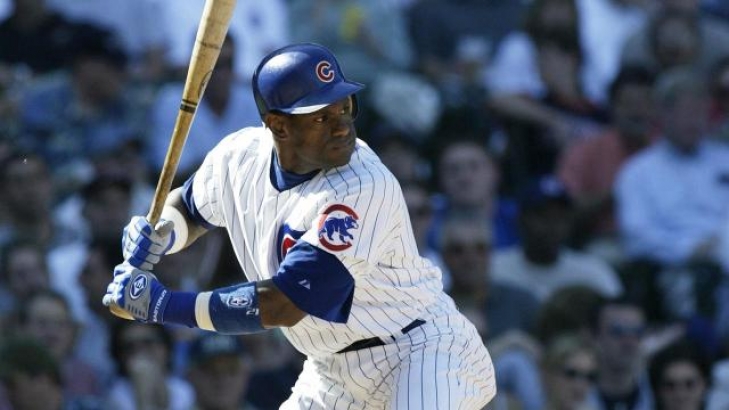
The Chicago Cubs’ acquisition of Sammy Sosa in 1992 remains one of the most lopsided "fleece" jobs in the history of the Crosstown Classic. While the White Sox received an aging George Bell, the North Side inherited a raw, chaotic ball of energy that would eventually transform into a global icon. He arrived as a high-strikeout enigma and evolved into "Slammin' Sammy”, a player who didn't just hit home runs; he staged a daily production in right field, complete with a heart-tap, a kiss to the camera, and a full-tilt sprint to the bleachers.
The story reached its crescendo in the summer of 1998. In a season that many credit with "saving" baseball, Sosa and Mark McGwire engaged in a mythic chase of Roger Maris’ single-season home run record. While McGwire took the title, Sosa took the city’s heart, launching 66 home runs and claiming the National League MVP. It was the start of an offensive deluge unlike anything the game had ever seen: five consecutive seasons of 40-plus homers, including three separate years surpassing the 60-homer mark. From 1998 to 2002, he was the most famous figure in the game, a run-producing machine who owned the Chicago skyline and dominated the highlight reels.
However, the "run with the team" took an unceremonious turn at the end. In 2004, the energy soured. An early exit from the season finale and a subsequent trade to Baltimore signaled a "fall from grace" that lasted for two decades. For years, the relationship between the franchise and its all-time home run leader was nonexistent, clouded by the complexities of the era’s "mistakes" and a fractured front-office dynamic.
But every great epic deserves a resolution. In late 2024, the silence finally broke with a public apology and a call for reconciliation. By early 2025, the prodigal son returned to a "roar" at the Cubs Convention, and in September 2025, he was officially inducted into the Cubs Hall of Fame. He arrived as a trade-market gamble, reached a peak that touched the sun, and after twenty years in the wilderness, finally returned to the Ivy to reclaim his place in franchise lore. He left Chicago with 545 home runs and a .569 slugging percentage, but more importantly, he left as a Cub once again.
27. Bill Hutchinson
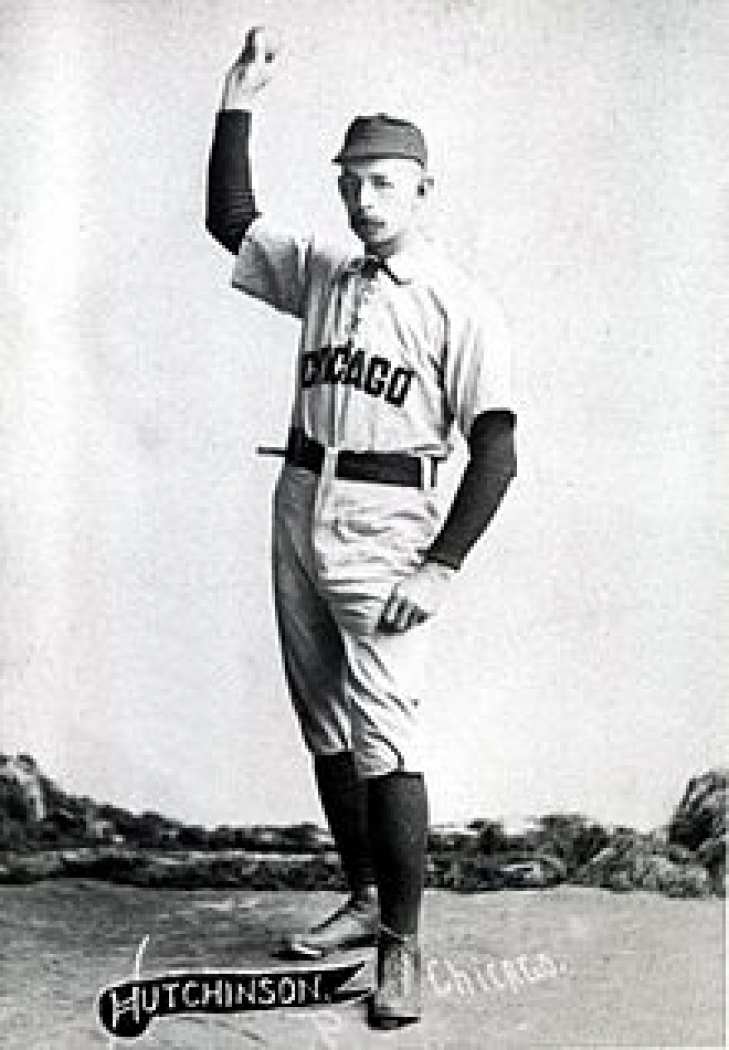
When Bill Hutchinson arrived in Chicago in 1889, the franchise, then known as the White Stockings, was transitioning into the "Colts" era. A Yale graduate with a cerebral approach to a rough-and-tumble game, his true calling card was a rubber arm that seemed immune to fatigue. His residency on the West Side began with a steady introduction, but by 1890, he shifted into a gear that few hurlers in history have ever reached. He arrived as a promising young arm and quickly matured into the most durable pitcher in the sport, leading the National League in innings pitched for three consecutive seasons.
The peak of his tenure arrived during a staggering window between 1890 and 1892. During these three years, Hutchinson was a statistical outlier of the highest order, leading the league in wins each season with totals of 42, 44, and 36, respectively. His dominance of the era was defined by a workload that remains mind-boggling; in 1892 alone, he tossed 622 innings and struck out a league-high 314 batters. He wasn't just a starter; he was a permanent fixture on the mound, providing the stamina that kept the Colts competitive in a rapidly evolving league. During this peak, he was the undisputed king of the rubber, finishing first or second in strikeouts in all three campaigns.
Acknowledging the reality of such a heavy workload, the flame that burned so brightly was destined to flicker out. The incredible stress of throwing over 1,600 innings in just three years eventually eroded his effectiveness. After 1892, Hutchinson’s traditional production began to wane, and he spent his final three seasons in Chicago as a serviceable, though no longer elite, member of the staff. While he was unable to recapture the lightning of his early 20s, the sheer accumulation of his peak years ensured his place in the franchise record books. He finished his Chicago stay with 180 wins and 1,225 strikeouts, a testament to a short, sharp burst of excellence.
The final walk toward the exit for Hutchinson came after the 1895 season, as the massive volume of the early 90s finally brought his career to a close at the age of 31. He left Chicago as a pioneer of the "iron man" era, a player who proved that a single pitcher could carry the weight of an entire organization if his will and his elbow remained strong enough.
17. Bill Nicholson
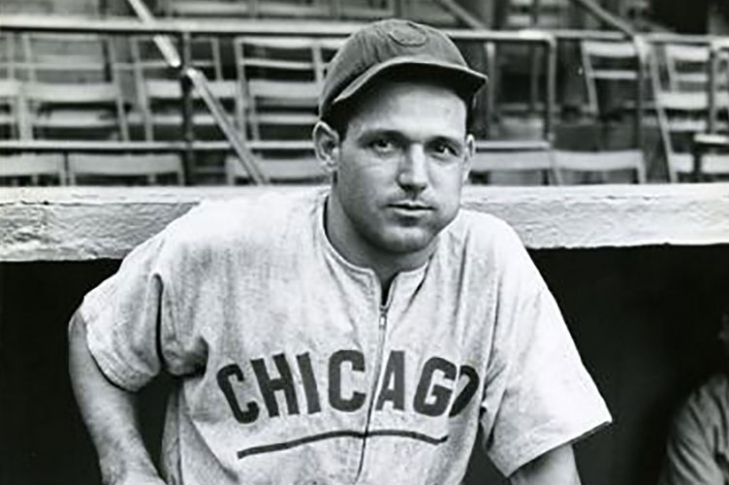
When Bill Nicholson joined the Cubs in late 1939, he arrived as a raw, 205-pound specimen with a swing designed for the cavernous gaps of Wrigley Field. He didn't just step into the box; he commanded it, performing a signature ritual of elongated practice swings, each one ending with his bat pointed like a bayonet at the pitcher. To the Brooklyn fans who mocked him, he was "Swish," but to the Chicago faithful, he was "Big Bill," the most reliable source of lightning on the North Side.
His trajectory reached a historic peak during the height of World War II. While many of the game's elite stars were in uniform overseas, Nicholson remained in a Cubs jersey (deferred from service due to colorblindness) and proceeded to terrorize National League pitching. In 1943 and 1944, he put together a back-to-back campaign that remains the gold standard for wartime production, leading the league in both home runs and RBIs in consecutive years. His 1944 season was his masterwork: 33 home runs, 122 RBIs, and a league-high 116 runs scored, a performance that saw him miss the MVP award by a single agonizing vote. He was so respected and feared that he was once intentionally walked with the bases loaded, a rare tribute to his game-breaking power.
However, the final chapter of his Chicago run was a steady, frustrated descent. As the soldiers returned from the front and the league’s talent pool deepened, Nicholson began a quiet battle with failing eyesight and a persistent kidney infection. The "Swish" that once echoed with authority began to lose its timing. By 1948, the Cubs’ most popular player of the decade was seeing less time on the field and more time on the bench. He was eventually traded to the Philadelphia Phillies after the '48 season, leaving Chicago with 205 home runs and 833 RBIs.
Nicholson departed the North Side as a five-time All-Star and a two-time home run champion who had anchored the team's 1945 pennant-winning squad. While he eventually found a second act as a "Whiz Kid" in Philly, his heart and his history belonged to Wrigley. He arrived as a prospect with a mighty swing and left as a franchise icon, finally taking his place in the inaugural class of the Cubs Hall of Fame in 2021.
20. Joe Tinker
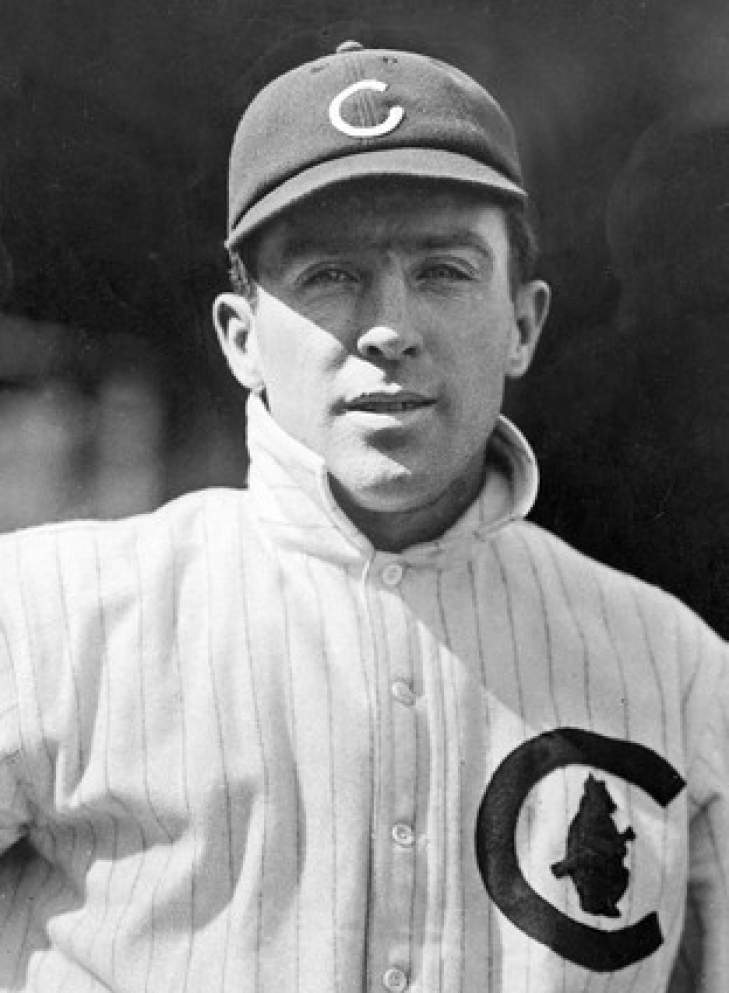
When Joe Tinker arrived in Chicago in 1902, the Cubs were a franchise on the verge of a golden era. He immediately stepped into the starting shortstop role, a position he would hold with an iron grip for the next eleven seasons. While history remembers him as the first link in the "Tinker to Evers to Chance" double-play combination, the reality on the dirt was far more complicated. Tinker and second baseman Johnny Evers famously despised each other, reportedly going years without speaking a word off the field. Yet, when the umpire cried, "Play Ball," Tinker’s professionalism took over. He arrived as a young, agile defender and quickly became the premier shortstop of the Deadball Era, proving that personal friction was no match for championship chemistry.
The peak of his residency was defined by the back-to-back World Series titles in 1907 and 1908. During this stretch, Tinker was a defensive titan, leading National League shortstops in fielding percentage four times and routinely topping the charts in assists and putouts. While his offensive numbers, including a modest .303 on-base percentage, might seem pedestrian by modern standards, he was more than adequate for a Deadball shortstop. He was a clutch performer who collected over 1,400 hits in a Cubs uniform, often delivering the timely knock that a low-scoring Chicago team desperately needed. Without his glove and his occasional bat, the Cubs’ trophy case from that era would likely be far emptier.
He was a five-time leader in defensive bWAR and the runner-up on four other occasions, establishing himself as arguably the greatest defensive player in the sport during his prime. He was the vacuum that allowed the Cubs' legendary pitching staff to thrive, turning countless potential base hits into routine outs. His value wasn't found in home runs or slugging, but in the ground balls that died in his glove and the runners he erased at second base.
The final walk toward the exit in 1912 was a direct result of his fractured relationship with Johnny Evers. When Evers was named player-manager, Tinker demanded a trade, leading to a brief departure from the North Side. However, the gravitational pull of Chicago was too strong; he returned to the city to lead the Chicago Whales of the Federal League, eventually making a final homecoming to the Cubs as a player-manager in 1916 after the leagues merged. It was a fitting, if short-lived, final chapter for a man who had become synonymous with Chicago baseball.
Joe Tinker’s legacy was finally cemented in 1946 when the Old Timers Committee ushered him into Cooperstown. In 2021, the Cubs rightfully included him in their inaugural franchise Hall of Fame class, a long-overdue nod to the man who started the poem but finished the job. He arrived as a scrappy infielder in a new century and left as a permanent monument to the "Hitless Wonders" era. He proved that you don't have to like your teammates to win with them, you just have to be better than everyone else when the ball is hit your way.
14. Billy Herman
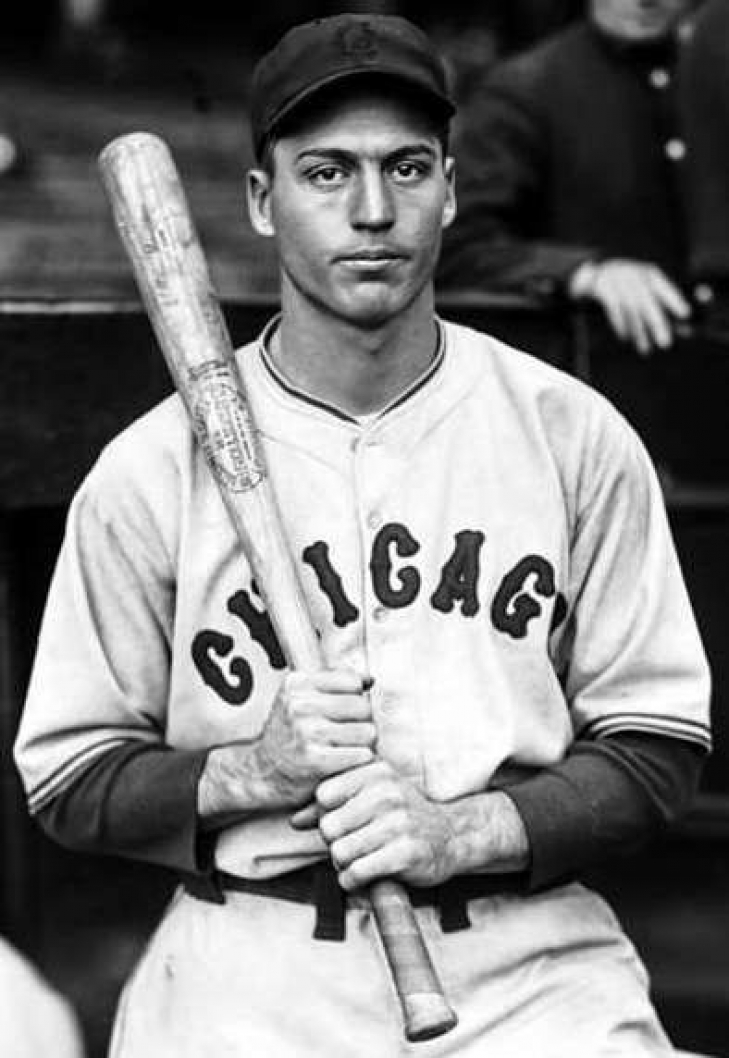
When Billy Herman arrived at Wrigley Field in 1931, he brought with him a brand of baseball that was as elegant as it was efficient. He didn't just play second base; he patrolled it with a spatial awareness that made it feel like he was playing a different game than everyone else. For a decade, Herman was the "vital cog" in a Cubs machine that churned out three National League pennants, providing a defensive foundation that anchored the team's greatest era of the 1930s. He arrived as a rookie with a reputation for his glove, and he spent the next ten years finishing in the top ten for Defensive bWAR seven times, a testament to a range and reliability that made him a perennial All-Star.
But the story of Billy Herman isn't just a defensive highlight reel. He was a dual-threat pioneer who proved that a middle infielder could be a centerpiece of the batting order. His offensive peak came in 1935, a season in which he led the National League with 227 hits, serving as the leadoff catalyst for a World Series run. Herman was a hitting machine who flirted with the .340 mark and retired from Chicago with a sterling .309 career average. He wasn't a power hitter who cleared the fences; he was a surgeon who sliced line drives into the gaps, amassing 1,710 hits in a Cubs uniform and earning eight consecutive All-Star nods as the premier second baseman in the senior circuit.
Herman’s Chicago stint was defined by a quiet, professional excellence that finally reached its peak in the history books long after his playing days were over. While the Cubs of his era famously fell short in the Fall Classic, the blame never rested on the shoulders of their second baseman, who was the heartbeat of the clubhouse and the architect of their defensive identity.
The final chapters of the Herman epic were written in bronze. Inducted into Cooperstown by the Veterans Committee in 1975, he was officially immortalized as a legendary figure of the pre-war era. When the Cubs finally opened their own Hall of Fame in 2021, Billy Herman was an automatic choice for the inaugural class. He arrived as a defensive specialist and left as a franchise icon, the man who proved that the keystone was the most important piece of the puzzle.
7. Mordecai Brown
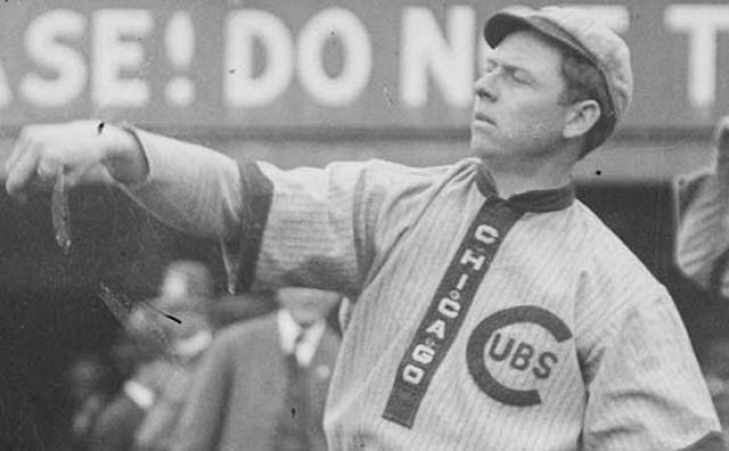
In the early 1900s, the Chicago Cubs weren't just a team; they were a dynasty, and at the center of that whirlwind was a man with a mangled hand and a heart of iron. Mordecai Brown arrived in Chicago in 1904 via a trade with the Cardinals, carrying the physical scars of a childhood farm machinery accident that had cost him parts of two fingers. To any other man, it would have been a career-ending tragedy. To Brown, it was a secret weapon. He learned to grip the ball in the gaps of his remaining digits, creating a "wicked" downward break that defied the laws of physics and the eyes of the era's greatest hitters.
His six-year peak from 1906 to 1911 remains one of the most statistically absurd stretches in the history of the mound. He arrived in the upper echelon of hurlers in 1906 with a 26-win season and a microscopic 1.04 ERA, a number that looks like a typo but was the terrifying reality for National League batters. But Brown wasn't just a regular-season workhorse; he was the ultimate big-game hunter. He pitched the Cubs to back-to-back World Series titles in 1907 and 1908, delivering 20 innings of scoreless baseball on the sport's biggest stage. When the pressure was highest, "Three Finger" was at his most precise.
Brown’s run with the Cubs was defined by a relentless, metronomic excellence. He was a perennial 20-game winner who finished his Chicago tenure with a 1.80 ERA, a mark of consistency that anchored the "Tinker-to-Evers-to-Chance" era. He wasn't just a pitcher; he was the stability that allowed the rest of the dynasty to flourish.
The story reached its formal conclusion long after he threw his last pitch. Elected to Cooperstown by the Old Timers Committee in 1949, Brown’s legacy as the greatest pitcher of the Deadball Era was secure. Decades later, when the Cubs finally established their own Hall of Fame in 2021, Brown was an inaugural inductee, a permanent reminder that greatness isn't about what you’ve lost, but what you do with what you have left. He arrived as a trade-market curiosity and left as the golden arm of the franchise’s most successful era.
28. Greg Maddux
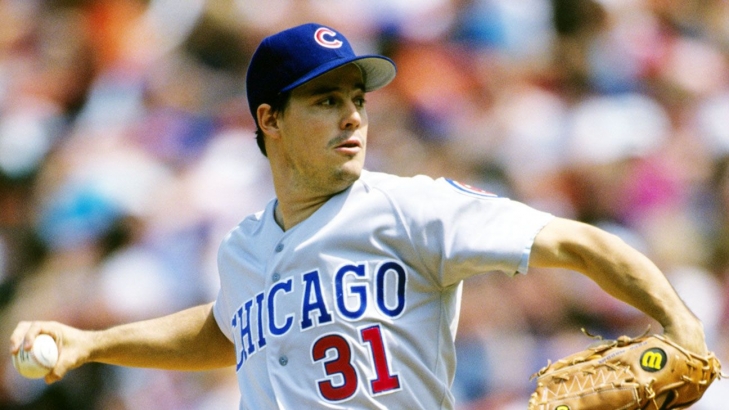
Chicago's North Side witnessed the slow, methodical rise of a pitcher who would eventually be defined by his surgical control. After a traditional developmental curve during his first two seasons, Maddux caught the league’s attention in 1988. At just 22 years old, he secured 18 wins and earned his first All-Star selection, signaling that the Cubs had found a rare anchor for their rotation. He matured into a model of consistency over the next several years, rattling off three consecutive seasons of at least 15 wins and establishing himself as a perennial threat to any lineup in the National League.
The statistical pinnacle of his first residency arrived in 1992, a season o that remains one of the greatest pitching performances in franchise history. Maddux led the league with 20 wins and posted a microscopic 2.18 ERA, a combination that earned him his first career Cy Young Award. This campaign was a masterclass in efficiency, further bolstered by his third consecutive Gold Glove, a trophy he would eventually collect a record-setting 18 times. He arrived as a prospect with high-end potential and left that season as the premier pitcher in the sport.
A complicated free-agency period led to a decade-long hiatus from Chicago, but the allure of Wrigley Field eventually brought him back for a second chapter in 2004. During this latter residency, he continued to showcase his legendary durability, winning his 300th career game in a Cubs uniform and leading the league in starts at the age of 39. He concluded his time in Chicago with 133 wins and 1,305 strikeouts, a volume of production that ranks him among the most significant arms to ever represent the organization.
The final chapter of his professional journey saw him enter the Baseball Hall of Fame in 2014, receiving one of the highest voting percentages in history during his first year of eligibility. In a fitting tribute to his dual-franchise legacy, he chose to have no logo on his plaque, honoring both the city that raised him and the one where he reached his peak. In 2009, he retired his number 31 and was later inducted as an inaugural member of the team Hall of Fame in 2021.
19. Mark Grace
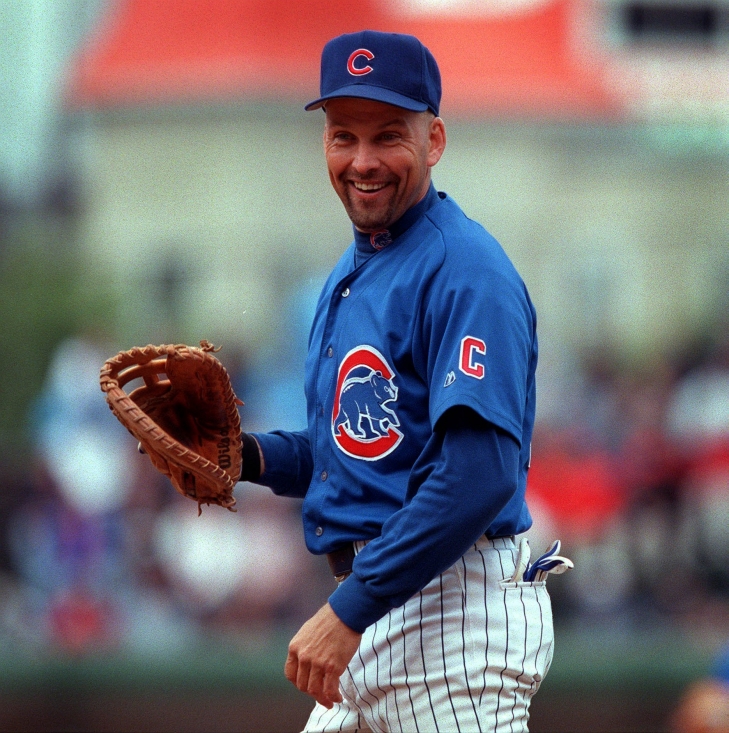
When Mark Grace was drafted in the 24th round in 1985, he arrived with almost no fanfare. Most scouts didn't expect a kid chosen that low to ever see the Ivy at Wrigley, but Grace didn't seem to care for their projections. He cracked the roster in 1988 and immediately locked down first base, finishing second in the Rookie of the Year race. He wasn't the stereotypical "slugging" first baseman of the era; he was a pure, high-contact technician who used the entire field. He arrived as a long shot and left the rookie season as a cornerstone, proving that a refined approach could be just as lethal as a 500-foot blast.
The middle of his Chicago residency was defined by a staggering, almost robotic consistency. Throughout the 1990s, Grace collected more hits and more doubles than any other player in Major League Baseball—a feat that often gets lost in the shadow of the era's power surge. He was a perennial .300 hitter, reaching that mark nine times in a Cubs uniform and frequently appearing in the National League's top ten for batting average. He possessed a discerning eye at the plate, twice posting an on-base percentage over .400. While he wasn't a "superstar" in the home run column, his 2,201 hits and 1,004 RBIs as a Cub made him the primary engine of the North Side offense.
Defensively, Grace was the gold standard for his generation. A four-time Gold Glove winner, he played first base with a surgical grace that made difficult scoops look routine. He was a three-time All-Star who became a fan favorite not just for his glove, but for his dry wit and his status as the "professional" in a lineup that often shifted around him. He was the rare "solid contributor" who played at such a high level for so long that he elevated himself into the franchise’s elite tier, serving as the bridge between the Ryne Sandberg era and the arrival of the next generation of Cubs stars.
The final walk toward the exit came after the 2000 season, a departure that felt like the end of an era for the Wrigley faithful. Grace signed with the Arizona Diamondbacks as a free agent, and in a bittersweet twist for Chicago fans, he finally captured the World Series ring that had eluded him on the North Side in his very first year in the desert. He left the Cubs with a career .308 average and a legacy of blue-collar reliability that hasn't been matched at first base since.
Mark Grace arrived as a 24th-round afterthought and left as a North Side legend. He proved that you don't need to lead the league in home runs to lead a decade in hits, and that sometimes, the most valuable player on the field is the one who simply refuses to make an out.
21. Clark Griffith
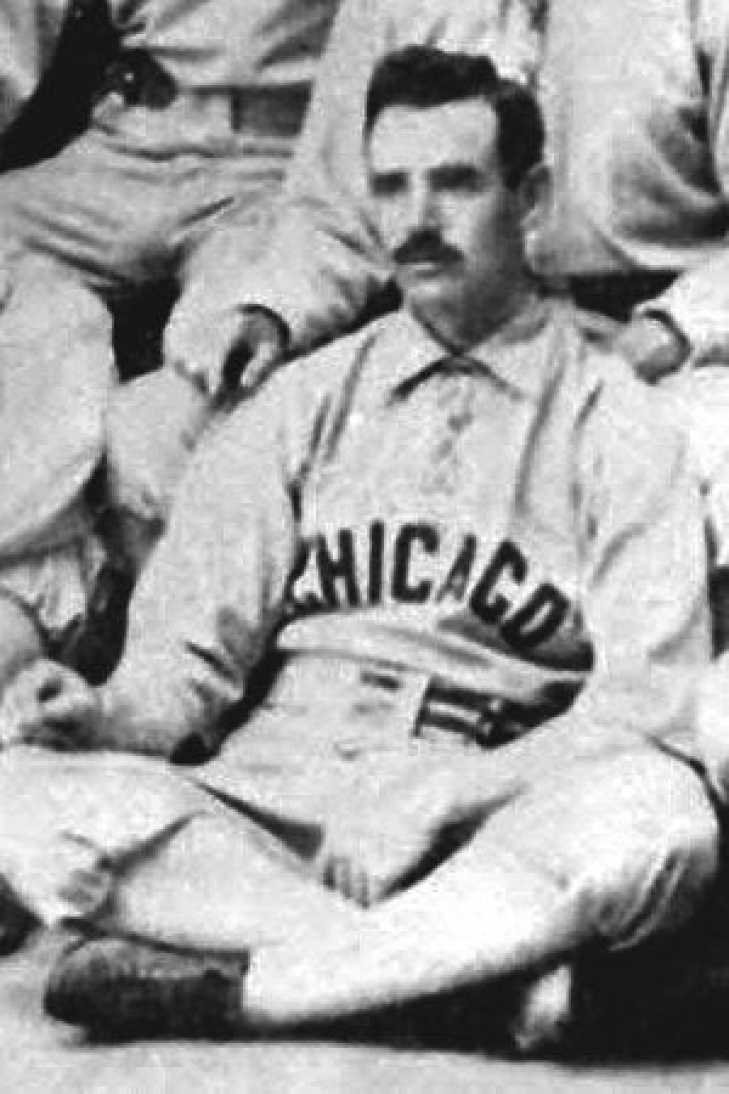
When Clark Griffith arrived in Chicago in 1893, he joined a franchise transitioning from the legendary Cap Anson era to a new identity. Standing just 5'6", Griffith lacked the imposing physical presence of his peers, but he possessed a shrewd intellect and a diverse arsenal that more than made up for it. He was an innovator of deception, utilizing a quick pitch and a variety of deliveries that kept hitters in a state of permanent frustration. He arrived as a young hurler with an immense workload ahead of him and quickly established himself as the most reliable arm in the National League.
The middle chapter of his Chicago residency was a masterclass in metronomic consistency. From 1894 to 1899, Griffith rattled off six consecutive seasons of at least 21 wins, a feat of durability that anchored the Chicago Colts (and later the Orphans). In 1898, he reigned as the National League’s ERA leader with a microscopic 1.88 mark and led the league in WHIP. He was a workhorse in the truest Deadball sense, eclipsing 300 innings pitched in five of those six seasons, proving that his "Old Fox" guile could keep him effective long after more powerful arms had withered.
However, Griffith’s legacy in Chicago is also defined by his role as a revolutionary. As the 1900 season concluded, he became a central figure in the labor movement of the era, leading an uprising against the National League’s salary ceiling. This friction eventually led to the most significant exit in Chicago baseball history. Griffith didn't just leave the Orphans; he actively helped organize the rival American League, "jumping" to the crosstown Chicago White Stockings (White Sox) and convincing many of his peers to join him. It was a move that fundamentally altered the sport's landscape, legitimized the junior circuit, and made Griffith a founding father of the modern game.
The final walk toward the exit of his playing days led him into a legendary career as a manager and owner, most notably with the Washington Senators. But the North Side never forgot the man who had been their ace for nearly a decade. In 1946, the Veterans Committee ushered him into Cooperstown as a Pioneer and Executive, a nod to his lifelong dedication to the sport. Decades later, the Cubs formally reclaimed his on-field brilliance by inducting him as part of their inaugural franchise Hall of Fame class in 2021.
