


Committee Chairman
The Hockey Hall of Fame announces the date of the 2020 Induction
The Hockey Hall of Fame has set a new date to induct the Class of 2020, which had postponed due to COVID-19.
The induction will take place on November 15, which will see Marian Hossa, Jarome Iginla, Kevin Lowe, Doug Wilson, Kim St-Pierre and Ken Holland enter the hallowed halls in Toronto.
Last October, Hall of Fame Chairman, Lanny McDonald announced that there will be no Class of 2021.
6 Things The MLS Does Better Than The Premier League
The MLS (Major League Soccer) is constantly being compared to the English Premier League, and the truth is, on many accounts, it can’t compete. The Premier League has better players, is viewed around the world, and is a financial powerhouse. However, that’s not to say that the MLS doesn’t have some amazing qualities. Here are six things that the MLS does better than the Premier League.
No Hooliganism
Hooliganism has been associated with soccer in England for decades. It became particularly bad in the 1980s but is still a part of the game today. The MLS doesn’t have that problem, though. The people behind the MLS have aimed at fostering a family-friendly environment. That’s not to say that the MLS doesn’t attract passionate fans, though.
Spending Limits
The MLS has a salary cap on players, which creates a level playing field for clubs. This creates a competitive environment that allows every club to have a shot at the title. The downside of the MLS’s salary cap is that the best American players end up playing for European clubs. In European leagues, the spending is completely out of control, with players earning massive wages and clubs competing on spending power.
Playoffs
The MLS is set up differently from every other soccer league in the world. Instead of a total points-based system, it has playoffs (like other American sports). It works like this - the 34 MLS teams are split into two conferences (the Eastern Conference and the Western Conference). Each team plays every other team in their conference twice. The top seven teams in each conference then get entered into a knock-out style tournament to lift the MLS cup. This isn’t as competitive as the Premier League, but it makes the end of the season far more exciting.
Respect
Soccer in Europe is extremely competitive. Unfortunately, this level of competition sometimes turns into a culture of disrespect. Players argue with referees, fans throw things at players, players make obscene gestures at fans… you get the picture. In the MLS, this sort of behavior is very rare.
Work Permits
If you’re a foreign player wanting a chance to play in England, there is a difficult process of entry. This is designed to stop an influx of overseas talent taking all of the opportunities instead of English players. In the MLS, it’s easy for foreign players to get into the country. This allows a lot of South American players to get a chance at professional soccer. However, it doesn’t stop young American players from traveling to Europe with programs like Soccer to Football. The draw of European soccer is too strong for American players.
No Relegation
In the English Premier League, the bottom three teams get relegated to the Championship (the 2nd tier league). That means professional soccer players get moved around from league to league, having their wages slashes and careers ruined. That’s not the case in the MLS. Once a team has been accepted into the league, they are there to stay. This provides more stability for players and fans.
We have revised our Notinhalloffame Basketball List. Major changes!
Revising lists never stops at Notinhalloffame.com.
A couple of months ago, The Naismith Basketball Hall of Fame announced the newest members of their institution. In terms of our list, it was a record five chosen from the top ten, and it created a seismic shift on our countdown.
Whenever we revamp our list, the first thing we do is take out those who were enshrined. Chosen for Springfield, were our top four ranked former players, Paul Pierce (#1), Chris Bosh (#2), Chris Webber (#3) and Ben Wallace (#4). Bob Dandridge, who was ranked at #10, also was elected.
The second thing we do, is add those who are now eligible, but unlike previous years, there are not multiple top players who appear to be locks for the Hall.
The third and final thing we look at is your votes and comments on each eligible player. Those help determine rises or falls of those on the list.
Let’s see our new top ten, which again, is colossally different from last year. Based on who we have available in 2022, we are having a hard time trying to predict who will be named to the next class.
We have to way back in hoops history for our new number one, Max Zaslofsky, who was an All-NBA (All-BAA) First Team Selection in the first four years of the BAA/NBA’s existence. While playing for the Chicago Stags, Zaslofsky won the 1947/48 Scoring Title, and at the time of his retirement in 1956, he was third all-time in scoring. He is also a member of the NBA 25th Anniversary Team, and was ranked at #6 last year.
Coming at #2 is Tim Hardaway, who moves up from #8 and was a Finalist last year. Known mostly for his run with Chris Mullin and Mitch Richmond as “RUN-TMC” at Golden State, Hardaway was a five-time NBA All-Star and five-time All-NBA Selection. His candidacy is plagued by his past homophobic remarks, though he has since atoned for that.
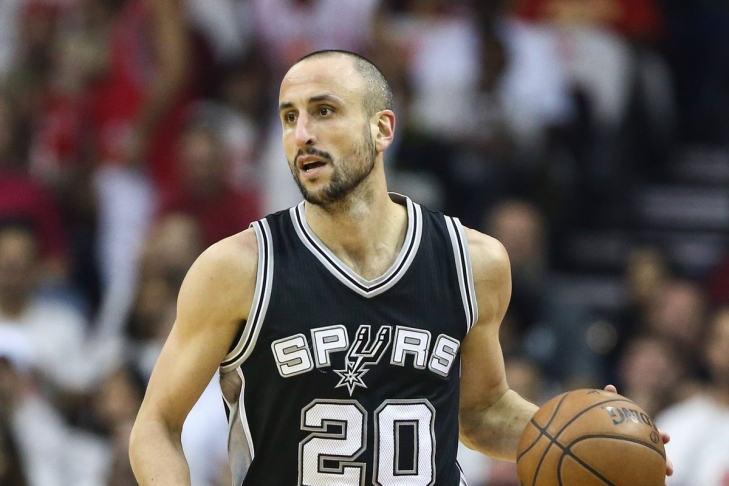
Our highest debut is Manu Ginobili at #3, who is arguably the greatest basketball player in Argentine history. A two-time All-Star and four-time NBA Champion with the San Antonio Spurs, Ginobili led his nation to Gold in the 2004 Olympics.
Chauncey Billups rocketed from #11 to #4. Billups led Detroit to the NBA Championship in 2004, where he was named the Finals MVP. He was also a five-time All-Star.
At #5 is former Seattle SuperSonic, Shawn Kemp, who holds the same rank as last year. Kemp was a six-time NBA All-Star.
Six-time All-Star and former Atlanta Hawk, Lou Hudson, climbed from #9 to #6.
Buck Williams jumped to #12 from #7. Williams was a three-time All-Star and was the 1982 Rookie of the Year.
Two-time NBA Champion with Detroit, Mark Aguire, dropped from #7 to #8.
Larry Foust went up from #15 to #9, and he was an eight-time All-Star who played in the 1950s.
Maurice Lucas went up three spots to #10. He was a four-time NBA All-Star and one-time ABA All-Star.
There are four other additions:
Joe Johnson, who was a seven-time All-Star makes a strong debut at #13.
Former Memphis Grizzlies big man, Zach Randolph, enters at #89.
The other two new names are David West and Richard Jefferson at #115 respectively. Jefferson’s ranking is currently where our list ends.
The entire list can be found here.
Eventually, we plan to expand our list to 150. At a later time, we may create a separate list for women, but at present there is no plan to do so.
You know what we want you to do!
Take a look for yourself, and cast your votes and offer your opinion.
As always, we thank you for your support.
Date-Match Songs from 2021 Rock and Roll Hall of Fame Finalists
The relationship between romance and love has spanned the centuries, ever since the world-renowned playwright Shakespeare likened music to ‘the food of love.’ Throughout history, music has been an important part of people's lives and continues to be celebrated today through the Rock and Roll Hall of Fame.
Can you make your date more passionate and hot with music?
There are so many reasons why finding an apt song or playlist can make your date perfect. For one thing, music comes in so many shapes or forms, from the grinding aggression of metal to the upbeat danceability of disco or hip-hop. Different songs can express a multitude of feelings.
It is important for true music lovers to surround themselves with people who share their passion for music. Therefore, they are looking for life partners among those who love to listen and light up to their favorite rhythms. Flirty singles can just as easily connect with soul mates at music concerts as they can through the HelloHotties dating site. With flirty online services, people can use a relaxed virtual environment to both meet new people and chat about their favorite love songs. One of the joint activities online is adding tunes to mutual playlists, which will improve the bond with common interests.
In a nutshell, music is the lifeblood of romance.
Many couples who go on to enjoy long-standing partnerships will often cast their minds back to whatever was playing in the background when they first met. This can become ‘their song,’ the one that will instantly remind each one about their loved one, even when they’re apart.
On a first date, dancing to pleasant music is an indication that their liaison is progressing well. And seductive love songs streaming in the background will create the perfect mood to continue the evening.
Songs from 2021 Rock and Roll Hall of Fame Finalists that set the right mood on a date
There’s a strong argument for current chart hits forming the ideal soundtrack to romance. These hits are current, uplifting, and the songs will be played regularly, provoking instant thoughts of a new partner. But there’s an equally strong argument for focusing on timeless classics. The Rock and Roll Hall of Fame has announced 2021 nominees, including those who have been releasing music more than 25 years ago. Let's take a look at the songs of some of these fantastic performers that guarantee your hot date keeps simmering.
Everlong by Foo Fighters
One of their most well-known songs of all time, Everlong (1997), in its acoustic version, is a beautiful musical composition for a romantic date as well as for the first wedding dance.
4:44 by Jay Z
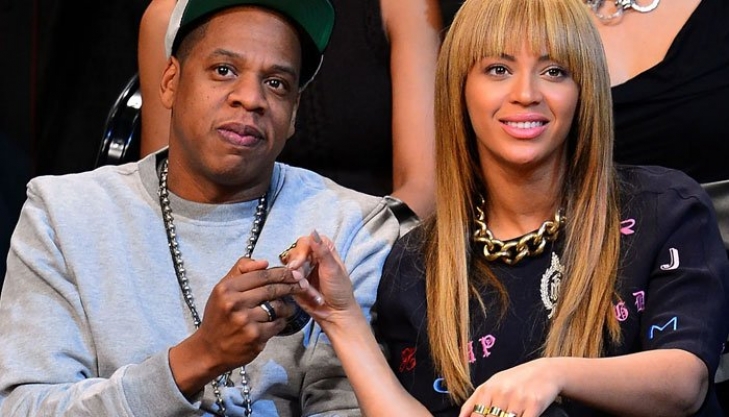
One of Jay Z's songs - 4:44 – a title from his 13th studio album, is a love-apology letter to the woman he loves. Great vocals and memorable music makes it one of the best songs in Jay Z’s career. It sure as hell will show your date your romantic side.
(You Make Me Feel Like) A Natural Woman by Carole King
King’s credentials for providing the ideal interlude to a romantic get-together are impeccable. As a singer-songwriter, she co-wrote and later performed a very intimate, yet relatable song, (You Make Me Feel Like) A Natural Woman. It’s telling a story about a woman finding her true love. Old school classics of their time perfect to listen to with your partner.
Vacation by Go-Go’s
Spending six weeks at the top of the US chart, and shifting two million copies, the Go-Go’s debut album Beauty and The Beat has been deemed the ‘cornerstone album of American New Wave.’ Lead by singer Belinda Carlisle, the songs are wonderfully catchy slices of poppy rock. Vacation (1982) is one of the most catchy ones. Giving the 80s vibes along with romantic atmosphere, it is a great song to listen to on your date.
Wasting Love by Iron Maiden
The Heavy Metal Gods know how to make quality music, and love songs are no exception. Their Wasting Love is about the dark side of love - that you can lose it and remain alone and broken. With passionate music and lyrics, this ballad makes people think about their life. Besides, it seems like there is something personal behind this song that adds value to it.
Girl U Want by Devo
A song about the love and lust of a man for a woman. Perfect for creating a playful mood on a date, to emphasize that the girl you are dating is special and desirable for her partner.
Of course, the list is not complete, since there are many creators of great hits for dating among the performers of the Rock and Roll Hall of Fame. However, start with these songs on a hot date and see how things develop.
