


Committee Chairman
Our All-Time Top 50 Buffalo Sabres are up
Yes, we know that this is taking a while!
As many of you know, we here at Notinhalloffame.com are slowly generating the 50 of each major North American sports team. We have a new one to unveil today, that of the Buffalo Sabres.
The Buffalo Sabres came into the NHL as part of the league’s expansion from 12 to 14 in 1970, and they quickly proved their worth.
On the strength of the "French Connection" line (Gilbert Perreault, Rick Martin, and Rene Robert), the Sabres made it to the 1975 Stanley Cup Finals, though lost to Philadelphia. Buffalo remained a good, though not necessarily great squad for years, and upon the emergence of Czech Goalie Dominic Hasek, made it to the Finals again in 1999, though a controversial call cost them the Cup against Dallas.
The Sabres have not been to the Finals since.
Our Top 50 lists in baseball look at the following:
1. Advanced Statistics.
2. Traditional statistics and how they finished in the National Hockey League.
3. Playoff accomplishments.
4. Their overall impact on the team and other intangibles not reflected in a stat sheet.
Remember, this is ONLY based on what a player does on that particular team and not what he accomplished elsewhere and also note that we have placed an increased importance on the first two categories.
This list is updated up until the end of the 2020/21 Season.
The complete list can be found here, but as always, we announce our top five in this article. They are:
3. Rick Martin
4. Ryan Miller
5. Mike Ramsey
We will continue our adjustments on our existing lists and will continue developing our new lists.
Look for our more material coming soon!
As always, we thank you for your support.
The Texas Rangers will induct Adrain Beltre and Chuck Morgan to their Hall of Fame
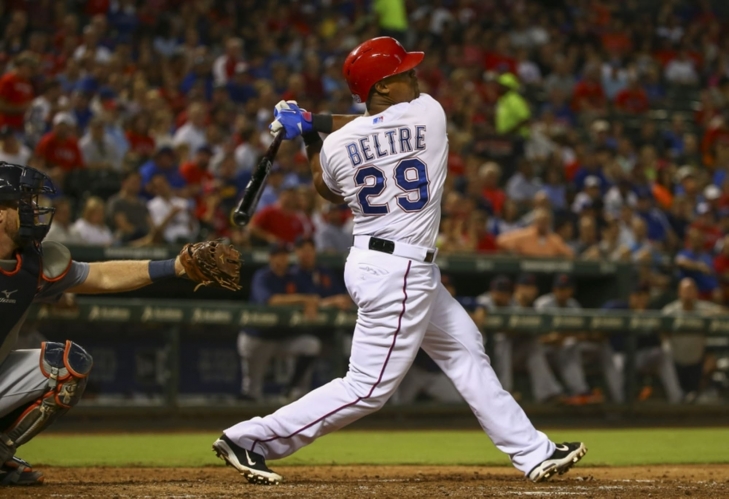
Regular visitors of Notinhalloffame.com know that we are slowly working on the top 50 of every major team in the NHL, NBA, NFL and MLB. Once that is done, we intend to look at how each team honor their past players, coaches and executives. Eventually, we are going to get to that of the Division I schools, and conferences. As such, it is news to us that the Texas Rangers have announced that former infielder, Adrian Beltre, and Public Address Announcer, Chuck Morgan will be inductee 23 and 24 to their franchise Hall of Fame.
The ceremony will take place on August 14, prior to their home game against Oakland.
Beltre played 21 seasons in the Majors, with his last eight (2011-18) coming as a Ranger. With Texas, Beltre had 199 Home Runs, 699 RBIs and won three Gold Gloves and two Silver Sluggers. Beltre, who had 3,166 career Hits, went to three All-Star Games as a Ranger. His number 29 was retired in 2019, making him the sixth player in franchise history to earn that honor.
Morgan became the Rangers’ Public Address Announcer on Opening Day of 1983, and had not missed a day ever since. He has performed this duty in over 3,000 Games.
We would like to congratulate both Adrian Beltre and Chuck Morgan for their impending induction to the Texas Rangers Hall of Fame.
Our All-Time Top 50 New York Giants have been revised (sort of)

Yes, we know that this is taking a while!
As many of you know, we here at Notinhalloffame.com are slowly generating the 50 of each major North American sports team. That being said, we have existing Top 50 lists out and we always consistently look to update them when we can and based on necessity. As such, we are very happy to present our pre-2021 revision of our top 50 New York Giants of all-time.
As for all of our top 50 players in football we look at the following:
1. Advanced Statistics.
2. Traditional statistics and how they finished in the NFL.
3. Playoff accomplishments.
4. Their overall impact on the team and other intangibles not reflected in a stat sheet.
Despite all of the above, here is what we have in terms of revisions:
Nothing.
None of the players who played for New York in 2020 rose their stock to crack our top 50, though this is a very old franchise, so that is not surprising. Nevertheless, we thought it prudent to mention what we have been working on.
As always, we present our top five immediately.
3. Rosey Brown
4. Mel Hein
You can find the entire list here.
We welcome your input and comments and as always, we thank you for your support.
Our All-Time Top 50 New England Patriots have been revised
Yes, we know that this is taking a while!
As many of you know, we here at Notinhalloffame.com are slowly generating the 50 of each major North American sports team. That being said, we have existing Top 50 lists out and we always consistently look to update them when we can and based on necessity. As such, we are very happy to present our pre-2021 revision of our top 50 New England Patriots of all-time.
As for all of our top 50 players in football we look at the following:
1. Advanced Statistics.
2. Traditional statistics and how they finished in the NFL.
3. Playoff accomplishments.
4. Their overall impact on the team and other intangibles not reflected in a stat sheet.
There are no additions to our top fifty, but three active Patriots moved up slightly, none of which affecting the top five, which as always, we present the top five.
1. Tom Brady
2. John Hannah
You can find the entire list here.
The three changes are:
Special Teams specialist, Matthew Slater, climbed from #30 to #28.
Defensive Back, Devin McCourty went up one spot to #39.
Former Defensive Player of the Year, Stefon Gilmore, went from #45 to #41.
We welcome your input and comments and as always, we thank you for your support.
