


Committee Chairman
Our All-Time Top 50 Minnesota Timberwolves have been revised
Yes, we know that this is taking a while!
As many of you know, we here at Notinhalloffame.com are slowly generating the 50 of each major North American sports team. That being said, we have existing Top 50 lists out and we always consistently look to update them when we can and based on necessity. As such, we are very happy to present our pre-2021-22 revision of our top 50 Minnesota Timberwolves of all-time.
As for all of our top 50 players in basketball we look at the following:
1. Advanced Statistics.
2. Traditional statistics and how they finished in the NBA.
3. Playoff accomplishments.
4. Their overall impact on the team and other intangibles not reflected in a stat sheet.
After looking at the 2020-21 Season, we have no new entries, nor any changes, but there are notes worth discussing.
As always, we present our top five immediately, though nothing has changed in this upper-tier.
3. Kevin Love
You can find the entire list here.
Towns has a long way to go, if he can ever, unseat Garnett.
Despite winning the Rookie of the Year, Anthony Edwards’ poor advanced stats held him from obtaining a spot on this list. Malik Beasley and D’Angelo Russell also missed out.
We welcome your input and comments and as always, we thank you for your support.
5 Footballers Who Love Gaming
You may be wondering what a professional footballer does with their free time, when they spend the majority of their days on the pitch or at the training ground. Well, it turns out, many of them are just like the rest of us, enjoying their downtime by playing games. Be it video games, PC or even casino games, here’s our list of 5 pro footballers who absolutely love gaming.
1. Jesse Lingard
Kicking off the list (no pun intended) is Jesse Lingard. The England and West Ham midfielder is an avid video gamer who spends a major portion of his free time playing console games like FIFA and Call of Duty. In an interview at his parent club, Manchester United, Lingard reported that he only got into gaming after a disappointing cup final defeat in 2018. He also revealed that he isn’t the only Red Devil to enjoy online gaming, as Marcus Rashford, Dan James and Paul Pogba regularly join him to play Call of Duty: Warzone.
2. Neymar
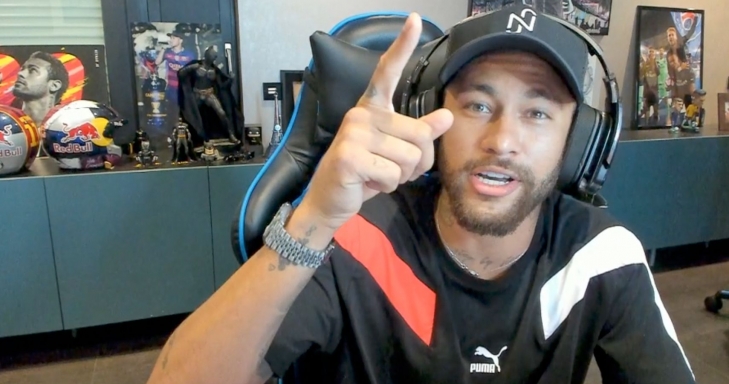
PSG superstar Neymar is one of the biggest gamers in world football, playing on both consoles and PC. In fact, he even has custom computers built for him. The left-winger has a whole host of games in his repertoire, including Pro Evolution Soccer, GTA and Fortnite. Recently, he actually became a playable character in the viral battle royale game! This collaboration comes as little surprise, as Neymar has always been a huge fan of the game, even playing on live streams with professional gamers like Ninja.
3. Cristiano Ronaldo
Yes, that’s right, one of the greatest footballers of all time is a huge fan of games. Not the type you of games you might be thinking of, however. While others may spend their time on a PC or console, Cristiano Ronaldo is much more comfortable at the poker table. While he generally keeps his love of casino games private, the Juventus forward is known for promoting events and tournaments for popular poker companies. If you want to give similar casino games a try, check out online casino Canada for a variety of exciting options.
4. Antoine Griezmann
Another player with a knack for video games is FC Barcelona forward Antoine Griezmann. The French international is an enthusiastic console gamer, and has even become a part of Team Xbox. As part of the collaboration, Griezmann was given a personalized Xbox Series X, which he used to play games like FIFA and Fortnite.
5. Gerard Piqué
Another player who loves to try his hand at the poker table is Spanish defender Gerard Piqué. In fact, he’s actually very skilled at the game. He is said to be as adept as some professionals, often taking part in high-level events like the World Series of Poker. He truly demonstrated his prowess by winning over £300,000 (over $400,000) at the European Poker Tour in Barcelona – a high-stakes game with a considerable £22k buy-in.
So, there you have it. Professionals on the field, but definitely amateurs on a console, these five footballers are living proof that gaming is for anyone and everyone.
Who Are The Top Safeties in NFL history?
When it comes to American Football, or any sport for that matter, there are always certain positions that get all the credit whilst others do an important, less recognized role for the team.
In American Football, the safety is the role that flies under the radar. Not today. Here we look at the top safeties in NFL history.
Number 5. Steve Atwater
Kicking off our top five safeties of all time is Steve Atwater. Now, you might think of Atwater as a linebacker but, make no mistake, he was a safety; his style of play, however, was linebacker-esque. He made an immediate impact on the Denver Broncos when he was drafted back in 1989. The Arkansas grad catapulted their run defence and instantly set about making tackle after tackle.
There was a four year stretch where he averaged 149 tackles a season; that’s a simply crazy haul when you compare to the tackle average of safeties in the modern game. His career was capped off with a Super Bowl win.
Number 4. Brian Dawkins
We were tempted to put Brian Dawkins higher on this list purely for his intensity and impact. The Eagles legend was an absolutely fantastic leader who wasn’t afraid to make the big tackle or the rough hit. A lot of the advantages that his team got with him isn’t even on the score sheet either; that makes him ten times more valuable.
That said his stats aren’t to be ignored; he had 37 career interceptions and 1,118 tackles that earned him nine Pro Bowl nods and four First Team honours. Very few in the game can rival Dawkins’ passion and drive.
Number 3. Ed Reed
What can you say about Ed Reed? In truth, maybe not much. What you can say though is that he was an outstanding safety. Reed was overshadowed at times due to the impact of Ray Lewis at the linebacker position.
Many though would say it was Reed that truly kept the defence together. He was constantly flying around the field to make big hits and snag interceptions at crucial times.
Those qualities earned him the Defensive Player of the Year award back in 2004; it made him the first safety to scoop the award in two decades. On top of that, he also made the Pro Bowl nine times and led the league in interceptions on three different occasions.
Number 2. Troy Polamalu
It’s hard to imagine anybody playing the way that two-time Super Bowl winner Troy Polamalu did back when he was on the football field. He played with a tremendous amount of heart and was a stalwart in the Pittsburgh Steelers side between 2003 and 2014.
Polamalu had a trademark hit on him and when it came to the passing game he’d zip around to acrobatically make interceptions that often looked impossible.
Despite being one of the shortest players for the safety position, his impact and loyalty to Pittsburgh mean he deservedly goes down as one of the best safeties in NFL history.
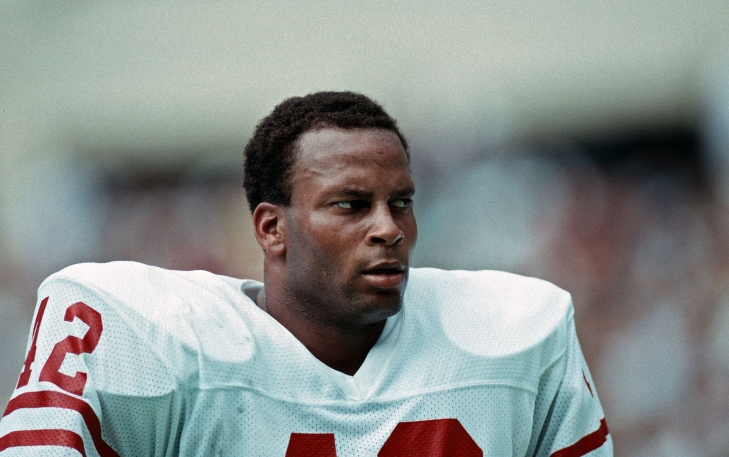
Number 1. Ronnie Lott
On our number 1, we have to disagree with TwinSpires list of the Top 10 Safeties in NFL history. They put Lott in second, but for us he tops the list. Lott is the epitome of a fearless leader. His reading of plays made it seem as if he was always one step ahead of the opposing team.
He knew exactly when to wrap up a fast playmaker and when to stand up and lay him out. Lott bounced around teams donning the colours of five different franchises, but it didn’t damage his reputation.
Across his career he had 63 interceptions and returned five of them for touchdowns. Finally, how can you talk about Lott and fail to mention the fact that he literally chose to amputate a broken finger just so he could return to the game and continue playing; absolutely insane.
There you have it, the best safeties in NFL history. Did we miss anyone? Let us know.
The University of Wyoming announces their 2021 Hall of Fame Class.
Regular visitors of Notinhalloffame.com know that we are slowly working on the top 50 of every major team in the NHL, NBA, NFL and MLB. Once that is done, we intend to look at how each team honor their past players, coaches and executives. Eventually, we are going to get to that of the Division I schools, and conferences. As such, it is news to us that the University of Wyoming has announced seven new members to their Athletic Hall of Fame.
The seven new members are:
Jon Cogdill, Football and Men’s Wrestling 1986-90. Codgill was an Offensive Lineman and Long Snapper who played in two bowl games. As a wrestler, Codgill was a three-time WAC Champion and was the Outstanding WAC Wrestler of the Year in 1990. He had a record of 82-29-4.
Dennis Dreher, Special Achievement. Dreher has been a volunteer for 50 years, working as a statistician in football games, and has also been a public address announcer for Cowgirl basketball.
Brandon Ewing, Men’s Basketball 2006-09. Ewing was the first player in All-Mountain West history to earn all-conference honors four years in a row. He is second all-time at Wyoming in Points and Assists and third in Steals.
Wiles Hallock, Administrator 1949-60. Hallock became the Publicity Director in 1948 and became the school’s first Sports Information Director in 1954.
Kevon Mannon, Men’s Track & Field 1998-99. Mannon is a seven-time All-American, competing in the weight throw, shot put, hammer throw and discus. He was a two-time WAC Champion in the shot put, two-time champion in wight throw and one-time champion in the discus.
Mike Schenbeck, Football 1985-1988. Schenbeck played at Linebacker who played in two bowl games. He had 106 Tackles in his junior year and 83 in his senior campaign.
Tom Wilkinson, Football and Baseball 1964-66. Wilkinson was Wyoming’s Quarterback for three years, and in 1965, he led the team to a #12 ranking, and had an overall record of 18-10-2. He was also the Shortstop on their baseball team. He would later be inducted to the CFL Hall of Fame after a long career winning six Grey Cups, all with Edmonton.
The class will be inducted on September 3, 2021. The new members bring the amount of inductees to 173 individuals and 21 teams. The Hall was initiated in 1993.
We would like to congratulate the newest members of the University of Iowa Athletic Hall of Fame.
