Ted Kluszewski was a monster in his day. This was not just in regards to his tape measure Home Runs, but that he was such an imposing physical specimen that he cut off the sleeves of his uniform so that his arms could move better.
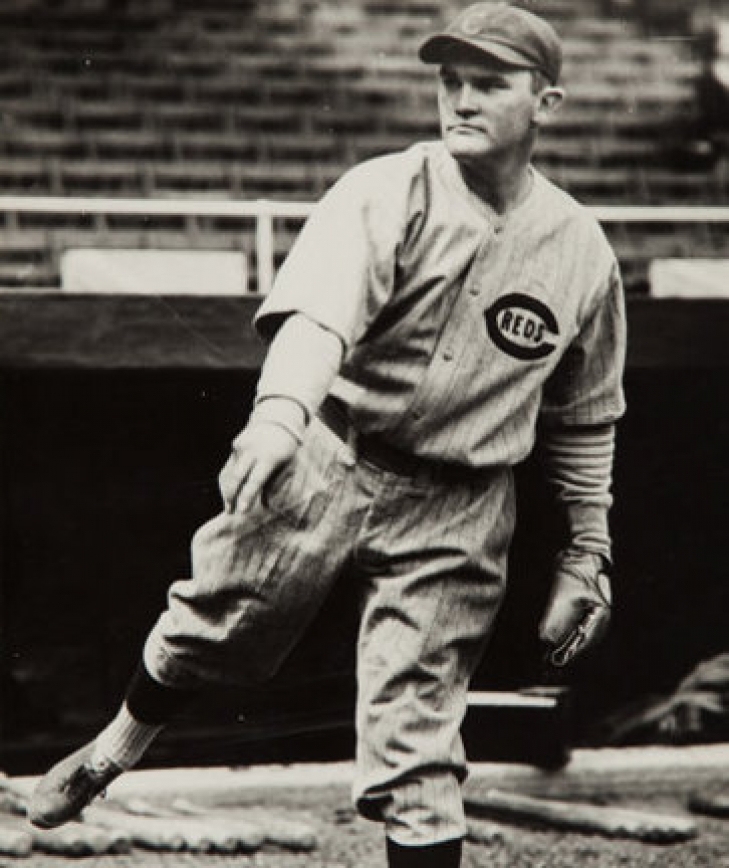
“Big Klu” debuted in the Majors in 1947 with the Cincinnati Reds, and the big First Baseman was a starter a couple of years later. From 1953 to 1956, Kluszewski was an All-Star and one of the premier hitters in the National League. Winning the Home Run Title in 1954 with 49, Kluszewski was also first in RBIs with 141. That year was sandwiched between two other 40-HR seasons, and in that four-year All-Star run, he was also a three-digit RBI player. Kluszewski’s offensive skills were not just his power, as he batted over .300 six times and had a career Batting Average of .302. Despite his big swing, he did not strike out much, fanning only 365 times in his career and 35 times in his 49-HR year. That year, he was also the runner-up for the National League MVP, and he was in the top ten in the year before and after.
Kluszewski’s offense fell off after 1956 when injuries took their toll on the big man’s body, and he bounced around the Majors before retiring in 1961 with 279 Home Runs and 1,028 RBIs.
Kluszewski would later win two World Series Rings as a Coach with Cincinnati in the 1970s.
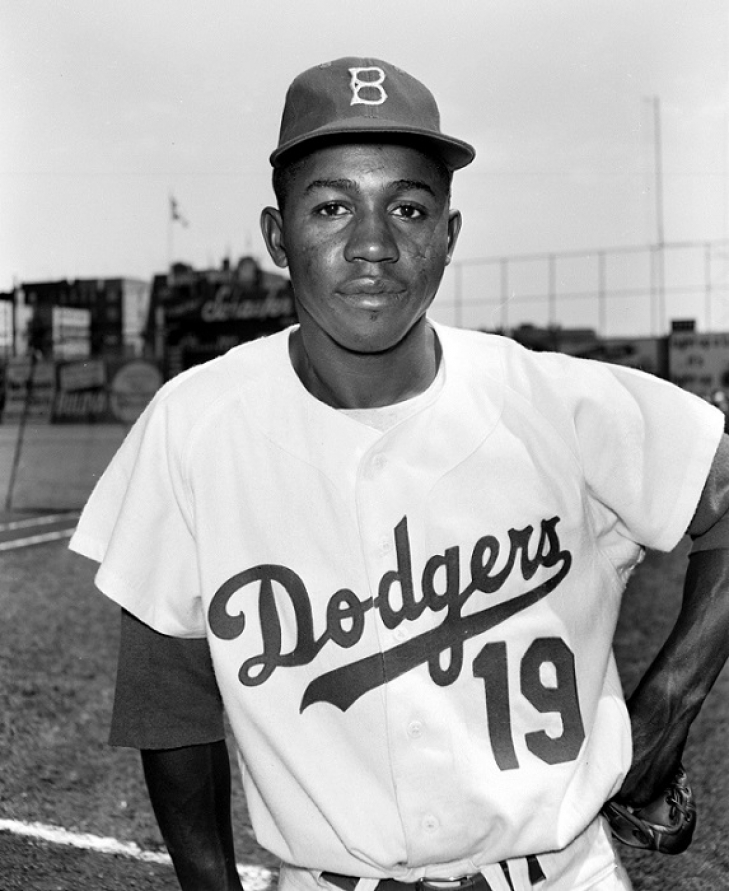
One of the most popular players in Cleveland Indians' history, Rocco "Rocky" Colavito, came from the Bronx, where, naturally, he was a Yankees fan.
The Outfielder debuted with the Indians in 1955, where he was an instant fan favorite and bona fide star.
Colavito was the runner-up for the American League Rookie of the Year in 1956, and in 1957, he began a six-year streak in the top six in Home Runs and a nine-year run in the top ten in Runs Batted In. Colavito won the Home Run Title in 1959, and this season, and the year before, he was in the top five in MVP voting.
One of the most controversial trades in Indians history took place two days before opening day, when Colavito was traded to the Detroit Tigers for Harvey Kuenn. Kuenn consistently batted over .300, and the Cleveland GM, Frank Lane, was berated by Indians fans and the press, who thought it was a bonehead transaction. Lane famously quipped that he traded "hamburger for steak," but it was an interesting trade for both sides.
Kuenn’s All-Star days were soon to be behind him, and Colavito, while still producing, was not nearly as popular in Detroit. He was then traded to the Kansas City Athletics, and then back to Cleveland in 1965, where he had one more great year with 26 Home Runs and a league-lead in RBIs (108) and Walks (93). He was fifth that year in MVP voting.
Colavito declined after that year, and he would play until 1969, appropriately finishing his career with a brief stint with the New York Yankees.
Colavito retired with 374 Home Runs and 1,159 RBIs.
Elston Howard's professional career began in the Negro Leagues with the Kansas City Monarchs in 1948, but the New York Yankees signed him in 1950. After two years in the military and two years in the minors, Howard debuted in pinstripes in 1955.
Howard had learned how to be a Catcher, but with Yogi Berra in tow, he was used as a backup there. He would receive playing time in the 1950s, either as a backup in the Outfield or occasionally at First Base. Playing for the Yankees gave him national attention, and he was regularly named to the All-Star Games despite not having a central position. New York won the World Series in 1956 and 1958, but by 1961, he was finally set to take up the Catcher's position on a regular basis.
Howard again helped the Yanks win the World Series in 1961 and 1962, and in 1963, when he hit a career-high 28 Home Runs, he won the American League MVP. Howard’s nine-year streak of All-Star Games ended in 1965, and he finished his career in 1968 with two final years as a Red Sox.
He would later win two more World Series rings with the Yankees as a Coach in 1977 and 1978.
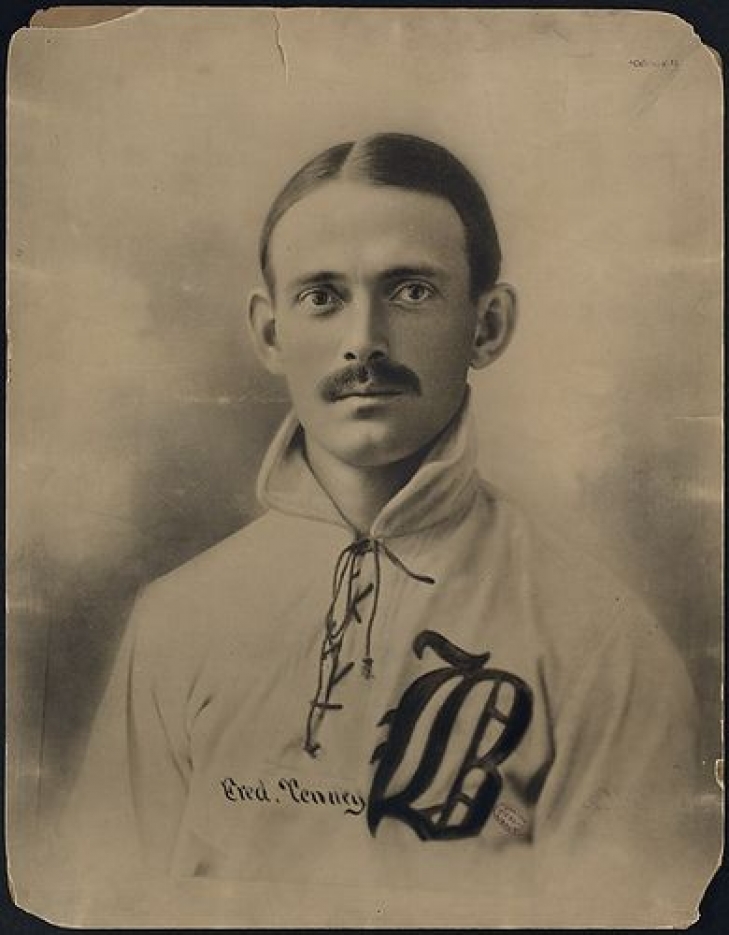
Silver King is quite the name, isn't it? This was the name of the man whose birth certificate stated, Charles Frederick Koenig, but doesn't this name sound more fun?
King debuted in 1886, playing a handful of games with the Kansas City Cowboys, but it was the three seasons that followed that put him on the map. These years were spent with the American Association's St. Louis Browns, where he won at least 32 Games each year. Known for his lack of windup and sidearm delivery, King had a monster season in 1888, where he led the league in Wins (45), ERA (1.63), Innings Pitched (584.2), FIP (2.38), WHIP (0.874), and SO/BB (3.39). The Browns won two AA Pennants while King was there.
Like many players in 1890, King joined the Players’ League, where, with the Chicago Pirates, he won the ERA Title (2.69) and led the league in H/9 (8.2). The league folded after that, and he went to the Pittsburgh Pirates of the National League, but he was beginning to suffer from arm fatigue and wasn't the same. He continued for a few years after, but he was done by 1897.
He retired with a 203-152 record.