
gold star for USAHOF

Top 50 Philadelphia Phillies

Philadelphia is one of the great sports cities of the United States and as such the Phillies have one of the strongest fan bases in baseball.  That being said, the success on the field has not matched the fervor of their fans.

Beginning in 1883 as the Philadelphia Quakers, the soon to be named Phillies had some very good players come through there in their early years (Billy Hamilton, Sam Thompson, and Ed Delahanty to name a few) but overall they were not particularly good.  In 1915, they would go to their first World Series though they would fail to win it and shortly afterward fall into an abyss of mediocrity.

The Phillies had only one winning season from 1918 to 1948.  Generally if looked at the bottom of the standing of the National League the chances were good that they were there.  In turned around briefly in the early 1950s when a crop of young talent known as “The Whiz Kids” took them to the 1950 World Series, though they lost again, but they went back to the bottom and more notably was on the wrong side of history as they were the last team to integrate.

After more years of poor performances, the Phils climbed back up the standings in the 1970s and they finally won their first World Series in 1980.  They would return to the Fall Classic in ’82 (they lost) and would lose again in 1993.  In 2008 they would win their second World Series.

For a team that has been around well over 100 years there are not as many elite players as there should be, but considering that they have had far more losing seasons than winning ones, this is not that much of a surprise.

Note: Baseball lists are based on an amalgamation of tenure, traditional statistics, advanced statistics, playoff statistics, and post-season accolades. 

This list is updated up until the end of the 2024 Season.
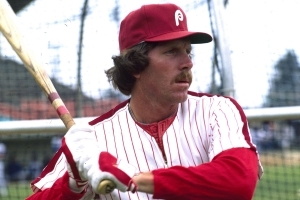
Mike Schmidt first stepped onto the Veterans Stadium turf in September 1972, a second-round draft choice out of Ohio University tasked with manning the hot corner for a struggling franchise. Initially, he appeared thoroughly overmatched by big-league pitching, struggling to a meager .196 batting average during his first full year. Yet, beneath those early growing pains lived a fiercely determined, flawlessly balanced athlete who would systematically revolutionize his position and define a franchise. After initial struggles as a rookie, Schmidt improved significantly, leading the NL with 36 home runs, along with 116 RBIs, 108 runs, and 106 walks, earning a…
Robin Roberts from Michigan State first took the mound at Shibe Park in June 1948 as a highly athletic right-hander with a precise fastball and strong stamina. During an era when starters finished their work, Roberts became the gold standard of workhorse pitchers. After two strong seasons, Roberts became dominant in the early 1950s. He anchored the pitching staff with such volume that, if the Cy Young Award had existed then, he might have won it five years in a row. Modern statistics support this, showing he led the National League in pitcher bWAR from 1950 to 1954—an impressive stretch…
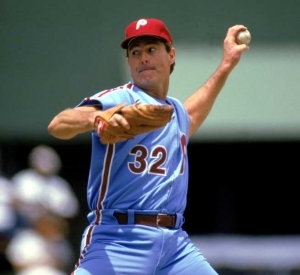
The arrival of Steve Carlton in Philadelphia prior to the 1972 season significantly impacted the baseball world, stemming from a contentious contract dispute with St. Louis. He was not an unproven prospect; he already held a World Series championship and had achieved a 20-win season with the Cardinals. Nevertheless, upon his debut at Veterans Stadium, his career trajectory advanced from commendable to legendary. His initial summer wearing pinstripes remains among the most remarkable individual accomplishments in the history of sports. Representing a struggling, last-place Phillies team that secured only 59 victories throughout the season, Carlton individually recorded 27 wins—constituting an…
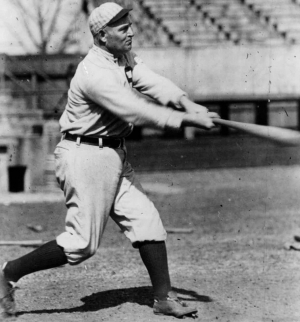
In May 1888, local observers quickly recognized that Ed Delahanty, who arrived as a member of the Phillies, possessed exceptional physical attributes; however, his initial performance fell significantly short of his potential. A robust and muscular presence at the plate, the young outfielder initially encountered difficulties against major league pitching, managing only a modest .228 batting average during his debut summer. He demonstrated improvements the following year, prior to briefly joining the renegade Players’ League in 1890, a decision that provided a glimpse of his developing batting ability but temporarily hindered his progression toward becoming the dominant offensive player of…
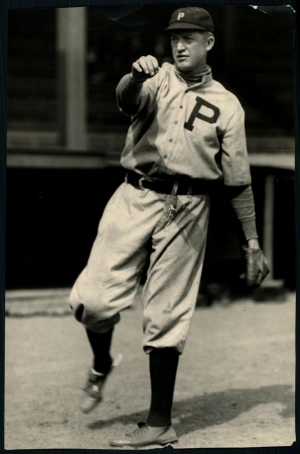
Inducted into the Baseball Hall of Fame in 1938, Grover Cleveland “Old Pete” Alexander might be surprising to see ranked so highly, considering he only played eight seasons for Philadelphia. In fact, we typically consider just the first seven seasons, as his eighth was his final at age 43, during which he was less effective. Still, examining Alexander’s first seven years of professional play reveals he’s a deserving top-five choice among the greatest Philadelphia Phillies of all time. Hardly anything was expected of the tall, unassuming farm boy from Nebraska when he arrived in the spring of 1911. He went…
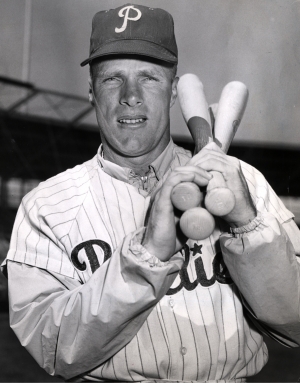
When the 21-year-old blonde kid from the small town of Tilden, Nebraska, stepped onto the grass at Shibe Park on Opening Day in 1948, he was experiencing his very first major league baseball game. Richie "Whitey" Ashburn instantly made a strong impression, setting the tone for a whole generation of Philadelphia baseball fans. Playing as the leadoff hitter, this speedy center fielder had an incredible debut summer, leading the National League with 32 stolen bases and batting an impressive .333. His performance earned him his first All-Star selection and established him as the spark for the cherished "Whiz Kids.” Ashburn…
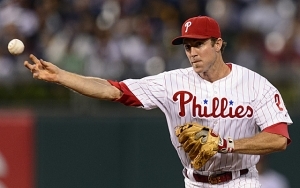
During the early 2000s, Chase Utley was discreetly progressing through the minor league ranks of the Philadelphia Phillies organization. Few anticipated that the reserved and diligent second baseman would become the driving force of the franchise's most prosperous period. Utley's initial notable achievement occurred in 2003 when he hit a grand slam for his first major league hit. He formally secured the regular second baseman position in 2005, subsequently initiating a multi-year period of peak performance. His playstyle became so remarkably dominant that it fundamentally influenced sabermetricians’ valuation of the position. Between 2005 and 2009, Utley demonstrated consistent elite performance…

2026 SEATTLE MARINERS FLEX MEMBERSHIPS

Jan 01, 1970

Buy your Tickets to see 2026 Seattle Mariners Flex Memberships HERE!

SEATTLE MARINERS VS. NEW YORK METS

Jun 03, 2026

Buy your Tickets to see Seattle Mariners vs. New York Mets HERE!

NEW YORK YANKEES V. CLEVELAND GUARDIANS * PREMIUM SEATING *

Jun 03, 2026

Buy your Tickets to see New York Yankees v. Cleveland Guardians * Premium Seating * HERE!

NEW YORK YANKEES VS. CLEVELAND GUARDIANS

Jun 03, 2026

Buy your Tickets to see New York Yankees vs. Cleveland Guardians HERE!

 
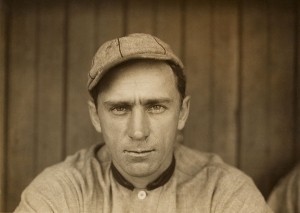
When Sherry Magee emerged as a 19-year-old rookie during the summer of 1904, the Philadelphia Phillies quickly recognized they had discovered a rare, energetic talent. Coming directly from the minor leagues, the right-handed outfielder made an immediate impact, establishing himself as a leading offensive powerhouse of the dead-ball era. In an era when offense was suppressed by heavily scuffed baseballs and large ballparks, Magee leveraged a unique combination of sharp line-drive hitting and exceptional speed on the bases. Magee was a mainstay in Philadelphia for over ten years, consistently near the top of the National League leaderboards. During his eleven…
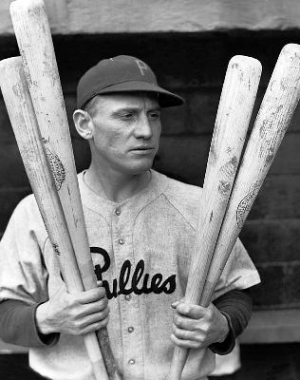
Throughout baseball's extensive history, there have been instances in which a franchise's fortunes have been significantly influenced by a fortunate administrative decision. Conventionally, Chuck Klein's prime years were characterized by his dominance over National League pitchers while representing the St. Louis Cardinals. During his prolific tenure with Fort Wayne in the Central League, Klein was firmly integrated within the Redbirds' developmental system. Nevertheless, the Cardinals simultaneously maintained ownership of the rival Dayton club, an evident violation of Major League Baseball regulations. Upon discovering this infringement, the vigilant Commissioner Kenesaw Mountain Landis mandated the liquidation of the St. Louis franchise and…
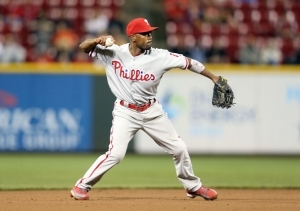
Achieving the distinction of being the sole top-ranked player on a franchise's all-time hits leaderboard is an extraordinary accomplishment for any baseball athlete. Doing so within an organization established in professional hits since 1883, an era that includes legendary figures such as Mike Schmidt, Richie Ashburn, and Ed Delahanty, approaches the realm of the surreal. Nonetheless, this is precisely the position held by James Calvin "Jimmy" Rollins. For nearly fifteen years, the dynamic shortstop has served as the rapid, passionate force behind the most enduringly successful period in the history of the Philadelphia Phillies. Having been raised on the concrete…
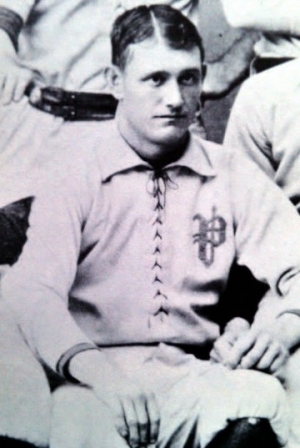
In the hyper-competitive landscape of 1890s baseball, “Sliding" Billy Hamilton was universally recognized as a human hurricane on the basepaths. He didn't just break the existing rules of baserunning; he completely rewrote the operational blueprint of the sport, popularizing the head-first slide, the drag bunt, and the daring art of advancing from first to third on a single. Decades after he hung up his heavy woolen uniform, an objective evaluation of his statistical fingerprints confirms that he remains firmly among the most elite, high-efficiency weapons ever to play the game. To genuinely acknowledge Hamilton’s remarkable dominance, it is essential to…
Prior to Babe Ruth fundamentally altering the landscape of professional baseball with his formidable power hitting to the upper deck, the unparalleled home run king during the dead-ball era was Gavvy Cravath. Nonetheless, in accordance with the prevailing baseball rationale of the early 20th century, Cravath was expected to be entirely phased out of the sport. Making his Major League debut at the age of 27 with the Boston Red Sox, he was widely criticized by teammates, fans, and front offices for his painfully slow on-field foot speed. He remained within the minor league system for several years, seemingly relegated…
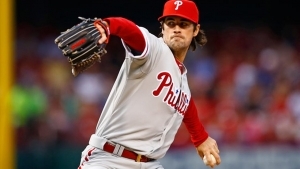
Every championship team has an iconic image, and for the 2008 Philadelphia Phillies, that’s Cole Hamels. With a smooth delivery that defied physics, the slender left-hander dismantled hitters using a devastating circle changeup and a crisp fastball. While the roster had power hitters and leaders, Hamels was the cool, clinical staff ace when the stakes increased in October. Drafted by the Phillies in the first round in 2002, Hamels entered the majors with high expectations, which his performance quickly confirmed. He quickly developed into a top-tier, front-of-the-rotation pitcher known for his consistent durability during the regular season and his exceptional…
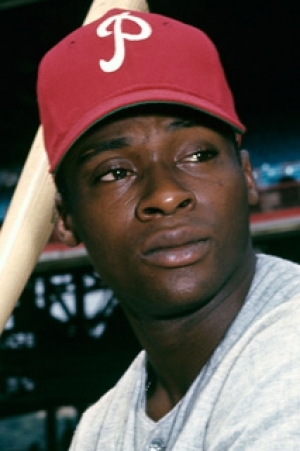
Dissecting Dick Allen's historical impact requires confronting the turbulent, racially charged controversy of his era in eastern Pennsylvania. As the first Black superstar in a conservative Philadelphia Phillies organization, Allen carried an overwhelming psychological weight. The franchise was among the last in the National League to integrate, and Allen had already faced severe systemic racism as the sole Black player on their minor league team in Little Rock. When he reached the major leagues, he entered a highly volatile environment, often targeted by parts of the local fanbase and a hostile media that refused to see him as a person…
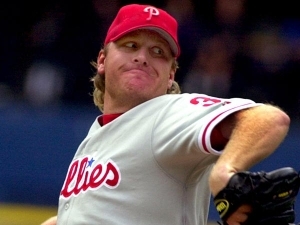
Long before Curt Schilling became famous for leading historic World Series victories in the desert and New England, he spent almost ten years building his reputation in eastern Pennsylvania. Although many remember him nationally for his later championship successes, his regular-season performance and overwhelming statistical achievements with the Philadelphia Phillies are fundamental to his career. In fact, his personal statistics during his time with the Phillies closely match his combined achievements in Arizona and Boston. Schilling officially joined the team through a discreet trade with the Houston Astros in 1992 and quickly demonstrated a remarkable individual breakthrough. Transitioning into a…
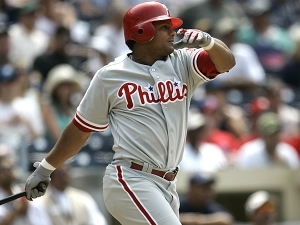
When modern spreadsheet analysts and advanced metric enthusiasts think of the standout example of the sabermetric movement, they often point to Bobby Abreu. Even before he gained widespread attention with his high-profile trade to the New York Yankees, the talented Venezuelan outfielder made the batter's box in Philadelphia feel like his own research lab. Abreu was a true master at working deep pitch counts, blending a sharp eye for the strike zone with a quick, graceful left-handed swing that kept opposing strategies at bay. While some casual observers in the late 1990s and early 2000s overlooked his quiet efficiency for…
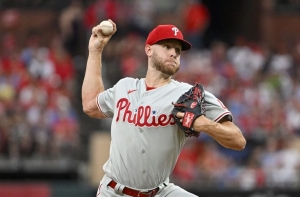
When Zack Wheeler signed a lucrative free-agent deal with the Philadelphia Phillies before the 2020 season, it was seen as a high-risk, high-reward move for a pitcher who had shown both brilliance and inconsistency over 126 games with the New York Mets. Since then, he has undergone a complete transformation. After arriving in Pennsylvania, the smooth-throwing right-hander systematically enhanced his game, reaching an elite, high-velocity level. He now combines an explosive four-seam fastball with a devastating sweeper and sinker. His development has been a remarkable example of modern pitching mastery. His initial summer in Philadelphia was significantly curtailed by the…
Within the extensive archives of baseball trades, some exchanges become increasingly imbalanced with each winter. Before the 1918 season, the Chicago Cubs executed a veteran trade, sending 30-year-old outfielder Fred "Cy" Williams to the Philadelphia Phillies in return for Dode Paskert. Paskert immediately experienced a sharp decline in performance at age 36 in Chicago, while Williams was only beginning to enter the most important phases of his career. He had already demonstrated his ability to excel during the dead-ball era, winning a National League home run title with 12 homers in 1916. Moving to the hitter-friendly Baker Bowl helped the…
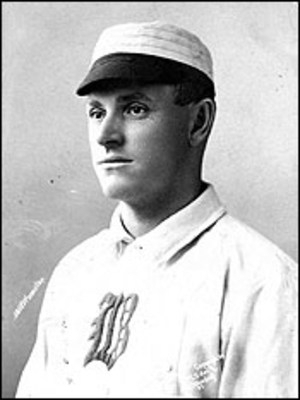
Back in late 1888, the Philadelphia Quakers, who would eventually become the modern Phillies, made a bold move by paying $5,000 to buy Samuel Luther Thompson's contract from the shrinking Detroit Wolverines. At the time, this was a huge financial risk, but it quickly paid off. In just one summer, it became clear that the front office had scored one of the greatest deals in professional sports history. Thompson, a towering six-foot-two with a big handlebar mustache, had a powerful, left-handed swing that completely changed the game of raw, line-drive power in the 19th century, turning the outfield into his…