
gold star for USAHOF

Top 50 Philadelphia Phillies

Philadelphia is one of the great sports cities of the United States and as such the Phillies have one of the strongest fan bases in baseball.  That being said, the success on the field has not matched the fervor of their fans.

Beginning in 1883 as the Philadelphia Quakers, the soon to be named Phillies had some very good players come through there in their early years (Billy Hamilton, Sam Thompson, and Ed Delahanty to name a few) but overall they were not particularly good.  In 1915, they would go to their first World Series though they would fail to win it and shortly afterward fall into an abyss of mediocrity.

The Phillies had only one winning season from 1918 to 1948.  Generally if looked at the bottom of the standing of the National League the chances were good that they were there.  In turned around briefly in the early 1950s when a crop of young talent known as “The Whiz Kids” took them to the 1950 World Series, though they lost again, but they went back to the bottom and more notably was on the wrong side of history as they were the last team to integrate.

After more years of poor performances, the Phils climbed back up the standings in the 1970s and they finally won their first World Series in 1980.  They would return to the Fall Classic in ’82 (they lost) and would lose again in 1993.  In 2008 they would win their second World Series.

For a team that has been around well over 100 years there are not as many elite players as there should be, but considering that they have had far more losing seasons than winning ones, this is not that much of a surprise.

Note: Baseball lists are based on an amalgamation of tenure, traditional statistics, advanced statistics, playoff statistics, and post-season accolades. 

This list is updated up until the end of the 2024 Season.
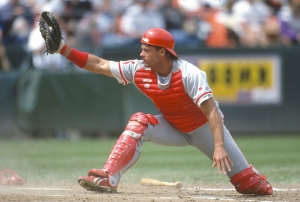
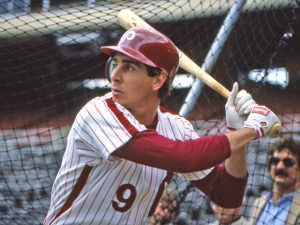
The narrative of contemporary Philadelphia baseball cannot be adequately documented without considering the significant influence of Darren Daulton. During the initial phase of his career, "Dutch" was predominantly perceived as an inexperienced, injury-prone catcher possessing a resemblance to Hollywood actors and exhibiting a consistent, low-risk batting style that impeded his ability to remain on the field. Nonetheless, through steadfast perseverance and an unwavering commitment to overcoming nine separate knee surgeries, this resilient leader systematically evolved into the definitive, dominant presence and essential figure of the franchise. By the early 1990s, he not only commanded the respect of his teammates but…
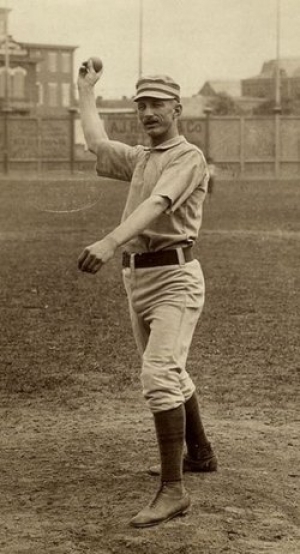
Although it may seem unlikely to rank a player with just three summers in red pinstripes above long-established franchise legends, advanced metrics reveal why Charlie Buffinton occupies such a notable position on the all-time leaderboard. To casual fans, his name has mainly faded into 19th-century baseball history, eclipsed by his outstanding 48-win season and 15.0 bWAR with the 1884 Boston Beaneaters. Yet, when the solidly built right-hander joined the Philadelphia Quakers from 1887 to 1889, he provided a concentrated, high-velocity burst of frontline dominance, marking one of the most efficient and productive pitching eras in the team's history. Buffinton made…
The psychological impact of a trade can sometimes shape a player’s entire legacy, influencing how fans view them despite their actual performance. Von Hayes is arguably the most intriguing and divisive example of this in the modern history of the Delaware Valley. With his impressive, lanky six-foot-five build and a smooth left-handed swing reminiscent of Ted Williams, Hayes arrived from Cleveland before the 1983 season, quickly earning the nickname “Five-for-One." This was because the front office traded five players, including the popular World Series hero Manny Trillo and a young Julio Franco, to acquire him. As a result, local fans…
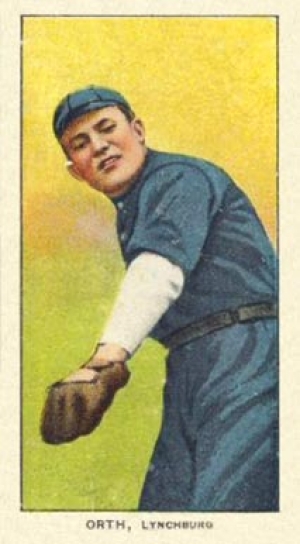
Historians often identify the early roots of the franchise as a transitional period around the 20th century. However, Albert Lewis Orth shaped that era with exceptional pitching accuracy. Known as "The Curveless Wonder," the right-handed control ace challenged typical practices of his time. Unlike competitors who relied on powerful breaking balls, Orth systematically broke down National League lineups by expertly varying pitch speeds, precisely placing his pitches, and conserving his bullpen's stamina. Moreover, his most notable season didn't come late with the New York Giants; instead, his peak occurred with the New York Highlanders (later known as the Yankees), when…
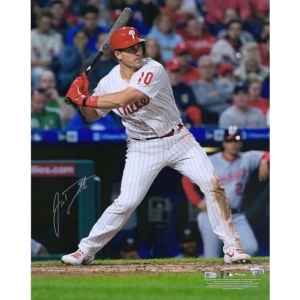
Modern catching positions often force managers to make a tough choice: accept a less effective batter to anchor the defense or tolerate defensive weaknesses to include a top run-producer. J.T. Realmuto breaks this trade-off. Using his exceptional, almost otherworldly athleticism behind the plate, the Oklahoma native has established himself as the leading, versatile catcher of his era. His move to eastern Pennsylvania highlights a player's awareness of his significant market value. After a standout 2018 season with the Miami Marlins that earned him his first All-Star appearance, Realmuto made it clear to South Florida management that he would not base…
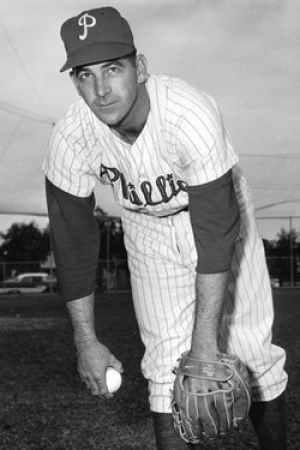
Long before Mike Schmidt set the benchmark for third basemen in the Delaware Valley, Willie Jones was busy creating the initial model of local excellence at the position. As a key member of the famous 1950 "Whiz Kids," this robust South Carolina native anchored the hot corner during a golden age of baseball. Jones combined powerful hitting with excellent defensive skills, providing the franchise with much-needed stability and solidifying his reputation as the top National League third baseman of his time. His ten-year tenure with the Phillies from 1947 to mid-1959 showcased remarkable durability. Jones not only amassed impressive statistics…
The detailed historical record of early 20th-century baseball features legendary figures deeply connected to the American League's origins. However, Elmer Flick’s greatness was built entirely during his time in Philadelphia. Although history primarily recalls "The Demon of the Stick" as a Cooperstown hero who reached his peak in Cleveland, it overlooks the exceptional and efficient debut he had in the majors during his four years with red pinstripes. Arriving in 1898 to replace the injured Sam Thompson, the stocky, quick outfielder from Ohio not only survived but also mounted a vigorous offensive against National League pitching. Flick turned offensive run…
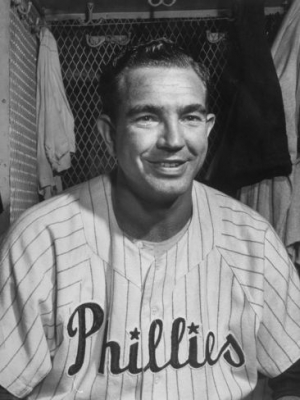
The wartime roster shuffle of the mid-1940s prompted many organizations to fast-track prospects before they were fully physically or tactically ready. Granny Hamner serves as a compelling example. Signed from Virginia as a very raw 17-year-old talent, he was thrown into the major leagues during the 1944 season and set an unbreakable record in 1945 as the youngest player to start on Opening Day. Although these early appearances revealed his developmental gaps, Hamner worked systematically to improve, earning the regular shortstop position by 1948. He quickly matured into the gritty, vocal leader and team captain of the popular 1950 "Whiz…
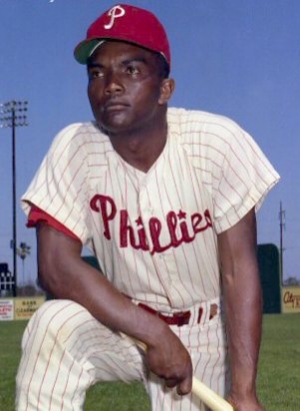
The 1960s baseball landscape was characterized by fast-paced pitching and low scores, making consistent middle-of-the-order hitters highly valuable. Tony González made this challenging environment the foundation of a disciplined career. Coming from Cuba just as political changes disrupted the island's pipeline to Major League Baseball, this calm, focused outfielder quickly became a key part of the Philadelphia Phillies’ team. Although he didn't attract national attention or major awards like more glamorous players, his smooth left-handed swing and precise defense made him an essential, reliable player for nearly ten years. His early 1960 campaign arrival through a trade with Cincinnati provided…
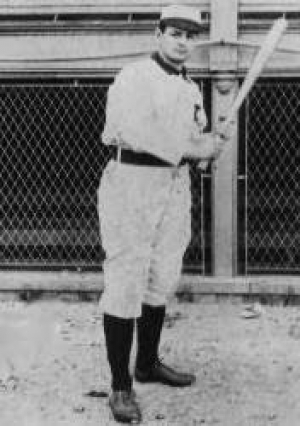
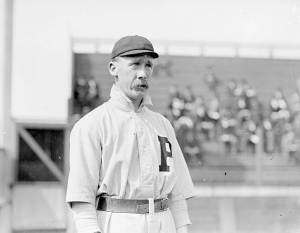
The baseball scene at the dawn of the 20th century was characterized by vibrant, outspoken individuals who approached the game with theatrical flair. John Franklin Titus, notably, declined to partake in such performative elements. Consistent with his primary nickname, "Silent John,” he maintained a discreet and disciplined demeanor, which was reflected in his physical conduct; conventional Deadball Era anecdotes recount that teammate Kid Gleason once observed Titus did not produce a sound when he spat. His secondary, significantly more vivid label—"Tight Ass"—was a direct pun on his surname and his renowned, low-variance financial practices. Titus is well known for his…
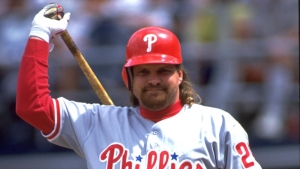
If a baseball roster typically calls for a polished, professional ambassador to represent the franchise, John Martin Kruk was the opposite of that ideal. His appearance, more resembling a guy who wandered onto the field from a local soft-pitch league than an elite athlete, along with his portly build and beer-drinking habits, made him an instant counterculture hero on Broad Street. Despite his rumpled uniform, untamed mullet, and repeated assertion that he was "not an athlete, but a ballplayer," he possessed one of the most refined, efficient left-handed swings of his era—an expert at strike-zone control who led the most…
The modern development of baseball analytics has dramatically changed how teams view the traditional leadoff hitter. Traditionally, this role required a fast player mainly valued for slap-hitting and stealing bases. Kyle Schwarber, however, broke this outdated mold when he came to Broad Street. After establishing himself as a clutch postseason hitter with Chicago, Boston, and Washington, the robust slugger became a free agent before the 2022 season. The Phillies aimed to boost their lineup with his relentless, championship-caliber energy and signed him to a popular four-year deal. With a build resembling a middle linebacker and a swinging style focused on…