

38. Mel Stottlemyre
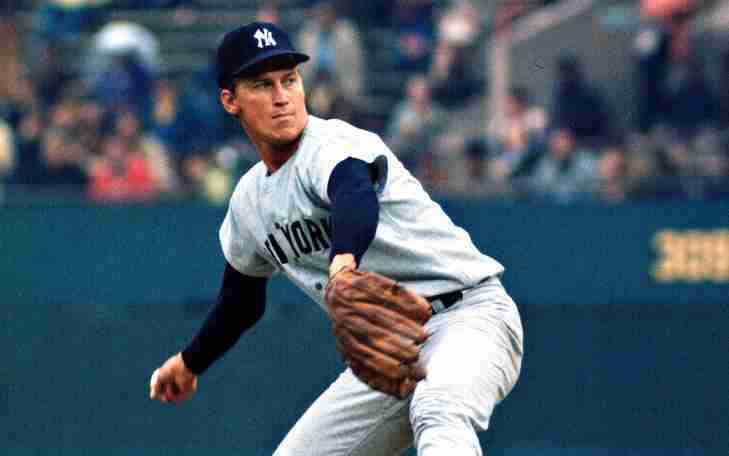
Mel Stottlemyre made a striking debut in Major League Baseball in August 1964, quickly establishing himself with a dramatic entrance. During a tense late-summer pennant race with the Yankees, and with veteran Whitey Ford out due to a hip injury, the 22-year-old rookie was called up to step in immediately. He responded by pitching a complete-game win in his first game, finished the season with a 9–3 record in critical late-season games, and famously matched up against Bob Gibson by pitching three times in the 1964 World Series. This remarkable start hinted at a future career illuminated by October's spotlight.
Instead, the historic pinstriped infrastructure around him collapsed, thrusting the organization into a rare, decade-long rebuilding slump. Although casual baseball history often overlooks this dormant period, Stottlemyre became the unwavering, essential figure of the franchise. Equipped with a powerful sinker that consistently forced opposing batters to hit the ground, he demonstrated relentless durability. Each summer, he regularly pitched over 270 innings, serving as a dependable frontline starter and leading the American League in complete games twice.
Stottlemyre exemplified an elite, high-volume workhorse, surpassing 20 wins three times with the Yankees, achieving 20 victories in 1965, a career-high 21 in 1968, and another 20 in 1969. His consistent regular-season performance earned national recognition and five All-Star selections over six years.
While he dominated games from the mound, Stottlemyre also proved to be a highly effective asset at the plate. In an era before the designated hitter rule, he was a formidable, well-coordinated hitter for a pitcher. He amassed 120 career hits and hit 7 home runs. His most remarkable offensive achievement came on September 26, 1964, when he tied a major league record for pitchers by collecting five hits, four singles and a double in a single game against Washington.
Sadly, his remarkable career ended abruptly just as his veteran leadership was about to help a rising team regain success. A serious, career-ending rotator cuff injury in his shoulder led to his early retirement during the 1974 season at age 32, stopping him from being part of the franchise's late-1970s comeback from the mound. He finished his impressive, single-team playing career with a 164–139 record, 40 shutouts, and a 2.97 ERA, which still stands as a benchmark for run prevention among pinstriped pitchers. Advanced stats strongly support his underrated greatness, with a career pitching bWAR of 43.1—keeping him securely in the top ten of the franchise's all-time pitching leaders.
Stottlemyre returned to the Bronx dugout as Joe Torre’s brilliant, highly respected pitching coach from 1996 through 2005. Operating with a calm, masterful authority, he skillfully guided the pitching staffs of the modern dynasty to four World Series championships, and in 2015, a plaque in his honor would be permanently placed in Monument Park.
34. Waite Hoyt
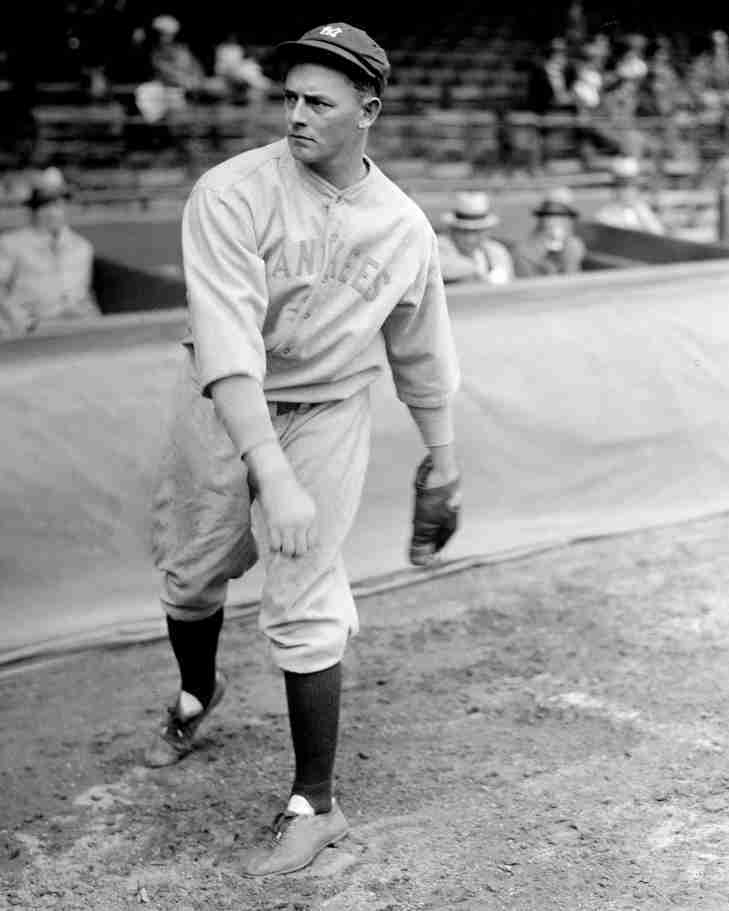
In December 1920, when the New York Yankees targeted the financially struggling Boston Red Sox to acquire a 21-year-old right-hander, they were more than just conducting a typical roster acquisition. They were securing the cornerstone pitcher for what would become the most legendary dynasty in baseball history.
Waite Hoyt, born in Brooklyn, was a prodigy who was signed by John McGraw's Giants at just 15, earning him the nickname "Schoolboy" for life. By the time he wore the pinstripes, he had developed into a highly skilled and polished pitcher, seamlessly supporting Babe Ruth's powerful hits and the formidable "Murderers' Row" lineup.
Hoyt approached the art of pitching with an exceptional, calculated precision. He didn't rely on raw, arm-shredding velocity to overpower junior circuit hitters. Instead, he weaponized a sharp, biting curveball, a deceptive change of pace, and a pinpoint, surgical control that allowed him to repeatedly paint the corners of the strike zone.
He quickly became manager Miller Huggins's most reliable worker, surpassing 200 innings in eight of his nearly ten seasons in New York. While fans in the Bronx often focused on Ruth's long home runs, Hoyt was quietly racking up wins at an impressive rate. He exceeded 19 wins four times with the Yankees, reaching his peak during the legendary 1927 season. That summer, Hoyt demonstrated exceptional efficiency, leading the American League with 22 wins against just 7 losses, posting a 2.63 ERA and completing 23 games to help secure the championship. His performance was no fluke the following year, as he matched it with a 23–7 record in 1928, helping the team win another pennant.
When October arrived and the pressure of the championship intensified, Hoyt became an exceptional big-game performer. Over 12 World Series appearances for the Yankees, he achieved an impressive 6–4 record with a minuscule 1.83 ERA, remaining completely composed on baseball's biggest stage. His greatest postseason feat occurred during the 1921 Fall Classic against his former team, the Giants, where Hoyt pitched three complete games without allowing a single earned run over 27 innings. He was the main pitcher for the franchise's first three world championship teams (1923, 1927, and 1928), establishing himself as a vital part of early Yankee history.
His arm eventually began to surrender to the heavy, structural toll of his massive 1920s workload, leading to a mid-season trade in 1930 that kick-started a multi-team journey through the twilight of his career. He formally walked away from the diamond in 1938, concluding his legendary stay in the Bronx with a spectacular 157–98 with a 3.48 ERA. In 1969, the Veterans Committee officially elected Hoyt into the National Baseball Hall of Fame.
29. Earle Combs
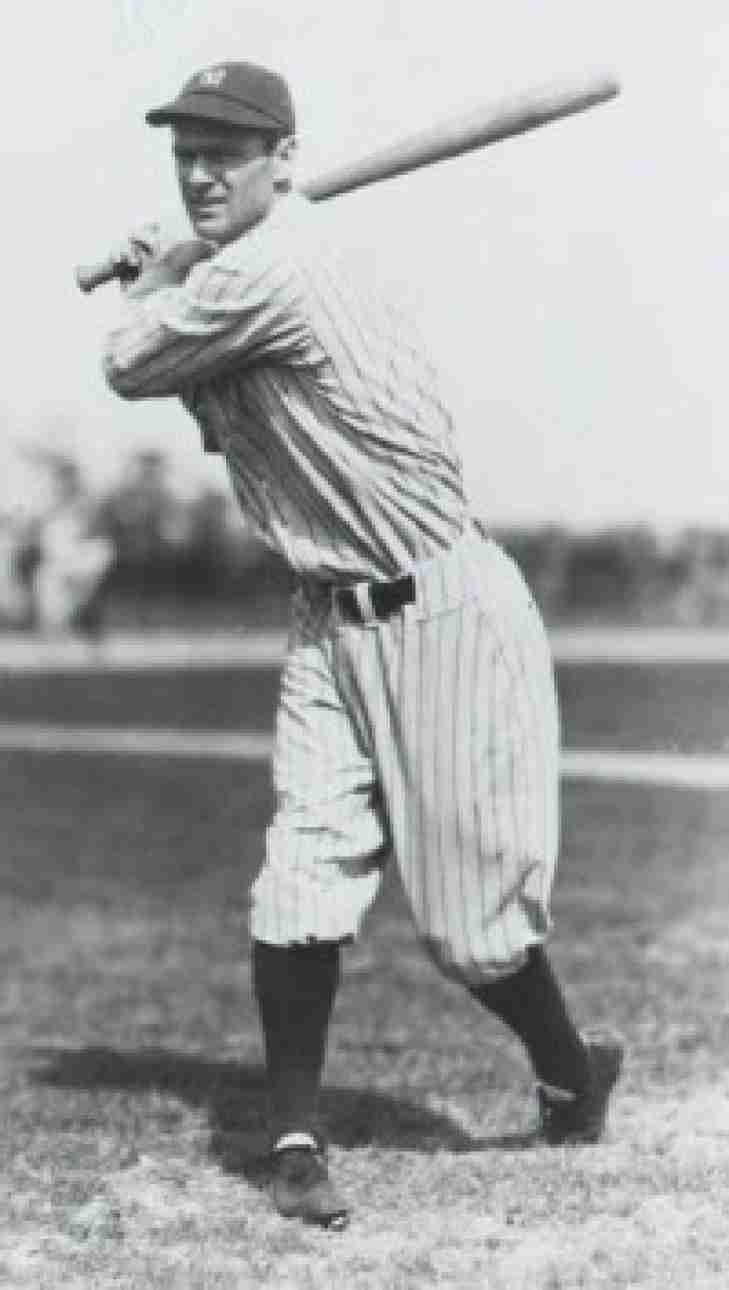
Earle Combs exuded a calm, scholarly dignity that sharply contrasted with the lively, flamboyant personalities of the roaring twenties. A former Kentucky schoolteacher who only made his major league debut at 24, "The Kentucky Colonel" quickly became a key figure in forming the most formidable lineup ever. As the regular center fielder and leadoff hitter for the legendary 1927 "Murderers' Row,” his main role was straightforward yet vital: to reach base before Babe Ruth and Lou Gehrig.
Debuting in 1924, Combs performed with remarkable, consistent efficiency, establishing himself as one of baseball's top table-setters. His quick, level left-handed swing allowed him to systematically dismantle junior league pitching. Achieving over a .300 batting average for eight straight seasons, he finished with an impressive career average of .325. Combining this elite contact ability with disciplined plate discipline and an exceptional visual sense, he surpassed the .400 on-base percentage mark six times.
Though primarily a traditional table-setter, Combs had a lively, high-speed running style that transformed ordinary hits into additional bases. He excelled at exploiting the wide open spaces of Yankee Stadium, leading the American League in triples three times. His best season was in 1927, when he amassed a league-high 231 hits and 23 triples, and scored 137 runs, providing a constant, high-pressure edge for the middle of the lineup.
On the grass, his defensive range was legendary. Combs covered center field with a swift, gliding stride that allowed him to swallow up line drives and track down deep fly balls with complete confidence. His flawless execution provided maximum stabilization for three World Series championship rosters as a player (1927, 1928, and 1932).
Tragically, his playing career was cut short by a terrible on-field accident. On July 24, 1934, while chasing a fly ball against the St. Louis Browns in the heat, Combs collided with the unpadded concrete wall at Sportsman's Park. He suffered a fractured skull, broken shoulder, and knee injury that nearly killed him. Despite battling back to play briefly in 1935, the damage forced his early retirement at 36.
He left the diamond with 1,866 hits, 309 doubles, 154 triples, and a.397 on-base percentage. His knowledge and dedication kept him in the Bronx as a respected coach for another decade. As a trusted observer for managers Joe McCarthy and Bucky Harris, Combs helped guide future stars like Joe DiMaggio to six more championships, earning nine World Series rings in a New York uniform.
In 1970, the Veterans Committee officially elected Combs into the National Baseball Hall of Fame.
27. Roy White
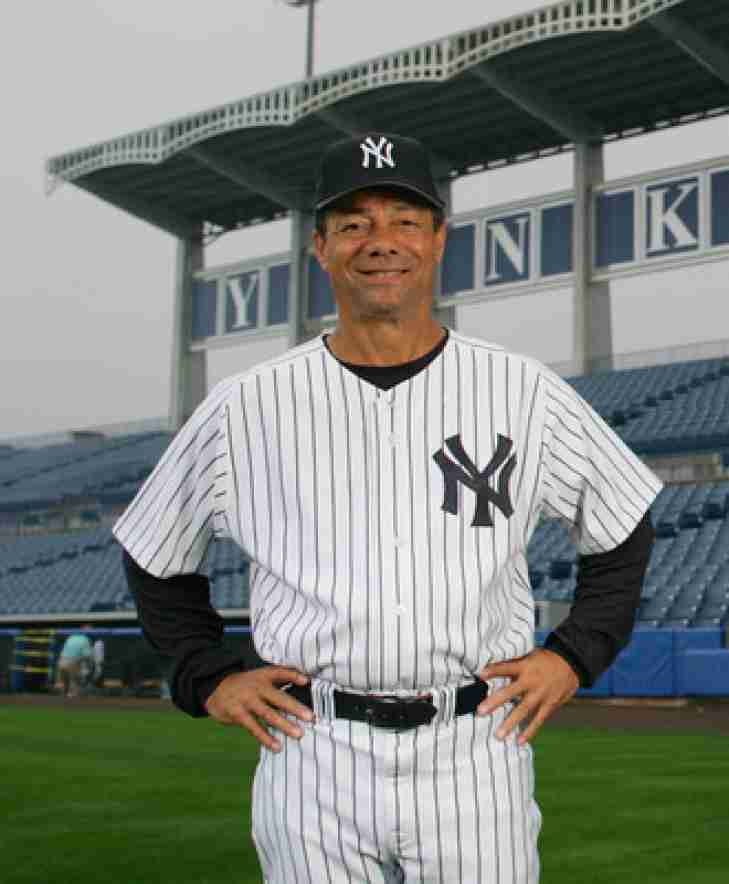
Roy White entered the Bronx clubhouse in September 1965, during the Yankees’ decline from their mid-century dynasty. While fans lamented the team's fall, White, a switch-hitter from Los Angeles, quietly became a steady bridge between two championship eras. With dignity, he endured rebuilding years before winning October titles.
White exemplified a masterful, quiet approach to situational hitting, balancing discipline and patience at the plate. With a highly disciplined visual clock and a rare patience, he avoided expanding his strike zone to appease impatient pitchers. During his time with the Yankees, he exceeded 70 walks seven times, including a standout 1972 season when he led the American League with 99 walks and posted an impressive .384 on-base percentage. Additionally, White demonstrated a unique ability to manufacture runs for his team; in 1971, he set a league record with 17 sacrifice flies, exemplifying a consistent, team-oriented focus that kept the offense active.
While his keen eye was his main weapon, White enhanced his play with a lively, multi-faceted presence on the bases and unexpected pop in his bat. He surpassed 15 home runs five times, including a career-high 22 during a remarkable 1970 All-Star season, when he also scored 109 runs and drove in 94. Once on base, he employed a highly effective running style that placed him in the junior circuit's top ten in power-speed seven times, leveraging his speed to amass 233 career stolen bases while playing for New York.
On the grass, his defense was the ultimate benchmark for late-game security. White held down left field with graceful, flawless movement, eventually appearing in 1,521 games at the position, the highest number by any left fielder in the franchise's long and star-studded history. His positioning and consistent play offered crucial stability as the team grew into a powerhouse again in the late 1970s. White was the experienced, professional presence that anchored the back-to-back World Championship teams in 1977 and 1978, providing vital steadiness alongside the more flamboyant, prominent figures of the "Bronx Zoo.”
He ended his 15-year major league career after 1979, then went to Japan to play with the Yomiuri Giants. He left the Bronx with notable stats: seventh in games played (1,881), eighth in walks (934), and career totals of 1,803 hits, 160 home runs, and a .360 on-base percentage.
41. Bobby Murcer
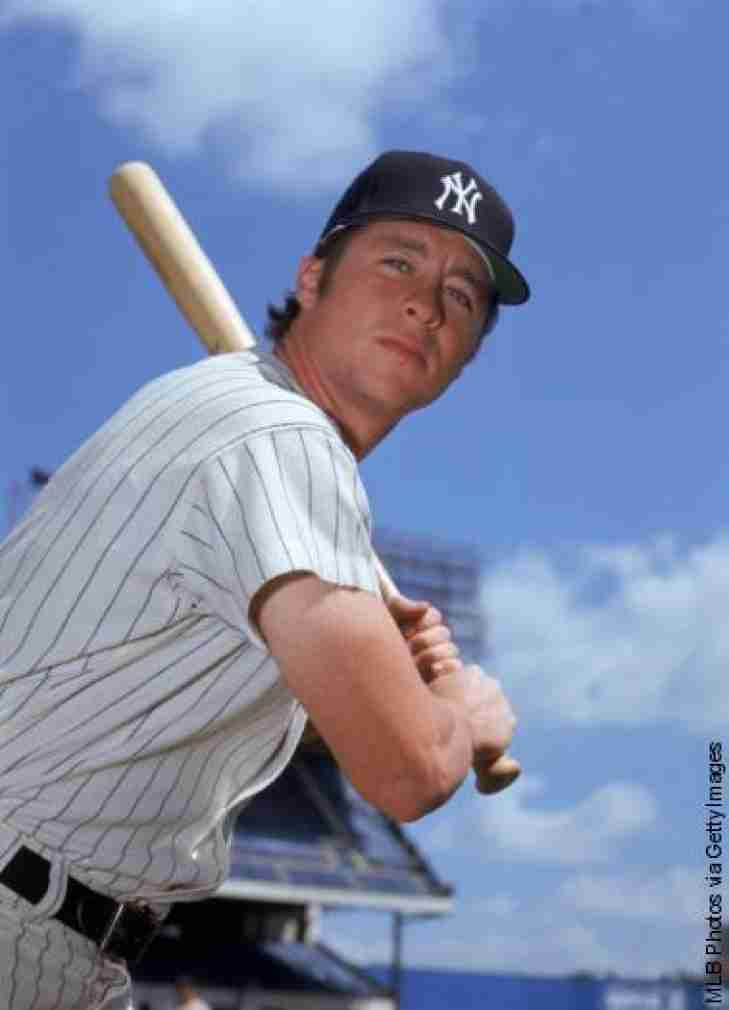
When New York called up Bobby Murcer as a teenager in the 1960s, the team saw him not just as a promising player but as the direct heir to Mickey Mantle, placing an unfair burden on him. Both proud Oklahoma natives, signed by legendary scout Tom Greenwade, they shared athletic, left-handed swings that inevitably drew comparisons. Murcer even took over Mantle’s locker and his role in center field. While living up to the mythical status of such a legendary figure was impossible, Murcer forged his own significant legacy, becoming the franchise’s emotional core during some of its toughest years.
After a mandatory two-year stint serving in the United States Army during the peak of the Vietnam War, Murcer returned in 1969 to take a central role in a transforming pinstriped batting lineup. He adopted a patient stance at the plate, effectively combining a keen visual sense with a smooth pull swing that was ideally suited to target the short right-field porch at Yankee Stadium. He achieved five straight summers with over 20 home runs early in his full-time career, peaking in 1971 when he led the American League with a remarkable .427 on-base percentage and a .969 OPS. The following year, he delivered an outstanding 1972 season, leading the league in runs scored (102) and total bases (314), while hitting a personal best of 33 home runs and driving in 96 RBIs. His consistent performance earned widespread recognition nationwide, securing four consecutive All-Star selections and four top finishes in the American League MVP voting, including a notable fifth-place finish in 1972.
On the grass, his defensive skills set a remarkable standard for outfield security. He moved with a swift first step, taking careful routes to the ball and earning a Gold Glove Award in 1972. His excellent throwing mechanics made him a formidable player; throughout the 1970s, Murcer recorded 119 outfield assists, leading all major league outfielders for the decade and making aggressive baserunners think twice. Yet, just as the front office began constructing a championship roster around him, Murcer was abruptly traded to San Francisco for Bobby Bonds in a stunning November 1974 deal. The trade meant he painfully missed out on the team's late-1970s world championship resurgence.
In June 1979, the Yankees reacquired their star from the Chicago Cubs, placing him in a veteran role. His return included a memorable moment on August 6, 1979, just hours after eulogizing his close friend and captain Thurman Munson. Murcer rallied the Yankees emotionally, driving home all five runs—including a game-winning two-run single in the bottom of the ninth—to beat Baltimore 5–4.
He spent four summers in a supporting leadership role before moving to the broadcast booth mid-season in 1983. Murcer ended his career with 1,238 hits, 192 doubles, 177 home runs, and 692 RBIs in 1,261 games.
32. Tommy Henrich
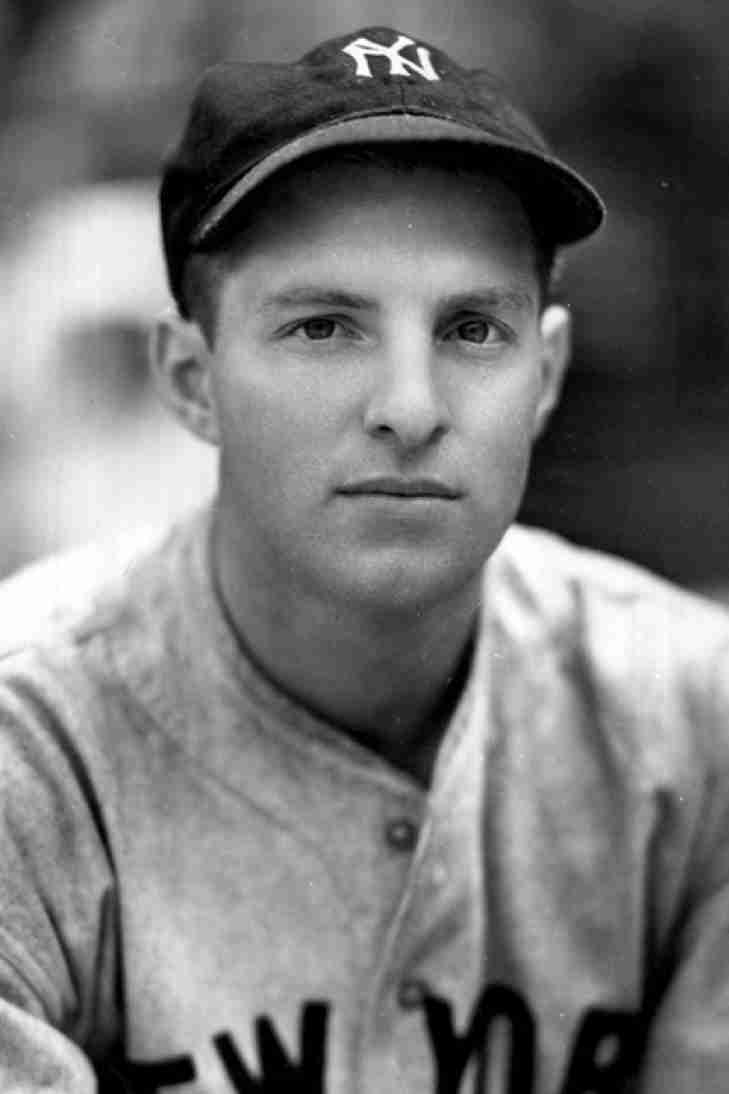
When legal issues in spring 1937 freed Thomas David Henrich from the Cleveland Indians' minor league system, a heated bidding war arose for the talented young outfielder. It was only through a personal meeting with Yankees business manager Ed Barrow that Henrich, a native of Ohio, agreed to sign with New York. This move proved to be a strategic victory for the franchise. By teaming up with Joe DiMaggio and Charlie Keller, Henrich completed the legendary outfield trio and proved himself to be the ultimate teammate, often saving his best performances for the most important moments.
His teammates and the New York press called him "Old Reliable" not just out of politeness. Henrich approached hitting with a calculated, intelligent approach, perfectly adjusting his smooth left-handed swing to take advantage of the short porch in right field at Yankee Stadium. He was an exceptional table-setter and run-producer, surpassing 20 home runs in four separate seasons and demonstrating impressive plate coverage that boosted his career on-base percentage to an outstanding .382. When he wasn't hitting home runs, he used an advanced visual clock to create scoring opportunities, leading the American League in triples twice and finishing the 1948 season with 138 runs scored, showcasing his all-around offensive prowess.
However, his regular-season stats only tell part of the story. Henrich's real legacy lies in his legendary capacity to perform under pressure. He was a dominant force on baseball's biggest stage, guiding the Yankees to four World Series titles (1938, 1941, 1947, and 1949).
His postseason achievements include a legendary performance in Game 1 of the 1949 Fall Classic against the Brooklyn Dodgers. In a scoreless, intense pitching duel during the ninth inning, Henrich faced Don Newcombe and hit a towering home run over the right-field wall. This was the first walk-off home run in World Series history, dramatically shifting the series momentum.
Similar to many of his contemporaries, his career was greatly affected by World War II, during which he gave up three peak seasons from 1943 to 1945 to serve in the United States Coast Guard. After returning to the Bronx in 1946, he quickly resumed his role as the dependable, professional backbone of the team.
A five-time All-Star, Henrich spent his entire 11-year major league career exclusively in a pinstriped uniform, retiring after the 1950 schedule with 1,297 hits, 183 home runs, and a spectacular, robust .282/.382/.491 slash line.
30. Mike Mussina
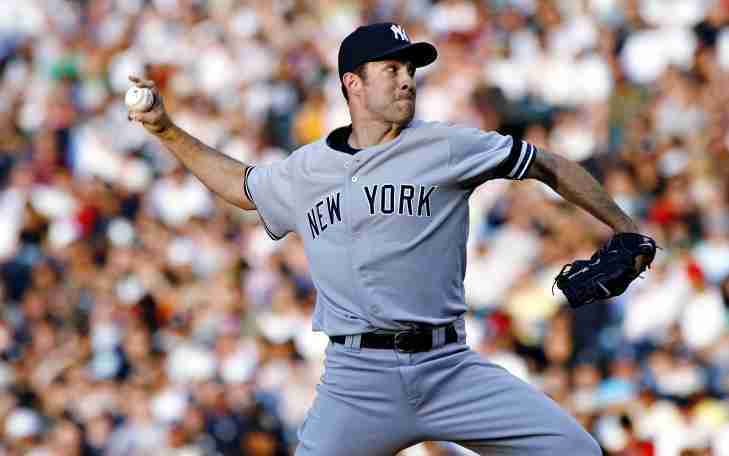
Mike Mussina joined the New York Yankees as a free agent in December 2000, after a decade with the Baltimore Orioles. Moving from Oriole Park to Yankee Stadium didn't change his relentless, efficient style. With an Ivy League-caliber mind, an elite visual clock, and a signature knuckle-curveball, "Moose" spent eight seasons delivering durability during a transitional era for the Yankees’ pitching staff.
He didn't rely solely on raw, overpowering velocity to dominate American League lineups. Instead, he carefully dissected hitters by consistently varying eye levels and adjusting his pitch speeds. During his time in New York, he surpassed 200 innings four times, providing a reliable and steady presence for manager Joe Torre. Interestingly, despite his significant regular-season contributions, he was never chosen for an All-Star team while with the Yankees, a rare quirk largely due to the strength of AL pitching in mid-summer rather than his performance. He focused on winning, piling up five seasons with over 15 victories and recording 1,278 strikeouts in a Yankees uniform.
On the grass, his execution set the standard for defensive excellence. Mussina showcased lightning-fast reflexes and superb spatial awareness, transforming into a highly effective fifth infielder immediately after releasing the ball. He earned three Gold Glove Awards as a Yankee (2001, 2003, and 2008), regularly halting opposing running attempts and ensuring the infield defense remained solid during critical moments.
Throughout his entire stay in New York, he demonstrated exceptional skill, and his final on-field appearance in 2008 served as a memorable, mic-drop moment. At age 39, pitching in the highly competitive American League East, Mussina delivered a masterful display of durability and accuracy. He started 34 games, pitched 200.1 innings, and confused opponents to earn exactly 20 wins for the first time in his impressive 18-year career. Instead of using this historic achievement to pursue lucrative late-career contracts, he chose to retire on his own terms at the peak of his abilities.
In pinstripes, Mussina had a 123–72 record, alongside a 3.88 ERA across his 244 starts. Mussina was elected into the Baseball Hall of Fame in 2019.
28. Herb Pennock
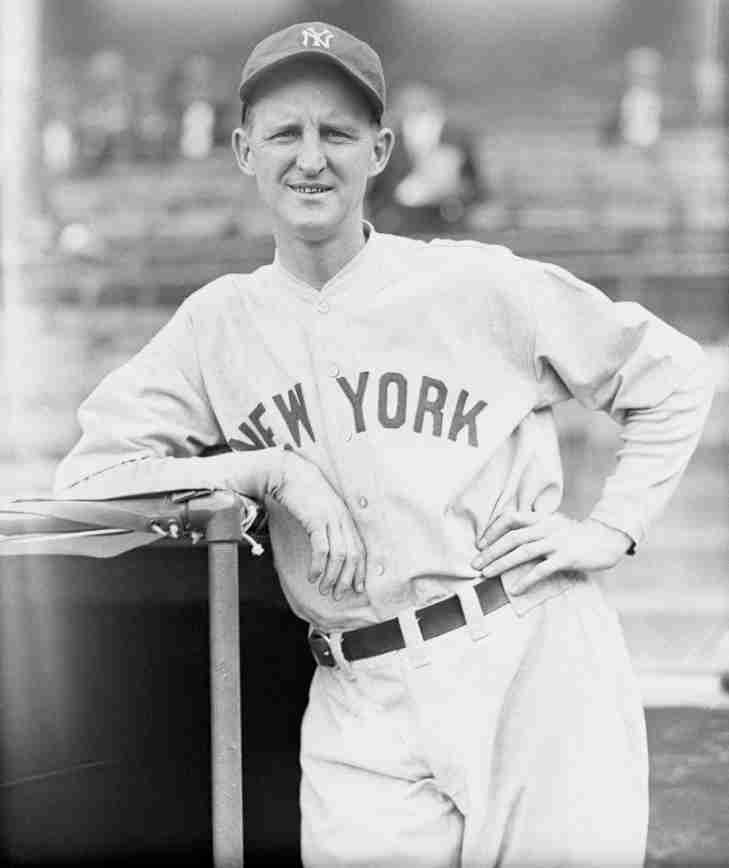
Miller Huggins once said that if his ace's head was cut open, "the weakness of every batter in the league would fall out," highlighting Herbert Jeffries Pennock's operational intelligence. While the 1920s Bronx were known for their power hitting, "The Knight of Kennett Square" was the smooth, elegant southpaw who stabilized the rotation. Acquired in January 1923 from Boston, the veteran left-hander had a graceful, refined delivery that made heavy workloads seem effortless.
Pennock demonstrated a masterclass in refined, strategic control. Instead of relying on overwhelming velocity to break down lineups, he utilized a diverse, deceptive speed repertoire and an exceptionally sharp curveball to keep hitters constantly off balance. His advanced visual perception enabled him to consistently target the very edges of the strike zone, leading the American League in WHIP twice and ranking among the best in fewest walks per nine innings three times. This careful efficiency resulted in two top-five finishes in American League MVP voting: third in 1924 with 21 wins and a tiny 2.83 ERA, and fourth in 1926 during a dominant 23-win season.
This exact regular-season performance set the stage for a remarkable and unparalleled big-game record. Pennock maintained an immaculate 5-0 record in his World Series career, displaying consistent calmness on baseball's biggest platform. In the historic 1927 "Murderers' Row" Fall Classic, he delivered a pitching masterclass in Game 3 against the Pittsburgh Pirates, nearly pitching a perfect game into the eighth inning before completing a game of just three hits. He was a key pillar on four different Yankees championship teams (1923, 1927, 1928, and 1932), providing a steady pitching presence that complemented Babe Ruth’s powerful, high-pressure role.
His arm gave out after an 11-year career in pinstripes, ending with a sentimental return to Boston before retiring in 1934. Pennock finished in the Bronx with a 162–90 record, a .643 winning percentage, a 3.54 ERA, and 165 complete games.
As a Yankee, Pennock gave the team 162 Wins against 90 Losses with a 3.54 ERA. He would enter the Baseball Hall of Fame in 1948, just months after he passed away from a cerebral hemorrhage
26. Graig Nettles
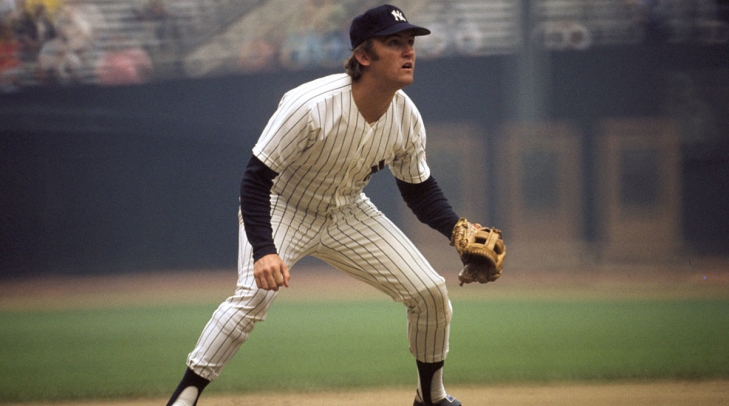
When Graig Nettles was acquired from the Cleveland Indians in November 1972, the New York Yankees knew they were landing a sound third baseman. However, they got a defensive maestro whose glove work at third base stabilized the left side of the field, supporting the late-1970s pinstriped revival. With dry wit, an intense demeanor, and a knack for reading a baseball off the bat, Nettles grew into a key clubhouse leader.
Nettles transformed games with his fielding, yet he was also a powerful left-handed hitter perfectly suited for Yankee Stadium's short porch. He started his New York career with seven straight seasons of over 20 home runs, culminating in 1976 when he led the league with 32 home runs and secured the American League title. In 1977, he had an even more impressive season, hitting a career-high 37 home runs and driving in 107 runs. His consistent excellence during this notable period earned him wide national acclaim, including a fifth-place finish in the 1977 American League MVP voting and sixth place the following year.
However, highlighting his offensive punch only tells part of the story. Nettles was essentially a defensive black hole whose value increased dramatically under postseason pressure. He won two straight Gold Glove Awards in 1977 and 1978, but his greatest achievement was displayed in Game 3 of the 1978 World Series against the Los Angeles Dodgers. With the Yankees trailing two games to none and under intense pressure, Nettles delivered a stunning defensive performance at third base. He executed four incredible diving stops along the line, preventing the Dodgers from securing extra-base hits, and decisively shifted the momentum of the series, helping New York secure back-to-back championships.
His fierce drive and leadership earned respect, leading to his 1982 designation as the 14th franchise captain. He held this role with pride in his final two seasons before an offseason trade to San Diego in 1984 sparked a youth movement.
Nettles left the Yankees after 11 seasons, with 1,396 hits, 230 doubles, 250 home runs, and 834 RBIs. The Yankees would later honor him with a plaque in Monument Park in 2014.
42. Spud Chandler
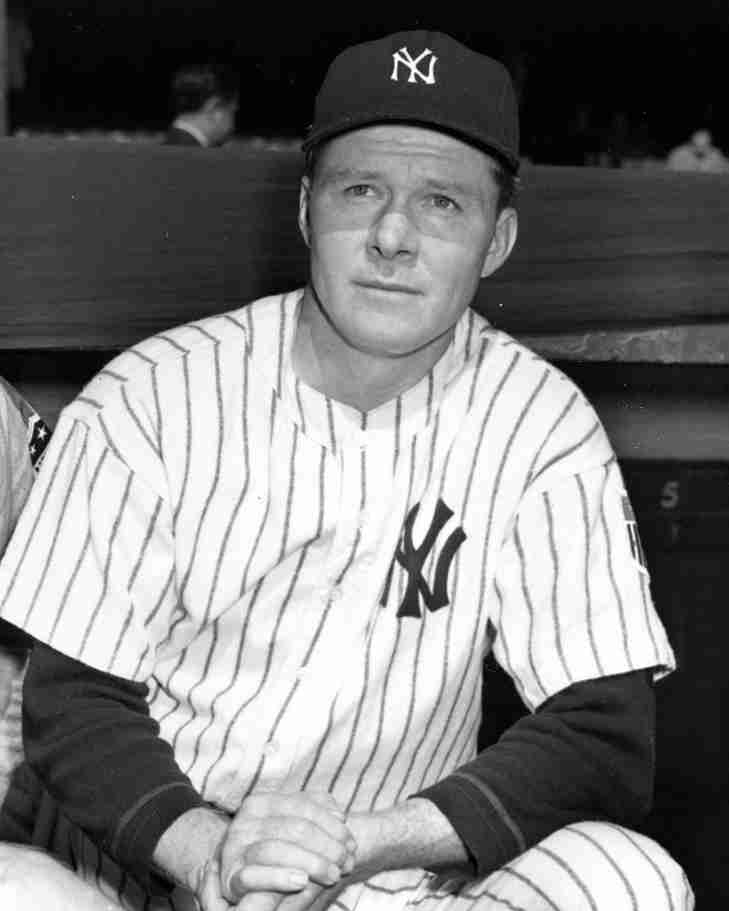
"Spud" Chandler patrolled the area around the pitching rubber at Yankee Stadium with fierce intensity that treated hitters like enemies. Because he didn't debut until age 29 and missed nearly two prime summers to WWII, many overlook his legacy.
We won’t do that here.
Armed with a heavy, biting slider, a relatively rare and devastating pitch that sharply cut across the plate, Chandler specialized in breaking opposing bats and inducing weak contact. Despite limitations from nagging arm fatigue and injuries in his early thirties, he fully realized his potential as a dominant, front-of-the-rotation pitcher as the 1940s began. He was a steadfast workhorse for manager Joe McCarthy, posting an impressive 16–5 record in 1942 and delivering an outstanding performance the following summer.
His historic 1943 regular-season performance remains one of the most dominant pitching displays in Bronx history. Chandler completely shut down American League lineups, leading the staff with 20 wins against only 4 losses. He showcased exceptional run prevention, finishing the season with 20 complete games, 5 shutouts, a tiny 0.992 WHIP, and a stellar 1.64 ERA; the lowest single-season ERA by any Yankees starter in the modern era. His consistent excellence was so evident that he overwhelmingly won the 1943 American League Most Valuable Player award, making him the only starting pitcher in franchise history to earn this honor.
During the postseason, Chandler transformed into an indispensable asset. He contributed to six World Series wins with the Yankees (1937, 1938, 1939, 1941, 1943, and 1947), but his standout performance was in the 1943 Fall Classic against the St. Louis Cardinals. He pitched in two games, delivering two complete-game victories, allowing only one unearned run over 18 impressive innings, and sealed the championship with a dominant Game 5 shutout, securing the title for the Yankees.
Just as he reached the peak of his powers, his career was significantly interrupted. Chandler dedicated almost all of the 1944 and 1945 campaigns to serving in the United States Army. Upon returning to the Bronx full-time in 1946, he didn't miss a beat. At age 38, he pitched a career-high 257.1 innings, completed 20 games, and struck out 138 batters, achieving his second 20-win season.
A four-time All-Star who spent his entire 11-year career in the pinstripes, Chandler pitched his final major league game in 1947 due to severe elbow chips that severely affected his arm. He retired with an impressive 2.84 ERA, a 109-43 record, and 26 shutouts, setting a high standard of competitive excellence. Bill Dickey called him the best pitcher he ever caught, and Ted Williams often listed him among the toughest opponents he faced; a distinguished legacy for a winner who refused to let the Bronx down.
35. Elston Howard
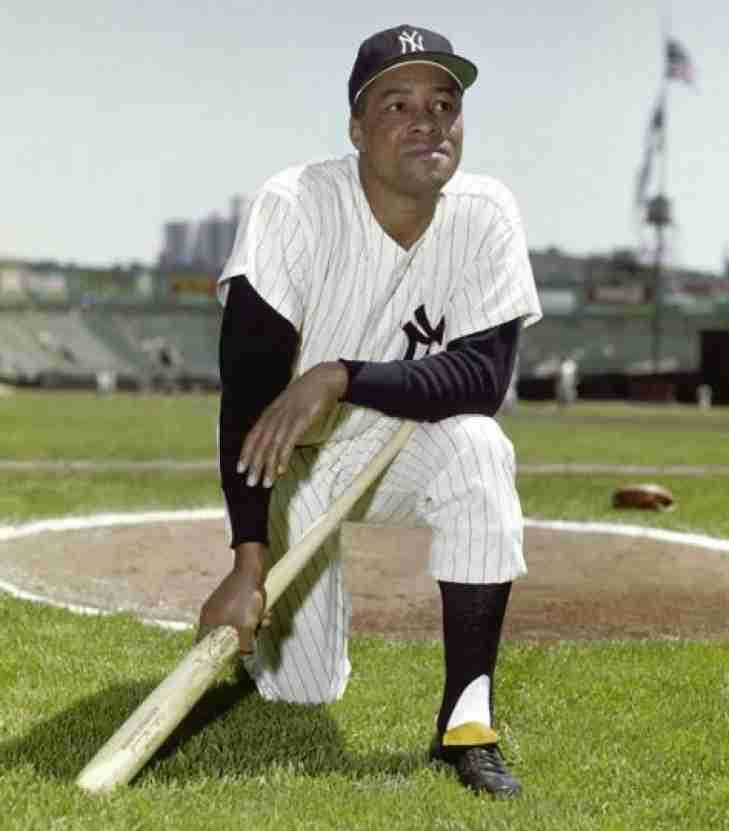
When Elston Howard finally made his major league debut in April 1955, he carried a historic weight that extended far beyond the white lines of the diamond. As the first African-American player to break the color barrier for the sport's most successful franchise, Howard faced immense, high-pressure scrutiny with quiet dignity and resilience. A former standout for the Kansas City Monarchs in the Negro Leagues, the St. Louis native was intentionally converted into a catcher by the New York front office during his minor league journey, a strategic move that would eventually transform the backstop position for a new generation in pinstripes.
Securing regular playing time early on demanded a lot of patience with team structure. Howard joined the Bronx during a period when the legendary Yogi Berra was still performing at an MVP-level behind the plate. Instead of leaving his defensive skills unused on the bench, manager Casey Stengel utilized Howard's athleticism by making him a versatile player capable of handling multiple positions. Throughout the late 1950s, he fluidly played left field, right field, and first base while serving as Berra's main backup. Despite the constant changes in defensive roles, Howard's exceptional performance gained national recognition, earning him his first of nine straight All-Star selections in 1957.
When Ralph Houk assumed the managerial role in 1961, Howard was finally appointed as the team's full-time catcher, beginning a legendary era of individual achievement and team excellence. He provided stability to the pitching staff with his calm demeanor, using exceptional game-calling skills and a rapid release that earned him two Gold Glove Awards. Complementing his defensive mastery with significant power hitting, he smashed 21 home runs and led the historic 1961 "M&M Boys" team to a world championship.
In 1963, his exceptional two-way skills reached their peak during a historic season. Howard dominated the junior circuit, hitting a career-high 28 home runs, driving in 85 RBIs, and posting a strong line of .287/.342/528, all while providing perfect defensive security behind the plate. His consistent performance earned him the 1963 American League Most Valuable Player award, the first time an African-American player received this honor in American League history, as he single-handedly led an injury-ravaged Yankees team to another pennant.
In October, Howard was a consistently reliable figure, appearing in an impressive ten World Series throughout his career. He played a key role in leading the Yankees to four championships (1956, 1958, 1961, and 1962). Known for his expert postseason performance, he managed high-pressure pitching staffs with complete composure. After a late-career trade to the Boston Red Sox in 1967, during which he contributed to the famous "Impossible Dream" pennant run, he officially retired after the 1968 season.
Howard quickly returned to the Bronx dugout, becoming a highly respected and level-headed first base coach for more than ten years. He shared his extensive operational expertise with the next generation of stars, including Thurman Munson, contributing to the team's consecutive World Championships in 1977 and 1978, and earning six rings in total. Sadly, his life was abruptly ended when he died of sudden heart issues in December 1980 at age 51.
On July 21, 1984, the franchise retired Howard’s iconic number 32 jersey and dedicated a bronze plaque in his honor inside Monument Park.
25. Tony Lazzeri
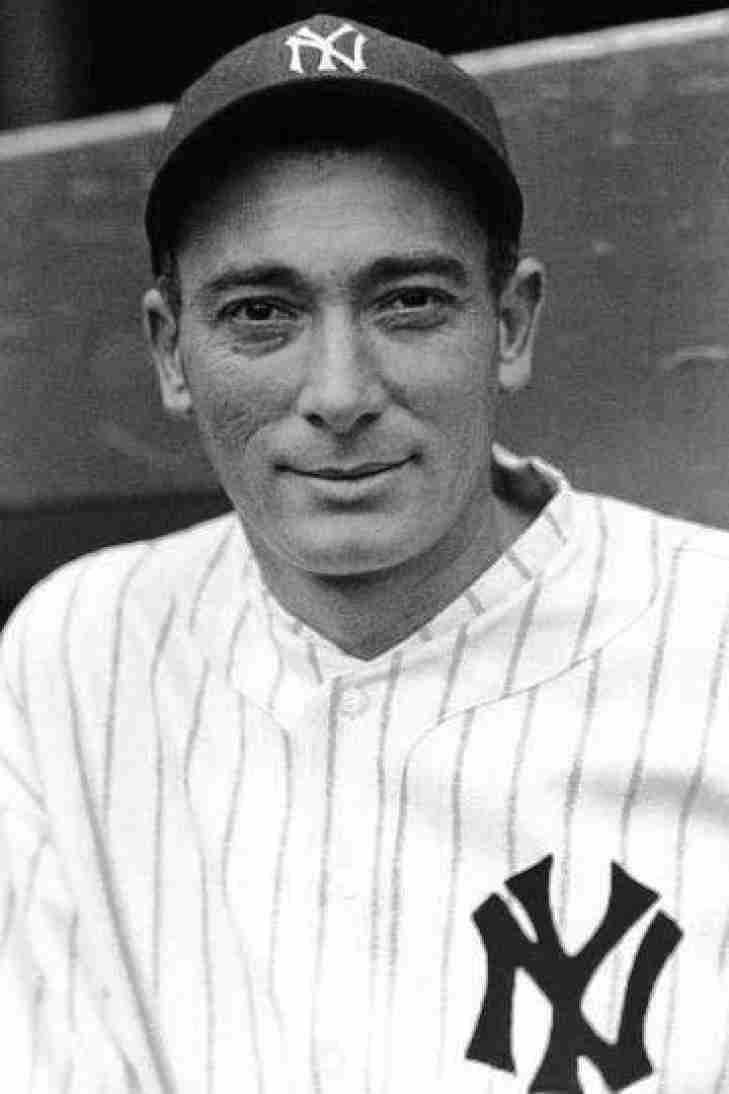
Tony Lazzeri's arrival in the Bronx in spring 1926 marked not only the debut of a highly praised rookie second baseman but also the emergence of a significant cultural icon for thousands of Italian-American fans across New York City. They packed the stands, enthusiastically chanting "Poosh 'Em Up Tony”, a tribute to his legendary power. While historical focus often highlights the mythical, tape-measure home runs of Babe Ruth and Lou Gehrig, Lazzeri’s subtle yet deadly efficiency in the lower order was essential in uniting the historic "Murderers' Row" lineup.
Lazzeri fundamentally redefined the expectations for middle infielders regarding run production. During a period when second basemen were generally regarded as diminutive, primarily defensive specialists employing small-ball strategies, he introduced a rare level of power expected from middle-of-the-order hitters. Over the course of his twelve distinguished seasons with the New York Yankees, he exceeded 100 RBIs on seven occasions, with his peak performance in 1930 when he achieved a career-high 121 RBIs. This offensive prowess was complemented by exceptional defensive zone control, and he maintained an impressive batting average of .292 alongside an outstanding on-base percentage of .380. Furthermore, he surpassed twenty doubles on ten occasions while representing New York.
His individual brilliance is highlighted by one of the most remarkable and impactful hitting displays in major league history. On June 3, 1932, during a high-scoring game against the Philadelphia Athletics, Lazzeri achieved a rare feat that remains unmatched. He hit a perfect "natural cycle," collecting a single, double, and triple in succession. Then, in the ninth inning, with the bases loaded, he hit a grand slam, ending the cycle and becoming the only player in baseball history to finish a natural cycle with a grand slam. Ironically, his legendary performance was overshadowed the next morning, as Lou Gehrig hit four home runs in the same game.
Beyond that singular afternoon of enchantment, Lazzeri was an ubiquitous presence in the playoffs, anchoring the infield for a roster that consistently excelled in the sport. He was a fundamental component of six American League pennant-winning teams, securing five World Series championships (1927, 1928, 1932, 1936, and 1937) while serving as a dependable, consistent defensive contributor alongside shortstop Frankie Crosetti. Furthermore, he holds the longstanding American League record for the most RBIs in a single game, with an impressive 11 runs driven in on May 24, 1936, during a contest that featured two grand slams.
He eventually departed New York following the 1937 season, concluding his brilliant, 12-year pinstriped stay with 1,784 hits, 169 home runs, and 1,157 runs batted in before brief, late-career stops with the Cubs, Dodgers, and Giants. Tragically, his life was cut short when he passed away suddenly at his home in San Francisco in 1946 at the young age of 42.
The Veterans Committee eventually elected him into the Hall of Fame in 1991.
22. Phil Rizzuto
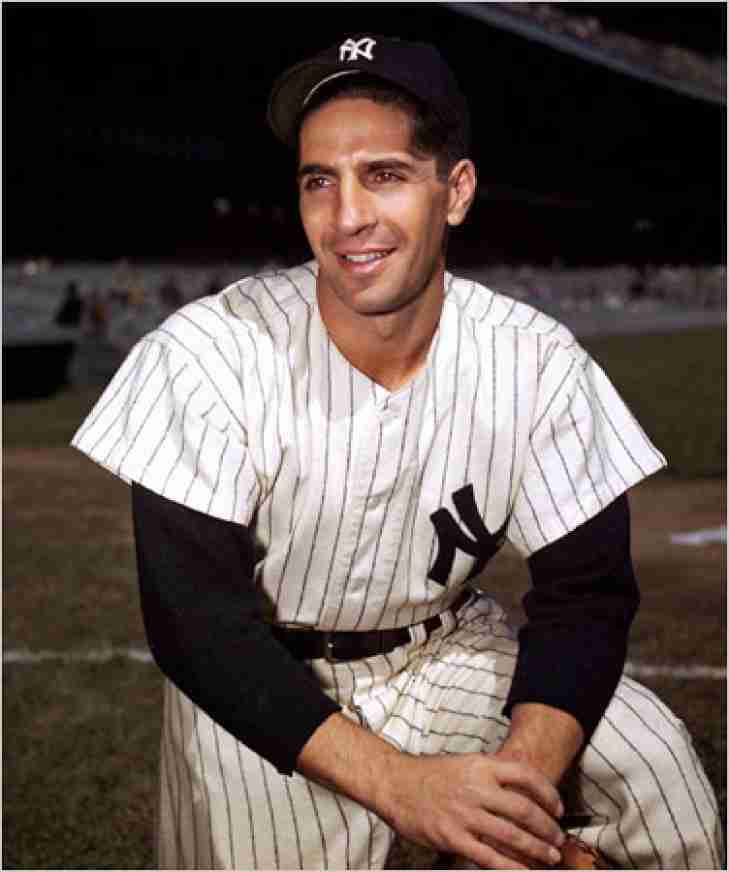
Holy Cow!
Philip Francis Rizzuto was cut by the Brooklyn Dodgers and New York Giants as a teenager because of his 5-foot-6 frame—told by Casey Stengel to "go get a shoeshine box.” Few predicted he would become the key infield anchor of baseball's greatest dynasty. The Brooklyn native didn't let rejection slow him, arriving in Bronx in 1941 to start at shortstop and change organizational control of the diamond.
"The Scooter" served as the quintessential counterbalance to the formidable identity of the "Bronx Bombers." He did not achieve fame by consistently hitting baseballs over the fences, amassing only 38 home runs throughout his 13-year tenure donning the pinstripes. Instead, Rizzuto perfected the art of small-ball execution, transforming it into an unparalleled craft. He was a consummate situational hitter, proficient in deftly manipulating the defense through precisely executed bunts, intelligent application of the hit-and-run play, and an aggressive style of baserunning that resulted in 1,588 hits and 149 stolen bases. His exceptional zone coverage and ability to perform in high-pressure situations on the basepaths exerted continuous pressure on opposing pitching staffs, thereby creating an ideal platform for the heavy hitters positioned behind him.
On the grass, his defensive performance was truly exceptional. Rizzuto had an extraordinary sense of timing, lightning-fast lateral agility, and smooth transfers that enabled him to execute double plays consistently. He surpassed a 2.0 defensive bWAR in six seasons, leading all American League shortstops in this category three times.
During a historic showcase in 1950, Rizzuto demonstrated an exceptional level of skill that reached its peak. He dominated the junior circuit with exactly 200 hits, scored 125 runs, and maintained an impressive .324/.418/439 slash line. Modern advanced metrics widely confirm his excellence, as he led all American League batters with a remarkable 6.7 bWAR. His consistent, high-quality performance earned him the 1950 American League Most Valuable Player award, showing that precise, efficient play can rival the league's top power hitters.
Above all, Rizzuto was the key factor in the team's greatest achievements. His career was interrupted by three prime years of military service with the U.S. Navy during World War II. Despite this, he returned to help the Yankees win nine American League pennants and an impressive seven World Series titles, cementing his reputation as a vital, legendary figure in big games.
After retiring from the uniform lines during the 1956 campaign, he moved straight into broadcasting, where over the next forty years, he captivated multiple generations of fans with his signature catchphrase, "Holy Cow!’, and his charmingly unconventional storytelling approach. He would be inducted into the Baseball Hall of Fame by the Veterans Committee in 1994, nine years after the Yankees retired Rizzuto's number 10.
45. Rickey Henderson
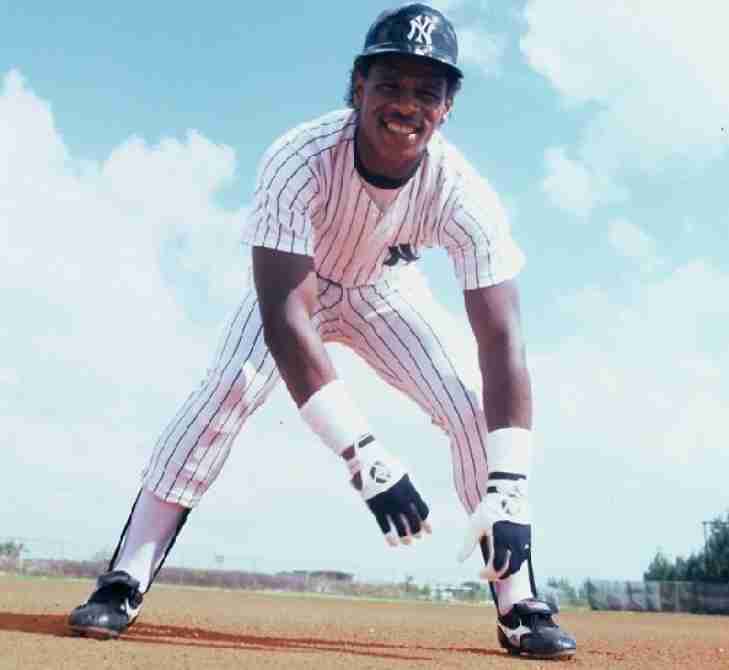
Rickey Henderson is, and will always be, an Athletic. Yet…
His move to New York was anything but ordinary—it was an exciting winter event at the 1984 Winter Meetings, highlighting George Steinbrenner's strong passion for top talent. By the end of 1984, the Athletics, his hometown team, were struggling with consecutive losing seasons and hesitated to offer Henderson a lucrative contract extension as he was nearing free agency. Seeing a special opportunity to acquire a legendary player at his peak, the Yankees eagerly joined a competitive bidding battle with the Orioles, Dodgers, and Rangers.
To win the sweepstakes, New York had to meet Oakland GM Sandy Alderson’s demand for a five-player package. On December 5, 1984, the Yankees made the deal, trading future talent for Henderson and reliever Bert Bradley. They sent reliever Jay Howell and four top prospects, Tim Birtsas, Stan Javier, Eric Plunk, and Jose Rijo, seen as Oakland's key piece, while receiving Henderson and Bert Bradley.
Henderson did more than just play baseball in New York; he controlled the pace and flow of the game entirely. With a highly disciplined strike zone and an advanced visual clock, he transformed the leadoff position into a key threat for opposing pitchers. His 1985 debut season in the Bronx was a masterclass in modern run production, as he posted a .314/.419/516 batting line, hit 24 home runs, drew 99 walks, and scored 146 runs, leading the league. His quick baserunning created chaos, leading all players with 80 stolen bases. Achieving a remarkable 9.9 bWAR that summer, he delivered one of the most dominant individual seasons in franchise history, finishing third in AL MVP voting.
While the casual fan fixated on his historic stolen base totals, his tenure in New York unlocked a rare, multi-dimensional completeness. He averaged over 20 home runs per season during his first three full summers in the Bronx, providing a shocking power baseline for a leadoff hitter.
Surprisingly, his defensive skills peaked during his time patrolling the outfield at Yankee Stadium. With an exceptionally quick first step and excellent spatial awareness, Henderson regularly turned difficult line drives into easy outs, significantly improving his efficiency in advanced metrics. He was a constant presence on the national stage, earning an All-Star selection in every complete season he played for the junior circuit in pinstripes.
Despite internal turmoil and roster changes in the late 1980s, Henderson’s impact remained significant. Even after being traded back to Oakland in June 1989, he left a lasting legacy on the team's leaderboard. He finished his Bronx career with 326 stolen bases, a remarkable figure that still places him among the top five in franchise history, despite playing fewer than 600 games in pinstripes. His time with the Yankees achieved an impressive 30.6 bWAR, a notable accumulation of value that surpasses many long-standing organization icons.
Appropriately, Henderson was a first ballot Baseball Hall of Fame inductee in 2009.
39. Roger Maris
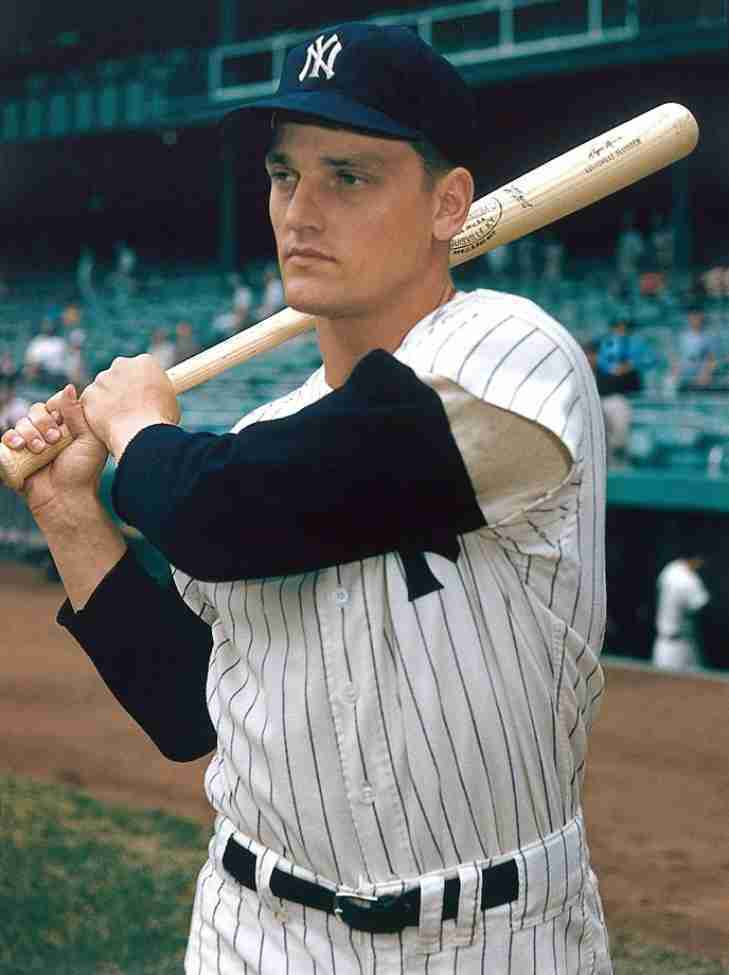
When Roger Maris arrived in the Bronx before the 1960 season through a multi-player trade with the Kansas City Athletics, few expected the quiet, crew-cut kid from Fargo, North Dakota, to immediately challenge the franchise's legendary status. Many thought he would simply serve at best as a reliable, power-hitting sidekick to Mickey Mantle. However, Maris found himself under intense pressure, propelling him into a historic period of exceptional performance that would change baseball forever and solidify his place in American folklore.
Maris didn't gradually step into the spotlight; he made a striking entrance. His swift, elegant left-handed swing, perfectly suited for Yankee Stadium's short right-field porch, allowed him to dominate American League pitching during his debut summer. He hit 39 home runs, led the league with 112 RBIs, and showcased spectacular, Gold Glove-winning right-field defense. His dynamic, multi-faceted impact helped the Yankees secure the pennant and earned Maris the 1960 American League Most Valuable Player award, cementing his superstar status before the chaos of the next summer even began.
In 1961, Maris engaged in a tense, summer-long race with teammate Mickey Mantle to break Babe Ruth's single-season record of 60 home runs. As an understated Midwesterner and outsider, he faced intense psychological pressure, with much of the New York media and his fans hoping Mantle would surpass him and claim Babe Ruth's legacy. The constant stress was so overwhelming that his hair reportedly started falling out in clumps.
Yet, Maris showed remarkable resilience under pressure. On October 1, 1961, the final game of the season, he hit a historic line-drive home run off Boston’s Tracy Stallard into right field, tying the record with his 61st homer. Instead of receiving pure praise, his achievement was quickly marred by Commissioner Ford Frick’s controversial decision to add an asterisk, citing that Maris played in a 162-game season, unlike Ruth's 154. Many casual fans overlook that his impressive 61-home-run, 141-RBI season also earned him his second straight American League MVP award, a rare back-to-back distinction that cemented his place among baseball’s legends.
Beyond just chasing home runs, Maris was a determined winner who solidified the middle of the lineup for consecutive world championship teams in 1961 and 1962. While his powerful hitting was central to his legacy, teammates often admired his exceptional baseball instincts, top-tier baserunning skills, and strong team loyalty. He hit 203 home runs over his first seven seasons in New York, helping the franchise secure five straight American League pennants.
The significant structural wear from injuries and the fatigue of the New York spotlight eventually reduced his productivity, resulting in a late-career trade to St. Louis. There, he contributed to guiding the Cardinals to two additional pennants before retiring from baseball after the 1968 season.
While the National Baseball Hall of Fame left his resume outside its plaque gallery, the Yankees honored him with a celebration on July 21, 1984, retiring his number 14 and dedicating a bronze plaque in Monument Park.
37. Dave Winfield
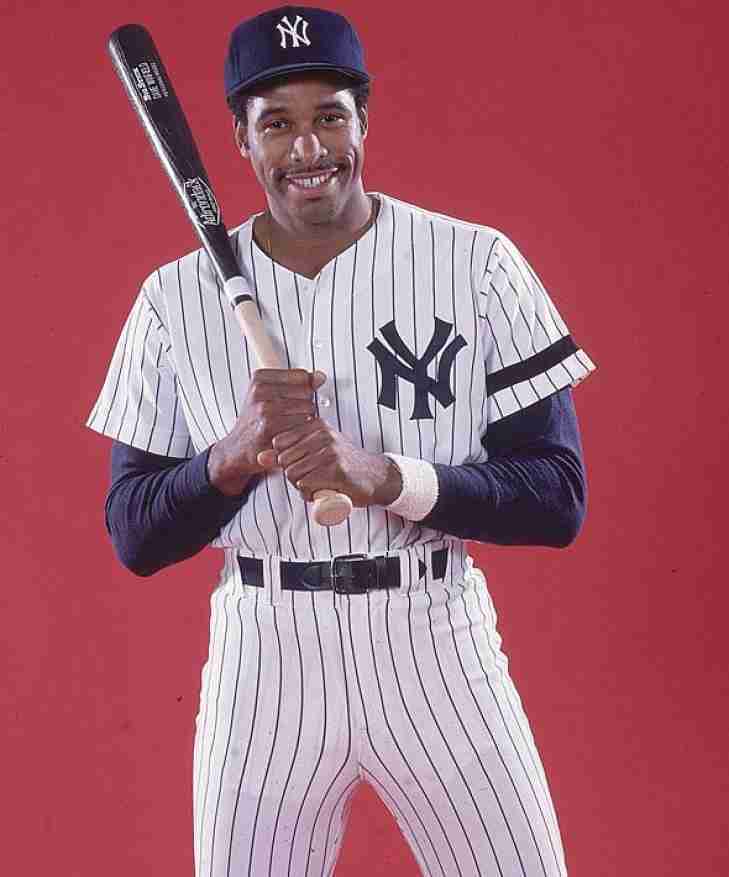
In December 1980, Dave Winfield stunned the sports world by signing a groundbreaking ten-year deal with the New York Yankees. This move not only set financial records but also plunged him into a prolonged media spotlight. The St. Paul native, standing 6-foot-6 and known for his smooth athleticism—traits that had led to drafts in three professional sports—brought a commanding, superstar aura to the Bronx. However, his time with the team was marked by a tumultuous, often confrontational relationship with owner George Steinbrenner, who famously called him "Mr. May" after a brief postseason slump.
Despite ongoing off-field drama and a highly publicized feud in the front office, Winfield’s consistent on-field performance stood out. He transformed the middle of the lineup into a reliable power source, thanks to his long, strong right-handed swing that often challenged American League pitchers. Winfield recorded eight straight seasons with over 20 home runs in New York, hitting a career-high 37 in 1982 along with 106 RBIs. Known for his ability to produce extra-base hits, he surpassed 100 RBIs five times as a Yankee and maintained an impressive .495 slugging percentage, consistently pressure opponents’ pitching staff.
On the grass, his defensive evaluation continues to be one of the most divisive aspects of his legacy. To casual observers and classic award voters, Winfield appeared as a top defensive player; his powerful arm frequently caught aggressive baserunners, and his extensive reach earned him five Gold Glove Awards in pinstripes.
However, modern advanced metrics reveal a more complex picture. His defensive bWAR was consistently lower, indicating that his positioning and lateral range were often below average, leading to many balls dropping in the gaps and reducing his overall efficiency compared to top-tier defenders.
His overwhelming offensive output and consistent excellence during the regular season made him a prominent figure on the national stage, earning him eight straight All-Star selections for the American League. He played with a strong, professional presence that kept the clubhouse focused despite the chaos upstairs, accumulating large hit totals until a severe back injury forced him to miss the entire 1989 season.
Following a highly tense standoff with the front office, Winfield was finally traded to California in May 1990, concluding his tumultuous yet incredibly productive pinstriped stay with 1,300 hits, 236 doubles, 205 home runs, and 818 runs batted in across 1,172 games. Winfield was inducted into the Baseball Hall of Fame in 2001 on the first ballot.
17. Andy Pettitte
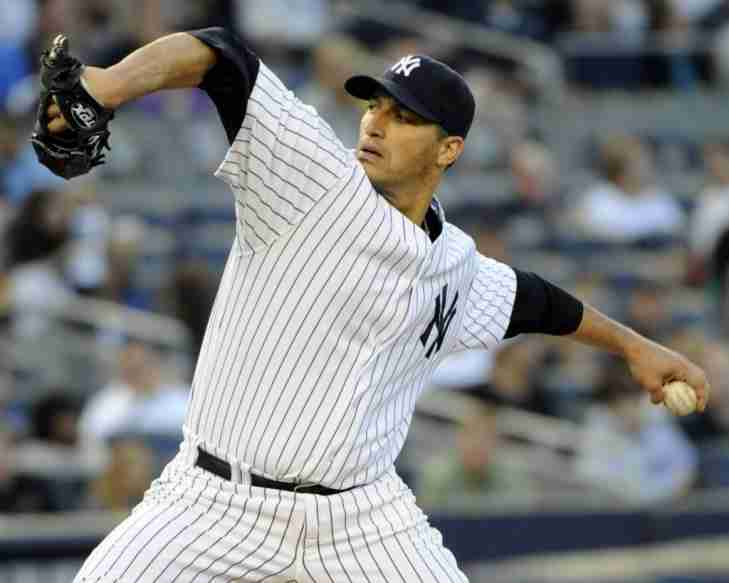
Andy Pettitte's arrival in spring 1995 didn't signal a hero's entrance, but his presence quickly established the core of the modern Yankees. As a rookie left-hander from Texas, he quietly earned a spot in the veteran rotation, known for his icy, focused stare over his glove and a deadly pickoff move to first base. That summer, he won 12 games, hinting at a durable, unyielding competitor who would, almost two decades later, become a symbol of pinstriped resilience.
His development from a dependable young pitcher to a top-tier competitor was evident by 1996. Pettitte delivered an outstanding regular season, leading the American League with 21 wins and pitching 221 innings, earning him the runner-up spot for the Cy Young Award. More critically, he proved himself as the ultimate clutch performer when the stakes were highest in October. In Game 5 of the World Series against the formidable Atlanta Braves, with elimination on the line, Pettitte pitched 8.1 innings without allowing a run in a famous 1-0 battle, changing the series dynamics and helping secure the first of four championships in a five-year span.
During the late 1990s and early 2000s, Pettitte was the backbone of the pitching rotation, thanks to his consistent, steady performance. He wasn't a strikeout pitcher who relied on high velocity, but he effectively limited opposing offenses and pitched deep into games. He earned four top-ten finishes in Cy Young voting in the Bronx and set the gold standard for postseason reliability. Whenever the Yankees faced a losing streak or needed a crucial win, Joe Torre often trusted him with the ball. He ended his career with an unprecedented 19 postseason wins, 18 with the Yankees, a record that still stands unmatched.
A short, three-year break to Houston interrupted his career, but he returned to the Bronx in 2007 to wrap up his playing days. During this second period, his legacy faced its greatest challenge. When the Mitchell Report implicated him in late 2007 for using human growth hormone to heal an elbow injury, Pettitte didn't evade questions or make vague excuses. Instead, he held a press conference alone at spring training, took full responsibility, apologized sincerely to fans and teammates, and answered every question honestly. By being completely transparent, he maintained the utmost respect from the clubhouse and fans.
His return was validated in 2009 when veteran Pettitte proved to be the steady force for a redesigned team, leading them to division, pennant, and World Series wins, ultimately securing the franchise’s 27th championship. After a brief retirement following 2010, he returned for two more tough but successful seasons before retiring for good in September 2013 with 219 wins and 2,020 strikeouts in pinstripes.
His status as a crucial symbol of the dynasty was solidified in August 2015, when the Yankees honored him by dedicating his plaque in Monument Park and permanently retiring his number 46 jersey.
23. Jorge Posada
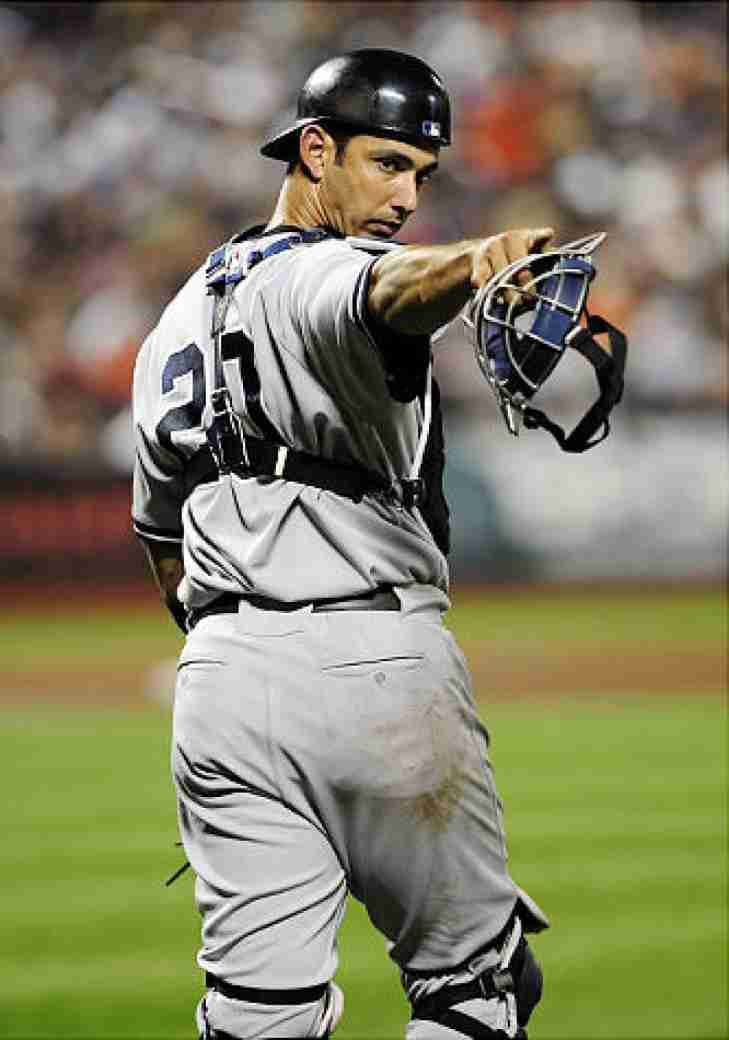
Jorge Posada was selected in the 24th round of the 1990 draft as a skinny infielder out of an Alabama community college, a place where you are barely expected to make it out of single A. Tapped to convert to catcher by the front office, the Puerto Rican native hammered away at his defensive assignments until making his mark in the Bronx. He eventually cemented his status as the fiery, emotional engine of the legendary "Core Four" alongside Derek Jeter, Mariano Rivera, and Andy Pettitte.
Posada brought a rare and formidable offensive style to the switch-hitting catching position. He played with a fierce, competitive mindset at the plate, often skipping batting gloves and using dirt on his hands to get a tough, gritty grip on the bat. His patient approach in the zone helped wear down opposing pitchers, earning over 100 walks in 2000 and maintaining an on-base percentage often above .370. Year after year, he challenged the American League with strong extra-base hitting, accumulating a high number of RBIs and achieving eight seasons with 20 or more home runs.
That player's peak performance was evident during a historic showcase in 2003. Posada dominated pitching by hitting 30 home runs, driving in 101 runs, and leading the Yankees’ offense with a strong .281/.405/518 slash line. His consistent daily performance earned him a third-place finish in the American League MVP voting, demonstrating his ability to lead a top-tier lineup from behind the plate. He capped his career with a remarkable 2007 season, hitting .338 with 42 doubles and 20 home runs at age 35, earning his fifth Silver Slugger Award.
When the postseason spotlight intensified, Posada proved to be a highly valuable asset. He caught for the team in the 1998, 1999, 2000, and 2009 championships, earning four World Series rings as the main catcher for the pitching staff. His exceptional durability helped him set major league records for the most postseason games played (119) and hits (103) by a catcher, confidently managing top-tier postseason rotations.
Age and severe knee wear finally prompted a full-time move to designated hitter during his final summer in 2011, culminating in a dramatic, division-clinching walk-off hit against Tampa Bay before he formally walked away from the diamond. Posada spent all 17 of his professional seasons in a single uniform, retiring as one of only five catchers in history to cross the metric threshold of 1,500 hits, 350 doubles, 275 home runs, and 1,000 runs batted in.
The Yankees retired his number 20 in 2015.
19. Willie Randolph
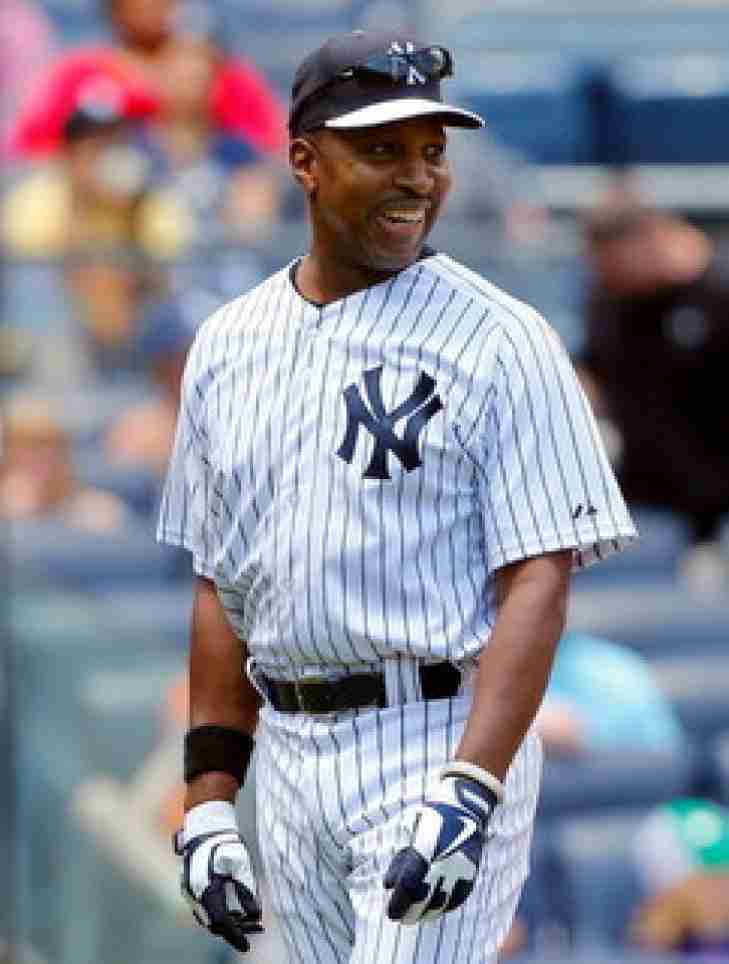
The Pittsburgh Pirates traded Willie Randolph to the Bronx prior to the 1976 season in what was the shrewdest trade by the Yankees brass in the 1970s. While the headlines and back pages were routinely dominated by the larger-than-life personalities of Reggie Jackson, Billy Martin, and George Steinbrenner, the 21-year-old rookie from Brooklyn quickly established himself as the quiet, unshakable foundation of the entire infield. He anchored second base for 13 consecutive seasons, displaying a level-headed professionalism that offered maximum stabilization during one of the most volatile stretches in franchise history.
Primarily batting second, Randolph epitomized selfless, high-quality situational hitting. While he lacked the raw, stadium-rousing power, his advanced plate discipline and excellent eye made him a top-tier catalyst for the power hitters behind him. His exceptional zone awareness enabled him to work deep counts, regularly exceeding the 80-walk mark and finishing as the American League's leading position player with 119 walks in 1980. He combined this remarkable on-base skill with proficiency in small-ball plays, executing bunts with precision and using his speed to steal 251 bases during his time with the Yankees.
His defensive skills truly made him stand out, transforming his value from just solid to legendary. Randolph was like a defensive wizard, with perfect positioning, quick footwork, and expert handling of the double-play pivot, making him one of the top second basemen of his era. Advanced stats strongly support his impact, with an impressive 19.4 defensive bWAR during his time in New York. Even with his consistent excellence in regular seasons, many still consider him arguably the greatest defender in modern history who never received a Gold Glove, a fact local fans still debate.
His quiet, lead-by-example approach earned him great respect across the clubhouse, culminating in management naming him the 12th franchise captain alongside Ron Guidry in March 1986. Randolph played a key role in the back-to-back World Series wins in 1977 and 1978, and his strong bond with the organization lasted well beyond his playing career. He returned as a coach in the Bronx under Buck Showalter and Joe Torre, helping steer the team to four more World Series titles, reaching a total of six championships with the Yankees.
His tenure with the Yankees concluded after the 1988 season when he signed with the Dodgers as a free agent. Over his 13 seasons in Bronx, he amassed 1,731 hits, scored 820 runs, and posted an impressive .373 on-base percentage. On June 15, 2015, during the Yankees' annual Old-Timers' Day, a bronze plaque was officially unveiled in his honor inside Monument Park, permanently honoring Randolph among the legendary figures of Bronx baseball.
24. Bob Shawkey
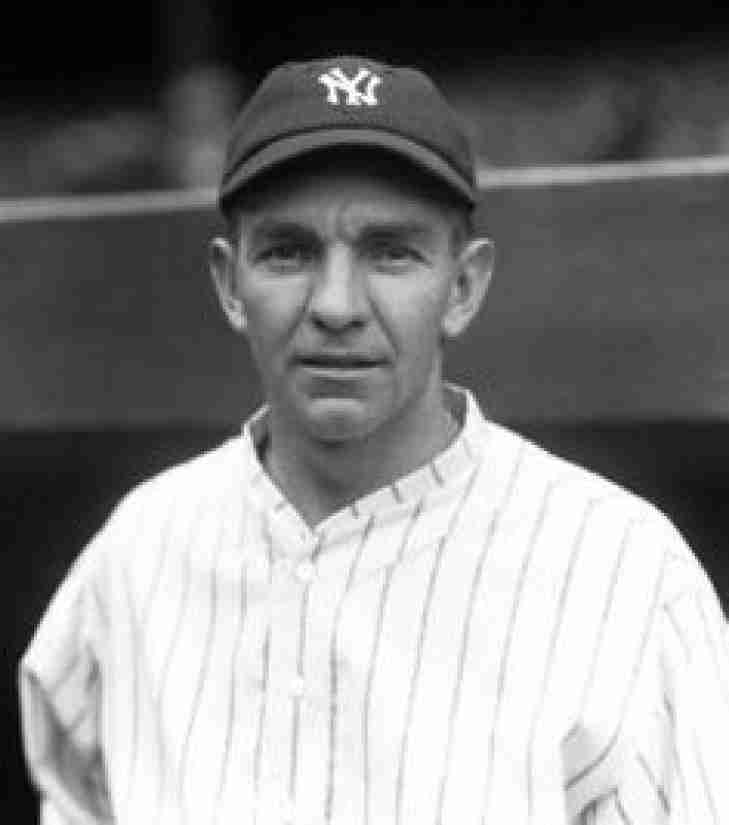
When a franchise builds its identity around a mythic moniker like the "Bronx Bombers," the elite pitching often gets overshadowed. Bob Shawkey spent 13 seasons in New York as the team’s main ace before the baseball world focused on Babe Ruth and Lou Gehrig's home runs. Nicknamed "Sailor Bob" after military service on USS Arkansas during WWI, his arrival through a $3,000 purchase from Connie Mack's Athletics in June 1915 changed the New York rotation.
Shawkey combined a high-velocity fastball with an exceptionally sharp, snapping curveball to methodically dismantle lineups. He expended no time in establishing an elite workload, experiencing a remarkable first full summer in pinstripes in 1916. He delivered an exceptional hybrid performance by initiating 27 games and completing another 24 from the bullpen, securing 24 victories to place second in the American League behind only Walter Johnson, while maintaining an impressive 2.21 ERA.
His consistency over the subsequent years emerged as the primary competitive driving force for Manager Miller Huggins. Shawkey surpassed the elusive 20-win threshold on four occasions while serving in New York, achieving identical 20-win seasons in 1919 and 1920, and culminating with another 20-victory season that contributed significantly to the 1922 pennant pursuit. He demonstrated mastery in run prevention, securing the 1920 American League ERA title with an exceptional 2.46 ERA. His meticulous approach to pitching was complemented by a formidable, historically significant dominance; notably, on the final day of the 1919 season, Shawkey recorded 15 strikeouts against Philadelphia batters, establishing a franchise record for the most strikeouts in a single game, a milestone that remained unchallenged for 59 years until Ron Guidry's remarkable 18-strikeout game in 1978.
Beyond his impressive stats, Shawkey is woven into the organization's history. On April 18, 1923, before 74,000 fans, he was the Opening Day starter for Yankee Stadium's debut. He threw a complete game to beat the Red Sox 4–1, becoming the first to pitch in "The House That Ruth Built." While Babe Ruth hit the stadium's first home run, Shawkey drove in another run and was the game's winning pitcher.
His arm eventually succumbed to severe structural fatigue in the latter half of the decade, shifting him into a veteran depth role during the historic 1927 "Murderers' Row" championship campaign before he formally transitioned to coaching. He closed his brilliant pinstriped playing career with 168 wins, 1,163 strikeouts, 168 complete games, and a stellar 3.12 ERA.
