

 Not in Hall of Fame News
Yes, we know that this is taking a while! As many of…
 Not in Hall of Fame News
Yes, we know that this is taking a while! As many of…
 Not in Hall of Fame News
2002 SEMI-FINAL RESULTS: Thank you for your participation in the Pro Football…
 Not in Hall of Fame News
Yes, we know that this is taking a while! As many of…
 Not in Hall of Fame News
We are diligently working away at Notinhalloffame on revising our Football lists…
 Not in Hall of Fame News
We are diligently working away at Notinhalloffame on revising our Football lists…
 From the Desk of the Chairman
Unlike in the case of pre-match betting, where you have to pick…
 From the Desk of the Chairman
Kupu178 builds trust with people by using top-end end-to-end encryption. It checks…
 From the Desk of the Chairman
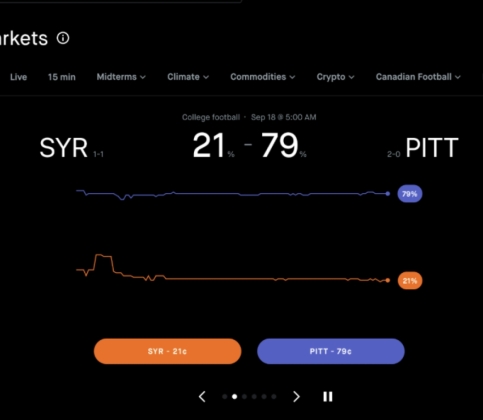
Sports fans thrive on calculating strategy, reading momentum, and maximizing every tactical…
 From the Desk of the Chairman
The 2026 NFL season is two weeks old and the division races…
 From the Desk of the Chairman
Sports communities are often built around things that have nothing to do…
 From the Desk of the Chairman
Every hall of fame eventually faces the same problem. The selection process…
100 Active Potential Football Hall of Famers
-
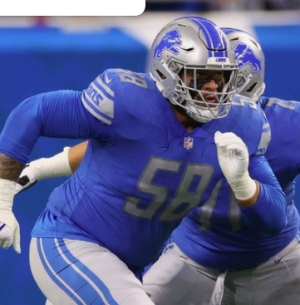 #38 Overall, Penei Sewell, Detroit Lions, Tackle, #4 Offensive Lineman2025 Pre-Season Rank #68, 2024: Pre-Season Rank: #121. Peak Period: 2021-25*Standing at 6'5” and 330 pounds, Penei Sewell can state that going into…
 -
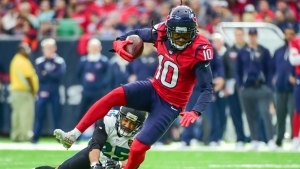 #27 Overall, DeAndre Hopkins, Free Agent, #4 Wide Receiver2025 Pre-Season Rank, #24, 2024 Pre-Season Rank #24, 2023 Pre-Season Rank #20, 2022 Pre-Season Rank #28, 2021 Pre-Season Rank #30, 2020 Pre-Season Rank…
 -
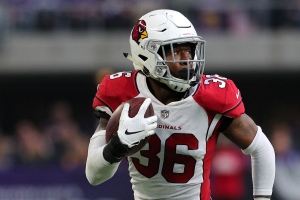 #24 Overall, Budda Baker, Arizona Cardinals, Free Safety, #1 Safety2025 Pre-Season Rank #28, 2024 Pre-Season Rank #43, 2023 Pre-Season Rank #78, 2022 Pre-Season Rank #86, 2021 Pre-Season Rank #113, 2020 Pre-Season Rank…in Safeties
 -
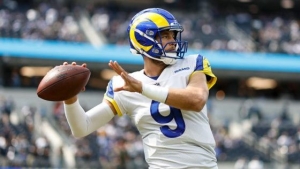 #9 Overall, Matthew Stafford, Los Angeles Rams, #3 Quarterback2025 Pre-Season Rank #26, 2024 Pre-Season Rank #31, 2023 Pre-Season Rank #37, 2022 Pre-Season Rank #37, 2021 Pre-Season Rank #59, 2020 Pre-Season Rank…in Quarterbacks
Visit the Fictitious Halls of Fame!

You May Also Like...
EDITOR’S CHOICE
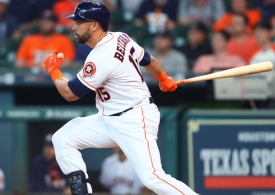
 DDT's Pop Flies
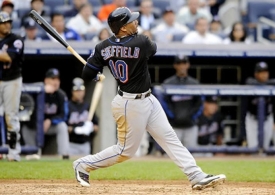
When the veterans committee (VC), officially convening as the Contemporary Baseball Era…


 Live Music Head
Project/Objectan interview with André Cholmondeleyby Live Music HeadOriginally published at timessquare.com on…

LATEST RANKINGS


MOST POPULAR RANKINGS

Committee Chairman
RIP: Marty Schottenheimer
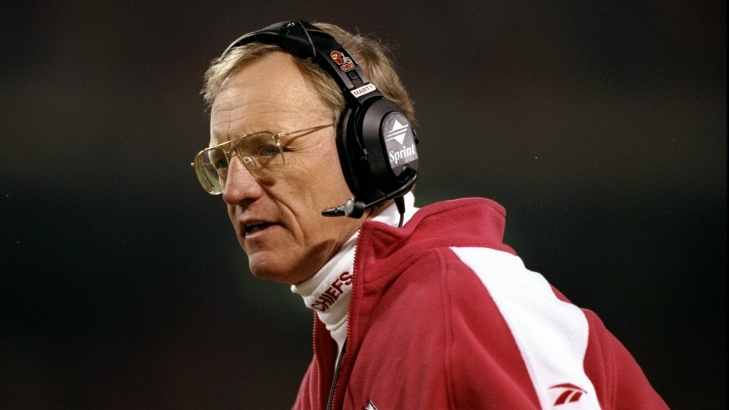
It was announced today that former NFL Head Coach, Marty Schottenheimer passed away today following a long battle with Alzheimer’s Disease. He was 77 years old.
Schottenheimer played six years in pro football, four with Buffalo and two with the Boston Patriots. Schottenheimer went into coaching, and moved up to defensive coordinator by the Cleveland Browns in 1980. Five years later, he became their head coach. Under Schottenheimer, Cleveland went to the AFC Championship Game in 1986 and 1987, and to the playoffs four out of five years. Schottenheimer left Cleveland in 1988 for the Kansas City Chiefs after he and Browns owner, Art Modell, mutually parted ways.
From 1989 to 1997, Kansas City was either first or second in the AFC West going to the post-season seven times. The Chiefs made it is far as the AFC Championship Game in 1993, losing to Buffalo. After a 7-9 1998 season, Schottenheimer resigned, and became an analyst for ESPN.
Schottenheimer was hired by Washington in 2001, but it would only be for one year as his team were a disappointing 8-8, and he was fired at the season’s end. He was not out of work for long, as Schottenheimer was hired by the San Diego Chargers in 2002.
With San Diego, Schottenheimer only went to playoffs twice, but it looked like they were Super Bowl bound in 2006 following a 14-2 season, but they lost to the Patriots in their first playoff game. That would be Schottenheimer’s last game as an NFL Head Coach, as clashes with ownership led to his dismissal.
Schottenheimer had a career record of 200-126-1.
We here at Notinhalloffame.com would like to extend our condolences to the friends, fans and family of Marty Schottenheimer.
The Pro Football Hall of Fame Announces 2021 Class

For most people, the Super Bowl is one of their favorite days of the year. It is for us too, but we have one day on the football calendar that we like just a little bit more. It is the day before the Super Bowl, when they announce the annual Pro Football Hall of Fame Class.
The Pro Football Hall of Fame committee met virtually two weeks ago due to COVID-19. This is atypical, as they usually meet in person close to the Super Bowl. We expected that leaks would come out, but to the credit of those involved, the spilling of details were minimal:
Let’s get to it!
The Class of 2021 is:
Alan Faneca: Guard: 1998-07 Pittsburgh Steelers, 2008-09 New York Jets & 2010 Arizona Cardinals. A Super Bowl Champion with the Steelers, Faneca went to nine Pro Bowls and was a six-time First Team All-Pro. Faneca has been a Semi-Finalist and Finalist in his first five years of eligibility, and this made year six. He has been arguably been “leapfrogged” by Steve Hutchinson and Kevin Mawae, and it won’t happen again. Faneca has been overdue for some time. Ranked #4 on Notinhalloffame.com.
Calvin Johnson: Wide Receiver: 2007-15 Detroit Lions. Johnson went to six Pro Bowls, three First Team All-Pros and was considered the most exciting Wide Receiver of his day. This was his first year on the ballot, and while other Wide Receivers exceed his overall stats, there was no one who passed the eye test more than “Megatron”. Ranked #27 on Notinhalloffame.com.
Peyton Manning: Quarterback: 1998-11 Indianapolis Colts & 2012-15 Denver Broncos. Manning took both the Colts and Broncos to a Super Bowl win, and he is a five-time MVP with 14 Pro Bowls and seven First Team All-Pros. He would throw for 71,940 Yards and 539 Touchdowns and this is his first year on the ballot. There was zero doubt that Manning was going in, and it was already leaked that his selection was filmed at a party. Ranked #1 on Notinhalloffame.com.
John Lynch: Free Safety: 1993-03 Tampa Bay Buccaneers & 2004-07 Denver Broncos. Lynch went to seven Pro Bowls and won a Super Bowl with Tampa Bay. Lynch gets in on his eighth try. Ranked #25 on Notinhalloffame.com.
Charles Woodson: Cornerback/Safety: 1998-05 & 2013-15 Oakland Raiders & 2006-12 Green Bay Packers. Woodson is a Super Bowl Champion with the Packers and has 65 career Interceptions. The nine-time Pro Bowler is also a former Defensive Rookie of the Year (1998) and Defensive Player of the Year (2009). This was Woodson’s first year of eligibility, and like Manning, he was considered a sure thing. Ranked #2 on Notinhalloffame.com.
Drew Pearson: Wide Receiver: 1973-93 Dallas Cowboys. Pearson is this year’s senior inductee, and it has been a long time coming. Pearson was a Finalist last year for the Centennial Slate, and his reaction when he was not chosen was heartbreaking. There are many fans, and not just those of the Cowboys who are happy for the former Wide Receiver. Ranked #28on Notinhalloffame.com.
Tom Flores: Head Coach: Flores, a former quarterback with Oakland, Buffalo and Kansas City, became the first Hispanic Head Coach in NFL history when Al Davis promoted him in 1979 after being the Wide Receivers Coach. Flores helmed the Raiders until 1987 and would win two Super Bowls (XV & XVIII). He came out of retirement as Seattle’s Head Coach from 1992 to 1994, and he had an overall coaching record of 97-87.
Bill Nunn: Scout: A reporter for the Pittsburgh Courier, Bill Nunn had a keen knowledge of the history black colleges. These were schools that were underrepresented in the NFL, and Art Rooney, owner of the Steelers hired him as a scout, and he would also be their Assistant Personnel Director. He remained with the Steelers until 2014, and he helped them win six Super Bowl rings. Nunn was also a charter member of the Black College Football Hall of Fame.
The ten Finalists who did not get in were:
Jared Allen: Defensive End: 2004-07 Kansas City Chiefs, 2008-13 Minnesota Vikings, 2014-15 Chicago Bears & 2016 Carolina Panthers. This was Allen’s first year of eligibility, and anyone who makes it as a Finalist in his first year of eligibility will make it to Canton eventually. Allen led the NFL in Sacks twice (2007 & 2011) and had 136.0 in total. He was also a five-time First Team All-Pro. Ranked #19 on Notinhalloffame.com.
Ronde Barber: Cornerback/Safety: 1997-12 Tampa Bay Buccaneers. Barber is a former Super Bowl Champion and was the 2001 leader in Interceptions. He has over 1,000 Solo Tackles with 47 career Interceptions. After four years as a Semi-Finalist, Barber makes it through to the Finals, but it is believed that he was not going to get in until Lynch did. Now that this has happened, Barber has a much clearer path to Canton. Ranked #13 on Notinhalloffame.com.
Tony Boselli: Tackle: 1995-01 Jacksonville Jaguars & 2002 Houston Texans. The career of Boselli was short, but he is believed to be the greatest Jaguar of all-time. The Lineman has now been a Finalist for the five years in a row, and will likely see a sixth next year. He is a beneficiary of Faneca’s selection. Ranked #45 on Notinhalloffame.com.
LeRoy Butler: Safety: 1990-01 Green Bay Packers. Butler had 38 career Interceptions, won a Super Bowl and went to four Pro Bowls over his career. He is on a four-year streak of Semi-Finalist nods, and he was also a Finalist last year. In terms of gaining momentum over the past three years, Butler is in the upper-tier of the list, but he did not get in. Butler leaked earlier last week that he was not chosen. Ranked #73 on Notinhalloffame.com.
Torry Holt: Wide Receiver: 1998-08 St. Louis Rams & 2009 Jacksonville Jaguars. Holt won a Super Bowl with the Rams, and he went to seven Pro Bowls with 12,832 career Receiving Yards. Holt is now a two-time Finalist, but the Wide Receiver position is loaded with worthy candidates. Johnson’s immediate induction will help him in the future. Ranked #9 on Notinhalloffame.com.
Clay Matthews: Linebacker: 1978-93 Cleveland Browns & 1994-96 Atlanta Falcons. A four-time Pro Bowler, Matthews had 69.5 Sacks with 1,595 Combined Tackles. Matthews was in his last year of eligibility, and this was the first time he made it as a Finalist. While he has the most fervent fan base on social media regarding this year’s potential class, he came up empty. Matthews will have to get in via the senior committee. Ranked #75 on Notinhalloffame.com.
Sam Mills: Linebacker: 1986-94 New Orleans Saints & 1995-97 Carolina Panthers. A five-time Pro Bowler, Mills began his pro career in the USFL. A four-time Semi-Finalist, Mills made it to the Finals for the first time, last year but he is now down to one year left of Modern Era eligibility. Ranked #48 on Notinhalloffame.com.
Richard Seymour: Defensive End/Defensive Tackle: 2001-08 New England Patriots & 2009-12 Oakland Raiders. Seymour won three Super Bowls with the Patriots, went to seven Pro Bowls and was a three-time First Team All-Pro. Seymour has now been a Finalist three times. Ranked #39 on Notinhalloffame.com.
Zach Thomas: Linebacker: 1996-07 Miami Dolphins & 2008 Dallas Cowboys: Thomas led the NFL in Combined Tackles twice (2002 & 2006) and he is five-time First Team All-Pro. He also has 1,727 career Combined Tackles. Thomas is a two-time Finalist, and has plenty of time left in his eligibility. Ranked #23 on Notinhalloffame.com
Reggie Wayne: Wide Receiver: 2001-14 Indianapolis Colts. A six-time Pro Bowl and one-time Super Bowl Champion, Wayne has 14,345 Receiving Yards with 82 Touchdowns. Wayne was a Finalist in his first two years of eligibility, and like Holt, the induction of Johnson helps him. Ranked #8 on Notinhalloffame.com.
We will be altering our Notinhalloffame.com Football list next month to reflect the deletion of this year’s inductees and adding those who are eligible.
We here at Notinhalloffame.com would like to congratulate the newest members of the Pro Football Hall of Fame.
RIP: Leon Spinks
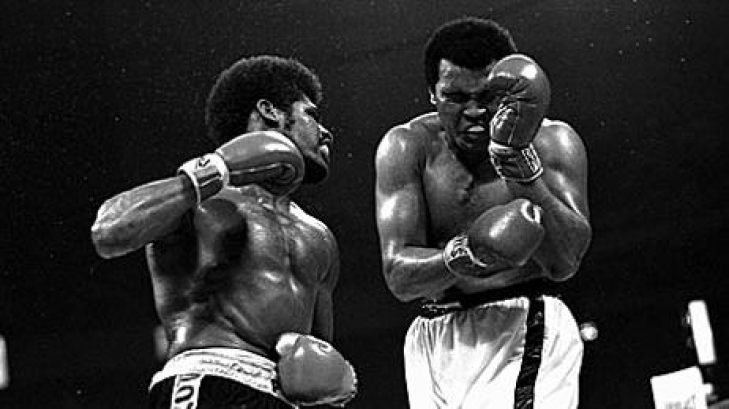
Former Heavyweight Champion, Leon Spinks, passed away today following a long battle with cancer. He was 67.
At the 1976 Montreal Olympics, Spinks represented the United States and won Gold in the Light Heavyweight division. Spinks turned pro, and in only his eighth fight, defeated the Muhammed Ali for the Heavyweight Championship. This was the highlight of his career, as Spinks lost the title back to Ali seven months later.
Spinks challenged Larry Holmes for the Heavyweight Title in 1981, but lost via TKO in the 3rdround. He later dropped down in weight, and challenged for the WBA Cruiserweight Title but lost to the incumbent, Dwight Muhammad Qawi.
Spinks still had a name but over the rest of his career, he lost more than he won. His last fight was in 1995, and he retired with a record of 26-17-3.
Spinks’ younger brother, Michael, was also a former Heavyweight Champion, and his son, Cory, is a former World Welterweight Champion.
We here at Notinhalloffame.com would like to extend our condolences to the fans, friends and family of Leon Spinks.
RIP: Butch Reed
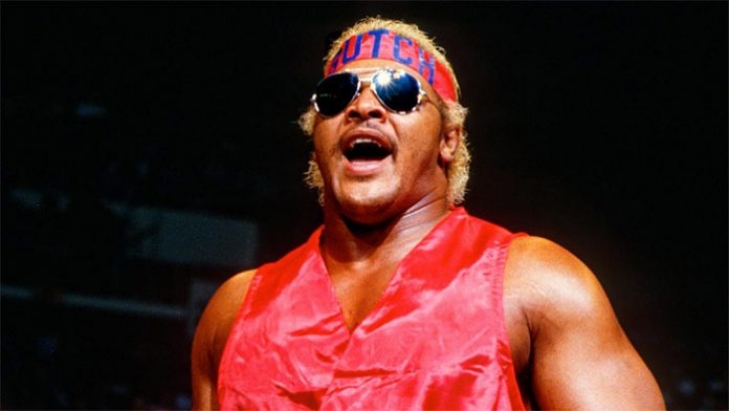
Butch Reed, who competed in many main events in professional wrestling during the 1980s, passed away today at age 66. He had suffered multiple heart attacks in recent weeks.
Playing football at the University of Central Florida, Reed first competed in the Central States territory, before moving on to Florida where he and Sweet Brown Sugar won the North American Tag Team Titles by beating Dory Funk Jr. and David Von Erich. Reed would even receive title shots against NWA Heavyweight Champion, Ric Flair.
Reed would continue to wrestle for various NWA promotions before joining Bill Watts’ promotion, Mid-South. Reed was used at or near the top, feuding with the Junkyard Dog and again having main events against Ric Flair.
In 1986, Reed signed with the World Wrestling Federation. With bleached blonde hair and Slick as his manager, Reed had a good run, and competed at Wrestlemania III and Wrestlemania IV, and was in the main event of the first Survivor Series. Reed left in 1988, and joined WCW in 1989, where he would eventually team with Ron Simmons to form the team of Doom. The tandem won the Tag Team Championships holding it for nine months. The team broke up, with Simmons winning the feud, and Reed wrestling sparingly form then on as he competed mostly in the rodeo circuit instead.
In our last ranking of those to consider for the WWE Hall of Fame, Reed was ranked at #93.
We here at Notinhalloffame.com would like to extend our condolences to the fans, friends and family of Butch Reed.
