

 Not in Hall of Fame News
Yes, we know that this is taking a while! As many of…
 Not in Hall of Fame News
Yes, we know that this is taking a while! As many of…
 Not in Hall of Fame News
2002 SEMI-FINAL RESULTS: Thank you for your participation in the Pro Football…
 Not in Hall of Fame News
Yes, we know that this is taking a while! As many of…
 Not in Hall of Fame News
We are diligently working away at Notinhalloffame on revising our Football lists…
 Not in Hall of Fame News
We are diligently working away at Notinhalloffame on revising our Football lists…
 From the Desk of the Chairman
October baseball often turns individual pitching performances into lasting postseason memories. Strikeout…
 From the Desk of the Chairman
For decades, the sports debate ran on gut feeling. Barstool arguments, call-in…
 From the Desk of the Chairman
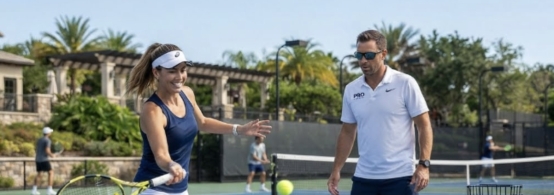
Introduction to Private Adult Tennis Camps in Prague Adult club players increasingly…
 From the Desk of the Chairman
Unlike in the case of pre-match betting, where you have to pick…
 From the Desk of the Chairman
Kupu178 builds trust with people by using top-end end-to-end encryption. It checks…
 From the Desk of the Chairman
Sports fans thrive on calculating strategy, reading momentum, and maximizing every tactical…
100 Active Potential Football Hall of Famers
-
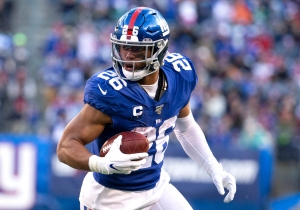 #45 Overall, Saquon Barkley, Philadelphia Eagles, #3 Running Back2025 Pre-Season Rank ##51, 2024 Pre-Season Rank #117, 2023 Pre-Season Rank #122, 2022 Pre-Season Rank #132 2021 Pre-Season Rank #101, 2020 Pre-Season Rank…
 -
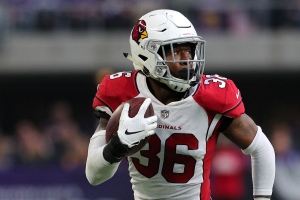 #24 Overall, Budda Baker, Arizona Cardinals, Free Safety, #1 Safety2025 Pre-Season Rank #28, 2024 Pre-Season Rank #43, 2023 Pre-Season Rank #78, 2022 Pre-Season Rank #86, 2021 Pre-Season Rank #113, 2020 Pre-Season Rank…in Safeties
 -
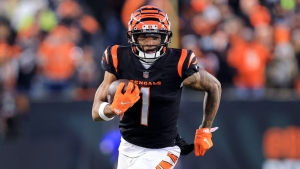 #42 Overall, Ja'Marr Chase, Cincinnati Bengals, #6 Wide Receiver2025 Pre-Season Rank #55, 2024 Pre-Season Rank #111, 2023 Pre-Season Rank #134, 2022 Pre-Season Rank #145. Peak Period: 2021-25* Ja’Marr Chase has been…
 -
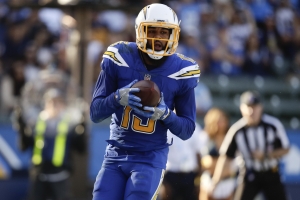 #49 Overall, Keenan Allen, Indianapolis Colts, #8 Wide Receiver2025 Pre-Season Rank #46, 2024 Pre-Season Rank #41, 2023 Pre-Season Rank #45, 2022 Pre-Season Rank #48, 2021 Pre-Season Rank #66, 2020 Pre-Season Rank…
Visit the Fictitious Halls of Fame!

You May Also Like...
EDITOR’S CHOICE
 DDT's Pop Flies
When the veterans committee (VC), officially convening as the Contemporary Baseball Era…

 Live Music Head
Project/Objectan interview with André Cholmondeleyby Live Music HeadOriginally published at timessquare.com on…

LATEST RANKINGS

MOST POPULAR RANKINGS

Committee Chairman
3. Anze Kopitar
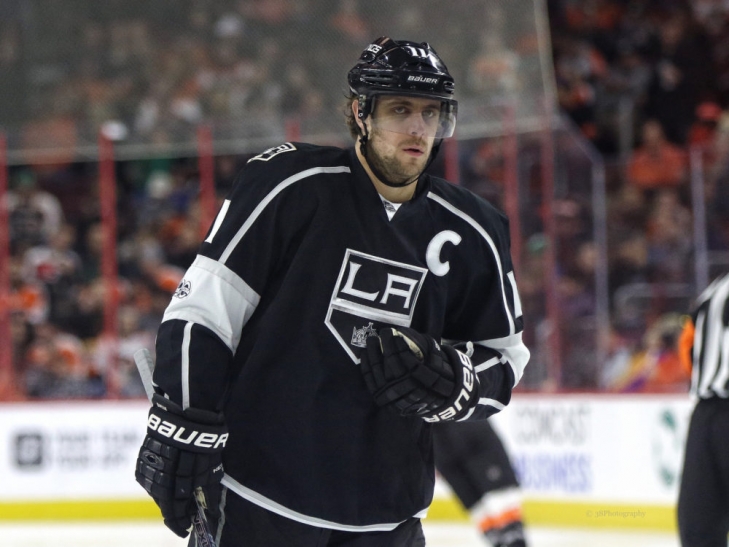
Anze Kopitar made history in 2006 as the first Slovenian to make the National Hockey League. As it looks now, it could be decades, if ever, before anyone supplants Kopitar as the best player from that nation.
Despite there not being anyone at Kopitar's level in Slovenia, he was highly scouted and transferred to the Swedish League. After a year there, Kopitar was taken 11th Overall in the 2005 Draft, a move that some considered a risk. Kopitar elected to stay in Europe for one more season, and the more polished Center ventured overseas, ready to show off what he learned.
Kopitar had 61 Points as a rookie, and he never dipped below that number in his first six years. An All-Star in 2008, Kopitar scored 81 Points in 2009-10, which was the best tally of the first half of his career. Kopitar went to another All-Star Game in 2011, and in 2012, he was the offensive spark plug of the Kings' 2012 Stanley Cup Championship, a playoff run that saw Kopitar (along with Dustin Brown) lead all skaters in scoring with 20. Kopitar led Los Angeles to their second title two years later, and Kopitar was again the postseason leading scorer (26).
Since his second Cup, Kopitar has collected individual accolades. In addition to three more All-Star Games (2015, 2018 & 2020), Kopitar was a dual-award winner in 2015-16, capturing the Frank J. Selke and Lady Byng. Kopitar won his second Selke in 2917-18, in a year where he posted a career-high 92 Points. For his efforts, Kopitar was a finalist for the Hart Trophy for the first time in his career. He continued to produce and collect awards, including the Mark Messier Leadership Award in 2021/22 and his second Lady Byng the year after.
As of this writing, Kopitar is entering his 20th and final season in Los Angeles with 1,280 Points, going into the 2025-26 Season, and could become the all-time leading scorer for this franchise. Considering the snipers and offensive superstars this team has housed, that would be incredible.
2. Drew Doughty
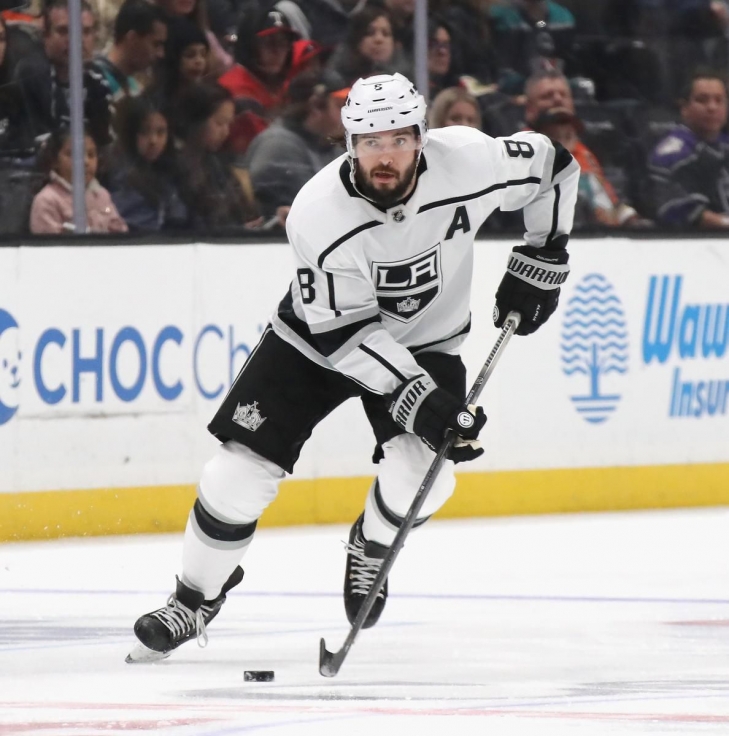
Drew Doughty was taken Second Overall in the 2008 Draft, and the Defenseman instantly went to work for the team that chose him, Los Angeles.
An All-Rookie in 2008-09, Doughty was a Second Team All-Star as a sophomore and the second runner-up for the Norris. Doughty established himself as the linchpin for the Kings' defensive corps and did so at age 20!
With the equal ability to lock down attackers and become one himself, Doughy anchored the Kings to Stanley Cup wins in 2012 and 2014 and began a six-year streak of finishing in the top ten in Norris voting in 2012-13. Doughty won the coveted Norris as the NHL's top Defenseman in 2016 and finished second in 2015 and 2018. Naturally, in all three of those years, he was named a postseason All-Star.
Doughty is still a King and is by far the best Defenseman in franchise history. His Norris runs might be behind him, but his leadership, experience, and passion make him valuable to keep around.
5. Wayne Gretzky

Edmonton Oilers' owner, Peter Pocklington, had a dynasty, but he also had a problem; he was hemorrhaging money through his other failed projects. His biggest asset was Wayne Gretzky, the best player and most prominent name in the sport. He engineered a trade, sending his superstar to Los Angeles, and in the process, shifting the hockey world to Southern California.
With all due respect to all the Kings players before Gretzky, they didn't make Los Angeles a must-watch team. Gretzky did. In his first season in L.A., Gretzky won what would be his final Hart Trophy. Hockey became hugely popular in California, and arguably because of Gretzky, two more teams (Anaheim and San Jose) would enter the league.
The Kings would not reach the Stanley Cup Finals, but again, people were watching. Pittsburgh's Mario Lemieux would become the NHL's best player, but Gretzky was still the "Great One" and the game's top draw. Following that first year with the Kings, where he led the NHL in Assists for what was the tenth straight year, he did so again the following three years and again in 1993-94. Lemieux's illness allowed Gretzky to win the Art Ross as the game's leading scorer in 1989-90 and 1990-91, and he won it a final time in 1993-94. Still one of the cleanest players in hockey, Gretzky won three Lady Byngs as a King.
The Kings were struggling in the standings, and while Gretzky was still a draw, he was set to become a free agent. L.A. traded him to St. Louis, and he would leave the team to finish his career with the Rangers.
With L.A., Gretzky scored 918 Points, 672 being Assists. The Hockey Hall of Fame inducted Gretzky immediately, waiving the three-year rule when he retired in 1999. Three years later, his #99 was forever hung to the rafters in Los Angeles.
4. Luc Robitaille
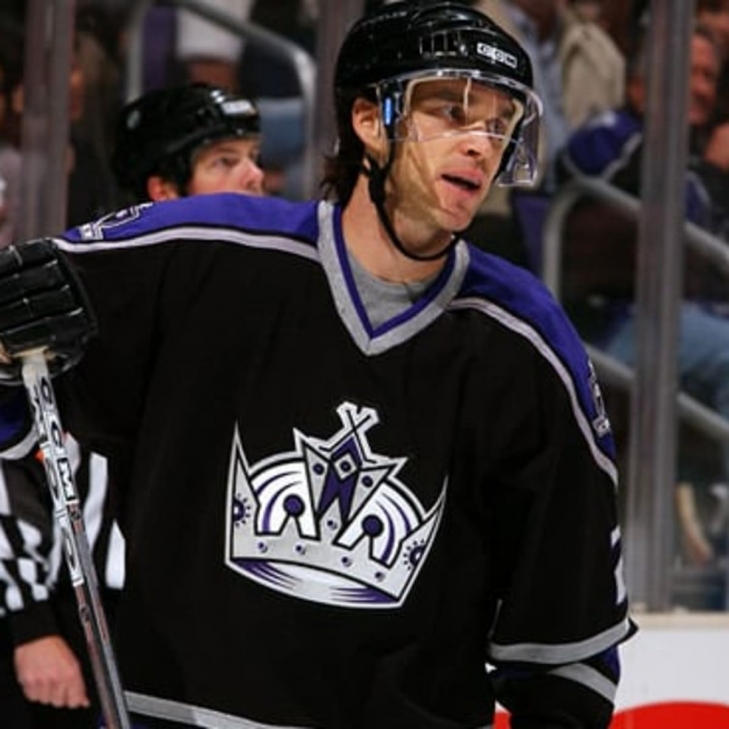
In the late 80s and early 90s, there was no question that Luc Robitaille was the top Left Wing in the National Hockey League, and it took him very little time to establish that title. What made it all the more impressive was that Robitaille turned out to be a steal as a Ninth Round Pick.
Two years after the Kings selected him, Robitaille made the team out of training camp and had an unexpected season, scoring 84 Points, earning Second Team All-Star accolades, and winning the Calder. This was no fluke, and he only got better, scoring over 100 Points in four of the next seven seasons, with his bottom only being 86 Points. Wayne Gretzky had arrived in 1988, and Robitaille would be a five-time First Team All-Star, four of which with Gretzky as his linemate. The Kings became contenders, largely thanks to Robitaille.
As Los Angeles began to slump, he was traded to Pittsburgh, but he returned three years later as a Free Agent. Robitaille was older but still a potent scorer, winning his third Second Team All-Star Selection. He left L.A. again, this time on his own accord, joining Detroit as a Free Agent. Robitaille finally got that elusive Stanley Cup (2002) but returned to the Kings to finish his career for two final seasons.
Robitaille is the franchise leader in Goals (557) and was enshrined in the Hockey Hall of Fame in 2009, two years after his #20 was retired by the team.
