

 Not in Hall of Fame News
Yes, we know that this is taking a while! As many of…
 Not in Hall of Fame News
Yes, we know that this is taking a while! As many of…
 Not in Hall of Fame News
2002 SEMI-FINAL RESULTS: Thank you for your participation in the Pro Football…
 Not in Hall of Fame News
Yes, we know that this is taking a while! As many of…
 Not in Hall of Fame News
We are diligently working away at Notinhalloffame on revising our Football lists…
 Not in Hall of Fame News
We are diligently working away at Notinhalloffame on revising our Football lists…
 From the Desk of the Chairman
October baseball often turns individual pitching performances into lasting postseason memories. Strikeout…
 From the Desk of the Chairman
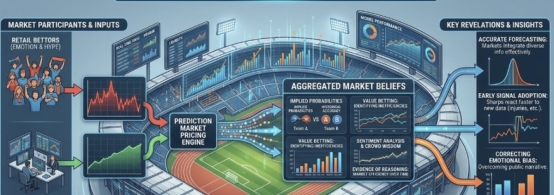
For decades, the sports debate ran on gut feeling. Barstool arguments, call-in…
 From the Desk of the Chairman
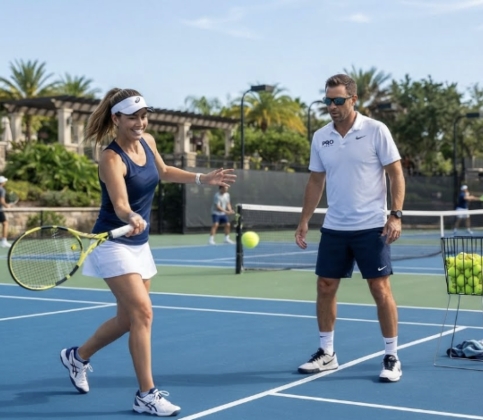
Introduction to Private Adult Tennis Camps in Prague Adult club players increasingly…
 From the Desk of the Chairman
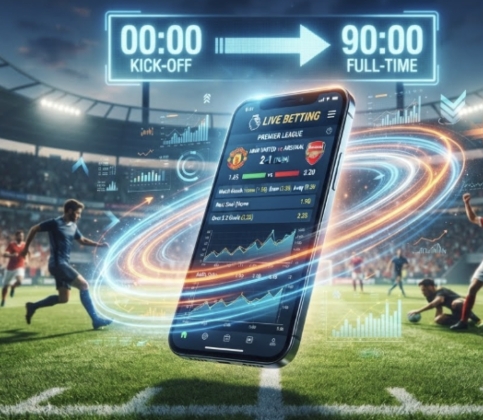
Unlike in the case of pre-match betting, where you have to pick…
 From the Desk of the Chairman
Kupu178 builds trust with people by using top-end end-to-end encryption. It checks…
 From the Desk of the Chairman
Sports fans thrive on calculating strategy, reading momentum, and maximizing every tactical…
100 Active Potential Football Hall of Famers
-
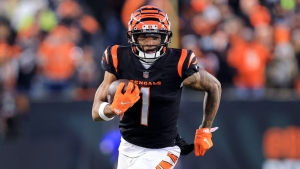 #42 Overall, Ja'Marr Chase, Cincinnati Bengals, #6 Wide Receiver2025 Pre-Season Rank #55, 2024 Pre-Season Rank #111, 2023 Pre-Season Rank #134, 2022 Pre-Season Rank #145. Peak Period: 2021-25* Ja’Marr Chase has been…
 -
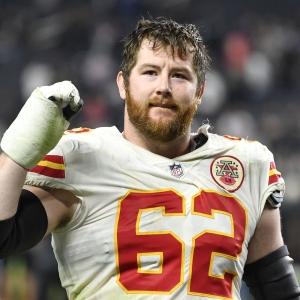 #41 Overall, Joe Thuney, Chicago Bears, Left Guard, #5 Offensive Lineman2025 Pre-Season Rank #64, 2024 Pre-Season Rank #75, 2023 Pre-Season Rank #120, 2022 Pre-Season Rank: #140. Peak Period: 2021-25 Over the last few…
 -
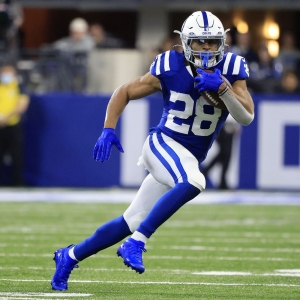 #47 Overall, Jonathan Taylor, Indianapolis Colts, #4 Running Back2025 Pre-Season Rank #70, 2024 Pre-Season Rank #98, 2023 Pre-Season Rank: #107, 2022 Pre-Season Rank #111. Peak Period: 2021-25 After a good rookie…
 -
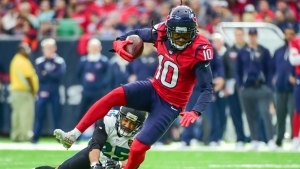 #27 Overall, DeAndre Hopkins, Free Agent, #4 Wide Receiver2025 Pre-Season Rank, #24, 2024 Pre-Season Rank #24, 2023 Pre-Season Rank #20, 2022 Pre-Season Rank #28, 2021 Pre-Season Rank #30, 2020 Pre-Season Rank…
Visit the Fictitious Halls of Fame!


You May Also Like...
EDITOR’S CHOICE
 DDT's Pop Flies
When the veterans committee (VC), officially convening as the Contemporary Baseball Era…
 Live Music Head
Project/Objectan interview with André Cholmondeleyby Live Music HeadOriginally published at timessquare.com on…

LATEST RANKINGS
MOST POPULAR RANKINGS



Committee Chairman
We have added more former players to our Football Futures
We have updated our Football futures with some new names for you to cast your votes on and offer your opinions.
Added to the 2024 Football Section are:
John Denney a Long Snapper who was a two-time Pro Bowler who played his entire career with the Miami Dolphins.
He joins Adam Jones, Andrew Luck, Antonio Gates, Brandon Marshall, Brent Grimes, Brian Orakpo, Chris Ivory, Connor Barwin, Corey Graham, Derek Anderson, Derrick Johnson, Doug Martin, Eric Berry, Glover Quin, Haloti Ngata, Jamaal Charles, Jermaine Gresham, Jermon Bushrod, Jonathan Stewart, Jordy Nelson, Josh Sitton, Julius Peppers, Kyle Williams, Lorenzo Alexander, Mark Sanchez, Matt Cassell, Max Unger, Muhammad, Wilkerson, Phil Dawson, Reggie Nelson, Sam Shields, Sebastian Janikowski, T.J. Lang, Vontae Davis and Zane Beadles.
Added to the 2025 Football Section are:
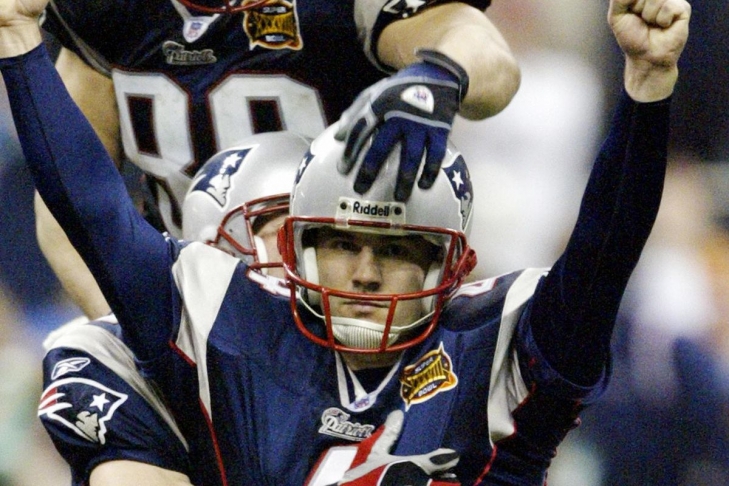
Adam Vinatieri, who is the most successful Place Kicker of all-time, and is the all-time leader in Points and Field Goals. He also has three Super Bowl wins with the Patriots.
DeMaryius Thomas, a four-time Pro Bowl Wide Receiver who won a Super Bowl with the Broncos. He had 9,763 Receiving Yards and 69 Touchdowns.
Roosevelt Nix, a Fullback who went to the Pro Bowl in 2017.
They join Antoine Bethea, Aqib Talib, Brynden Trawick, Cameron Wake, C.J. Anderson, Darren Sproles, Dominique Rodgers-Cromartie, Donald Penn, Eli Manning, Eric Weddle, James Develin, Joe Staley, Jon Condo, Kyle Long, Luke Kuechly, Marshal Yanda, Matt Bryant, Michael Bennett, Mike Pouncey, Patrick DiMarco, Patrick Chung, Ryan Kalil, Travis Frederick, Vernon Davis, Zach Brown and Zak DeOssie.
Added to the 2026 Football Section are:
Dez Bryant, who went to three Pro Bowls and led the NFL in Touchdown Receptions in 2016 as a Cowboy.
Don Muhlbach, a two-time Pro Bowl Long Snapper who played his entire career with the Lions.
Johnathan Joseph, a two-time Pro Bowl Cornerback.
Jurrell Casey, who went to five Pro Bowls as a Defensive End, and played most of his career with Tennessee.
LeSean McCoy, who went to six Pro Bowls and led the NFL in Rushing Yards in 2013. He was also a two-time First Team All-Pro and would have an even 15,000 Yards From Scrimmage.
Malcolm Butler, a two-time Super Bowl Champion with the Patriots.
Marshawn Lynch, the man who made “Beast Mode” popular, and was a five-time Pro Bowl, one-time First Team All-Pro and two-time Rushing Touchdown leader. The Running Back would win a Super Bowl with the Seahawks and had 10,413 Rushing Yards.
They join Alex Smith, Anthony Costanzo, Anthony Sherman, Drew Brees, Greg Olsen, Jason Witten, Jordan Reed, Julian Edelman, Matt Schaub, Maurkice Pouncey, Mike Iupati, Philip Rivers, Sean Lee, Thomas Davis and Tramon Williams.
As we proceed further, we will be adding new names to all of our future sections.
As always, thank you for your support.
Notinhalloffame names Zack Wheeler the 2021 Starting Pitcher of the Year
The process continues.
We here are Notinhalloffame.com have plans to create our own set of post-season awards, which we will look back and retroactively present from 1901 on. That will take a while, but it has never stopped us before!
Our awards are not be league specific.
Now it is time for our 2021 positional awards.
We will be awarding a positional player of the year, but not only that, offer up the runner-up and second runner-up, meaning that we will have First, Second and Third All-MLB players.
Let’s work our way around the diamond and award the best of the best in Baseball!
Please note that with Starting Pitchers, we will be naming a Starting Pitcher of the Year, and four other co-First Team All-MLB Selections. This is due to each team generally having at least five regular starters, and to honor more than just three starters.
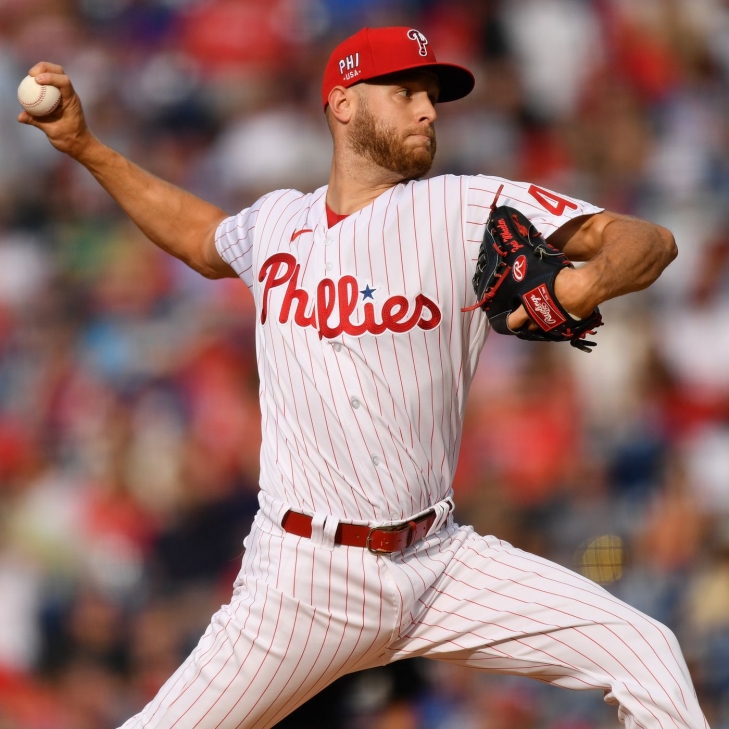
Pitcher of the Year (First Team All-MLB): Zack Wheeler, Philadelphia Phillies. 7.9 bWAR, 7.3 fWAR, 14-10 Record, 2.78 ERA, 213.1 IP, 247 SO, 5.37 SO/BB, 1.008 WHIP, 2.59 FIP.
There were no clear-cut winners, and while we suspect that other organizations will go a different route, we will stand by Wheeler, who led the National League in IP, Strikeouts, and bWAR for Pitchers. The workhorse was also in the top five in the NL in ERA, WHIP, SO/BB and ERA+, and we can confidently say that the Phillies would not have competed for the NL East without him. Again, if this is disputed by you (and we expect many will), there are five First Team All-MLB Starting Pitchers!
First Team All-MLB: Starting Pitcher: Corbin Burnes, Milwaukee Brewers. 5.7 bWAR, 7.5 fWAR, 11-5 Record, 2.43 ERA, 167 IP, 234 SO, 6.88 SO/BB, 0.940 WHIP, 1.63 FIP.
Burnes was the ace of the Brewers staff, and he led the NL in ERA, SO/BB and WHIP. While he was hurt for our Pitcher of the Year Award (46.1 IP less than Wheeler), he easily could have won this two more starts.
First Team All-MLB: Starting Pitcher: Walker Buehler, Los Angeles Dodgers. 6.7 bWAR, 5.5 fWAR, 16-4 Record, 2.47 ERA, 207.2 IP, 212 SO, 4.08 SO/BB, 0.968 WHIP, 3.16 FIP.
The Dodgers had the best pitching staff in 2021, with Buehler going to his second All-Star Game, and setting personal bests in Wins, IP and ERA+. Buehler was second in the NL in bWAR for Pitchers.
First Team All-MLB: Starting Pitcher: Robbie Ray, Toronto Blue Jays. 6.7 bWAR, 3.9 fWAR, 13-7 Record, 2.84 ERA, 193.1 IP, 248 SO, 4.77 SO/BB, 1.045 WHIP, 3.69 FIP.
This was the season that the Blue Jays were hoping to see out of Ray, who led the American League in ERA, IP, Strikeouts, ERA+ and WHIP.
First Team All-MLB: Starting Pitcher: Max Scherzer, Washington Nationals & Los Angeles Dodgers. 5.3 bWAR, 5.4 fWAR, 15-4 Record, 2.46 ERA, 179.1 IP, 236 SO, 6.56 SO/BB, 0.864 WHIP, 2.97 FIP.
Scherzer was one of the many Nationals jettisoned from the team this year, and he became part of one of the best starting rotations in recent history. He was an All-Star for the eighth time this year, and for the fifth time he was the league leader in WHIP.
Second Team All-MLB: Starting Pitcher: Jacob deGrom, New York Mets. 5.0 bWAR, 4.9 fWAR, 7-2 Record, 1.08 ERA, 92 IP, 146 SO, 13.27 SO/BB, 0.554 WHIP, 1.24 FIP.
deGrom only played 15 Games, making it hard for him to be First Team, but those 15 Games were better than other hurler’s 15 this year. Even if he was just an average Pitcher over 15 more Games, he would likely have won our Pitcher of the Year Award, but we can’t place him as a First Team Starter with under 100 Innings.
Second Team All-MLB: Starting Pitcher: Carlos Rodon, Chicago White Sox. 5.0 bWAR, 4.9 fWAR, 13-5 Record, 2.37 ERA, 132.2 IP, 185 SO, 5.14 SO/BB, 0.957 WHIP, 2.65 FIP.
Rodon was phenomenal over his 24 Starts, and like deGrom, was eliminated from Pitcher of the Year consideration due to missing time. He was an All-Star for the first time this year, and this is either the start of something great or a blip on his radar.
Second Team All-MLB: Starting Pitcher: Brandon Woodruff, Milwaukee Brewers. 5.7 bWAR, 4.7 fWAR, 9-10 Record, 2.56 ERA, 179.1 IP, 211 SO, 4.91 SO/BB, 0.956 WHIP, 2.96 FIP.
Woodruff was an All-Star for the second time in 2021, and he finished in the top five in the National League in ERA, WHIP, FIP, WPA, and was first in cWPA.
Second Team All-MLB: Starting Pitcher: Kevin Gausman, San Francisco Giants. 5.3 bWAR, 4.8 fWAR, 14-6 Record, 2.81 ERA, 192 IP, 227 SO, 4.54 SO/BB, 1.042 WHIP, 3.00 FIP.
Gausman had his best season to date, going from long-time average starter to ace in a year that the Giants went from also-rans to World Series contenders. He was an All-Star for the first time in his career.
Second Team All-MLB: Starting Pitcher: Julio Urias, Los Angeles Dodgers. 4.7 bWAR, 5.0 fWAR, 20-3 Record, 2.96 ERA, 185.2 IP, 195 SO, 5.13 SO/BB, 1.018 WHIP, 3.13 FIP.
Urias in 2021’s only 20-Win Pitcher, and part of by far the best rotation in Baseball. This was either his breakout year, or a stop in his career as a starter, and bluntly, we are mostly intrigued as to Urias’ 2022 season than any other Pitcher.
Third Team All-MLB: Starting Pitcher: Nathan Eovaldi, Boston Red Sox. 4.6 bWAR, 5.6 fWAR, 11-9 Record, 3.75 ERA, 182.1 IP, 195 SO, 5.57 SO/BB, 1.190 WHIP, 2.79 FIP.
Eovaldi led the American League in FIP and went to his first All-Star Game in his tenth MLB season.
Third Team All-MLB: Starting Pitcher: Max Fried, Atlanta Braves. 5.4 bWAR, 3.8 fWAR, 14-7 Record, 3.04 ERA, 165.2 IP, 158 SO, 3.85 SO/BB, 1.087 WHIP, 3.31 FIP.
Fried arrived last year, and propelled himself as an elite National League Pitcher this year.
Third Team All-MLB: Starting Pitcher: Lance Lynn, Chicago White Sox. 5.4 bWAR, 4.2 fWAR, 11-6 Record, 2.69 ERA, 157 IP, 176 SO, 3.91 SO/BB, 1.070 WHIP, 3.91 FIP.
Lynn was an All-Star for the second time in his career, the first since 2012.
Third Team All-MLB: Starting Pitcher: Charlie Morton, Atlanta Braves. 4.0 bWAR, 4.6 fWAR, 14-6 Record, 3.34 ERA, 185.2 IP, 216 SO, 3.72 SO/BB, 1.045 WHIP, 3.35 FIP.
At age 37, Morton was an All-Star in 2018 and 2019, and is in his first year with Atlanta.
Third Team All-MLB: Starting Pitcher: Tyler Mahle, Cincinnati Reds. 4.9 bWAR, 3.9 fWAR, 13-6 Record, 3.75 ERA, 180 IP, 210 SO, 3.23 SO/BB, 1.283 WHIP, 3.80 FIP.
Mahle broke out this year and could be a bona fide elite starter.
We have added more former players to our Basketball Futures
We have updated our Basketball futures with some new names for you to cast your votes on and offer your opinions.
Added to the 2023 Basketball Section are:
Darren Collison, a ten-year veteran who led the league in 3-Point Shooting Percentage in 2017-18.
Devin Harris, an All-Star in 2009, and former Big Ten Player of the Year.
Nene, who is one of the most successful players from Brazil, both representing his country and in the NBA.
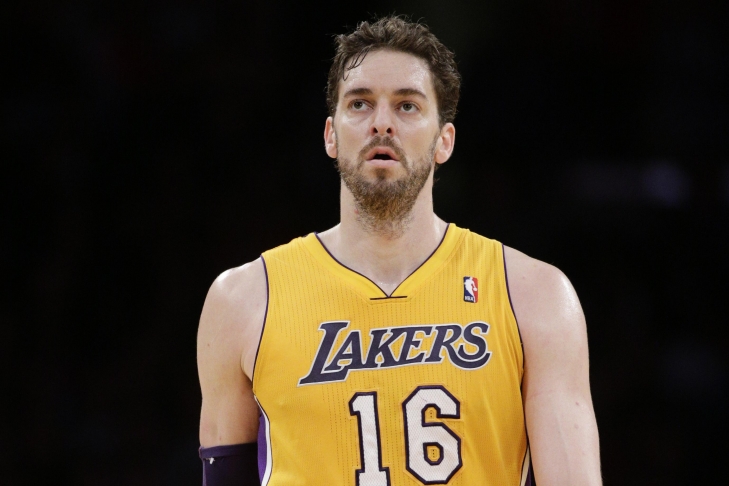
Pau Gasol, the Spanish Superstar who not only is one of Europe’s greatest basketball players, and would win two NBA Championships with the Lakers. Gasol also is a four-time post-season All-Star and won the Rookie of the Year in 2002.
They join Dirk Nowitzki, Dwyane Wade, Luol Deng and Tony Parker who already have writeups.
The 2024 Basketball Section is new, and consists of:
Jamal Crawford, a three-time Sixth Man of the Year, who also won the Teammate of the Year in 2018.
Joakim Noah, a two-time NCAA Champion at Florida and First Team All-NBA Selection in 2014. Noah also won the 2014 NBA Defensive Player of the Year.
The 2025 Basketball Section is new, and consists of:
J.J. Redick, wh0 was the consensus College Player of the Year in 2006, and led the NBA 3-Point Field Goal Percentage in 2015-16.
As we proceed further, we will be adding new names to all of our future sections.
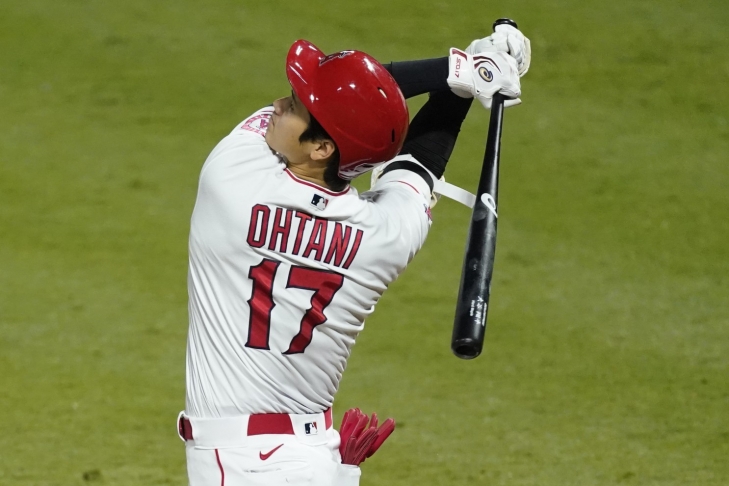
Notinhalloffame names Shohei Ohtani the 2021 Designated Hitter of the Year
The process continues.
We here are Notinhalloffame.com have plans to create our own set of post-season awards, which we will look back and retroactively present from 1901 on. That will take a while, but it has never stopped us before!
Our awards are not be league specific.
Now it is time for our 2021 positional awards.
We will be awarding a positional player of the year, but not only that, offer up the runner-up and second runner-up, meaning that we will have First, Second and Third All-MLB players.
Let’s work our way around the diamond and award the best of the best in Baseball!
*Please note that to qualify, a player must appear in that position at least 50% of the time.
Designated Hitter of the Year (First Team All-MLB): Shohei Ohtani, Los Angeles Angels. 4.9 bWAR, 5.1 fWAR, 138 H, 46 HR, 103 R, 100 RBI, 26 SB, .257/.372/.592/.965.
Ohtani was named our 2021 MVP, and when he was not Pitching, he was the Angels’ DH. The Japanese sensation appeared as a DH in 126 Games.
Second Team All-MLB: Designated Hitter: Yordan Alvarez, Houston Astros. 3.2 bWAR, 3.7 fWAR, 149 H, 33 HR, 92 R, 104 RBI, 1 SB, .277/.346/.531/.877.
Alvarez is two years away from his Rookie of the Year, and this year he exceeded the power numbers from his 2019 campaign. Alvarez was the DH in 98 of his 144 Games.
Third Team All-MLB: Designated Hitter: J.D. Martinez, Boston Red Sox. 3.0 bWAR, 2.9 fWAR, 163 H, 28 HR, 92 R, 99 RBI, 0 SB, .286/.349/.518/.867.
An All-Star for the fourth time, Martinez led the AL in Doubles (42), and broke past his poor 2020. He played 113 of his 148 Games at DH.
