

 Not in Hall of Fame News
Yes, we know that this is taking a while! As many of…
 Not in Hall of Fame News
Yes, we know that this is taking a while! As many of…
 Not in Hall of Fame News
2002 SEMI-FINAL RESULTS: Thank you for your participation in the Pro Football…
 Not in Hall of Fame News
Yes, we know that this is taking a while! As many of…
 Not in Hall of Fame News
We are diligently working away at Notinhalloffame on revising our Football lists…
 Not in Hall of Fame News
We are diligently working away at Notinhalloffame on revising our Football lists…
 From the Desk of the Chairman
Unlike in the case of pre-match betting, where you have to pick…
 From the Desk of the Chairman
Kupu178 builds trust with people by using top-end end-to-end encryption. It checks…
 From the Desk of the Chairman
Sports fans thrive on calculating strategy, reading momentum, and maximizing every tactical…
 From the Desk of the Chairman
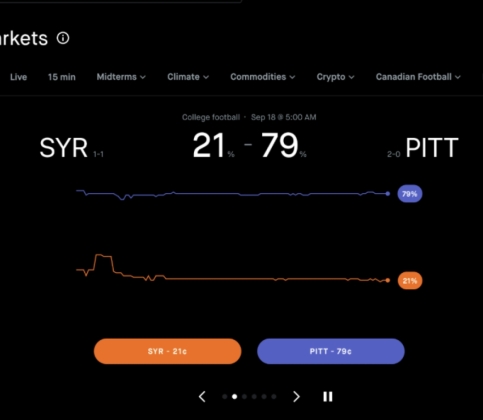
The 2026 NFL season is two weeks old and the division races…
 From the Desk of the Chairman
Sports communities are often built around things that have nothing to do…
 From the Desk of the Chairman
Every hall of fame eventually faces the same problem. The selection process…



100 Active Potential Football Hall of Famers
-
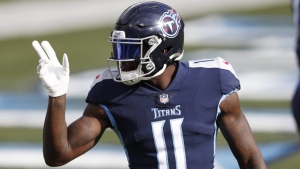 #50 Overall, A.J. Brown, New England Patriots, #9 Wide Receiver2025 Pre-Season Rank #49, 2024 Pre-Season Rank #76, #2023 Pre-Season Rank #106, 2022 Pre-Season Rank #142, 2021 Pre-Season Rank #141. Peak Period: 2020-24…
 -
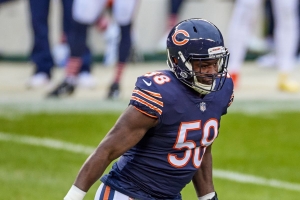 #31 Overall, Roquan Smith, Baltimore Ravens Linebacker, #3 Defensive Lineman/Linebacker: Interior Lineman2025 Pre-Season Rank #39, 2024 Pre-Season Rank #62, 2023 Pre-Season Rank #92, 2022 Pre-Season Rank #133, 2021 Pre-Season Rank #146. Peak Period: 2020-24…
 -
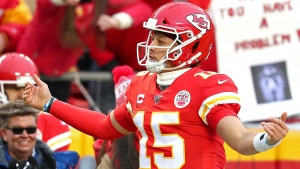 #4 Overall, Patrick Mahomes: Kansas City Chiefs, #2 Quarterback2025 Pre-Season Rank #4, 2024 Pre-Season Rank #2, 2023 Pre-Season Rank #10, 2022 Pre-Season Rank #21, 2021 Pre-Season Rank #31, 2020 Pre-Season Rank…in Quarterbacks
 -
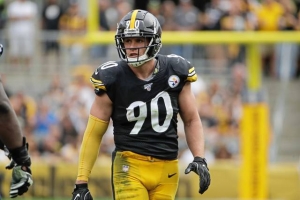 #10 Overall, T.J. Watt, Pittsburgh Steelers, #4 Defensive Lineman/Linebacker Pass Rusher2025 Pre-Season Rank #7, 2024 Pre-Season Rank #11: 2023 Pre-Season Rank #15, 2022 Pre-Season Rank #24, 2021 Pre-Season Rank #68, 2020 Pre-Season Rank…
Visit the Fictitious Halls of Fame!


You May Also Like...
EDITOR’S CHOICE
 DDT's Pop Flies
When the veterans committee (VC), officially convening as the Contemporary Baseball Era…


 Live Music Head
Project/Objectan interview with André Cholmondeleyby Live Music HeadOriginally published at timessquare.com on…

LATEST RANKINGS

MOST POPULAR RANKINGS


Committee Chairman
50. Adam Lind
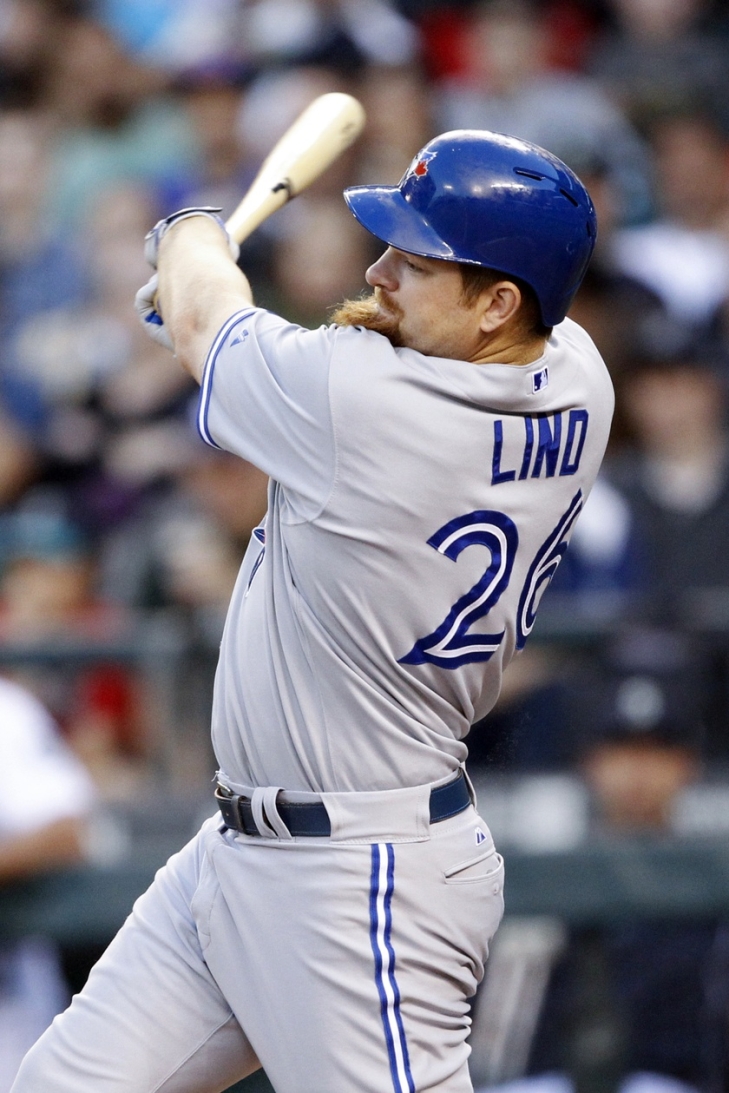
Adam Lind played most of his career with Toronto (2006-14), first showing up to the Jays as a September callup.
Lind proved that he could hit, but he was an abysmal fielder and could only find a place in the Majors as a Designated Hitter, and for a brief time, he was among the best in this role. Lind entered this role full-time in 2009, and he was phenomenal that year, hitting 35 Home Runs with 114 RBI and a .306 Batting Average. He won the Silver Slugger and the Edgar Martinez Award as the game's top DH, but this was his high-water mark.
Lind had three more 20 HR years but struggled with his average and strikeouts, and would spend more time in the Minors. He never got that 2009 level back and was traded to Milwaukee after the 2014 Season, and left the team with 931 Hits, 146 Home Runs, and a .276 Batting Average.
42. Mark Eichhorn
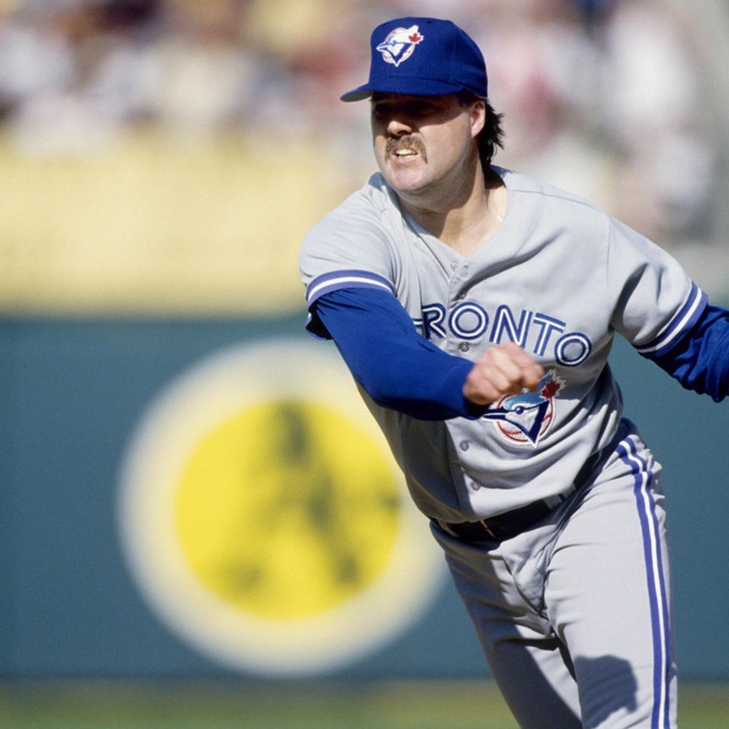
Originally drafted as a standard, overhand starting pitcher, he made a brief big-league debut in 1982 before severe shoulder issues completely derailed his career. Facing an early retirement, Eichhorn reinvented himself out of sheer survival, dropping his arm slot down to a deceptive, frisbee-like sidearm delivery. That mechanical overhaul completely changed his life. When he finally returned to the majors in 1986 after a four-year absence, he didn't just survive—he authored one of the most dominant, high-volume relief seasons in the sport's history.
That 1986 campaign was an absolute masterpiece of bullpen efficiency. Relying on an unhittable, changing-speed changeup and a sinking fastball that defied gravity from his low arm angle, Eichhorn paralyzed American League hitters. He made 69 appearances, swallowed up a jaw-dropping 157.0 innings strictly in relief, and compiled an incredible 14–6 record with a microscopic 1.72 ERA. He was an absolute workhorse, backing up that rookie showcase by leading the entire American League with a staggering 89 pitching appearances in 1987. Across a three-year span, his rubber arm racked up 24 wins out of the bullpen, making him an absolute favorite of the Exhibition Stadium faithful.
As the front office retooled the roster, Toronto sold his contract to the Atlanta Braves in 1989. Eichhorn eventually found his groove again with the California Angels, which set the stage for a dramatic, full-circle homecoming. In August 1992, the Blue Jays traded for their former bullpen star to reinforce their late-inning bridge for the stretch run.
His second tour in Toronto was defined by calm, veteran precision. Operating as a steady middle-relief specialist, Eichhorn became a vital, high-leverage cog in the machine that secured the franchise's back-to-back world championships. He turned in a tidy 2.38 ERA down the stretch in 1992 and followed it up by throwing 45 crucial games with a 2.72 ERA during the historic 1993 title defense, giving Cito Gaston total structural reliability ahead of closer Duane Ward.
Following the 1993 triumph, Eichhorn departed as a free agent to sign with Baltimore, eventually wrapping up his 11-year major league journey with a stop in Anaheim. Over his two stints in Toronto, Eichorn appeared in 279 games (only 7 starts) with a 31–22 record, a 3.03 ERA, and a 1.15 WHIP. He worked 481.1 innings, recording 14 saves and 338 strikeouts while generating an elite 139 ERA+.
39. Doyle Alexander
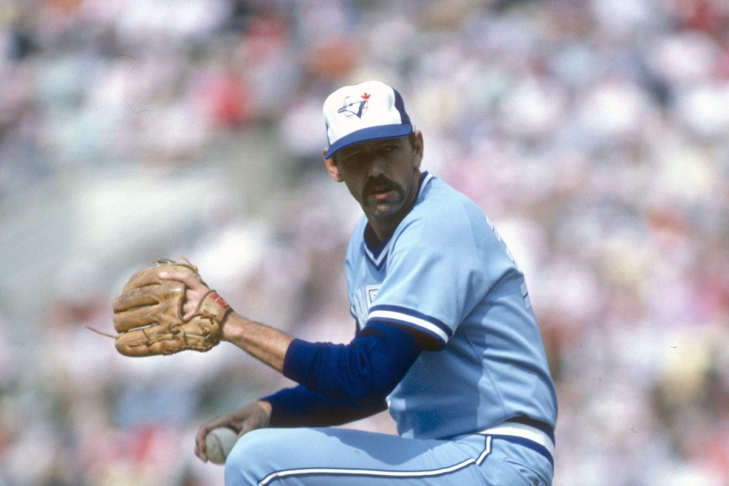
When Doyle Alexander arrived in Toronto in May 1983, his signing appeared to be a low-risk fallback for the roster. The 32-year-old right-hander had recently been released unceremoniously by the New York Yankees after a difficult period, and having moved through six major league teams over 13 seasons, it was understandable if he was nearing the end of his career. However, this familiar story took an unexpected turn. Alexander not only revived his career in Canada, but he also began the most productive and dominant pitching streak of his life.
Alexander quickly showed he still had plenty of strength, maintaining the staff's performance through the rest of the 1983 season by securing seven wins with a consistent 3.93 ERA. This foundation set the stage for an extraordinary breakthrough in 1984. Acting as the calm, reliable counterpart to the fireballing ace Dave Stieb, Alexander delivered a season of excellence. He expertly controlled the strike zone with precise movement, finishing with an impressive 17–6 record and a tight 3.13 ERA, leading the American League with a remarkable .739 winning percentage.
Far from a one-hit wonder, he perfectly echoed that high-volume output in 1985. Alexander delivered another stellar 17-win season, pitching 260.2 innings over 36 starts and posting a solid 3.45 ERA. With his veteran consistency leading the rotation, the Blue Jays achieved their first-ever American League East pennant with 99 wins. Although he struggled against Kansas City in a tough ALCS, his regular-season performance earned him a career-best sixth place in the AL Cy Young voting, the first time he received award votes.
The following summer, after a sluggish, inconsistent start to the 1986 campaign, the front office capitalized on his market value by orchestrating a landscape-shifting trade with the Atlanta Braves. Toronto sent Alexander south in exchange for a young, power-armed prospect named Duane Ward—a transaction that would later solidify the back of the Blue Jays' championship bullpens for years to come. Alexander would go on to enjoy several more famous workhorse seasons, notably carrying the Tigers into the 1987 playoffs.
With Toronto, Alexander appeared in 105 games (104 starts) and posted a magnificent 46–26 record, a 3.56 ERA, and a 1.25 WHIP. He accumulated 721.2 innings and 332 strikeouts.
44. Teoscar Hernandez
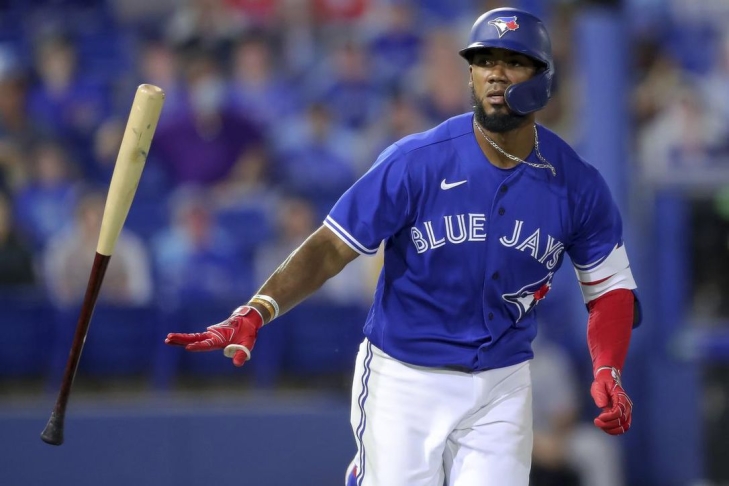
The acquisition of Teoscar Hernández at the 2017 trade deadline is truly one of the most impressive under-the-radar moves in recent Toronto Blue Jays history. The Houston Astros, in a thoughtful trade that included Nori Aoki, exchanged him for veteran pitcher Francisco Liriano. When Hernández first arrived, he was a young Dominican outfielder with raw, high-velocity power, but he had yet to find his footing in the big leagues. Over the next five-and-a-half seasons in Ontario, Hernández’s transformation has been remarkable—going from an inconsistent, strikeout-prone player to one of the most exciting, powerful middle-of-the-order run producers in the American League.
His initial full seasons in Toronto showcased a typical high-power, high-volatility profile. In 2018, he took on a regular outfield position, hitting 22 home runs with impressive strength, but struggled with consistency, posting a .239 batting average and a high strikeout rate in high-pressure situations. The 2019 season followed a similar pattern, with 26 home runs and a .230 batting average. Despite his exceptional exit velocity, defensive issues in the outfield and a tendency to chase outside pitches limited his overall value.
The 2020 schedule, shortened by the pandemic, marked Hernández's major breakout season. In only 50 games, he dominated opposing pitchers by hitting .289, with 16 home runs and 34 RBIs. His improved plate discipline and high barrel rate earned him his first American League Silver Slugger Award and an 11th-place ranking in the AL MVP voting, highlighting his elite offensive potential.
Instead of declining over a 162-game season, Hernández reached a historic peak during the outstanding 2021 season. Batting cleanup in a strong Toronto lineup, he created a remarkable personal achievement, hitting a career-high .296 with 32 homers. He utilized his gap power to drive in an impressive 116 runs—ranking among league leaders—earning a first-time starting spot in the All-Star Game, a second consecutive Silver Slugger award, a place on the All-MLB Second Team, and finishing 19th in MVP voting.
He had another highly productive summer in 2022, hitting 25 home runs with a .267 average to help the Blue Jays reach the postseason. However, as free agency approached and the front office aimed to rebalance the roster with left-handed hitters and top-tier outfield defense, Toronto traded the star outfielder to the Seattle Mariners in November 2022.
Hernández with the Blue Jays had 584 hits, 125 doubles, 129 home runs, and 369 RBIs, with a .263/.320/503 slash line and 121 OPS+.
