

 Not in Hall of Fame News
Yes, we know that this is taking a while! As many of…
 Not in Hall of Fame News
Yes, we know that this is taking a while! As many of…
 Not in Hall of Fame News
2002 SEMI-FINAL RESULTS: Thank you for your participation in the Pro Football…
 Not in Hall of Fame News
Yes, we know that this is taking a while! As many of…
 Not in Hall of Fame News
We are diligently working away at Notinhalloffame on revising our Football lists…
 Not in Hall of Fame News
We are diligently working away at Notinhalloffame on revising our Football lists…
 From the Desk of the Chairman
Unlike in the case of pre-match betting, where you have to pick…
 From the Desk of the Chairman
Kupu178 builds trust with people by using top-end end-to-end encryption. It checks…
 From the Desk of the Chairman
Sports fans thrive on calculating strategy, reading momentum, and maximizing every tactical…
 From the Desk of the Chairman
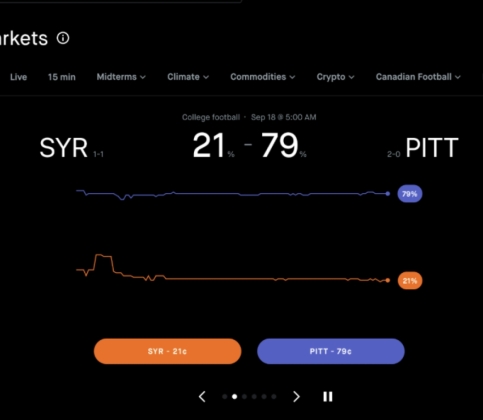
The 2026 NFL season is two weeks old and the division races…
 From the Desk of the Chairman
Sports communities are often built around things that have nothing to do…
 From the Desk of the Chairman
Every hall of fame eventually faces the same problem. The selection process…



100 Active Potential Football Hall of Famers
-
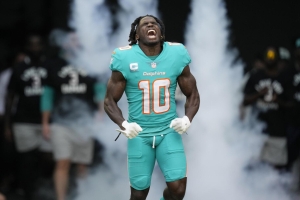 #25 Overall, Tyreek Hill, Free Agent, #3 Wide Receiver2025 Pre-Season Rank #18, 2024 Pre-Season Rank #8, 2023 Pre-Season Rank #28, 2022 Pre-Season Rank #35, 2021 Pre-Season Rank #53. Peak Period: 2019-23…
 -
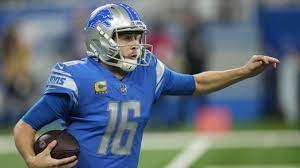 #45 Overall, Jared Goff, Detroit Lions, #8 Quarterback2025 Pre-Season Rank #46, pSeason 2024 Pre-Season Rank #89, 2023 Pre-Season Rank #100, 2022 Pre-Season Rank #112. 2021 Pre-Season Rank #106, 2020 Pre-Season…in Quarterbacks
 -
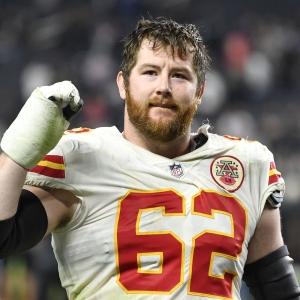 #41 Overall, Joe Thuney, Chicago Bears, Left Guard, #5 Offensive Lineman2025 Pre-Season Rank #64, 2024 Pre-Season Rank #75, 2023 Pre-Season Rank #120, 2022 Pre-Season Rank: #140. Peak Period: 2021-25 Over the last few…
 -
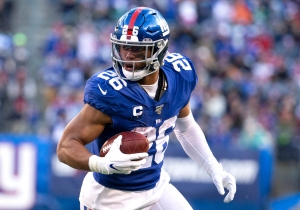 #45 Overall, Saquon Barkley, Philadelphia Eagles, #3 Running Back2025 Pre-Season Rank ##51, 2024 Pre-Season Rank #117, 2023 Pre-Season Rank #122, 2022 Pre-Season Rank #132 2021 Pre-Season Rank #101, 2020 Pre-Season Rank…
Visit the Fictitious Halls of Fame!


You May Also Like...
EDITOR’S CHOICE
 DDT's Pop Flies
When the veterans committee (VC), officially convening as the Contemporary Baseball Era…


 Live Music Head
Project/Objectan interview with André Cholmondeleyby Live Music HeadOriginally published at timessquare.com on…

LATEST RANKINGS

MOST POPULAR RANKINGS



Committee Chairman
27. David Wells
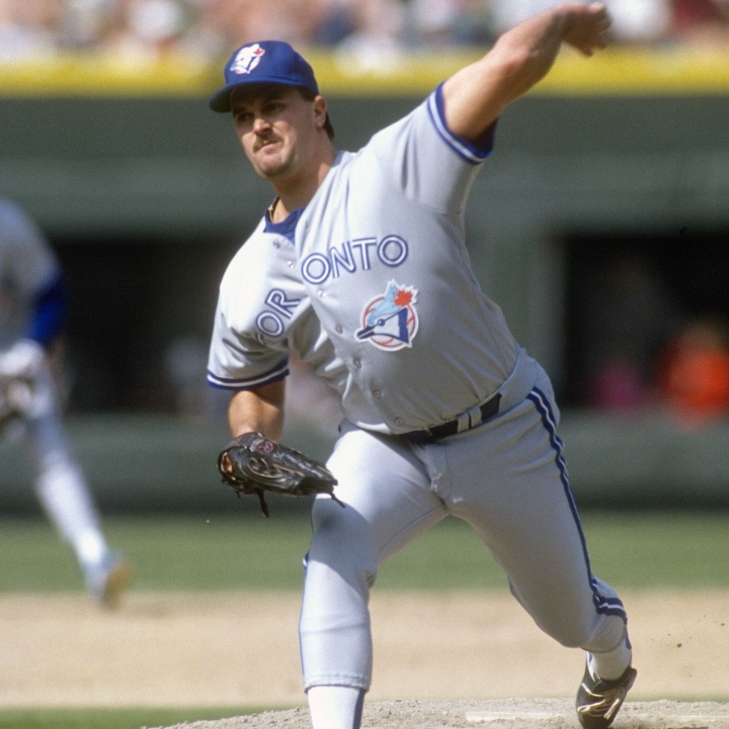
When David Wells first entered the big leagues with Toronto in 1987, no one could have imagined the incredible, high-stakes journey that was yet to come. Known affectionately as "Boomer," this lively and honest left-hander stood out in a sport that often values uniformity. Although he spent his early days exploring different roles, his experience in Canada turned into a remarkable story of growth, as he evolved from an unpredictable bullpen pitcher to one of the most resilient and commanding left-handed starters of his era.
During his initial six seasons with Toronto, Wells demonstrated great versatility as a pitcher. He started in 1987 as a rookie, mainly pitching out of the bullpen, and over the next three years, he skillfully alternated between spot starts and intense relief roles. In 1990, he secured a permanent spot in the rotation, achieving an 11-win season with a 3.14 ERA. By 1992, he was an important multi-purpose player for a strong team, appearing in 41 games and helping Toronto win its first American League pennant. Although his role in the Fall Classic was limited, Wells earned his first World Series ring before being unexpectedly released by the front office just before the 1993 season.
That abrupt departure triggered a significant mid-career transformation. Wells moved to Detroit, Cincinnati, and Baltimore, steadily refining his precise control and developing a powerful, heavy curveball. By 1998, he had become a star with the New York Yankees, achieving a historic perfect game and leading a championship rotation. Then, in February 1999, a surprising trade occurred: Roger Clemens requested a move to a contender, leading the Yankees to include Wells as the main part of the deal to Toronto.
His second stint in the Great White North showcased exceptional old-school durability. Boomer not only pitched many innings but also completely shut down the powerful, steroid-enhanced offenses of that era. In 1999, he secured 17 wins, and in 1999, he delivered a remarkable season. Despite a tough, high-scoring environment, Wells led the American League with a 20–8 record, pitching 229.2 demanding innings. While his 4.11 ERA reflected the era's hitter-friendly conditions, his command remained excellent, earning him an AL All-Star spot and a third-place finish in Cy Young voting.
With the franchise entering a rebuilding phase after the 2000 season, the front office traded the veteran left-hander to the Chicago White Sox in a multi-player deal. Wells would go on to pitch until he was 44, piling up 239 career victories across nine major-league stops.
With Toronto, Wells appeared in 302 games (130 starts) with an 84–55 record alongside a 4.06 ERA and a 1.28 WHIP. He threw 1,098.1 innings, recording 17 complete games, 6 shutouts, and 12 saves, and striking out 784 batters.
28. Shannon Stewart
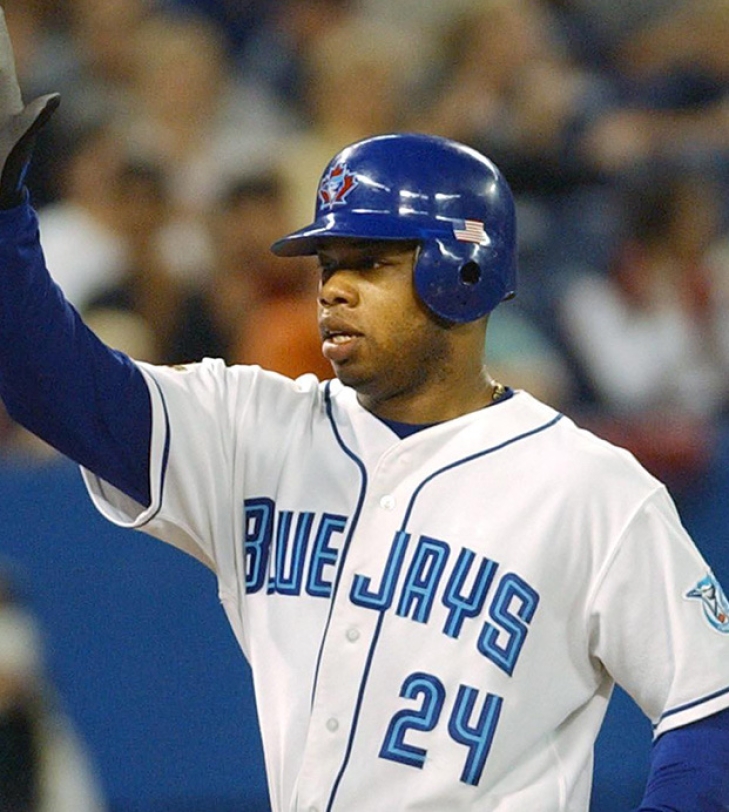
Shannon Stewart joined Toronto baseball during a transitional period after their back-to-back championships. Drafted in 1992, he debuted in late 1995 amid roster changes. Despite adjustments, SkyDome crowds remained lively, and Stewart became a key, energetic leadoff hitter.
His developmental trajectory spanned several seasons of alternating between Triple-A and the major leagues; however, by 1998, Stewart secured a permanent position as a starting player in the Toronto outfield. He promptly demonstrated his capabilities to the American League through an exceptional, high-velocity season. By leveraging his exceptional acceleration, he intimidated opposing catchers by stealing a career-high 51 bases and achieved a commendable batting average of .279.
While that 50-steal peak would stand as his personal high-water mark on the basepaths, his evolution into a pure, elite hitter was only just beginning. Over the next four-and-a-half seasons, Stewart became the ultimate model of line-drive consistency north of the border. He rattled off consecutive seasons batting north of the .300 plateau, showcasing a refined right-handed stroke that effortlessly exploited the turf gaps in Toronto. Far from merely a singles hitter, he also added a substantial layer of power to his game, launching at least 10 home runs in six consecutive seasons for the franchise—culminating in a career-high of 21 home runs during an impressive offensive performance in 2000.
By the early 2000s, the Blue Jays were stuck in a competitive lull, drifting out of the postseason picture despite Stewart's top-of-the-order brilliance. Recognizing his high-leverage value to a contender, the front office traded him to the Minnesota Twins midway through the 2003 season for Bobby Kielty. Stewart instantly sparked the Twins' offense, batting .322 down the stretch to help carry Minnesota into the playoffs and finish a spectacular fourth in the American League MVP balloting.
He accumulated 1,082 hits, 222 doubles, 74 home runs, and 359 RBIs while generating a stellar .298/.365/.431 slash line with Toronto.
26. Ernie Whitt
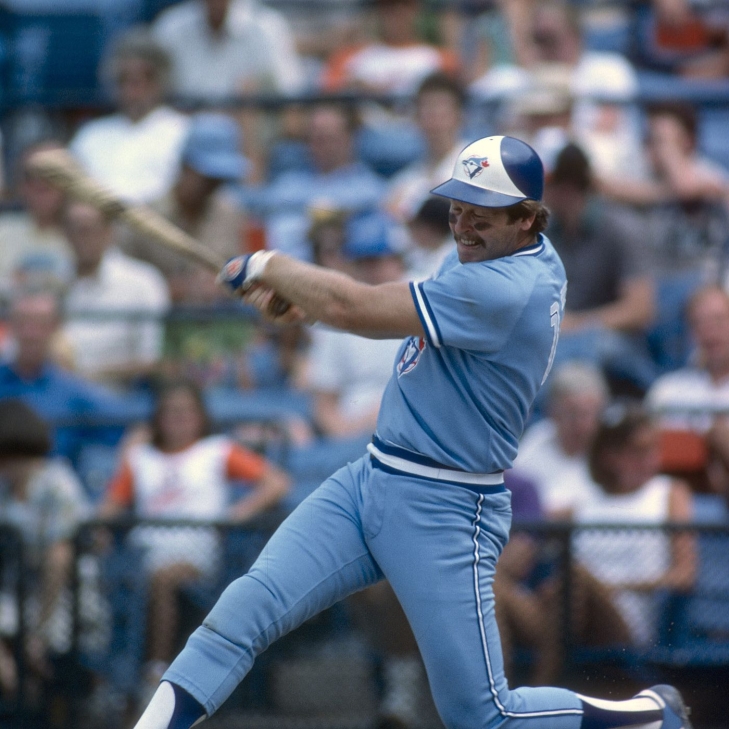
When the Toronto Blue Jays played their first game on a snowy April day in 1977, Ernie Whitt was a little-known 24-year-old expansion pick with only eight major league games on his record, all with the Boston Red Sox. Left unprotected because his position was blocked by Carlton Fisk, a future Hall of Famer, Whitt, a left-handed hitter, moved north with no promises. His rise was slow and difficult, but by the end of his 12 seasons in Toronto, he had become not only the starting catcher but also the emotional core of a developing team and the last remaining original Blue Jay.
Whitt spent the late 1970s largely overlooked in the minor leagues, managing only 25 appearances for the major league team in 1977 and 1978, and missing the entire 1979 season in Triple-A. His career took a significant turn before the 1980 season when Bobby Mattick became manager. Mattick saw the potential in Whitt's left-handed batting and consistent presence, promoting him to a regular role. Over the next ten years, Whitt became known for his effective platoon partnership with Buck Martinez, skillfully handling the more challenging matches against right-handed pitchers.
He swiftly became the primary defensive anchor and trusted confidant of Blue Jays ace Dave Stieb, providing a calming, composed presence that contributed to one of the most formidable young pitching staffs of the decade. As his defensive skills behind the plate improved, his left-handed batting became a reliable element in Toronto's deep lineup. Beginning in 1982, Whitt completely reinvented his offensive game, embarking on a nine-year streak of double-digit home runs.
His peak performance came during the historic 1985 season, when Whitt surpassed 100 hits for the first time, hitting 19 home runs and driving in 64 RBIs. This achievement earned him his only All-Star selection, where he had the chance to face Stieb on a national stage. More significantly, his consistent leadership behind the plate helped the Blue Jays reach 99 wins and secured the franchise’s first-ever postseason appearance. Two years later, in 1987, he delivered his best personal achievement, posting a career-high .269 batting average with 19 home runs and 75 RBIs.
Following the 1989 season, with the organization ready to hand the keys over to younger homegrown catchers like Pat Borders and Greg Myers, the front office traded the veteran icon to the Atlanta Braves. Whitt appeared in 1,218 games for Toronto and accumulated 888 hits, 164 doubles, 131 home runs, and 516 RBIs while generating a steady .253/.329/.418 slash line (104 OPS+).
Whitt was proudly inducted into the Canadian Baseball Hall of Fame in 2009.
6. Vladimir Guerrero Jr.
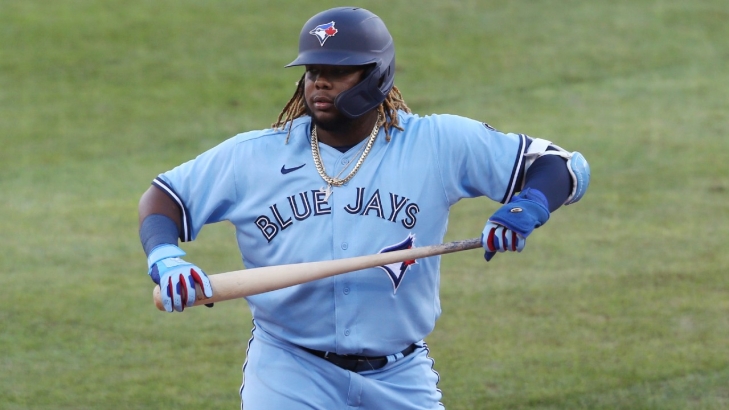
Vladimir Guerrero Jr., the son of Hall of Famer Vladimir Guerrero, embarked on his professional baseball career bearing the significant generational expectations that could easily undermine a less promising prospect. Signed from the Dominican Republic as an international free agent in 2015, his formidable batting ability accelerated his progression through the minor leagues, culminating in a highly anticipated Major League debut in 2019. He met these expectations by demonstrating the raw bat speed and considerable power reflective of his father’s legacy, finishing sixth in the American League Rookie of the Year voting and establishing himself as a key figure for the franchise's future.
Following his demonstration of capability during the abbreviated 2020 season, Guerrero delivered a historic, MVP-caliber performance in 2021 that would have likely earned him the award in nearly any other year, had it not been for an exceptional two-way season from Shohei Ohtani. By securing the esteemed Hank Aaron Award and his inaugural All-Star selection, the young first baseman dominated American League pitching by leading the league in runs (123), home runs (48), on-base percentage (.401), slugging percentage (.601), and achieving an impressive 1.002 OPS. This season served as a definitive statement of his elite status as a tier-one superstar, fully capable of dominating a game.
The ensuing two seasons brought a period of offensive recalibration, proving that even generational talents have to adjust to the league's counterpunches. While his power numbers dipped in 2022 and his OPS slid below .800 in a frustrating 2023, Guerrero adjusted by shoring up his defensive profile, capturing a Gold Glove at first base to show his value wasn’t strictly tied to the batter's box. The true roaring return to form arrived in 2024; shaking off a sluggish spring, he exploded down the stretch to hit a blistering .323 with 30 home runs, a surge that secured his fourth consecutive All-Star appearance and a sixth-place finish in the MVP voting.
Any anxiety regarding his long-term future in Canada was permanently erased in April 2025, when the Blue Jays front office orchestrated one of the most monumental moments in franchise history. Rather than letting their homegrown superstar walk into a high-stakes free-agent market, Toronto locked him up with a staggering 14-year, $500 million contract extension. The megadeal, featuring a full no-trade clause and no opt-outs, completely reset the organizational clock, ensuring that the face of the franchise would carry on his legacy north of the border as a lifelong Blue Jay.
With his financial future secured, Guerrero went out and validated every single penny during a thrilling 2025 campaign that culminated in a deep, magical postseason push. He put the entire team on his back in October, capturing ALCS MVP honors and absolutely tearing through the playoff brackets with a scorching 1.289 OPS and 8 postseason home runs. Though the Blue Jays ultimately fell just one victory short of a title, losing a heartbreaking 11-inning thriller in Game 7 of the World Series to the Los Angeles Dodgers, Guerrero’s absolute supremacy under the highest stakes solidified his reputation as a big-game destroyer.
Entering the 2026 season, Vladdy has the goods to enter the top five of this list by year’s end. Could he make it all the way to the top?
