

 Not in Hall of Fame News
Yes, we know that this is taking a while! As many of…
 Not in Hall of Fame News
Yes, we know that this is taking a while! As many of…
 Not in Hall of Fame News
2002 SEMI-FINAL RESULTS: Thank you for your participation in the Pro Football…
 Not in Hall of Fame News
Yes, we know that this is taking a while! As many of…
 Not in Hall of Fame News
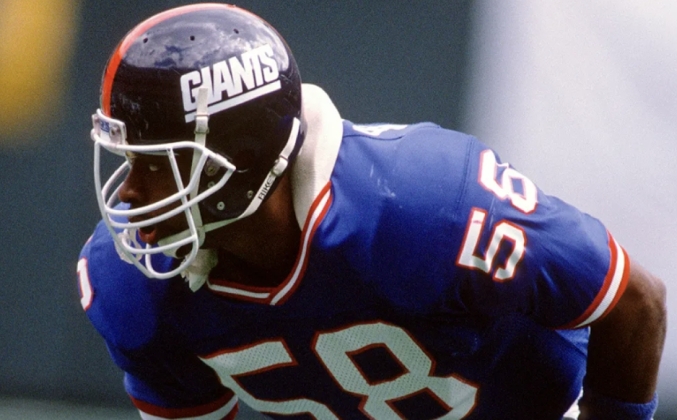
We are diligently working away at Notinhalloffame on revising our Football lists…
 Not in Hall of Fame News
We are diligently working away at Notinhalloffame on revising our Football lists…
 From the Desk of the Chairman
Kupu178 builds trust with people by using top-end end-to-end encryption. It checks…
 From the Desk of the Chairman
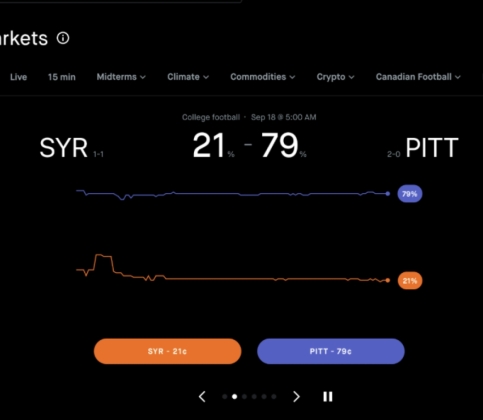
Sports fans thrive on calculating strategy, reading momentum, and maximizing every tactical…
 From the Desk of the Chairman
The 2026 NFL season is two weeks old and the division races…
 From the Desk of the Chairman
Sports communities are often built around things that have nothing to do…
 From the Desk of the Chairman
Every hall of fame eventually faces the same problem. The selection process…
 From the Desk of the Chairman
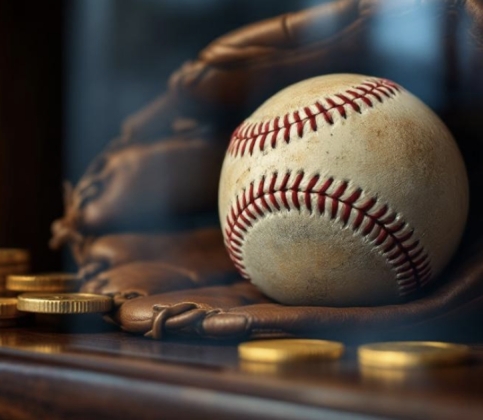
Pete Rose died in 2024. On May 13, 2025, Commissioner Rob Manfred…
100 Active Potential Football Hall of Famers
-
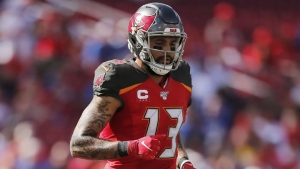 #18 Overall, Mike Evans, San Francisco 49ers, #1 Wide Receiver2025 Pre-Season Rank #13, 2024 Pre-Season Rank #18, 2023 Pre-Season Rank #35, 2022 Pre-Season Rank #58, 2021 Pre-Season Rank #73. Peak 2020-24 How…
 -
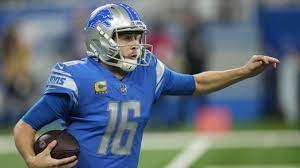 #45 Overall, Jared Goff, Detroit Lions, #8 Quarterback2025 Pre-Season Rank #46, pSeason 2024 Pre-Season Rank #89, 2023 Pre-Season Rank #100, 2022 Pre-Season Rank #112. 2021 Pre-Season Rank #106, 2020 Pre-Season…in Quarterbacks
 -
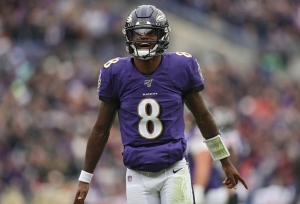 #12 Overall, Lamar Jackson, Baltimore Ravens, #4 Quarterback2025 Pre-Season Rank #10, 2024 Pre-Season Rank #14, 2023 Pre-Season Rank #30, 2022 Pre-Season Rank #38, 2021 Pre-Season Rank #46, 2020 Pre-Season Rank…in Quarterbacks
 -
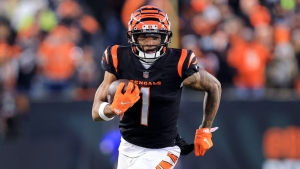 #42 Overall, Ja'Marr Chase, Cincinnati Bengals, #6 Wide Receiver2025 Pre-Season Rank #55, 2024 Pre-Season Rank #111, 2023 Pre-Season Rank #134, 2022 Pre-Season Rank #145. Peak Period: 2021-25* Ja’Marr Chase has been…
Visit the Fictitious Halls of Fame!
You May Also Like...
EDITOR’S CHOICE
 DDT's Pop Flies
When the veterans committee (VC), officially convening as the Contemporary Baseball Era…

 Live Music Head
Project/Objectan interview with André Cholmondeleyby Live Music HeadOriginally published at timessquare.com on…
LATEST RANKINGS

MOST POPULAR RANKINGS


Committee Chairman
Proud to be Canadian: NFL Hall of Famers
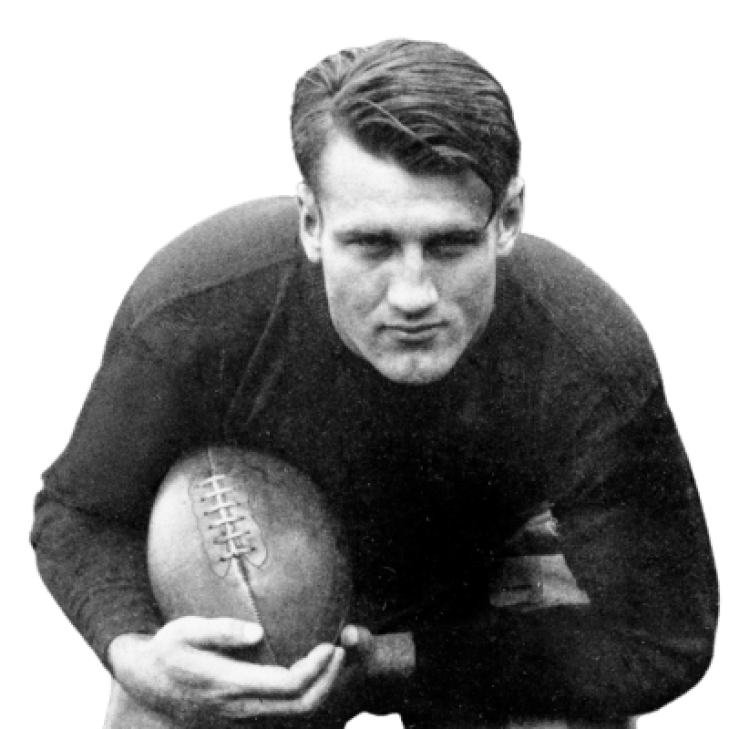
There is a considerable history of Canadian players who have moved south to play in the world’s largest pigskin league, and these players have made waves at some of the top teams in the league. Even right now in the NFL, there are 25 players who have hailed from Canada and show up regularly in the league playing as nose tackles, cornerbacks, receivers and a number of other positions. As we look towards the biggest game of the American football season, and Canadian fans check out Bet99’s Super Bowl bet selection, we’re taking a look back into NFL history for some of the most prestigious Canadian NFL names.
Two Canadian players have achieved the biggest possible single-player accolade in the sport - entry into the NFL’s Hall of Fame. It seems certain that others will follow - maybe some of those currently playing in the league will make it once they have retired - but for now, we’re going to look at the two men who have climbed the ladder to the Valhalla of American gridiron achievement, and get an idea for why they have been recognised among the best to pull on a pair of cleats.
Bronco Nagurski
In recent years, outside of the occasional trick play, football stars have tended to specialise in a specific position, or at least limited their involvement to offensive or defensive play. Back in the day, when squads were smaller, it was not uncommon for players to do their thing on offense and then, when the ball went over to the other team, turn around and play defense. Nagurski was one such player. As a fullback for the Chicago Bears, he racked up more than 4000 yards total offense, threw seven touchdown passes, and then switched around to play as a defensive lineman. In that role, he was pretty much unblockable.
One story about Nagurski goes that he once carried for a touchdown against the Washington Redskins, shaking off two linebackers and watching two defensive backs bouncing off him on his way. He then bounced off the goalposts into a brick wall behind the endzone, and as he joined the huddle for the following PAT told his teammates “That last guy hit me awfully hard”. Maybe true, maybe not, but entirely believable about Nagurski.
Arnie Weinmeister
Saksatchewan native Weinmeister entered the American game in 1945, two years after Nagurski’s retirement. He played exclusively as a defensive tackle, first for the Brooklyn/NY Yankees of the All-America Football Conference, and then for the New York Giants before returning to Canada to play for the BC Lions for a couple of seasons. Across 71 NFL games, he recovered eight fumbles, and gained a fearsome reputation as a hand-in-the-dirt defensive lineman. Although his career span was a relatively short eight years, his impact on the game was enough to elect him to the HoF in 1984.
Standing at 6’ 4 in his playing days and weighing 235lb, Weinmeister was one of the biggest tackles playing the game at the time. This, allied to his incredible pace for a lineman and his ethos of always hitting the other guy first (and hardest) made him a force to be reckoned with at the highest level of the game.
Songs from the Greats of Rock and Roll About the Love for Mature Women
Mature women have always been popular with men of all ages. Whether a hundred years ago or today, no man can resist the charm of a lady over 40. They know how to pick the right words and make any man dedicate poems to them at one glance. In fact, that’s exactly what many rock ‘n’ roll stars have done, and it was their love for mature women that gave birth to songs like Stacy’s Mom or Hot for Teacher.
How Music Connects Lonely Hearts
Music can work miracles; everyone knows that. It heals souls and connects lonely hearts worldwide, no matter what language you speak or what color your skin is. Even just opening any dating site to find MILFs, all you have to do is specify your musical preferences, and within minutes your DM will be stuffed with mature women who share your tastes.
Finding someone who likes the same songs as you is like finding a soulmate with whom you’ll always have something in common, no matter where fate takes you. That’s why many men who want to meet mature women but don’t know how to approach them use the topic of music as an icebreaker on MILF dating sites. And it works because who doesn’t love good old smash hits?
And what about you? Do you consider yourself a fan of classic rock ‘n’ roll? Maybe you share Van Halen and The Police’s love of gorgeous older women and want to get some inspiration before you approach the MILF of your dreams? If so, here are the most famous five songs from big rock artists that celebrate the beauty of older ladies!
- Fountains of Wayne – Stacy’s Mom
If there’s a perfect song dedicated to MILFs, it’s Stacy’s Mom. Fountains of Wayne’s mischievous ode to teenage fantasies was a success. “Stacy’s Mom” reached No. 21 on the Billboard Hot 100 (it was their first song to make the chart) and number 11 in the UK. This song gave the band Grammy nominations for Best Pop Vocal Performance and Best New Artist in 2004.
It is dedicated to gorgeous moms who drive young guys crazy with their stunning sexuality. It’s about how mature women can turn a young guy on in seconds with their small tricks. “Your mom came out with just a towel on / I could tell she liked me from the way she stared / And the way she said, you missed a spot over there.” “Stacy’s Mom” proves that MILFs have always been and always will be popular with men of all ages and all generations!
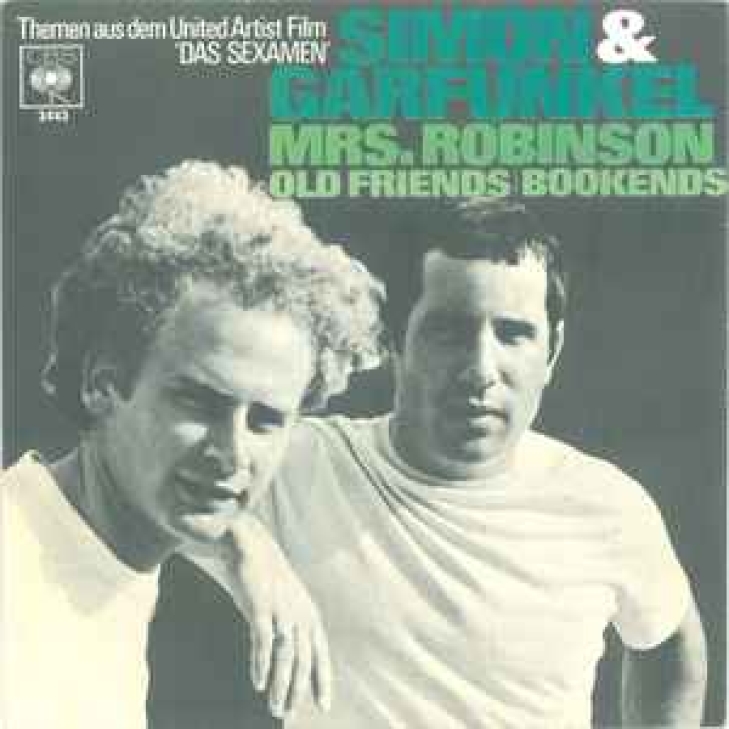
- Simon & Garfunkel – Mrs. Robinson
The song became popular primarily because it was included on the soundtrack of the movie Absolwent with Dustin Hoffman. Mrs. Robinson is played by Anne Bancroft, a middle-aged woman who seduces young Benjamin Braddock (Hoffman). However, the song was originally to be called “Mrs. Roosevelt,” referring (probably) to Eleanor Roosevelt, wife of Franklin Delano Roosevelt.
Because of becoming the soundtrack to a movie that tells the story of a mature woman who seduces a younger man, “Mrs. Robinson” became tightly associated with this kind of relationship. For many years, it was the anthem of men who were crazy about older women.
- Van Halen – Hot for Teacher
It is a typical fantasy of many young students worldwide that doesn’t lose relevance no matter how much time passes. There is something about educated and experienced women that makes guys fall in love with them over and over again. A gorgeous, mature teacher who drives young guys crazy. In the clip, a mature teacher in a bikini, dances on stage in front of her students, and they applaud her. “I got it bad, so bad, I’m hot for teacher,” the band sings, and we couldn’t agree more!
- The Police – Wrapped Around Your Finger
This song can be interpreted in many different ways. If we judge from the words of Sting, who is the author of the song, it is a story from his life. It is about getting revenge on someone by turning the situation 180 degrees; it has mythological and literary references, including the monsters Scylla and Charybdis from Greek mythology and the German legend of Faust.
But the underlying meaning aside, the text is perceived quite differently. “Hypnotized by you if I should linger / Staring at the ring around your finger.” It seems as if the song is about a young guy who falls under the spell of a married, mature woman. “I’ll be wrapped around your finger,” the chorus lines keep saying, as if alluding to a powerful, cunning woman who lures young men into her net. Which interpretation do you prefer?
- Queen – Fat Bottom Girls
The song, which later reached No. 24 on the Billboard Hot 100, was written by Queen guitarist Brian May and released in 1978. It is not hard to guess that it is dedicated to his love for mature women with big bottoms, and judging by the popularity of the song at the time, so many men worldwide could not agree more. The lyrics of the song are about a guy who goes crazy over the beauty of curvy mature women and considers them his greatest treasure; it’s about how curvy women make his world go round.
Love for mature women is a phenomenon that has existed for decades. They fascinate men with their natural attractiveness and rich life experience, so it is not surprising that songs were and are dedicated to them. And as a true fan of classic rock ‘n’ roll, which of the songs do you like best?
Notinhalloffame NBA Cup Standings Update (210)
If you are a regular visitor at Notinhalloffame.com, you know that we created the Notinhalloffame NBA Cup, where in every regular season game, we award points (5-4-3-2-1) to the top five performers. This is the third year that we have done this, and Denver’s Nikola Jokic won the first two.
To keep everyone regularly in the loop this time, we have decided to give regular updates, starting at when the first player cracked 100 Points, and tell all of you the top ten. We will this going forward with every update as the first player breaches the elevated ten-point threshold afterward.
Here is the current top ten, based on the first player to breach 210 Notinhalloffame Cup Points:
1. Jayson Tatum, Boston Celtics, 211 Cup Points: 57 Games, 30.4 PPG, 8.7 RPG, 4.6 APG, 1.0 SPG, 0.8 BPG, 23.8 PER, 8.0 WS. (#1 on last ranking)
Tatum remains at #1 and while there are other players who can make a statistical claim as this year’s MVP, Tatum is the best player on the NBA’s best team, and that often translates into an MVP. This looks to be his first year where he will finish with a PPG over 30.
2. Nikola Jokic, Denver Nuggets, 208 Cup Points: 53 Games, 24.5 PPG, 11.6 RPG, 10.0 APG, 1.3 SPG, 0.7 BPG, 31.7 PER, 11.7 WS. (#4 on last ranking)
Jokic again climbs up two spots and the two-time and defending MVP winner (and NIHOF Cup Champion) is leading the league in PER (31.7), Win Shares (11.7), VORP (6.8) and Box Plus/Minus (13.2). He is also averaging a triple-double, and is probably the biggest threat to Tatum for the MVP.
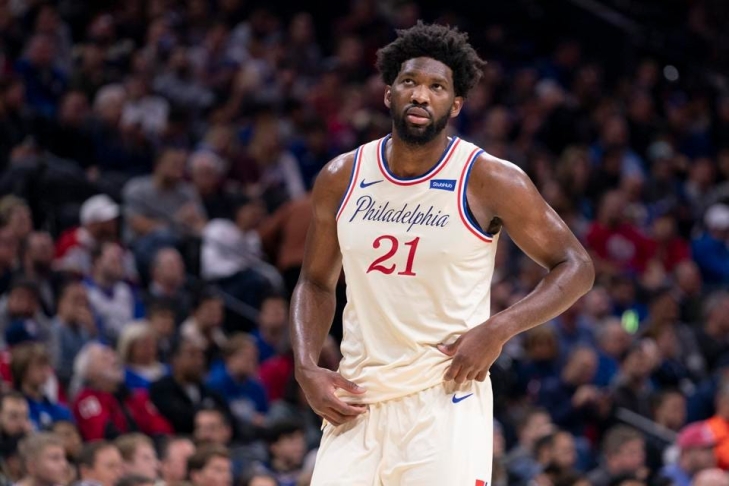
3. Joel Embiid, Philadelphia 76ers, 206 Cup Points: 47 Games, 33.1 PPG, 10.4 RPG, 4.1 APG, 1.1 SPG, 1.6 BPG, 30.6 PER, 8.4 WS. (#5 on last ranking)
Embiid rockets into number three, and is a bona fide MVP contender. He is currently second in PPG (33.1) and is second in PER (30.9).
4. Luka Doncic, Dallas Mavericks, 204 Cup Points: 51 Games, 33.2 PPG, 8.8 RPG, 8.2 APG, 1.5 SPG, 0.5 BPG, 30.4 PER, 8.9 WS. (#3 on last ranking)
Doncic drops again, and is now at number 4. The now four-time All-Star reclaimed the scoring lead from Joel Embiid His PER of 30.4 also ranks him third. He now has Kyrie Irving as a teammate, which will prove intriguing.
5. Giannis Antetokounmpo, Milwaukee Bucks, 203 Cup Points: 48 Games, 31.3 PPG, 12.0 RPG, 5.4 APG, 0.8 SPG, 0.8 BPG, 28.4 PER, 6.5 WS. (#2 on last ranking)
The two-time MVP would have probably been on the top had he not missed a series of Games earlier in the season, but has also been a little hurt lately, dropping him three spots. He is now a six-time All-star.
6. Shai Gilgeous-Alexander, Oklahoma City Thunder, 200 Cup Points: 54 Games, 31.0 PPG, 4.7 RPG, 5.7 APG, 1.6 SPG, 1.1 BPG, 27.3 PER, 9.1 WS. (#5 on last ranking)
Gilgeous-Alexander went to his first All-Star Game, and is shattering last year’s averages, which were already good. He is currently fifth in PPG and SPG, and is second in Win Shares (8.7). How great will this Canadian be?
7 (Tie). Julius Randle, New York Knicks, 196 Cup Points: 62 Games, 25.1 PPG, 10.6 RPG, 4.2 APG, 0.7 SPG, 0.3 BPG, 21.2 PER, 7.3 WS. (#8 on last ranking)
Randle continues to climb the list, and currently has a higher PPG (24.9), than his All-Star year two years ago.
8. Ja Morant, Memphis Grizzlies, 191 Cup Points: 50 Games, 27.0 PPG, 5.9 RPG, 8.1 APG, 1.0 SPG, 0.3 BPG, 23.4 PER, 5.2 WS. (#7 on last ranking)
Morant is the face of the Grizzles, and he is posting similar numbers from last year, when he took Memphis to the next level.
9. Trae Young, Atlanta Hawks, 179 Cup Points: 53 Games, 26.9 PPG, 2.9 RPG, 10.2 APG, 1.0 SPG, 0.2 BPG, 22.1 PER, 4.9 WS. (#9 on last ranking)
Young is the face of an intriguing Hawks squad, but was unable to make the NBA All-Star Team.
10. Lauri Markkanen, Utah Jazz, 174 Cup Points: 56 Games, 25.2 PPG, 8.5 RPG, 1.8 APG, 0.6 SPG, 0.6 BPG, 22.7 PER, 7.6 WS. (Not on last ranking)
Markkanen is now the first player from Finland to be an All-Star and after two months, he returns to the top ten in Cup Points. This the year of his life.
LeBron James, of the Los Angeles Lakers, has fallen off the top ten
Our next update will happen after the first player breaches 220 Cup Points.
We have revised our Notinhalloffame Baseball 300 list to reflect 2024.
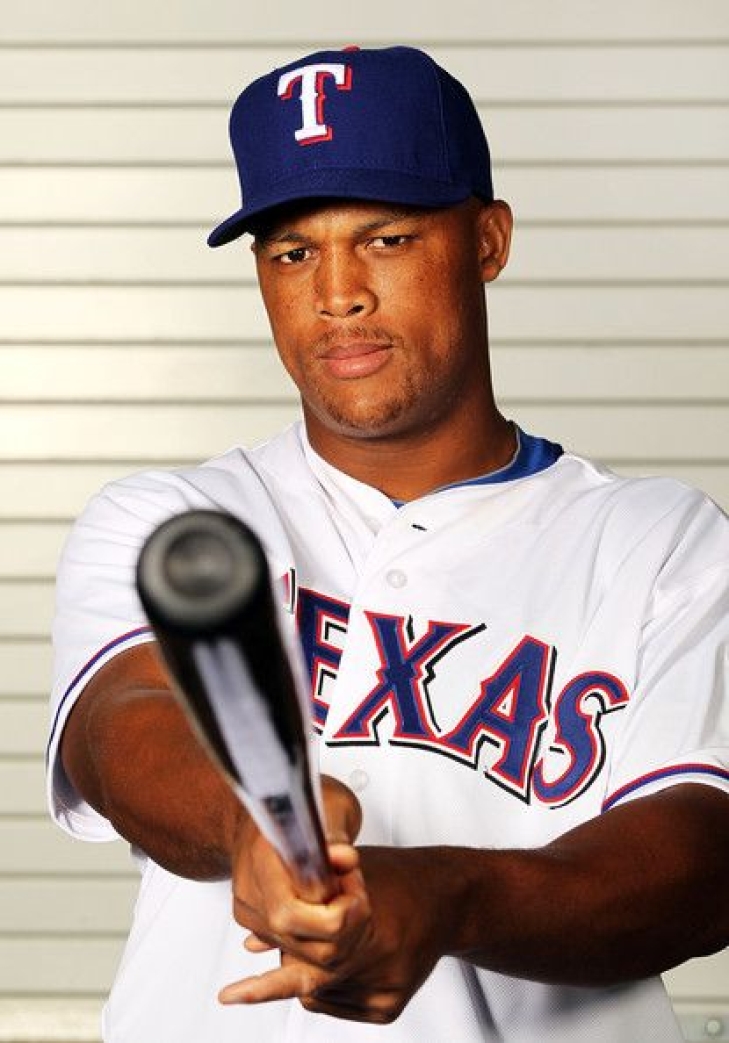
Last month, the Baseball Hall of Fame elected Scott Rolen into their midst; a month after the Veteran’s Committee unanimously chose Fred McGriff for the Class of 2023.
This means that for us at Notinhalloffame.com, it is time to revise one of our most important lists, the top 300 Baseball players who we feel are deserving for a look at enshrinement in Cooperstown.
Our list looks at the following criteria:
- Traditional and advanced statistics.
- Playoff performance.
- Impact and influence.
- Your votes and comments.
We take all of these factors into consideration (especially your input), but as years go by, it becomes more difficult to rank players, especially since many of those eligible are tainted with activity that has kept them out. Regardless of how Baseball may have decreased in popularity over the past decades, this is still the pre-eminent sports Hall of Fame in North America, and the standard by which all others are judged.
Specifically for the 2023 list, adjustments were made by removing Rolen and McGriff, factoring in your collective input, and adding former players who are eligible for the 2024 vote.
Our entire list of 300 can be found here, but below, we are pleased to present the Notinhalloffame.com Baseball top 20.
Remaining at #1 is Barry Bonds, the all-time leader in Home Runs (762) and is a seven-time MVP. Controversy overshadows the power hitter, who is universally believed to have taken PEDs, though never tested positive. Bonds concluded his ten years on the modern era ballot with 66%, and had there been 15 years like there were previously, he might have made it. He was on the recent Veteran’s Committee ballot that included McGriff, though Bonds failed to gain the minimum votes needed to even have his number made public. Bluntly, this means that Bonds is further than ever for Hall of Fame induction, as his peers do not view him as worthy. We suspect that Bonds will forever be the most potent hitter to never see a plaque in the Hall, and could remain #1 here for decades (unless, your votes and comments plumet him from the top spot.
Roger Clemens also remains fixed at #2, and most of what we said about Bonds, applies to Clemens, only that he is a Pitcher. A seven-time Cy Young winner, the “Rocket” never was suspended for PEDs, but the clouds around him are ominous, and he also did not win over a lot of friends in the media. Just like Bonds, Clemens had his highest total on his last year of modern eligibility, and did not gain enough votes on his first Veteran Ballot for his tally to be known.
Remaining at #3 is Alex Rodriguez, who was arguably the top player of the 2000s, and he will enter his third year of Modern eligibility. There was nobody (Bonds and Clemens included) whose first year on the ballot intrigued us the most. Unlike Bonds and Clemens, A-ROD DID test positive and served the longest suspension in MLB history. At one time, he was the most hated man in all of sports, yet here we are in 2023 where he has a job with Fox Sports, and was in a high-profile relationship with Jennifer Lopez. His marginal improvement in the 2023 vote does not forecast a Hall of Fame for Rodriguez.
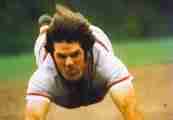
With Pete Rose staying at #4, we have another player who looks to be forever to remain on the outside-looking-in. Baseball’s all-time hit king was banned from Baseball for gambling on the sport, though he has recently made some appearances. The Baseball Hall of Fame has followed the edict of MLB (although they don’t actually have to) and never added him to a ballot of any kind. Even if he is reinstated, he would still have to appear on a Veteran’s Committee ballot, and that group would have to choose him.
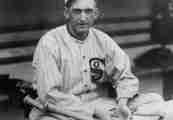
With “Shoeless” Joe Jackson at #5, we have a top five (our only) where it is likely that none will ever receive the call. Banned in 1920 for allegedly conspiring to throw the World Series from the year before, Jackson maintained his innocence, and there many suspect that the Outfielder, who may have known about it, did not participate, which reflects his 1919 postseason statistics.
This takes us to #6, Adrian Beltre, who enters his first year on the ballot, and is a bona fide threat to enter on his first attempt. He brings a resume of 3,166 Hits, 477 Home Runs, four All-Stars, four Silver Sluggers and five Silver Sluggers.
Falling one spot to #7 is he former career-Tiger, Lou Whitaker. The Second Baseman and World Series Champion was a one-and-done on his only year on the ballot and is one of the most egregious omissions from the multi-ballot club.
Bill Dahlen, a previous Veterans Committee nominee, is at #8. We expect that he will be on the next one for his respective era.
Dropping one to #9 is Curt Schilling, whose war with the media (and possibly his right-wing politics) resulted in his perpetual snub. At the end of his run on the Modern Era ballot, the Pitcher asked the voters not to select him, and many acquiesced. Schilling was on the same Veteran’s Committee ballot that Bonds and Schilling was on, and though he also was denied induction, he fared much better, gaining 6 votes.
Rounding out the top ten is Manny Ramirez, who though is still on the ballot is running out of time. If Alex Rodriguez is unlikely to get elected, Ramirez has no shot, as he too was suspended, and has weaker (though Hall of Fame worthy) stats than A-Rod.
Todd Helton stays at #11. The “Toddfather” missed out on Cooperstown this year with 72.2 of the vote, but next year on 2024 looks promising for Helton, who enters year number six on the ballot.
Boston’s most wanted for the Hall of Fame, Dwight Evans, holds firm at #12.
Pre-1900 Pitcher, Jim McCormick, advances two spots to #13.
Carlos Beltran had a bit of tumble from #10 to #14. Like others above, Beltran has the stats, but is paying a penance for his prominent role in the 2017 Houston Astros cheating scandal. He received only…. 1st And we suspect that many voters wanted to make him wait a year. Beltran will likely jump significantly on his second vote.
Tommy John, whose career-saving surgery named after him is recognized by the Hall, fell one spot to #15.
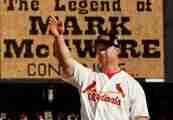
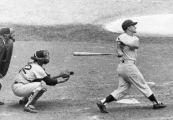
The final five of the top twenty all hold the same positions as last year, respectively being; Roger Maris (#16), Dick Allen (#17), Mark McGwire, (#18), Dave Parker (#19) and Rafael Palmeiro (#20).
There are other new entries on our list. They are:
Chase Utley (#28), Joe Mauer (#37), Bartolo Colon (#77), David Wright (#89), Jose Bautista (#220) and Jose Reyes (#271)
We are now going to begin work on revising or Notinhalloffame.com Football 300, where we rank those to consider for the Pro Football Hall of Fame.
As always, we thank you for your support, and ask you to continue with your votes and comments.
