

 Not in Hall of Fame News
Yes, we know that this is taking a while! As many of…
 Not in Hall of Fame News
Yes, we know that this is taking a while! As many of…
 Not in Hall of Fame News
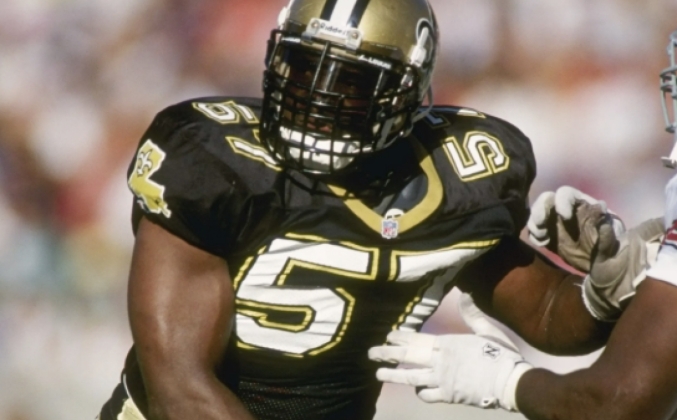
2002 SEMI-FINAL RESULTS: Thank you for your participation in the Pro Football…
 Not in Hall of Fame News
Yes, we know that this is taking a while! As many of…
 Not in Hall of Fame News
We are diligently working away at Notinhalloffame on revising our Football lists…
 Not in Hall of Fame News
We are diligently working away at Notinhalloffame on revising our Football lists…
 From the Desk of the Chairman
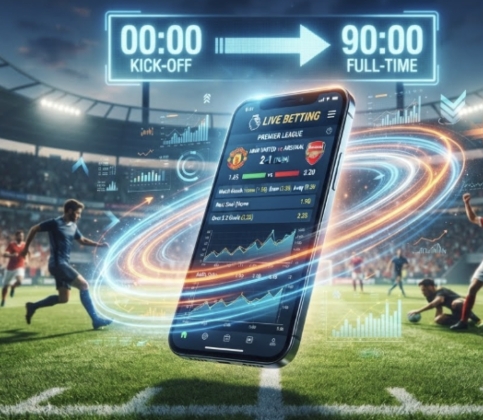
Unlike in the case of pre-match betting, where you have to pick…
 From the Desk of the Chairman
Kupu178 builds trust with people by using top-end end-to-end encryption. It checks…
 From the Desk of the Chairman
Sports fans thrive on calculating strategy, reading momentum, and maximizing every tactical…
 From the Desk of the Chairman
The 2026 NFL season is two weeks old and the division races…
 From the Desk of the Chairman
Sports communities are often built around things that have nothing to do…
 From the Desk of the Chairman
Every hall of fame eventually faces the same problem. The selection process…
100 Active Potential Football Hall of Famers
-
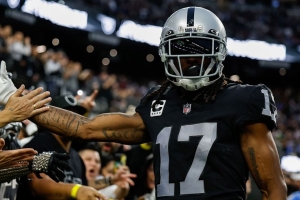 #21 Overall, Davante Adams, Los Angeles Rams, #2 Wide Receiver2025 Pre-Season Rank #23, 2024 Pre-Season Rank #27, 2023 Pre-Season Rank #24, 2022 Pre-Season Rank #43, 2021 Pre-Season Rank #67, 2020 Pre-Season Rank…
 -
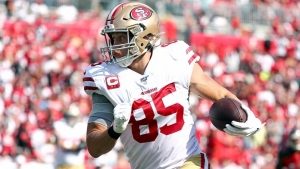 #26 Overall, George Kittle, San Francisco 49ers, #2 Tight End2025 Pre-Season Rank #34, 2024 Pre-Season Rank #42, 2023 Pre-Season Rank #59, 2022 Pre-Season Rank #74, 2021 Pre-Season Rank #86, 2020 Pre-Season Rank…in Tight Ends
 -
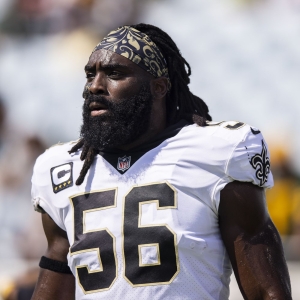 #48 Overall, DeMario Davis, New York Jets, Linebacker, #4 Defensive Lineman/Linebacker: Interior Lineman2025 Pre-Season Rank #47, 2024 Pre-Season Rank #47, 2023 Pre-Season Rank #61, 2022, Pre-Season Rank #137. Peak Period: 2019-23 Davis, a veteran player,…
 -
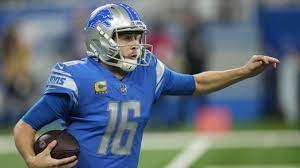 #45 Overall, Jared Goff, Detroit Lions, #8 Quarterback2025 Pre-Season Rank #46, pSeason 2024 Pre-Season Rank #89, 2023 Pre-Season Rank #100, 2022 Pre-Season Rank #112. 2021 Pre-Season Rank #106, 2020 Pre-Season…in Quarterbacks
Visit the Fictitious Halls of Fame!
You May Also Like...
EDITOR’S CHOICE
 DDT's Pop Flies
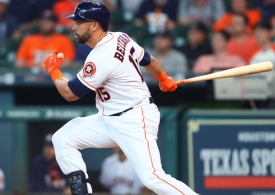
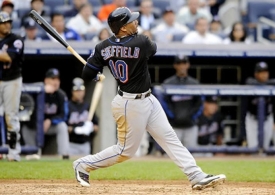
When the veterans committee (VC), officially convening as the Contemporary Baseball Era…


 Live Music Head
Project/Objectan interview with André Cholmondeleyby Live Music HeadOriginally published at timessquare.com on…
LATEST RANKINGS

MOST POPULAR RANKINGS

Committee Chairman
The Naismith Basketball Hall of Fame announces the 2023 Finalists
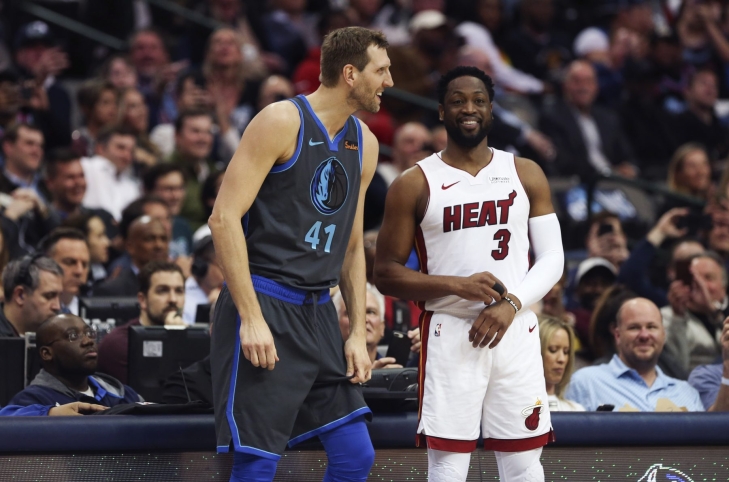
As part of the impending NBA All-Star festivities, the Naismith Basketball Hall of Fame has announced their Finalists for the Class of 2023.
They are:
Jennifer Azzi: The former Stanford Point Guard led the Cardinal to a National Championship in 1990, winning the Final Four MVP, and the Naismith Award during the regular season. Internationally, she won Gold for the United States in the 1996 Olympics and 1990 and 1998 FIBA World Championships.
Gene Bess: Bess had a career record of 1,300-416 making him the winningest coach in NCAA history. Spending his entire career at Three Rivers Community College, he is a two-time Junior College Champion as a Coach.
Gary Blair: Blair coached for 37 years, most notably leading the women’s program at Texas A&M to a National Championship in 2011. He had a lifetime record of 852-346.
Pau Gasol: The Spanish Center went to six All-Star Games and helped lead the Los Angeles Lakers to two NBA Championships. Gasol also was a two-time Second Team and two-time Third Team All-NBA player and while representing Spain, he is a two-time Olympic Silver Medalist, won an Olympic Bronze, and also led his country to Gold in the 2006 World Cup.
Becky Hammon: Hammon was a six-time WNBA Selection and was named to the NBA 15th, 20th, and 25th Anniversary Team. She won Bronze representing Russia in the 2008 Olympics and was the first female Assistant Coach in the NBA (San Antonio). Hammon won the WNBA Championship in her first year as a Head Coach with Las Vegas.
David Hixon: Hixon was Amherst College’s Men Head Coach for 42 years, winning two Division III National Championships and two Division III Head Coach of the Year Awards.
Gene Keady: Keady was the Head Coach for Purdue for 25 years and led the Boilermakers to six Big Ten Regular Season Titles. He is a seven-time Big Ten Coach of the Year.
Dirk Nowitzki: A Finalist on his first year on the ballot, Nowitzki was the centerpiece for the Dallas Mavericks for over a decade, and took them to their first NBA Championship in 2011. The 2007 MVP was a four-time First Team, five-time Second Team and three-time Third Team All-NBA recipient and also was named to the NBA 75th Anniversary Team.
Tony Parker: Parker won four NBA Championships with the San Antonio Spurs and was a six-time All-Star. The 2007 NBA Finals MVP was a three-time Second Team All-NBA player and would represent France in many tournaments, most notably winning EuroBasket Gold in 2013.
Gregg Popovich: Popovich is still active, and is already a legend in basketball coaching. “Pop” led the Spurs to five NBA Championships. He is also a three-time NBA Coach of the Year and the was the Head Coach for the U.S. Team that won Gold at the 2020 Olympics.
Dwyane Wade: Wade was the long-time Point Guard with the Miami Heat where he won three NBA Championships. The first ballot nominee went to 13 All-Star Games, and was an eight-time All-NBA Selection (two First Team, three Second Team and three Third Team). He is also a 75th Anniversary Team.
Marian Washington: Washington was the Women’s Head Coach for Kansas from 1979 to 2003 and had a record of 560-363.
The Class of 2023 will be announced during this year’s Final Four
We here at Notinhalloffame.com would like to congratulate those who made it to this stage.
Ned Yost elected to the Kansas City Royals Hall of Fame
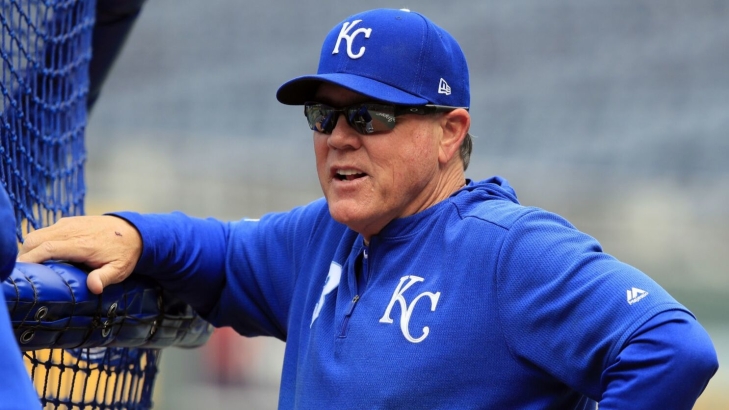
Regular visitors of Notinhalloffame.com know that we are slowly working on the top 50 of every major team in the NHL, NBA, NFL and MLB. Once that is done, we intend to look at how each team honor their past players, coaches and executives. As such, it is important to us that the Kansas City Royals have announced that Ned Yost has been elected to their Hall of Fame.
Yost becomes the 27th inductee to the Royals Hall and it will become official on September 2, during their home game against Boston.
Previously managing the Milwaukee Brewers, Yost took over as the Royals skipper in 2010, and four years later, would helm Kansas City to the Pennant. The next year the Royals won it all, and he is the only Royal Manager to have won consecutive pennants. Yost is also the team’s all-time leader in wins (746).
Yost retired in 2019, and was eligible for the franchise Hall of Fame for the first time this year. He received 88.2% of the vote, more than the 75% required.
To be eligible for the Royals Hall of Fame alumni must have been active with the ballclub for at least three seasons and accumulated a minimum of 1,500 plate appearances or 300 innings pitched, or managed the equivalent of three full seasons. They also have to be retired for three years.
We here at Notinhalloffame.com would like to congratulate Ned Yost for this impending honor.
Phil Esposito named to the Tampa Bay Lightning Hall of Fame
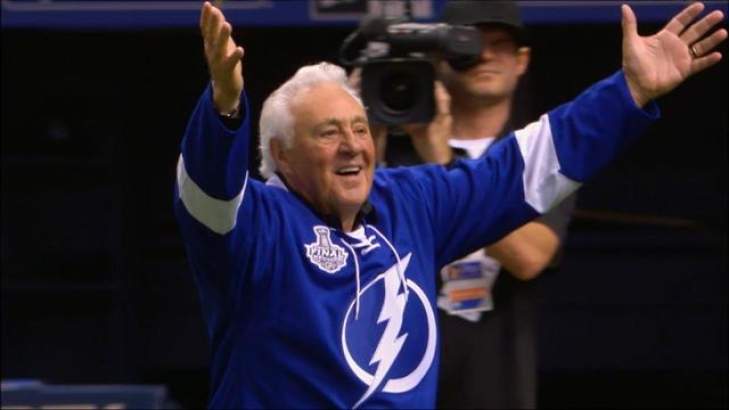
Regular visitors of Notinhalloffame.com know that we are slowly working on the top 50 of every major team in the NHL, NBA, NFL and MLB. Once that is done, we intend to look at how each team honor their past players, coaches and executives. As such, it is important to us that the Seattle Mariners have announced that Phil Esposito has been chosen for the inaugural Tampa Bay Lightning Hall of Fame class.
Esposito will be honored on alumni weekend (March 16-18), and will be part of the first class with already named inductees, Martin St. Louis and Vincent Lecavalier.
"As good as the Lightning are now, expanding the NHL into Florida was a daunting task as big-time hockey had never been tried in this warm weather state. Esposito was tasked as the team’s first General Manager, and he used his creativity to generate as much interest in the product as he could. The Lightning only reached the playoffs once under Esposito, but he laid the groundwork for the team to make it. He would later serve as their radio color analyst.
We here at Notinhalloffame.com would like to congratulate Phil Esposito for this impending honor.
49. Kelvim Escobar
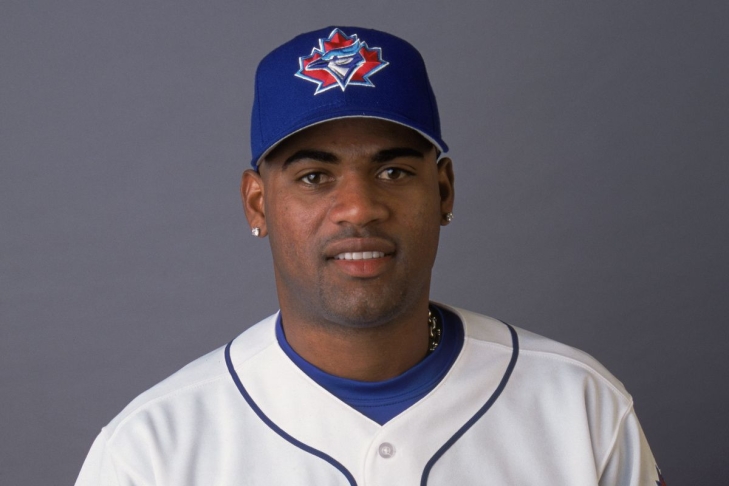
Over his seven seasons in Toronto, Venezuelan hurler Kelvim Escobar tried every role on the mound.
Debuting in 1997, five years after he was signed as an Amateur Free Agent, Escobar saved 14 Games as a rookie, but two years later was a starter, going 14-11, though his ERA was a bloated 5.69. He again had an ERA over five in 2000 (10-14), going back and forth from starter to reliever, and was finding a groove in late relief in 2001.
Toronto promoted Escobar to their closer in 2002, and though he had 38 Saves, the 4.27 ERA was not good, and they tried again in 2003 to figure out what to do with Escobar, who bounced between roles. Escobar signed with the Angels in 2004, and though Escobar’s career as a Blue Jay was inconsistent and somewhat chaotic, he belongs on this list.
