


Committee Chairman
The Toy Hall of Fame announces the 2021 Finalists
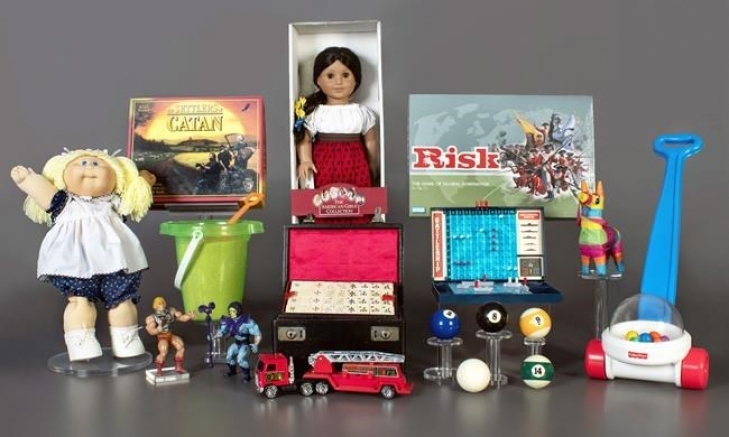
We always get a kick out of anything that comes from the Strong Museum in Rochester, New York. Today, they announced the Finalists for the 2021 Class of the Toy Hall of Fame.
The nominees are:
-American Girl Dolls: Created in 1986 by educator and newscaster Pleasant Rowland, each doll comes with a narrative that reflects an era of American history.
- Battleship: Originally played with paper and pencil, Milton Bradley’s 1967 plastic adaptation popularized the two-person strategy game. It was among the first board games to be computerized in 1979.
- Billiards: Commonly known as pool in the United States, the game evolved from earlier European outdoor games and became popular in the 1800s.
- Cabbage Patch Kids: The dolls, each unique, were launched in 1979. Complete with adoption papers, they were the must-have holiday toy of 1983, paving the way for Tickle Me Elmo, Beanie Babies, and Furby that followed.
- Fisher-Price Corn Popper: Introduced in 1957, the push-toy got toddlers walking, mesmerized by bright flying balls and the popping sound.
- Mahjong: The gambling card game originated in China became popular in the United States in the 1920s.
- Masters of the Universe: He-Man, She-Ra and the line's other action figures became popular through Mattel’s use of comic books and television, including the cartoon series He-Man and the Masters of the Universe, from 1983 to 1985.
- Piñata: The treat-filled paper mache object is commonly associated with Mexican culture but may date back to early 13th-century China.
- Risk: The strategy board game first published in the United States in 1959 challenges players to control armies and conquer the world.
- Sand: The substance is perhaps the most universal and oldest toy in the world, according to the National Toy Hall of Fame.
- The Settlers of Catan: The cooperative board game now called “Catan" was first published in Germany. Players representing settlers establish a settlement on an island by spending resources, which are earned through trade and rolls of the dice.
- Toy fire engine: Materials, design and technology have evolved but the appeal has remained.
The winners will be inducted on November 4, and will join 74 other toys.
Ryan Braun Retires
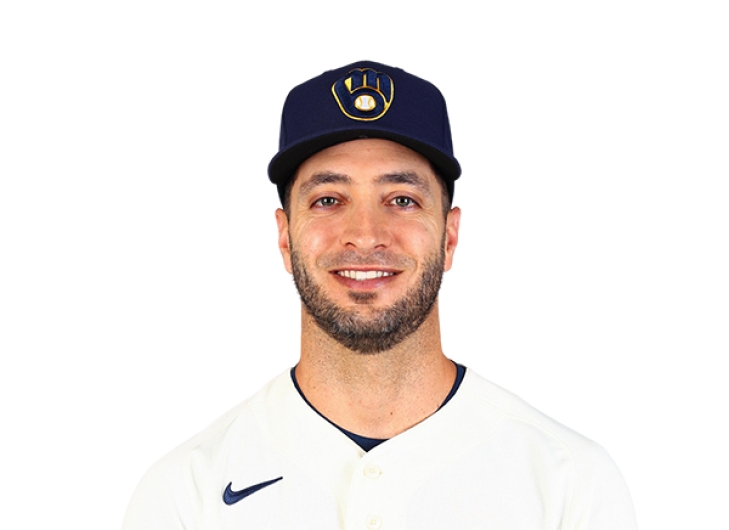
A significant retirement has taken place in the world of baseball as Ryan Braun announced his retirement.
Braun has not played this season after being unable to find a new home when the Brewers declined to exercise the option on his contract.
Debuting in 2007 for Milwaukee, the only team he ever played for, Braun was an instant star, winning the American League Rookie of the Year and subsequently the Slugging Title. Over the next five years, Braun was one of the top sluggers in the National League, going to the All-Star Game in all of those campaigns, all of which seeing him collect at least 100 RBIs. Braun led the NL in Hits in 2009 (203), batted over .300 five times, and was a five-time Silver Slugger. He also won the Home Run Title in 2012 (41), won the MVP in 2011, and led the NL in OPS twice.
Braun infamously failed a PED test in 2011, though successfully won the appeal, though would be suspended two years later through the Biogenesis scandal.
He retires with 1,863 Hits, 352 Home Runs, 1,154 RBIs, a Slash Line of .296/.358/.532, and a bWAR of 47.1. Braun is 25th in JAWS among Leftfielders with 42.9, a good number but well below the average Hall of Fame Leftfielder number of 53.7.
Braun is Hall of Fame eligible in 2026, but his PED issues hurt what would be a borderline candidate.
We wish Braun the best in his post-playing career.
2. Dwight Yoakam
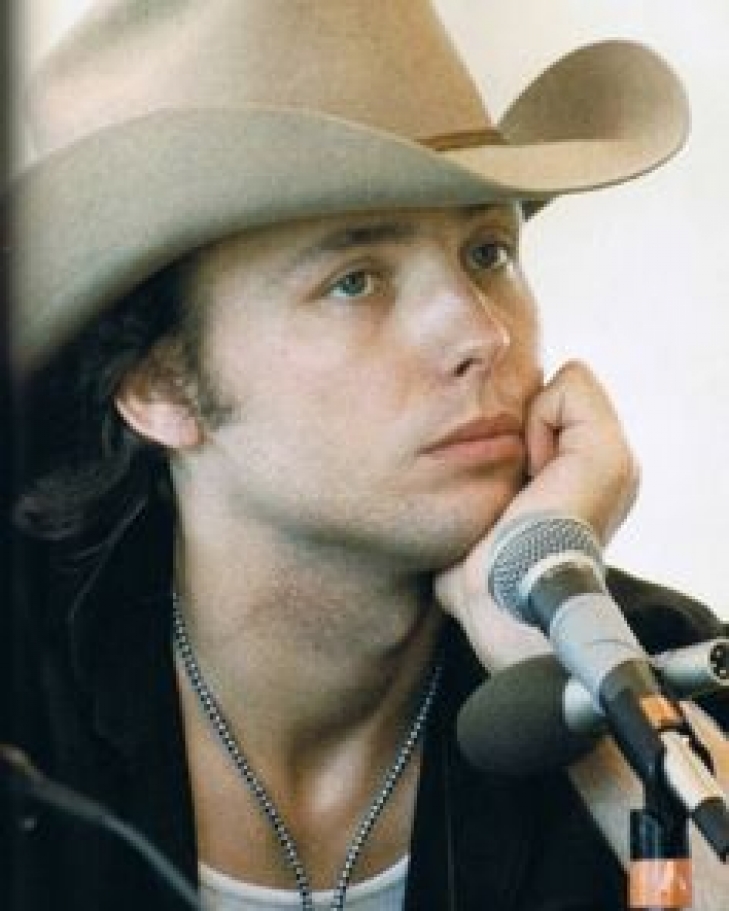
Starting his radio career in the mid-1980’s, Dwight was a superstar with audiences for most of his career but he didn’t start out that way. . Trying to get a recording contract in Nashville didn’t seem to be working for him, as he was playing traditional honky-tonk music instead of the pop-country that was all the rage at that point in time. So, he headed off to Los Angeles, performing at rock and punk shows. This not only allowed him to diversify his audience, but he added slight rock styles into his own music. With those more electric sounds in his songs, he ended up carrying on the tradition of the ‘Bakersfield sound’ in country music. This sound and new audience finally allowed him to get a record contract, and from there he had success. He was never one who wanted to play by Nashville’s rules and always desired to experiment with the sounds and styles he was recording, while still sounding country. This mostly honky-tonk music gained him an audience with the country radio listeners and he was able to keep his rock crowd happy with his rebellious attitude. Thus, while never one to burn up the charts, Dwight carved a place for himself in country music history.
RIP: Mick Tingelhoff
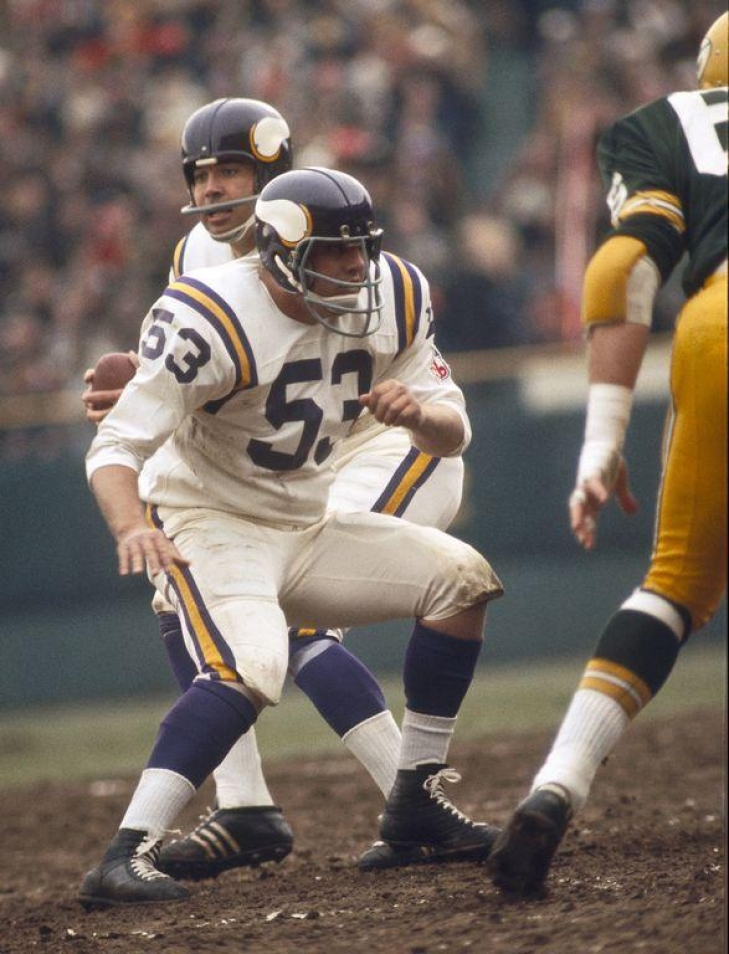
On the eve of the first Sunday of the 2021 NFL Season, the sport lost one of its great as former Minnesota Viking, Mick Tingelhoff, passed away at the age of 81.
Undrafted in 1962 from Nebraska, Tingelhoff took over as the starting Center for the Vikings, and he never missed a game in 240 contests, starting every one of them. The former Cornhusker began a six-year streak of Pro Bowls in 1964, with five of them earning him a First Team All-Pro Selection.
Minnesota retired his number 53, and named him to their Ring of Honor. In our most recent list of the Top 50 Vikings of all-time, he was ranked at #5.
In 2015, Tingelhoff was finally inducted to the Pro Football Hall of Fame.
We here at Notinhalloffame.com would like to extend our condolences to the fans, friends and family of Mick Tingelhoff.
