


Committee Chairman
1. Patrick Mahomes
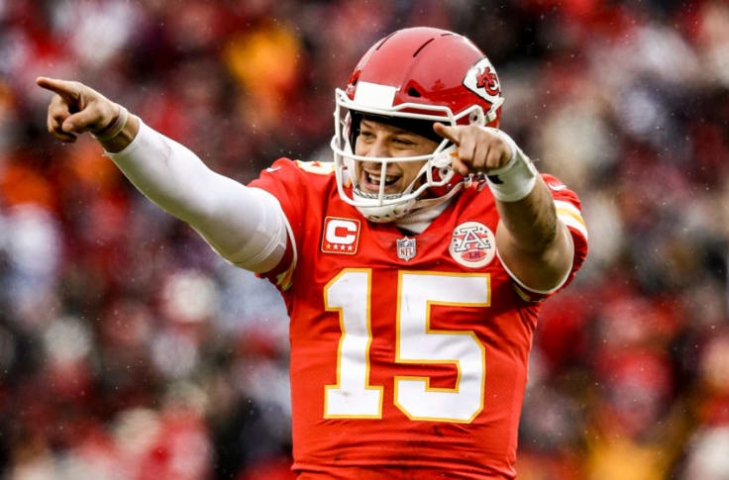
Before we tell the story of Patrick Mahomes, let’s set the stage as to why he is number one.
This is the multi-time MVP Quarterback (the most important position in football) who won the Super Bowl three times and was the MVP in all three.
When the Kansas City Chiefs traded up to pick Mahomes tenth overall from Texas Tech in 2017, everyone knew Andy Reid was acquiring a strong-armed quarterback. However, no one expected that sitting him behind Alex Smith for a full redshirt year would activate what is arguably the most talented quarterback in football history, immediately changing the course of modern professional football.
Taking the starting reins in 2018, Mahomes delivered a jaw-dropping debut that shattered conventional standards for young quarterbacks. He unleashed a dizzying array of sidearm slants, no-look passes, and off-platform lasers, putting together a legendary campaign with 5,097 passing yards and 50 touchdown passes. Joining Peyton Manning as the only players to reach those dual milestones in a single year, Mahomes walked away with NFL MVP honors and turned Arrowhead Stadium into the league's undeniable epicenter.
What sets Mahomes apart from every passer before him is a blend of supreme improvisation and lethal situational awareness. Operating behind an offensive line built for his style, he treats third-and-long like a routine walk in the park, systematically dismantling zone coverages before extending plays beyond the pocket. Defensive coordinators quickly learned that bringing pressure only fuels his genius, as his uncanny field vision turns broken plays into long-distance highlight-reel damage.
The individual statistical dominance translated directly into postseason hardware in short order. In 2019, Mahomes engineered three consecutive double-digit comeback victories in the playoffs, culminating in a fourth-quarter rally over San Francisco to secure Super Bowl LIV—Kansas City's first world title in 50 long years. He proved that the championship standard was no transient flash, returning to the big game the following season to cement the AFC's dominant hierarchy.
His second MVP campaign arrived in 2022, when he led the league with 5,250 passing yards and 41 touchdowns despite losing elite weapon Tyreek Hill in a high-profile offseason trade. Mahomes completely re-engineered his approach, picking defenses apart underneath with surgical precision, then gutted out a legendary performance despite a high-ankle sprain in Super Bowl LVII to capture his second ring and second Super Bowl MVP trophy.
In 2023, back-to-back titles became a reality as Mahomes led a resilient, defense-focused Chiefs team to the top again. Despite midseason offensive slumps, he relied on playoff experience and a strong connection with Travis Kelce, guiding Kansas City through tough road games in Buffalo and Baltimore. The journey culminated in Las Vegas, where he threw the game-winning touchdown in overtime against San Francisco during Super Bowl LVIII, earning the franchise’s third championship in five seasons and solidifying their dynasty.
Entering the 2024 campaign with historic three-peat ambitions, Mahomes again delivered clutch moments at critical times. Despite injuries testing the receiving corps, his unwavering leadership, quick decision-making, and late-game heroics led Kansas City to another impressive January run, demonstrating veteran maturity that kept the Chiefs firmly at the top of the NFL.
The 2025 season brought a rare taste of adversity and a stark reminder that even elite quarterbacks aren't immune to structural shifts. Battling offensive line reconfigurations and key injuries, Mahomes posted his first sub-.500 record as a starting quarterback. While he still generated over 3,500 passing yards and flashed moments of signature brilliance, the team struggled to find its usual rhythm, missing the postseason for the first time in his tenure.
Now heading into the 2026 NFL season at 30 years old, Mahomes faces a new kind of challenge: proving he can reset the standard and steer Kansas City back to the top of the AFC. Yet even with bumps in the road, his overall resume remains extraordinary. With two NFL MVPs, three Super Bowl rings, three Super Bowl MVP awards, and a mountain of franchise passing records, his place in gridiron royalty is already well secured.
With his prime years still stretching out ahead of him, Kansas City enters 2026 eager to see how Number 15 responds to his first true professional setback. If history is any indicator, betting against Mahomes to recalibrate Andy Reid's offense and launch a fierce bounce-back effort would be a mistake.
It won’t matter if he never catches the lead spot in Pro Bowls and All-Pros over some of the others. Refer to the first two sentences. This is the top dog on this team.
Sean Lee Retires
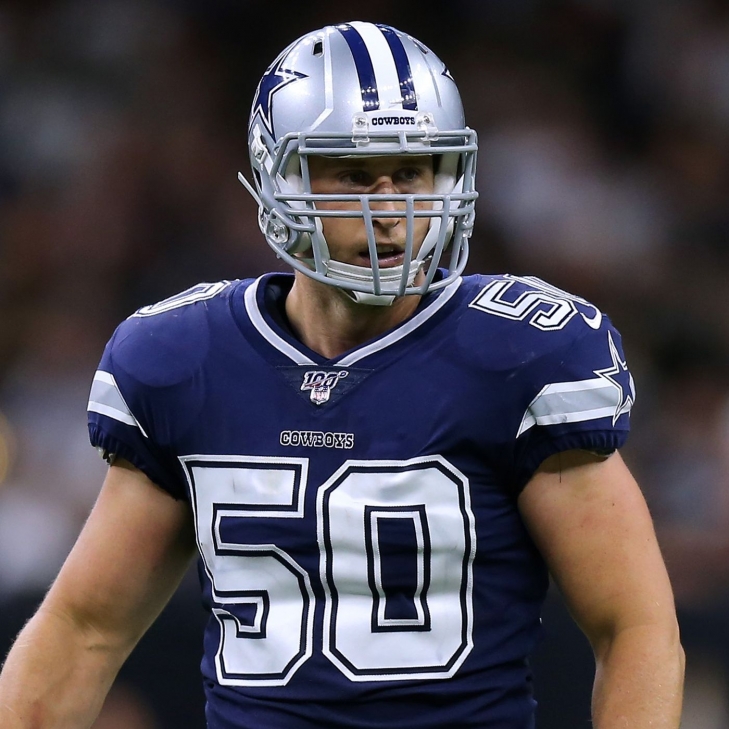
The retirements keep coming in sports, as Dallas Cowboy Linebacker, Sean Lee, is calling it a career after 11 seasons.
Lee arrived in Dallas as a Second Round Pick from Penn State in 2010 and was their starting Middle Linebacker as a sophomore. Lee would lead the NFL in Interception Return Yards (174) in 2013, but a torn ACL took him out of the entire 2014 Season.
Despite the setback, Lee returned to the Cowboys, and put forth the best back-to-back campaigns of his professional career. Lee went to the Pro Bowl with a 128-Tackle year, and in 2016, he improved it to 145 with an Approximate Value of 19. He was so impressive, that he was chosen to be a First Team All-Pro.
Lee played four more seasons, but injury after injury compounded, and he retired after the 2020 Season.
Lee will be eligible for the Pro Football Hall of Fame in 2026, and while he is unlikely to make it, he might make it to the preliminary stage.
We here at Notinhalloffame.com would like to wish Sean Lee the best in his post-playing career.
The Premier League HOF announces their first two members
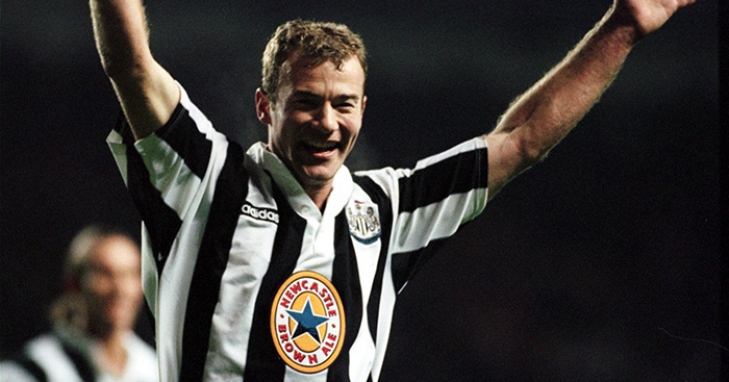
After what can only be described as a trying league for European Football, it is nice to move on with something positive, as the Premier League Hall of Fame has announced their first two members.
Former Blackburn and Newcastle star, Alan Shearer and former Arsenal player, Thierry Henry are the first two members of a group that will also include six more members based on a public vote.
Shearer’s 260 Goals are the most on Premier League history, and his striking ability is second to none of his day.
Henry played for Arsenal from 1999 to 2007 and the native of France was a four-time Premier League Golden Boot winner. The Gunners won two FA Cups while he was there.
We here at Notinhalloffame.com would like to congratulate both Alan Shearer and Thierry Henry for earning this very prestigious honor.
Our All-Time Top 50 Minnesota Vikings have been revised to reflect the 2020 Season
Yes, we know that this is taking a while!
As many of you know, we here at Notinhalloffame.com are slowly generating the 50 of each major North American sports team. That being said, we have existing Top 50 lists out and we always consistently look to update them when we can and based on necessity. As such, we are very happy to present our pre-2021 revision of our top 50 Minnesota Vikings of all-time.
As for all of our top 50 players in football we look at the following:
1. Advanced Statistics.
2. Traditional statistics and how they finished in the NFL.
3. Playoff accomplishments.
4. Their overall impact on the team and other intangibles not reflected in a stat sheet.
This our first revision in two years, and it has yielded two new entries. There are no changes in our top five, but as always, we present our top five. They are:
1. Alan Page
2. FranTarkenton
3. Carl Eller
You can find the entire list here.
Free Safety, Harrison Smith, moved up seven spots to #34.
The two new entries are Tight End, Kyle Rudolph (#48) and Defensive Tackle, Linval Joseph (#49).
In the future, Running Back, Dalvin Cook will likely be on next year’s list if he repeats his 2020 Pro Bowl campaign.
We also suspect that Quarterback, Kirk Cousins, who has only been a Viking for three years, but has been entrenched in the upper half of NFL pivots could crack the top 50 too.
We welcome your input and commentsand as always, we thank you for your support.
