
The Pro Football Hall of Fame Revisited Project: 1989 Final VOTE

1989 Pro Football Hall of Fame Revisited Project Class.
Here we are! Again!!
If you have been following our Pro Football Hall of Fame Revisited Project, you know we have asked the question: What if the PFHOF had begun in January 1946?
After soliciting and obtaining a passionate group of football fans and historians, we sent out a ballot for a Preliminary Vote, in which each voter selected 25 names as their semi-finalists and five names for the Senior Pool. We then asked the group to vote for their 15 Finalists in the Modern Era and 3 in the Senior Category. The final stage was to vote for their five Modern Era inductee and one Senior inductee.
This is the result of the 44th official class.
Below are the final results of this project based on 32 votes.
Remember that we have reverted back to the top five candidates entering the Hall in the Modern Era
This is for the “Modern Era”
*Bold indicates they have been elected to the Pro Football Hall of Fame Revisited Class of 1989:
|
Player |
Year of Eligibility |
Vote Total |
|
Ted Hendricks LB |
1 |
28 |
|
Mel Blount DB |
1 |
22 |
|
Jim Langer C |
3 |
14 |
|
Terry Bradshaw QB |
1 |
14 |
|
Dan Dierdorf T-G-C |
1 |
11 |
|
Bob Hayes SE-WR |
9 |
10 |
|
Tom Mack G |
6 |
10 |
|
Ken Houston DB |
4 |
9 |
|
Jackie Smith TE |
6 |
8 |
|
Dave Wilcox LB |
10 |
6 |
|
Bob Griese QB |
4 |
6 |
|
Ron Yary T |
2 |
5 |
|
Randy Gradishar LB |
1 |
5 |
|
Roger Werhli DB |
2 |
3 |
|
Elvin Bethea DE |
1 |
3 |
This is for the “Senior Era”,
*Bold indicates they have been elected to the Pro Football Hall of Fame Revisited Class of 1989.
|
Gene Lipscomb DT |
2 |
11 |
|
Marshall Goldberg FB |
16 |
9 |
|
Les Richter LB-C |
2 |
9 |
|
None of the Above |
N/A |
3 |
This is for the “Coaches/Contributors”,
*Bold indicates they have been elected to the Pro Football Hall of Fame Revisited Class of 1989.
|
Bud Grant (Coach) |
2 |
19 |
|
Don Coryell (Coach) |
1 |
10 |
|
Wellington Mara (Owner) |
3 |
2 |
|
None of the Above |
|
1 |
About the 1989 Inductees:
Ted Hendricks, LB, BAL 1969-73, GNB 1974, OAK/RAI 1975-83: Inducted in the Pro Football Hall of Fame Revisited Project in 1989 on his 1st Ballot. Inducted into the actual Pro Football Hall of Fame in 1990.
Ted Hendricks was a two-time All-American at Miami and a fifth-place finisher for the Heisman in 1968, an incredible accomplishment for a Linebacker. The Colts stole him in the Second Round of the following draft, and he went on to have stellar performances for three teams.
Hendricks became a starter during his rookie year and was a Super Bowl Champion a year later. Using his height (6’ 7”), strength, and speed, opposing offenses had to alter their schemes around him, and also special teams, as he was also excellent in blocking kicks.
Leading the NFL in Approximate Value in 1971 (21), Hendricks began a four-year run of Pro Bowls, the last year of which was with the Green Bay Packers, whom he was traded to in 974. Hendricks was set to bolt for Jacksonville in the World Football League, but was convinced to stay in the NFL when he was dealt to Oakland, where he finished his career and became mostly synonymous with.
As a Raider, Hendricks anchored the team to three Super Bowl wins, including his final year in football. Hendricks also concluded his career with a four-year streak of Pro Bowls.
Retiring as a champion, Hendricks is unofficially a member of the 25-25 Club with 26 Interceptions and 61 Sacks. He is also a four-time First Team All-Pro.
Mel Blount, DB, PIT 1970-83: Inducted in the Pro Football Hall of Fame Revisited Project in 1989 on his 1st Ballot. Inducted into the actual Pro Football Hall of Fame in 1989.
If you got past the Steel Curtain, you were not that lucky. You had Mel Blount to contend with.
Blount played the entirety of his pro career with the Steelers (1970-83), and by the middle of the 70s, he had established himself as one of the premier Cornerbacks in the NFL. A member of all four of their 70s Super Bowl teams, Blount led the league in Interceptions in 1975 (11) and secured 57 over his career, which is tops among all Steelers.
Blount used his size and strength to overpower receivers. He did it so well that the five-yard no-bump-and-run rule was put in place for how he impeded his opponents regularly. Blount remained a dominant Cornerback regardless of the rule change, earning five Pro Bowl selections and two First-Team All-Pro honors, and notably being named the AP Defensive Player of the Year in ’75.
Jim Langer, C, MIA 1970-79 & MIN 1980-81. Inducted in the Pro Football Hall of Fame Revisited Project in 1989 on his 1st Ballot. Inducted into the actual Pro Football Hall of Fame in 1987.
Jim Langer went undrafted in 1970 after a college career at South Dakota State, and following a failed attempt to make the Cleveland Browns, he found a home with the Miami Dolphins. After a pair of non-descript seasons, Langer was about to rise to the top of the food chain of NFL Centers quickly.
Langer did not start in his first two seasons, but he would in 1972, and that was the year he never missed a snap, and the Dolphins went undefeated and won Super Bowl VII. He would help them win Super Bowl VIII, and Langer marked that season with a six-year streak of Pro Bowl Selections, four of which earned First Team All-Pro Honors. As the center of a dominant O-Line, Langer deserves a lot of credit for the offensive success that Miami had in the 1970s.
Langer played his final two seasons with the Minnesota Vikings, the team that he requested to play for so that he could be close to his home.
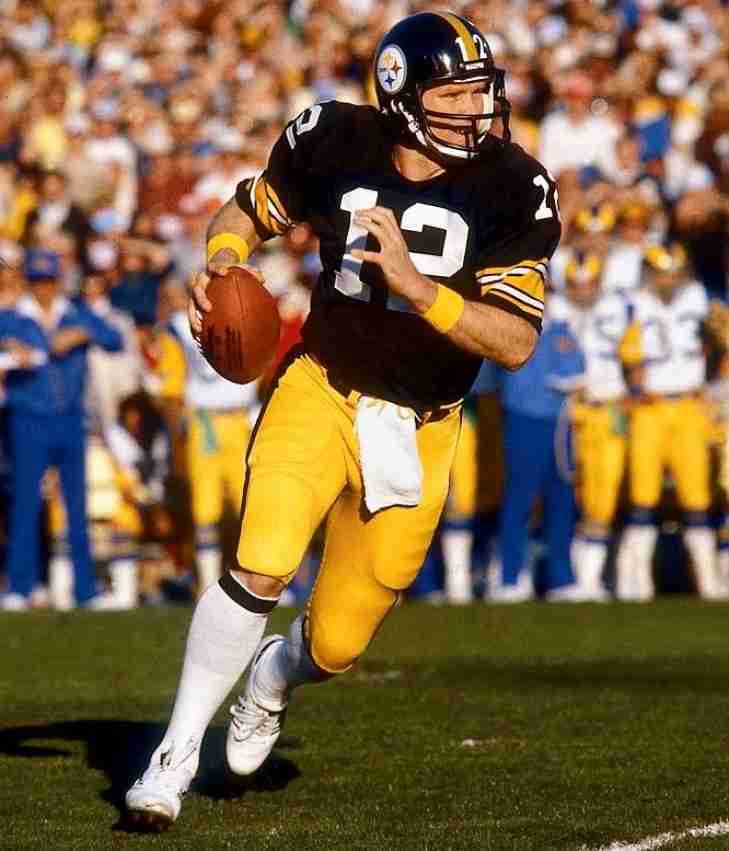
Terry Bradshaw, QB, PIT 1970-83. Inducted in the Pro Football Hall of Fame Revisited Project in 1989 on his 1st Ballot. Inducted into the actual Pro Football Hall of Fame in 1989.
Say what you want about how the help that Terry Bradshaw had with the Steel Curtain defense and Franco Harris in the backfield, but no Quarterback wins four Super Bowls without being an excellent player.
Bradshaw was the First Overall Pick in 1970, where the Louisiana Tech QB had an abysmal rookie year with a TD-INT ratio of 6-24. “The Blonde Bomber” had up-and-down years in the first half of his career, but he was still effective, leading Pittsburgh to its first Super Bowl (IX) for the 1974 season. Bradshaw's play improved, and he went to his first Pro Bowl and took the Steelers to their second Super Bowl.
Bradshaw’s best season was in 1978, when he won the AP MVP, the Bert Bell Award, and led the NFL in Touchdown Passes (28). Also named a First Team All-Pro and Pro Bowler, Bradshaw again led the Steelers to a Super Bowl win, and this time he was the Super Bowl MVP. Bradshaw arguably had a better 1979, with 26 TDs and a career-high 3,724 Passing Yards. The Louisiana native led the Steelers to their fourth Super Bowl win, with a second Super Bowl MVP trophy landing in his case.
The QB continued to play well, again finishing first in Touchdown Passes (17) in the strike-shortened '82 season. This was the end for Bradshaw, who only played one game in 1983 after dealing with elbow problems.
Bradshaw finished his career with 27,989 Passing Yards and 212 Touchdowns against 210 Interceptions. He became a successful television analyst.
Dan Dierdorf, T-G-C, STL 1971-83. Inducted in the Pro Football Hall of Fame Revisited Project in 1989 on his 4th Ballot. Inducted into the actual Pro Football Hall of Fame in 1996.
Playing his entire career with the St. Louis Cardinals, Dan Dierdorf played predominantly at Right Tackle, where he started 150 Games and was thought of as a “walking mountain”.
Possessing an elite combination of intelligence, strength, and agility, Dierdorf showcased equal ability in run blocking and pass protection, and helmed a line that allowed the fewest sacks for five straight years. Dierdorf earned a spot on the 1970s All-Decade Team, was a six-time Pro Bowl and three-time First Team All-Pro.
Bud Grant, Coach, MIN 1967-85. Inducted in the Pro Football Hall of Fame Revisited Project in 1989 on his 1st Coach/Contributor Ballot. Inducted into the actual Pro Football Hall of Fame in 1994.
After playing professionally in Philadelphia and Winnipeg in the CFL, Bud Grant went into coaching, first in Canada with the Blue Bombers, where he won four Grey Cups. That type of success will get you noticed, and the closest NFL team, the Minnesota Vikings, signed him as their Head Coach in 1967.
Grant is still, as of this writing, the most successful Head Coach in Vikings history, winning the Coach of the Year in 1969, and leading Minnesota to four Super Bowl appearances. The Vikings did not win any of them, but they would not have gotten there without Grant, whose innovations and vision made Minnesota one of the most recognized franchises in the NFL.
Grant, who is also in the Canadian Football Hall of Fame, had an overall NFL record of 158-96-5.
Our All-Time Top 50 Pittsburgh Steelers are now up
Yes, we know that this is taking a while!
As many of you know, we here at Notinhalloffame.com are slowly generating the 50 of each major North American sports team. We have a new one to unveil today, that of the Pittsburgh Steelers.
There are many that feel that the Pittsburgh Steelers really did not begin until the 1970s, but of course, that isn't true.
The origin of the Steelers dates all the way back in 1933, and they are the seventh oldest NFL franchise in existence. They made the playoffs in 1947, but that was the only time they made it to a post-season from 1933 to 1971. The Steelers would then become the power of the AFC, winning four Super Bowls in the 1970s, primarily on the strength of their potent "Steel Curtain" defense.
Their 70s success made them one of the most popular teams in the game, a status that they maintain today. Pittsburgh never had another dynasty, but they did have success winning two more Super Bowls this millennium, giving them six, which is tied with the New England Patriots for the most.
1. Advanced Statistics.
2. Traditional statistics and how they finished in the NFL.
3. Playoff accomplishments.
4. Their overall impact on the team and other intangibles not reflected in a stat sheet.
Remember, this is ONLY based on what a player does on that particular team and not what he accomplished elsewhere and also note that we have placed an increased importance on the first two categories.
This list is updated up until the end of the 2019 Season.
The complete list can be found here, but as always, we announce our top five in this article. They are:
1. Joe Greene
2. Jack Lambert
3. Mike Webster
5. Jack Ham
We will continue our adjustments on our existing lists and will continue developing our new lists.
Look for our more material coming soon!
As always, we thank you for your support.
13. Terry Bradshaw
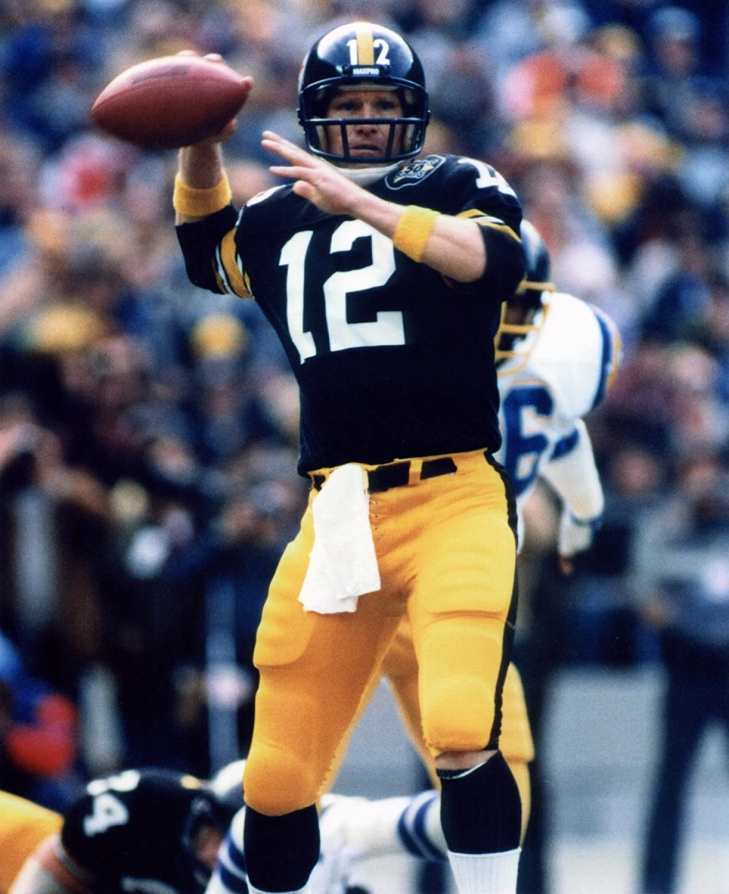
Say what you want about how the help that Terry Bradshaw had with the Steel Curtain defense and Franco Harris in the backfield, but no Quarterback wins four Super Bowls without being an excellent player.
The Pittsburgh Steelers announce their Hall of Honor
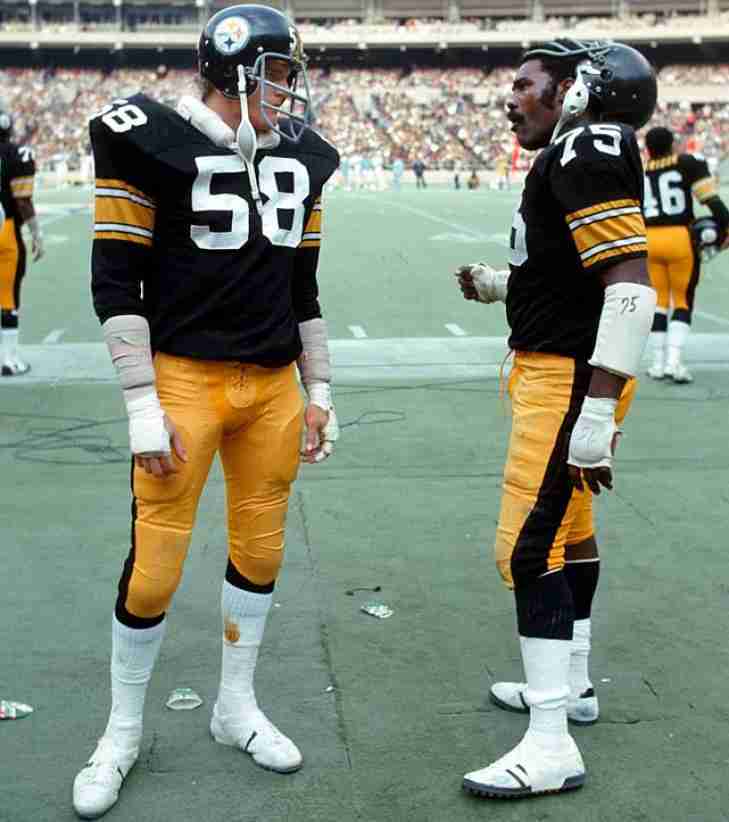
This has been a long time coming, so much so that this group comprises 23 Pro Football Hall of Famers.
Let’s get right to this very esteemed group:
Art Rooney: The founding owner of the Steelers and President of the team from 1933 to 1974. He also served as the Chairman until 1988.
Dan Rooney: The son of Art Rooney, Dan Rooney was the Steelers President from 1975 to 2002. He spearheaded the push for minority hires as coaches or GM creating the “Rooney Rule”, whereby all NFL teams must interview a minority candidate for a coaching or GM job.
Chuck Noll: The Head Coach for Pittsburgh from 1969 to 1991, Noll is a four time Super Bowl winner with a regular season record of 193-148-1. He would win two more Super Bowls with the Steelers as an Executive.
Jack Butler: a four time First Team All-Pro Cornerback from 1956 to 1959. He led the NFL in Interceptions in 1957.
Dick Hoak: A Pro Bowl Running Back in 1968 and the Running Coach from 1972 to 2007. He has five Super Bowl Rings as a Coach.
Joe Greene: “Mean” Joe was a four time Super Bowl Champion and a Defensive Tackle who went to ten Pro Bowls while earning six First Team All-Pro Selections. He was the Defensive Player of the Year in both 1972 and 1974.
Terry Bradshaw: The Quarterback of the 1970’s Steelers dynasty, Terry Bradshaw was a three time Pro Bowler and two time Super Bowl MVP.
Franco Harris: The Fullback was the engine of the Steelers juggernaut and he too is a four time Super Bowl Champion. He was also a nine time Pro Bowl Selection and the MVP of Super Bowl IX.
Mike Webster: The Center for the 70’s juggernaut, he also won four Super Bowls. He would be named to nine Pro Bowls and seven First Team All-Pro squads.
Lynn Swann: The very popular Wide Receiver was also a four time Super Bowl winner. Twice he would be a Pro Bowler and he was the MVP of Super Bowl X.
L.C. Greenwood: Greenwood also won four Super Bowls and the Defensive End went to six Pro Bowls.
Mel Blount: The Cornerback also won four Super Bowls and was himself a five time Pro Bowl and four time First Team All Pro. He led the NFL in Interceptions in 1975 and was named the NFL Defensive Player of the Year.
Jack Ham: Playing Outside Linebacker, Ham also won four Super Bowls and was a eight time Pro Bowl and six time First Team All Pro Selection.
Jack Lambert: Yet another four time Super Bowl winner Jack Lambert went to nine Pro Bowls and seven First Team All Pros. The Middle Linebacker was a two time Defensive Player of the Year in both 1976 and 1983.
Andy Russell: A two time Super Bowl winner with eight Pro Bowl Selections. Russell played Linebacker.
Rod Woodson: The Cornerback played ten years of his career with Pittsburgh and was a seven time and five time First Team All Pro Selection with Pittsburgh. As a Steeler he won a Super Bowl and was named the Defensive Player of the Year in 1993.
Kevin Greene: Only a Steeler for three seasons, Greene won the Super Bowl with the team and was named to a First Team All Pro squad.
Jerome Bettis: “The Bus” won a Super Bowl with Pittsburgh as well as earning four Pro Bowls.
Donnie Shell: Another four time Super Bowl Champion, the Safety was a five time Pro Bowl and three time First Team All-Pro Selection.
John Stallworth: Stallworth also won four Super Bowls and he was named to three Pro Bowls. The Wide Receiver also made a First Team All Pro squad once.
Bobby Layne: The Hall of Fame Quarterback played his final five seasons with Pittsburgh and he was a two time Pro Bowl Selection as a Steeler.
Ernie Stautner: A star Defensive Tackle of the 1950’s, Statutner would be a nine time Pro Bowl.
John Henry Johnson: A Fullback who went to three Pro Bowls as a Steeler in early 1960’s.
Bill Dudley: “Bullet Bill” was an imposing halfback who was with Pittsburgh for three seasons; one before World War II, and two after his service. He would be named the MVP in 1946.
Walt Kiesling: Kiesling only played one season with Pittsburgh but served as their coach for two stints.
John “Blood” McNally: McNally played three seasons for Pittsburgh as well as coached them for three.
Dermontti Dawson: The Center was a seven time Pro Bowl and six time First Team All Pro Selection.
The Hall of Honor will be located at the river end of the FedEx Great Hall at Heinz Field with the eventual plan to grow it to a museum.
To qualify for the Pittsburgh Steelers Hall of Honor a player must have been with the team for at least three years and be retired for at least three years.
We here at Notinhalloffame.com are beyond delighted that the Steelers have finally begun to honor their past legends with an institution like this.
Awards = HOF? Part Four: The Super Bowl MVP (NFL)
Needless to say, different awards in different sports yield hall of fame potential. In basketball, the team sport with the least amount of players on a roster, the dividend for greatness much higher. In baseball, it is not as much as a great individual season does not have the same impact.
