


Committee Chairman
45. Mark Kotsay
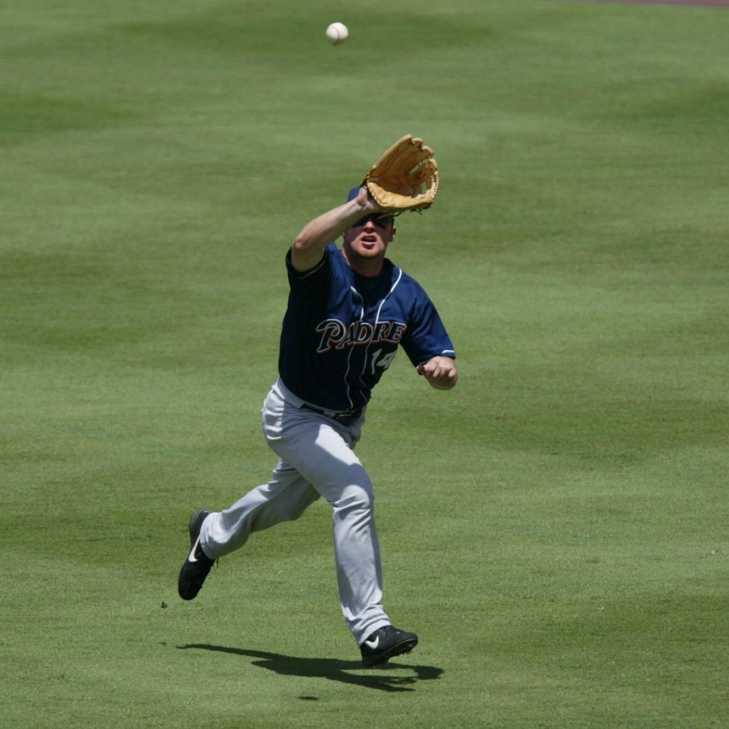
Mark Kotsay came to South Florida in 1997 as the top amateur, after winning the Golden Spikes Award and College World Series at Cal State Fullerton. Drafted ninth in 1996, he quickly reached the majors in under a year.
In 1998, Kotsay excelled defensively, leading all Major League outfielders with 20 assists. He had a strong, cannon-like arm that discouraged baserunners. Despite team struggles after the veteran purge, Kotsay's rookie season was impressive, batting .279 with 11 home runs and a 3.9 bWAR, the highest on the team. He demonstrated complete control of center field, showing that his amateur skills translated well to the professional level.
Kotsay plateaued in offensive efficiency over the next two summers. In 2000, he achieved a career-high .298 average, 12 home runs, and 19 stolen bases. Just days before Opening Day in 2001. In a move that shocked the fanbase, the organization finalized a trade that sent Kotsay to the San Diego Padres in exchange for Matt Clement and Eric Owens.
Kotsay compiled 439 hits, 31 home runs, and a .282 batting average as a Marlin.
44. Mike Redmond
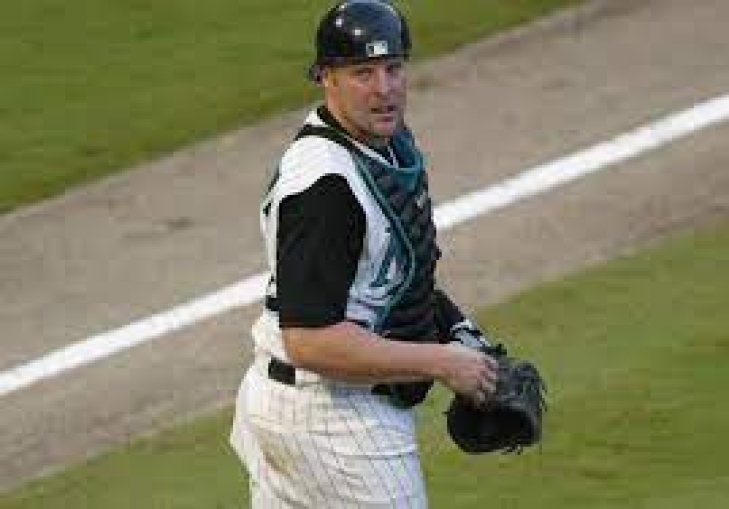
Mike Redmond arrived in South Florida in 1992 as one of the first building blocks of the expansion Marlins, signing as an undrafted free agent out of Gonzaga. While he didn't carry the "first-round" pedigree of his teammates, he operated with a gritty, professional durability that kept him in the organization for over a decade.
After six years of grinding in the system, Redmond hit an immediate impact peak in May 1998, going 3-for-3 with a home run in his first major league game. He demonstrated complete strike zone control during his rookie year, batting.331 and showing his bat was a key asset even in part-time play. Quickly earning a reputation as a reliable mainstay who could stay "locked in" despite limited playing time, he won the Charlie Hough "Good Guy" Award in 1999 for his conduct on and off the field.
In '02, he set a career high with 89 games and a.305 batting average, serving as a specialized foil to starters. His Marlins legacy was cemented in 2003 when he backed up Iván Rodríguez on the way to the World Series. Though his hits mostly were singles, 380 in total, his skill in managing pitchers and delivering clutch hits made him a clubhouse giant.
Redmond signed with Minnesota after the 2004 season.
43. Steve Cishek
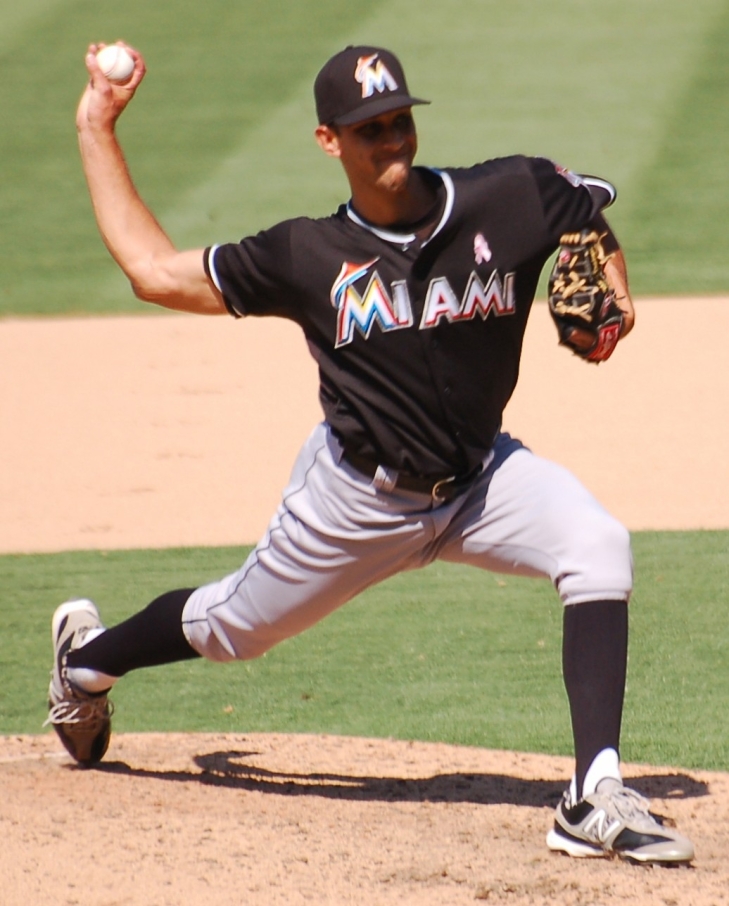
Steve Cishek arrived in Miami as a fifth-round pick in 2007, a gangly right-hander whose sidearm delivery and sinking velocity made him an immediate intrigue for the organization's bullpen. After a brief run in 2010, in which he threw over four scoreless innings, he returned in 2011 to become a permanent fixture in the late innings.
While he showcased an ability to induce ground balls and missing bats, his 2012 transition to closer sealed his status as a top late-inning reliever. Taking over for struggling Heath Bell, Cishek led the National League with 62 games finished, recording 15 saves. His funky delivery proved a reliable asset against top hitters in high-pressure situations.
During 2013-2014, he showed consistency, converting 34 of 36 saves in '13 with a 2.33 ERA, and set an MLB record for saves on a team losing 100 games. In 2014, he hit a career-high 39 saves and achieved 33 consecutive saves, marking historic milestones.
After a tough start that lowered his efficiency, the organization traded him mid-season to the St. Louis Cardinals for prospect Kyle Barraclough. Cishek finished 191 Games for the Marlins with 94 Saves.
40. Alex Gonzalez
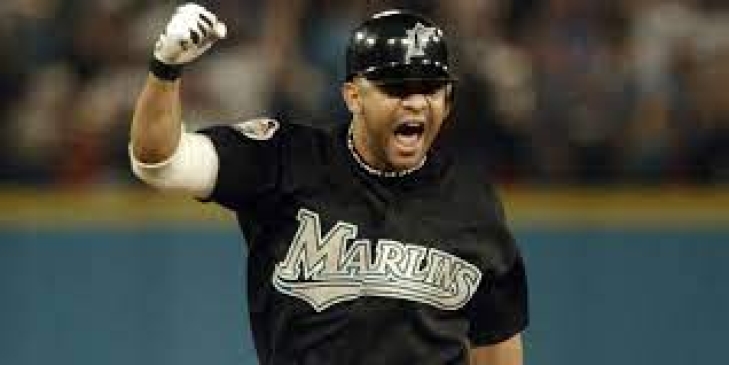
Alex Gonzalez arrived in Miami in late 1998, stepping into a clubhouse still smelling of the championship champagne from the year before, and the fire sale that followed. He was the young, slick-fielding prospect meant to solidify the shortstop position for a new era of Marlins baseball.
In 1999, Gonzalez quickly rose to success, making the All-Star Team as a 22-year-old rookie. He combined gap power and defensive range that the organization believed would make him a star. However, early on, a key flaw emerged: complete resistance to the walk. That season, he had a career-high 155 hits but a low .291 OBP due to his inability to reach base via walks, affecting his stats for the rest of his career.
Gonzalez celebrated a remarkable highlight in the 2003 World Series. His regular season featured consistent offense, with 18 home runs and 33 doubles, but his true legacy was cemented in Game 4. With the series at a critical point, he delivered a dramatic moment by hitting a walk-off home run in the 12th inning off Jeff Weaver, tying the series at two games each. This pivotal moment was a key factor in the Marlins' surprising victory over the Yankees.
Although Gonzalez hit a career-high 23 home runs in 2004, his defensive performance was inconsistent, with only one season in Florida where his Defensive bWAR exceeded 1.0. His power was balanced by high strikeout rates and ongoing discipline issues at the plate, resulting in a career Marlins bWAR below 2.0. He was traded to Boston after the 2005 season and accumulated 788 hits for the Fish.
