

Committee Chairman
39. Kevin Millar
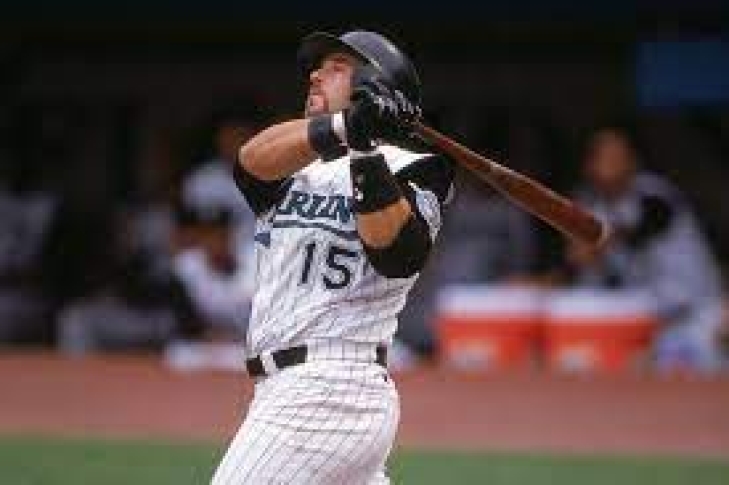
Kevin Millar arrived in Miami in 1998 as the ultimate baseball outcast. Undrafted and forced to start his professional journey in the independent leagues, he famously served as a replacement player during the 1995 spring training, a decision that permanently barred him from the Major League Baseball Players Association. Despite this "union-less" status, he operated with a specialized, blue-collar intensity that transformed him from a $5,000 minor-league purchase into one of the most reliable bats in South Florida.
After a brief stint in the Majors in 1998, Millar reached a plateau of efficiency as a part-time player, eventually forcing his way in the daily lineup by 1999. He demonstrated excellent control of the strike zone, hitting .285 during his first full season and improving to .300 in 2000. He wasn't only a morale booster in the clubhouse; he was a significant presence in the batting order, with 14 home runs in limited opportunities, confirming that his rise from the St. Paul Saints to the major leagues was truly earned.
During the 2001 and 2002 seasons, he posted consistent batting averages of .314 and .306, slugging over .500 both years. In 2001, he hit 20 home runs and received the "Charlie Hough Good Guy Award" for his professionalism. That year, he had a career-high 25-game hitting streak, becoming a key player for a Marlins team building towards its next championship.
In 2002, South Florida's journey hit a strange crossroads. The team planned to sell his contract to Japan's Chunichi Dragons, but after the Red Sox claimed him on waivers, breaking an unspoken rule, a complex deal ensued. Millar returned to Miami, then was traded to Boston for cash. He became a global star as the "idiot" who helped break the Curse of the Bambino.
Millar compiled 443 hits, 59 home runs, and a .296 batting average as a Marlin.
38. Preston Wilson
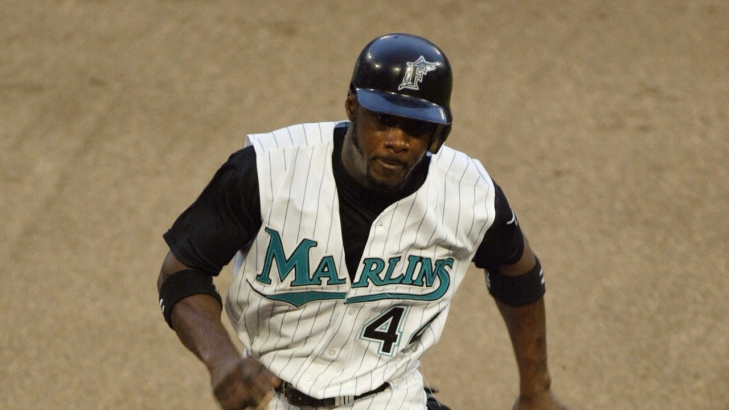
Preston Wilson arrived in South Florida in 1998, a centerpiece of the blockbuster trade that sent Mike Piazza to New York. As a former High School Player of the Year and a first-round talent, he carried the expectations of a franchise cornerstone during a period of massive transition for the Marlins.
No pressure, right?
After a brief coffee break in 1998, Wilson earned the starting center field position in 1999 and produced one of the team's most impressive rookie seasons. He hit .280 with 26 home runs, finishing as the runner-up for the National League Rookie of the Year award. He soon became a key player, demonstrating a unique talent for hitting to all fields while keeping the speed that kept him dangerous on the bases.
In the 2000 season, Wilson achieved a peak in individual performance. He joined the exclusive 30/30 club by hitting 31 home runs and stealing 36 bases, while also driving in 121 runs. Although he led the National League in strikeouts with 187, just short of the then record, his ability to produce runs was a key strength for the Marlins. He maintained this momentum into the 2001 and 2002 seasons, each with 23 home runs, confirming that his power was a consistent presence in the lineup.
In the 2002 off-season, Wilson was traded to the Colorado Rockies as part of a six-player deal. Wilson had 104 Home Runs, 87 Stolen Bases, and 549 Hits with the Marlins.
Ranking the Worst WWE Celebrity Appearances

WrestleMania is one of the WWE’s most important events. Each spring since 1985,the WWE has brought together some of its most successful wrestlers who hash out year-long feuds between the ropes. There’s guts, glory, and more than a handful of celebrity guest wrestlers.
These have run the gambit over the years, from a Chris Jericho cross-promotion of Tim Burton’s Planet of the Apes in 2001 to the Queen of Soul, Aretha Franklin, belting out ‘America The Beautiful’ to open up the third annual event in 1988.
Part pro sport and part acting gig, professional wrestling’s ongoing success might surprise a traditional sports fan. It doesn’t have a set of clear rules, won’t be played at the Olympics any time soon, and doesn’t often feature on afree sports bet offer from oddsmakers given the difficulties of betting on the WWE.
However, what the WWE lacks in traditional representation it makes up for in a wild ride, truly athletic stunts, and a cast of unforgettable characters. Even better, the depth of bets is starting to expand as the sport becomes more mainstream—and one of those prop bets on offer is whether a celebrity will win a match during WrestleMania.
As the biggest pro wrestling event in the world, WrestleMania has seen celebrities from all industries step foot in the ring. Some, like the cast of Jackass, have been huge successes. Others, like the flops listed below, have gained notoriety for being some of the worst celeb appearances (including RAW segments).
Number One: Kevin Federline
Back in 2006, the former partner of pop star Britney Spears was at the height of his fame. As mentioned above, most celebrity appearances on WWE coincide with promoting another project; for K-Fed, this was a studio album.
Fans were torn about the worst part of the performance—was it when John Cena attempted to out-rap Federline? When Federline showed up at another RAW event and the WWE powers-that-be let a D-list celebrity pin Cena? Many are still wondering.
Number Two: Jerry Springer
On the surface, Springer should be a hit for the WWE, as the TV personality knows drama and timing. Unfortunately, both of his appearances were incredibly awkward. What should have been a killer segment with Springer mediating The Bella Twins turned into a masterclass in horrendous acting.
Was it Springer’s fault, or another mishandling from WWE producers who banked too much on performers delivering complex dialogue?
Number Three: Gronk
This call-out isn’t based on Gronk’s lack of acting skills or mismanagement from the WWE. Instead, reports from other wrestlers hint that the NFL star was actually the problem. As he prepared to host WrestleMania for his second appearance in the WWE, wrestlers reported a subpar attitude behind the scenes that led toa subpar reception from fans.
Number Four: Donald Trump
Once again, the WWE looked to have a winner when Donald Trump, of The Apprentice fame at the time, signed on for a WrestleMania appearance. Typically, fans enjoy seeing non-athletic celebs jump into the ring and get their hands dirty—a line like ‘you’re fired’ only adds to the hype and serves to drive a longstanding feud between Trump and Vince McMahon.
Unfortunately, the WWE forever ruined this interesting dynamic when they sent Bobby Lashley and Umaga into the ring on behalf of Trump and McMahon, respectively. Though WrestleMania 23 saw Stone Cold Steve Austin down the future president with a Stunner, audiences were noticeably cold to the new routine.
Number Five / Best of the Worst: The Muppets
Once again part of a 2011 promotion of The Muppets, this RAW crossover was hilarious, confusing, and memorable. Highlights include Miss Piggy’s altercation with Vickie Guerrero and Jack Swagger and Swagger’s attack on Gonzo.
36. Alex Fernandez
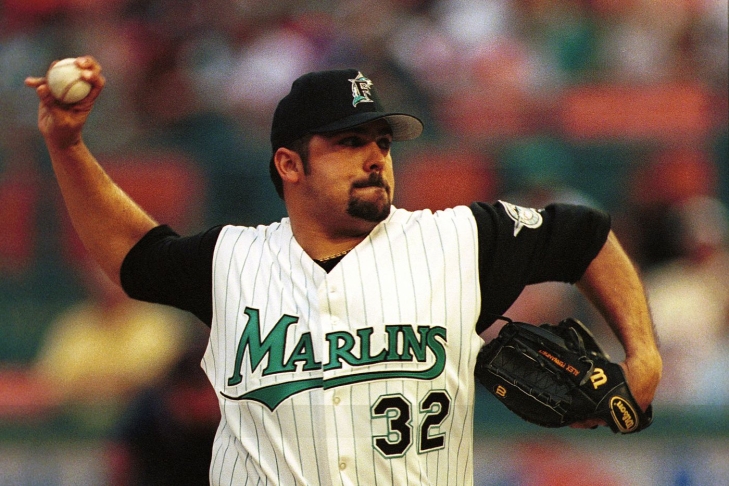
In 1997, Alex Fernandez went back to his hometown of Miami Beach, becoming the last key player in South Florida’s first championship team. Following seven successful seasons in Chicago, the right-hander added veteran composure and a powerful fastball to a Marlins rotation that quickly gained national attention.
In 1997, Fernandez led the rotation with Kevin Brown and Al Leiter. He posted a 17-12 record, a 3.59 ERA, and 183 strikeouts, establishing himself as the high-leverage pitcher the organization expected when they signed him to a then-record deal. His season was marked by a remarkable performance at Wrigley Field in April, where he was just two outs shy of a no-hitter before settling for a dominant one-hit shutout. He was the key driver for a team that advanced to the postseason, winning the NLDS and helping the franchise reach its first National League Championship Series.
After being chased early in an NLCS start against the Braves, Fernandez was found to have been pitching with a torn rotator cuff. While his teammates famously won the 1997 World Series, Fernandez was more of a spectator in the dugout, observing from the sidelines as he prepared for a difficult surgery. His career was completely halted during the 1998 season, making him one of the few veterans to survive the notorious "fire sale" that broke up the championship team.
Fernandez returned to the mound in 1999, authoring a deceptively strong 3.38 ERA over 24 starts and proving there was still life in his arm. Yet the physical toll of his 1997 workload proved too great; after eight starts in 2000, the shoulder issues sealed his decision to step away from the game.
