

Committee Chairman
J.J. Watt now retired. HOF in 2028?
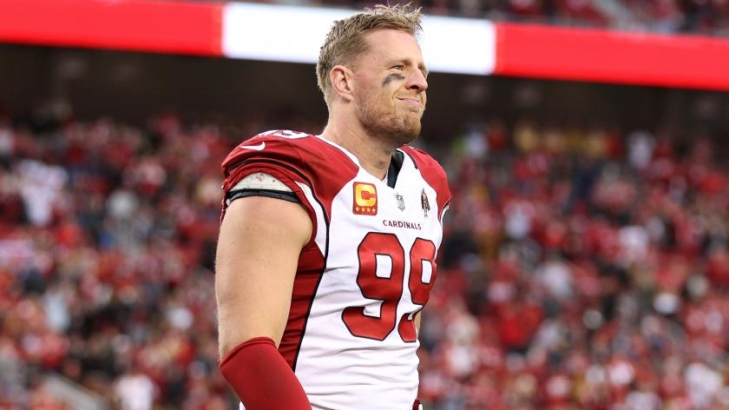
One of the most spectacular defensive careers came to an end today as J.J. Watt, who announced two weeks ago that this would be his final NFL season. With the Arizona Cardinals out of playoff contention, today’s game against the San Francisco 49ers saw Watt ride off into the sunset.
Watt dominated as a Senior at Wisconsin, winning the Lott Trophy and earning All-American honors. The Houston Texans used their 11th Overall Pick to take the Defensive End, and he instantly became the face of the franchise.
After a good rookie year, Watt went on a four-year tear where he was easily the best defensive player in football. A First Team All-Pro in all four of those campaigns, Watt won three Defensive Player of the Year Awards (2012, 2014 & 2015), twice led the league in Sacks (2012 & 2015) and three times in Tackles for Loss (2012, 2014 & 2015). Watt was so dominant, that he won the 2014 Bert Bell Award, that institution’s version of the MVP.
Injuries held him to only eight Games in 2016 & 2017, but he added another monster season in 2018, adding a fifth First Team All-Pro, on the strength of a 16-Sack year.
Watt played more two more seasons with the Texans before signing with the Arizona Cardinals. Injured again for much of 2021, Watt’s final year was solid, accumulating 12.5 Sacks giving him 114.5 in total. His 195 Tackles for Loss also places him second overall.
As phenomenal as Watt was on the field, he was even more incredible off of it. Watt won the 2017 Walter Payton Man of the Year, after having raised $37 million in relief for those suffering from Hurricane Harvey, and his philanthropic efforts also including covering the funeral costs for the six victims of the Waukesha Christmas Parade Attack.
Watt is eligible for the Pro Football Hall of Fame in 2028, and he will be a first ballot Hall of Famer. He was ranked #5on our pre-2022 Season Ranking of active players, and bluntly, anyone that high is getting a bust in Canton right away.
We here at Notinhalloffame.com wish J.J. Watt the best in his post-playing career.
22. Pedro Guerrero
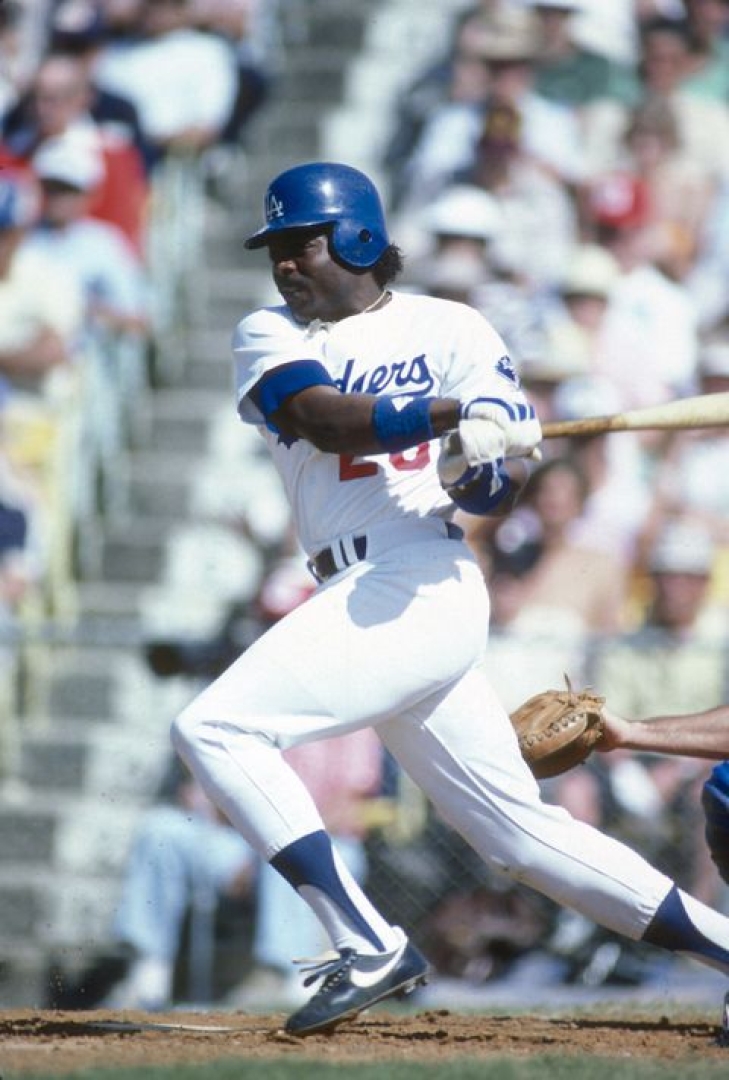
Pedro Guerrero was a “gift" from the Cleveland Indians, traded for pitcher Bruce Ellingsen before he ever saw a Major League pitch. A powerhouse from the Dominican Republic, he operated with a violent yet controlled swing that eventually led Bill James to label him "the best hitter God has made in a long time.”
After establishing himself as a professional mainstay in 1980, Guerrero reached a legendary plateau during the 1981 World Series. He dictated terms to the New York Yankees by belting two home runs and driving in seven runs, earning World Series Tri-MVP honors alongside Steve Yeager and Ron Cey.
The subsequent four seasons proved to be exceptional for Guerrero, as he recorded three seasons with thirty or more home runs. In 1982, he demonstrated comprehensive mastery of the game, earning a Silver Slugger Award and finishing third in the Most Valuable Player (MVP) voting after a distinguished season with 32 home runs and 100 runs batted in (RBIs). He reached a historic milestone in 1985, illustrating a season of extraordinary performance; he led the league in On-Base Percentage (.422), Slugging (.577), and On-base Plus Slugging (OPS) (.999), while hitting 33 home runs. During this peak, he earned four All-Star selections and consistently placed in the top five of the MVP voting.
Guerrero had an awful 1986, when a ruptured knee tendon in spring training cost him nearly the entire season. He reached a final summit of Dodger excellence in 1987, authoring a brilliant comeback by batting .338 with 27 home runs to win the UPI Comeback Player of the Year award. Despite his offensive skills, the organization looked to retool for a stretch run, and they traded him to the St. Louis Cardinals in exchange for pitcher John Tudor.
Guerrero had 1,113 hits with Los Angeles, with 171 Home Runs and a batting average of .309.
19. Dixie Walker
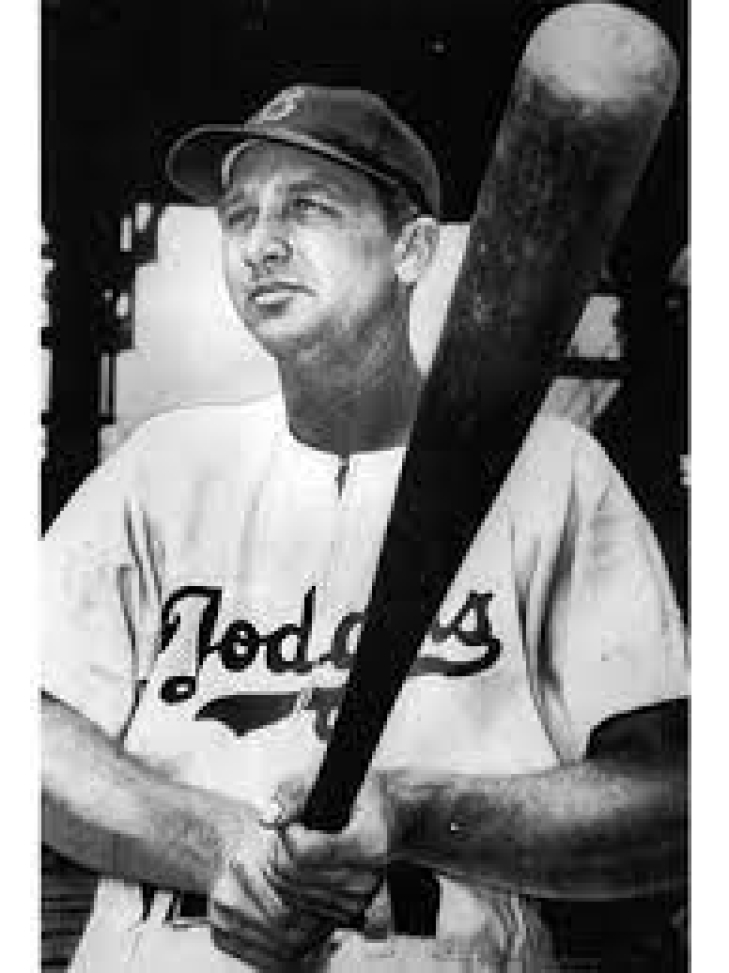
In 1939, the Brooklyn Dodgers signed Dixie Walker as a waiver-wire reclamation project, a player whose early promise in the Yankees' organization had been sidetracked by recurring injuries. Once touted as the heir to Babe Ruth in the Bronx, he had bounced around from Detroit to Chicago before finding his footing at Ebbets Field, and boy, did he find his footing!
Following a strong debut in 1939, Walker showed a remarkable talent for spotting gaps, batting .308 in 1940 and .311 in 1941. He quickly established himself as a key player, finishing in the top ten of MVP voting two years in a row and contributing to the Dodgers’ 1941 pennant win. Brooklyn did not win the World Series, but without Walker, they would have never made it there.
During the wartime period, Walker enjoyed a prolific streak of performance that few league players could rival. In 1944, he demonstrated exceptional hitting skill by winning the National League Batting Title with a .357 average, surpassing even the legendary Stan Musial. In 1945, he continued to excel by leading the league with 124 RBIs, establishing himself as a clutch run producer capable of carrying the team’s offense. Despite the return of the league's biggest stars in 1946, Walker remained a top-tier player, finishing second in MVP voting after batting .319 with 116 RBIs.
Walker maintained a batting average above .300 in seven out of his eight full seasons with the Dodgers. While not a power hitter by specialization, he demonstrated consistent efficiency, accumulating over 1,200 hits with the team. His tenure ended amidst controversy in spring 1947 when the Georgia native wrote a letter to management requesting a trade as the Dodgers prepared to integrate. Despite remaining professional, batting .306 and driving in 94 runs to help the team reach the World Series, his outspoken opposition to the new era in baseball made his departure inevitable.
Walker was traded to the Pittsburgh Pirates after the 1947 season. As a Dodger, Walker accumulated 1,295 hits, a .311 average, and the 1944 Batting Title.
20. Jim Gilliam
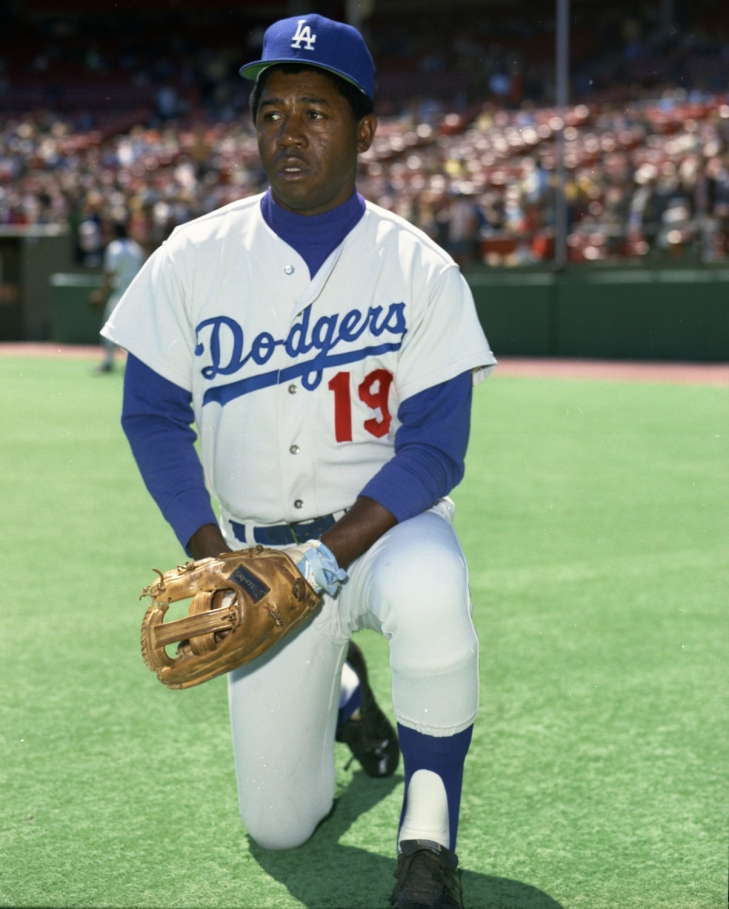
Jim Gilliam joined Brooklyn in 1953 as the last piece of the "Boys of Summer" puzzle, a versatile switch-hitter who enabled Jackie Robinson to move to third base. Quiet and tactically selfless, "Junior" served as the vital glue for the team during its significant transcontinental transition.
In 1953, Gilliam achieved a significant milestone as a debutant, leading the National League with 17 triples and accumulating 125 runs, which earned him the Rookie of the Year award. He promptly established a foundation of consistent excellence as the team's chief table-setter, recording three consecutive seasons with no fewer than 100 runs. By 1955, he demonstrated high-leverage on-base performance, evidenced by a .469 on-base percentage in the Fall Classic, that ultimately contributed to the Dodgers’ first and sole World Series championship in Brooklyn. In 1956, Gilliam was selected as an All-Star for the first time, batting .300 and leading the NL in Total Zone Runs as a second baseman. He excelled as the lead-off man, with a fourth straight 100-run season and finishing fifth in MVP voting.
Gilliam reached a new level of versatility after the franchise moved to Los Angeles in 1958. In 1959, he showed his keen batting eye, leading the National League with 96 walks and anchoring a young team that won its first West Coast title. His position shifted between second base, third base, and the outfield, but his efficiency stayed steady; he earned All-Star honors in Brooklyn (1956) and Los Angeles (1959) and finished in the MVP top ten twice. As the 1960s began, he transitioned into a specialized role as the "accomplice" to Maury Wills; batting second, he famously took pitches and fell behind in the count, giving Wills the freedom to dismantle opponents on the basepaths. This tactical selflessness fueled the Dodgers' high-speed offense and led to another World Series victory in 1963, where he played a reliable hand in the sweep of the Yankees. He reached his absolute summit of defensive value in Game 7 of the 1965 World Series, making a lunging, backhanded stab of a Zoilo Versailles grounder to save the game for Sandy Koufax.
Gilliam joined the coaching staff in 1966, but due to injuries on the team, the organization activated him in May, and the 36-year-old veteran responded by batting .280 over 111 games. He went back to coaching and was in that capacity when he passed away from a cerebral hemorrhage just before the start of the 1978 World Series. The Dodgers honored Gilliam by retiring his number 19 two days after.
While Gilliam might not be considered Hall of Fame worthy, he should have at least been on the ballot when he was eligible in 1972. With the Dodgers, Gilliam accumulated 1,889 hits with 203 stolen bases and a .265 batting average.
