

Committee Chairman
10. Fernando Valenzuela
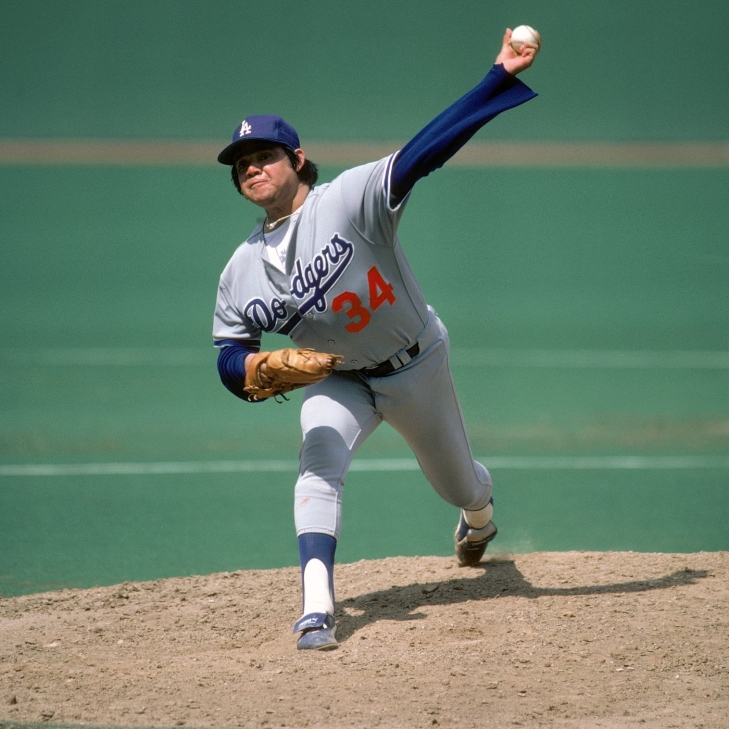
Fernando Valenzuela arrived in Los Angeles in 1980, a nineteen-year-old left-hander who spoke no English but communicated through a specialized screwball that looked like magic. Discovered by accident while scouts were looking at a shortstop, he stood as a high-voltage phenomenon who didn't just play for the Dodgers; he transformed the culture of the city.
The first chapter of his career was a rare story in baseball that probably won't happen again. After a quiet September call-up in 1980, Valenzuela was suddenly chosen to start on Opening Day in 1981 because Jerry Reuss was injured. He made a great impression by pitching a shutout and went on to win his first eight starts, five of which were shutouts. He became a hero for the Mexican-American community, earning both the Rookie of the Year and Cy Young Award in the same season—an outstanding achievement that still stands out in baseball history. He finished this remarkable debut by leading the Dodgers to the 1981 World Series title, showing that his special talent was perfect for the biggest moments in the game.
Between 1981 and 1986, he was a high-volume workhorse who consistently led the league in categories such as complete games and batters faced. He earned an All-Star selection in six consecutive seasons, highlighting a period of dominance where he remained a perennial threat for the Cy Young. While the "mania" of his rookie year eventually leveled off, he remained a professional mainstay, recording three 200-strikeout seasons and proving to be a high-quality offensive asset by winning two Silver Sluggers for his work at the plate.
In 1986, he authored his only 21-win season, finishing second in the Cy Young voting and leading the league with 20 complete games. Even as his heavy workload began to impact his efficiency, he showed the organization a specialized resilience, tossing a no-hitter in 1990 against the Cardinals. He left behind a statistical footprint that includes 141 wins as a Dodger and over 1,700 strikeouts, marks that reflect a lifetime of heavy lifting before he moved on to play for the Angels and several other clubs.
The longevity of his legacy was finalized with a heavy heart following his passing in October 2024, just as the Dodgers were beginning another championship run. The organization had already broken its long-standing rule by retiring his number 34 in 2023. Valenzuela compiled a 141-116 record, a 3.31 ERA, and 1,759 strikeouts as a Dodger.
The Frank J. Selke Award
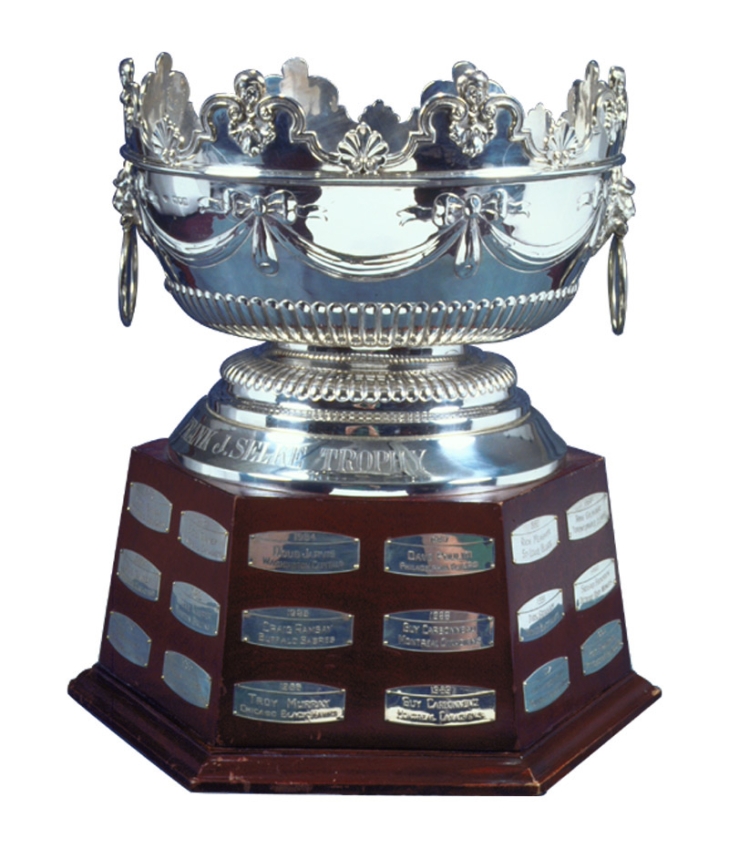
The Frank J. Selke Trophy is awarded annually to the forward who demonstrates the most skill on the defensive side of the game. It is voted on by the Professional Hockey Writers Association at the end of the regular season.
Named after Frank J. Selke, the former General Manager of the Toronto Maple Leafs and Montreal Canadiens, the trophy was first awarded in the 1977/78 Season.
The results are as follows:
There are currently 20 former Frank J. Selke Trophy winners who are Hockey Hall of Fame eligible, with 7 entering, yielding a percentage of 35.0.
If we go by yearly winners, there is a sizable increase to 30 eligible years with 13 of them generating a Hockey Hall of Famer. That is a 43.3 Percentage.
The following are the past players who have won the Frank J. Selke Trophy and are eligible for the Hockey Hall of Fame and have been enshrined.
1978: Bob Gainey, Montreal Canadiens, Left Wing. 15 Goals, 16 Assists, 31 Points, +11, 1.9 Point Shares, 0.7 Defensive Point Shares.
Sure enough, a player from Montreal won an inaugural award. Bob Gainey knew his role, which was to play both ends of the ice, and smother attackers. The Habs won the Stanley Cup this year, with Gainey capturing his third.
Inducted into the Hall of Fame in 1992.
1979 (2): Bob Gainey, Montreal Canadiens, Left Wing. 20 Goals, 18 Assists, 38 Points, +12, 2.4 Point Shares, 1.1 Defensive Point Shares.
The value of Gainey was well established this year, as Gainey, not only won the second ever Selke Award, he won a fourth Stanley Cup, where his skills landed him the Conn Smythe. Gainey was not only the first ever repeat Selke winner, but the first to win the Selke and Smythe in the same year. It didn’t take long!
Inducted into the Hall of Fame in 1992.
1980 (3): Bob Gainey, Montreal Canadiens, Left Wing. 14 Goals, 19 Assists, 33 Points, -1, 1.8 Point Shares, 0.7 Defensive Point Shares.
The voters chose Gainey again, and we have three awards, and the same winner. Gainey remained solid in his role, which was a lot easier on a team as deep as Montreal.
Inducted into the Hall of Fame in 1992.
1981 (4): Bob Gainey, Montreal Canadiens, Left Wing. 23 Goals, 24 Assists, 47 Points, +13, 3.2 Point Shares, 1.4 Defensive Point Shares.
Gainey won the fourth (also his fourth) Selke, which was also his last. The two-way star, won a fifth Cup in 1986, and played his entire career with Montreal. The Left Wing would accumulate 501 Points over 16 Seasons and was a first ballot Hall of Fame inductee.
Inducted into the Hall of Fame in 1992.
1983: Bobby Clarke, Philadelphia Flyers, Center. 23 Goals, 62 Assists, 85 Points, +37, 6.1 Point Shares, 1.8 Defensive Point Shares.
Clarke was always an excellent two-way player, but he was far removed from his Stanley Cup winning/Hart Trophy years. The grizzled veteran was in his penultimate season, and previously had two top Selke finishes.
Inducted into the Hall of Fame in 1987.
1988: Guy Carbonneau, Montreal Canadiens, Center. 17 Goals, 21 Assists, 38 Points, +14, 2.4 Point Shares, 1.4 Defensive Point Shares.
Carbonneau won his first Stanley Cup two years earlier, and was the runner-up for the Selke last year. The Center won his first Selke and followed in the footsteps of Bob Gainey.
Inducted into the Hall of Fame in 2019.
1989 (2): Guy Carbonneau, Montreal Canadiens, Center. 26 Goals, 30 Assists, 56 Points, +37, 5.0 Point Shares, 2.1 Defensive Point Shares.
Carbonneau became the first player since Gainey to win a second Selke, and he also did so in consecutive fashion. He would finish second and fourth in Selke voting over the next two seasons.
Inducted into the Hall of Fame in 2019.
1992 (3): Guy Carbonneau, Montreal Canadiens, Center. 18 Goals, 21 Assists, 39 Points, +2, 2.8 Point Shares, 1.1 Defensive Point Shares.
Now the second player (again after Bob Gainey) to become a three-time Selke winner, Carbonneau’s win gave Montreal seven of the first fifteen. Carbonneau helped Montreal win the Stanley Cup the next season, and in 1999, as a Dallas Star, Carbonneau won a third Cup. He amassed 663 Points over 19 Seasons in the NHL.
Inducted into the Hall of Fame in 2019.
1993: Doug Gilmour, Toronto Maple Leafs, Center. 32 Goals, 95 Assists, 127 Points, +32, 11.0 Point Shares, 2.2 Defensive Point Shares.
Doug Gilmour had the best year of his career, taking the Toronto Maple Leafs to the Conference Final where many feel they were screwed out of a trip to the Stanley Cup. Gilmour had career-highs in Points (127), and became the first Selke winner to break 100 Points. Also, the Hart Trophy runner-up this season, Gilmour was the runner-up in 1994 for the Selke, and prior to the win, had three consecutive fifth-place finished. Retiring in 2008, Gilmour had 1,414 career Points.
Inducted into the Hall of Fame in 2011.
1994: Sergei Fedorov, Detroit Red Wings, Right Wing. 56 Goals, 64 Assists, 120 Points, +48, 13.8 Point Shares, 2.1 Defensive Point Shares.
Fedorov made Selke history as the first European to win the award, and was also the first off of a 50-Goal year. The Russian star also won the Hart, making more history as the first player to win the Hart, the Pearson and the Selke in the same year. What a campaign!
Inducted into the Hall of Fame in 2015.
1995: Ron Francis, Pittsburgh Penguins, Center. 11 Goals, 48 Assists, 59 Points, +30, 5.8 Point Shares, 1.2 Defensive Point Shares.
Francis had one of the longest careers in the NHL, spanning over 1,700 Games, and three Stanley Cups, and when he won the Selke, he was in the middle of it all. This season, he also won the first of three Lady Byng Awards, and was the Selke runner-up the year after.
Inducted into the Hall of Fame in 2015.
1996 (2): Sergei Fedorov, Detroit Red Wings, Right Wing. 39 Goals, 68 Assists, 107 Points, +49, 12.0 Point Shares, 2.5 Defensive Point Shares.
Fedorov joined the multi-Selke club, and was fifth for the Hart. He never contended for any major individual award again, but he later won three Stanley Cups with Detroit. Fedorov tallied 1,179 Points over his career.
Inducted into the Hall of Fame in 2015.
2000: Steve Yzerman, Detroit Red Wings, Center. 35 Goals, 44 Assists, 79 Points, +28, 9.8 Point Shares, 2.5 Defensive Point Shares.
Yzerman was already a legend in Detroit by this time, having already led the Red Wings to two Stanley Cups and winning a Pearson Award. Stevie Y’s best years were behind him, but he was still a potent player, and he won his only Selke, and was eighth in Hart voting. He would win another Cup for Detroit, and concluded his career with 1,755 Points in a stellar 22-year career.
Inducted into the Hall of Fame in 2009.
The following are the players who have won the Frank J. Selke Trophy who are eligible for the Hockey Hall of Fame and have not been selected:
1982: Steve Kasper, Boston Bruins, Center. 20 Goals, 31 Assists, 51 Points, -18, 2.5 Point Shares, 0.6 Defensive Point Shares.
Kasper was the first Selke winner not named Bob Gainey, and he won this as an NHL sophomore. While he played until 1993, Kasper never captured another award, but had a nice career that totalled 468 Points.
Eligible Since 1996. Unranked on Notinhalloffame.com.
1984: Doug Jarvis, Washington Capitals, Center. 13 Goals, 29 Assists, 42 Points, +6, 2.1 Point Shares, 1.5 Defensive Point Shares.
Jarvis was the first to win the Selke who had more Defensive Point Shares than Offensive Point Shares, which was common place for the Center. A four-time Stanley Cup Champion with Montreal, Jarvis at one time was the NHL Iron Man with 964 Games.
Eligible Since 1991. Ranked #81 on Notinhalloffame.com.
1985: Craig Ramsay, Buffalo Sabres, Left Wing. 12 Goals, 21 Assists, 33 Points, +17, 1.8 Point Shares, 1.8 Defensive Point Shares.
This was Ramsay’s last year in the NHL, and at this point he was primarily focused on the defensive side of the ice. The career-Sabre was the runner-up for the Selke three times before, and had 672 career Points over 14 seasons.
Eligible Since 1988. Unranked on Notinhalloffame.com.
1986: Troy Murray, Chicago Blackhawks, Center. 45 Goals, 54 Assists, 99 Points, +32, 8.5 Point Shares, 1.6 Defensive Point Shares.
Murray never had another year like this again, though he did have a long career in the NHL. Finishing tenth in Hart voting this season, Murray had two other top-ten Selke finishes that bookended this one. He won a Stanley Cup in his last year (1996) with the Avalanche, and had 584 career Points.
Eligible Since 1999. Unranked on Notinhalloffame.com.
1987: Dave Poulin, Philadelphia Flyers, Center. 25 Goals, 45 Assists, 70 Points, +47, 6.3 Point Shares, 2.0 Defensive Point Shares.
The Flyers become the first team to have two Selke winners with Poulin’s win. Poulin, who won the King Clancy Award in 1993, was second for the Selke that year, and was one of the more beloved teammates in hockey.
Eligible Since 1998. Unranked on Notinhalloffame.com.
1990: Rick Meagher, St. Louis Blues, Center. 8 Goals, 17 Assists, 25 Points, +4, 0.7 Point Shares, 1.2 Defensive Point Shares.
How defensive was Rick Meagher? He had NEGATIVE Offesnive Point Shares (-0.5), to his DPD of 1.2. Bluntly, we have a problem with a forward who can’t get a positive integer in OPS winning any award, but this was a player who was excellent the defensive role. Megaher only played one more year, and had 309 Points over 12 years of service.
Eligible Since 1994. Unranked on Notinhalloffame.com.
1991: Dirk Graham, Chicago Blackhawks, Right Wing. 24 Goals, 21 Assists, 45 Points, +12, 3.8 Point Shares, 1.4 Defensive Point Shares.
Graham won his only major award this year, though he would have two other seventh-place finishes (1989 & 1993) for the Selke. He had 489 career Points over 12 Seasons.
Eligible Since 1998. Unranked on Notinhalloffame.com.
1997: Michael Peca, Buffalo Sabres, Center. 20 Goals, 29 Assists, 49 Points, +26, 5.1 Point Shares, 1.7 Defensive Point Shares.
Peca was in his fourth NHL year, but only his second in Buffalo, where the gifted and gritty two-way player won his first of two Selkes. He ed the league in Short-Handed Goals with 6.
Eligible Since 2012. Ranked #272 on Notinhalloffame.com.
1998: Jere Lehtinen, Dallas Stars, Right Wing. 23 Goals, 19 Assists, 42 Points, +19, 5.7 Point Shares, 1.8 Defensive Point Shares.
Sergei Makarov might be the first European to win the award, but Jeri Lehtinen still carved a spot as Scandinavia’s first Selke winner. Lehtinen was in his third campaign, and was third for the Selke the year before.
Eligible Since 2013. Ranked #167 on Notinhalloffame.com.
1999 (2): Jere Lehtinen, Dallas Stars, Right Wing. 20 Goals, 32 Assists, 52 Points, +29, 6.5 Point Shares, 2.9 Defensive Point Shares.
Lehtinen was a back-to-back winner, but it was an extra sweet award for the Finnish Wing, as he was integral to Dallas’s first Stanley Cup win.
Eligible Since 2013. Ranked #167 on Notinhalloffame.com.
2001: John Madden, New Jersey Devils, Left Wing. 23 Goals, 15 Assists, 38 Points, +24, 4.6 Point Shares, 1.9 Defensive Point Shares.
New Jersey became a defensive power in this era, and John Madden was a large part of that. Madden helped the Devils win two Stanley Cups, and he was a Selke second-place finisher on three other occasions. He later won a third Cup with Chicago in 2010.
Eligible Since 2015. Unranked on Notinhalloffame.com.
2002 (2): Michael Peca, New York Islanders, Center. 20 Goals, 29 Assists, 87 Points, +26, 5.1 Point Shares, 1.7 Defensive Point Shares.
Peca won his second Selke, and became the first to win one for different teams, with number two coming in his debut year in New York. The 60 Points he scored was the highest of his career, and would have 465 in total. Notably, from 1997 to 2004 (he missed 2000-01) he always finished in the top five in Selke balloting.
Eligible Since 2012. Ranked #272 on Notinhalloffame.com.
2003 (3): Jere Lehtinen, Dallas Stars, Right Wing. 31 Goals, 17 Assists, 38 Points, +39, 7.5 Point Shares, 3.2 Defensive Point Shares.
Lehtinen captured his third and final Selke this year and became the first winner to have over three Defensive Point Shares. Playing his entire career in Dallas, Lehtinen was the Selke runner-up in 2006, was third two other years and had 514 career Points.
Eligible Since 2013. Ranked #167 on Notinhalloffame.com.
2004: Kris Draper, Detroit Red Wings, Center. 24 Goals, 16 Assists, 40 Points, +22, 6.0 Point Shares, 2.1 Defensive Point Shares.
We have been saying a lot in this section that many of these winners know/knew their role, but does anyone fit this better than Kris Draper. A 20-year NHL veteran, with the latter 17 in Detroit Red, Draper’s 2003-04 was arguably his best, with career-highs in Goals (24), Points and Point Shares (6.0), and even received a Hart Trophy vote.
Eligible Since 2014. Unranked on Notinhalloffame.com.
2006: Rod Brind’Amour, Carolina Hurricanes, Center. 31 Goals, 39 Assists, 70 Points, +8, 6.8 Point Shares, 2.2 Defensive Point Shares.
Brind’Amour was a seasoned veteran, who debuted in 1989, but he never finished higher than ninth for the Selke, but this would be the most memorable season of his career. Not only did Brind’Amour win the Selke, he was tenth in Hart voting (his best result), he helped lead the Hurricanes to their first Stanley Cup.
Eligible Since 2013. Ranked #38 on Notinhalloffame.com.
2007 (2): Rod Brind’Amour, Carolina Hurricanes, Center. 26 Goals, 56 Assists, 82 Points, +7, 8.2 Point Shares, 2.5 Defensive Point Shares.
Brind’Amour won his second straight (and final) Selke Award, and he while he was very strong defensively, he had his first 80-Point plus year since 1995-96. The Center played three more years, compiling 1,184 Points.
Eligible Since 2013. Ranked #38 on Notinhalloffame.com.
2011: Ryan Kesler, Vancouver Canucks, Center. 41 Goals, 32 Assists, 73 Points, +24, 10.4 Point Shares, 2.7 Defensive Point Shares.
This was Kesler lone Selke, but he contended for it often, with five other top five finishes, and two at second-place. Kesler had 573 Points over 15 Seasons; 10 with the Canucks and five with Anaheim.
Eligible Since 2022. Unranked on Notinhalloffame.com.
So, who is up next?
The following are the players who have won the NHL Frank J. Selke Trophy who have retired but have not met the mandatory years out of the game to qualify for the Hockey Hall of Fame:
2008: Pavel Datsyuk, Detroit Red Wings, Center. 31 Goals, 66 Assists, 97 Points, +41, 12.6 Point Shares, 3.7 Defensive Point Shares.
Datsyuk was no stranger to awards, as he was already a two-time Stanley Cup winner, and would win his third consecutive Lady Byng this season. This year, Datsyuk added his first Selke, was first in Plus/<inus (+41) and was ninth in Hart voting. His 3.7 Defensive Point Shares is a current record for any Selke winner.
Eligible in 2024.
2009 (2): Pavel Datsyuk, Detroit Red Wings, Center. 32 Goals, 65 Assists, 97 Points, +34, 11.5 Point Shares, 2.6 Defensive Point Shares.
As phenomenal as Datsyuk was in 2008/09, he was just as good this year, where the Russian not only his second Selke, but fourth Lady Byng. Datsyuk, for the first and only time, was a Second Team All-Star, and had his highest finish for the Hart, third.
Eligible in 2024.
2010 (3): Pavel Datsyuk, Detroit Red Wings, Center. 27 Goals, 65 Assists, 70 Points, +17, 8.6 Point Shares, 2.7 Defensive Point Shares.
This was Selke’s third consecutive and last Selke, but he would land third in voting the next three seasons. Datsyuk stayed with the Red Wings until 2016, compiling 918 Points over 14 years. He continued his career in Europe until 2021.
Eligible in 2024.
The following are the past players who have won the NHL Frank J. Selke Trophy and are eligible for the Hockey Hall of Fame, and are still active.
2012: Patrice Bergeron, Boston Bruins, Center. 22 Goals, 42 Assists, 64 Points, +36, 8.3 Point Shares, 2.7 Defensive Point Shares.
Bergeron debuted for the Bruins in 2003, and year-by-year would methodically work his way to becoming one of hockey’s most complete players. Helping Boston win the Stanley Cup in 2011, Bergeron, who was in the top five in Selke voting the two years earlier, won his first major award this year, with his first Selke win.
37 Years Old, Playing for the Boston Bruins.
2013: Jonathan Toews, Chicago Blackhawks, Center. 23 Goals, 25 Assists, 48 Points, +28, 7.6 Point Shares, 2.0 Defensive Point Shares.
Toews was a massive part of Chicago’s return to greatness in the 2010s, and he won the Conn Smyther in the Blackhawks Stanley Cup win in 2010. Chicago won the Cup again, and Toews, who was second in Smythe voting two years earlier, won it this season, the same campaign where Toews won a second Stanley Cup and earned Second Team All-Star honors. Toews did not win a second Selke, but in 2015, he was second, won the Mark Messier Leadership Award and more importantly a third Stanley Cup. He has eight top ten Selke finishes.
34 Years Old, Playing for the Chicago Blackhawks.
2014 (2): Patrice Bergeron, Boston Bruins, Center. 30 Goals, 32 Assists, 62 Points, +38, 9.2 Point Shares, 2.8 Defensive Point Shares.
Bergeron captured the King Clancy Award in 2013 and was the runner-up for the Selke that year, thus denying him of back-to-back honors (for now). The Bruins Center would win it this year, while finishing fifth in Hart voting, his highest tally.
37 Years Old, Playing for the Boston Bruins.
2015 (3): Patrice Bergeron, Boston Bruins, Center. 23 Goals, 32 Assists, 55 Points, +2, 6.4 Point Shares, 1.7 Defensive Point Shares.
Back-to-back Selke wins did come for Bergeron with his third win in four years, though Boston had an overall poor season, as they failed to make the playoffs. The early golf season was no fault of Bergeron, who was their leading scorer.
37 Years Old, Playing for the Boston Bruins.
2016: Anze Kopitar, Los Angeles Kings, Center. 25 Goals, 49 Assists, 74 Points, +34, 9.7 Point Shares, 3.3 Defensive Point Shares.
The Slovenian star had already won two Stanley Cups by this time, and he was in the top three in Selke in voting the seasons before. Kopitar won his first Selke this season, as well as his first Lady Byng.
35 Years Old, Playing for the Los Angeles Kings.
2017 (4): Patrice Bergeron, Boston Bruins, Center. 21 Goals, 32 Assists, 53 Points, +12, 6.6 Point Shares, 2.5 Defensive Point Shares.
In 2015-16, Bergeron was the Selke runner-up, but he won it this season, earning his fourth in six years. This tied him with Bob Gainey for the most Selke wins.
37 Years Old, Playing for the Boston Bruins.
2018 (2): Anze Kopitar, Los Angeles Kings, Center. 35 Goals, 57 Assists, 92 Points, +21, 11.0 Point Shares, 3.7 Defensive Point Shares.
Kopitar had his best season, putting up a career-high in Goals (35), Points (92) and Defensive Point Shares (3.7), and was third in Hart voting.
35 Years Old, Playing for the Los Angeles Kings.
2019: Ryan O’Reilly, Los Angeles Kings, Center. 28 Goals, 37 Assists, 59 Points, +22, 8.8 Point Shares, 3.0 Defensive Point Shares.
St. Louis finally on their first Stanley Cup, and Ryan O’Reilly, who joined the Blues this year, deserved a lot of the credit. O’Reilly won the Smythe this year, was second for the Lady Byng, and was also 13h in Hart voting.
The Frank J. Selke Trophy is awarded annually to the forward who demonstrates the most skill on the defensive side of the game. It is voted on by the Professional Hockey Writers Association at the end of the regular season.
Named after Frank J. Selke, the former General Manager of the Toronto Maple Leafs and Montreal Canadiens, the trophy was first awarded in the 1977/78 Season.
The results are as follows:
There are currently 20 former Frank J. Selke Trophy winners who are Hockey Hall of Fame eligible, with 7 entering, yielding a percentage of 35.0.
If we go by yearly winners, there is a sizable increase to 30 eligible years with 13 of them generating a Hockey Hall of Famer. That is a 43.3 Percentage.
The following are the past players who have won the Frank J. Selke Trophy and are eligible for the Hockey Hall of Fame and have been enshrined.
1978: Bob Gainey, Montreal Canadiens, Left Wing. 15 Goals, 16 Assists, 31 Points, +11, 1.9 Point Shares, 0.7 Defensive Point Shares.
Sure enough, a player from Montreal won an inaugural award. Bob Gainey knew his role, which was to play both ends of the ice, and smother attackers. The Habs won the Stanley Cup this year, with Gainey capturing his third.
Inducted into the Hall of Fame in 1992.
1979 (2): Bob Gainey, Montreal Canadiens, Left Wing. 20 Goals, 18 Assists, 38 Points, +12, 2.4 Point Shares, 1.1 Defensive Point Shares.
The value of Gainey was well established this year, as Gainey, not only won the second ever Selke Award, he won a fourth Stanley Cup, where his skills landed him the Conn Smythe. Gainey was not only the first ever repeat Selke winner, but the first to win the Selke and Smythe in the same year. It didn’t take long!
Inducted into the Hall of Fame in 1992.
1980 (3): Bob Gainey, Montreal Canadiens, Left Wing. 14 Goals, 19 Assists, 33 Points, -1, 1.8 Point Shares, 0.7 Defensive Point Shares.
The voters chose Gainey again, and we have three awards, and the same winner. Gainey remained solid in his role, which was a lot easier on a team as deep as Montreal.
Inducted into the Hall of Fame in 1992.
1981 (4): Bob Gainey, Montreal Canadiens, Left Wing. 23 Goals, 24 Assists, 47 Points, +13, 3.2 Point Shares, 1.4 Defensive Point Shares.
Gainey won the fourth (also his fourth) Selke, which was also his last. The two-way star, won a fifth Cup in 1986, and played his entire career with Montreal. The Left Wing would accumulate 501 Points over 16 Seasons and was a first ballot Hall of Fame inductee.
Inducted into the Hall of Fame in 1992.
1983: Bobby Clarke, Philadelphia Flyers, Center. 23 Goals, 62 Assists, 85 Points, +37, 6.1 Point Shares, 1.8 Defensive Point Shares.
Clarke was always an excellent two-way player, but he was far removed from his Stanley Cup winning/Hart Trophy years. The grizzled veteran was in his penultimate season, and previously had two top Selke finishes.
Inducted into the Hall of Fame in 1987.
1988: Guy Carbonneau, Montreal Canadiens, Center. 17 Goals, 21 Assists, 38 Points, +14, 2.4 Point Shares, 1.4 Defensive Point Shares.
Carbonneau won his first Stanley Cup two years earlier, and was the runner-up for the Selke last year. The Center won his first Selke and followed in the footsteps of Bob Gainey.
Inducted into the Hall of Fame in 2019.
1989 (2): Guy Carbonneau, Montreal Canadiens, Center. 26 Goals, 30 Assists, 56 Points, +37, 5.0 Point Shares, 2.1 Defensive Point Shares.
Carbonneau became the first player since Gainey to win a second Selke, and he also did so in consecutive fashion. He would finish second and fourth in Selke voting over the next two seasons.
Inducted into the Hall of Fame in 2019.
1992 (3): Guy Carbonneau, Montreal Canadiens, Center. 18 Goals, 21 Assists, 39 Points, +2, 2.8 Point Shares, 1.1 Defensive Point Shares.
Now the second player (again after Bob Gainey) to become a three-time Selke winner, Carbonneau’s win gave Montreal seven of the first fifteen. Carbonneau helped Montreal win the Stanley Cup the next season, and in 1999, as a Dallas Star, Carbonneau won a third Cup. He amassed 663 Points over 19 Seasons in the NHL.
Inducted into the Hall of Fame in 2019.
1993: Doug Gilmour, Toronto Maple Leafs, Center. 32 Goals, 95 Assists, 127 Points, +32, 11.0 Point Shares, 2.2 Defensive Point Shares.
Doug Gilmour had the best year of his career, taking the Toronto Maple Leafs to the Conference Final where many feel they were screwed out of a trip to the Stanley Cup. Gilmour had career-highs in Points (127), and became the first Selke winner to break 100 Points. Also, the Hart Trophy runner-up this season, Gilmour was the runner-up in 1994 for the Selke, and prior to the win, had three consecutive fifth-place finished. Retiring in 2008, Gilmour had 1,414 career Points.
Inducted into the Hall of Fame in 2011.
1994: Sergei Fedorov, Detroit Red Wings, Right Wing. 56 Goals, 64 Assists, 120 Points, +48, 13.8 Point Shares, 2.1 Defensive Point Shares.
Fedorov made Selke history as the first European to win the award, and was also the first off of a 50-Goal year. The Russian star also won the Hart, making more history as the first player to win the Hart, the Pearson and the Selke in the same year. What a campaign!
Inducted into the Hall of Fame in 2015.
1995: Ron Francis, Pittsburgh Penguins, Center. 11 Goals, 48 Assists, 59 Points, +30, 5.8 Point Shares, 1.2 Defensive Point Shares.
Francis had one of the longest careers in the NHL, spanning over 1,700 Games, and three Stanley Cups, and when he won the Selke, he was in the middle of it all. This season, he also won the first of three Lady Byng Awards, and was the Selke runner-up the year after.
Inducted into the Hall of Fame in 2015.
1996 (2): Sergei Fedorov, Detroit Red Wings, Right Wing. 39 Goals, 68 Assists, 107 Points, +49, 12.0 Point Shares, 2.5 Defensive Point Shares.
Fedorov joined the multi-Selke club, and was fifth for the Hart. He never contended for any major individual award again, but he later won three Stanley Cups with Detroit. Fedorov tallied 1,179 Points over his career.
Inducted into the Hall of Fame in 2015.
2000: Steve Yzerman, Detroit Red Wings, Center. 35 Goals, 44 Assists, 79 Points, +28, 9.8 Point Shares, 2.5 Defensive Point Shares.
Yzerman was already a legend in Detroit by this time, having already led the Red Wings to two Stanley Cups and winning a Pearson Award. Stevie Y’s best years were behind him, but he was still a potent player, and he won his only Selke, and was eighth in Hart voting. He would win another Cup for Detroit, and concluded his career with 1,755 Points in a stellar 22-year career.
Inducted into the Hall of Fame in 2009.
The following are the players who have won the Frank J. Selke Trophy who are eligible for the Hockey Hall of Fame and have not been selected:
1982: Steve Kasper, Boston Bruins, Center. 20 Goals, 31 Assists, 51 Points, -18, 2.5 Point Shares, 0.6 Defensive Point Shares.
Kasper was the first Selke winner not named Bob Gainey, and he won this as an NHL sophomore. While he played until 1993, Kasper never captured another award, but had a nice career that totalled 468 Points.
Eligible Since 1996. Unranked on Notinhalloffame.com.
1984: Doug Jarvis, Washington Capitals, Center. 13 Goals, 29 Assists, 42 Points, +6, 2.1 Point Shares, 1.5 Defensive Point Shares.
Jarvis was the first to win the Selke who had more Defensive Point Shares than Offensive Point Shares, which was common place for the Center. A four-time Stanley Cup Champion with Montreal, Jarvis at one time was the NHL Iron Man with 964 Games.
Eligible Since 1991. Ranked #81 on Notinhalloffame.com.
1985: Craig Ramsay, Buffalo Sabres, Left Wing. 12 Goals, 21 Assists, 33 Points, +17, 1.8 Point Shares, 1.8 Defensive Point Shares.
This was Ramsay’s last year in the NHL, and at this point he was primarily focused on the defensive side of the ice. The career-Sabre was the runner-up for the Selke three times before, and had 672 career Points over 14 seasons.
Eligible Since 1988. Unranked on Notinhalloffame.com.
1986: Troy Murray, Chicago Blackhawks, Center. 45 Goals, 54 Assists, 99 Points, +32, 8.5 Point Shares, 1.6 Defensive Point Shares.
Murray never had another year like this again, though he did have a long career in the NHL. Finishing tenth in Hart voting this season, Murray had two other top-ten Selke finishes that bookended this one. He won a Stanley Cup in his last year (1996) with the Avalanche, and had 584 career Points.
Eligible Since 1999. Unranked on Notinhalloffame.com.
1987: Dave Poulin, Philadelphia Flyers, Center. 25 Goals, 45 Assists, 70 Points, +47, 6.3 Point Shares, 2.0 Defensive Point Shares.
The Flyers become the first team to have two Selke winners with Poulin’s win. Poulin, who won the King Clancy Award in 1993, was second for the Selke that year, and was one of the more beloved teammates in hockey.
Eligible Since 1998. Unranked on Notinhalloffame.com.
1990: Rick Meagher, St. Louis Blues, Center. 8 Goals, 17 Assists, 25 Points, +4, 0.7 Point Shares, 1.2 Defensive Point Shares.
How defensive was Rick Meagher? He had NEGATIVE Offesnive Point Shares (-0.5), to his DPD of 1.2. Bluntly, we have a problem with a forward who can’t get a positive integer in OPS winning any award, but this was a player who was excellent the defensive role. Megaher only played one more year, and had 309 Points over 12 years of service.
Eligible Since 1994. Unranked on Notinhalloffame.com.
1991: Dirk Graham, Chicago Blackhawks, Right Wing. 24 Goals, 21 Assists, 45 Points, +12, 3.8 Point Shares, 1.4 Defensive Point Shares.
Graham won his only major award this year, though he would have two other seventh-place finishes (1989 & 1993) for the Selke. He had 489 career Points over 12 Seasons.
Eligible Since 1998. Unranked on Notinhalloffame.com.
1997: Michael Peca, Buffalo Sabres, Center. 20 Goals, 29 Assists, 49 Points, +26, 5.1 Point Shares, 1.7 Defensive Point Shares.
Peca was in his fourth NHL year, but only his second in Buffalo, where the gifted and gritty two-way player won his first of two Selkes. He ed the league in Short-Handed Goals with 6.
Eligible Since 2012. Ranked #272 on Notinhalloffame.com.
1998: Jere Lehtinen, Dallas Stars, Right Wing. 23 Goals, 19 Assists, 42 Points, +19, 5.7 Point Shares, 1.8 Defensive Point Shares.
Sergei Makarov might be the first European to win the award, but Jeri Lehtinen still carved a spot as Scandinavia’s first Selke winner. Lehtinen was in his third campaign, and was third for the Selke the year before.
Eligible Since 2013. Ranked #167 on Notinhalloffame.com.
1999 (2): Jere Lehtinen, Dallas Stars, Right Wing. 20 Goals, 32 Assists, 52 Points, +29, 6.5 Point Shares, 2.9 Defensive Point Shares.
Lehtinen was a back-to-back winner, but it was an extra sweet award for the Finnish Wing, as he was integral to Dallas’s first Stanley Cup win.
Eligible Since 2013. Ranked #167 on Notinhalloffame.com.
2001: John Madden, New Jersey Devils, Left Wing. 23 Goals, 15 Assists, 38 Points, +24, 4.6 Point Shares, 1.9 Defensive Point Shares.
New Jersey became a defensive power in this era, and John Madden was a large part of that. Madden helped the Devils win two Stanley Cups, and he was a Selke second-place finisher on three other occasions. He later won a third Cup with Chicago in 2010.
Eligible Since 2015. Unranked on Notinhalloffame.com.
2002 (2): Michael Peca, New York Islanders, Center. 20 Goals, 29 Assists, 87 Points, +26, 5.1 Point Shares, 1.7 Defensive Point Shares.
Peca won his second Selke, and became the first to win one for different teams, with number two coming in his debut year in New York. The 60 Points he scored was the highest of his career, and would have 465 in total. Notably, from 1997 to 2004 (he missed 2000-01) he always finished in the top five in Selke balloting.
Eligible Since 2012. Ranked #272 on Notinhalloffame.com.
2003 (3): Jere Lehtinen, Dallas Stars, Right Wing. 31 Goals, 17 Assists, 38 Points, +39, 7.5 Point Shares, 3.2 Defensive Point Shares.
Lehtinen captured his third and final Selke this year and became the first winner to have over three Defensive Point Shares. Playing his entire career in Dallas, Lehtinen was the Selke runner-up in 2006, was third two other years and had 514 career Points.
Eligible Since 2013. Ranked #167 on Notinhalloffame.com.
2004: Kris Draper, Detroit Red Wings, Center. 24 Goals, 16 Assists, 40 Points, +22, 6.0 Point Shares, 2.1 Defensive Point Shares.
We have been saying a lot in this section that many of these winners know/knew their role, but does anyone fit this better than Kris Draper. A 20-year NHL veteran, with the latter 17 in Detroit Red, Draper’s 2003-04 was arguably his best, with career-highs in Goals (24), Points and Point Shares (6.0), and even received a Hart Trophy vote.
Eligible Since 2014. Unranked on Notinhalloffame.com.
2006: Rod Brind’Amour, Carolina Hurricanes, Center. 31 Goals, 39 Assists, 70 Points, +8, 6.8 Point Shares, 2.2 Defensive Point Shares.
Brind’Amour was a seasoned veteran, who debuted in 1989, but he never finished higher than ninth for the Selke, but this would be the most memorable season of his career. Not only did Brind’Amour win the Selke, he was tenth in Hart voting (his best result), he helped lead the Hurricanes to their first Stanley Cup.
Eligible Since 2013. Ranked #38 on Notinhalloffame.com.
2007 (2): Rod Brind’Amour, Carolina Hurricanes, Center. 26 Goals, 56 Assists, 82 Points, +7, 8.2 Point Shares, 2.5 Defensive Point Shares.
Brind’Amour won his second straight (and final) Selke Award, and he while he was very strong defensively, he had his first 80-Point plus year since 1995-96. The Center played three more years, compiling 1,184 Points.
Eligible Since 2013. Ranked #38 on Notinhalloffame.com.
2011: Ryan Kesler, Vancouver Canucks, Center. 41 Goals, 32 Assists, 73 Points, +24, 10.4 Point Shares, 2.7 Defensive Point Shares.
This was Kesler lone Selke, but he contended for it often, with five other top five finishes, and two at second-place. Kesler had 573 Points over 15 Seasons; 10 with the Canucks and five with Anaheim.
Eligible Since 2022. Unranked on Notinhalloffame.com.
So, who is up next?
The following are the players who have won the NHL Frank J. Selke Trophy who have retired but have not met the mandatory years out of the game to qualify for the Hockey Hall of Fame:
2008: Pavel Datsyuk, Detroit Red Wings, Center. 31 Goals, 66 Assists, 97 Points, +41, 12.6 Point Shares, 3.7 Defensive Point Shares.
Datsyuk was no stranger to awards, as he was already a two-time Stanley Cup winner, and would win his third consecutive Lady Byng this season. This year, Datsyuk added his first Selke, was first in Plus/<inus (+41) and was ninth in Hart voting. His 3.7 Defensive Point Shares is a current record for any Selke winner.
Eligible in 2024.
2009 (2): Pavel Datsyuk, Detroit Red Wings, Center. 32 Goals, 65 Assists, 97 Points, +34, 11.5 Point Shares, 2.6 Defensive Point Shares.
As phenomenal as Datsyuk was in 2008/09, he was just as good this year, where the Russian not only his second Selke, but fourth Lady Byng. Datsyuk, for the first and only time, was a Second Team All-Star, and had his highest finish for the Hart, third.
Eligible in 2024.
2010 (3): Pavel Datsyuk, Detroit Red Wings, Center. 27 Goals, 65 Assists, 70 Points, +17, 8.6 Point Shares, 2.7 Defensive Point Shares.
This was Selke’s third consecutive and last Selke, but he would land third in voting the next three seasons. Datsyuk stayed with the Red Wings until 2016, compiling 918 Points over 14 years. He continued his career in Europe until 2021.
Eligible in 2024.
The following are the past players who have won the NHL Frank J. Selke Trophy and are eligible for the Hockey Hall of Fame, and are still active.
2012: Patrice Bergeron, Boston Bruins, Center. 22 Goals, 42 Assists, 64 Points, +36, 8.3 Point Shares, 2.7 Defensive Point Shares.
Bergeron debuted for the Bruins in 2003, and year-by-year would methodically work his way to becoming one of hockey’s most complete players. Helping Boston win the Stanley Cup in 2011, Bergeron, who was in the top five in Selke voting the two years earlier, won his first major award this year, with his first Selke win.
37 Years Old, Playing for the Boston Bruins.
2013: Jonathan Toews, Chicago Blackhawks, Center. 23 Goals, 25 Assists, 48 Points, +28, 7.6 Point Shares, 2.0 Defensive Point Shares.
Toews was a massive part of Chicago’s return to greatness in the 2010s, and he won the Conn Smyther in the Blackhawks Stanley Cup win in 2010. Chicago won the Cup again, and Toews, who was second in Smythe voting two years earlier, won it this season, the same campaign where Toews won a second Stanley Cup and earned Second Team All-Star honors. Toews did not win a second Selke, but in 2015, he was second, won the Mark Messier Leadership Award and more importantly a third Stanley Cup. He has eight top ten Selke finishes.
34 Years Old, Playing for the Chicago Blackhawks.
2014 (2): Patrice Bergeron, Boston Bruins, Center. 30 Goals, 32 Assists, 62 Points, +38, 9.2 Point Shares, 2.8 Defensive Point Shares.
Bergeron captured the King Clancy Award in 2013 and was the runner-up for the Selke that year, thus denying him of back-to-back honors (for now). The Bruins Center would win it this year, while finishing fifth in Hart voting, his highest tally.
37 Years Old, Playing for the Boston Bruins.
2015 (3): Patrice Bergeron, Boston Bruins, Center. 23 Goals, 32 Assists, 55 Points, +2, 6.4 Point Shares, 1.7 Defensive Point Shares.
Back-to-back Selke wins did come for Bergeron with his third win in four years, though Boston had an overall poor season, as they failed to make the playoffs. The early golf season was no fault of Bergeron, who was their leading scorer.
37 Years Old, Playing for the Boston Bruins.
2016: Anze Kopitar, Los Angeles Kings, Center. 25 Goals, 49 Assists, 74 Points, +34, 9.7 Point Shares, 3.3 Defensive Point Shares.
The Slovenian star had already won two Stanley Cups by this time, and he was in the top three in Selke in voting the seasons before. Kopitar won his first Selke this season, as well as his first Lady Byng.
35 Years Old, Playing for the Los Angeles Kings.
2017 (4): Patrice Bergeron, Boston Bruins, Center. 21 Goals, 32 Assists, 53 Points, +12, 6.6 Point Shares, 2.5 Defensive Point Shares.
In 2015-16, Bergeron was the Selke runner-up, but he won it this season, earning his fourth in six years. This tied him with Bob Gainey for the most Selke wins.
37 Years Old, Playing for the Boston Bruins.
2018 (2): Anze Kopitar, Los Angeles Kings, Center. 35 Goals, 57 Assists, 92 Points, +21, 11.0 Point Shares, 3.7 Defensive Point Shares.
Kopitar had his best season, putting up a career-high in Goals (35), Points (92) and Defensive Point Shares (3.7), and was third in Hart voting.
35 Years Old, Playing for the Los Angeles Kings.
2019: Ryan O’Reilly, Los Angeles Kings, Center. 28 Goals, 37 Assists, 59 Points, +22, 8.8 Point Shares, 3.0 Defensive Point Shares.
St. Louis finally on their first Stanley Cup, and Ryan O’Reilly, who joined the Blues this year, deserved a lot of the credit. O’Reilly won the Smythe this year, was second for the Lady Byng, and was also 13h in Hart voting.
31 Years Old, Playing for the St. Louis Blues.
2020: Sean Couturier, Philadelphia Flyers, Center. 22 Goals, 37 Assists, 59 Points, +21, 6.6 Point Shares, 2.2 Defensive Point Shares.
Couturier won the Selke in his ninth NHL campaign, and had four prior top ten Selke finishes, including a second-place tally two years earlier.
30 Years Old, Playing for the Philadelphia Flyers.
2021: Alexsander Barkov, Florida Panthers, Center. 26 Goals, 32 Assists, 58 Points, +12, 7.3 Point Shares, 1.4 Defensive Point Shares.
Like other Selke winners, Barkov was a previous Lady Byng winner 2019), and had twice been in the top ten in Selke voting. He was also in sixth place for the Hart this year.
27 Years Old, Playing for the Florida Panthers.
2022 (5): Patrice Bergeron, Boston Bruins, Center. 25 Goals, 40 Assists, 65 Points, +26, 7.6 Point Shares, 2.6 Defensive Point Shares.
Bergeron set the new benchmark for Selke wins with his fifth, though it took a five-year gap from his fourth win. In between Bergeron’s fourth and fifth Selke, he remained a contender for the Award, finishing third, third, second and second respectively, while also winning another important accolade, the Mark Messier Leadership Award.
37 Years Old, Playing for the Boston Bruins.
Based on some of the recent winners, the Frank J. Selke Trophy will trend higher into Hall induction in the future.
31 Years Old, Playing for the St. Louis Blues.
2020: Sean Couturier, Philadelphia Flyers, Center. 22 Goals, 37 Assists, 59 Points, +21, 6.6 Point Shares, 2.2 Defensive Point Shares.
Couturier won the Selke in his ninth NHL campaign, and had four prior top ten Selke finishes, including a second-place tally two years earlier.
30 Years Old, Playing for the Philadelphia Flyers.
2021: Alexsander Barkov, Florida Panthers, Center. 26 Goals, 32 Assists, 58 Points, +12, 7.3 Point Shares, 1.4 Defensive Point Shares.
Like other Selke winners, Barkov was a previous Lady Byng winner 2019), and had twice been in the top ten in Selke voting. He was also in sixth place for the Hart this year.
27 Years Old, Playing for the Florida Panthers.
2022 (5): Patrice Bergeron, Boston Bruins, Center. 25 Goals, 40 Assists, 65 Points, +26, 7.6 Point Shares, 2.6 Defensive Point Shares.
Bergeron set the new benchmark for Selke wins with his fifth, though it took a five-year gap from his fourth win. In between Bergeron’s fourth and fifth Selke, he remained a contender for the Award, finishing third, third, second and second respectively, while also winning another important accolade, the Mark Messier Leadership Award.
37 Years Old, Playing for the Boston Bruins.
Based on some of the recent winners, the Frank J. Selke Trophy will trend higher into Hall induction in the future.
RIP: Art McNally
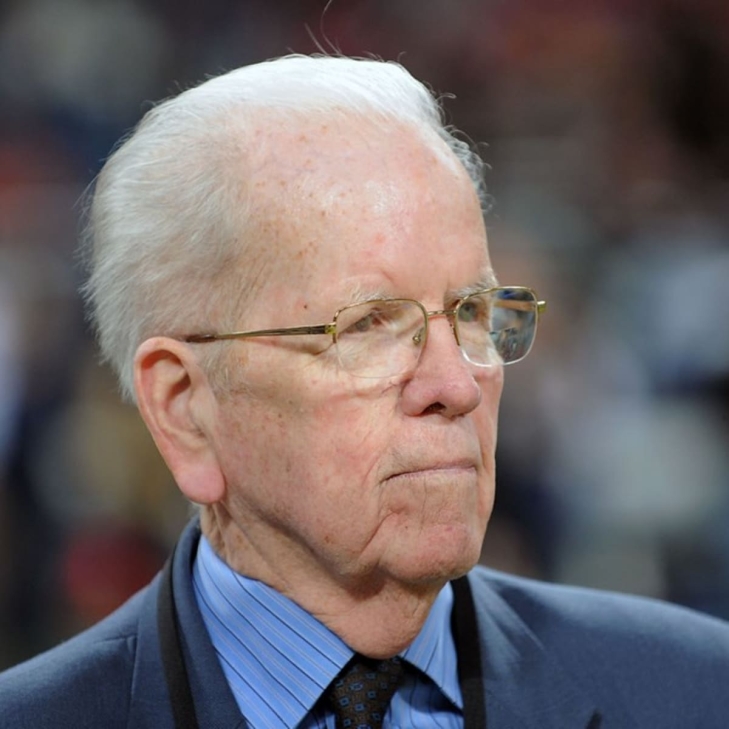
A year after he became the first official to be inducted into the Pro Football Hall of Fame, Art McNally passed away at 97.
You cannot tell the story of officiating without the name of Art McNally. Considered to be the “Father of Modern Officiating”, McNally began his NFL career in 1959 as a field judge, and would be a referee from 1960 to 1968. Afterward, McNally would become the supervisor of officials, and he modernized the role through extensive training. In 1986, McNally brought in instant replay, and helped to bring modern technology to the role. McNally, was a consultant up until seven years ago.
We here at Notinhalloffame.com would like to extend our condolences to the fans, friends and family of Art McNally.
12. Gil Hodges
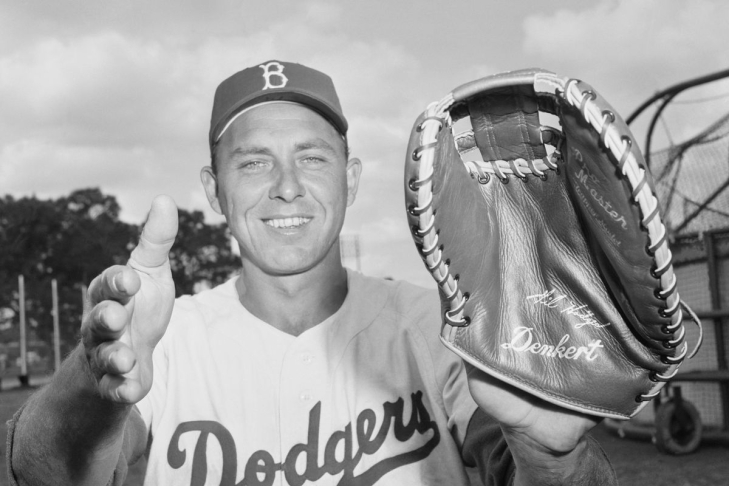
The beginning of Gil Hodges’s career was in Brooklyn in 1943 as a raw, talented catcher, but his journey was immediately interrupted by a two-year commitment to the U.S. Marine Corps during World War II. Returning in 1947, the same historic season Jackie Robinson broke the color barrier, Hodges eventually shifted from behind the plate to first base, a tactical move that solidified the "Boys of Summer" infield.
Hodges enjoyed a rapid evolution from a utility player to a premier specialized slugger. By 1949, Hodges demonstrated a high-frequency ability to drive in runs, beginning a staggering run of seven consecutive 100-RBI seasons. He was a high-stakes contributor during the most competitive era of the Brooklyn-Yankees rivalry, providing a high-quality floor of protection for Robinson and Duke Snider.
During the early 1950s, he authored two seasons with at least 40 home runs in 1951 and 1954. He showcased mastery of first base, becoming a defensive standard for his generation. When the Gold Glove was created in 1957, Hodges earned the first three ever awarded to a National League first baseman, highlighting high-quality efficiency ahead of its time. At his peak, he was a perennial All-Star and MVP contender, receiving votes in nine seasons.
In the 1955 World Series, after years of heartbreak against the Yankees, Hodges provided the specialized heroics the borough had been praying for. In the deciding Game 7, he drove in both runs of a 2-0 victory and squeezed the final out at first base to secure the only championship in Brooklyn history.
The 1958 move to Los Angeles saw Hodges remain a high-stakes veteran leader for a young, West Coast squad. He showed a specialized brand of longevity by helping the Dodgers capture the 1959 World Series title, batting a staggering .391 against the White Sox. While his power numbers began to dip in his final years, he remained a professional mainstay until he was taken by the New York Mets in the 1962 expansion draft. He left behind a statistical footprint as the Dodgers' all-time leader in several categories at the time, finishing his run in Blue with 361 home runs and 1,254 RBIs.
Hodges was finally inducted into the Baseball Hall of Fame in 2022. The Dodgers subsequently retired his number 14, a final punctuation on a legacy that had seen him receive over 50 percent of the Hall of Fame ballot for eleven different years.
