
Committee Chairman
Notinhalloffame NBA Cup Standings Update (150)
If you are a regular visitor at Notinhalloffame.com, you know that we created the Notinhalloffame NBA Cup, where in every regular season game, we award points (5-4-3-2-1) to the top five performers. This is the third year that we have done this, and Denver’s Nikola Jokic won the first two.
To keep everyone regularly in the loop this time, we have decided to give regular updates, starting at when the first player cracked 100 Points, and tell all of you the top ten. We will this going forward with every update as the first player breaches the elevated ten-point threshold afterward.
Here is the current top ten, based on the first player to breach 150 Notinhalloffame Cup Points:
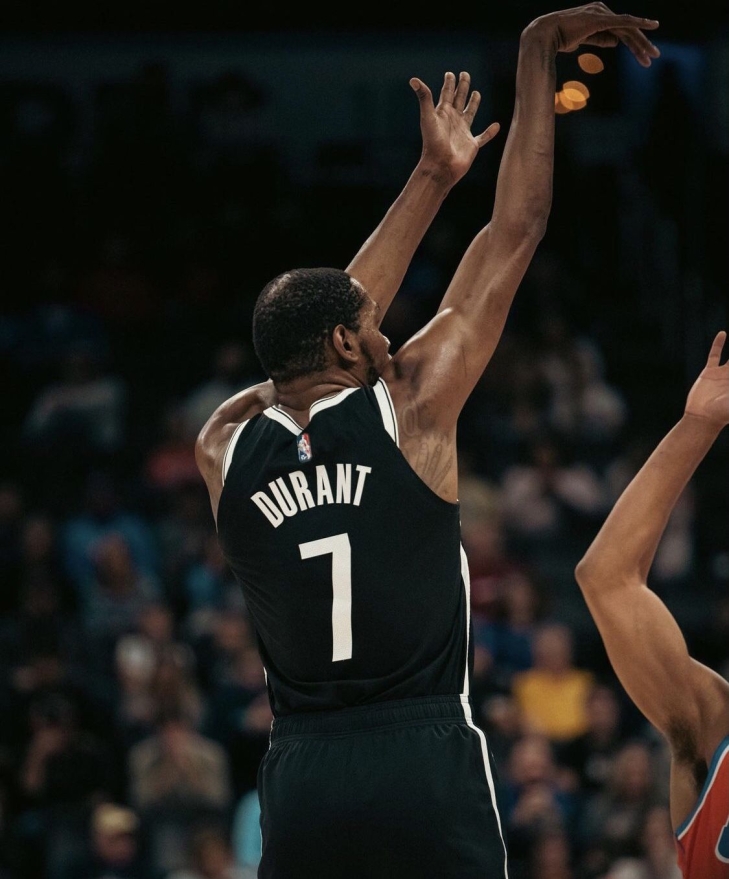
1. Kevin Durant, Brooklyn Nets, 152 Points: 38 Games, 30.0 PPG, 6.8 RPG, 5.4 APG, 0.8 SPG, 1.5 BPG, 27.1 PER, 6.4 WS. (#2 on last ranking)
The Nets are on fire, and whether are winning or losing, Durant always shines. Currently, he leads the league in Free Throw Percentage (.935).
2. Luka Doncic, Dallas Mavericks, 151 Points: 38 Games, 34.0 PPG, 8.8 RPG, 8.7 APG, 1.7 SPG, 0.6 BPG, 31.7 PER, 7.2 WS. (#1 on last ranking)
Doncic dropped to number two, behind KD, but for our money is still he front runner for the MVP. The European star is currently leading the NBA in Points per Game (34.0) and VORP (4.4).
3 (Tie). Jayson Tatum, Boston Celtics, 137 Points: 33 Games, 30.7 PPG, 8.2 RPG, 4.2 APG, 1.1 SPG, 0.9 BPG, 24.9 PER, 5.4 WS. (#3 on last ranking)
Tatum continues to get better which should scare the hell out of anybody cheering against the Celtics. He has never finished a season averaging over 30 Points per Game, and Tatum is over that now.
3 (Tie). Giannis Antetokounmpo, Milwaukee Bucks, 137 Points: 30 Games, 32.0 PPG, 11.8 RPG, 5.2 APG, 0.8 SPG, 0.9 BPG, 27.9 PER, 4.3 WS. (#4 on last ranking)
Giannis moves up another spot and the two-time MVP’s Bucks look ready to win it all. He is in the top five in Rebounds and Points per Game.
5. Nikola Jokic, Denver Nuggets, 135 Points: 36 Games, 25.3 PPG, 10.8 RPG, 9.5 APG, 1.4 SPG, 0.6 BPG, 32.0 PER, 7.8 WS. (#6 on last ranking)
The “Joker” is on fire lately, and we know someone wants to get that third Cup! He is currently leading the NBA in PER 32.0, Box Plus/Minus (12.3) and Win Shares (7.8).
6. Shai Gilgeous-Alexander, Oklahoma City Thunder, 134 Points: 35 Games, 30.9 PPG, 4.8 RPG, 5.7 APG, 1.6 SPG, 1.1 BPG, 26.6 PER, 5.3 WS. (#5 on last ranking)
Gilgeous-Alexander is going to be an All-Star this year, and is shattering last year’s averages, which were already good. How great will this Canadian be?
7. Ja Morant, Memphis Grizzlies, 129 Points: 33 Games, 27.2 PPG, 5.9 RPG, 8.0 APG, 1.1 SPG, 0.2 BPG, 24.9 PER, 3.7 WS. (#8 on last ranking)
Morant is the face of the Grizzles, and he is posting similar numbers from last year, when he took Memphis to the next level.
8. Jaylen Brown, Boston Celtics, 126 Points: 37 Games, 26.9 PPG, 7.1 RPG, 3.3 APG, 1.1 SPG, 0.4 BPG, 20.4 PER, 3.1 WS. (#7 on last ranking)
Brown’s appearance here gives Boston the only team to have two players in the top ten, and he currently has the highest traditional numbers of his career.
9. Joel Embiid, Philadelphia 76ers, 122 Points: 28 Games, 33.5 PPG, 9.8 RPG, 4.6 APG, 1.2 SPG, 1.6 BPG, 30.7 PER, 5.0 WS. (#8 on last ranking)
Embiid is currently second in Points per Game (behind Doncic), but is currently dealing with a foot injury.
10. Julius Randle, New York Knicks, 117 Points: 40 Games, 24.4 PPG, 10.0 RPG, 3.8 APG, 0.8 SPG, 0.4 BPG, 20.9 PER, 4.9 WS. (Not on last ranking)
Randle makes his first appearance this year in the top ten, and is currently boasting a higher PPG (24.4), than his All-Stat year two years ago (24.1).
DeMar DeRozan of the Chicago Bull fell off the top ten, just after making it on.
Our next update will happen after the first player breaches 160 Cup Points.
16. Ron Cey
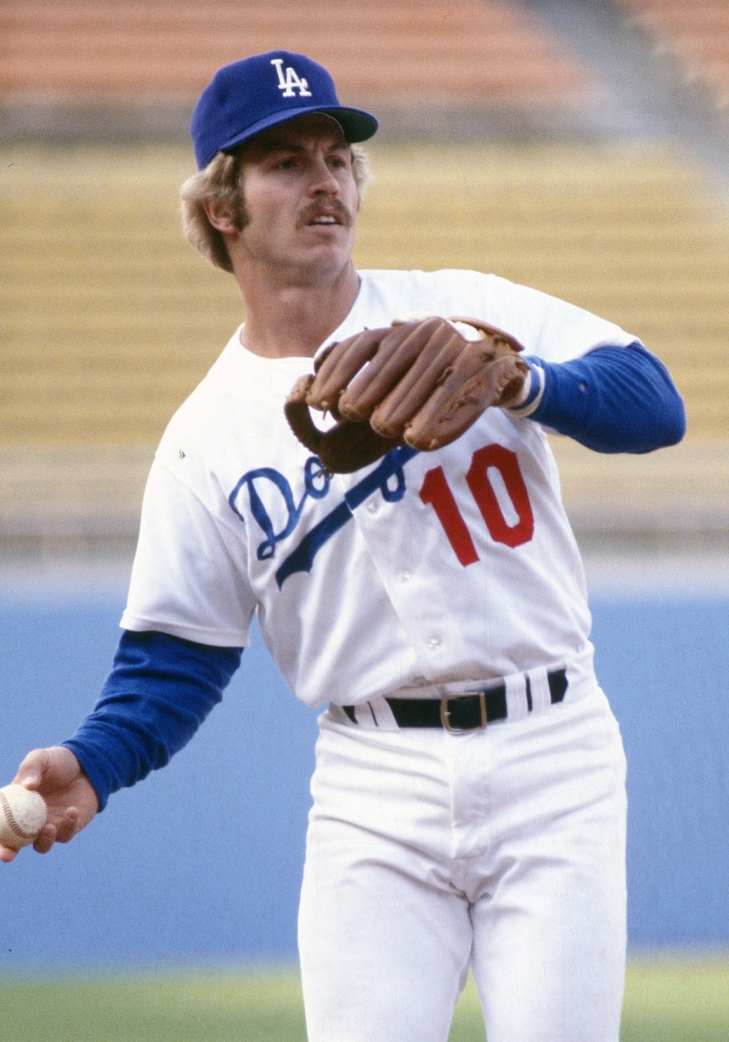
Ron Cey made his first MLB appearance in Los Angeles in 1971 as a stocky third baseman with a waddling walk, earning him the nickname "Penguin." However, his exceptional power and strategic dependability were serious assets. By 1973, he had established himself as the key figure at third base, forming a crucial part of what became the most resilient infield in baseball history.
Once he took on the starting role, Cey quickly proved his ability to hit balls into the seats repeatedly, a rare skill for a Dodgers team known for pitching and small ball tactics. By 1974, he had established himself as a player with a high potential ceiling, earning his first of six straight All-Star appearances. From 1974 to 1980, he achieved an impressive streak of seven consecutive seasons with at least 20 home runs. He demonstrated a particular talent for performing in clutch moments, especially during the 1977 season when he hit a career-best 30 home runs and drove in 110 RBIs. Although he wasn't flashy like other superstars, his efficiency at the plate and durability, playing at least 150 games in five seasons, made him a core player for a team that reached the World Series three times in five years.
Despite the strike-shortened schedule, Cey remained a professional mainstay, and in the 1981 Fall Classic against the Yankees, he provided the specialized spark needed to secure the title. He batted .350 in the series, earning World Series co-MVP honors and finally securing the ring that had eluded that core for a decade.
Before the 1993 season, the Dodgers traded Cey to the Chicago Cubs in a move designed to get younger and clear a path for Pedro Guerrero’s transition to the infield. With Los Angeles, Cey compiled 1,378 hits, 228 home runs, and a 1981 World Series MVP.
18. Roy Campanella
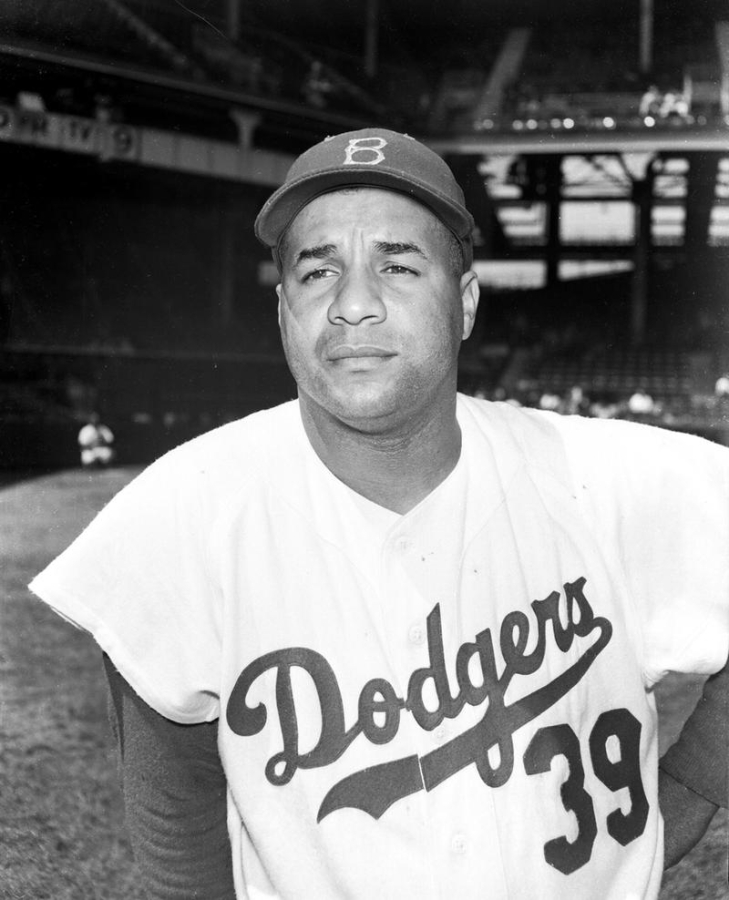
There is always one player on these top 50 lists that seems impossible to lock down. For the Dodgers, that man is Roy Campanella, a three-time MVP, but had they been judged by current metrics, he likely would not have won any.
Roy Campanella joined Brooklyn in 1948 after playing in the Negro Leagues. He was a stocky catcher with a unique combination of agility and power. Although Jackie Robinson broke the color barrier in 1947, Campanella joined him a year later to form a resilient and emotional pairing on the team, known as the "Boys of Summer.” By 1949, Campanella showed an impressive ability to control the running game, starting an incredible run of eight straight All-Star selections. He quickly became a key player, setting a high standard for catchers in baseball history.
During the early 1950s, Campanella won three National League MVP Awards in 1951, 1953, and 1955. His 1953 campaign remains a standout outlier for catchers; he belted a personal-best 41 home runs, led the league with 142 RBIs, and batted .312. He showcased total mastery of the "triple threat" for catchers: elite power, high average, and high-caliber defense. While modern metrics sometimes debate the value of those MVP votes, his specialized influence on the game’s best pitching staff was undeniable, as he led the league in caught-stealing percentage five times, once reaching a staggering 69.4% in 1951.
Campy anchored five different pennant-winning teams. In the 1955 World Series, he was a high-stakes contributor to the franchise's only title in Brooklyn, batting .318 during the regular season and outdueling teammate Duke Snider for his third MVP. It was a phenomenal run in Brooklyn, but tragedy reared its ugly head.
Just as the team was getting ready to move to Los Angeles, a devastating accident involving a flipped rental car caused a broken neck and left him permanently paralyzed. This injury abruptly ended a distinguished career, denying West Coast fans the chance to see a legend in his final years. Campanella was inducted into the Baseball Hall of Fame in 1969, in his seventh year of eligibility. His number 39 would also be retired by the team. Campanella compiled a .276 average, 242 home runs with the team.
Again, if this rank does seem a little low, remember that the Dodgers ahead of him have much longer tenures than Campanella, though not all of them were as important. Seriously, the Dodgers are the hardest to rank!
15. Orel Hershiser
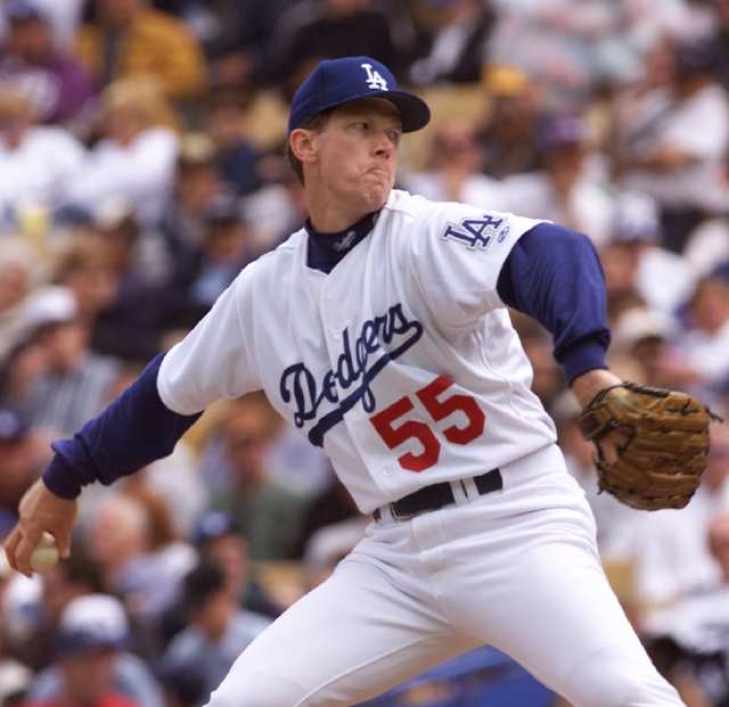
Orel Hershiser debuted in Los Angeles in 1983 as a 17th-round pick who was never supposed to be the "Bulldog" of a major league rotation. Initially viewed as a lean, cerebral pitcher with limited upside, he underwent a physical and mental transformation under the guidance of Tommy Lasorda, who demanded he pitch with a more aggressive, high-stakes intensity.
By 1985, Hershiser posted a 19-3 record, a 2.03 ERA, and finished third in Cy Young voting. He became a key player, surpassing Valenzuela as the Dodgers' go-to in high-pressure situations.
In 1988, Hershiser crafted a season that remains legendary in baseball history. He topped the league with 23 wins, pitched 267 innings, and achieved 8 shutouts. His most notable feat was setting a Major League record with 59 consecutive scoreless innings to close out the regular season. This exceptional performance made him a national star, earning him the Cy Young Award unanimously and a Gold Glove. He continued this winning streak into October, becoming the only player to win both NLCS MVP and World Series MVP in the same year, famously closing the Fall Classic with the final out to clinch the championship. It was an incredible peak, but many great careers have to overcome an injury. Hershiser was no different.
After a torn labrum and rotator cuff surgery in 1990, a radical procedure at the time, he showed the organization a specialized determination during a grueling rehabilitation. While he never quite reclaimed the high-frequency dominance he had in 1988, he remained a professional mainstay and a high-stakes veteran leader. There was one final chapter in Los Angeles, as he enjoyed a sentimental return to the Dodgers in 2000. While he mentored younger arms, his effectiveness on the mound had finally waned, leading to his release that summer.
Overall, Hershiser compiled a 135-107 record, a 3.12 ERA, and 1,455 strikeouts.
