

6. Jimmy Johnson
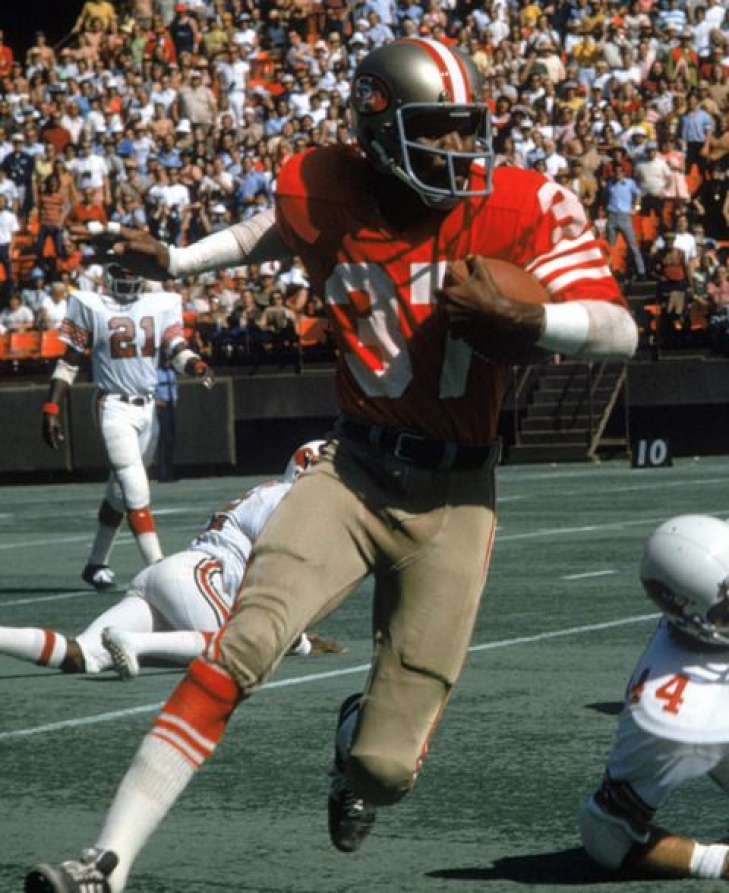
Jimmy Johnson came from an athletic family that included his brother Rafer, the 1960 Olympic decathlon gold medalist, so the talent was never in question. The defensive back played his college ball at UCLA and stayed in California when the 49ers selected him sixth overall in the 1961 draft. He began his career at cornerback, recorded five interceptions as a rookie, and looked like a solid starter. The 49ers then moved him to flanker for one season, where he posted 627 yards, before shifting him to safety in 1963. He returned to cornerback and stayed there for the rest of his career. His versatility showed early, but the secondary was clearly where he belonged, and once he settled in, he became a problem for every receiver lined up across from him.
Johnson proved reliable throughout the 1960s, yet the peak arrived later. From 1969 through 1972, he earned Pro Bowl and first-team All-Pro recognition every season, and his Approximate Value never dropped below 14. He intercepted five passes in 1969, two in 1970 (including a touchdown), three in 1971, and four in 1972. During that stretch, he was widely regarded as one of the league’s best defensive backs, and many considered him the best. He matched up against the top receivers of the era and rarely gave them easy separation or clean releases. The combination of coverage skill, physicality at the line, and range in the deep field made him difficult to beat for a full game. He jammed receivers at the line, stayed in their hip pocket through the route, and arrived at the catch point with enough force to disrupt the play. Offenses had to account for him on every throw, and the 49ers’ secondary played with more confidence and more physicality when he was on the field. Quarterbacks quickly learned that throwing his way usually meant a contested catch or worse.
The production stayed strong after the All-Pro streak ended. He recorded four interceptions in 1973, three in 1974 (another Pro Bowl year), two in 1975, and one in his final season of 1976. He remained with the franchise through the 1976 season and continued to start even as the supporting cast around him changed. Johnson finished his career with 47 interceptions for 615 yards and two touchdowns, all of them in a 49ers uniform, along with seven fumble recoveries. He retired after sixteen seasons as one of the most accomplished cornerbacks in franchise history. The sixth overall pick, who spent one year as a flanker, became the clear standard in the secondary during the late 1960s and early 1970s.
With the team, he recorded 47 interceptions and earned five Pro Bowl selections along with four first-team All-Pro honors. Those numbers reflected both the individual excellence and the sustained impact he brought across more than a decade in San Francisco. He finished as one of the most dominant defensive backs of his generation, and his consistency made him one of the most valuable players on the roster for most of his career.
Johnson entered the Pro Football Hall of Fame in 1994. He was named to the 1970s All-Decade Team. The 49ers retired his number 37 in 1977 and inducted him into their Hall of Fame in 2009 as part of the first class.
3. Steve Young
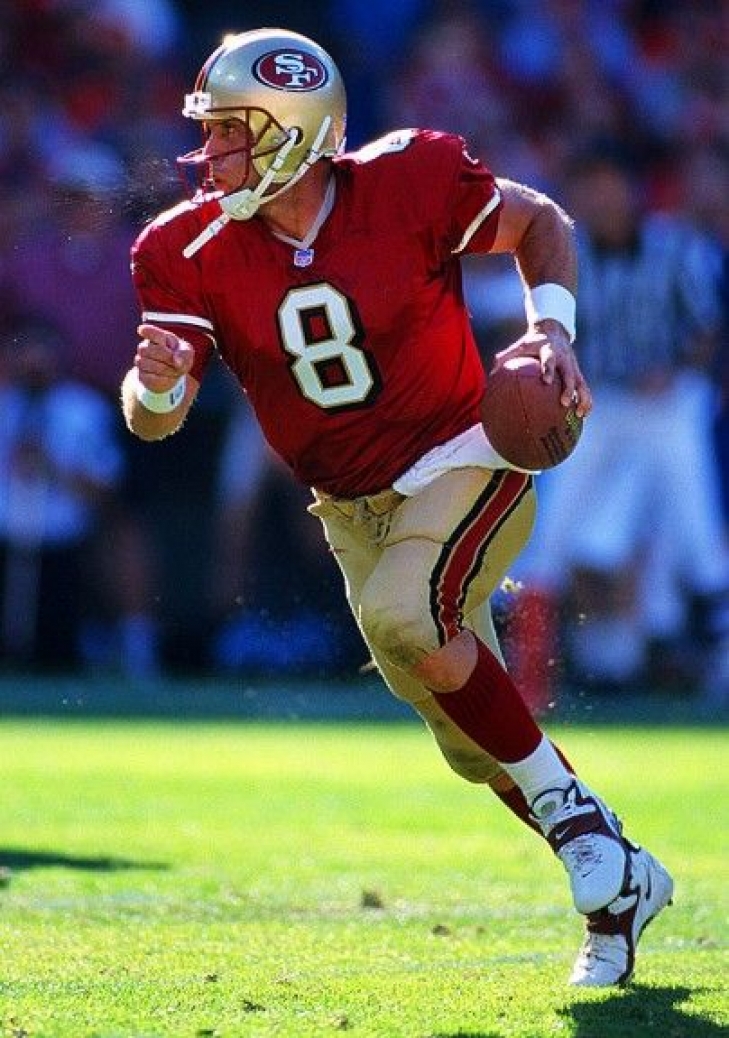
The 49ers already had Joe Montana when Steve Young arrived, and for a while it looked like the younger quarterback might spend his career as a high-end backup. Young was an All-American at BYU, signed with the Los Angeles Express in the USFL, and then landed with the Tampa Bay Buccaneers after the league folded. Two years in Tampa produced only three wins on a terrible roster, and the Buccaneers traded him to San Francisco so they could draft Vinny Testaverde. The 49ers got a mobile quarterback with a live arm and a history of winning at every level except the NFL.
Young spent his first four seasons in San Francisco as Montana’s understudy. He played when the starter was hurt and looked sharp every time he got the chance. In 1991, Montana went down, and Young took over for 11 games. He threw for 2,517 yards and 17 touchdowns while posting a league-leading 101.8 passer rating. The production was good enough that some wondered whether the 49ers should stick with him. Montana was still recovering, and the team had another young quarterback in Steve Bono, but Young removed any doubt the following year.
By 1992, he was the clear starter. He earned his first Pro Bowl and first-team All-Pro selection, led the NFL in completion percentage, touchdown passes, passer rating, and Approximate Value, and won the AP, NEA, and PFWA MVP awards, plus the Bert Bell Award and Offensive Player of the Year. The 49ers reached the NFC Championship Game and lost to Dallas. Montana was traded to Kansas City before the next season, and Young no longer had to look over his shoulder. He took the team back to the conference title game, lost again to the Cowboys, and still led the league in touchdowns, passer rating, and Approximate Value while earning another first-team All-Pro nod.
The breakthrough arrived in 1994. Young completed 70.3 percent of his passes, threw 35 touchdowns, and posted a 112.8 passer rating. He led the NFL in all of those categories along with Approximate Value, earned his third straight first-team All-Pro selection, and collected another set of MVP awards and the Bert Bell Award. The 49ers finally beat Dallas in the NFC Championship Game and then crushed the San Diego Chargers in the Super Bowl, where Young was named MVP. The dual-threat ability that had always been part of his game showed up in the biggest moments. He could beat defenses with his arm or take off and run when the pocket collapsed, and the combination made him difficult to contain for four quarters.
He remained productive after the championship. Young earned Pro Bowl selections every season from 1995 through 1998. During that stretch, he led the league in completion percentage three more times, in passer rating twice, and in touchdown passes once. The mobility never completely disappeared, and the accuracy stayed high even as the supporting cast changed. Defenses still had to account for both the deep ball and the scramble, and the 49ers’ offense kept leaning on him when games were close.
Young’s style combined precision with athleticism in a way that few quarterbacks of the era matched. He could drop back and hit intermediate routes with timing that kept the offense on schedule, then pull the ball down and gain yards with his legs when the protection broke down. That dual threat forced defenses to respect both the pass and the run on every snap, opening throwing lanes for Jerry Rice and the rest of the receiving corps. The efficiency numbers stayed elite even in seasons when the supporting cast was not at its peak.
Young’s career ended after the 1999 season. A concussion and the post-concussion symptoms that followed forced him to retire. He left San Francisco after more than a decade as one of the most efficient quarterbacks in franchise history and as the starter who had delivered a Super Bowl title after Montana’s departure. The former USFL and Buccaneers quarterback, who arrived as a backup, became the clear face of the offense during the 1990s.
As a Niner, he threw for 29,907 yards with 221 touchdowns against 86 interceptions. He also rushed for 3,581 yards and 37 touchdowns. Those totals, combined with the MVP awards and the Super Bowl production, reflected both the individual excellence and the sustained impact he brought once he became the starter.
Young entered the Pro Football Hall of Fame in 2005. The 49ers retired his number 8 in 2008 and inducted him into their Hall of Fame the following year.
4. Ronnie Lott
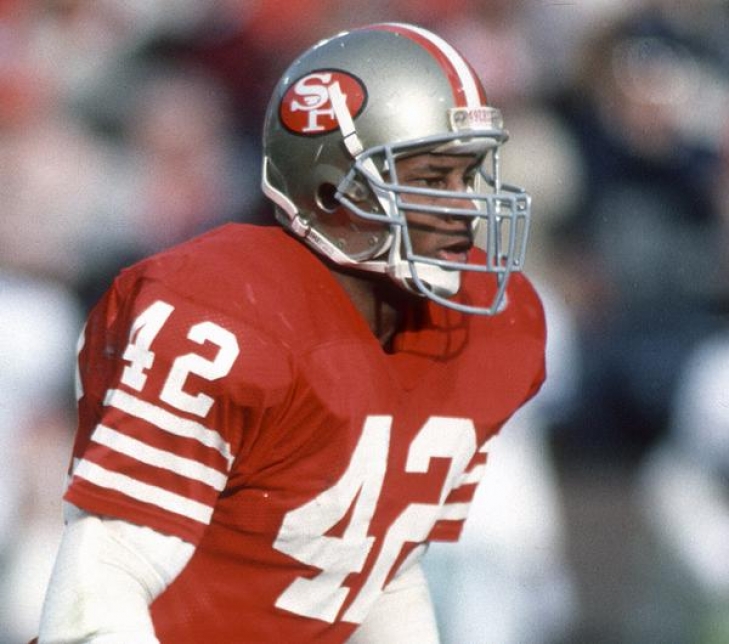
The San Francisco 49ers of the 1980s were known for Joe Montana and Jerry Rice, yet the defense that kept opposing offenses in check was led by Ronnie Lott. He arrived as the eighth overall pick in the 1981 draft out of USC, a national champion who stayed in California and immediately became a starter. As a rookie, he returned three interceptions for touchdowns, earned first-team All-Pro recognition, and helped the 49ers win their first Super Bowl. Only Lawrence Taylor kept him from being named Defensive Rookie of the Year. The physical presence was obvious from the start. Lott played with a violence that made receivers think twice about catching the ball in his area, and the secondary gained an immediate edge.
He spent his first five seasons at left cornerback and made the Pro Bowl in the first four. In the strike-shortened 1982 season, he led the NFL in tackles, a rare feat for a defensive back, and he continued to shut down the boundary the following year. The 1984 campaign brought another Super Bowl win, and Lott was again central to a defense that limited opposing offenses throughout the postseason. He matched up against the league’s best receivers week after week and rarely gave them clean releases or easy catches. His size, speed, and physicality at the line of scrimmage made him one of the hardest corners to separate from, and quarterbacks learned to look elsewhere when he was in coverage.
After the 1984 championship, the team moved him to free safety. The change suited him perfectly. He led the league with 10 interceptions in 1986 and posted a 20 Approximate Value in both 1986 and 1987, leading the NFL in the latter year. From the deeper position, he still arrived at the catch point with force, and receivers continued to pay a price for contested balls. He diagnosed run plays quickly and filled gaps from the secondary, which allowed the 49ers to play more aggressively up front. The production stayed elite even as the responsibilities changed, and the secondary played with more range and confidence once he settled in at free safety.
He anchored that unit for two more Super Bowl wins later in the decade. Across his time in San Francisco, he recorded 51 interceptions, a total that reflected both his range and the instincts that put him in the right place. Offenses had to account for him on every throw, whether he was playing corner or safety, and the 49ers’ defense played with more physicality when he was on the field. The combination of coverage skill and hitting ability made him one of the more complete defensive backs of the era, and younger players in the secondary looked to him for the standard of how the position should be played.
Lott left for the Los Angeles Raiders before the 1991 season. He played four more years before retiring. He left San Francisco after a decade as one of the most accomplished defensive backs in franchise history and as a key contributor to four Super Bowl championships. The eighth overall pick, who returned three interceptions for touchdowns as a rookie, became the clear leader of the secondary during the 49ers’ most successful era.
In the Bay Area, he earned multiple Pro Bowl and All-Pro selections while helping the team win four Super Bowls. Those recognitions, combined with the interception total and the championship contributions, reflected both the individual excellence and the sustained impact he brought across ten seasons in San Francisco. He finished as one of the more dominant defensive backs of his generation.
Lott entered the Pro Football Hall of Fame in 2000. He was named to the 1980s All-Decade Team, the NFL 75th Anniversary Team, and the 100th Anniversary Team. The 49ers retired his number 42 in 2003 and inducted him into their Hall of Fame in 2009 as part of the inaugural class.
5. Leo Nomellini
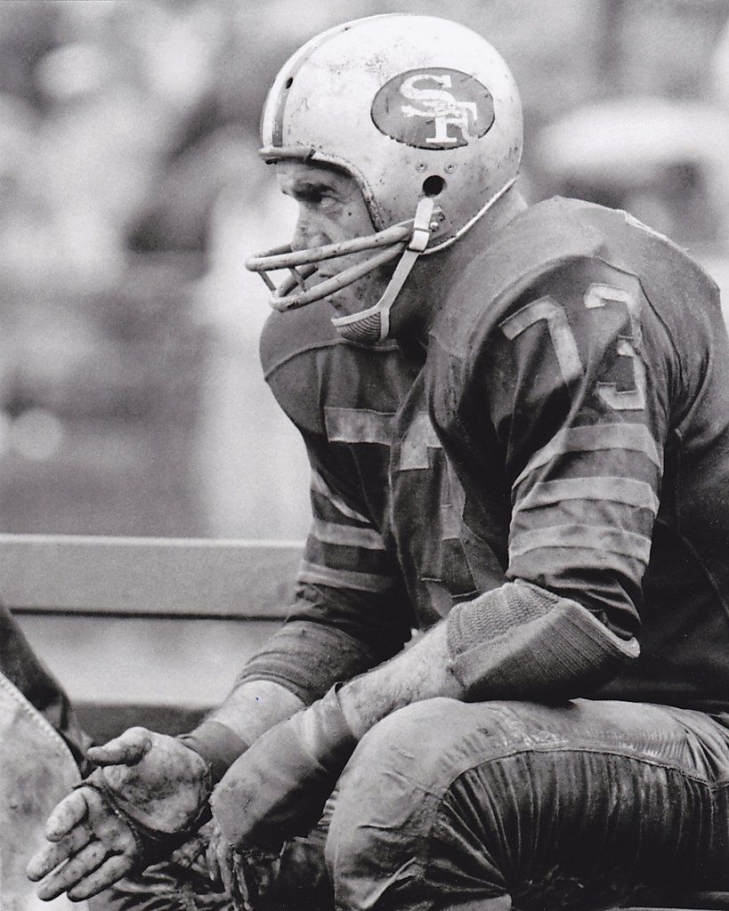
Leo Nomellini arrived in San Francisco as the 11th overall pick in the 1950 draft out of Minnesota, a two-time All-American and future College Football Hall of Famer who immediately became a starter. Known as The Lion, he spent his early seasons primarily at offensive tackle and earned first-team All-Pro honors in both 1951 and 1952. The strength and quickness he brought to the line made him a mismatch for most defensive ends of the era, and the 49ers’ offensive line gained an immediate anchor. He was already among the best at his position before he ever moved to the other side of the ball.
He later shifted more of his time to defensive tackle and earned four first-team All-Pro selections in that role, in 1953, 1954, 1957, and 1959. Few players of the period earned All-Pro recognition on both sides of the ball, and Nomellini did so while remaining a full-time starter. During those peak defensive years, he consistently disrupted the interior, forced offensive lines to account for him on every snap, and gave the 49ers’ defense a reliable presence in the middle. The combination of size, speed, and technique made him difficult to handle for a full game, and he was widely regarded as the best player on the 49ers roster throughout the 1950s. Opponents had to double-team him or risk having the play blown up before it developed, and the 49ers’ front played with more physicality whenever he was on the field.
Nomellini never missed a game across his fourteen seasons with the franchise. The durability was remarkable for a lineman who played through the physical style of that era, and it allowed the 49ers to count on him every week. He retired after the 1963 season. He left San Francisco after more than a decade as one of the most accomplished two-way players in franchise history and as a clear standard at both offensive and defensive tackle.
In San Francisco, he earned multiple first-team All-Pro selections on both sides of the ball and never missed a start. Those recognitions, combined with the longevity, reflected both the individual excellence and the sustained impact he brought across fourteen seasons in San Francisco. He finished as one of the more dominant linemen of his generation.
Nomellini also wrestled in the off-season and became a multi-time tag-team champion. He was inducted posthumously into the Professional Wrestling Hall of Fame. The same strength and athleticism that defined his football career translated to the ring, and the dual success added another layer to a career that already stood out for its versatility.
He was inducted into the Pro Football Hall of Fame in 1969. He was named to the 1950s All-Decade Team and the NFL 50th Anniversary Team. The 49ers retired his number in 1971, making him one of the first two players to receive that honor, and he was a charter member of the 49ers Hall of Fame.
1. Jerry Rice
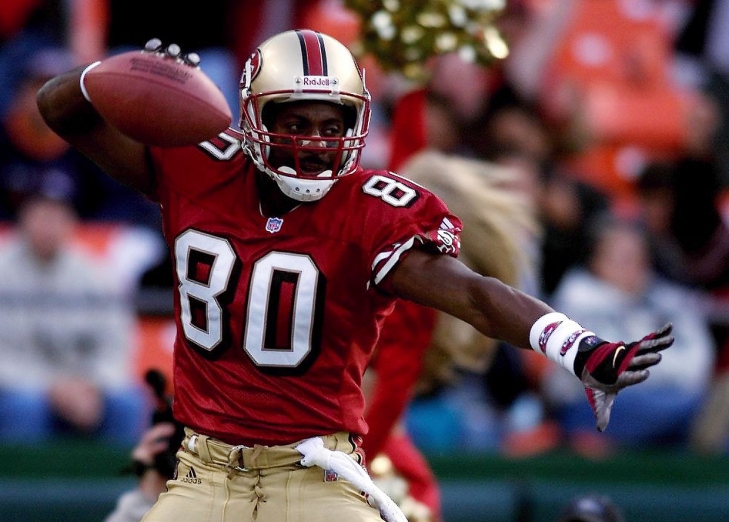
There is no debate.
Jerry Rice is the greatest wide receiver who ever lived, and he is the greatest player in San Francisco 49ers history.
The franchise has produced a long line of Hall of Famers and won multiple Super Bowls, yet no other name sits at the top of the list with the same certainty. Rice was the 16th overall pick in the 1985 draft out of Mississippi Valley State, a Division I-AA program where he had already rewritten the record book. The 49ers got a receiver who was about to make every other wideout in the league look ordinary.
His rookie year produced 927 yards and All-Rookie recognition. That was the quiet part. The next season he jumped to 1,570 yards and 15 touchdowns and made his first Pro Bowl. Then 1987 arrived, and the numbers became ridiculous. In just 12 games, Rice scored 22 touchdowns, led the league in receiving yards, and walked away with the Bert Bell Award, plus NEA and PFWA MVP honors. Defenses had no answer for him. He followed that with 1,306 yards and 9 touchdowns the next year, then exploded again in 1989 with 1,483 yards and 17 touchdowns while helping the 49ers win the Super Bowl.
The peaks kept coming. He led the NFL with 1,502 yards and 13 touchdowns in 1990, then posted 1,206 yards and 14 scores the following season. Another 1,201 yards and 10 touchdowns arrived after that. In 1993, he recorded 1,503 yards and 15 touchdowns. The next year he put up 1,499 yards and 13 scores while the 49ers won another Super Bowl. He led the league with 1,848 yards and 15 touchdowns in 1995, then finished with 1,254 yards and 8 touchdowns in 1996. Eleven straight Pro Bowls. Ten first-team All-Pro selections. Six receiving-yard titles. Six receiving-touchdown titles. Two Offensive Player of the Year awards. Three Super Bowl rings and a Super Bowl MVP. The list is absurd.
He stood out because the full package rarely shows up in one player. Rice was fast enough to threaten deep, precise enough to win on intermediate routes with sharp breaks and perfect timing, and strong enough to finish plays after contact. His route-running was elite. He created separation with subtle movements, sold vertical stems, and arrived at the right depth at the right moment. He almost never dropped the ball, even in traffic, and he turned short throws into long gains by making the first defender miss. The quarterbacks who threw to him were excellent. They were still more fortunate to have Rice as their primary target than he was to have them.
The work habits matched the talent. Rice stayed after practice to refine routes and studied film to find the smallest advantages. That preparation showed up every Sunday. Defenses could not take him away consistently, and the gap between him and the next tier of receivers was obvious to anyone watching. He was the clear top option throughout the championship years, and the offense leaned on him when the stakes were highest.
He was just as dominant in the postseason. Across 23 playoff games with the 49ers, he totaled 1,811 yards and 19 touchdowns. Those numbers came against the best defenses the league could offer, and they still looked like regular-season production. The consistency carried over when the games mattered most.
Rice played for San Francisco until he signed with the Oakland Raiders in 2001. He spent three and a half seasons there before finishing his final year with the Seattle Seahawks. He left the 49ers after sixteen seasons as the franchise’s all-time leader in receiving yards and receiving touchdowns. The 16th overall pick from Mississippi Valley State, who posted 927 yards as a rookie, became the most productive receiver in NFL history while still wearing a 49ers uniform.
With San Francisco, he recorded 19,247 receiving yards and 176 receiving touchdowns. Both totals still rank first in league history even before the numbers from Oakland and Seattle are added. Those figures, combined with the Pro Bowl streak, the All-Pro recognition, and the Super Bowl production, reflect a level of sustained excellence that has not been matched.
Rice was named to the 1980s and 1990s All-Decade Teams. He entered the Pro Football Hall of Fame on the first ballot in 2010 and was later named to the NFL 100th Anniversary Team. The 49ers retired his number and inducted him into their Hall of Fame the same year. The receiver, who arrived from a small college in 1985 and spent the next decade making every other wide receiver look ordinary, became the clear standard against which the position is measured, not just for the Niners but for every team in the league.
2. Joe Montana
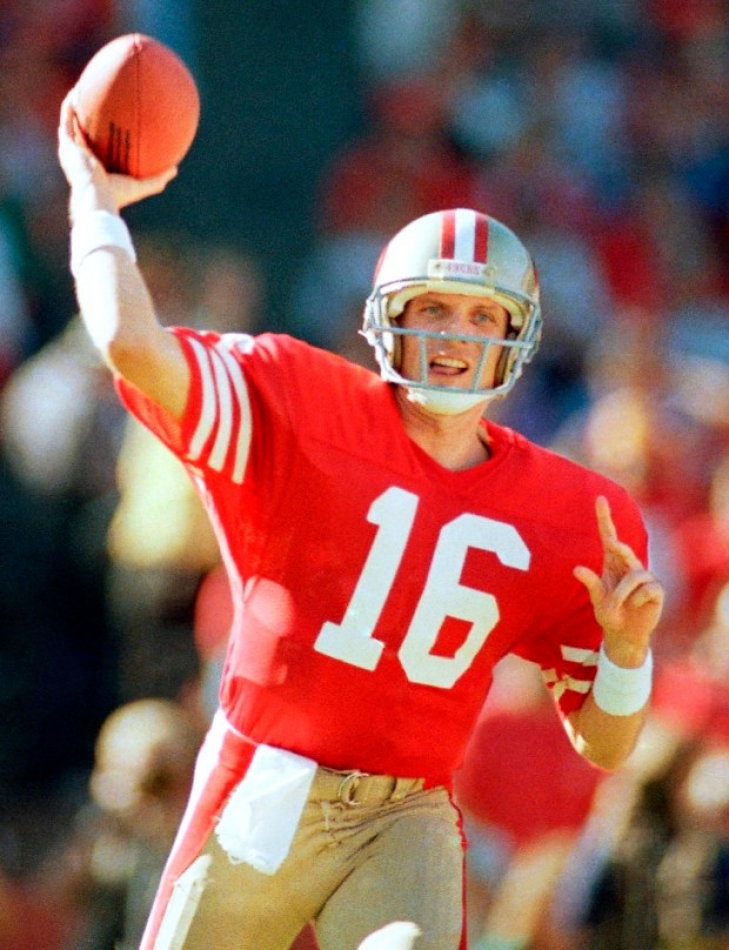
Joe Montana is the greatest quarterback the San Francisco 49ers ever had, and for a long stretch he was the best in the entire league. The 49ers took him in the third round of the 1979 draft out of Notre Dame, and for a while, it looked like they'd found a solid backup. Then the wins started arriving, and suddenly the entire franchise looked different. Montana turned the 49ers into a dynasty, and he did it with a calm that made the biggest moments look routine.
He became the full-time starter in 1981 and immediately led the team to its first Super Bowl. That postseason included The Catch, the rolling touchdown pass to Dwight Clark that beat the Cowboys in the NFC Championship Game. Two weeks later, he was the MVP of Super Bowl XVI. The production kept climbing from there. In the strike-shortened 1982 season, he still threw for 2,613 yards and 17 touchdowns in only nine games. The following year he posted 3,910 yards and 26 touchdowns while the 49ers returned to the playoffs. In 1984, he threw for 3,630 yards and 28 scores, earned Super Bowl MVP honors after the team beat the Dolphins, and looked completely in control of every situation the defense threw at him.
The middle of the decade brought more of the same. In 1985, he recorded 3,653 yards and 27 touchdowns. A back injury limited him to eight games in 1986, yet he still managed 2,236 yards. He returned fully in 1987 and threw 31 touchdowns while posting a 102.1 passer rating. In 1988, he added 2,981 yards and 18 scores as the 49ers kept winning. Defenses kept trying to take him out of the game, and he kept finding ways to move the ball anyway.
The peak arrived in the late 1980s. In the following season, he led the league with a 112.4 passer rating, threw for 3,521 yards and 26 touchdowns, and was named NFL MVP and Offensive Player of the Year. The 49ers won Super Bowl XXIII that season, and Montana directed the famous 92-yard drive in the final minutes. The next year he threw for 3,944 yards and 26 touchdowns, earned another MVP, and was the MVP of Super Bowl XXIV after the 49ers destroyed the Broncos 55-10. He finished that game with five touchdown passes and no interceptions. Four Super Bowl wins. Three Super Bowl MVPs. Zero interceptions in 122 Super Bowl attempts. The numbers still look absurd.
Montana’s style was built on timing, accuracy, and composure. He did not possess the strongest arm in the league, yet he put the ball exactly where his receivers needed it, and he did it under pressure that would have rattled most quarterbacks. The nickname Joe Cool was not marketing. He remained steady when the pocket collapsed, when the clock was running out, and when the defense knew the play was coming. The 49ers’ offense thrived because he could process the field quickly and deliver the throw on time. Jerry Rice and the rest of the receiving corps were exceptional. They were still more fortunate to have Montana throwing to them than he was to have them.
Injuries eventually limited him. He missed most of 1991 and appeared in only one game in 1992. By then Steve Young had developed into a star, and Montana became expendable. The 49ers traded him to the Kansas City Chiefs before the 1993 season. He left San Francisco after fourteen years as the franchise’s all-time leader in passing yards and touchdowns and as the quarterback who had delivered four Super Bowl championships. The third-round pick who started his career as a backup became the face of the most successful era in 49ers history.
With the 49ers, he completed 2,929 of 4,600 passes for 35,124 yards, 244 touchdowns, and 123 interceptions. Those totals, combined with the Super Bowl production and the MVP awards, reflected a level of sustained excellence that few quarterbacks have matched. He finished as one of the most clutch players the position has ever produced.
Montana entered the Pro Football Hall of Fame in 2000. He was named to the 1980s All-Decade Team, the NFL 75th Anniversary Team, and the 100th Anniversary Team. The 49ers retired his number 16 and inducted him into their Hall of Fame.
Yeah, he can pass!
#26 Overall, George Kittle, San Francisco 49ers, #2 Tight End
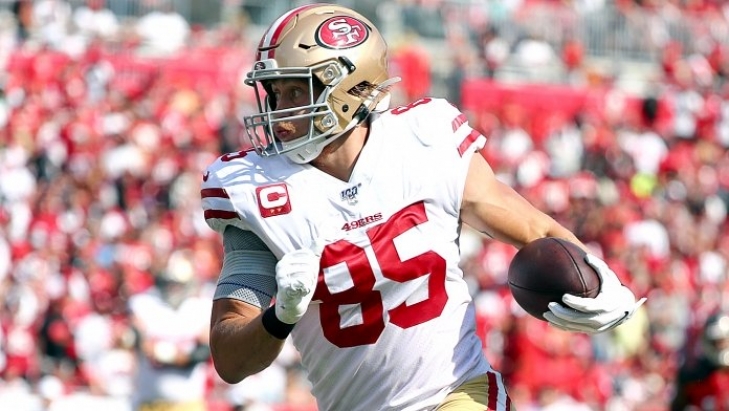
2025 Pre-Season Rank #34, 2024 Pre-Season Rank #42, 2023 Pre-Season Rank #59, 2022 Pre-Season Rank #74, 2021 Pre-Season Rank #86, 2020 Pre-Season Rank #93. Peak Period: 2018-19/22-24.
The man who coined “National Tight Ends Day” would be the toast of his position over the last decade if it were not for Travis Kelce, but George Kittle has become well known just the same!
Kittle is coming off his seventh Pro Bowl, where he just broke 8,000 lifetime yards and remained one of the best blocking Tight Ends in the game. A San Francisco 49er for all of his nine years, Kittle is now north of 30, but still plays like he is in his prime. With Rob Gronkowski (and possibly Jason Witten) entering soon, the statistical bar for Tight Ends is growing, but if Kittle can make it to five digits in yards, coupled with the respect that he has as a blocker, he is definitely in the Canton hunt.
#17 Overall, Christian McCaffrey, San Francisco 49ers, #2 Running Back
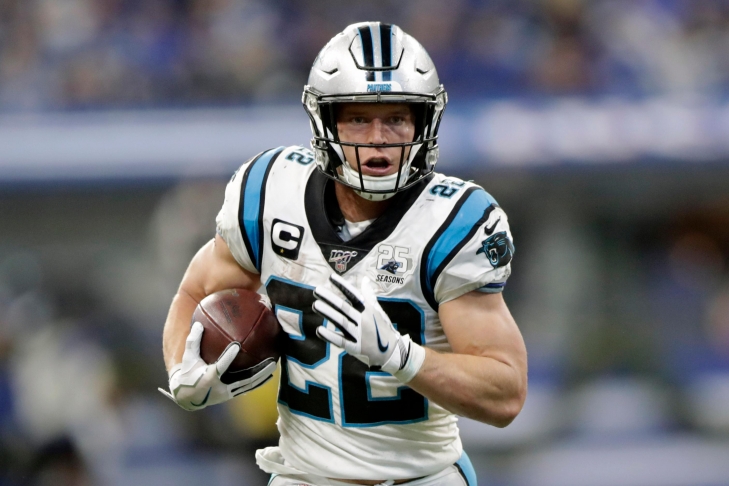
2025 Pre-Season Rank #21, 2024 Pre-Season Rank #16, 2023 Pre-Season Rank #55 Pre-Season Rank #66, 2021 Pre-Season Rank #76, 2020 Pre-Season Rank #81. Peak Period: 2017-18/2021-23
When we look at the 2026 Pro Football Hall of Fame Class, the induction of Roger Craig bodes well for another current 49er, Christian McCaffrey.
McCaffrey started his career with the Carolina Panthers, and in 2019, he joined Craig by rushing for over 1,000 yards and catching passes for over 1,000 yards—a rare accomplishment only shared by Craig and McCaffrey. Injuries hindered his progress in the following two years, but in 2022, when he was healthy and returned to Pro Bowl form, the team that had given up and traded him to San Francisco surrounded him. McCaffrey is one of the most adaptable running backs, but his role often involves dealing with injuries.
In 2023, McCaffrey won his first Rushing Title, while also winning his second Yards From Scrimmage and Touchdown title. This was an incredible campaign that as per usual CMC fashion, was followed by an injury-plagued year.
Last season, McCaffrey had his third 2,000-yard-plus YFS year, and is in a place where he is 21 yards shy of 13,000 in YFS, and is still capable of pounding more yards as long as the injury bug does not bite.
Is CMC a Hall of Famer? Craig’s induction surely helps, but a ring would help more!
298. Bart Oates
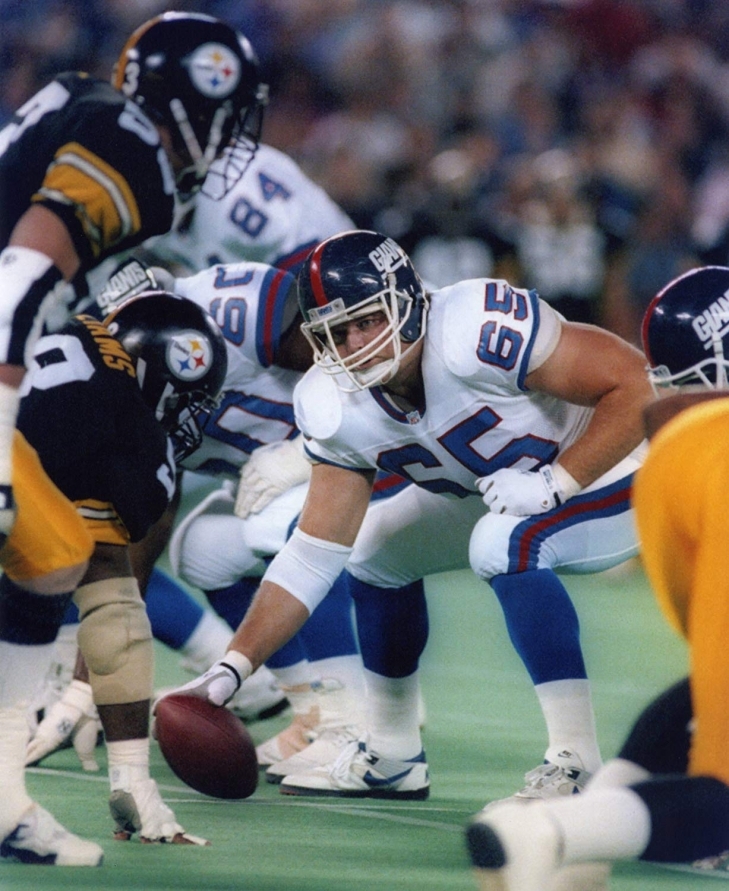
In terms of Centers, there are few Professional Football players who can say that they are as successful as Bart Oates.
After going undrafted out of BYU in 1983, Oates joined the Philadelphia Stars of the USFL and won championships with them in 1984 and 1985. When the USFL folded, he signed with the New York Giants, where he would become their starting Center, and was named an All-Rookie. The following season would see Oates win another title, this time a Super Bowl Ring when the Giants won Super Bowl XXI. In 1990, Oates and the Giants won another Super Bowl (XXV), but for the first time, he made the Pro Bowl.
This began his most successful individual run, as he earned that honor in 1991 and 1993. He would sign with the San Francisco 49ers for 1994, where he played two seasons and went to his fourth and fifth Pro Bowls. He would win another title when he assisted the Niners in their win in Super Bowl XXIX.
Five pro rings are pretty damned good, don’t you think?
302. Frankie Albert
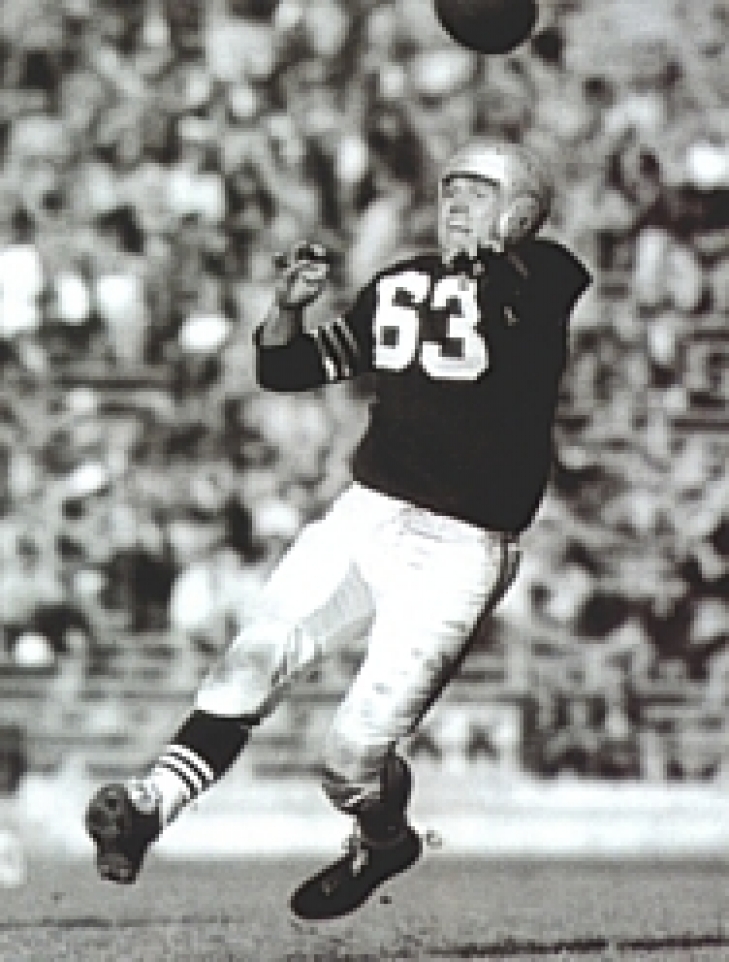
Frankie Albert was the 10th overall pick in 1942 by the Chicago Bears, but remember, the year in question was 1942. The Stanford graduate served in the Navy during World War II, and upon his return, he played for his home state's Los Angeles Bulldogs in the Pacific Coast League before joining the San Francisco 49ers in the upstart All-American Football Conference.
Albert played all four years of the AAFC's existence with San Francisco, where he was one of the league's better Quarterbacks. Albert was named a Second Team All-Pro three times, and he led the league in Passing Touchdowns in 1948 and 1949 and in Completion Percentage in 1948. When the team was absorbed into the National Football League in 1950, Albert was named to the Pro Bowl, proving to the gridiron world that he was just as good as any NFL pivot.
Albert threw for 10,795 Yards and 115 TDs and ran for another 1,272 Yards and 27 TDs. These are great numbers for a Quarterback from 1946 to 1952, and they can't be dismissed. Sadly, much of what happened in the AAFC has not translated into Canton.
191. Tim McDonald
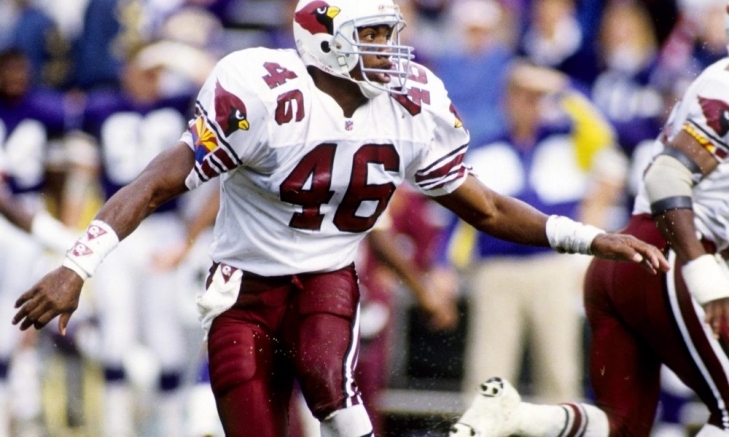
Tim McDonald split his career between the St. Louis Cardinals and San Francisco 49ers, where the Safety went to three Pro Bowls and earned two Second Team All-Pro selections with each team. McDonald would have four seasons where he went over 100 Tackles and would have 1,138 in total, along with 40 Interceptions over his career. He was a member of San Francisco's Super Bowl XXIX championship team and would have had a higher profile had he not been a Cardinal in the first half of his season and overshadowed by other 49ers defensive players in the second half of his career.
189. Abe Woodson
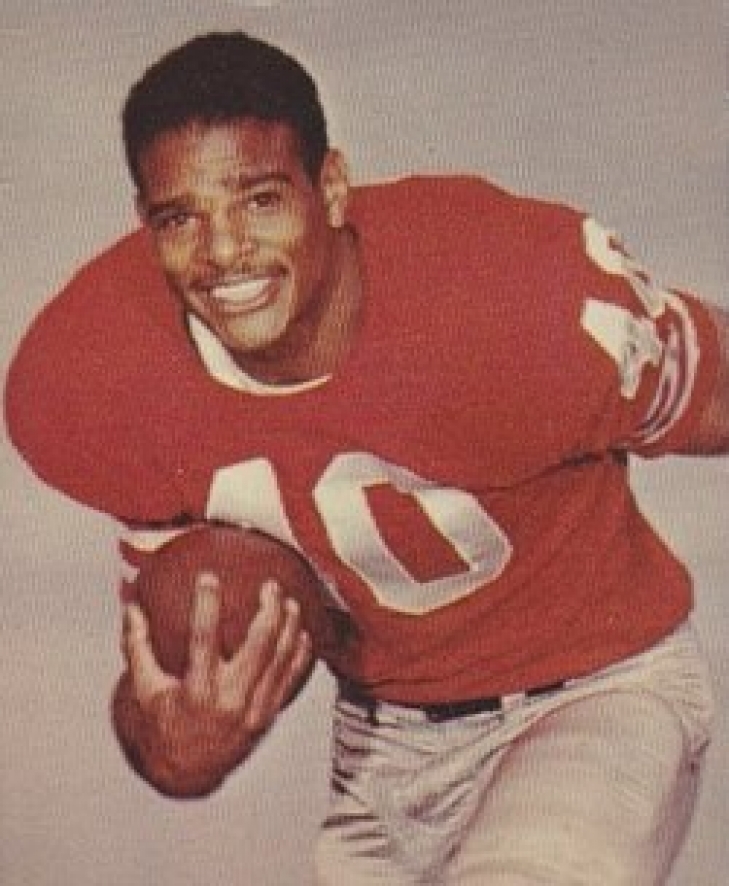
Abe Woodson’s regular role was at Cornerback where he would accumulate 19 Interceptions over his career, but it was his returning ability that would see him gain five straight Pro Bowls Selections (1959-63)
Drafted in the 2nd Round from the University of Illinois, Abe Woodson's best seasons were with the San Francisco 49ers. Woodson, who was also a two-time First Team All-Pro, would record 6,850 Return Yards and would average a whopping 28.7 Yards per Kick Return. He would have four straight years where he had at least 1,000 All-Purpose Yards.
165. Gene Washington
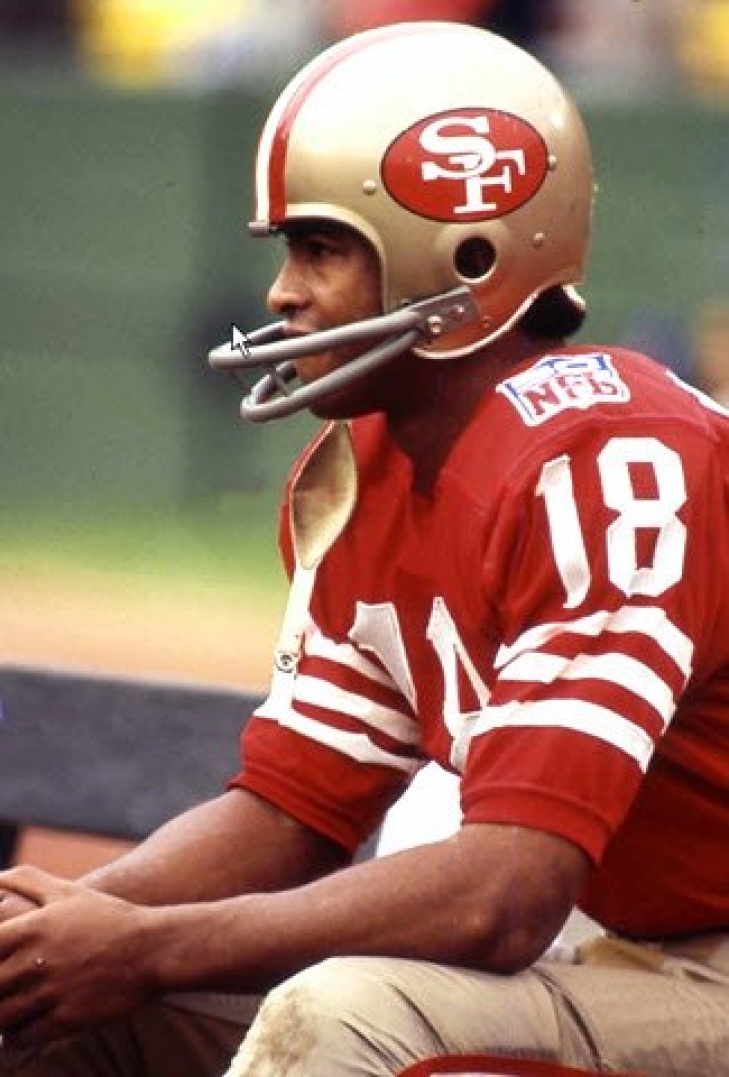
A First Round Pick from Stanford in 1969, Gene Washington was part of the turnaround for the San Francisco 49ers from league doormats to respectability. In his first four seasons in the National Football League, Washington made the Pro Bowl, earning First Team All-Pro honors in three of those years.
In 1970, Washington would have his best season, with his 1,100 Receiving Yards seeing him capture the league lead, and he would again finish at the top of another statistical category in 1972 with his 12 Touchdown Receptions. Save for his final campaign with the Detroit Lions, Washington would play all of his career with the Niners and would accumulate 60 Touchdowns in total.
233. Bruno Banducci
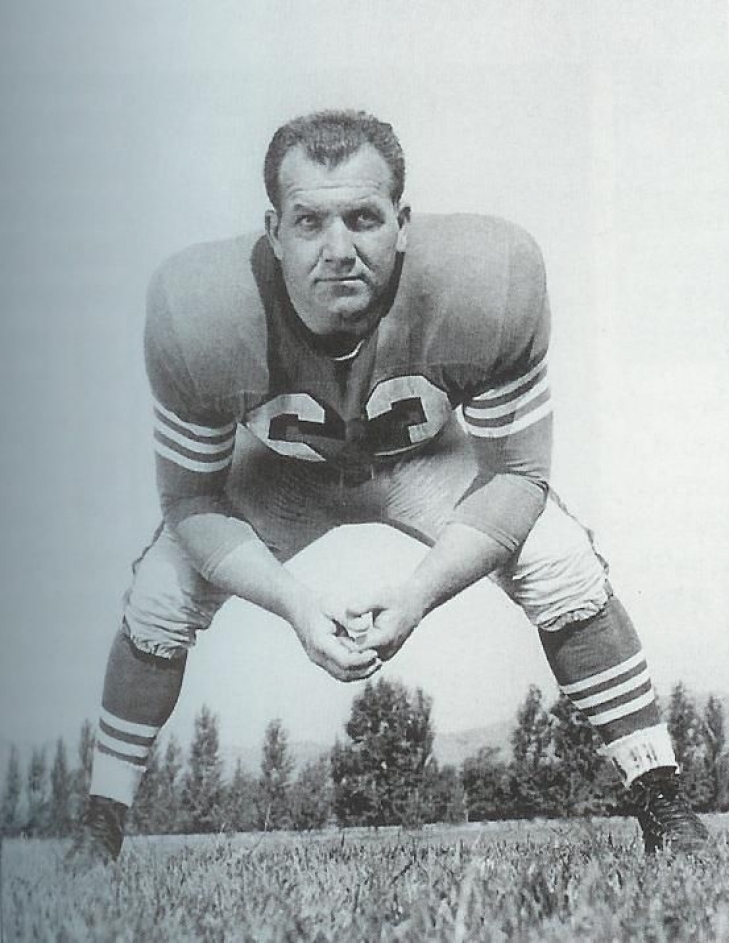
Born in Italy and raised in the United States, Bruno Banducci played his college ball for Stanford but was drafted by the Philadelphia Eagles in 1944. Banducci was more at home in 1946 when the Guard joined the San Francisco 49ers of the upstart All-American Football Conference. Banducci stayed there for the rest of his career, including the move to the NFL, until his retirement after 1954. Banducci, who helped San Francisco gain relevance with their rushing attack, was a two-time First Team All-Pro and was chosen for the 1940’s All-Decade Team.
178. Billy Wilson
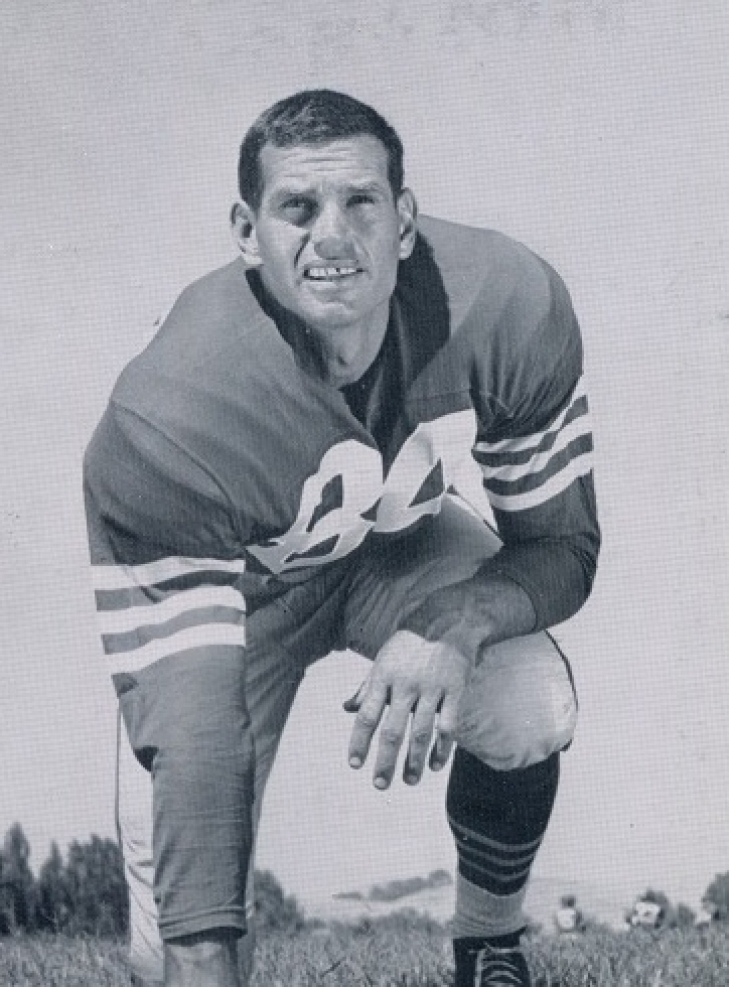
Billy Wilson spent his entire career with the San Francisco 49ers, but that was in the 1950s, when the Niners weren’t the world beaters they'd become later, which may be why he doesn’t get the credit he deserves.
Wilson would be drafted in the 22nd Round (yes, the 22nd) in 1951, and he would emerge as their top Wide Receiver and their primary offensive weapon. In 1953, he had 51 Receptions, and that season was pivotal, as it started a run in which he was arguably in the top tier of Ends in the NFL through the rest of the decade. From 1953 to 1957, Wilson never finished below fourth in Receiving Yards, and he led the NFL in receptions in three seasons (1954, 1956 & 1957). He would be named to six straight Pro Bowls (1953-58) and is the first outstanding wideout in franchise history.
#6 Overall, Trent Williams, San Francisco 49ers, Offensive Tackle, #1 Offensive Lineman
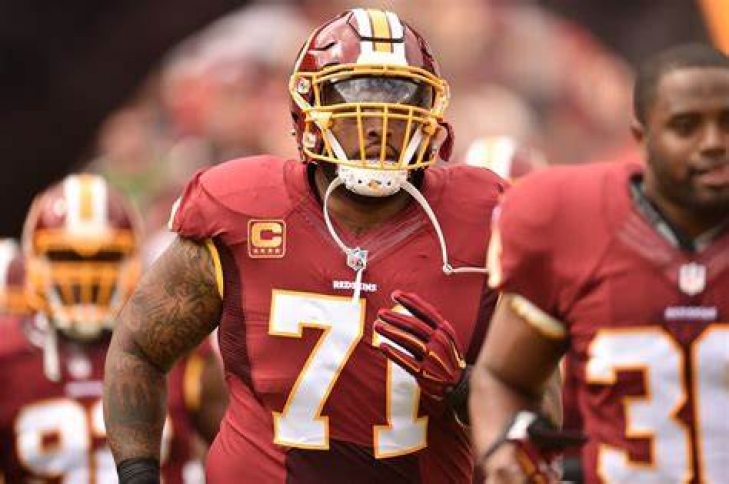
2025 Pre-Season Rank #5, 2024 Pre-Season Rank #6, 2023 Pre-Season Rank #6, 2022 Pre-Season Rank #20, 2021 Pre-Season Rank #33, 2020 Pre-Season Rank #35. 2018-23*
Aging like wine, we love the story of Trent Williams, who was one of the better Offensive Linemen in Washington history and who wanted out after he felt that the team misdiagnosed a dermatofibrosarcoma protuberans, a growth that was determined to be a type of cancer in 2019 but was dismissed by the Redskins medical team in 2013. He did not play at all in 2019 and wanted out, landing in San Francisco in 2020, where he was a First Team All-Pro from 2021 to 2023 and now has the most Pro Bowls (12) of any active Offensive Lineman.
What Williams has accomplished in San Francisco has cemented a bronze bust.
*Williams sat out in 2019.
271. NaVorro Bowman
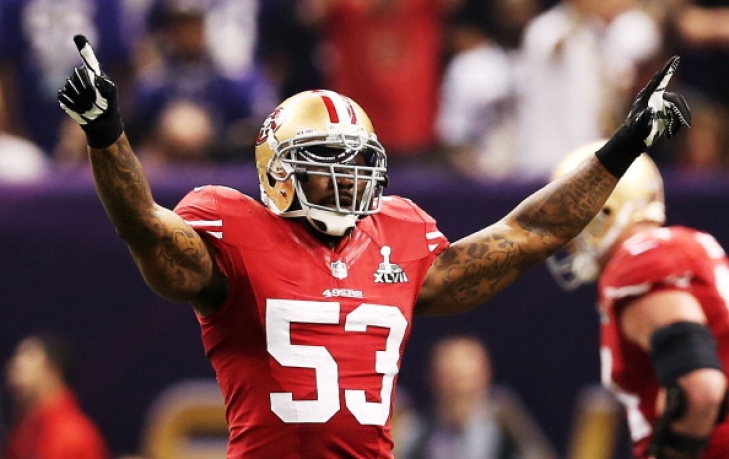
NaVorro Bowman would prove to be a tackling machine during his time with the San Francisco 49ers, and once he became a starter, he would help usher in a new wave of strong defense for the team. Bowman would be a First Team All-Pro in 2011 (despite not making the Pro Bowl), and he finished second overall in Solo Tackles. He repeated his First Team All-Pro performance in 2012 and 2013, making the Pro Bowl both years; in 2012, he helped the Niners reach the Super Bowl, though they lost to the Baltimore Ravens. From 2011 to 2013, he had 140 Combined Tackles or more, which was good enough for the top ten each year. A torn ACL and MCL cost Bowman the 2014 season, but his return in 2015 saw him again reach the Pro Bowl and the First Team All-Pro, and this time he would lead the NFL in Solo and Combined Tackles.
Bowman didn’t play much longer after that, as injuries piled up, and he played only two more years.
Terrell Owens to the San Francisco 49ers Hall of Fame
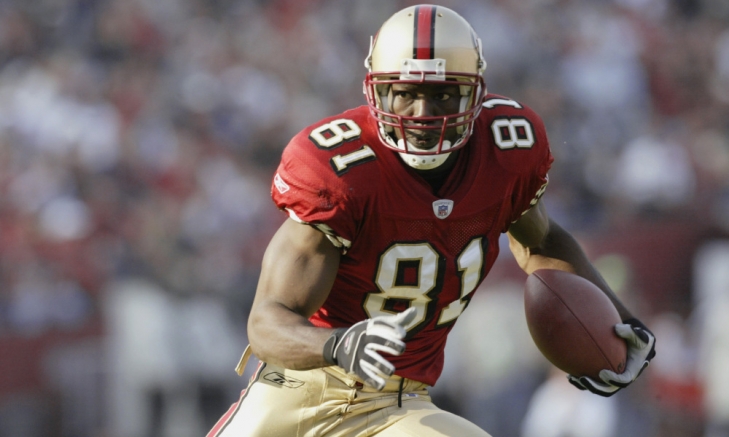
The San Francisco 49ers have announced that Terrell Owens will be the 28thmember of their franchise Hall of Fame.
Owens was a third round pick in 1996 from Tennessee-Chattanooga and as a rookie he would catch 35 passes for 520 Yards. Over the next three seasons, T.O. would move up the ranks and would become the primary receiver with seasons of 936, 1,097 and 754 Yards respectively but in 2000 he would prove himself as an elite wideout with a 1,451 Yard campaign that earned him his first Pro Bowl and First Team All Pro Selection. He would repeat those honors in 2001 and 2002 but would add another accolade he was the NFL leader in Touchdown Receptions. In his final season with the Niners, Owens would again be named a Pro Bowler.
While Owens was certainly a great receiver, he was a controversial player. He was outspoken and could be divisive in locker rooms. Still, T.O. was a phenomenal player who is second all time in franchise history in Receptions (592), Receiving Yards (8,572) and Receiving Touchdowns (81). Owens would later play for Philadelphia, Dallas, Buffalo and Cincinnati and he would be chosen for the Pro Football Hall of Fame in 2018.
We here at Notinhalloffame.com would like to congratulate Terrell Owens for this latest accomplishment!
A look at Eddie DeBartolo Jr.s' PFHOF induction
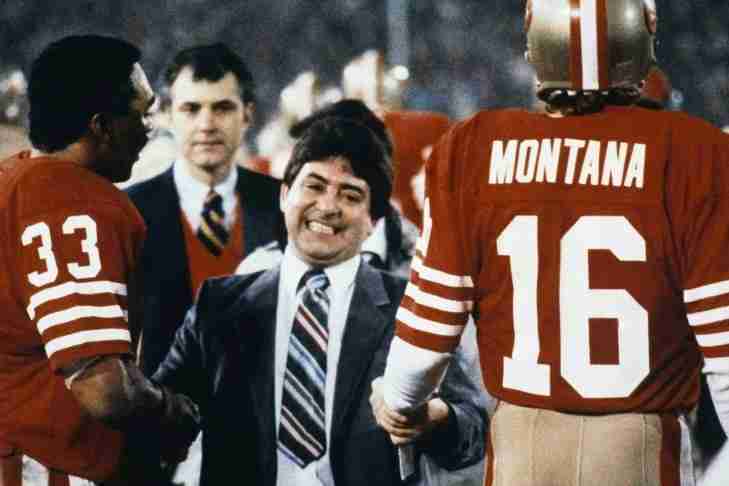
Now that the Baseball Hall of Fame Class of 2016 has announced their class has done the same. We were hopeful to do this prior to the announcement of the actual inductees, but life, as it often does simply got in the way!
Saying that, we felt it was worth our time to take a look at the 2016 Nominees and debate whether they should have gotten in (or not) and look to the future of the Pro Football Hall of Fame.
57. John Brodie
When you think of great San Francisco quarterbacks, you automatically think of Joe Montana and Steve Young. Before them, there was a very good one named John Brodie who put up great numbers without the supporting cast that Montana and Young had.
John Brodie was one of the game's early gunslingers, and most of the time he had to be. The 49ers of the 1960s were not a great team, and Brodie was often the main reason they were competitive. By the time the 1970s rolled around, Brodie had a better team around him, and though he was finally playoff-bound, the Niners could not get past the Cowboys for three years in a row. Still, Brodie won the 1970 MVP and was given more respect around the league.
Because he had to take a lot of chances, John Brodie’s interception rate was fairly high, and he finished his career with more picks than touchdown passes. This could be why he has never been a semifinalist for the Hall, and with the San Francisco 49ers reaching great heights in the 1980s, virtually every Niners star before them has been forgotten. John Brodie deserves better than that.
