

26. Jason Elam
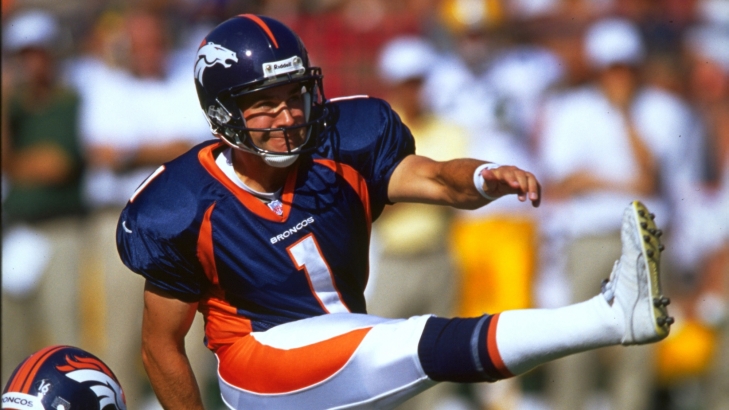
Drafted in the third round (70th overall) of the 1993 NFL Draft from Hawaii, Jason Elam turned out to be an excellent pick for the Denver Broncos. He utilized the unique altitude advantage at Mile High together with his strong kicking leg, securing the placekicking role for over fifteen years. Elam became known as a dependable and cool under pressure.
Elam’s reliable, rhythmic kicking played a crucial role in Denver’s championship runs in the late 1990s. He consistently scored points, complementing star players John Elway and Terrell Davis. During Super Bowls XXXII and XXXIII, he made three field goals and four extra points, contributing to their consecutive Lombardi trophies. His most memorable moment came in October 1998 against Jacksonville, where he made a legendary 63-yard field goal, tying Tom Dempsey's NFL record for the longest kick.
Elam concluded his Mile High run following the 2007 season before spending two final years with the Atlanta Falcons. With the Broncos, Elam played in 236 regular-season games for Denver—a franchise record for most games played in team history. He converted 395 of 490 field goal attempts (80.6%) and 537 of 542 extra points for a franchise-record 1,786 total points. He was inducted into the Broncos Ring of Fame in 2016.
31. Barney Chavous
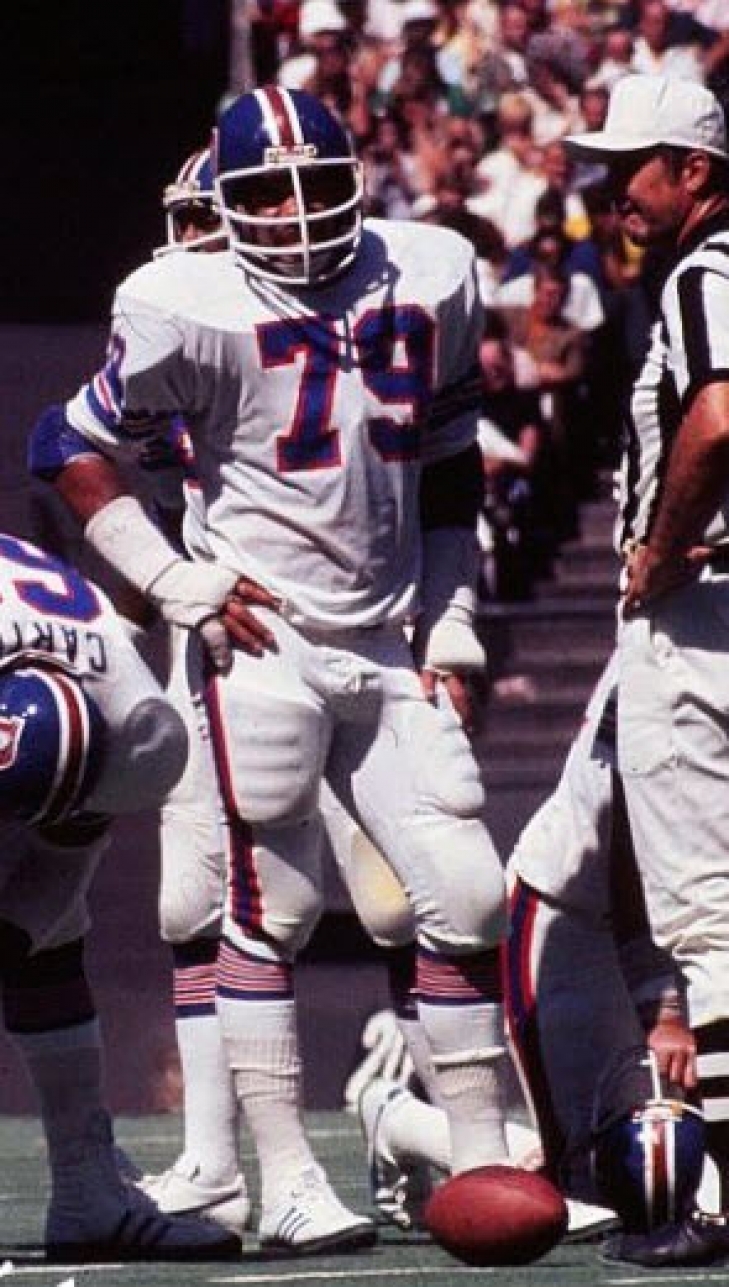
Long before the 3-4 defense became a standard NFL blueprint, Barney Chavous was quietly setting the benchmark for dirty-work defensive line play in Colorado. Selected in the second round out of South Carolina State in 1973, the powerful trench anchor started his career as a defensive tackle before shifting to left defensive end, where he held down a starting role for 13 consecutive seasons.
Chavous quickly became an indispensable pillar of Denver's iconic "Orange Crush" defense. Operating at the tip of Joe Collier’s 3-4 front, he absorbed constant double-teams from opposing offensive lines, freeing up linebackers like Randy Gradishar and Tom Jackson to roam free and make plays. Despite taking on those grueling assignments, Chavous brought constant, relentless pressure off the edge, helping power Denver to its first AFC Championship and Super Bowl XII appearance.
Because official NFL sack tracking did not begin until 1982, Chavous is credited with just 23.0 official sacks. However, Pro Football Reference credits him with 75.0 career sacks—a total that held as the franchise's all-time record at the time of his retirement and still ranks fourth in team history behind only Von Miller, Simon Fletcher, and Karl Mecklenburg. He retired after the 1985 season.
His commitment to the organization extended far past his playing days. Chavous later served 11 seasons on the Denver coaching staff as an assistant strength coach, earning two Super Bowl rings during the John Elway era.
23. Al Wilson
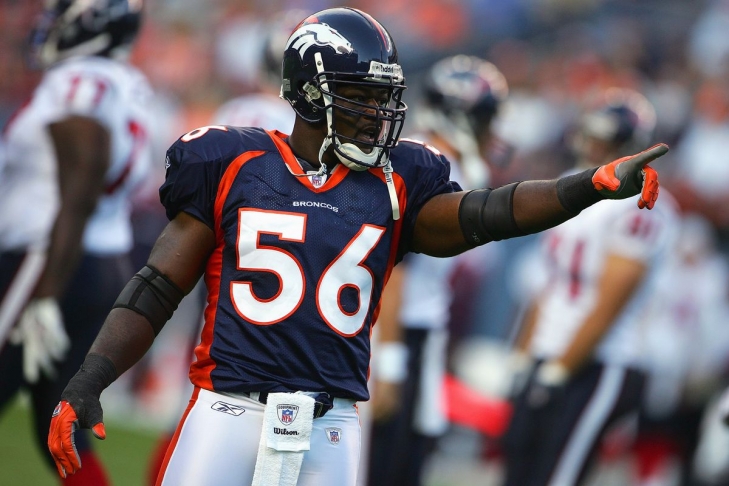
Fresh off leading the Volunteers to a national championship, Al Wilson was chosen 31st overall in the 1999 NFL Draft and quickly secured the middle linebacker position in Denver. While middle linebackers were traditionally known for their hard-hitting role, Wilson revolutionized the position for the modern game by combining fierce tackling, exceptional sideline-to-sideline agility, and keen pass-rushing instincts.
Operating as the unquestioned vocal leader and heartbeat of Denver's defense, Wilson generated immense pressure on opposing backfields. His 5.0-sack campaign in 2000 showcased his blitzing value, and by 2001 he earned his first of three consecutive Pro Bowl trips. He was an absolute tackle machine in the middle of the field, leading the Broncos' defense in tackles for multiple seasons and consistently surpassing the 100-stop mark.
Wilson’s best season was in 2005. Anchoring a defense that powered Denver to a 13–3 record and an appearance in the AFC Championship Game, Wilson earned First-Team All-Pro honors and his fourth Pro Bowl nod after recording 72 tackles, 3.0 sacks, and two forced fumbles. He added a fifth Pro Bowl selection in 2006, continuing to operate as one of the premier off-ball linebackers in the NFL.
Tragically, his dominant run ended unexpectedly. Wilson suffered a severe neck injury during a December 2006 matchup against Seattle. Though he bravely finished out the campaign, medical evaluations that offseason revealed significant underlying spinal damage. Released by Denver in March 2007, Wilson visited several teams but was never medically cleared to return to the field, forcing an early retirement at age 29.
Over his career, Wilson played in 125 regular-season games with 119 starts. He compiled 712 total tackles, 21.5 sacks, eight forced fumbles, seven fumble recoveries, and five interceptions.
14. Bill Thompson
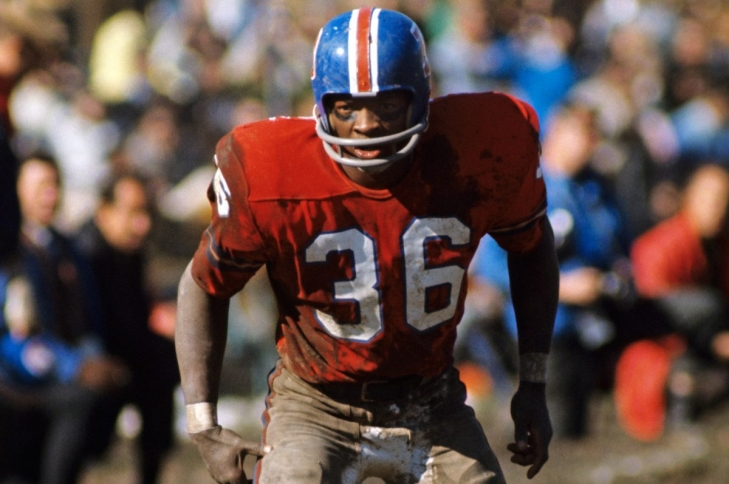
Taken in the third round of the 1969 AFL-NFL Draft out of Maryland State (now UMES), Billy Thompson made an immediate, multi-dimensional splash as a rookie. Deployed as a right cornerback and return specialist, Thompson put together an electric debut campaign, becoming the first player in professional football history to lead his league in both kickoff return average (28.5 yards) and punt return average (11.5 yards) in the same season.
Though Thompson was initially a dangerous special teams player, he became a franchise cornerstone after head coach John Ralston moved him from cornerback to strong safety in 1973. This switch unlocked his full potential, allowing him to serve as the tough, ball-hawking key figure of the secondary. He anchored Joe Collier's renowned "Orange Crush" defense, known for disciplined tackling, relentless pursuit, and frequent turnovers.
Thompson's best season was during Denver's storybook 1977 campaign. Snaring five interceptions, recovering three fumbles, and spearheading a defense that powered the Broncos to their first AFC championship and Super Bowl XII appearance, Thompson was named a First-Team All-Pro and earned his first Pro Bowl selection. He added back-to-back Pro Bowl nods in 1978 and 1981, routinely jump-starting the offense by converting opponent mistakes into instant points. In fact, Thompson scored seven career defensive touchdowns—three on interception returns and four on fumble recoveries—the latter standing as an NFL record for decades.
Beyond his playmaking prowess, Thompson was an absolute ironman. He started 178 of his 179 games in Denver, setting a franchise record with 142 consecutive starts that stood for years. A long-time team captain, he retired following the 1981 season as the first player in franchise history to log 13 active seasons in a Broncos uniform.
With Denver, he compiled 40 interceptions for a franchise-record 784 return yards, 21 fumble recoveries, and seven defensive touchdowns, while adding 2,970 combined return yards and was inducted into the Denver Broncos Ring of Fame in 1987 as the sole member of his class.
25. Ed McCaffrey
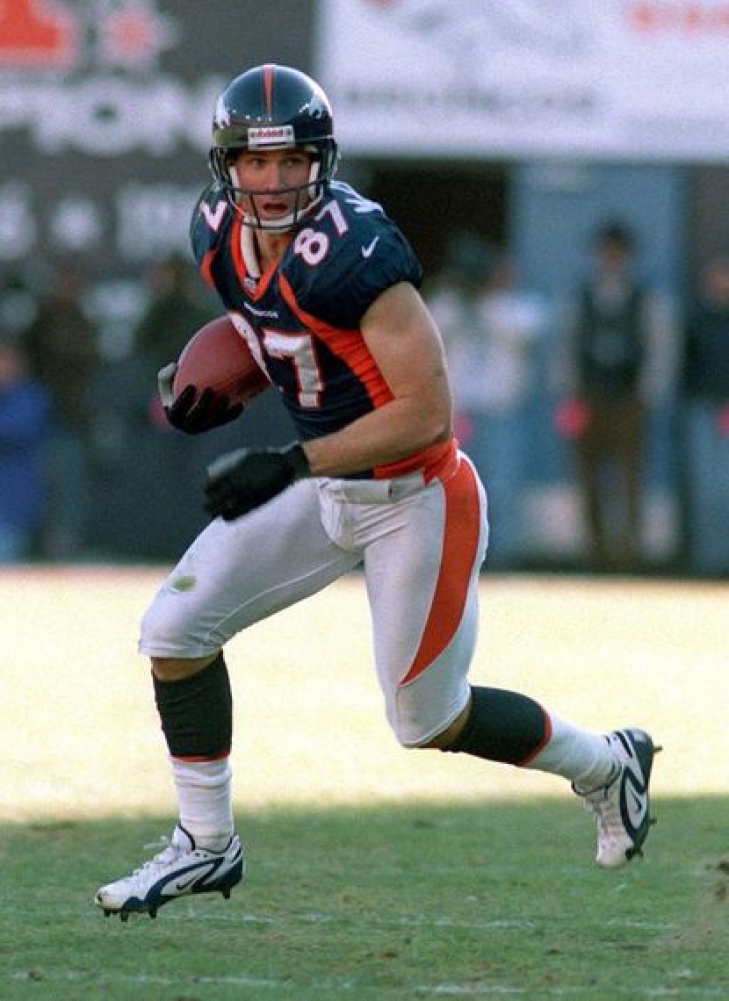
When Mike Shanahan took over as Denver’s head coach in 1995, one of his first orders of business was luring free-agent wideout Ed McCaffrey to Mile High. The two had previously won Super Bowl XXIX together in San Francisco, and Shanahan knew "Eddie Mac" was the missing puzzle piece for John Elway’s offense. Standing 6-foot-5 and wearing shoulder pads that looked like they belonged to a high schooler, McCaffrey looked unassuming, but he quickly forged a reputation as one of the most fearless over-the-middle pass catchers and ferocious perimeter blockers in the NFL.
McCaffrey’s ability to withstand heavy contact while holding onto the football made him a fan favorite and a reliable third-down option. In Denver’s consecutive Super Bowl victories (XXXII and XXXIII), his strong downfield blocking aided Terrell Davis, and his precise route-running kept defenses alert.
As the offense expanded, McCaffrey became an elite threat alongside Rod Smith. Between 1998 and 2000, he achieved three straight 1,000-yard receiving seasons. His breakout year in 1998—64 catches for 1,053 yards and 10 touchdowns—earned him a Pro Bowl and Second-Team All-Pro honors. In 2000, he improved further with 101 receptions for 1,317 yards, and along with Smith, became only the second NFL duo to each record 100 catches in a single season. His 101 receptions set a then-franchise record for most catches in a season.
Tragedy struck in the 2001 season opener when McCaffrey suffered a devastating compound leg fracture on Monday Night Football—holding onto the ball for a spectacular catch even as his leg broke. Showing the sheer grit that defined his career, he returned in 2002 to post a 903-yard campaign. He played one final season in 2003 before hanging up his cleats, leaving a lasting legacy in Mile High that his son Christian would later carry on in the family football lineage.
In his nine years in Denver, he compiled 462 receptions, 6,200 receiving yards, and 46 touchdown catches in orange and blue.
22. Trevor Pryce

From Clemson, Trevor Pryce was selected 28th overall in the 1997 NFL Draft, joining a Denver locker room firing on all cylinders. At an imposing 6-foot-5 and 290 pounds, Pryce possessed a rare blend of explosive interior quickness and edge power. He served as a valuable rotational contributor on back-to-back championship squads as a young player, earning Super Bowl XXXII and XXXIII rings while soaking up veteran wisdom along the defensive line.
Once those veteran leaders stepped aside, Pryce transformed into one of the most destructive interior pass rushers in professional football. Primarily positioned as a three-technique defensive tackle—while occasionally shifting to defensive end as dictated by the scheme—his rapid first-step quickness consistently disrupted pocket formations before interior guards could effectively engage him. This exceptional skill set established a consistent four-year period of Pro Bowl selections from 1999 to 2002.
Pryce's peak performance was achieved during the 1999 season when he recorded a career-high of 13.0 sacks, earning First-Team All-Pro honors and establishing himself as an elite defender. He further demonstrated his prowess in 2000 with a 12.0-sack performance, marking consecutive seasons with double-digit sacks from the interior—a rare accomplishment for a defensive tackle. Whether disrupting double teams inside or controlling the edge on early downs, Pryce was the definitive cornerstone of Denver's defense at the turn of the century.
Apart from a 2004 season shortened by back surgery, Pryce maintained steady interior pressure at Mile High for nearly ten years. He achieved 8.5 sacks in 1998 and 2003, and 9.0 in 2002. He was often among the league leaders in quarterback hits and tackles for loss before joining Baltimore in 2006.
With the Broncos, Pryce had 4.0 sacks, 312 total tackles, seven forced fumbles, and two Super Bowl rings.
15. Peyton Manning

For over a decade, John Elway’s shadow hung over Mile High, fueling a long search for a worthy successor under center. In a twist fit for a movie script, it took Elway himself—serving as executive vice president and general manager—to finally solve the puzzle. After four neck surgeries forced Peyton Manning to miss the entire 2011 season, Indianapolis released their franchise icon and drafted Andrew Luck first overall. Elway pounced, luring the future Hall of Famer to Denver in 2012 amid a sea of eager suitors. Questions lingered about whether Manning’s arm strength and nerve function would hold up, but what followed was one of the most prolific second acts in sports history.
In 2012, Manning silenced critics by leading the NFL in completion percentage at 68.6%, throwing for 4,659 yards and 37 touchdowns. He received the AP Comeback Player of the Year award, was named a First-Team All-Pro, and helped Denver achieve a 13–3 record. The following year, he surpassed his own standards with what is considered the greatest statistical season by a passer in NFL history. Manning led the league's highest-scoring offense ever (606 points), setting single-season records with 5,477 passing yards and 55 touchdown passes. This outstanding performance earned him his fifth MVP award, another First-Team All-Pro honor, and an AFC Championship win.
Following another Pro Bowl and a 4,700-yard season in 2014, the physical toll of father time and accumulated injuries caught up to Manning in 2015. Plagued by a torn plantar fascia, he struggled through a nine-touchdown, 17-interception stretch and surrendered the starting job to Brock Osweiler. Yet true to his legendary intellect, Manning reclaimed the job in Week 17, serving as the ultimate game manager for Wade Phillips' historic "No Fly Zone" defense. In the postseason, Manning used his elite pre-snap command to pilot Denver through the AFC bracket, capping his career with a 24–10 victory over Carolina in Super Bowl 50. That would be the last game Peyton Manning ever played. Having become the first starting quarterback to win Super Bowls with two different franchises, Manning rode off into the sunset, announcing his retirement weeks after lifting the Lombardi Trophy.
As a Bronco, compiling 17,112 passing yards, 140 touchdown passes, and a 45–12 record as a starter. Manning was inducted into the Denver Broncos Ring of Fame in 2021, the same year he was enshrined into the Pro Football Hall of Fame in his first year of eligibility.
13. Dennis Smith
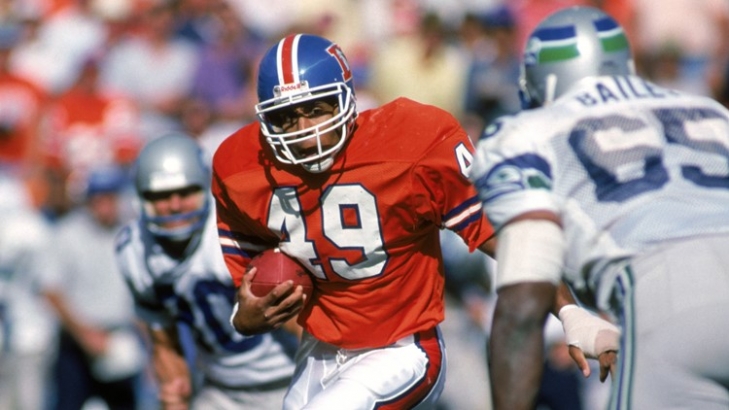
From USC, Dennis Smith was drafted 15th overall in the 1981 NFL Draft and was a decorated consensus All-American who immediately injected raw physicality into the secondary. Transitioning into the starting strong safety spot early in his career, Smith established himself as an intimidating secondary enforcer—setting the blueprint for a generation of box safeties who could crush ball-carriers in run support while holding their own in pass coverage.
Smith’s breakout arrival occurred during his third season in 1983, when he achieved a career-best total of 114 tackles, along with five sacks and four interceptions. This remarkable performance initiated a decade-long period of leadership in the secondary. Acting as the formidable enforcer of Denver’s defense, Smith exceeded 100 tackles in five distinct seasons—culminating with a career-high of 120 tackles in 1992—while consistently leading the team's defensive backs in tackles and forced fumbles.
During the late 1980s and early 1990s, his play reached elite level. Smith earned six Pro Bowl selections (1985, 1986, 1989–1991, 1993) and two All-Pro honors. As the veteran starter alongside a young Steve Atwater from 1989, they created one of the most formidable safety duos in NFL history. That defensive backfield was crucial for Dan Reeves' teams, driving Denver to the AFC playoffs and securing three Super Bowl appearances in XXI, XXII, and XXIV.
Smith was not only known for his punishing hits but also for his exceptional ball skills and field awareness. Over his 14-year career with Denver, he amassed 30 interceptions—one of which he returned for a touchdown—along with 17 fumble recoveries and 15 sacks. His versatile skill set consistently disrupted opposing offenses, and he was regarded as a revered team leader until he retired after the 1994 season.
In his 14-year career, Smith had 1,171 total tackles, 30 interceptions, 15 sacks, and 17 fumble recoveries. In 2001, he was enshrined in the Broncos Ring of Fame.
11. Floyd Little
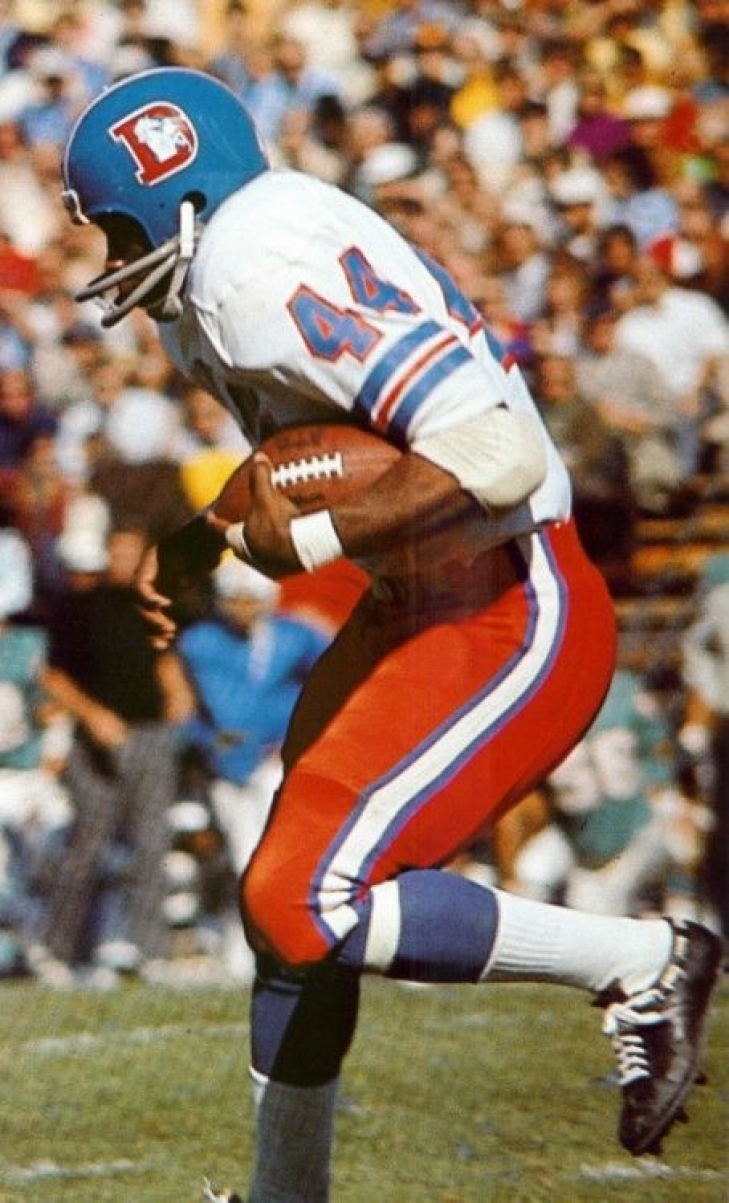
The Denver Broncos spent their first seven seasons as an AFL afterthought, operating on shoestring budgets and constantly facing relocation rumors. Everything changed in 1967 when Denver selected Syracuse star Floyd Little sixth overall. Little was the first first-round pick ever to sign with the franchise, single-handedly turning Mile High Stadium into a hot ticket and earning the immortal nickname "The Franchise" for effectively saving pro football in Denver.
Although early in his career he often served as a dangerous returner—leading the league in punt return average (16.9) in 1967 and ranking high in all-purpose yards for two consecutive years—his move to a full-time tailback marked one of the most impressive individual streaks of his time. Standing 5-foot-10 and weighing less than 200 pounds, Little may not have had imposing size, but he made up for it with exceptional vision, outstanding contact balance, and a quick, elusive running style that made it difficult for defenders to catch him.
During a six-season absolute peak from 1968 through 1973, no running back in professional football accumulated more total rushing yards or scrimmage yards than Floyd Little. He made four straight Pro Bowls starting in 1968, grabbed First-Team All-AFL honors in 1969 with a league-high 5.0 yards per carry, and led the AFC in rushing in 1970. His crown jewel season arrived in 1971, when he captured the NFL rushing title with 1,133 yards—becoming the first 1,000-yard rusher in franchise history and the first player ever to lead the league in rushing while playing for a last-place team (4–9–1). He capped off that elite run in 1973 by pacing the NFL with 12 rushing touchdowns while amassing over 1,400 yards from scrimmage.
By 1974, after years of heavy workloads, Little's physical health declined, with injuries limiting his touches as younger backs took over. Wanting to retire on his own terms, he announced 1975 would be his last season. In his home finale at Mile High Stadium, he made a final highlight—scoring a 66-yard touchdown on a screen pass and calmly handing the ball to the official. Having attended night classes at the University of Denver Law School during his career, Little earned his master's degree in 1975 and retired from football to pursue business ventures.
With the Broncos, Little accumulated 6,323 rushing yards, 43 rushing touchdowns, 215 receptions, 2,418 receiving yards, and 12,173 all-purpose yards alongside 54 total touchdowns. A five-time Pro Bowler/All-Star, 1971 NFL rushing leader, and inaugural 1984 Ring of Fame inductee, Little had his No. 44 retired by the team before earning long-overdue enshrinement into the Pro Football Hall of Fame in 2010.
16. Tom Jackson
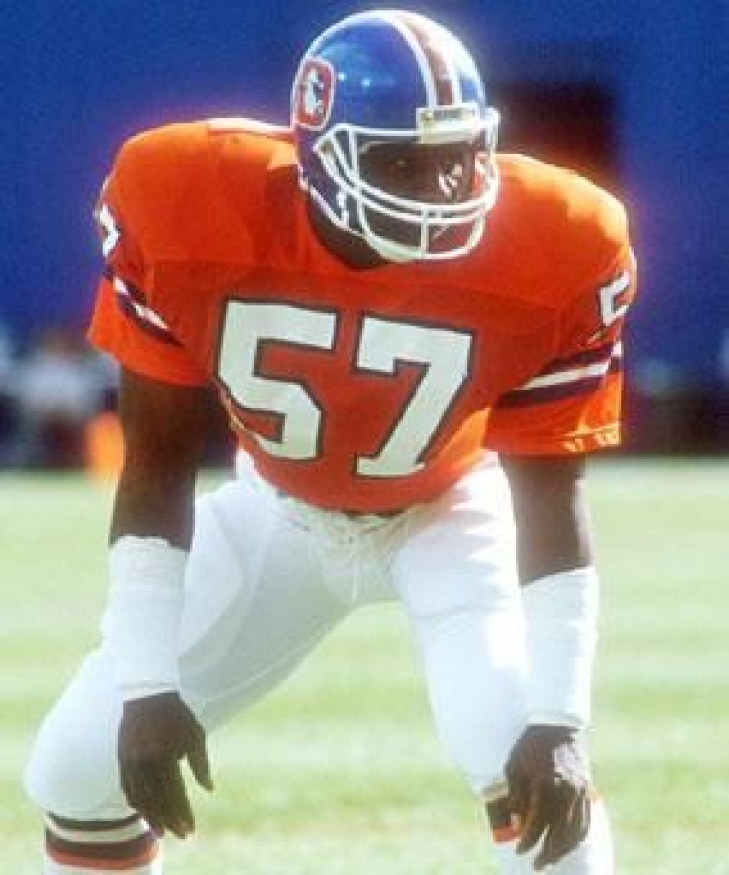
Drafted in the fourth round of the 1973 NFL Draft out of Louisville, Tom Jackson arrived in Denver as an undersized, fast-flowing weakside linebacker. He quickly claimed a starting job in Joe Collier's 3-4 front and became the emotional heartbeat and outspoken leader of the iconic "Orange Crush" defense. Jackson's range, high football IQ, and sideline-to-sideline pursuit helped transform the Broncos from a historically struggling franchise into an AFC powerhouse.
Jackson's career trajectory reached elite standing during the storybook 1977 season. Spearheading a defensive unit that carried Denver to its first AFC Championship and Super Bowl XII appearance, Jackson earned First-Team All-Pro honors and his first Pro Bowl selection. He followed that up with two more consecutive Pro Bowl trips in 1978 and 1979. Operating as an effective blitzer and intermediate coverage defender, he routinely turned opponent mistakes into points, returning three of his 20 career interceptions for touchdowns.
Remarkable longevity defined Jackson's 14-year run in Mile High. He missed minimal action across his career, starting 177 of his 191 games—a durable total that trails only John Elway and Jason Elam on the franchise's all-time games played list. Near the tail end of his playing days, Jackson provided crucial veteran leadership for the 1986 squad that captured another AFC crown, making him one of just four players to appear in both Super Bowl XII and Super Bowl XXI for the franchise.
After retiring following the 1986 season, Jackson smoothly transitioned into a second iconic career as a broadcaster. Joining ESPN in 1987, he spent nearly three decades alongside Chris Berman on NFL Primetime and Sunday NFL Countdown, becoming one of the most recognizable and revered studio analysts in sports media history until he retired from broadcasting in 2016.
Jackson spent 14 seasons with the Denver Broncos (1973–1986), playing 191 games with 177 starts. He recorded 20 interceptions for 340 yards, 3 defensive touchdowns, 40 sacks, and 8 fumble recoveries. A three-time Pro Bowler, All-Pro, two-time AFC champion, and six-time team MVP, Jackson was inducted into the Denver Broncos Ring of Fame in 1992.
9. Louis Wright
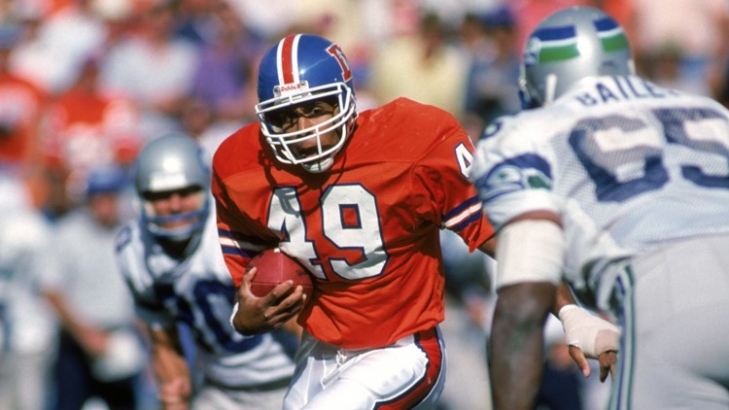
Louis Wright was taken 17th overall in the 1975 NFL Draft out of San Jose State, and the gifted cornerback stepped straight into Denver's starting lineup and instantly elevated the standard for perimeter defense. Standing 6-foot-1 with track-star speed, Wright brought a rare combination of length, fluidity, and physical press coverage that allowed defensive coordinator Joe Collier to unleash the legendary "Orange Crush" defense.
12. Tom Nalen
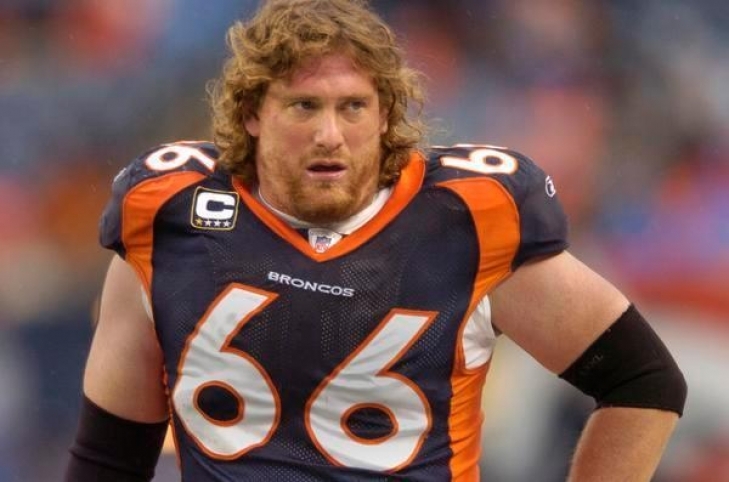
Drafted in the seventh round (218th overall) of the 1994 NFL Draft from Boston College, Tom Nalen arrived in Denver with modest expectations. He earned the starting center job early in his second season and went on to anchor Alex Gibbs’ famous zone-blocking scheme for more than a decade. Slightly undersized at 286 pounds, Nalen relied on textbook leverage, rare foot speed, and an ironclad grasp of defensive fronts to call the line of scrimmage, cementing his status as the cerebral heartbeat of the offense.
Nalen's arrival coincided with Denver's transformation into an offensive juggernaut. While John Elway's arm and Terrell Davis' running generated headlines, Nalen was the indispensable engine up front that made the system go. During his 14 seasons with Big Blue, Nalen blocked for six different 1,000-yard rushers across 11 seasons—including Davis’ iconic 2,008-yard MVP campaign in 1998, alongside Olandis Gary, Mike Anderson, Clinton Portis, Reuben Droughns, and Tatum Bell. His ability to reach linebackers on stretch plays allowed running backs to cut back into open grass consistently.
That trench dominance produced consecutive Lombardi Trophies in Super Bowl XXXII and XXXIII, as the front five imposed its will in back-to-back playoff runs. Individual accolades quickly followed: Nalen earned four consecutive Pro Bowl trips from 1997 through 2000, adding a second-team All-Pro nod in 1999 and a first-team selection in 2000. After rebounding from a knee injury that cut his 2002 campaign short, Nalen delivered a masterclass year in 2003—earning his fifth Pro Bowl nod, a second first-team All-Pro honor, and recognition as the NFL Alumni Offensive Lineman of the Year.
Nalen, known for his stoic demeanor and silent media policy, let his play speak until a torn bicep in 2007 ended his career. His long tenure set the franchise standard. He played 194 games with 188 starts—second only to John Elway—and had 13 postseason starts and two Super Bowl rings. A five-time Pro Bowler, two-time First-Team All-Pro, and part of the Broncos 50th Anniversary Team, he was inducted into the Broncos Ring of Fame in 2013.
1. John Elway
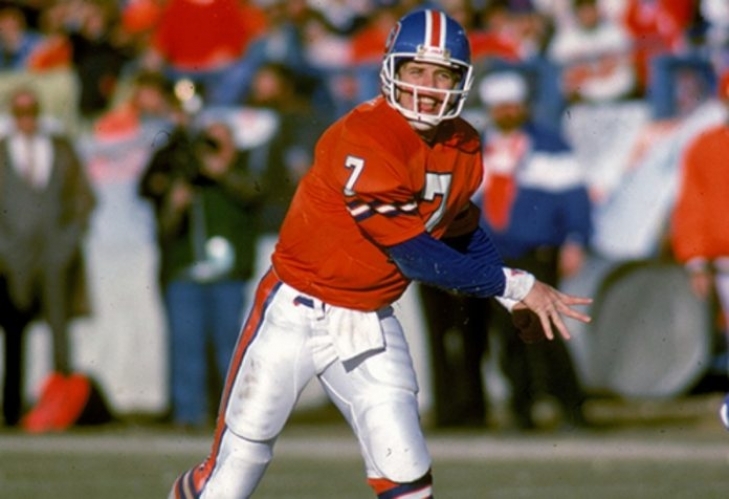
The 1983 Draft had a lot of drama.
John Elway, who was selected first overall in the 1983 NFL Draft by the Baltimore Colts from Stanford University, was renowned for possessing the most celebrated combination of arm strength, athletic mobility, and field vision among his peers. Having explicitly expressed his intention not to play on the East Coast for Baltimore—leveraging his status as a top draft prospect of the New York Yankees to compel a transfer—he persuaded the Colts to trade his rights to the Denver Broncos. Under the leadership of head coach Dan Reeves, Elway faced immediate challenges as a rookie. Nevertheless, he quickly developed into one of the most dynamic playmakers in the history of football, utilizing his mobility to evade collapsing pockets and delivering off-platform throws that redefined the role of the quarterback.
Elway demonstrated exceptional arm strength, capable of delivering precise deep passes on a line, complemented by uncommon speed and physical resilience as a runner. Excelling in heavy bootleg and scramble-drill scenarios, he thrived when structured plays collapsed. His notable mobility enabled him to manipulate pursuit angles, employing his legs to secure vital third downs or to buy time outside the pocket before accurately delivering long throws downfield.
Elway’s reputation as a distinguished performer on significant stages was exemplified during the 1986 AFC Championship Game against the Cleveland Browns. With a deficit of one touchdown and 5:32 remaining, and situated at his own 2-yard line, Elway meticulously directed a 15-play, 98-yard touchdown drive—commonly known as "The Drive"—to compel overtime, ultimately leading Denver to secure a position in Super Bowl XXI. Despite Denver’s defeat by the New York Giants' formidable defense, Elway had already cemented his status as the preeminent late-game strategist in the National Football League.
The following year, Elway captured the 1987 AP NFL Most Valuable Player award after throwing for 3,198 yards and 19 touchdowns, while adding 304 yards and four scores on the ground. He led Denver back to Super Bowl XXII, though the campaign ended in a blowout loss to Washington. Two seasons later, Elway led another Denver roster to the championship stage in Super Bowl XXIV, only to suffer a third defeat at the hands of the San Francisco 49ers.
Despite the uneven postseason outcomes during his initial championship pursuits, Elway consistently maintained his status as an elite regular-season performer. Over the course of his 16-year career, he was selected to nine Pro Bowls and received three Second-Team All-Pro honors (1987, 1993, 1996). He led the entire NFL in passing yards in 1993 with a career-high 4,028 yards, continuously improving his pre-snap decision-making and pocket mechanics as he gained experience.
Throughout the late 1980s and early 1990s, Elway consistently enhanced the talent surrounding him, establishing late-game fourth-quarter comebacks as his distinctive hallmark. By the time Head Coach Mike Shanahan joined in 1995, Elway had acquired the veteran expertise necessary to proficiently operate a sophisticated, movement-oriented West Coast offensive scheme that capitalized on his deep-ball accuracy off play-action fakes.
The incorporation of Terrell Davis and Shanahan's zone-blocking strategy furnished Elway with the well-balanced offensive support he lacked earlier in his career. During Super Bowl XXXII, Elway executed his most renowned physical play—the celebrated "Helicopter" run on third down, which facilitated a touchdown—as Denver triumphed over the Green Bay Packers with a score of 31-24, securing the franchise's inaugural Lombardi Trophy.
Elway returned for one final campaign in 1998, leading Denver to a 14-2 regular-season record. He capped his legendary career in Super Bowl XXXIII, throwing for 336 yards and a touchdown while scoring another on the ground in a 34-19 victory over the Atlanta Falcons. Named Super Bowl MVP in his final professional contest, Elway walked off the field as a back-to-back world champion.
Elway played all 234 of his regular-season games with the Denver Broncos. During his career, he threw for 51,475 yards and 300 touchdowns, and also rushed for 3,407 yards and 33 touchdowns. He ended his playing days holding the NFL record for fourth-quarter comebacks by a quarterback with 47.
In 1999, the franchise expedited Elway's induction into the Denver Broncos Ring of Fame and officially retired his No. 7 jersey. Subsequently, in 2004, he was inducted into the Pro Football Hall of Fame during his first year of eligibility. Elway rejoined the franchise as General Manager and Executive Vice President of Football Operations in 2011, where he was responsible for constructing the roster—including signing free-agent quarterback Peyton Manning—that secured Super Bowl 50, thereby earning Elway his third championship ring with the franchise.
With the Broncos (1983–1998), Elway played in 234 regular-season games (230 starts), throwing for 51,475 yards and 300 touchdowns, rushing for 3,407 yards and 33 scores.
10. Karl Mecklenberg
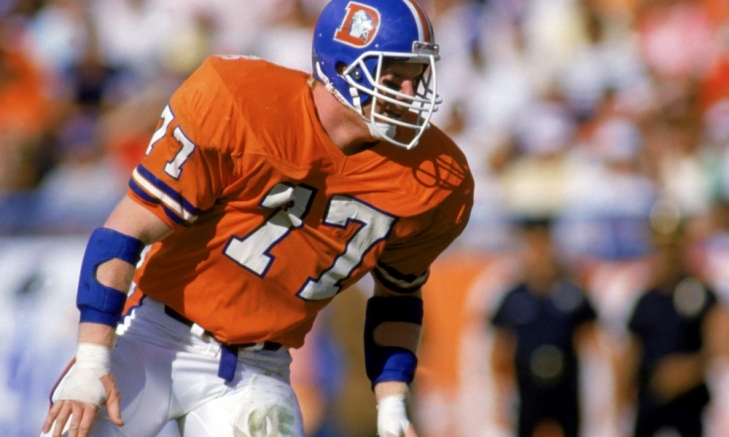
Drafted in the long-forgotten 12th round (310th overall) of the 1983 NFL Draft out of Minnesota, Karl Mecklenburg began his professional career as a longshot defensive end before evolving into one of the most uniquely versatile front-seven weapons in football history. Nicknamed the "Albino Rhino," he earned the ultimate reputation as a defensive "Swiss-Army Knife," lining up at all seven front-seven positions—inside linebacker, outside linebacker, nose tackle, and both defensive end spots—often shifting between multiple alignment roles over the course of a single game to attack opposing offenses.
Mecklenburg's career took a major step forward when Denver moved him to inside linebacker, while still utilizing him as an interior pass rusher on third downs. His breakthrough season was in 1985, when he achieved a career-high 13.0 sacks, setting a franchise record at the time, which earned him his first Pro Bowl selection and First-Team All-Pro honors. He confirmed this was no accident in 1986, earning AFC Player of the Year from Football News after recording 9.5 sacks and leading Denver's defense to a Super Bowl XXI appearance.
During his peak from 1985 to 1989, Mecklenburg was the crucial tactical force in Joe Collier's defense. He earned four First-Team All-Pro honors (1985, 1986, 1987, 1989) within five seasons. His 1989 campaign was a showcase of dominance, as he led the Broncos with a personal best of 143 tackles, along with 7.5 sacks and four forced fumbles. He topped the NFL in Approximate Value and helped Denver reach Super Bowl XXIV for the third time in his career.
Despite aging and injuries, Mecklenburg's keen instincts and diagnose-and-attack skills kept him among the league's top linebackers into the early 1990s. He received Pro Bowl nominations again in 1991 and 1993, leading the linebacking unit through scheme changes and remaining one of the most hard-hitting interior defenders. Notably, he is the only player in Denver history to achieve four sacks in a single game twice, showcasing his rare talent for disrupting pass protections from the inside.
Across 12 seasons in Denver (1983–1994), Mecklenburg played 180 games, with 1,145 tackles, 79.0 sacks, 16 forced fumbles, and five interceptions. The Broncos inducted their six-time Pro Bowler into the Ring of Fame in 2001.
6. Terrell Davis
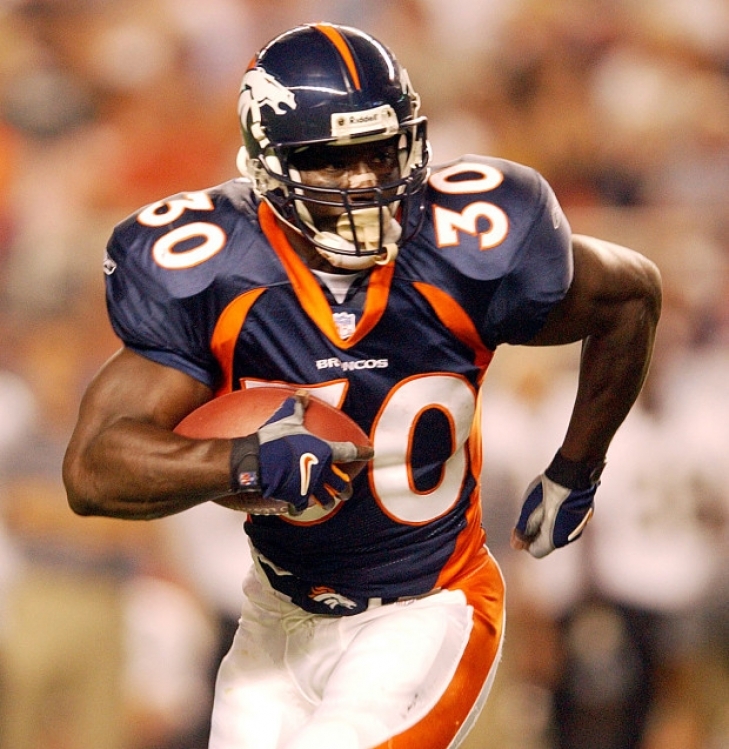
Selected in the sixth round of the 1995 NFL Draft out of Georgia, Terrell Davis arrived in training camp as a longshot before a ferocious special teams tackle on kickoff coverage in preseason action caught head coach Mike Shanahan’s eye. Davis quickly seized the starting job, making history as the lowest-drafted rookie running back to eclipse 1,000 rushing yards when he compiled 1,117 yards and seven touchdowns in his debut campaign.
That incredible start set the stage for what many consider the greatest three-year peak by any running back in NFL history. From 1996 to 1998, "T.D." was a powerhouse in Alex Gibbs' zone-blocking scheme, rushing for an amazing 5,296 yards, gaining 6,125 total yards from scrimmage, and scoring 53 touchdowns in the regular season alone. In 1996, he truly broke through with 1,538 rushing yards and 15 total touchdowns, earning his first First-Team All-Pro honor. He raised the bar even higher in 1997, leading the NFL with 15 rushing touchdowns, while rushing for 1,750 yards and adding another 287 yards through the air. Playing a key role alongside John Elway, Davis helped lead Denver to a win in Super Bowl XXXII, earning MVP honors after rushing for 157 yards and three touchdowns against Green Bay, even while battling a severe migraine that temporarily affected his vision.
His legendary run reached its peak in 1998, a truly standout year when Davis made history by breaking the 2,000-yard mark. Winning the NFL MVP and Offensive Player of the Year awards, he rushed for an impressive 2,008 yards and scored 21 touchdowns. Averaging an incredible 5.3 yards per carry, he wrapped up his incredible season by earning a second straight championship ring in Super Bowl XXXIII. Over this remarkable three-year period, Davis was a unanimous First-Team All-Pro choice every year, setting the benchmark for excellence in the backfield.
Beyond his regular-season excellence, Davis stepped up even more during crucial moments. He is arguably the most dominant postseason running back in football history, with an impressive 1,140 rushing yards and 12 touchdowns in just eight playoff games—an average of 142.5 yards per game. He has won all eight games and recorded seven straight 100-yard rushing performances.
It was an incredible run, but fate had other plans.
Early in the 1999 season, he sustained a torn ACL and MCL while attempting to make a tackle following an interception, shattering his knee. Severe injuries hampered him over his final three seasons, holding him to only 17 games from 1999 to 2001. The pain was too much, forcing a premature retirement in 2001 at just 29 years old.
In his time at Mile High, Davis accumulated 7,607 rushing yards and 60 rushing touchdowns, alongside 1,280 receiving yards and five touchdown catches for 8,887 total yards from scrimmage. The Broncos inducted him into the Ring of Fame in 2007, and his legendary peak was immortalized when he was enshrined in the Pro Football Hall of Fame in 2017.
8. Steve Atwater
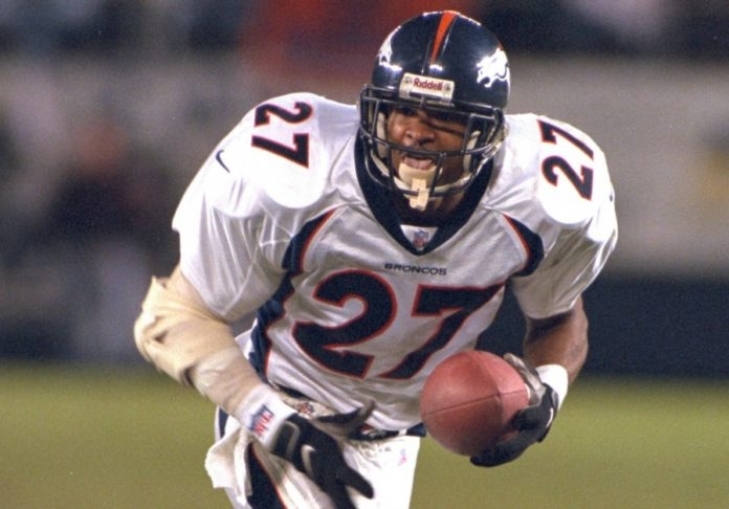
Arriving in Denver as the 20th overall pick in the 1989 NFL Draft, the imposing safety out of Arkansas immediately redefined physical play in the Broncos' secondary. Standing 6-foot-3 and weighing 218 pounds, Steve Atwater brought a linebacker's size and a sprinter's range to the free safety position, earning runner-up honors for NFL Defensive Rookie of the Year while helping propel Denver to an appearance in Super Bowl XXIV.
Nicknamed "The Smiling Assassin" for his cheerful personality off the field and fierce tackling on it, Atwater quickly became one of the league's most formidable enforcers. From 1990 to 1996, he enjoyed a period of dominance, earning seven straight Pro Bowl selections. During his prime, he received First-Team All-Pro honors in 1991 and 1992, and a Second-Team award in 1996. He was a consistent leader in tackles and expertly shut down deep passing routes.
His 1991 First-Team All-Pro season saw him achieve a career-high 150 tackles and five interceptions, showcasing his rare ability to play as an extra linebacker in the box against the run without compromising pass coverage. In 1992, he earned his second First-Team honors with 121 tackles and two interceptions, cementing his status as the AFC's top all-around safety. During this period, he made his most famous play—a legendary, bone-jarring collision on Monday Night Football in 1990 that stopped 260-pound Chiefs fullback Christian Okoye in his tracks.
Atwater's elite instincts and physical presence were the heartbeat of the defense as Denver evolved into a championship powerhouse late in the decade. He logged 126 tackles in 1995 and another 117 in 1996, consistently setting a ruthless physical tone for the entire unit. Opposing receivers routinely dropped passes over the middle in anticipation of Atwater's arrival, allowing Denver's defensive coordinators to run aggressive, opportunistic schemes up front.
As his tenure with the Denver Broncos and the Miami Dolphins reached its zenith, Atwater served as a pivotal figure in the defensive backfield for the Broncos' consecutive championship-winning teams. His most notable postseason performance occurred in Super Bowl XXXII against Green Bay, where he delivered an outstanding display with six tackles, a sack, a forced fumble, and a decisive pass breakup in the late stages of the game, which involved a mid-air collision knocking out three players, thereby securing Denver's inaugural Lombardi Trophy. He subsequently earned a second championship ring in Super Bowl XXXIII before concluding his professional career with a single season with the New York Jets in 1999.
Over his career, Atwater appeared in 155 regular-season games, compiling 24 interceptions, 1,074 tackles, and 5.0 sacks, while earning a spot on the NFL 1990s All-Decade Team. The Broncos inducted him into the Ring of Fame in 2007, culminating in his enshrinement into the Pro Football Hall of Fame in 2020.
4. Champ Bailey
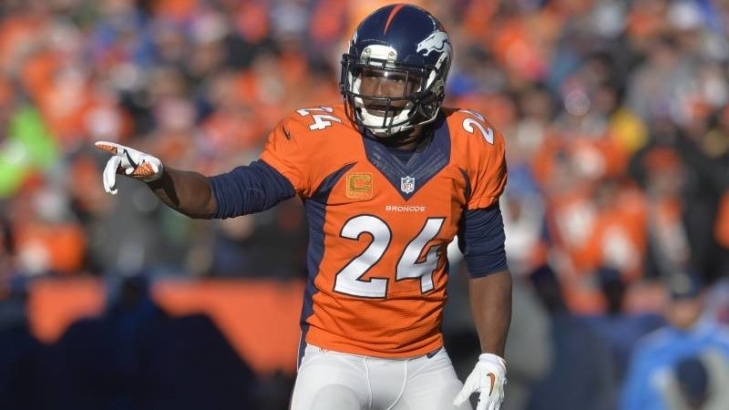
Acquired in a blockbuster 2004 trade with the Washington Redskins for running back Clinton Portis, Champ Bailey arrived in Denver already established as a premier defensive back. Across ten seasons in Mile High, Bailey elevated his play to immortal levels, transforming his side of the field into "Champ Island" and cementing his standing as one of the greatest shutdown cornerbacks in football history.
Bailey combined top-tier speed, exceptional hip fluidity, and superior tackling skills on the edge. His standout trait was his capacity to play aggressive press-man coverage independently, consistently neutralizing the opponent's main receiver each snap. Additionally, Bailey was arguably the best run-stopper among cornerbacks of his era, easily shedding blocks on perimeter runs to make powerful tackles in open space.
Bailey made an immediate impact when he arrived in Denver, earning First-Team All-Pro honors and Pro Bowl selections in his first three seasons (2004–2006). His 2006 season is considered one of the best in history for a defensive back: even though quarterbacks rarely targeted him, Bailey led the NFL with 10 interceptions for 162 return yards, while also recording 85 tackles and surrendering no touchdown catches in coverage.
His defining moment that season was in the 2005–06 AFC Divisional Playoff against the New England Patriots, when he intercepted Tom Brady in the end zone and returned it 100 yards. This game-changing play ended New England's playoff winning streak and propelled Denver to the AFC Title Game.
Bailey stayed a key part of Denver's secondary into his mid-30s, earning eight Pro Bowl selections as a Bronco and totaling 12 for his career—the highest for any NFL cornerback. Over ten years in Denver, he intercepted 34 passes, defensed over 100, and led a secondary that saw several defensive coordinators. After contributing to Denver's Super Bowl XLVIII appearance in the 2013 season, Bailey finished his remarkable playing career.
In 2019, in his first year of eligibility, Bailey was enshrined in the Pro Football Hall of Fame. That same year, the franchise permanently honored his career by inducting him into the Denver Broncos Ring of Fame.
7. Rod Smith
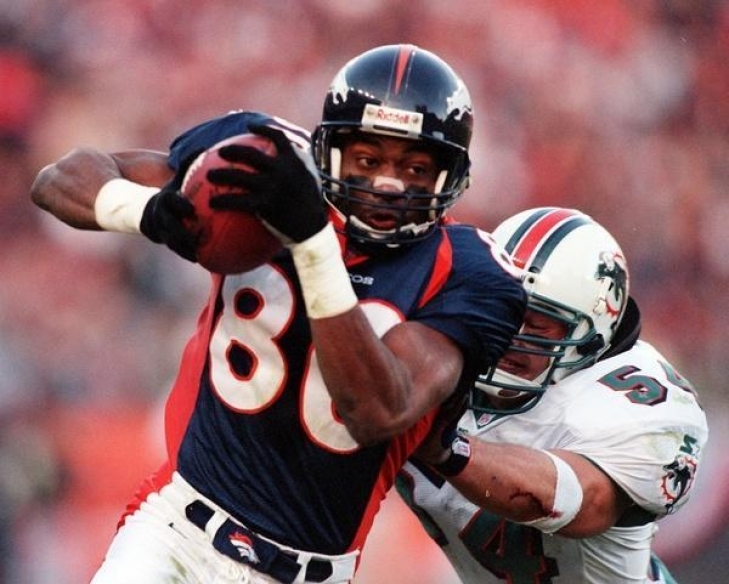
Going unselected in the 1994 NFL Draft despite shattering records at Division II Missouri Southern State, Rod Smith entered the league as a complete longshot. He spent his entire rookie year on the practice squad and operated strictly as a depth option for his first two active seasons in Denver, but he quietly refined his route running while waiting for his moment.
His breakthrough arrived in 1997, when he earned a starting role and became a favorite target for John Elway. Smith delivered a huge campaign with 70 receptions for 1,180 yards and 12 touchdowns, helping drive Denver to its first world championship in Super Bowl XXXII. He backed it up in 1998 with another 1,222 receiving yards, saving his defining moment for Super Bowl XXXIII, where he hauled in an iconic 80-yard touchdown strike from Elway en route to a 152-yard performance that sealed back-to-back titles.
After Elway retired, Smith seamlessly became the veteran anchor of the offense, serving as the go-to target through quarterback transitions to Brian Griese and Jake Plummer. From 1997 through 2002, he logged six consecutive 1,000-yard receiving seasons. His individual dominance peaked with consecutive Second-Team All-Pro selections in 2000 and 2001; he set a franchise record with 1,602 receiving yards in 2000 alongside Ed McCaffrey, then led the entire NFL with 113 catches in 2001.
Smith hit the 1,000-yard mark twice more in 2004 and 2005, earning his third career Pro Bowl selection in 2005 while becoming the first undrafted wide receiver in NFL history to break the 10,000-yard barrier. His precise footwork, relentless run-blocking, and incredible consistency helped him record 70 or more catches in nine consecutive seasons.
A severe hip injury sustained in 2006 eventually ended his playing days after the 2007 offseason. As a Bronco, Smith played in 183 games, leaving as the organization's all-time leader in receptions (849), receiving yards (11,389), and touchdown catches (68), while adding 860 receiving yards and six touchdowns in the postseason. The Broncos inducted their self-made star into the Ring of Fame in 2012.
3. Shannon Sharpe
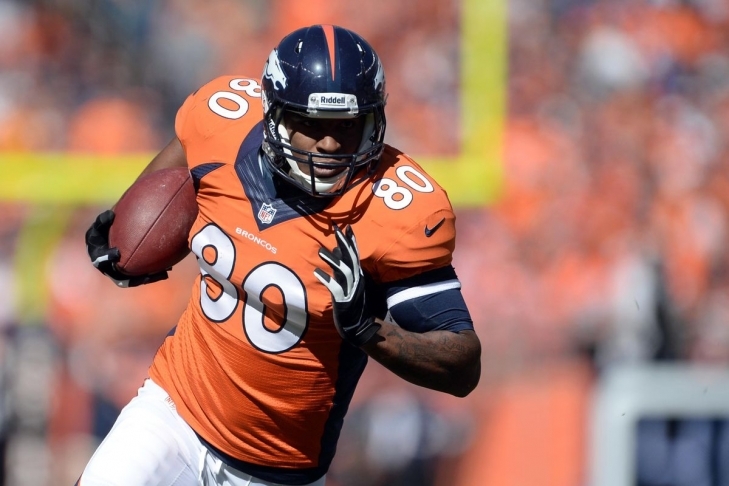
Selected in the seventh round (192nd overall) of the 1990 NFL Draft out of Division II Savannah State, Shannon Sharpe arrived in Denver as a converted wide receiver with long odds of making an impact. Instead, he completely redefined the tight end position, blending wide receiver athleticism with unmatched verbal swagger to become the premier pass-catching tight end of the 1990s and a centerpiece of Denver's back-to-back championship teams.
Prior to Sharpe's emergence, the National Football League regarded tight ends chiefly as supplementary offensive linemen with occasional infiltration into the flat. Sharpe disrupted this traditional perception. By flexing into the slot or enlarging his role as a receiver, he compelled defensive coordinators to confront complex schematic challenges. Should a defense maintain base personnel, Sharpe evaded coverage by isolating a slow-footed linebacker; conversely, if they employed nickel or dime defensive backs, Denver responded with audible shifts to facilitate a handoff to Terrell Davis into a less crowded box. His capacity to divert coverage away from the perimeter facilitated the entire offensive operation, acting as both a primary vertical target and an auxiliary catalyst for Denver's renowned zone-blocking running scheme.
Sharpe demonstrated exceptional speed that outpaced linebackers when covering downfield, and physicality that proved challenging for safeties attempting tackles in open space. Head coach Mike Shanahan strategically utilized Sharpe’s unique movement abilities by positioning him in the slot, in the flex, or isolated on the boundary. Possessing elite run-after-catch acceleration, Sharpe effectively employed strong hands to secure passes amid traffic and subsequently accelerate past defensive backs, resulting in explosive gains.
Sharpe’s illustrious career commenced during his breakout year of 1992, when he led the Denver Broncos in receiving with 53 receptions for 640 yards, thereby earning his inaugural Pro Bowl selection. In 1993, he cemented his status as a premier offensive asset by receiving his first First-Team All-Pro accolade after securing 81 receptions for 995 yards and nine touchdowns, including a historic 13-reception playoff game against the Los Angeles Raiders. He further demonstrated his continued excellence in 1994 with a career-high 87 receptions for 1,010 yards, evidencing that defensive game-planning could not effectively limit his downfield volume.
When Mike Shanahan assumed coaching responsibilities in 1995, Sharpe adapted seamlessly, recording 63 receptions across 13 games despite contending with injuries. From 1996 to 1998, Sharpe attained the pinnacle of his career, securing three consecutive First-Team All-Pro honors. He achieved 80 receptions for 1,062 yards and 10 touchdowns in 1996, followed by a personal-best 1,107 receiving yards in 1997. During the 1997 postseason, his critical third-and-5 reception against Pittsburgh in the AFC Championship Game secured Denver’s qualification for the Super Bowl, ultimately leading to victory in Super Bowl XXXII. He concluded his seven-year Pro Bowl streak in 1998 with 768 yards and 10 touchdowns, aiding Denver in achieving a 14-2 record and clinching consecutive championships in Super Bowl XXXIII.
Following a two-year stint with the Baltimore Ravens, during which he secured his third Super Bowl ring (XXXV) and an eighth Pro Bowl selection, Sharpe returned to Denver in 2002 to complete his career. At the time of his retirement following the 2003 season, Sharpe held the all-time NFL records for tight ends in receptions (815), receiving yards (10,060), and receiving touchdowns (62), becoming the first tight end in league history to cross the 10,000-yard threshold.
In 2009, he was inducted into the Denver Broncos Ring of Fame. In 2011, he entered the Pro Football Hall of Fame. Playing for the Broncos (1990–1999, 2002–2003), Sharpe appeared in 172 games (139 starts), with 675 receptions, 8,439 yards, and 55 touchdowns.
2. Von Miller
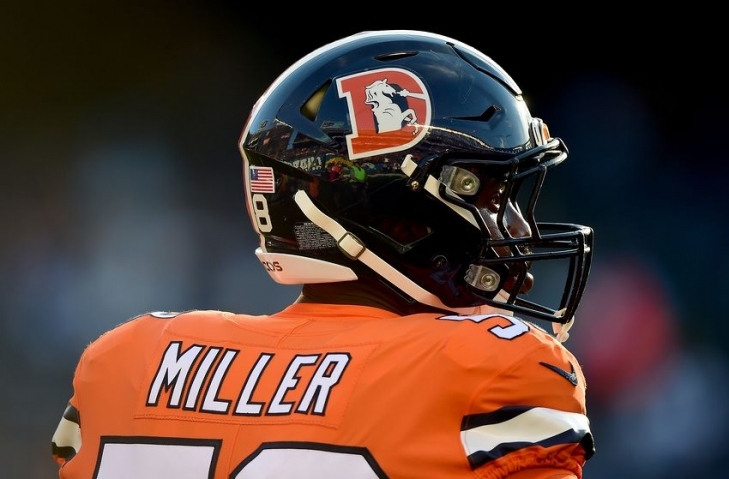
The Denver Broncos selected Von Miller with the second overall pick in the 2011 NFL Draft from Texas A&M. Miller's arrival in Denver marked the signature draft choice of John Elway's executive tenure. Elway famously described Miller as a "once-in-a-decade" talent, a statement that Miller promptly confirmed. Over nine and a half seasons with the Broncos, he revitalized Mile High Stadium as a formidable defensive stronghold and emerged as the most formidable edge rusher in the franchise's history.
Miller boasted an iconic first-step explosion, remarkable ankle flexion ("bend"), and elite closing speed around the edge. In Wade Phillips' aggressive 3-4 scheme, he routinely beat offensive tackles off the snap before they could establish their pass sets. Beyond taking down quarterbacks, Miller excelled at active-hand strip-sacks, converting pass-rush wins into immediate turnovers.
What distinguished Miller from other edge rushers of his era was his exceptional "get-off" at the snap—a reaction time that was remarkably swift, often giving the appearance of him jumping the count. By combining this raw speed with extraordinary ankle flexibility, Miller was able to dip his shoulder and maneuver around offensive tackles at nearly impossible angles, successfully turning the corner while sustaining full momentum toward the pocket. Opposing tackles were compelled to overcommit to his outside rush, thus rendering them vulnerable to his effective spin move or a powerful bull-rush that forced them back into the quarterback's pocket.
Miller made a significant impact on the league in 2011, receiving the AP Defensive Rookie of the Year award following his achievement of 11.5 sacks. He subsequently achieved an 18.5-sack season in 2012, culminating as the runner-up for the AP Defensive Player of the Year and securing his inaugural First-Team All-Pro recognition. Miller demonstrated remarkable consistency in disrupting opposing offenses, recording seven seasons with double-digit sacks while with Denver. This comprehensive skill set led to his unanimous selection for the NFL 2010s All-Decade Team.
His peak years in Mile High were characterized by an exceptional ability to elevate his performance during the most critical moments. In the 2015 AFC Championship Game against New England, he achieved 2.5 sacks and an interception against Tom Brady, thereby setting the stage for his renowned performance in Super Bowl 50 two weeks later against the Carolina Panthers.
Miller recorded six tackles, 2.5 sacks, two forced fumbles, and two quarterback hits in the big game. Both forced fumbles directly produced Denver touchdowns—including a late strip-sack that sealed the victory—earning him Super Bowl MVP honors and securing the franchise's third championship trophy. That postseason run (5.0 sacks in three games) remains one of the most dominant playoff stretches by a defensive player in NFL history.
Miller remained an elite defensive engine through the late 2010s, earning seven total Pro Bowl selections and seven All-Pro honors (3 First-Team, 4 Second-Team) in Denver. His time with the franchise came to an emotional end midway through the 2021 season when he was traded to the Los Angeles Rams, where he helped secure his second Super Bowl ring before joining the Buffalo Bills.
Miller left Denver as the franchise's all-time official sack leader with 110.5 sacks, alongside 142 tackles for loss, 225 quarterback hits, and 25 forced fumbles across 135 regular-season games.
