

39. Marco Gonzales
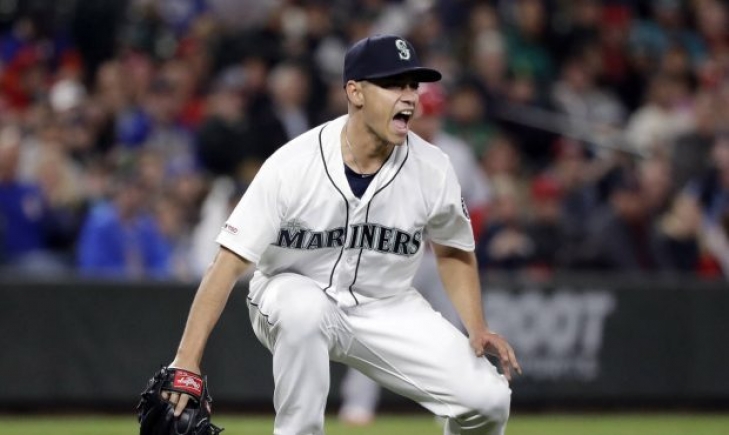
A key element for a thriving franchise rebuild is having a reliable pitcher who can consistently take the mound every fifth day, pitch innings, and support a team in transition. For the Seattle Mariners in the late 2010s and early 2020s, that crucial piece was Marco Gonzales. Drafted in the first round by the St. Louis Cardinals in 2013 from Gonzaga University, this soft-tossing left-hander overcame early injuries and a crowded roster before a pivotal July 2017 trade sent him to Seattle in exchange for outfielder Tyler O'Neill. When Gonzales joined the Mariners, he was an untested talent, but he quickly became the steady, competitive backbone of the pitching staff.
Gonzales officially established himself as a dependable rotation piece during the 2018 season. Securing a permanent role right after spring training, the southpaw displayed an elite changeup and excellent sequencing, pitching through 29 starts with a promising 13–9 record and a 4.00 ERA. Although he didn't possess the high velocity of some peers, his calm, pitch-to-contact strategy made him a consistent presence during the regular season.
He beautifully validated that breakout during the 2019 season. Operating as the undisputed ace of a shifting roster, Gonzales spearheaded the staff by going 16–13 across a volume-dense 203.0 innings pitched, pacing the club with 147 strikeouts and cementing his status as the unquestioned leader of the clubhouse.
In the pandemic-shortened 2020 season, Gonzales put together his absolute professional masterpiece. Serving as the team's Opening Day starter, he completely dismantled American League hitters, cruising to a brilliant 7–2 record with a career-best 3.10 ERA and a league-leading 0.9 walk-per-nine-innings rate, proving that pristine command could thoroughly dictate the modern game.
While he remained a highly competent and competitive force during a 10-win 2021 campaign, the massive physical toll of carrying the rotation through consecutive rebuilding seasons eventually created significant friction. The 2022 season proved to be an incredibly grueling stretch; despite logging 183.0 innings across 32 starts, Gonzales lacked his signature sharpness, leading the American League with 15 losses and posting a negative bWAR (-0.1).
His final chapter in the Emerald City arrived in 2023. Though he managed a winning 4–1 record over 10 starts, persistent nerve irritation in his forearm severely limited his durability and efficiency, inflating his ERA to 5.22 and dropping his advanced value metrics to a negative 0.4 bWAR before season-ending surgery sidelined him for good.
Recognizing the rapid ascent of younger arms like George Kirby and Logan Gilbert, the front office made a tough transitional calculation in December 2023, trading the veteran southpaw to the Atlanta Braves, who subsequently flipped him to the Pittsburgh Pirates just days later. With Seattle, Gonzales had a 61–47 record, a 4.08 ERA, and 631 strikeouts.
Our All-Time Top 50 Seattle Mariners are now up

Yes, we know that this is taking a while!
As many of you know, we here at Notinhalloffame.com are slowly generating the 50 of each major North American sports team. We have a new one to unveil today, that of the Seattle Mariners.
Entering the American League as an expansion team in 1977, the Seattle Mariners have had a lot of great players, but despite that, they are the only team to have never appeared in the World Series.
As for all of our top 50 players in baseball we look at the following:
1. Advanced Statistics.
2. Traditional statistics and how they finished in the American League.
3. Playoff accomplishments.
4. Their overall impact on the team and other intangibles not reflected in a stat sheet.
Remember, this is ONLY based on what a player does on that particular team and not what he accomplished elsewhere and also note that we have placed an increased importance on the first two categories.
This list is updated up until the end of the 2019 Season.
The complete list can be found here, but as always we announce our top five in this article. They are:
We will continue our adjustments on our existing lists and will continue developing our new lists.
Look for our All-Time Top 50 Tampa Bay Rays coming next!
As always we thank you for your support.
50. Leon Roberts
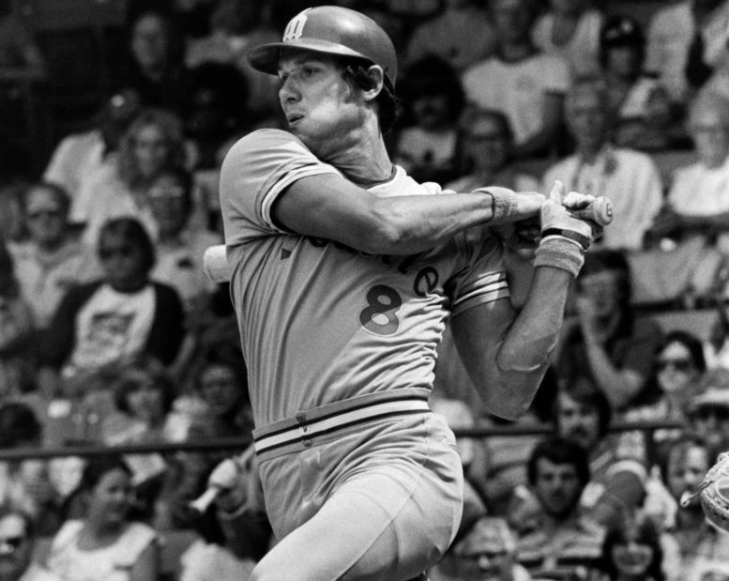
The fact that Leon Roberts managed an 11-year major-league career is a minor medical and athletic miracle. As a child, he accidentally stabbed his right eye with a jackknife, leaving him with a severe focusing impairment in that eye and profoundly broken depth perception in his left. Terrified that a diagnosis would spell the immediate end of his professional aspirations, Roberts hid the injury from every coach, manager, and teammate he ever played with. Yet, despite essentially hitting blind in one eye, the 6'3" corner outfielder found a way to survive at the sport's highest level, engineering his absolute professional peak in the Pacific Northwest.
Acquired from the Houston Astros ahead of the Seattle Mariners' second season in 1978, Roberts walked into the Kingdome and immediately seized the primary everyday role in right field. Hitting inside a cavernous dome where visual tracking was notoriously difficult for fully sighted batters, his level-headed determination turned him into the expansion franchise's premier offensive constant.
Roberts’ introductory 1978 campaign in Seattle was an absolute masterpiece of individual defiance. Slashing a magnificent .301/.364/.515, he thoroughly dominated opposing American League pitching to collect career-high benchmarks with 142 hits, 21 doubles, 7 triples, and 22 home runs. Roberts didn't just accumulate empty volume; he was a highly efficient, high-leverage engine for the young Mariners. Pacing the entire 1978 lineup with a career-high 92 RBIs, his .301 batting average placed him a brilliant sixth overall in the American League batting race.
While the physical toll of grinding through modern schedules and adjusting his mechanics caused his offensive numbers to trend downward over the subsequent two summers, Roberts remained a vital piece of the team's structural depth. He gritted his way through 140 games in 1979, contributing 122 hits and 15 home runs to help support a transitioning lineup. He backed that up by appearing in 119 games during the 1980 campaign, securing 94 hits and reaching double-digit home run territory yet again with 10 long balls. His ability to maintain a regular role despite his sensory hurdles stood as a powerful testament to his fierce competitive character.
Following the 1980 season, the front office made a massive strategic calculation to reshuffle the roster, sending Roberts to the Texas Rangers as part of a monumental, 11-player blockbuster trade package. He would later navigate subsequent major-league chapters with the Blue Jays and Royals before retiring in 1984 to embark on a successful second career as a minor-league manager.
With Seattle, Roberts compiled 358 hits, 63 doubles, 47 home runs, and 179 RBIs across 393 games.
49. Kazuhiro Sasaki
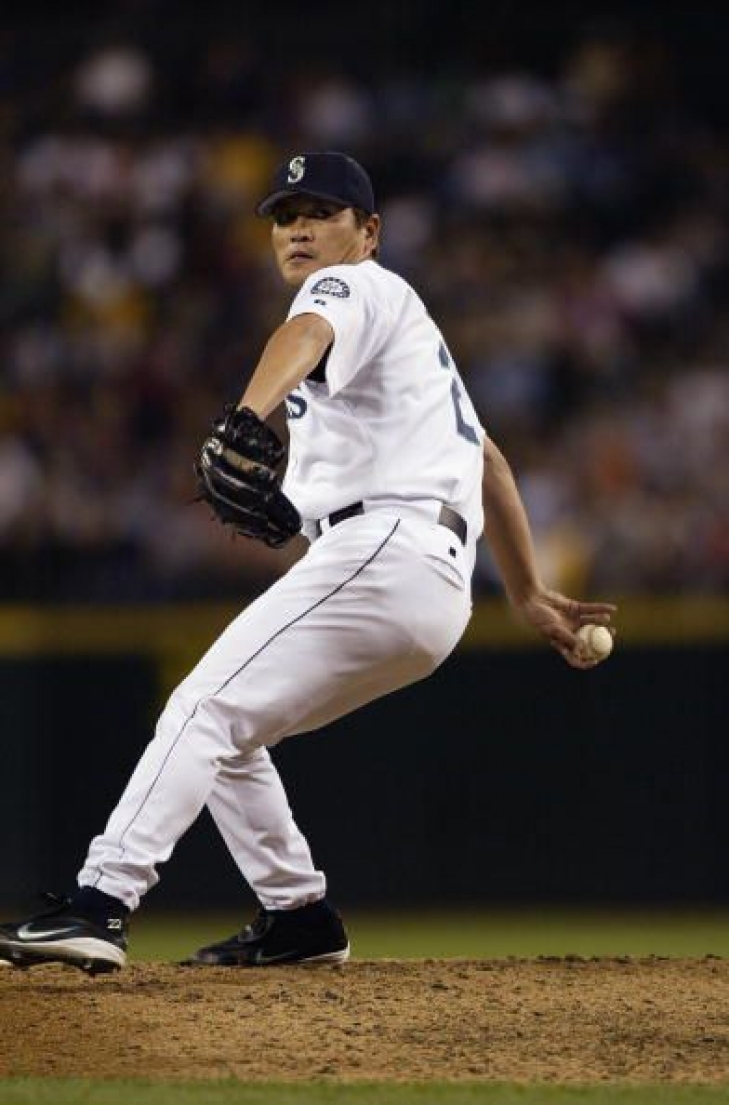
After playing a decade in Japan with Yokohama, Kazuhiro Sasaki was a 32-year old rookie in Seattle, and with a decade of real experience, he easily won the 2000 American League Rookie of the Year Award. The former Central League MVP would finish third in the AL with 37 Saves.
47. Edwin Diaz
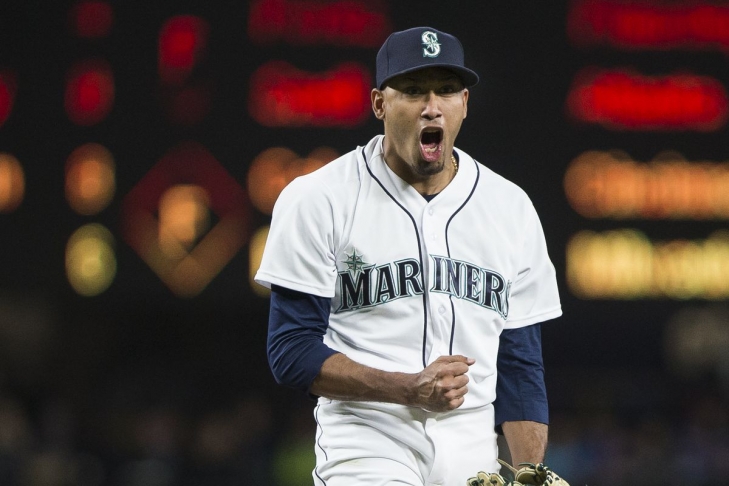
The discussion regarding who owns the greatest overall closing career in Pacific Northwest history remains a compelling debate for baseball historians, with compelling cases to be made for the sustained durability of Kazuhiro Sasaki or J.J. Putz. However, when evaluating the single most dominant, high-efficiency peak ever constructed by a relief pitcher in a Seattle Mariners uniform, the conversation begins and ends with Edwin "Sugar" Díaz. Originally drafted as a starting pitcher in the third round of the 2012 draft, the slender right-hander from Naguabo, Puerto Rico, transformed into an absolute late-inning cheat code the moment the front office moved him to the bullpen.
Díaz burst onto the major-league stage midway through the 2016 campaign, immediately electrifying Safeco Field with an overwhelming, upper-90s four-seam fastball and a devastating slider. He locked down 18 saves over just 51.2 frames, averaging a blistering 15.3 strikeouts per nine innings to secure a fifth-place finish in the American League Rookie of the Year voting. He seamlessly backed up his initial splash by securing the full-time closer role in 2017, converting 34 saves to establish himself as a premier tier-one weapon. Yet, nothing in his early track record could have prepared the sport for the historic, regular-season hurricane he unleashed upon the American League the following summer.
The 2018 campaign stands as one of the most statistically overwhelming exhibitions of relief dominance in the history of Major League Baseball. Operating as manager Scott Servais' ultimate late-inning firewall, Díaz served as a regular-season metronome for a highly competitive Mariners squad, leading all of baseball with 65 games finished and a historic, mind-boggling 57 saves. His 57 conversions tied him with Bobby Thigpen for the second-highest single-season save volume in major-league history, trailing only Francisco Rodríguez's all-time record of 62. True to form, he was completely untouchable. Over 73.1 high-leverage innings of work, Díaz racked up 124 strikeouts while surrendering a mere 41 hits and 17 walks. This suffocating era dominance yielded a microscopic 1.96 ERA and a brilliant 0.79 WHIP, earning him his very first career All-Star selection, the AL Reliever of the Month honors in three separate months, and the prestigious Mariano Rivera American League Reliever of the Year Award.
Recognizing that his trade value would never be higher, general manager Jerry Dipoto utilized his young closer as the ultimate premium chip to kickstart an organizational reset. In December 2018, the Mariners packaged Díaz alongside veteran Robinson Canó in a blockbuster trade with the New York Mets, bringing back a significant haul of young talent centered around top outfield prospect Jarred Kelenic.
Díaz finished his three-year Seattle residency with 109 saves, 140 games finished, and 301 strikeouts against 64 walks over 206 relief appearances.
44. Tino Martinez
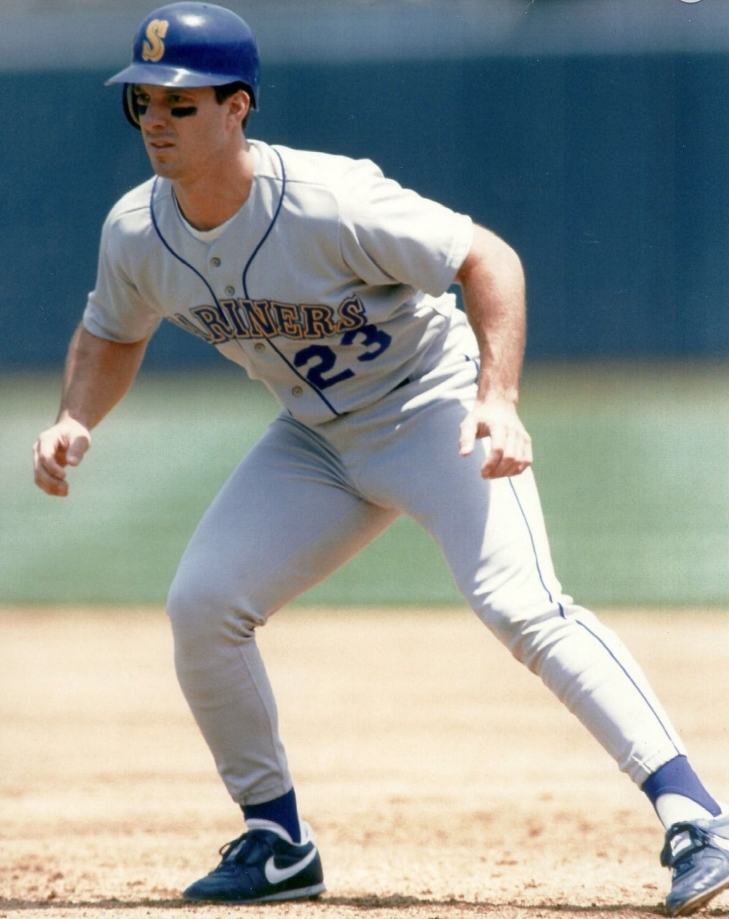
Tino Martinez was an excellent college baseball player at the University of Tampa and a Gold Medalist at the Seoul Olympics. Martinez was a first round pick (14th Overall) in 1988, and he would debut with Seattle in 1990.
35. Franklin Gutierrez
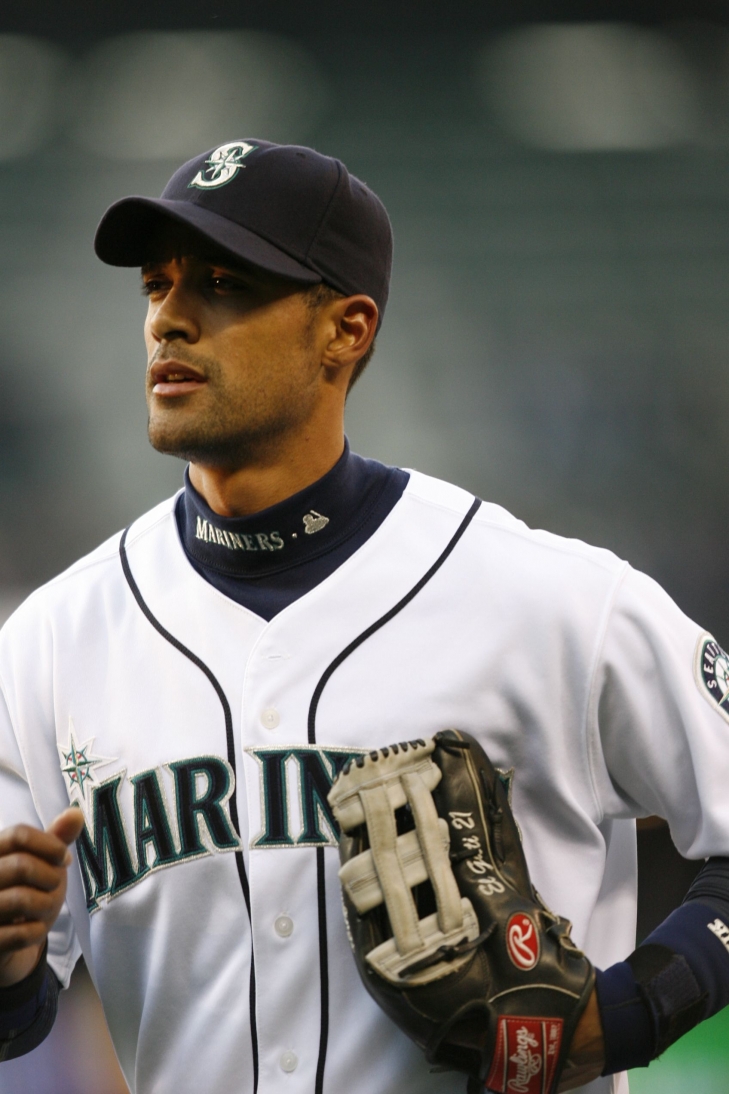
Franklin Gutierrez was not a superstar in the Majors, but his best years by far were his time in Seattle.
24. Jeff Nelson
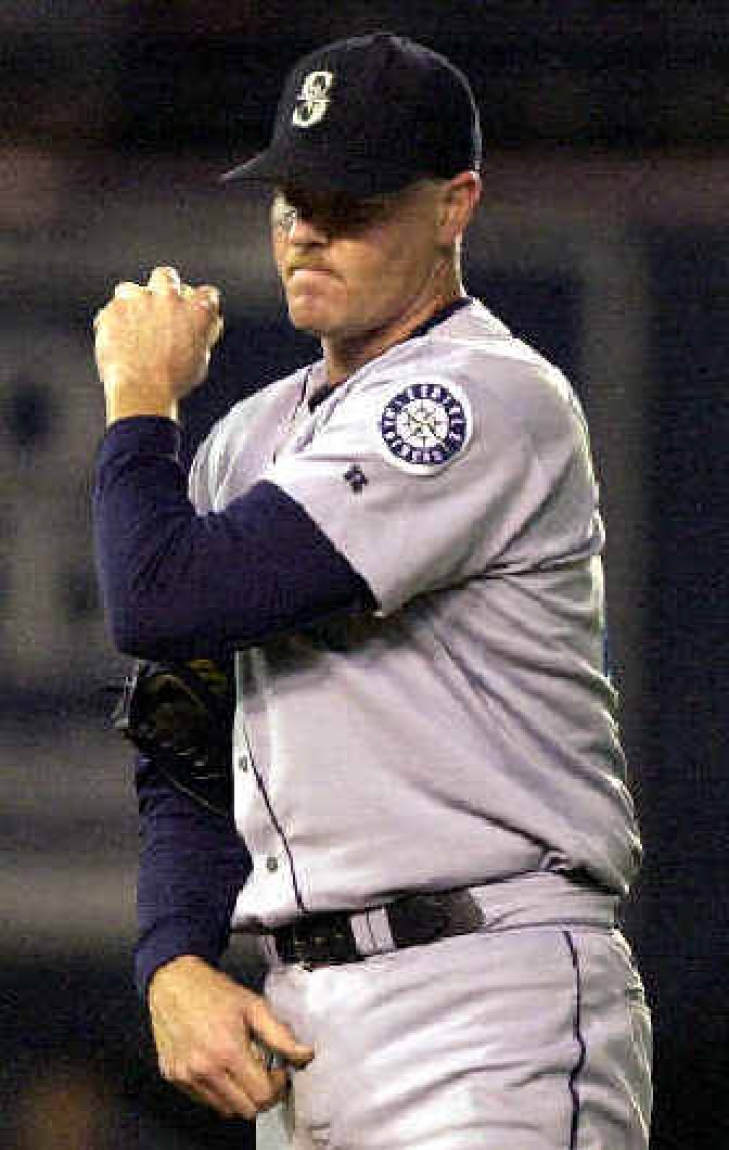
Jeff Nelson was with the Seattle Mariners for three different runs, and while he was a four-time World Series Champion with the New York Yankees, it is with Seattle where he will always be most associated with.
48. Ken Phelps
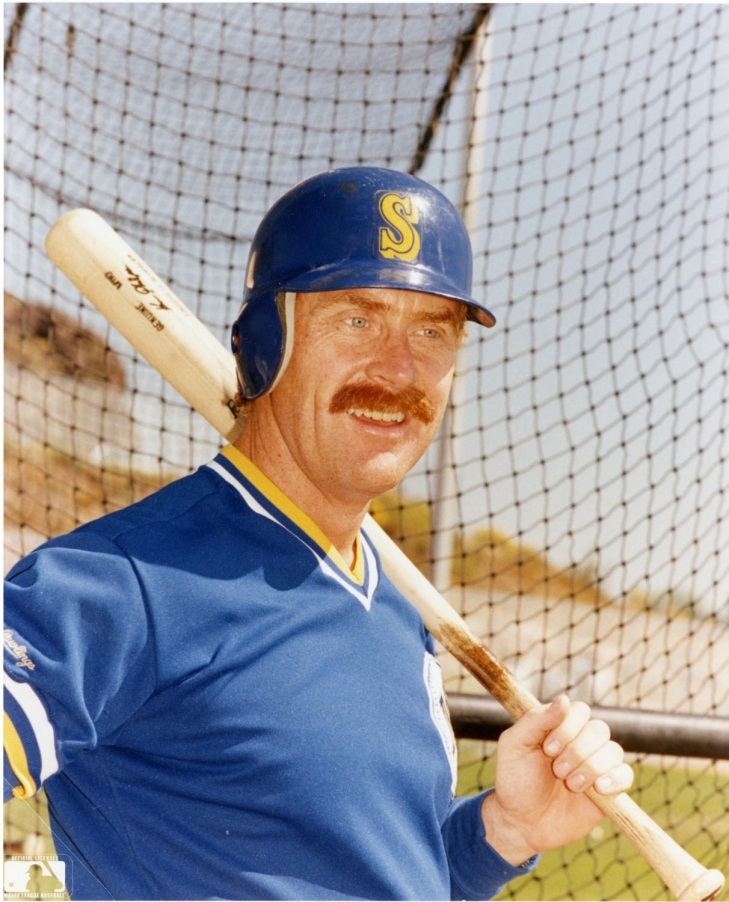
Long before modern analytics transformed front-office decisions, Ken Phelps exemplified what would become known as "Moneyball." During a time when raw batting average and physical build were the main metrics, the mustached, slow-footed slugger was often misunderstood by traditional scouts. They saw a defender who struggled and a player batting around .240 as a platoon candidate. However, those who looked deeper recognized a more dangerous talent: an efficient hitter with an exceptional strike zone sense and a remarkable ability to change the game with one swing.
In March 1983, the Mariners traded for Phelps from the Montreal Expos, giving him a platform to showcase his unique skills. Although he seldom faced left-handed pitchers, he effectively utilized his platoon role against right-handers as a key advantage. While he didn't accumulate many hits, his ability to draw walks was exceptional. Phelps broke the .400 on-base percentage barrier twice during his Seattle tenure, including a remarkable .434 over 72 games in 1988, making him a tough out for pitchers trying to navigate the bottom of the Seattle order.
When he wasn't discarding his bat and heading to first base after a walk, Phelps was busy hitting long shots over the Kingdome walls. He had an impressive three-year run of power from 1984 to 1987. He hit 24 home runs in both 1984 and 1986, with a strong 1985 season where he posted a .521 slugging percentage in limited plate appearances. His best regular season came in 1987, when he hit a career-high 27 home runs, drew 80 walks in just 120 games, and achieved a remarkable .916 OPS.
On July 21, 1988, the Mariners' front office executed a notable mid-season trade, sending 33-year-old Phelps to the New York Yankees in exchange for 23-year-old outfield prospect Jay Buhner. Although Phelps quickly suffered a significant decline after reaching the Bronx, Buhner flourished into a fan-favorite, hitting 40 home runs for Seattle. This trade created a remarkable imbalance, so much so that it was later famously referenced in a memorable episode of Seinfeld.
He finished his six-year Seattle stint with 353 hits, 105 home runs, and 245 RBIs, boasting a .392 on-base percentage and a.507 slugging average over 520 games.
33. Phil Bradley
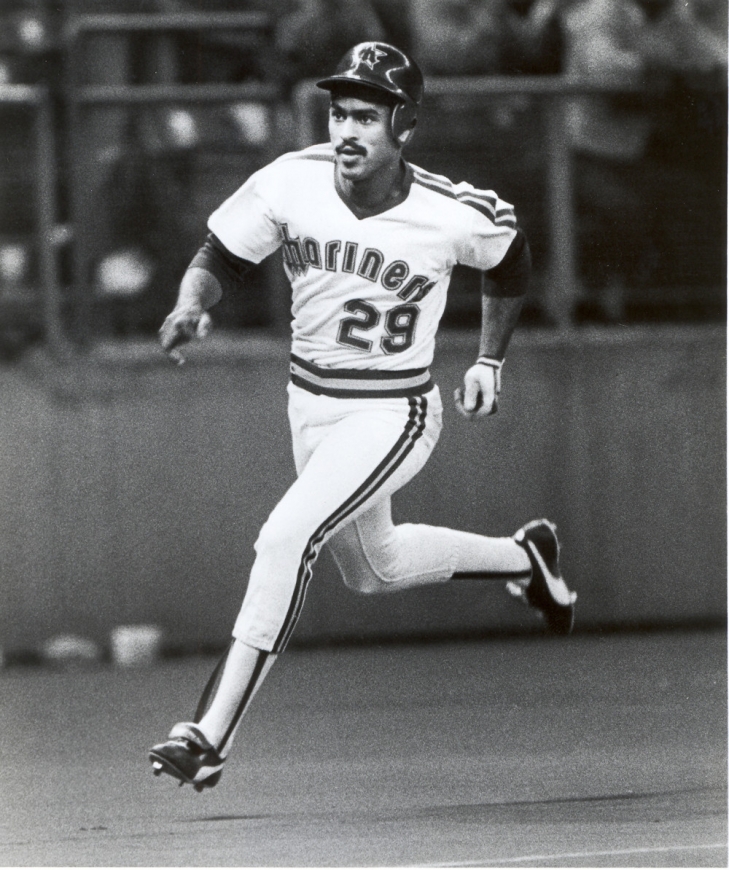
Before Phil Bradley became an accomplished major-league outfielder, he was already a notable athlete in the Midwest. At the University of Missouri, he excelled as an All-American outfielder and simultaneously was a three-time Big Eight Offensive Player of the Year as a quarterback. After being picked in the third round of the 1981 amateur draft by the Seattle Mariners, he quickly developed his exceptional hand-eye coordination in the minors. By 1983, he had made it to the big leagues, bringing energetic athleticism to a young team eager for talented table-setters.
Bradley’s breakout came during the historic 1985 season, a summer when he produced one of the most explosive individual performances for the franchise that decade. As the team's regular left fielder, his quick wrists and disciplined hitting overwhelmed opposing pitchers. He hit an impressive .300, ranking seventh in the American League, and achieved career highs with 192 hits, 33 doubles, 26 home runs, and 88 RBIs. His standout season included a dramatic walk-off grand slam against the Minnesota Twins on April 13, which led to his first All-Star selection and a 16th-place finish in the AL MVP voting.
He demonstrated how his exceptional performance in the 1986 season relied on selective patience rather than raw power. While his home runs remained steady at 12, Bradley improved his batting average to an impressive .310, placing him eighth in the league. His disciplined approach made him a difficult matchup, drawing 77 walks and achieving a stellar .405 on-base percentage, which ranked among the top ten. Coupled with his 21 stolen bases, he consistently created scoring chances at the top of the order.
In 1987, Bradley had a highly productive summer in the Pacific Northwest, hitting .297 with 14 home runs, 38 doubles, and 101 runs scored. He also showcased his speed by stealing 40 bases, a career high. Despite his popularity and efficiency, the team traded him to the Philadelphia Phillies in December 1987 for a package that included utility player Mike Jackson and outfielder Glenn Wilson. While he continued to perform well with the Phillies, Orioles, and White Sox, Bradley’s prime physically was spent entirely in Seattle.
Bradley compiled 52 home runs, 107 stolen bases, and an exceptional .301/.382/.449 slash line across 607 games in Seattle.
41. Dave Valle
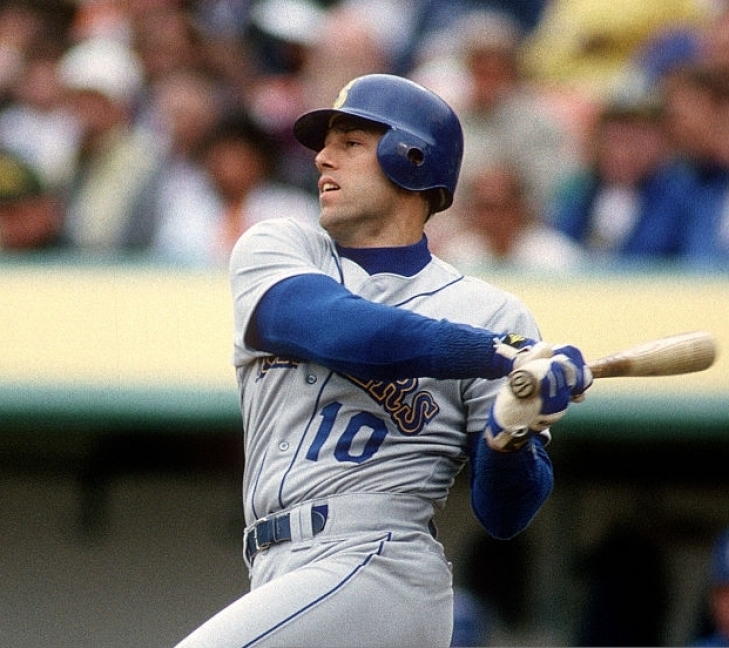
While the late 1980s and early 1990s Seattle Mariners were marked by exciting young talent, having a dependable, hardworking player behind the plate was essential for managing the demanding MLB schedule. For ten years, Dave Valle offered the Pacific Northwest consistent, defense-oriented stability. Drafted in 1978, the New York native spent years working through the minors before debuting in the majors in September 1984. After three seasons sharing catching duties in a competitive rotation, Valle took over as the main catcher in 1987 and maintained that role firmly.
Valle was never expected to be a power hitter for the middle of the lineup. He was mainly valued for his glove rather than his batting. His offensive stats were modest—with a top on-base percentage of .328 in 1990—though he occasionally delivered clutch hits from the bottom of the order. He hit double-digit home runs in both 1987 (12) and 1988 (10), making it harder for pitchers to overlook him. However, the Mariners valued him more for his skill in managing pitchers and suppressing base stealers than for his batting line.
Valle’s last season in Seattle was his finest defensive performance. In 1993, he dominated American League running games, leading all Junior Circuit catchers in caught stealings (57), putouts (881), double plays, and range factor. Highlighting his game-calling skills, he was the catcher guiding Chris Bosio during a historic no-hitter in April that year.
Following his standout 1993 defensive season, Valle became a free agent, signing with the Boston Red Sox and ending his Seattle career. He finished with 558 hits, 61 home runs, and a 6.1 Defensive bWAR over ten years.
45. Tom Paciorek
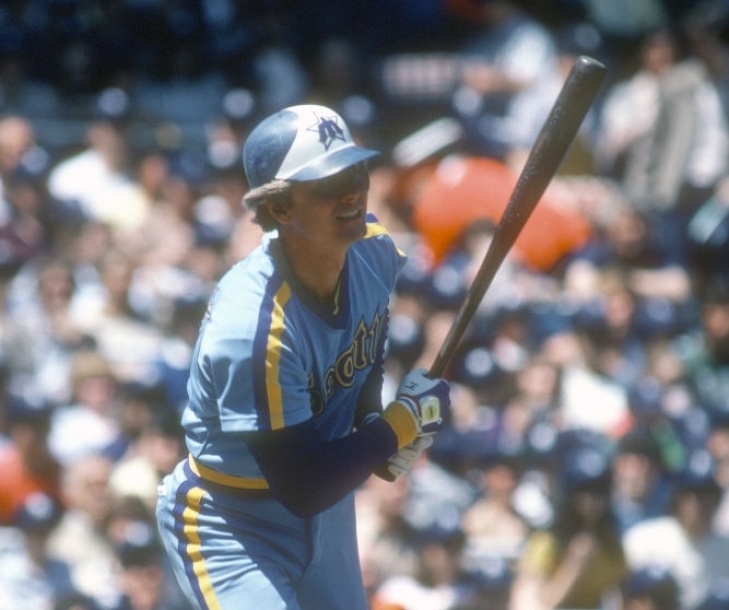
Some baseball careers span decades of consistent, predictable play, while others are remembered for a single, spectacular moment of brilliance. Tom "Wimpy" Paciorek’s first ten years in the majors fall into the latter category. Drafted in the fifth round by the Los Angeles Dodgers in 1968, this tall (6’4") outfielder and first baseman was often stuck on the fringes of Hollywood, unable to secure a spot on a crowded, star-studded roster. After a short platoon role with the Atlanta Braves ended in May 1978 with his release, 31-year-old Paciorek signed with the Seattle Mariners, then a second-year team, looking for a new opportunity to keep playing professional baseball.
During Paciorek’s early seasons playing under the Kingdome’s roof, he proved to be a highly skilled and adaptable bench player for the young franchise. He adapted seamlessly to the Pacific Northwest environment, covering multiple outfield positions and first base, and posted a commendable .299 batting average over 70 games in 1978. By 1980, his role expanded as he became a more regular part of the lineup, amassing 114 hits and hitting a career-high 15 home runs. Although these totals marked him as a reliable major-league player, nothing in his decade-long career hinted at the extraordinary individual achievement he was about to deliver.
The 1981 season, shortened by a strike, was a remarkable showcase of hitting. At 34, Paciorek played full-time and became a scientific wonder at the plate, tallying a career-high 132 hits and 14 home runs in just 104 games. His impressive .326 batting average was no fluke; it ranked him second in the American League, behind only Carney Lansford. Demonstrating an unexpected mix of power and agility, Paciorek slugged.509 and stole a career-high 13 bases. This performance put him at the top of the league's Power-Speed number (13.5), earning him his only All-Star appearance and finishing tenth in the American League MVP voting.
Instead of signing the veteran to a long-term extension after his career year, the Mariners' front office opted to capitalize on his peak trade value. In December 1981, they traded Paciorek to the Chicago White Sox for a three-player package. Although none of the players became long-term contributors for Seattle, Paciorek proved his worth with two consecutive .300 seasons in Chicago. He ended his four-year stint with Seattle with 410 hits, 40 home runs, 173 RBIs, and a.296 batting average.
36. J. J. Putz
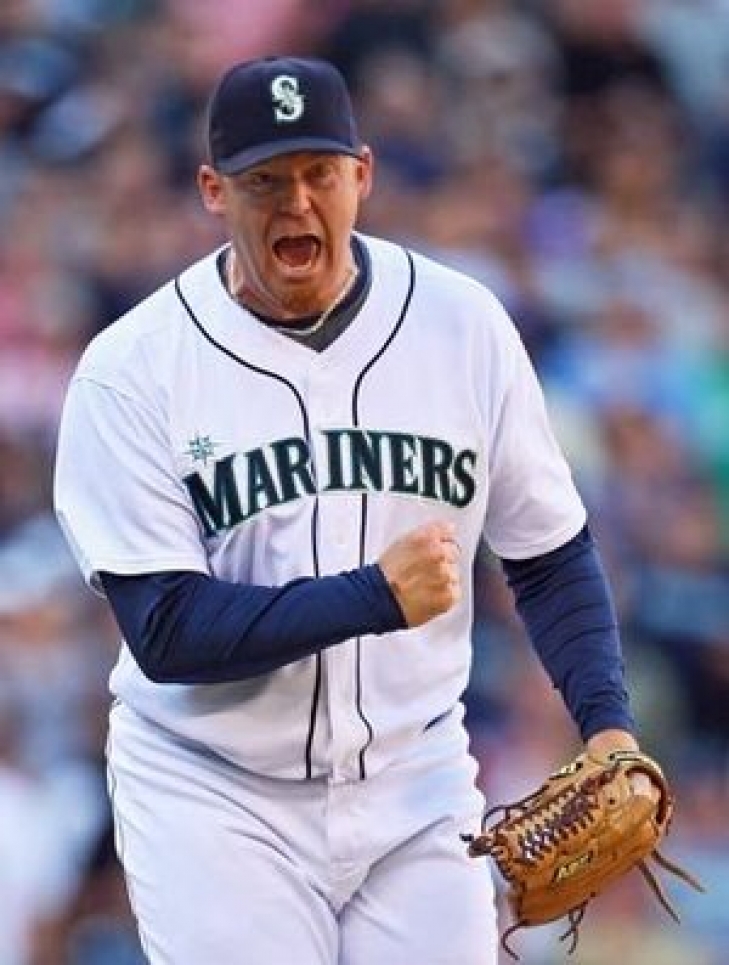
J.J. Putz made his Major League debut with the Seattle Mariners in 2003 for three games, and in 2004 and 2005, he had a role in the bullpen appearing in 118 Games. In those two years, Putz was just another arm, but after adding a splitter to his arsenal, and winning the closing job, 2006 would see him reborn.
43. Omar Vizquel
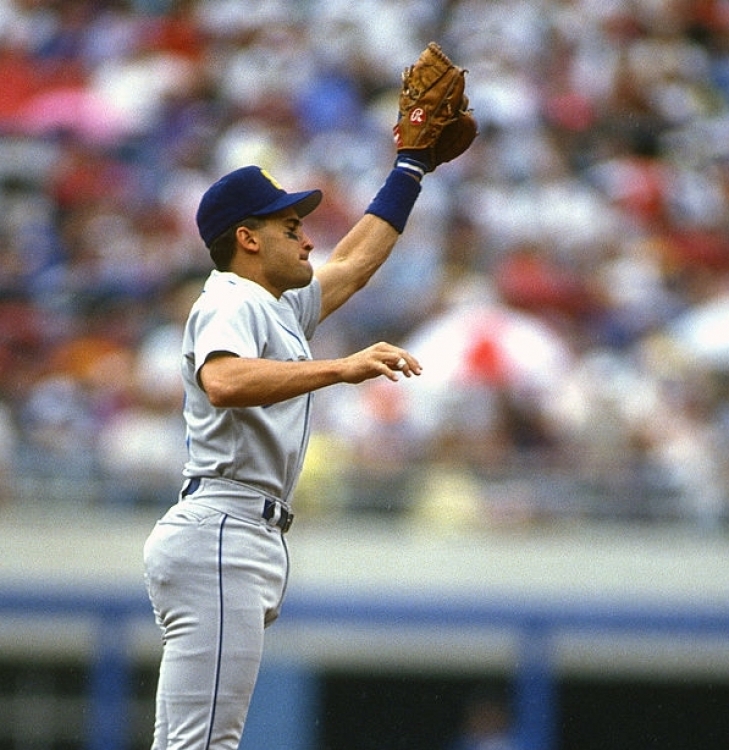
Omar Vizquel is not primarily associated with the Seattle Mariners, but the player who would become one of the best defensive infielders ever would begin his career in the Pacific Northwest.
42. Bruce Bochte
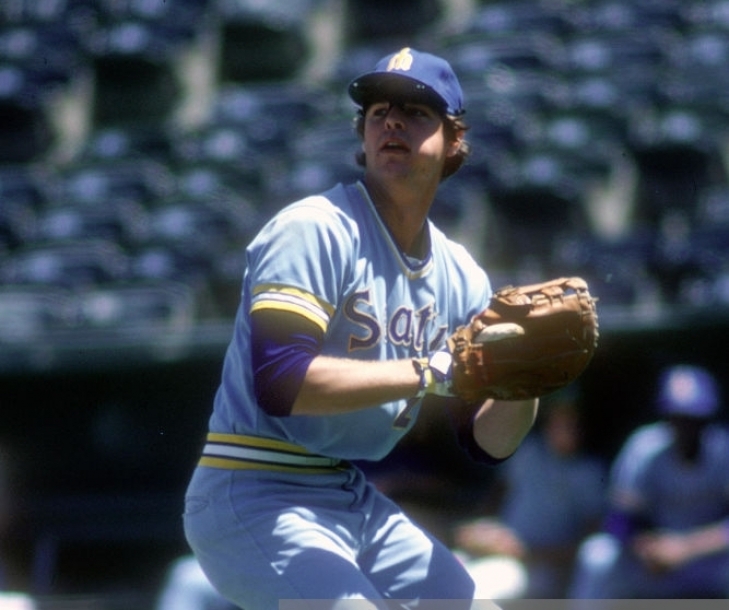
Every emerging franchise needs a reliable, level-headed hitter to solidify its lineup. For the late 1970s Seattle Mariners, that role was filled by Bruce Bochte. After four years of struggling for consistent playing time with the California Angels and Cleveland Indians, the smooth-swinging, left-handed first baseman and outfielder took a chance on the Pacific Northwest, signing as a free agent with the Mariners before the 1978 season. Bochte stepped into the Kingdome and quickly entered the best phase of his career, evolving from a platoon player to the key middle-of-the-order hitter for a young team.
Bochte’s 1978 rookie season in Seattle laid a strong foundation, as he achieved 128 hits and 11 home runs, helping to stabilize a young expansion team. His true standout moment came during the historic 1979 season, where he displayed excellent plate discipline and consistently drove line drives across the Kingdome's turf. That summer, Bochte posted career-high numbers in nearly every key hitting category, with 175 hits, 38 doubles, 16 home runs, and 100 RBIs, while maintaining a remarkable .316 batting average. His exceptional performance earned him a spot on the 1979 American League All-Star team. Playing at home in the Kingdome, Bochte made history as the first Mariner to get a hit and RBI in the Midsummer Classic, singling off Hall of Famer Gaylord Perry in a crucial pinch-hit at-bat.
Bochte convincingly demonstrated that his All-Star peak was not just a temporary highlight. He maintained that high level of performance into the 1980 season, posting another impressive .300 batting average along with 34 doubles, 13 home runs, and 78 RBIs, earning the Mariners Team MVP award. Although the team experienced various roster changes in the following summers, Bochte’s steady demeanor remained a reliable constant during the regular season. After a strike-shortened 1981, he bounced back to deliver an outstanding 1982 season, playing 144 games, tallying 151 hits, 12 home runs, and maintaining a solid .297 batting average with a disciplined .380 on-base percentage.
Following the 1982 season, Bochte’s career took one of the era’s most unconventional detours. Possessing a unique, contemplative perspective on life outside of sports, he walked away from the game entirely for the 1983 season, citing both physical friction and a personal desire to step back from the business of baseball. After sitting out that entire summer, his competitive drive returned, prompting him to sign a free-agent contract with the Oakland Athletics in early 1984. He then enjoyed three highly productive final seasons before retiring in 1986.
In Seattle, Bochte accumulated 697 hits, 134 doubles, 58 home runs, and 329 RBIs with a sharp, steady .290 batting average and an elite .370 on-base percentage across 681 total games.
32. Julio Cruz
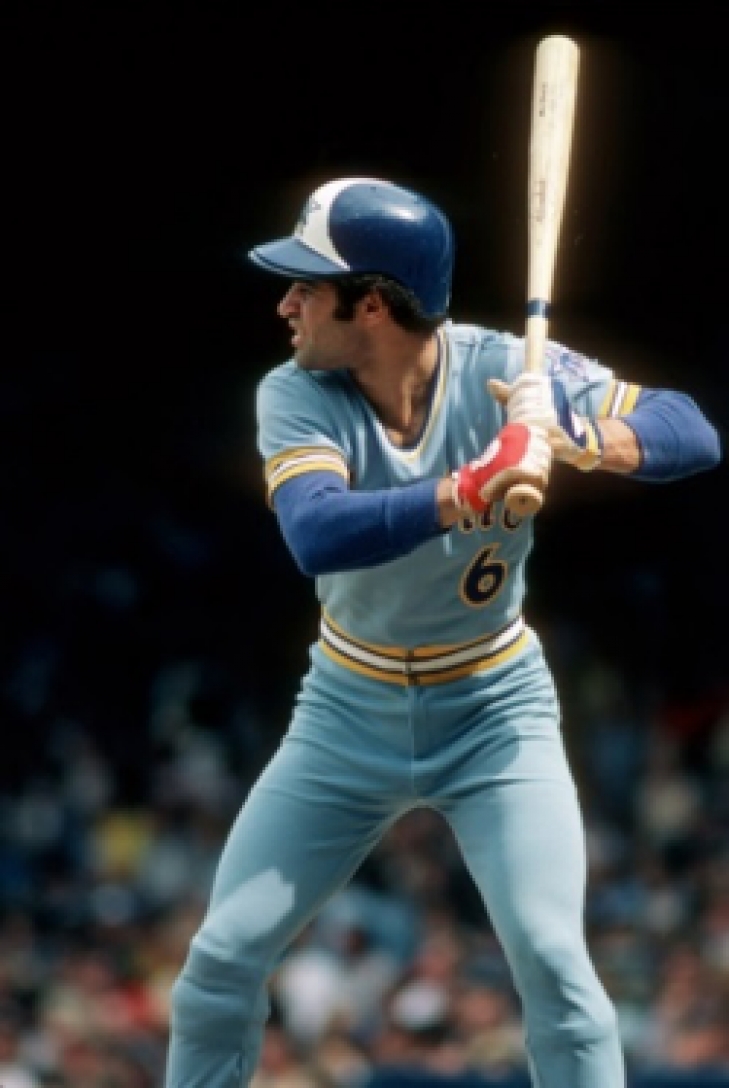
When the Seattle Mariners began their first season in April 1977, they were a diverse team still searching for key players to build a future. Julio Cruz came into the picture. Initially signed from the California Angels' farm system, the smooth-fielding switch-hitter was picked by Seattle in the 1976 expansion draft. He gained immediate experience in the majors as a 22-year-old rookie that summer, and the next year, he became the franchise's first regular starting second baseman.
Known affectionately as "The Cruzer" by a growing Pacific Northwest fan base, his value wasn't based on raw power or extra-base hits. Cruz epitomized the dead-ball style speedster of the late 1970s; during his six-and-a-half seasons in Seattle, he was a light hitter with only 17 home runs and a modest .243/.327/307 slash line. Nonetheless, he had exceptional base-running instincts and an innate talent for causing chaos once he reached first base.
Cruz used his lightning-fast speed to solidify himself as the anchor of manager Darrell Johnson’s lineup, constantly challenging opposing catchers with aggressive baserunning. His performance peaked in the 1978 Season, when he raced across the Kingdome’s artificial turf to steal a career-high 59 bases. This breakout established him as an elite baserunner, and he consistently surpassed 40 stolen bases each year for the following four seasons, regularly creating scoring opportunities for a team in need of offensive stability.
Beyond his peak in dynamic base-running, Cruz offered consistent, highly efficient infield play. His soft hands and excellent lateral range contributed to his strong relationship with teammates around second base, making him a beloved clubhouse leader during the team's early years. The end of his notable tenure in Seattle came in June 1983, when the front office traded him to the Chicago White Sox in exchange for infielder Tony Bernazard. Cruz quickly found success in Chicago, becoming a key player that helped the White Sox achieve a 99-win season and win the American League West division.
He finished his Seattle career with 701 hits and 290 stolen bases in 722 games. He held the franchise record for stolen bases for 25 years until Ichiro Suzuki surpassed him in 2008.
34. Jim Beattie
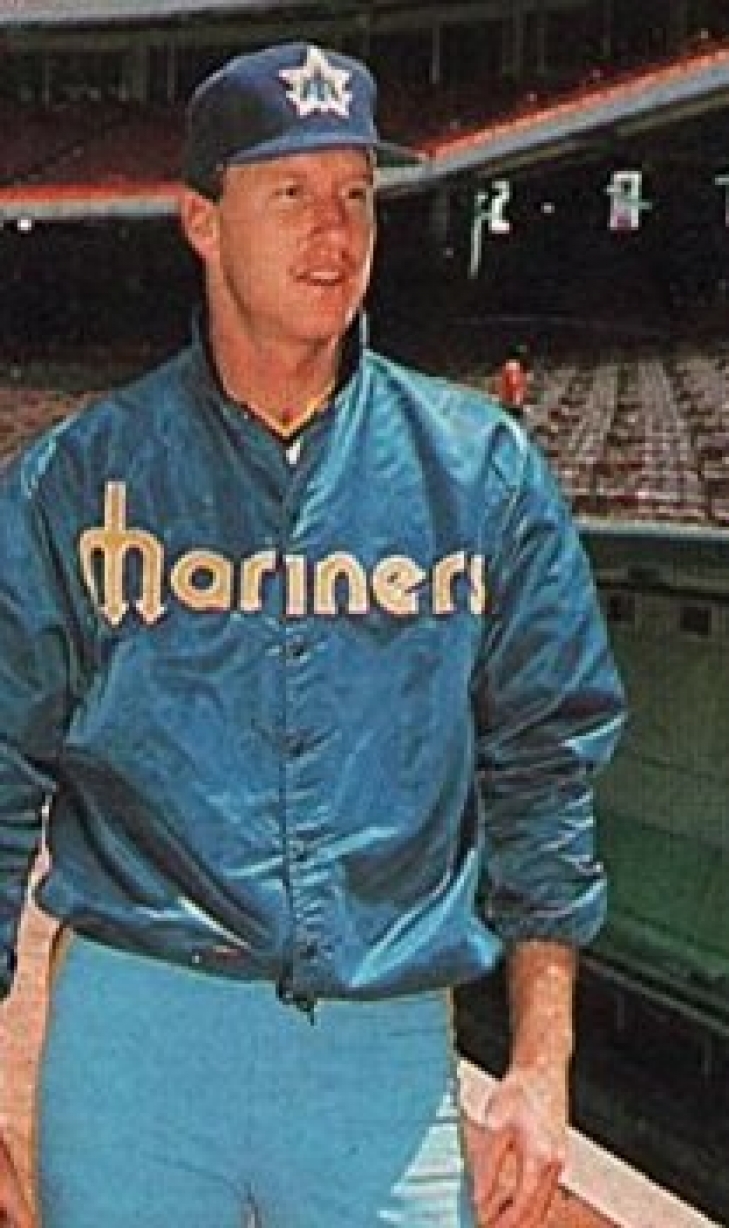
Jim Beattie came to the Pacific Northwest with credentials that few of his new teammates could rival. An Ivy League star from Dartmouth, this tall 6-foot-5 right-hander had already achieved baseball's highest honor as a rookie in 1978 by starting and winning Game 5 of the World Series for the New York Yankees. But the intense New York environment changed quickly, and after just two winters, Beattie was traded to the expansion Seattle Mariners in a multi-player deal. He went from the high-pressure spotlight of New York to the challenges of a franchise seeking its identity, moving from a playoff contender to the bottom of the American League.
His initial time on the Kingdome turf was a tough baptism, marked by misfortune and little local support. Beattie faced a difficult 1980 debut, ending with a 5–15 record and a 4.85 ERA. After a similarly tough start in 1981, which included a brief demotion to Triple-A Spokane, he returned to the major leagues with a completely revised approach. Despite continuing to post losing records—a common outcome for a team that often finished last in the division—Beattie quietly became a reliable, intelligent mainstay of the starting rotation.
His major breakthrough as a key pitcher came in a remarkable 1982 season. Over 26 starts, Beattie posted a strong 3.34 ERA, ranking seventh in the American League, and his 140 strikeouts placed him eighth in the league. He combined impressive swing-and-miss ability with effective efficiency, becoming a star attraction for local fans who saw that his talent greatly surpassed his misleading 8–12 record.
That durability reached its peak during the crucial summers of 1983 and 1984. On September 27, 1983, Beattie achieved a historic milestone by pitching a one-hit shutout against the Kansas City Royals—the first in franchise history. He continued with a heavy workload in 1984, pitching 211 innings and completing 12 games. His consistent ability to go deep into games and keep his bullpen fresh earned him top-ten bWAR rankings among American League pitchers in both years, exemplifying a model of stable and focused performance.
After a sharp decline over two injury-plagued winters, Beattie threw his final major league pitch in August 1986. He left with a 43–72 record, 24 complete games, and 563 strikeouts over 944.1 innings.
30. Mitch Haniger
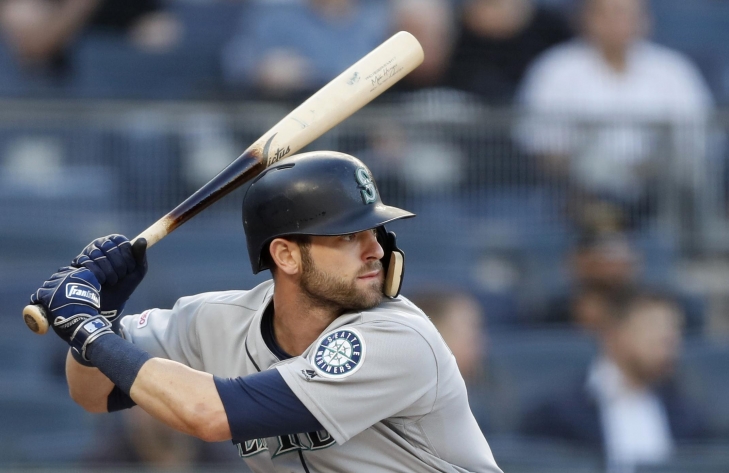
When Mitch Haniger arrived in the Pacific Northwest in November 2016, it seemed like just another typical roster adjustment. The Seattle Mariners’ general manager, Jerry Dipoto, traded shortstop Jean Segura to the Arizona Diamondbacks in a five-player deal. However, it was Haniger—a former promising outfield prospect who had difficulty securing regular playing time in Arizona—who proved to have the greatest potential. After being named the starting right fielder at Safeco Field, the determined outfielder quickly took advantage of his new role, turning his powerful swing into a key asset for the team.
His outstanding breakout came during the historic 2018 season, a summer when Haniger played at a top-tier superstar level. He established himself as a relentless offensive threat and the emotional leader of manager Scott Servais' team, hitting against opposing pitchers with a .285 average, 170 hits, 38 doubles, 26 home runs, and 93 RBIs. His ability to consistently deliver clutch, high-pressure hits earned him his first selection to the American League All-Star Game and an impressive 11th-place finish in MVP voting. Defensively, he showcased a powerful throwing arm, leading the majors with 12 outfield assists and cementing his status as one of the best right fielders in the league.
Haniger was expected to lead the organization through a transitional youth movement, but his rapid rise was tragically halted by a series of severe and painful injuries. In June 2019, he was struck by a sharp fastball that ruptured his testicle, leading to a difficult chain of core muscle tears and back surgeries. These intense physical issues sidelined him for the rest of 2019 and caused him to miss the entire 2020 season, which was shortened by the pandemic. This two-year gap posed a serious threat to his playing career.
Haniger demonstrated his remarkable mental resilience with an impressive comeback in the unforgettable 2021 season. Although his batting average fell to .253 and he became more prone to strikes, his power surged to new heights. Leading as a seasoned veteran on a young team that reached deep into September, he set personal records with a team-leading 39 home runs and 100 RBIs. His successful return won over local fans and earned him a spot in the top 20 of the American League MVP race, confirming the success of his lengthy physical rehab.
After an ankle injury limited his 2022 season to 57 games, Haniger provided veteran leadership to help Seattle end a 21-year playoff drought. He then signed a lucrative free-agent deal with the Giants. In 651 games in a Mariners uniform, he amassed 619 hits, 119 home runs, and a. 786 OPS.
46. James Paxton
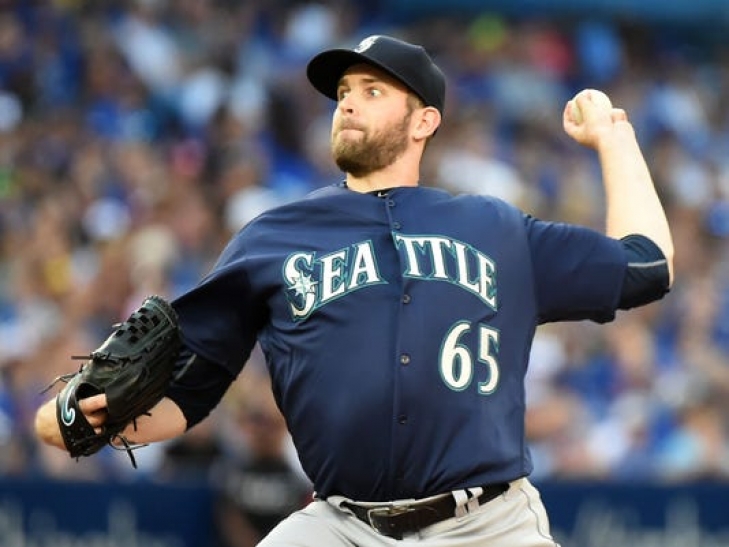
The vast shadow cast by "The Big Maple" continually sparks a blend of awe and ‘what-if' questions for sports fans in the Pacific Northwest. At 6'4" with a powerful left-handed throw, James Paxton had an arsenal of raw talent that, on any night, could break down any Major League Baseball team. Drafted out of the University of Kentucky in the fourth round of 2010, the British Columbia native made his debut in late 2013 with an impressive 3–0 appearance, immediately showing the high-energy potential that set him up as the future of the Mariners' left-handed pitching.
Paxton’s story is closely tied to physical struggles. Between 2014 and 2016, he frequently spent time on the disabled list due to various muscle strains and finger injuries, limiting his playing time and resulting in a modest 15–15 record within the organization. However, in 2017, when his body finally aligned, he delivered an outstanding performance. Over 24 starts, he relied on a powerful high-90s fastball and a sharp cutter to achieve a remarkable 12–5 record, a top-tier ERA of 2.98, and 156 strikeouts.
On May 8, 2018, Paxton made a historic mark in Canadian sports history. Pitching against the Toronto Blue Jays on his home turf, he threw a remarkable 99-pitch no-hitter—becoming the first Canadian-born major leaguer to achieve a no-hit game in Canada. He maintained this exceptional form throughout the 2018 summer, recording a career-high 208 strikeouts over 160.1 innings, and finishing with an 11–6 record. As the front office shifted toward a complete rebuild, GM Jerry Dipoto traded Paxton to the New York Yankees that winter, capitalizing on his peak value in a major blockbuster deal.
Following a 15-win season in the Bronx and injury setbacks, Paxton returned to Seattle on a one-year deal in 2021. Unfortunately, his homecoming was brief; he pitched only 1.1 innings before tearing his ulnar collateral ligament, ending his season and prompting Tommy John surgery. After stints with the Dodgers and Red Sox, Paxton retired from Major League Baseball.
In Seattle, Paxton had a 41–26 record, 3.42 ERA, and 617 strikeouts in 103 starts.
37. Jose Lopez
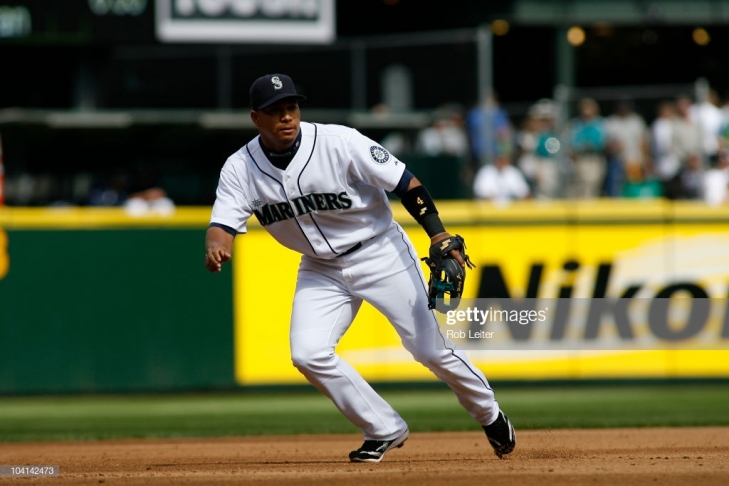
Jose Lopez climbed the minor-league ladder with remarkable speed, making his major-league debut in 2004 at just 20 years old. Initially tasked with filling the voids left by departing franchise icons, Lopez's true calling card became his exceptional defensive adaptability and a durable, free-swinging bat that could anchor multiple spots on the diamond.
Lopez’s official role as a frontline contributor began in the 2006 campaign. At 22, he made a breakout summer with 170 hits, 28 doubles, 10 home runs, and a.282 batting average. His play earned him a spot at the All-Star Game in Pittsburgh. Though his aggressive hitting meant few walks and a weak .297 on-base percentage, he compensated by being a reliable run-producer who excelled at putting the ball in play with runners on.
After his All-Star breakthrough, Lopez became one of the American League's most reliable infield contributors. In 2008, he delivered an outstanding offensive season, amassing a career-high 191 hits and 41 doubles. His performance ranked third in total hits across the league, behind Dustin Pedroia and Ichiro Suzuki.
He carried that same momentum into the 2009 campaign, demonstrating an unexpected increase in raw power. Lopez hit a career-high 25 home runs and drove in 96 RBIs, establishing himself as the key, cleanup hitter for a rebuilding team. Apart from his consistent presence at the plate, Lopez offered manager Don Wakamatsu a crucial defensive safety net. Over his seven seasons in the Pacific Northwest, he played more than 100 games at second base, third base, and shortstop, using soft hands and a quick transfer to prevent opposing rallies effectively.
After a tough 2010 season that saw a decline in his offensive efficiency, the front office decided to prioritize youth by trading the veteran infielder to the Colorado Rockies for pitching depth. Lopez then had brief periods with the Marlins, Indians, and White Sox before establishing a successful, multi-year career in Japan's Nippon Professional Baseball, where he achieved significant productivity.
Lopez completed his memorable seven-year Seattle residency having compiled 897 hits, 154 doubles, 80 home runs, and 402 RBIs across 845 total games.
