

The Pro Football Hall of Fame Revisited Project: 1994 Final VOTE

1994 Pro Football Hall of Fame Revisited Project Class.
Here we are! Again!!
If you have been following our Pro Football Hall of Fame Revisited Project, you know we have asked the question: What if the PFHOF had begun in January 1946?
After soliciting and obtaining a passionate group of football fans and historians, we sent out a ballot for a Preliminary Vote, in which each voter selected 25 names as their semi-finalists and five names for the Senior Pool. We then asked the group to vote for their 15 Finalists in the Modern Era and 3 in the Senior Category. The final stage was to vote for their five Modern Era inductee and one Senior inductee.
This is the result of the 49th official class.
Below are the final results of this project based on 32 votes.
Remember that we have reverted back to the top five candidates entering the Hall in the Modern Era
This is for the “Modern Era”
*Bold indicates they have been elected to the Pro Football Hall of Fame Revisited Class of 1994:
|
Player |
Year of Eligibility |
Vote Total |
|
Randy White DT |
1 |
25 |
|
Tony Dorsett RB |
1 |
21 |
|
Joe Demielleure G |
4 |
17 |
|
John Riggins RB-FB |
4 |
12 |
|
Lynn Swann WR |
7 |
10 |
|
Jackie Smith TE |
11 |
9 |
|
Tommy Nobis LB |
13 |
8 |
|
Ray Guy P |
3 |
8 |
|
Charlie Joiner WR |
3 |
8 |
|
Dave Robinson LB |
15 |
7 |
|
John Stallworth WR |
2 |
7 |
|
Dick LeBeau DB |
17 |
6 |
|
Jan Stenerud PK |
4 |
6 |
|
Kenny Easley DB |
2 |
6 |
|
Bob Griese QB |
9 |
5 |
|
Ken Stabler QB |
5 |
1 |
This is for the “Senior Era”,
*Bold indicates they have been elected to the Pro Football Hall of Fame Revisited Class of 1994.
|
Pete Retzlaff E-HB-TE |
3 |
12 |
|
Woody Strode E |
20 |
10 |
|
Pat Harder E-HB-TE |
16 |
6 |
|
None of the Above |
N/A |
4 |
This is for the “Coaches/Contributors”,
*Bold indicates they have been elected to the Pro Football Hall of Fame Revisited Class of 1994.
|
Chuck Noll (Coach) |
1 |
29 |
|
Ralph Wilson (Owner) |
3 |
2 |
|
Gil Brandt (Scout) |
3 |
1 |
|
None of the Above |
0 |
About the 1994 Inductees:
Randy White, DT, DAL 1975-88: Inducted in the Pro Football Hall of Fame Revisited Project in 1994 on his 1st Ballot. Inducted into the actual Pro Football Hall of Fame in 1994.
Randy White was a superstar at the University of Maryland, where in 1974 he won the Lombardi Trophy and was the ACC Player of the Year. The Cowboys took notice, and they would select him with the second overall pick.
White was eased into greatness as a backup Linebacker, but in his third year he became the starting Right Defensive Tackle, which was his natural fit. That was the year that White broke out and established himself among the best in the game. White went on a 10-year Pro-Bowl streak, with seven of those years seeing him ascend to First Team All-Pro honors. It was also especially sweet, as in that first year, White would win Super Bowl XII, sharing the game MVP with a fellow defensive teammate, Harvey Martin.
White was an exceptional pass rusher who had only 52 official Sacks (the stat was not recorded until 1982). He missed only one game, and he was one of the most popular players in team history. White would be named to the 1980s All-Decade Team and the Cowboys Ring of Honor in 1994.
Tony Dorsett, RB, DAL 1977-87 & DEN 1988: Inducted in the Pro Football Hall of Fame Revisited Project in 1994 on his 1st Ballot. Inducted into the actual Pro Football Hall of Fame in 1994.
A stud Running Back at the University of Pittsburgh, Tony Dorsett had an immediate impact with the Dallas Cowboys, who drafted him second overall in the 1977 Draft. That year, Dorsett won the Offensive Rookie of the Year award with 1,007 Rushing Yards and four postseason touchdowns on the way to a Super Bowl win. Not a bad rookie year!
Dorsett never won another Super Bowl, but he remained a superstar and one of the elite rushers over the next eight seasons. He had eight 1,000-yard years, with all of those seasons seeing him finish in the top nine in that category. He was a dual threat in that era with his receiving skills and was also perennially in the top nine in Yards from Scrimmage, appearing on that list from 1977 to 1985.
After the 1987 season, the Running Back would sign with the Denver Broncos for one final season. Dorsett would have 12,739 Rushing Yards, 3,554 Receiving Yards, and 90 Touchdowns.
Joe DeLamielleure, G, BUF 1973-79 & 1985 & CLE 1980-84. Inducted in the Pro Football Hall of Fame Revisited Project in 1994 on his 4th Ballot. Inducted into the actual Pro Football Hall of Fame in 2001.
Joe DaLamielleure had the best years of his NFL career with the Buffalo Bills and was adept at opening holes for O.J. Simpson to plow through. DeLamielleure had five of his six Pro Bowls as a Bill and was a three-time First Team All-Pro. It was also noted how well the Offensive Guard handled Pittsburgh Steeler Defensive End, Joe Greene, one of the few players who got the better of “Mean Joe”.
DeLamielleure spent the second half of his career with the Cleveland Browns, though he returned for a final season with Buffalo in 1985. In 2003, he was inducted into the Pro Football Hall of Fame. Six years prior, DeLamielleure was chosen for the Bills Wall of Fame. His run with the Cleveland Browns was also stellar.
John Riggins, RB, NYJ 1971-75 & WAS 1976-79 & 1981-85. Inducted in the Pro Football Hall of Fame Revisited Project in 1994 on his 4th Ballot. Inducted into the actual Pro Football Hall of Fame in 1992.
While everyone (and rightfully so) thinks of John Riggins in a Redskins uniform. That wasn’t where he started, as the former Kansas Jayhawk was a New York Jet for the first five years of his career. While wearing the green, the 1971 First Rounder was a Pro Bowl Selection and cracked over 1,000 Yards rushing in 1975, which was his last season with the Jets.
Riggins signed with Washington as a Free Agent afterward, but his first two seasons were poor, and a knee injury marred his second year. He powered back in 1978 with 1,014 Rushing Yards, and 1,153 in 1979. Riggins was finally the Running Back they needed, but they would not have him in 1980, as a contract dispute kept him out for the entire year.
The Redskins saw Riggins return, and while the 1981 and 1982 regular seasons were average, his '82 playoffs were phenomenal. Riggins rushed for 166 Yards (a then-record) in Washington's Super Bowl XVII Championship, and he also had 610 Rushing Yards overall in the playoffs. The Running Back was on a roll, and in 1983, Riggins had rushed for 1,347 Yards and a league-leading 24 Touchdowns. Riggins was a First Team All-Pro and the Bert Bell Award winner that season, and he again led the NFL in Rushing Touchdowns with 14 the season after. Without his run from '82 to '84, there was no way that Riggins would get into Canton!
He played one more year before retiring, and he accumulated 13,442 Yards From Scrimmage with 116 Touchdowns.
Lynn Swann, WR, PIT 1974-82. Inducted in the Pro Football Hall of Fame Revisited Project in 1994 on his 7th Ballot. Inducted into the actual Pro Football Hall of Fame in 2001.
One of the most recognized players of the Pittsburgh Steelers’ Super Bowl era in the 1970s, Lynn Swann, was part of all four of their titles during their dynastic run.
Swann was the player with whom Pittsburgh used their First Round Pick in 1974 (24th overall), and in his rookie season, he was mostly used as a Punt Returner, where he excelled, leading the NFL in Punt Return Yards. Swann and the Steelers won their first Super Bowl that year, and the following season, he was a far more integral cog in the Pittsburgh offense.
Swann's 1975 season would see him lead the NFL in Receiving Touchdowns (11), and in Super Bowl X, Swann had 161 Receiving Yards and a TD, impressive considering he was not expected to play due to injury. Arguably, this was the performance that earned him a spot in Canton.
The Wide Receiver, who was a Pro Bowl in 1975, would be again in 1977 and 1978, with the latter season earning a First Team All-Pro. Swann helped them win two more Super Bowls, and in the 16 postseason games he played, he had 907 yards and 9 TDs.
Swann would later be inducted into the Steelers Hall of Honor in 2017.
Pete Retzlaff, TE-E-FL, PHI 1956-66. Inducted in the Pro Football Hall of Fame Revisited Project in 1994 on his 20th Senior Ballot. Was never inducted into the actual Pro Football Hall of Fame.
In this era of sports specialization, it is hard to imagine that football players used to change positions regularly. Pete Retzlaff played various offensive positions, but he could always be counted on to catch the ball.
On five different occasions, Pete Retzlaff had seasons of 50 or more receptions. Considering the era in which he played, that tally becomes even more impressive. His best offensive seasons occurred after he moved to Tight End, where he was one of the few at that position who were sure-handed. He continued to post impressive stats and received the Bert Bell Award in 1965.
Retzlaff was not the best blocker, which may limit his overall performance in the Tight End slot. Still, with the numbers he could put up at a time when it was not common, the fact that he was not the League’s best blocker could be forgiven somewhat.
Chuck Noll, Head Coach, PIT 1969-91. Inducted in the Pro Football Hall of Fame Revisited Project in 1994 on his 1st Coach/Contributor Ballot. Inducted into the actual Pro Football Hall of Fame in 1993.
Chuck Noll played seven years in the NFL, all for Cleveland under Paul Brown. Much like Brown, Noll would become an iconic figure in a blue-collar town and achieve similar success.
After establishing himself as a Defensive Coordinator with the San Diego Chargers and Baltimore Colts, Noll was named Head Coach of the Pittsburgh Steelers in 1969, inheriting a team that had never won anything of note. Under Noll, the Steelers became a league juggernaut, winning four Super Bowls in the 1970s. He kept the team as contenders throughout his 22 Years in that capacity, and under him, the culture completely changed to where Pittsburgh remains one of the most high-profile teams in the NFL.
Noll retired after the 1991 Season with a record of 194-148-1.
As a Coach, Noll would be named to the 1970s All-Decade Team, the 1980s All-Decade Team, and the 100th Anniversary Team.
Our All-Time Top 50 Pittsburgh Steelers are now up
Yes, we know that this is taking a while!
As many of you know, we here at Notinhalloffame.com are slowly generating the 50 of each major North American sports team. We have a new one to unveil today, that of the Pittsburgh Steelers.
There are many that feel that the Pittsburgh Steelers really did not begin until the 1970s, but of course, that isn't true.
The origin of the Steelers dates all the way back in 1933, and they are the seventh oldest NFL franchise in existence. They made the playoffs in 1947, but that was the only time they made it to a post-season from 1933 to 1971. The Steelers would then become the power of the AFC, winning four Super Bowls in the 1970s, primarily on the strength of their potent "Steel Curtain" defense.
Their 70s success made them one of the most popular teams in the game, a status that they maintain today. Pittsburgh never had another dynasty, but they did have success winning two more Super Bowls this millennium, giving them six, which is tied with the New England Patriots for the most.
1. Advanced Statistics.
2. Traditional statistics and how they finished in the NFL.
3. Playoff accomplishments.
4. Their overall impact on the team and other intangibles not reflected in a stat sheet.
Remember, this is ONLY based on what a player does on that particular team and not what he accomplished elsewhere and also note that we have placed an increased importance on the first two categories.
This list is updated up until the end of the 2019 Season.
The complete list can be found here, but as always, we announce our top five in this article. They are:
1. Joe Greene
2. Jack Lambert
3. Mike Webster
5. Jack Ham
We will continue our adjustments on our existing lists and will continue developing our new lists.
Look for our more material coming soon!
As always, we thank you for your support.
28. Lynn Swann
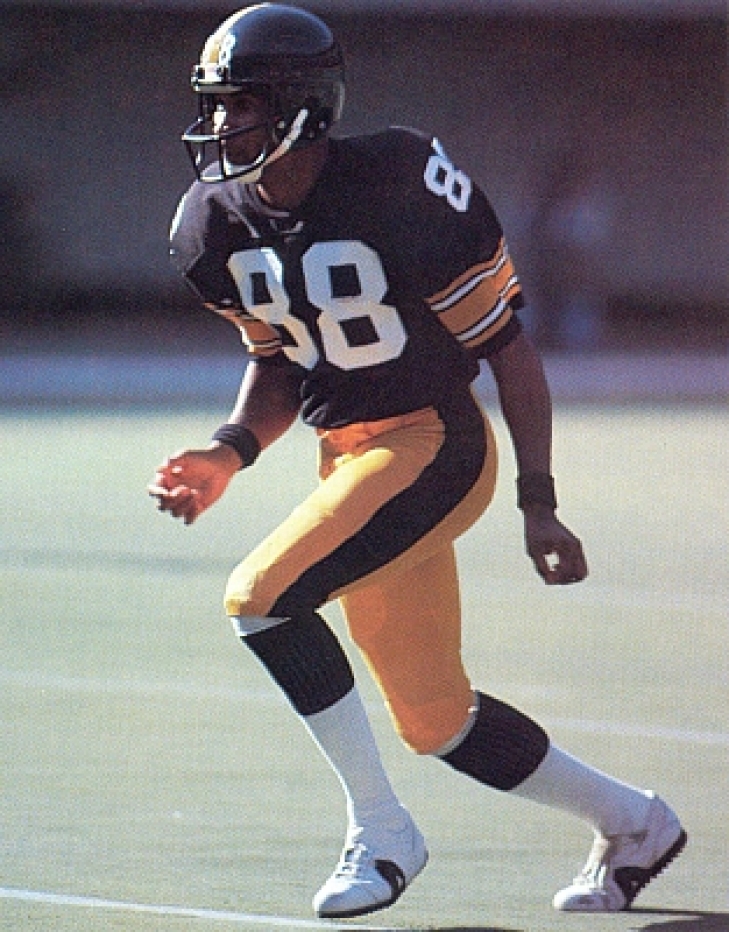
One of the most recognized players of the Pittsburgh Steelers Super Bowl era of the 1970s, Lynn Swann, was a member of all four of their titles in their dynastic run.
The Pittsburgh Steelers announce their Hall of Honor
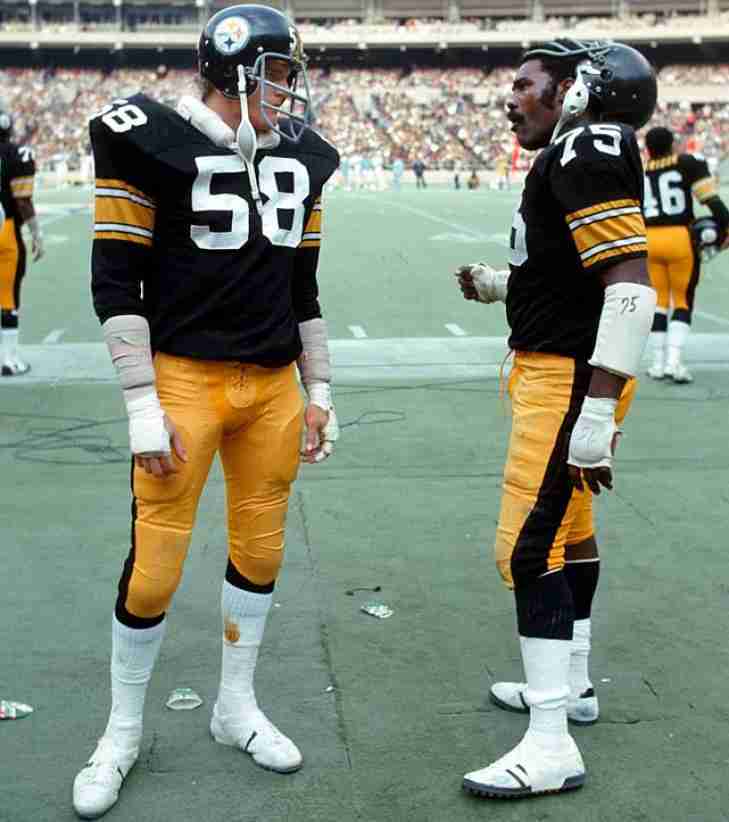
This has been a long time coming, so much so that this group comprises 23 Pro Football Hall of Famers.
Let’s get right to this very esteemed group:
Art Rooney: The founding owner of the Steelers and President of the team from 1933 to 1974. He also served as the Chairman until 1988.
Dan Rooney: The son of Art Rooney, Dan Rooney was the Steelers President from 1975 to 2002. He spearheaded the push for minority hires as coaches or GM creating the “Rooney Rule”, whereby all NFL teams must interview a minority candidate for a coaching or GM job.
Chuck Noll: The Head Coach for Pittsburgh from 1969 to 1991, Noll is a four time Super Bowl winner with a regular season record of 193-148-1. He would win two more Super Bowls with the Steelers as an Executive.
Jack Butler: a four time First Team All-Pro Cornerback from 1956 to 1959. He led the NFL in Interceptions in 1957.
Dick Hoak: A Pro Bowl Running Back in 1968 and the Running Coach from 1972 to 2007. He has five Super Bowl Rings as a Coach.
Joe Greene: “Mean” Joe was a four time Super Bowl Champion and a Defensive Tackle who went to ten Pro Bowls while earning six First Team All-Pro Selections. He was the Defensive Player of the Year in both 1972 and 1974.
Terry Bradshaw: The Quarterback of the 1970’s Steelers dynasty, Terry Bradshaw was a three time Pro Bowler and two time Super Bowl MVP.
Franco Harris: The Fullback was the engine of the Steelers juggernaut and he too is a four time Super Bowl Champion. He was also a nine time Pro Bowl Selection and the MVP of Super Bowl IX.
Mike Webster: The Center for the 70’s juggernaut, he also won four Super Bowls. He would be named to nine Pro Bowls and seven First Team All-Pro squads.
Lynn Swann: The very popular Wide Receiver was also a four time Super Bowl winner. Twice he would be a Pro Bowler and he was the MVP of Super Bowl X.
L.C. Greenwood: Greenwood also won four Super Bowls and the Defensive End went to six Pro Bowls.
Mel Blount: The Cornerback also won four Super Bowls and was himself a five time Pro Bowl and four time First Team All Pro. He led the NFL in Interceptions in 1975 and was named the NFL Defensive Player of the Year.
Jack Ham: Playing Outside Linebacker, Ham also won four Super Bowls and was a eight time Pro Bowl and six time First Team All Pro Selection.
Jack Lambert: Yet another four time Super Bowl winner Jack Lambert went to nine Pro Bowls and seven First Team All Pros. The Middle Linebacker was a two time Defensive Player of the Year in both 1976 and 1983.
Andy Russell: A two time Super Bowl winner with eight Pro Bowl Selections. Russell played Linebacker.
Rod Woodson: The Cornerback played ten years of his career with Pittsburgh and was a seven time and five time First Team All Pro Selection with Pittsburgh. As a Steeler he won a Super Bowl and was named the Defensive Player of the Year in 1993.
Kevin Greene: Only a Steeler for three seasons, Greene won the Super Bowl with the team and was named to a First Team All Pro squad.
Jerome Bettis: “The Bus” won a Super Bowl with Pittsburgh as well as earning four Pro Bowls.
Donnie Shell: Another four time Super Bowl Champion, the Safety was a five time Pro Bowl and three time First Team All-Pro Selection.
John Stallworth: Stallworth also won four Super Bowls and he was named to three Pro Bowls. The Wide Receiver also made a First Team All Pro squad once.
Bobby Layne: The Hall of Fame Quarterback played his final five seasons with Pittsburgh and he was a two time Pro Bowl Selection as a Steeler.
Ernie Stautner: A star Defensive Tackle of the 1950’s, Statutner would be a nine time Pro Bowl.
John Henry Johnson: A Fullback who went to three Pro Bowls as a Steeler in early 1960’s.
Bill Dudley: “Bullet Bill” was an imposing halfback who was with Pittsburgh for three seasons; one before World War II, and two after his service. He would be named the MVP in 1946.
Walt Kiesling: Kiesling only played one season with Pittsburgh but served as their coach for two stints.
John “Blood” McNally: McNally played three seasons for Pittsburgh as well as coached them for three.
Dermontti Dawson: The Center was a seven time Pro Bowl and six time First Team All Pro Selection.
The Hall of Honor will be located at the river end of the FedEx Great Hall at Heinz Field with the eventual plan to grow it to a museum.
To qualify for the Pittsburgh Steelers Hall of Honor a player must have been with the team for at least three years and be retired for at least three years.
We here at Notinhalloffame.com are beyond delighted that the Steelers have finally begun to honor their past legends with an institution like this.
Lynn Swann questions Calvin Johnson's HOF resume
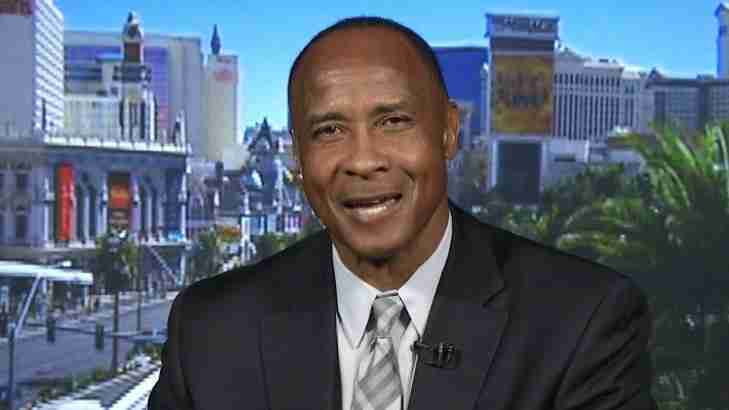
Lynn Swann, the Hall of Famer who was a member of the Pittsburgh Steelers dynasty that won four Super Bowls and retired at the height of his career at the age of 30 and would join the Pro Football Hall of Fame in 2001.
Calvin Johnson is expected to retire at the same age, but when asked if “Megatron” was a Hall of Famer, the former Pittsburgh Steeler implied in a piece with the Detroit News that Johnson should not join that elite club.
“I would think that it would be difficult for Calvin Johnson at this point to be considered a Hall of Famer. Calvin Johnson has an extreme amount of talent and ability, but when you start to look at his team, the success of his team and did he lift that team; he made them a little bit better, but at the end of the day, I’m not quite sure.
Hard to say he’s going to be in the Hall of Fame when his team hasn’t gotten to a Super Bowl, and they don’t get a chance to get into the playoffs…and that’s for a lot of guys across the board. If he had broken every passing record, like Danny Fouts, who didn’t win the Super Bowl, then yeah, I think there’s going to be consideration.”
Following this, Lynn Swann was criticized and rightly so. In Pittsburgh, he was surrounded by a dream team, where as Calvin Johnson has not exactly been blessed with the most talented group of teammates. Detroit did not make a lot of noise in the past decade, but how much worse would they have been without him?
Stat wise, it has been argued that Swann, who has half of the yards that Johnson has, should keep his mouth shut on the matter. While that was in fact a different era and the passing game has exploded since then, Swann still was never in the top five in receiving yards during his career.
Swann’s argument about playoff success is also questionable as the Pro Football Hall of Fame is full of players who do not have Super Bowl rings or NFL Championships who have a spot in Canton. Swann’s induction itself has been criticized as it was openly asked, if he were with a lesser team himself would be enshrined.
Should Calvin Johnson elect not to return to the National Football League, the Hall of Fame clock is set at 2021 for his first year of eligibility. We wonder if Swann will be vocal on that matter again.
