

Our All Time Top 50 Los Angeles Angels have been revised to reflect the 2025 Season

Yes, we know that this is taking a while!
As many of you know, we at Notinhalloffame.com are slowly generating the top 50 of each major North American sports team. That being said, we maintain and update our existing Top 50 lists annually. As such, we are delighted to present our pre-2026 revision of our top 50 Los Angeles Angels.
As for all of our top 50 players in baseball, we look at the following:
1. Duration and Impact.
2. Traditional statistics and how they finished in the Major League Baseball.
3. Advanced Statistics.
4. Playoff performance.
5. Their respective legacy on the team.
6. How successful the team was when he was there.
7. Respecting the era in which they played.
Criteria 1-4 will make up the lion’s share of the algorithm. Please note that we have implemented this for the first time. This has changed the rankings all throughout the board.
Last year, the Angels won 72 Games and finished last in the American League West. There was no new entrant, but there were changes within the Top 50 due to the new algorithm.
As always, we present our top five, which saw changes due to the new algorithm.
1. Mike Trout
2. Nolan Ryan
3. Chuck Finley
4. Shohei Ohtani
5. Jared Weaver
You can find the entire list here.
Please note that Nolan Ryan and Chuck Finley flipped the #2 and #3 positions. Shohei Ohtani was repurposed from #5 to #4. Jared Weaver took over #5, and Jim Fregosi dropped off the top five.
We thank you for your continued support of our lists on Notinhalloffame.com.
Our All Time Top 50 Los Angeles Angels have been revised to reflect the 2024 Season
Yes, we know that this is taking a while!
As many of you know, we at Notinhalloffame.com are slowly generating the top 50 of each major North American sports team. That being said, we have existing Top 50 lists and consistently look to update them when necessary and based on necessity. As such, we are delighted to present our post-2024 revision of our top 50 Los Angeles Angels.
As for all of our top 50 players in baseball, we look at the following:
1. Advanced Statistics.
2. Traditional statistics and how they finished in the American League.
3. Playoff accomplishments.
4. Their overall impact on the team and other intangibles that are not reflected in a stat sheet.
Please note that our algorithm has changed, which yielded minor changes throughout the baseball lists.
Last year, the Angels had their first year of the post-Ohtani era finished last in the division as expected. There were no new entrants based on 2024, but there was one from the new algorithm.
As always, we present our top five, which saw two changes based on the new algorithm.
1. Mike Trout
2. Chuck Finlay
3. Nolan Ryan
4. Jim Fregosi
You can find the entire list here.
Under the new algorithm, Finlay surpasses Ryan for #2 and Jim Fregosi entered the top five..
With the new algorithm, Shortstop Gary DiSarcina comes in at #49.
We thank you for your continued support of our lists on Notinhalloffame.com.
Our All-Time Top 50 Los Angeles Angels have been revised to reflect the 2023 Season
Yes, we know that this is taking a while!
As many of you know, we here at Notinhalloffame.com are slowly generating the 50 of each major North American sports team. That being said, we have existing Top 50 lists out and we always consistently look to update them when we can and based on necessity. As such, we are very happy to present our post 2022/23 revision of our top 50 Los Angeles Angels.
As for all of our top 50 players in baseball we look at the following:
1. Advanced Statistics.
2. Traditional statistics and how they finished in Major League Baseball.
3. Playoff accomplishments.
4. Their overall impact on the team and other intangibles not reflected in a stat sheet.
Last year, the Angels went all in and imploded with another failure to make the playoffs. We only saw one change, and no new entries.
As always, we present our top five, which saw one major change.
1. Mike Trout
2. Nolan Ryan
3. Chuck Finley
5. Frank Tanana
You can find the entire list here.
Notably, Trout was already at the top of the list, and with Shohei Ohtani departing the club, his status at #1 is cemented for decades.
Ohtani made it to #4 from #12. As mentioned, he left the struggling Angels for a shot at the World Series with the Dodgers.
As always, we thank you for your support, and look for more revisions in the future.
Our All Time Top 50 Los Angeles Angels have been updated to reflect the 2022 Season

Yes, we know that this is taking a while!
As many of you know, we here at Notinhalloffame.com are slowly generating the 50 of each major North American sports team. That being said, we have existing Top 50 lists out and we always consistently look to update them when we can and based on necessity. As such, we are very happy to present our post 2022 revision of our top 50 Los Angeles Angels.
As for all of our top 50 players in baseball we look at the following:
1. Advanced Statistics.
2. Traditional statistics and how they finished in the American League.
3. Playoff accomplishments.
4. Their overall impact on the team and other intangibles not reflected in a stat sheet.
Last year, Los Angeles again failed to make the playoffs, despite having the two best players of this generation, one who is ranked number one on this list, and another who jumped 20 spots.
As always, we present our top five, which was not affected by the last season:
1. Mike Trout
2. Nolan Ryan
3. Chuck Finley
4. Frank Tanana
5. Jered Weaver
You can find the entire list here.
2021 MVP and dual-threat superstar, Shohei Ohtani, rocketed from #31 to #12.
We welcome your input and comments and as always, we thank you for your support.
Our All-Time Top 50 Los Angeles Angels are up
Yes, we know that this is taking a while!
As many of you know, we here at Notinhalloffame.com are slowly generating the 50 of each major North American sports team. We have a new one to unveil today, that of the Los Angeles Angels.
The Los Angeles Angels came into existence in 1961 as an expansion team, and while they were (and are) still secondary to the Dodgers, the constant name changes didn't help. They went from the Los Angeles Angels (1961-65) to the California Angels (1965-96), Anaheim Angels (1997-2004), Los Angeles Angels of Anaheim (2005-15), and back to the Los Angeles Angels.
The team did not go to their first postseason until 1979, and in 2002, they won their first Pennant, which is, to date, the only one they have captured. They made the most of their lone World Series appearance, winning it all.
Our Top 50 lists in Baseball look at the following:
1. Advanced Statistics.
2. Traditional statistics and how they finished in the American League.
3. Playoff accomplishments.
4. Their overall impact on the team and other intangibles not reflected in a stat sheet.
Remember, this is ONLY based on what a player does on that particular team and not what he accomplished elsewhere and also note that we have placed an increased importance on the first two categories.
This list is updated up until the end of the 2021 Season.
The complete list can be found here, but as always, we announce our top five in this article. They are:
1. Mike Trout
2. Nolan Ryan
3. Chuck Finley
4. Frank Tanana
5. Jared Weaver
We will continue our adjustments on our existing lists and will continue developing our new lists.
Look for our more material coming soon!
As always, we thank you for your support.
49. David Eckstein
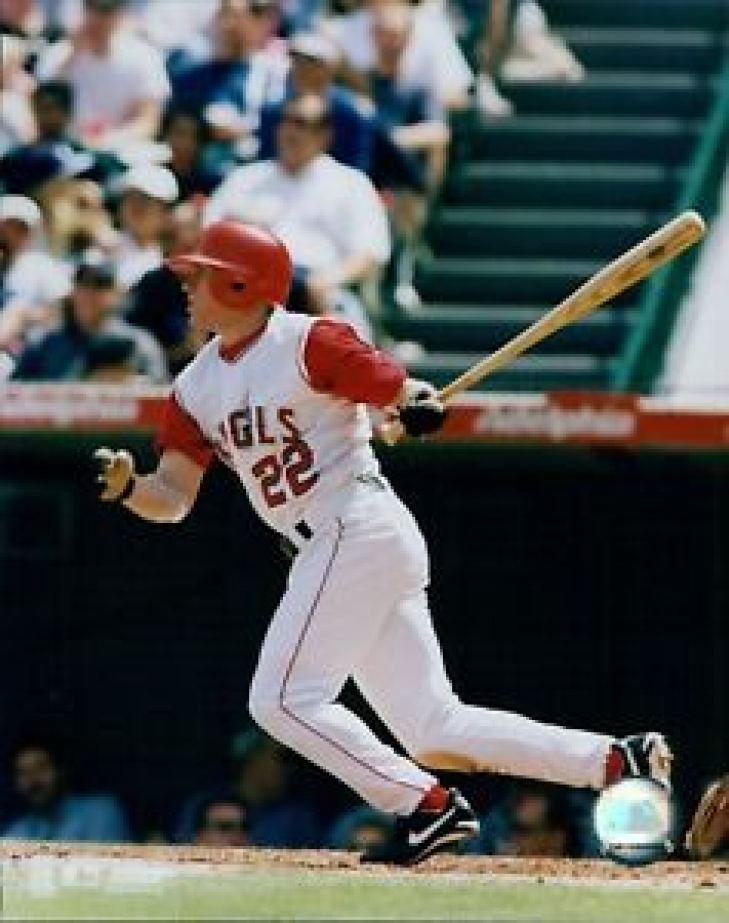
David Eckstein came to SoCal in late 2000 as a waiver claim from the Red Sox, a transaction that initially barely registered as a blip on the radar. At 5' 6" and drafted in the 19th round, he didn't fit the physical profile of a major league shortstop, but he immediately provided a brand of high-frequency hustle that fundamentally changed the energy of the clubhouse.
After earning a spot on the 2001 Opening Day roster, Eckstein showed the ability to generate chaos on the basepaths, batting .285 with 29 stolen bases. He quickly proved to be a professional mainstay, finishing fourth in the Rookie of the Year voting and winning over the fan base with a playing style that involved getting hit by more pitches than most players see in a career.
Eckstein reached a historic impact during the 2002 campaign, setting a standard for "unconventional" dominance. He mastery of the leadoff role, batting .293 and breaking franchise records with eight home runs, including grand slams in consecutive games. He played a key role in the World Series win, finishing 11th in MVP voting and leading in hit-by-pitches and sacrifice hits. During this peak, he was a symbol of the team's resilience and a foundation for the "Thunder Sticks" era.
Between 2001 and 2004, he was a high-volume contributor, surpassing 150 hits three times and hard to strike out. Though lacking elite arm strength, he demonstrated reliability, leading AL shortstops in fielding percentage in 2004.
The exit from Orange County after the 2004 season was a business decision that famously led one columnist to write that the team had "shot Bambi." As a free agent, Eckstein sought a multi-year commitment, but the Angels chose to move in a different direction by signing Orlando Cabrera to a larger deal. Eckstein became a specialized fit elsewhere, signing a three-year contract with the St. Louis Cardinals, where he would eventually win another World Series ring and a World Series MVP award.
Eckstein accumulated 614 hits, 219 runs, and a 2002 World Series ring as an Angel.
50. Gary Pettis
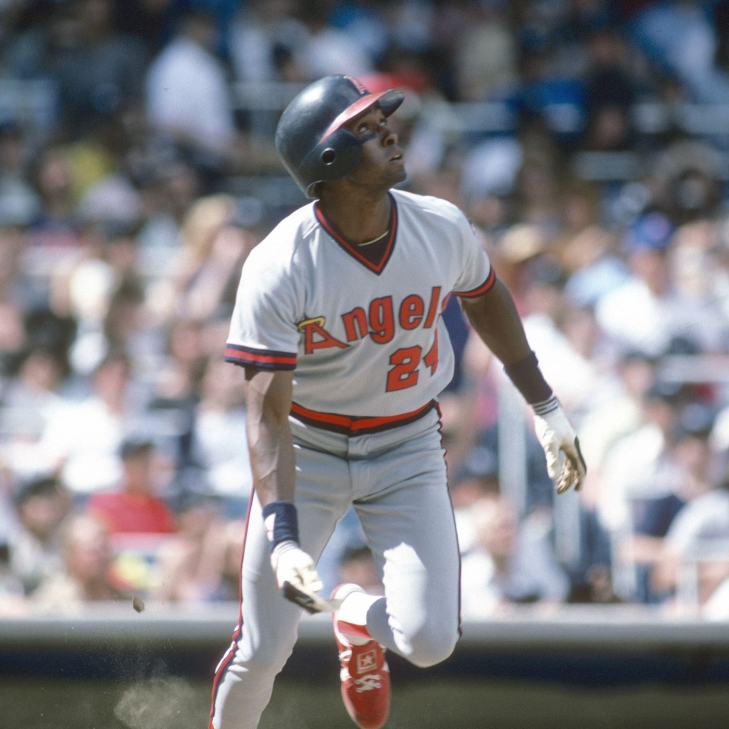
Spending the first six years of his career as a California Angel, Gary Pettis was a blur of speed that immediately redefined the limits of what a center fielder could cover. Drafted as a late-round flyer, he operated as a specialized defensive wizard whose legs were his greatest asset both on the paths and in the grass.
After a brief introduction to the big leagues, Pettis seized the starting center field job in 1984 and turned the position into a highlight-reel theater. He demonstrated a high-caliber ability to track down fly balls that seemed destined for the wall, using his elite speed to shrink the outfield. This early stretch established a high-quality floor, proving that even with a limited bat, his field value made him a professional mainstay for a team with championship aspirations.
Pettis peaked between 1985- 1986, earning consecutive Gold Glove Awards. In 1986, he led the league with 22 Total Zone Runs, crucial for the Angels' division win. While nearly powerless at the plate, he was a constant threat on base, ranking second in stolen bases for three straight years, swiping 145 bases in three seasons and causing pitchers to lose focus.
While he was a technical marvel in center field, rarely committing an error and frequently robbing home runs, his offensive efficiency remained a recurring concern. He showed the organization a specialized resilience despite his struggles to stay above the "Mendoza Line" in batting average, relying on his ability to draw walks to keep his on-base percentage respectable.
After the 1987 season, the Angels traded Pettis to the Detroit Tigers in exchange for pitcher Dan Petry. The move cleared the way for the arrival of Chili Davis and allowed a young Devon White to transition to center field. Pettis had 186 stolen bases, 467 hits, and two Gold Gloves as an Angel.
44. Scot Shields
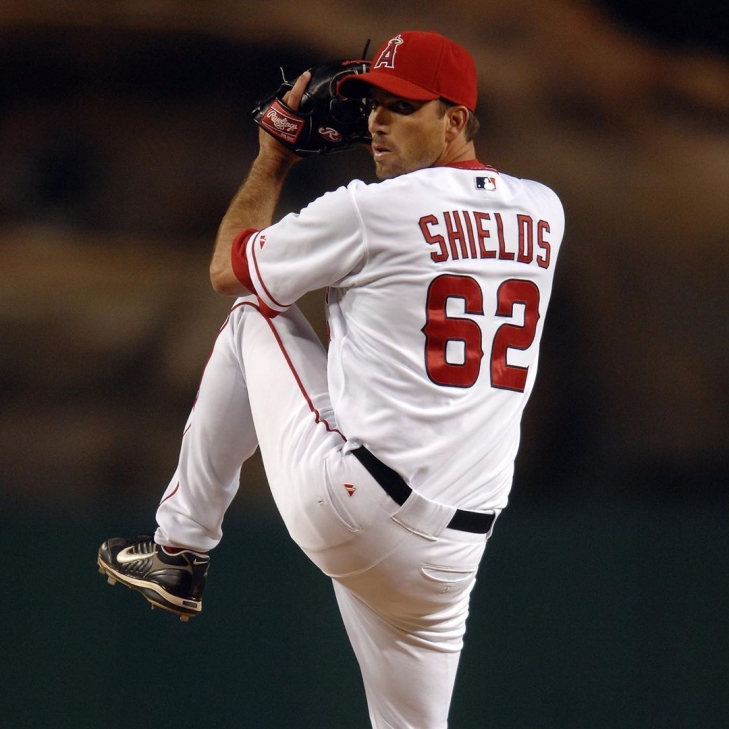
Scot Shields was initially seen as a low-ceiling prospect after the 38th round but defied expectations to become a key reliever in the franchise's most successful era. He served as the vital "bridge" to Troy Percival and Francisco Rodriguez for ten seasons, demonstrating that a specialized sinker can outweigh a high draft pick.
Debuting in 2001, Shieldshe played a supporting role on the 2002 World Series Championship team; it was his work over the following years that cemented his legacy. Shields demonstrated a high-frequency ability to enter games with runners on base and neutralize threats with a heavy sinker that felt like a bowling ball to opposing hitters.
Between 2004 and 2008, authoring a five-year run of volume that was essentially unprecedented for a setup man. He showed a high-caliber stamina by appearing in at least 60 games in each of those seasons, exceeding 70 appearances in three consecutive years from 2005 to 2007. He was a tactical weapon for Mike Scioscia, often pitching multiple innings to protect a lead. This high-volume output turned him into a perennial secret weapon, as he consistently finished near the top of the league in holds and relief innings pitched.
Shoelds played until 2010, retiring as a career Angel. Over his career, Shields accumulated 21 Saves and had 114 Games Finished.
43. Clyde Wright
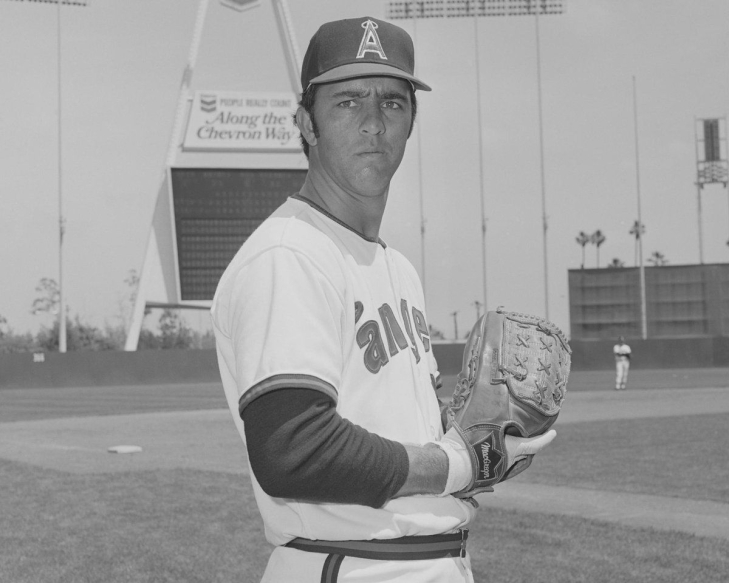
Debuting with the Angels in 1966, Clyde Wright arrived as a wiry southpaw with a specialized repertoire that took a few years to fully calibrate. While he spent his first four seasons bouncing between the rotation and the bullpen, even suffering through a miserable one-win campaign in 1969, he transformed into a technical marvel practically overnight.
Wright demonstrated flashes of high-quality potential during his 1966 debut, but he quickly became a professional mainstay in the "swingman" category, oscillating between spot starts and high-leverage relief. It wasn't until he perfected a screwball during winter ball, reportedly at the suggestion of teammate Jim Fregosi, that he truly found the high-caliber arsenal needed to anchor a major league rotation.
In 1970, Wright won 22 games, setting a franchise record for a left-hander that still stands today. He was a high-stakes performer on July 3, 1970, when he famously tossed a no-hitter against the Oakland A’s, an achievement that occurred just hours after he was inducted into the NAIA Hall of Fame. His efficiency that year earned him his only All-Star selection and a sixth-place finish in the Cy Young voting.
Between 1971 and 1972, he was a valuable technical player, posting two consecutive seasons with an ERA below 3.00 and pitching over 250 innings each year. He demonstrated a particular skill in keeping hitters off balance, earning 16 wins in '71 and increasing to 18 wins in ’72.
In 1973, physical wear began to impact his high-frequency output. Battles with chronic back pain made it difficult for him to even bend over on the mound, a specialized struggle that led to a league-leading 19 losses. Following the season, Wright was dealt to the Milwaukee Brewers.
With the Angels, Wright had an 87-85 record with a 3.28 ERA.
47. Chili Davis
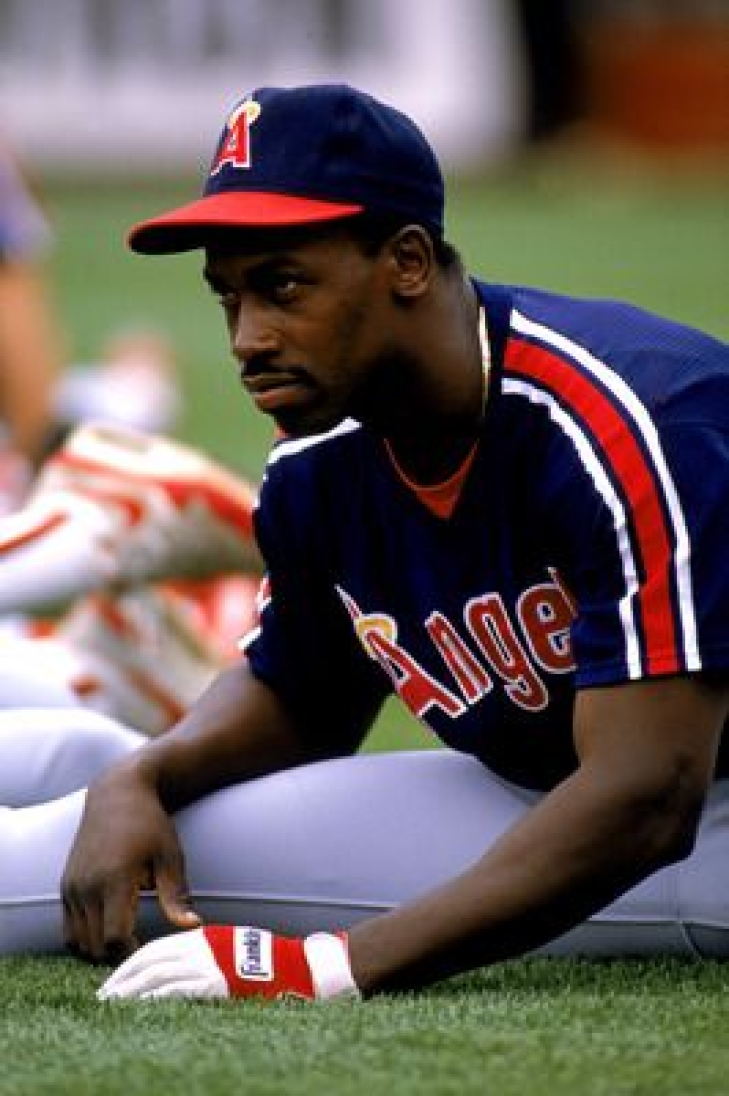
Chili Davis’ arrival as a free agent after the 1987 season in Anaheim was a homecoming of sorts, a move driven by a desire to escape the notorious elements of San Francisco. Having grown up in Los Angeles after moving from Jamaica as a child, Davis had become a star for the Giants but grew increasingly frustrated with the "cold and windy" conditions at Candlestick Park.
Davis’ first season with the Angels saw 21 homers and 93 RBIs but also a franchise-record 19 errors in right field. By 1990, back problems and defensive issues led to a switch to DH, emphasizing his offensive skills. He left for Minnesota as a free agent in 1991, won a World Series there, and returned in 1993 as a free agent, this time only for his bat and veteran presence.
The second stint saw Davis belt at least 20 home runs and 80 RBIs across all four seasons(1993–1996), while maintaining a healthy on-base percentage. He left again via free agency (Kansas City), but had solid numbers with the Halos: 156 home runs, 973 hits, and a .279 batting average.
46. Bobby Knoop
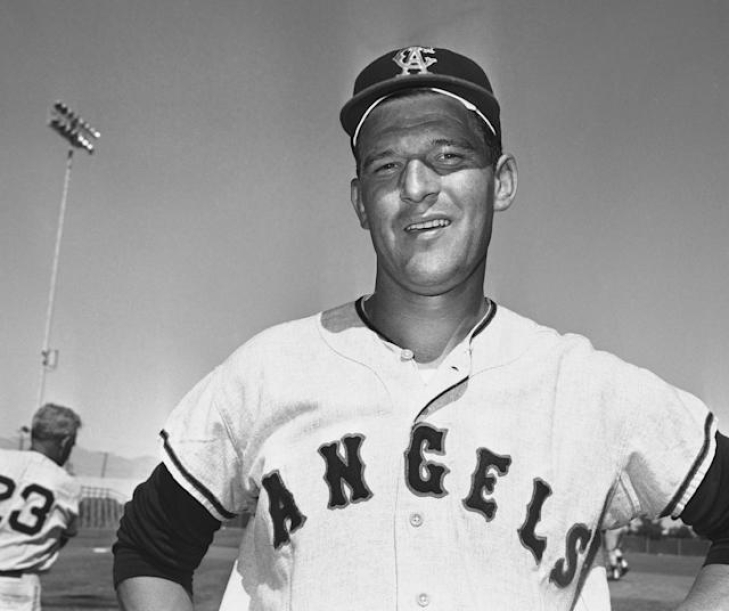
Bobby Knoop arrived in Anaheim in 1964 as a defensive specialist who quickly turned second base into a specialized fortress. While his offensive numbers fit the classic "dead ball" mold of the era, he provided the early Angels with a brand of technical brilliance in the field that made him an immediate professional mainstay.
In his rookie year, Knoop demonstrated a high-frequency ability to take the field, playing in all 162 games and proving to be a reliable defensive engine from day one. He quickly earned a reputation as a technical master of the double play, with manager Bill Rigney famously comparing his specialized glove work to that of the legendary Bobby Richardson.
During the 1966 campaign, authoring a season where his bat briefly matched the elite level of his glove. That summer, he exhibited a surprising power surge, hitting a career-high 17 home runs and leading the American League with 11 triples. He was a high-stakes performer throughout the year, earning his only All-Star selection and setting a major league record by turning six double plays in a single game.
Knoop earned three consecutive Gold Glove Awards from 1966 to 1968 and led the American League in Total Zone Runs for second basemen four times, showcasing high-quality fielding efficiency.
The 1969 trade to the White Sox marked the end of his first act. Knoop returned in 1979 as a coach, serving until 1996, and again as a special assignment instructor from 2013 to 2018, demonstrating dedicated leadership in the dugout for nearly two decades. In 2013, Knoop was inducted into the Angels Hall of Fame. As a player, Knoop compiled 856 hits, three Gold Gloves, and a 1966 All-Star nod.
41. Kirk McCaskill
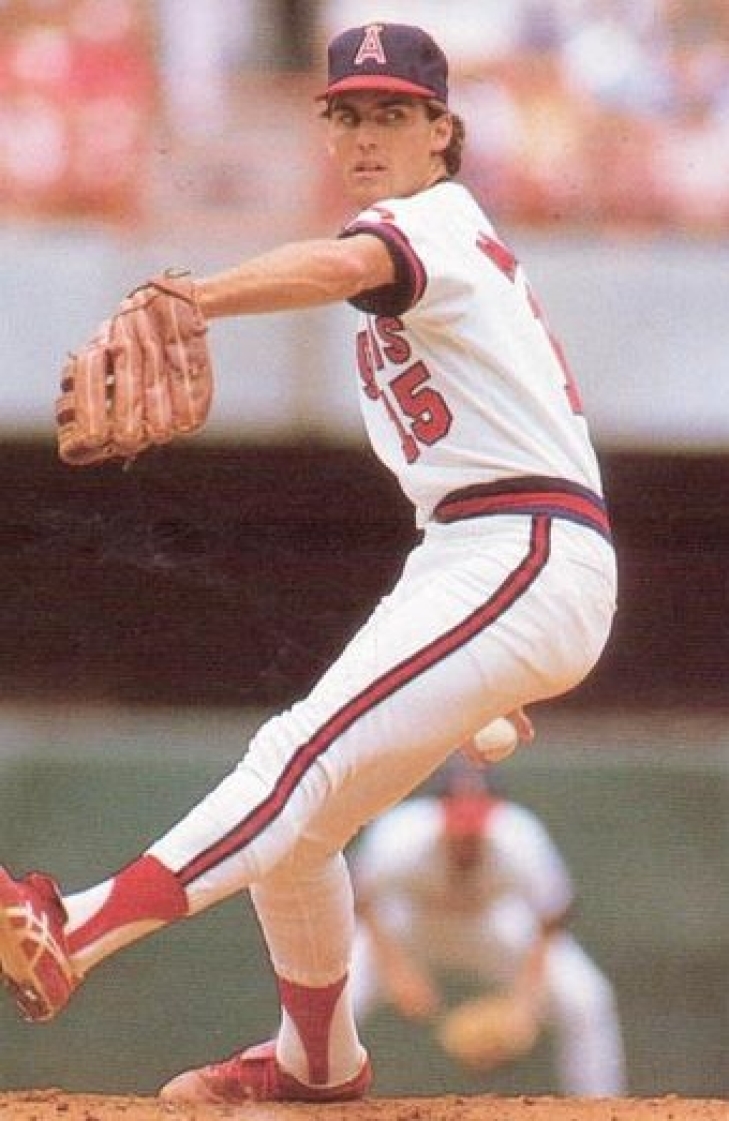
Kirk McCaskill arrived in Anaheim in 1985, a Canadian multi-sport athlete who chose baseball over hockey. Though not as famous as some 1980s pitchers, he offered the California Angels reliable technical skill vital for their mid-1980s success.
McCaskill helped the Angels win the 1986 division, winning 17 games with a 3.36 ERA. He showed durability, recording ten complete games and proving he was more than a supplemental starter for a championship team. After two sub-par seasons, McCaskill had his best season, where he went 15-10 with a 2.93 ERA that was good enough for fifth in the American League. While he recorded another 15-win season, his value was best reflected in his specialized durability, as he tossed over 210 innings and led the staff in quality starts.
Following the 1991 season, McCaskill hit the open market as a proven, high-volume starter with a pedigree for durability. The Chicago White Sox, looking to solidify a rotation behind Jack McDowell and Alex Fernandez, offered a lucrative three-year deal. As an Angel, McCaskill had a 78-74 record, 747 strikeouts, and a 3.86 ERA.
42. Fred Lynn
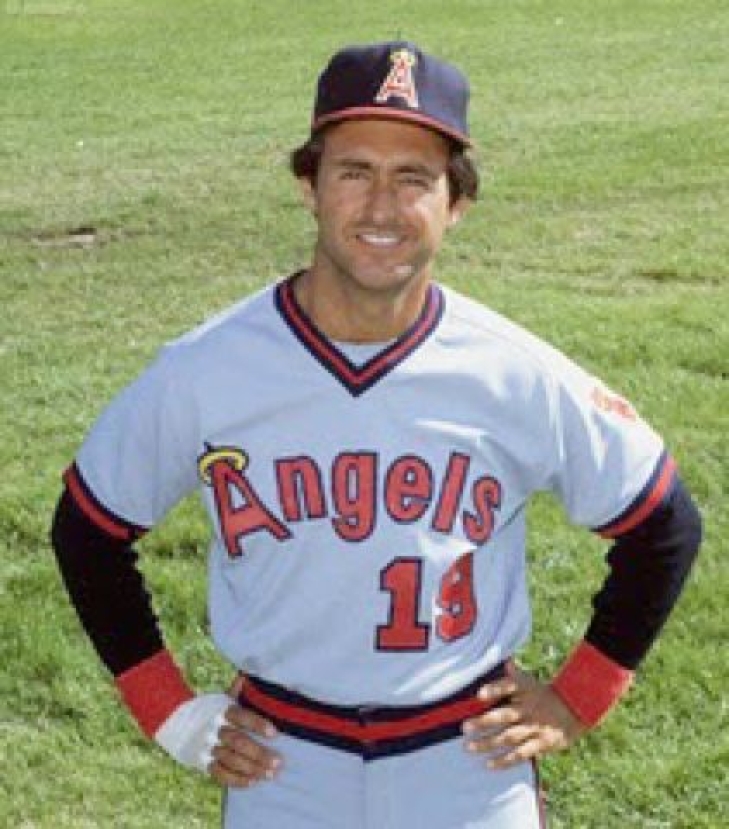
Fred Lynn arrived in Anaheim in 1981 via a blockbuster trade from the Red Sox, a move that sent shockwaves through the league as the Angels looked to pair a legitimate superstar with their burgeoning core. Having already achieved legendary status in Boston as the first man to win the Rookie of the Year and MVP in the same season, Lynn carried the weight of massive expectations into Orange County.
The first part of his tenure was marked by a difficult transition that challenged the patience of Anaheim fans. In the shortened 1981 season, Lynn showed an unusual lack of rhythm at the plate, ending with a career-low .219 batting average and just five home runs. Although he was still selected for the All-Star Game due to his reputation, he exhibited particular difficulty adjusting to the unique dimensions of the Big A.
During the 1982 campaign, he had a bounce-back season, showing he still had a superstar's toolkit. He could drive the ball high-frequency, hitting 21 home runs and earning an All-Star nod. He quickly became a mainstay, leading by example as a tactical anchor for the AL West champions. This run helped him regain his high-caliber offensive status, providing the organization with the production they envisioned when trading for him a year earlier.
The 1982 postseason marked his peak in California, a performance etched in franchise lore. In the ALCS against Milwaukee, Lynn had a remarkable .611/.650/889 slash line over five games. Though the Angels lost the pennant, he was named ALCS MVP, the first from a losing team to win. He was a high-stakes performer, keeping the Halos in the hunt with offensive dominance.
Lynn would belt 45 home runs over the next two seasons, but departed back to the AL East in 1985, signing with the Baltimore Orioles.
With the Angels, Lynn had 71 Home Runs while batting .271.
45. Kole Calhoun
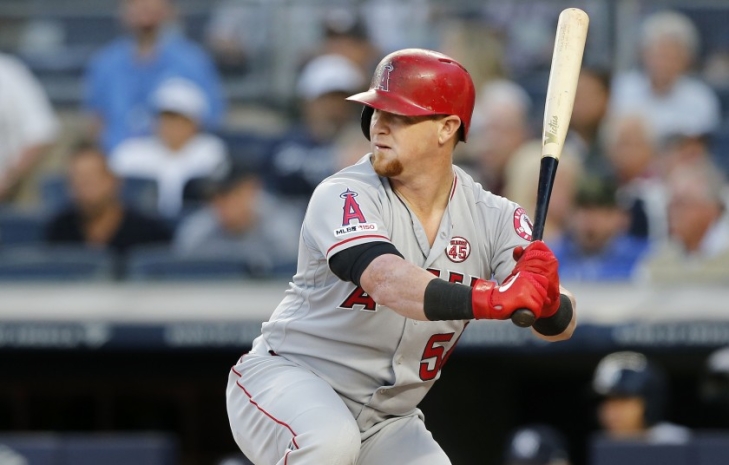
An unheralded 2010 eighth-round pick out of Arizona State, Kole Calhoun was a stocky outfielder who looked more like a specialized power-hitter than a fleet-footed defender. However, he quickly proved that he was a high-frequency engine of energy, earning the nickname "Red Baron" for his fiery red hair and a playing style that bordered on reckless abandon.
After a brief introduction to the majors, Calhoun displayed a high-caliber breakout in 2014, his first full season as a starter. He demonstrated a high-frequency ability to reach base and provide specialized pop from the leadoff spot, batting .272 with 17 home runs.
During the 2015 campaign, he authored a season in which his glove was as prominent as his bat. He demonstrated comprehensive mastery of the right-field corner, earning the 2015 American League Gold Glove Award for his specialized ability to track down fly balls and deploy a high-caliber arm. Simultaneously, he sustained offensive consistency, achieving a career-high 161 hits and 26 home runs.
Calhoun’s last season in 2019 saw him set a personal best of 33 home runs. He signed with the Arizona Diamondbacks in 2020, leaving behind 884 hits and 140 taters as an Angel.
40. Don Baylor
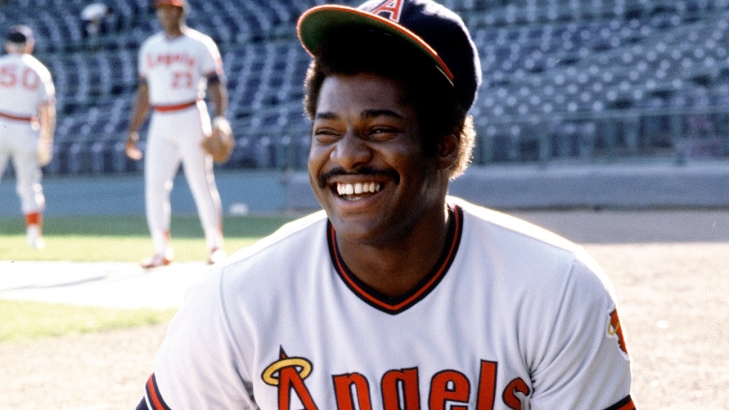
Don Baylor joined Anaheim in 1977 as a key signing during the early free-agency period. He was a muscular slugger whose presence marked a bold new era for the team. Although he is now well-known for his later roles as a manager and hitting coach, his playing days in California were characterized by a particular kind of power-driven middle-of-the-order intimidation.
Baylor’s 1979 season is among the most successful in the team's history. That summer, he proved his skill in driving in runs at an exceptional pace, leading the American League with 139 RBIs and scoring 120 runs. He demonstrated his elite status by hitting 36 home runs and earning the 1979 American League MVP, becoming the first in franchise history to receive the award. This consistent production was the key factor that helped the Angels reach their first postseason. Interestingly, it also marked his only All-Star appearance in a Halos uniform.
Known for "crowding the plate" and standing firm, he led the league twice in hit-by-pitches. From 1977 to 1982, he demonstrated consistent power, averaging nearly 24 home runs annually despite missing much of 1980 due to a major injury. Although he was a key run-producer, his overall value was limited by particular difficulties in the field. Bluntly, he was a defensive liability throughout his stay with the Angels.
After 141 home runs and over 500 RBIs, Baylor departed for the New York Yankees as a free agent. In 1990, he was inducted into the Angels Hall of Fame, becoming just the third man to receive the honor.
39. Ervin Santana
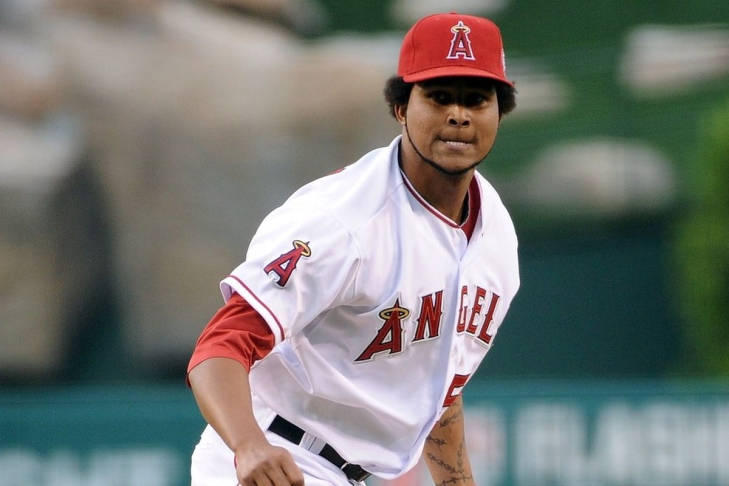
Ervin Santana joined the California organization as an amateur free agent in 2000. This Dominican right-hander was known for his powerful fastball and slider, which were expected to be the backbone of the rotation for years. He made his debut in 2005, quickly fitting into a clubhouse fresh off a world title and showing signs of a top-tier starter. Over eight seasons with the Angels, he displayed a unique lot of "feast or famine" dominance, indicating that although he lacked consistent performance, his raw talent could overpower any lineup.
In his first two summers in the rotation, he established himself as a dependable key player, posting a 12-8 rookie record, which he improved to 16 wins in 2006. His career hit a setback in 2007 due to technical problems and a demotion to the minors. Showing resilience, he made a remarkable comeback in 2008, his best season with Anaheim. That year, he had 16 wins, achieved a career-high 214 strikeouts, and earned his first All-Star selection, finishing sixth in Cy Young Award voting.
His time in Orange County was marked by fluctuations over the next four years. He frequently pitched deep into games, highlighted by a career-high 17 wins in 2010, but he also faced seasons where his ERA rose above 5. Despite these ups and downs, he achieved a historic individual moment on July 27, 2011, when he threw a no-hitter against the Cleveland Indians.
In October 2012, he was traded to the Kansas City Royals as the team looked to reshuffle its pitching staff. With the Angels, Santana had a 96-80 record with a 4.33 ERA and 1,167 strikeouts.
38. Albert Pujols
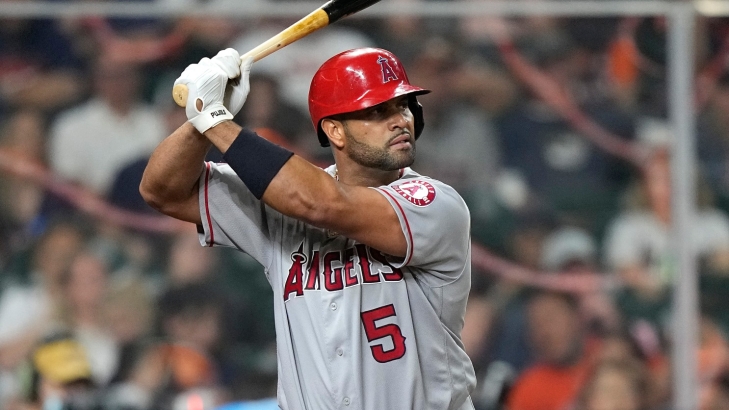
In December 2011, Albert Pujols arrived in Anaheim with a ten-year, $240 million contract, aiming to reshape the American League's power dynamics. Already a first-ballot Hall of Famer after a decade of record-breaking performance in St. Louis, he brought high expectations to the Angels' roster. Over nearly ten seasons in Southern California, he offered a unique veteran power, chasing historic baseball milestones. However, his time there ultimately became a stark reminder of athletic decline.
In 2012, he showcased his ability to succeed on the Junior Circuit, hitting 30 home runs and collecting 105 RBIs while maintaining a .285 batting average. He demonstrated his professionalism as a run-producer with a strong 2015 season, hitting 40 home runs and earning his only All-Star selection as a Halo. This consistent power threat served as a key element in the lineup during the club’s 98-win season in 2014, offering a veteran presence alongside a young Mike Trout.
Over time, his stint in Orange County was increasingly marked by a decline in his secondary skills. As years passed, his technical hitting ability was gradually diminished by reduced mobility and a declining on-base percentage. While he demonstrated his value to the organization by recording over 100 RBIs in four seasons, these strong stats often concealed a decline in overall effectiveness; as his fielding range diminished and his speed waned, his advanced metrics also dropped sharply. By the late 2010s, he found it difficult to reach a .300 on-base percentage, and his bWAR frequently turned negative, indicating a decline from his former status as one of the most complete hitters in the game.
In May 2021, when the franchise aimed to cut his playing time to give more opportunities to younger players, a specific disagreement resulted in his release. This marked the end of a tenure that was as much defined by a burdensome contract as by his legendary home runs.
While his contract might have been cumbersome to the Angels, Pujols still compiled 1,180 hits and 222 home runs.
37. Devon White
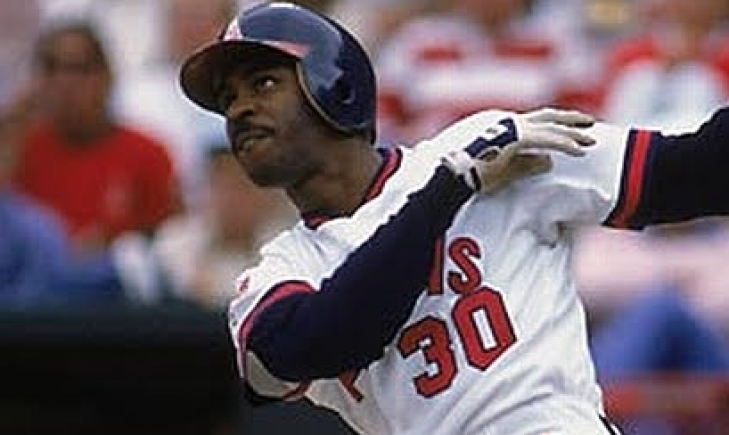
Devon White joined the California organization as a sixth-round pick in 1981. As a switch-hitting center fielder with exceptional speed and defensive skills, he became one of the most promising homegrown prospects in years. After brief appearances in 1985 and 1986, he took over as the starting outfielder and quickly changed the look of the Angels' outfield.
In 1987, he entered Major League Baseball and quickly proved his versatility by making an impact in all aspects of the game. That season, he achieved 168 hits, 24 home runs, and 32 stolen bases. He established himself as a key player in the organization by finishing fifth in the American League Rookie of the Year voting and providing a consistent spark that supported the lineup. His strategic value was evident when he became only the second player in franchise history to join the 20/30 club, a performance that is still considered one of the most exciting seasons by a young outfielder in the team's history.
Between 1988 and 1989, he earned consecutive Gold Glove Awards, showcasing a unique range that made difficult catches seem effortless. He proved his value to the organization as a key player, earning an All-Star selection in 1989, a season in which he stole a career-high 44 bases and led the league with 13 triples. Although his home run count declined from his rookie peak, his defensive prowess remained exceptional, reflected in a 6.9 defensive bWAR that only partially captured the many runs he saved through strategic positioning and speed.
In December 1990, he was involved in a franchise-changing trade to the Toronto Blue Jays, a six-player deal that sent White north in exchange for Junior Felix and Luis Sojo. Although he later won three World Series titles elsewhere, he achieved notable stats as an Angel with 551 hits, 123 stolen bases, and two Gold Gloves.
34. Jim Abbott
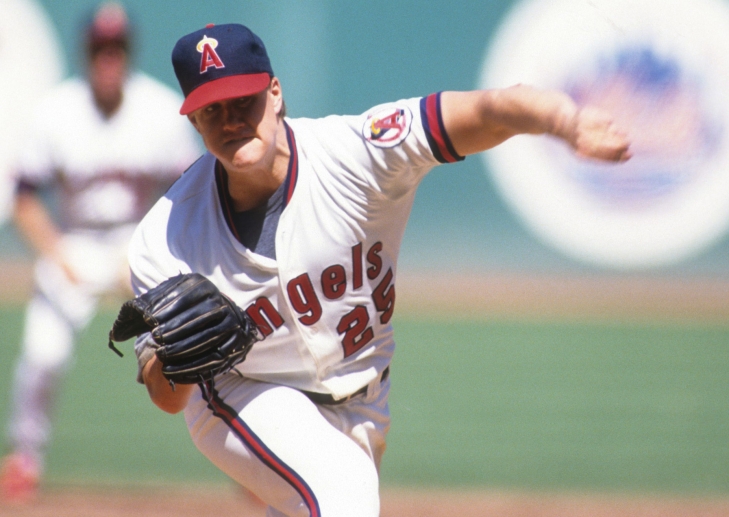
Jim Abbott joined the Anaheim organization as the eighth overall pick in the 1988 draft. Hailing from Michigan, he became a nationwide sensation even before throwing his first professional pitch. Born without a right hand, he mastered a unique technique to switch his glove to his left hand right after delivering the pitch. This seamless skill soon became overshadowed by his impressive performance on the mound.
Abbott’s 1989 rotation debut was historic, skipping the minor leagues to prove he could compete at the Major League level immediately. He demonstrated his professionalism by finishing his rookie season with a 12-12 record and a 3.92 ERA, effectively silencing doubts about his capability to perform at the top level. In 1990, he continued with a focused campaign, pitching 211.2 innings.
This early success laid the groundwork for his peak efficiency in the 1991 season. That summer, he became one of the top left-handed pitchers in the American League, achieving 18 wins and posting a best-in-class 2.89 ERA. He demonstrated his value to the organization as a key ace by finishing third in Cy Young Award voting, pitching 243 innings, and frequently outperforming the league’s strongest lineups. His technical skills carried into 1992, where he posted a 2.77 ERA; however, a lack of run support often left him with a 7-15 record despite his improved performance.
His initial tenure in California ended in December 1992 when he was traded to the New York Yankees in a blockbuster deal involving three prospects. After three seasons, highlighted by a no-hitter in New York, he returned to Southern California in 1995 through a mid-season trade from the Chicago White Sox. He demonstrated his value to the organization by contributing during a tense pennant race, posting a 5-4 record down the stretch. However, his effectiveness in specialized roles declined markedly in 1996, a tough season marked by frequent contact issues and a league-leading 18 losses, which ultimately led to his release.
Abbott’s overall numbers with the Angels saw him post a 54-74 record with 607 strikeouts and a 4.07 ERA.
36. Dick Schofield
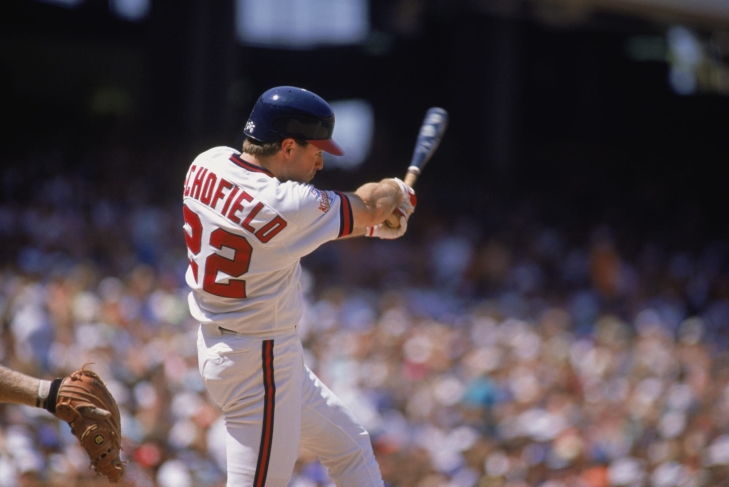
Dick Schofield joined the California organization as the third overall pick in the 1981 draft, highly regarded as a shortstop expected to anchor the infield for a rising team. He debuted in 1983 and quickly demonstrated that, although his hitting was not his primary strength, his glove was an exceptional asset that few in the American League could match.
In the mid-1980s, Schofield was establishing himself as one of the most technically skilled shortstops in baseball. He exhibited a unique talent for solidifying the infield, achieving three seasons with a defensive bWAR exceeding 2.0. During the 1986 division-winning season, he proved his value as a key professional, highlighted by consistent defensive excellence and memorable offensive heroics. In August of that year, he capped an eight-run ninth-inning comeback with a walk-off grand slam against the Tigers, a powerful swing that energized the Big A and became one of the franchise’s most legendary moments.
Although his offensive output was modest, reaching a peak of 126 hits in 1988, his true value lay in his exceptional range and reliable defense. He demonstrated to the organization that he was a core winner by maintaining a high defensive standard that helped the Angels contend in the competitive American League West. His 10.7 defensive bWAR with the Angels ranks sixth in franchise history, highlighting the consistent specialization he brought to the field every day.
In 1992 when he was traded to the New York Mets, eventually leading to a World Series championship with the Toronto Blue Jays in 1993. After a brief stop in Los Angeles with the Dodgers, he returned to Anaheim in 1995 to finish his career where it began. Schofield compiled 832 hits and a 10.7 dWAR with the Angels.
