


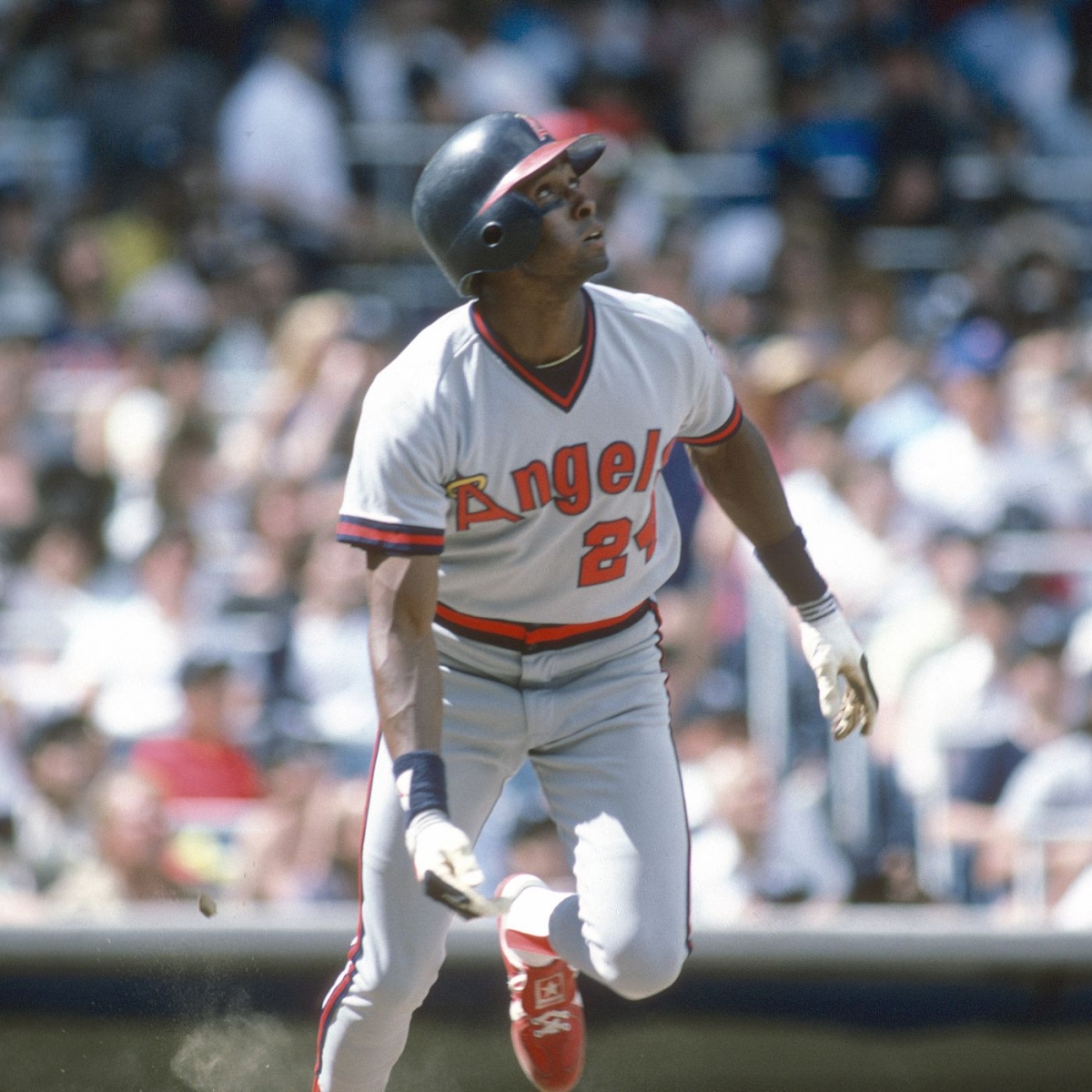

Spending the first six years of his career as a California Angel, Gary Pettis was a blur of speed that immediately redefined the limits of what a center fielder could cover. Drafted as a late-round flyer, he operated as a specialized defensive wizard whose legs were his greatest asset both on the paths and in the grass.
After a brief introduction to the big leagues, Pettis seized the starting center field job in 1984 and turned the position into a highlight-reel theater. He demonstrated a high-caliber ability to track down fly balls that seemed destined for the wall, using his elite speed to shrink the outfield. This early stretch established a high-quality floor, proving that even with a limited bat, his field value made him a professional mainstay for a team with championship aspirations.
Pettis peaked between 1985- 1986, earning consecutive Gold Glove Awards. In 1986, he led the league with 22 Total Zone Runs, crucial for the Angels' division win. While nearly powerless at the plate, he was a constant threat on base, ranking second in stolen bases for three straight years, swiping 145 bases in three seasons and causing pitchers to lose focus.
While he was a technical marvel in center field, rarely committing an error and frequently robbing home runs, his offensive efficiency remained a recurring concern. He showed the organization a specialized resilience despite his struggles to stay above the "Mendoza Line" in batting average, relying on his ability to draw walks to keep his on-base percentage respectable.
After the 1987 season, the Angels traded Pettis to the Detroit Tigers in exchange for pitcher Dan Petry. The move cleared the way for the arrival of Chili Davis and allowed a young Devon White to transition to center field. Pettis had 186 stolen bases, 467 hits, and two Gold Gloves as an Angel.

Comments powered by CComment