

The Pro Football Hall of Fame Revisited Project: 1990 Final VOTE

1990 Pro Football Hall of Fame Revisited Project Class.
Here we are! Again!!
If you have been following our Pro Football Hall of Fame Revisited Project, you know we have asked the question: What if the PFHOF had begun in January 1946?
After soliciting and obtaining a passionate group of football fans and historians, we sent out a ballot for a Preliminary Vote, in which each voter selected 25 names as their semi-finalists and five names for the Senior Pool. We then asked the group to vote for their 15 Finalists in the Modern Era and 3 in the Senior Category. The final stage was to vote for their five Modern Era inductee and one Senior inductee.
This is the result of the 45th official class.
Below are the final results of this project based on 31 votes.
Remember that we have reverted back to the top five candidates entering the Hall in the Modern Era
This is for the “Modern Era”
*Bold indicates they have been elected to the Pro Football Hall of Fame Revisited Class of 1990:
|
Player |
Year of Eligibility |
Vote Total |
|
Jack Lambert LB |
1 |
24 |
|
Jack Youngblood DE |
1 |
19 |
|
Ken Houston DB |
5 |
17 |
|
Bob Hayes SE-WR |
10 |
14 |
|
Franco Harris RB |
1 |
12 |
|
Ron Yary T |
3 |
10 |
|
Lee Roy Selmon DE |
1 |
9 |
|
Dick LeBeau DB |
13 |
8 |
|
Dave Wilcox LB |
11 |
8 |
|
Tom Mack G |
7 |
8 |
|
Roger Werhli DB |
3 |
7 |
|
Jackie Smith TE |
7 |
6 |
|
Randy Gradishar LB |
2 |
5 |
|
Bob Griese QB |
5 |
4 |
|
Dave Casper TE |
1 |
3 |
This is for the “Senior Era”,
*Bold indicates they have been elected to the Pro Football Hall of Fame Revisited Class of 1990.
|
Gene Lipscomb DT |
3 |
15 |
|
Buckets Goldenberg FB |
20 |
10 |
|
Pat Harder FB |
12 |
4 |
|
None of the Above |
N/A |
3 |
This is for the “Coaches/Contributors”,
*Bold indicates they have been elected to the Pro Football Hall of Fame Revisited Class of 1990.
|
Don Coryell (Coach) |
2 |
20 |
|
Tex Schramm (Owner) |
11 |
6 |
|
Wellington Mara (Owner) |
4 |
2 |
|
None of the Above |
|
1 |
About the 1990 Inductees:
Jack Lambert, LB, PIT 1974-84: Inducted in the Pro Football Hall of Fame Revisited Project in 1990 on his 1st Ballot. Inducted into the actual Pro Football Hall of Fame in 1990.
The Steelers had already put together a powerful defensive corps before they used their Second Round Pick in 1974 to take Jack Lambert, the MAC Defensive Player of the Year two years before.
Lambert became the Steelers’ starting Middle Linebacker early in his rookie season, and he was so impressive that he was named the Defensive Rookie of the Year. Lambert was arguably the final piece of the puzzle to create the Steelers dynasty, as Lambert, Joe Greene, Terry Bradshaw, and Franco Harris would win the Super Bowl that year. As we know, that would be the first of four Super Bowls of the decade, and Lambert was at the heart of all of them.
Lambert would become known as one of the hardest and most feared hitters in the National Football League. Lambert won the AP Defensive Player of the Year in 1976, and with all due respect to Greene, Lambert was now the top dog of the Steel Curtain. The Linebacker was a perennial Pro Bowl Selection from 1975 to 1983, and in addition to his 1976 First Team All-Pro, he had five more from 1979 to 1983.
Had Lambert not suffered from severe turf toe in 1984 (causing him to retire that year), it is conceivable he could have continued to pile on accolades. Lambert left the game with a sick rate of 136 Approximate Value to 146 Games, one of the best ratios of its kind at his position.
Jack Youngblood, DE, RAM 1971-84: Inducted in the Pro Football Hall of Fame Revisited Project in 1990 on his 1st Ballot. Inducted into the actual Pro Football Hall of Fame in 2001.
Jack Youngblood came from the University of Florida, and the 1st Round Pick would be asked to fill the shoes of possibly the most iconic defensive force in Rams history, Deacon Jones. Considering the pressure he had to feel that he was under, it is more than safe to say that he did one hell of a job!
In his third season in the NFL (1973), Youngblood was named to his first of seven consecutive Pro Bowls, five of which earned him First Team All-Pro honors. Although the Quarterback Sack was not an official statistic when he played, Youngblood is believed to have recorded 151.5 sacks over his career.
In a tough sport, Youngblood was one of the toughest and most durable players, missing only one game in his 14 seasons, and is best remembered by Rams fans for playing with a broken fibula in both the NFC Championship Game and Super Bowl XIV against the Steelers. Although the Rams lost, the legend of Jack Youngblood grew to even greater heights in those two games.
Ken Houston, DB, HOU 1967-72 & WAS 1973-80. Inducted in the Pro Football Hall of Fame Revisited Project in 1990 on his 5th Ballot. Inducted into the actual Pro Football Hall of Fame in 1986.
From Prairie View A&M, Ken Houston was taken way back in the 9th Round of the 1967 Draft, and it could have been the biggest steal of that year's draft. Ironically, the Oilers would make the worst trade in franchise history when they sent him to Washington years later.
The Safety was a starter as a rookie, starting nine of his 14 Games, and he made the Pro Bowl the following year and again over the next four seasons. Houston was easily one of the top Safeties in the AFL/AFC when he competed as an Oiler, and he picked off 25 passes, returning nine for Touchdowns.
The Oilers had a superstar in their defensive back corps, but they made a tactical error; as though they were struggling, they traded him to Washington for five players. None of the players that Houston acquired would be decent
Houston continued his streak of Pro Bowls, adding six more to have a twelve-year streak. Unlike while wearing the oil derrick, Houston was a First Team All-Pro in two of his seasons (1975 & 1978), and he had 24 Interceptions as a Redskin. Houston was also regarded as one of the game’s most punishing tacklers, and he was one of the fastest players on the field. He retired after the 1980 season, the year after his run of consecutive Pro Bowls ended.
Bob Hayes, SE-WR, DAL 1965-74 & SFO 1975. Inducted in the Pro Football Hall of Fame Revisited Project in 1990 on his 10th Ballot. Inducted into the actual Pro Football Hall of Fame in 2009.
A two-sport athlete at Florida A&M, “Bullet” Bob Hayes starred in the 1964 Olympics, winning two Gold Medals (100m and 4x100m relay). The Dallas Cowboys drafted him in the 7th Round, but he was not yet a refined football player, and it was widely assumed he would be a work in progress. It did not take long to make it work!
Hayes’ explosive speed caused havoc for defenses and forced opponents to adopt zone schemes and bump-and-run to limit his advantage. He led the NFL in Touchdown Receptions in his first two years, and later propelled the Cowboys to their first Super Bowl.
He compiled 7,414 Rushing Yards with 71 TDs, and is arguably the reason why General Managers look at 40-yard times!
Franco Harris, RB, PIT 1972-83 & SEA 1984. Inducted in the Pro Football Hall of Fame Revisited Project in 1990 on his 1st Ballot. Inducted into the actual Pro Football Hall of Fame in 1990.
With all due respect to the many great Running Backs that the Pittsburgh Steelers had, they are all in line behind Franco Harris, who is still the team’s all-time leading rusher.
Harris debuted in the professional ranks in 1972 for the Steelers, a team he didn’t have to travel far from, as he was a star at Penn State. The Running Back won the Offensive Rookie of the Year, going to the Pro Bowl and rushing for 1,055 Yards and 10 Touchdowns. This was the year Harris benefited from the "Immaculate Reception," a still-debated play in which the Steelers beat the Raiders in the playoffs. Pittsburgh didn't win it all that year, but they had a Running Back in tow who could help them.
Harris was one of the best Running Backs of the decade, going to the Pro Bowl every season from 1972 to 1980. Harris was a First Team All-Pro in 1977 (1,162 Rushing Yards and 11 TDs), but he arguably was better the season before with a league-leading 14 TDs and 1,128 Rushing Yards. Harris helped propel the Steelers to four Super Bowl titles, earning MVP honors in the first. Over 19 Playoff Games, Harris had 2,060 Yards From Scrimmage with 17 Touchdowns, an incredible number over intense situations.
Harris was with the Steelers until 1983, playing one final year in Seattle before retiring. Overall, Harris would accumulate 14,234 Yards From Scrimmage with an even 100 Touchdowns.
Gene Lipscomb, DT, RAM 1953-55, BAL 1956-60 & PIT 1961-62. Inducted in the Pro Football Hall of Fame Revisited Project in 1990 on his 3rd Senior Ballot. Was never inducted into the actual Pro Football Hall of Fame.
Gene “Big Daddy” Lipscomb enlisted in the military and played football at USMC Camp Pendleton, so if you think the teams of the NFL lightly recruited him, you would be right!
The 300-pound Lipscomb would, however, sign with the Los Angeles Rams in 1952 and would win the starting Right Defensive Tackle job in 1953, but went on to greater success when he was traded to the Baltimore Colts. "Big Daddy" would help anchor the Colts to the 1958 and 1959 NFL Championships, and not so coincidentally, he was named a First Team All-Pro for his efforts. Lipscomb went to Pittsburgh in 1961 and went to his third Pro Bowl in 1962, but that would be his final year in Pro Football, as sadly, his career ended when he died of a heroin overdose in May of 1963.
Don Coryell, Coach, STL 1973-77 & SDG 1978-86. Inducted in the Pro Football Hall of Fame Revisited Project in 1990 on his 2nd Coach/Contributor Ballot. Inducted into the actual Pro Football Hall of Fame in 2023.
Coryell was dubbed “Air Coryell” for placing a premium on the passing game and for creating a unique rhythm, forcing defenses to cover all parts of the field. Tight Ends, Running Backs would go in motion, Receivers had no set start point, and the ball would be going to the target before the receiver would get there. Coryell made deep routes a major part of his offense and changed how Tight Ends were played, making them a bigger part of the offensive target mix. All of this is commonplace today, but it wasn’t happening before Coryell literally changed the way the game was played.
He would begin this revolution with the St. Louis Cardinals, where he would win two consecutive division titles, but it was in San Diego that he had the Quarterback he wanted (Dan Fouts), where he was really able to bring his vision to light. His Chargers won the division three times and led the National Football League in passing for six consecutive seasons, a record that still stands today.
Coryell took his teams to the playoffs often, though he never made it to the Super Bowl; his offensive mindset changed the game. That is a Hall of Fame worthy!
Our All Time Top 50 Pittsburgh Steelers have been revised to reflect the 2025 Season

Yes, we know that this is taking a while!
As many of you know, we at Notinhalloffame.com are slowly generating the top 50 of each major North American sports team. That being said, we maintain and update our existing Top 50 lists annually. As such, we are delighted to present our post-2024 revision of our top 50 Pittsburgh Steelers.
As for all of our top 50 players in football, we look at the following:
1. Advanced Statistics.
2. Traditional statistics and how they finished in the National Football League.
3. Playoff accomplishments.
4. Their overall impact on the team and other intangibles that are not reflected in a stat sheet.
Last year, the Steelers had a good season, finishing 10-7, but were taken out in the opening round by the Buffalo Bills. There were two elevations on our Top 50.
As always, we present our top five, which remain unchanged.
1. Joe Greene
2. Jack Lambert
3. Mike Webster
4. Franco Harris
5. Jack Ham
You can find the entire list here.
Superstar T.J. Watt moved up one spot to #12.
The second elevation was Cameron Heyward, who moved to #15 from #19.
We thank you for your continued support of our lists on Notinhalloffame.com.
Our All-Time Top 50 Pittsburgh Steelers Have Been Revised to Reflect the 2023 Season
Yes, we know that this is taking a while!
As many of you know, we at Notinhalloffame.com are slowly generating the top 50 of each major North American sports team. That being said, we have existing Top 50 lists and consistently look to update them when necessary and based on necessity. As such, we are delighted to present our post-2023 revision of our top 50 Pittsburgh Steelers.
As for all of our top 50 players in football, we look at the following:
1. Advanced Statistics.
2. Traditional statistics and how they finished in the National Football League.
3. Playoff accomplishments.
4. Their overall impact on the team and other intangibles that are not reflected in a stat sheet.
Last year, the Steelers made the playoffs but were eliminated in the first round. They had no new entrants in the Top 50 but two major elevations.
As always, we present our top five, which saw no changes:
1. Joe Greene
2. Jack Lambert
3. Mike Webster
4. Franco Harris
5. Jack Ham
You can find the entire list here.
T.J. Watt, the Former Defensive Player of the Year, last year’s runner-up, and Sack Leader rocketed to #12 from #28.
Cameron Heyward, a six-time Pro Bowl Defensive End moved to #19 from #22.
We thank you for your continued support of our lists on Notinhalloffame.com.
Our All-Time Top 50 Pittsburgh Steelers have been revised to reflect the 2022 Season
Yes, we know that this is taking a while!
As many of you know, we here at Notinhalloffame.com are slowly generating the 50 of each major North American sports team. That being said, we have existing Top 50 lists out and we always consistently look to update them when we can and based on necessity. As such, we are very happy to present our post 2022 revision of our top 50 Pittsburgh Steelers.
As for all of our top 50 players in football we look at the following:
1. Advanced Statistics.
2. Traditional statistics and how they finished in the National Football League.
3. Playoff accomplishments.
4. Their overall impact on the team and other intangibles not reflected in a stat sheet.
Last year, the Steelers were unable to make the playoffs, but they had two defensive players that made significant jumps on the list.
As always, we present our top five, which was not affected by the last season:
1. Joe Greene
2. Jack Lambert
3. Mike Webster
5. Jack Ham
You can find the entire list here.
Defensive End, Cameron Hayward, advances six spots to #22. He enters 2023 on a six-year Pro Bowl streak.
Former Defensive Player of the Year, T.J. Watt, moved to #28 from #33. He added another Pro Bowl last season.
We welcome your input and comments and as always, we thank you for your support.
RIP: Franco Harris
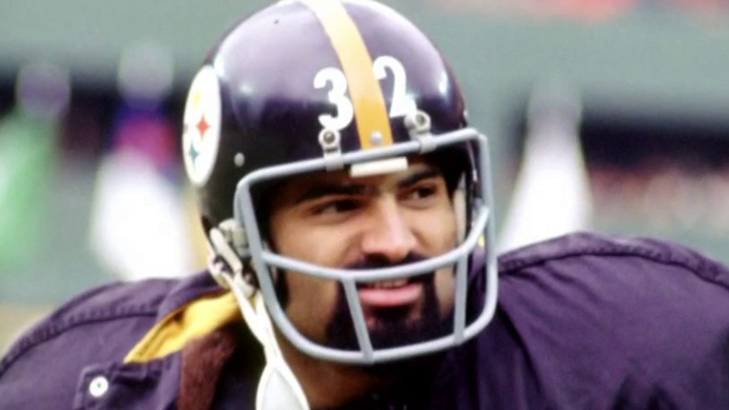
One of the greatest Running Backs of all-time, Franco Harris, passed away at the age of 72.
Harris debuted in the professional ranks in 1972 for the Steelers, a team he didn’t have to travel far from as he was a star at Penn State. The Running Back won the Offensive Rookie of the Year, going to the Pro Bowl and rushing for 1,055 Yards and 10 Touchdowns. This was the year where Harris was the beneficiary of the "Immaculate Reception," as a still-debated play that saw the Steelers beat the Raiders in the playoffs. Pittsburgh didn't win it all that year, but they had a Running Back in tow that could help them in the future.
Harris was one of the best Running Backs of the decade, going to Pro Bowl every season from 1972 to 1980. Harris was a First Team All-Pro in 1977 (1,162 Rushing Yards and 11 TDs), but he arguably was better the season before with a league-leading 14 TDs and 1,128 Rushing Yards. Harris helped propel the Steelers to four Super Bowl wins, earning MVP honors in the first title. Over 19 Playoff Games, Harris had 2,060 Yards From Scrimmage with 17 Touchdowns, an incredible number over intense situations.
Harris was with the Steelers until 1983, playing one final year in Seattle before retiring. Overall, Harris would accumulate 14,407 Yards From Scrimmage with an even 100 Touchdowns. The Pro Football Hall of Fame came calling in 1990 and was a member of the first Steelers' Hall of Honor in 2017. In addition, the Steelers retired his number 32, giving Harris the distinction of being the third player in franchise history to earn that accolade.
We here at Notinhalloffame.com would like to extend our condolences to the fans, family and friends of Franco Harris.
Our All-Time Top 50 Pittsburgh Steelers are now up
Yes, we know that this is taking a while!
As many of you know, we here at Notinhalloffame.com are slowly generating the 50 of each major North American sports team. We have a new one to unveil today, that of the Pittsburgh Steelers.
There are many that feel that the Pittsburgh Steelers really did not begin until the 1970s, but of course, that isn't true.
The origin of the Steelers dates all the way back in 1933, and they are the seventh oldest NFL franchise in existence. They made the playoffs in 1947, but that was the only time they made it to a post-season from 1933 to 1971. The Steelers would then become the power of the AFC, winning four Super Bowls in the 1970s, primarily on the strength of their potent "Steel Curtain" defense.
Their 70s success made them one of the most popular teams in the game, a status that they maintain today. Pittsburgh never had another dynasty, but they did have success winning two more Super Bowls this millennium, giving them six, which is tied with the New England Patriots for the most.
1. Advanced Statistics.
2. Traditional statistics and how they finished in the NFL.
3. Playoff accomplishments.
4. Their overall impact on the team and other intangibles not reflected in a stat sheet.
Remember, this is ONLY based on what a player does on that particular team and not what he accomplished elsewhere and also note that we have placed an increased importance on the first two categories.
This list is updated up until the end of the 2019 Season.
The complete list can be found here, but as always, we announce our top five in this article. They are:
1. Joe Greene
2. Jack Lambert
3. Mike Webster
5. Jack Ham
We will continue our adjustments on our existing lists and will continue developing our new lists.
Look for our more material coming soon!
As always, we thank you for your support.
4. Franco Harris
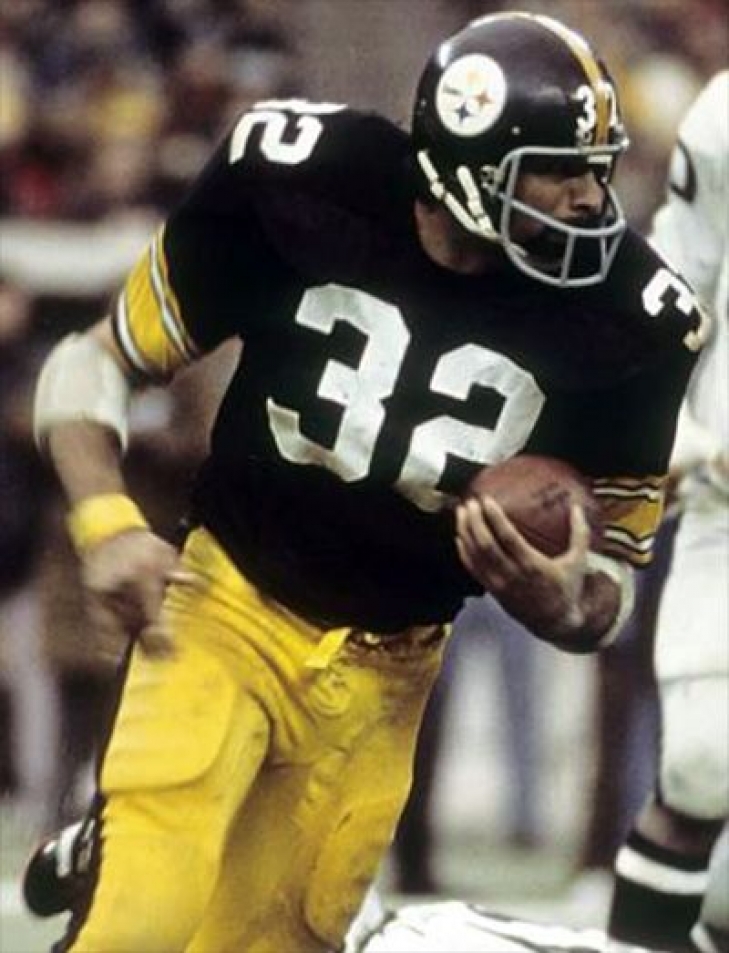
With all due respect to the many great Running Backs that the Pittsburgh Steelers had, they are all in line behind Franco Harris, who is still the team’s all-time leading rusher.
The Pittsburgh Steelers announce their Hall of Honor
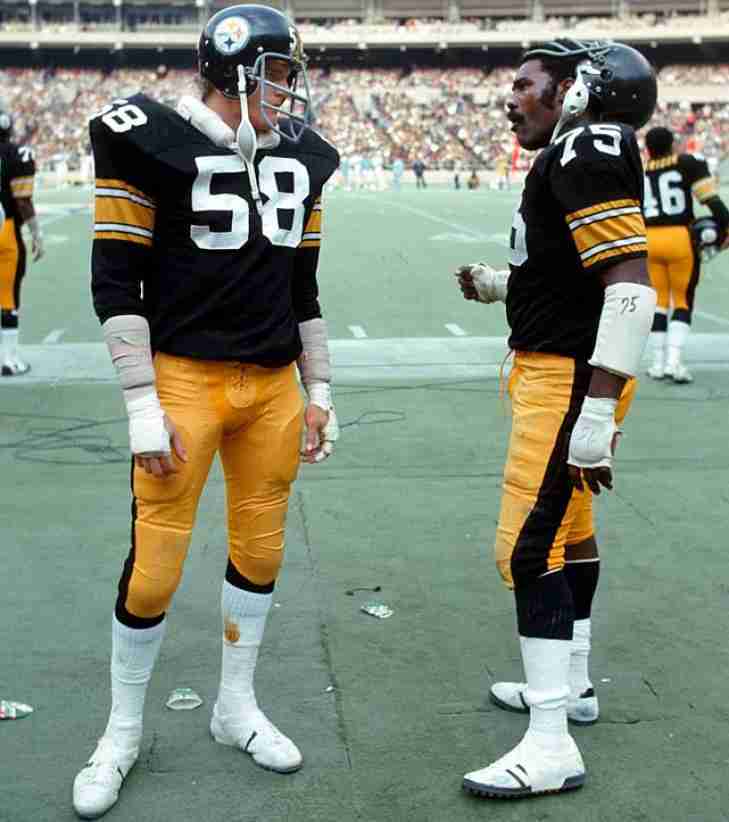
This has been a long time coming, so much so that this group comprises 23 Pro Football Hall of Famers.
Let’s get right to this very esteemed group:
Art Rooney: The founding owner of the Steelers and President of the team from 1933 to 1974. He also served as the Chairman until 1988.
Dan Rooney: The son of Art Rooney, Dan Rooney was the Steelers President from 1975 to 2002. He spearheaded the push for minority hires as coaches or GM creating the “Rooney Rule”, whereby all NFL teams must interview a minority candidate for a coaching or GM job.
Chuck Noll: The Head Coach for Pittsburgh from 1969 to 1991, Noll is a four time Super Bowl winner with a regular season record of 193-148-1. He would win two more Super Bowls with the Steelers as an Executive.
Jack Butler: a four time First Team All-Pro Cornerback from 1956 to 1959. He led the NFL in Interceptions in 1957.
Dick Hoak: A Pro Bowl Running Back in 1968 and the Running Coach from 1972 to 2007. He has five Super Bowl Rings as a Coach.
Joe Greene: “Mean” Joe was a four time Super Bowl Champion and a Defensive Tackle who went to ten Pro Bowls while earning six First Team All-Pro Selections. He was the Defensive Player of the Year in both 1972 and 1974.
Terry Bradshaw: The Quarterback of the 1970’s Steelers dynasty, Terry Bradshaw was a three time Pro Bowler and two time Super Bowl MVP.
Franco Harris: The Fullback was the engine of the Steelers juggernaut and he too is a four time Super Bowl Champion. He was also a nine time Pro Bowl Selection and the MVP of Super Bowl IX.
Mike Webster: The Center for the 70’s juggernaut, he also won four Super Bowls. He would be named to nine Pro Bowls and seven First Team All-Pro squads.
Lynn Swann: The very popular Wide Receiver was also a four time Super Bowl winner. Twice he would be a Pro Bowler and he was the MVP of Super Bowl X.
L.C. Greenwood: Greenwood also won four Super Bowls and the Defensive End went to six Pro Bowls.
Mel Blount: The Cornerback also won four Super Bowls and was himself a five time Pro Bowl and four time First Team All Pro. He led the NFL in Interceptions in 1975 and was named the NFL Defensive Player of the Year.
Jack Ham: Playing Outside Linebacker, Ham also won four Super Bowls and was a eight time Pro Bowl and six time First Team All Pro Selection.
Jack Lambert: Yet another four time Super Bowl winner Jack Lambert went to nine Pro Bowls and seven First Team All Pros. The Middle Linebacker was a two time Defensive Player of the Year in both 1976 and 1983.
Andy Russell: A two time Super Bowl winner with eight Pro Bowl Selections. Russell played Linebacker.
Rod Woodson: The Cornerback played ten years of his career with Pittsburgh and was a seven time and five time First Team All Pro Selection with Pittsburgh. As a Steeler he won a Super Bowl and was named the Defensive Player of the Year in 1993.
Kevin Greene: Only a Steeler for three seasons, Greene won the Super Bowl with the team and was named to a First Team All Pro squad.
Jerome Bettis: “The Bus” won a Super Bowl with Pittsburgh as well as earning four Pro Bowls.
Donnie Shell: Another four time Super Bowl Champion, the Safety was a five time Pro Bowl and three time First Team All-Pro Selection.
John Stallworth: Stallworth also won four Super Bowls and he was named to three Pro Bowls. The Wide Receiver also made a First Team All Pro squad once.
Bobby Layne: The Hall of Fame Quarterback played his final five seasons with Pittsburgh and he was a two time Pro Bowl Selection as a Steeler.
Ernie Stautner: A star Defensive Tackle of the 1950’s, Statutner would be a nine time Pro Bowl.
John Henry Johnson: A Fullback who went to three Pro Bowls as a Steeler in early 1960’s.
Bill Dudley: “Bullet Bill” was an imposing halfback who was with Pittsburgh for three seasons; one before World War II, and two after his service. He would be named the MVP in 1946.
Walt Kiesling: Kiesling only played one season with Pittsburgh but served as their coach for two stints.
John “Blood” McNally: McNally played three seasons for Pittsburgh as well as coached them for three.
Dermontti Dawson: The Center was a seven time Pro Bowl and six time First Team All Pro Selection.
The Hall of Honor will be located at the river end of the FedEx Great Hall at Heinz Field with the eventual plan to grow it to a museum.
To qualify for the Pittsburgh Steelers Hall of Honor a player must have been with the team for at least three years and be retired for at least three years.
We here at Notinhalloffame.com are beyond delighted that the Steelers have finally begun to honor their past legends with an institution like this.
