


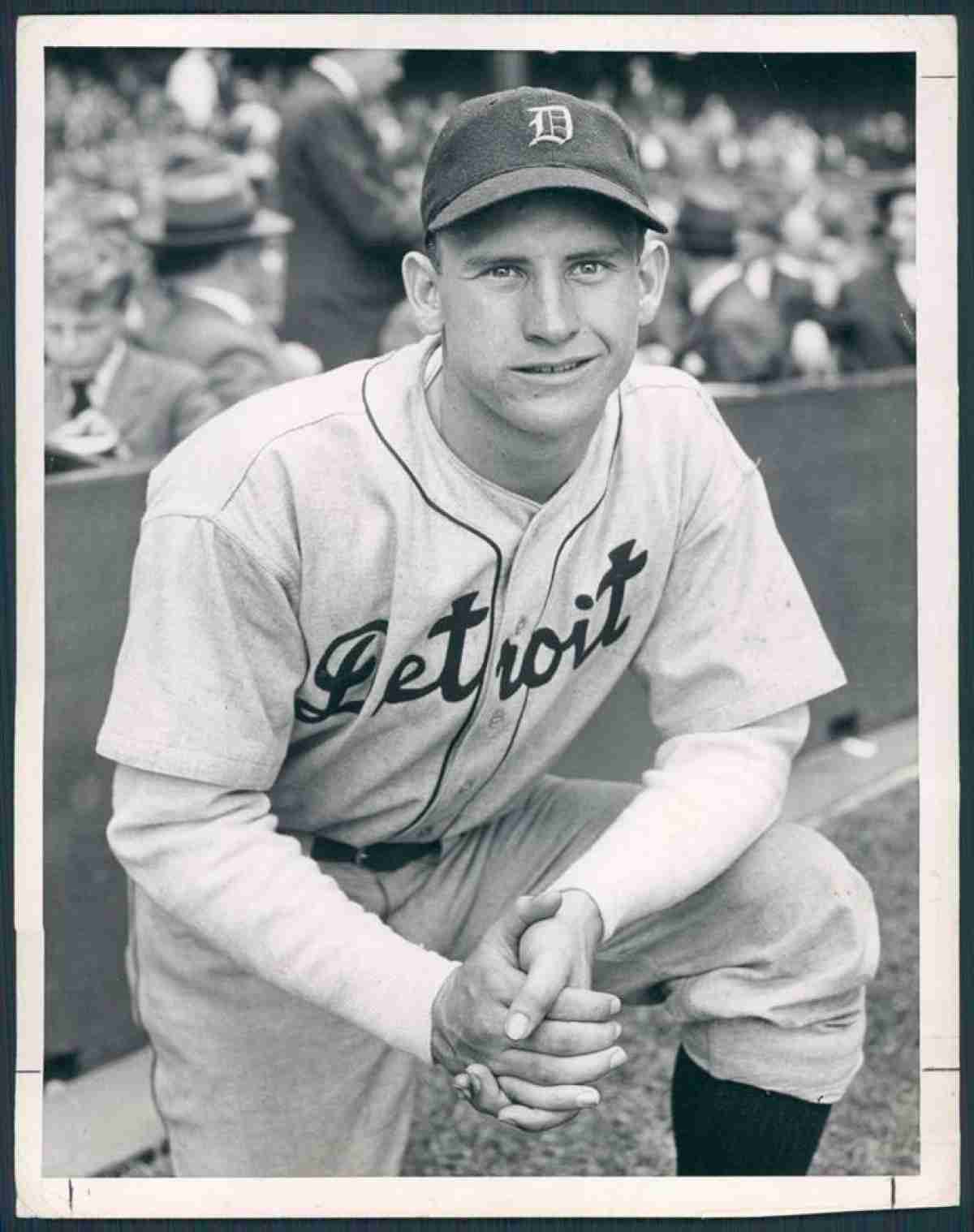



The story of "Dizzy" Trout is a fascinating narrative of a pitcher who became a titan of the American League during one of baseball's most unique eras. For fourteen seasons, Trout was a mainstay of the Detroit Tigers' rotation, evolving from a struggling young arm into one-half of the most feared pitching duo in the game. While he thrived during the depleted years of World War II, his longevity and professional resilience allowed him to remain a tactical asset for Detroit long after the stars returned from overseas.
When he debuted in 1939, he arrived with a "Dizzy Dean" persona, a loud-talking, colorful character who spent more time "clowning" than dominating. His first four seasons were defined by a losing record (33-44) and a lack of focus, even as he struggled during the Tigers' 1940 pennant run, when he was largely relegated to the bullpen and lost his only World Series start. It wasn't until 1943 that Trout finally abandoned the antics and matured into a professional, anchoring the staff with 20 wins and five shutouts, signaling his transition into a premier AL ace.
His career reached a definitive zenith in 1944, a season in which he and teammate Hal Newhouser nearly carried Detroit to the pennant by themselves. That summer, Trout led the major leagues with a 2.12 ERA and won 27 games, finishing as the runner-up for the AL MVP. He possessed a specialized durability that saw him lead the league in innings pitched (352.1), complete games (33), and shutouts (7). He was a model of specialized efficiency during this run, dominating as both a high-frequency starter and an occasional high-leverage reliever when the team needed a save.
The hallmark of his time in Detroit was his focused intensity during the 1945 World Series run. While his regular-season win total dropped to 18, he reached a professional high point in the postseason against the Chicago Cubs. Trout was a primary engine of the championship, recording a critical five-hit, complete-game victory in Game 4. He finished the Series with a 1.72 ERA and a sub-0.9 WHIP, showing that his tactical poise could survive the highest stakes. He eventually amassed 161 wins in a Detroit uniform, maintaining a steady-state effectiveness that saw him finish in the top ten in ERA as late as 1950.
His tenure with the organization ended during the 1952 season, when he was included in a massive nine-player trade to the Boston Red Sox. He departed as a World Series champion and a two-time All-Star, a man who arrived as a "clown" and left as one of the most decorated and durable arms in Tigers history.
As a Tiger, Trout compiled a 161-153 record with a 3.20 ERA and 1,199 strikeouts across fourteen seasons.






Comments powered by CComment