


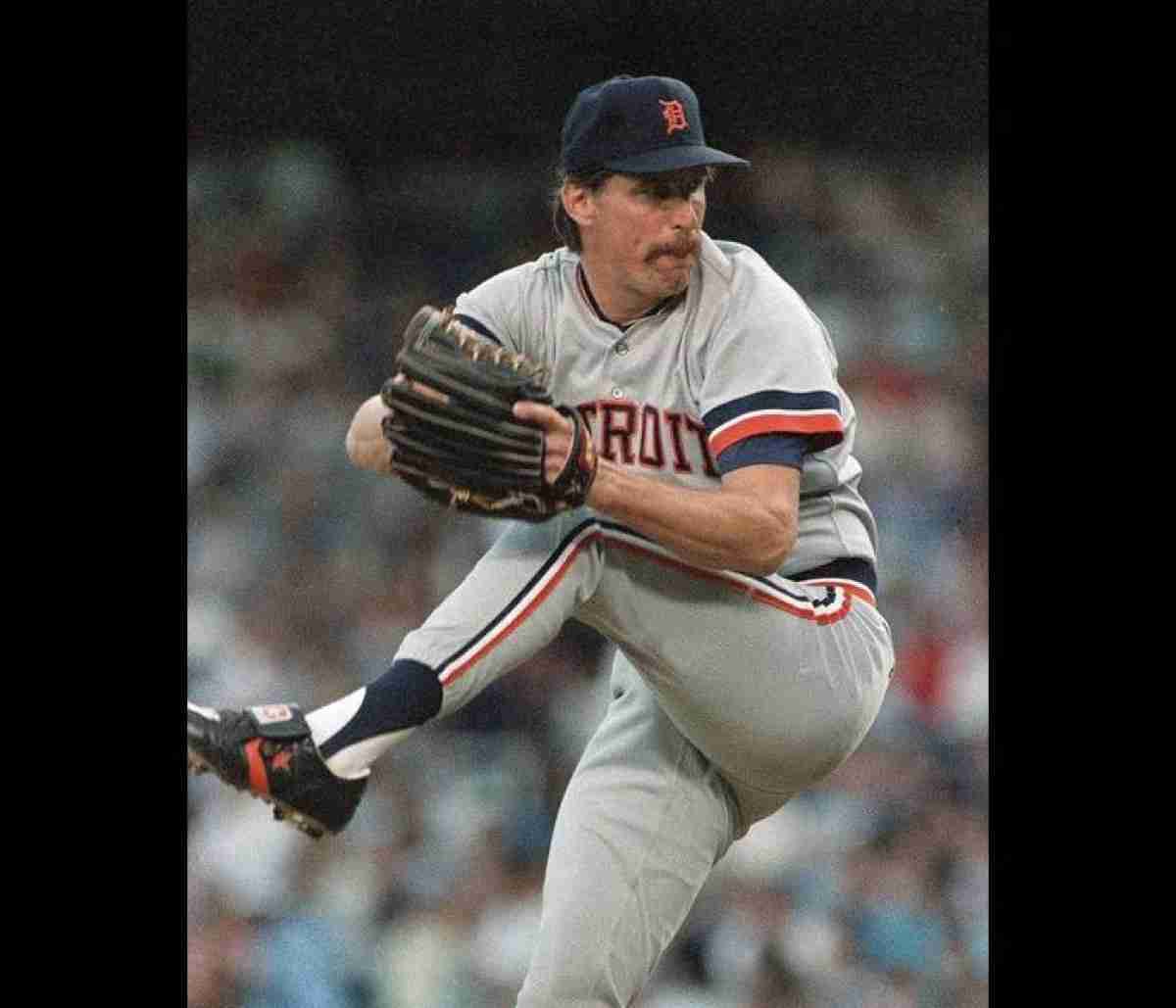




Jack Morris was the definitive workhorse of his era, a pitcher who didn't just inhabit the rotation; he owned it. For fourteen seasons in Detroit, he was the embodiment of the "big game" starter, a man whose competitiveness was as legendary as the split-fingered fastball that eventually made him the winningest pitcher of the 1980s. While he wasn't always a darling of the scouts who favored efficiency over grit, Morris possessed a specialized durability that allowed him to finish what he started, leading the league in innings and complete games while anchoring a championship staff.
Morris’ ascent in Detroit began in the late 1970s, but he arrived in 1979 when he won 17 games and established himself as the rotation’s primary outlier. By 1981, he had matured into a tactical ace, leading the American League with 14 wins in a strike-shortened season and earning his first All-Star nod. He was a model of high-frequency excellence, often categorized by his "bent-back" delivery and a focused intensity that made him a nightmare for opposing hitters. He proved that he could maintain professional poise even under the heaviest workloads, throwing over 240 innings across five seasons for the club.
Everything culminated in the historic 1984 campaign. Morris signaled his transition into a franchise pillar early that year by throwing a no-hitter against the White Sox in just his second start of the season. In the postseason, going 3-0 across the ALCS and World Series. In the Fall Classic against the Padres, he threw two complete-game victories, including the clincher in Game 5, proving to the world that he was a specialized big-game performer. He finished his Detroit residency with 198 wins, including a league-leading 20-win season in 1983 and three other seasons where he finished in the top five of the Cy Young voting.
The final chapters of his Tigers tenure saw him maintain a steady-state reliability as the veteran-like leader of the staff. While he eventually moved on to win three more rings with Minnesota and Toronto, his identity remained deeply rooted in the Motor City, where he amassed 1,980 strikeouts and 154 complete games. He was a horse who thrived on the psychological edge of the mound, a style that eventually carried him to the Hall of Fame via the Veterans Committee in 2018.
The story in Detroit reached its final punctuation later that summer when the Tigers retired his number 47, placing him forever among the icons of the franchise.






Comments powered by CComment