


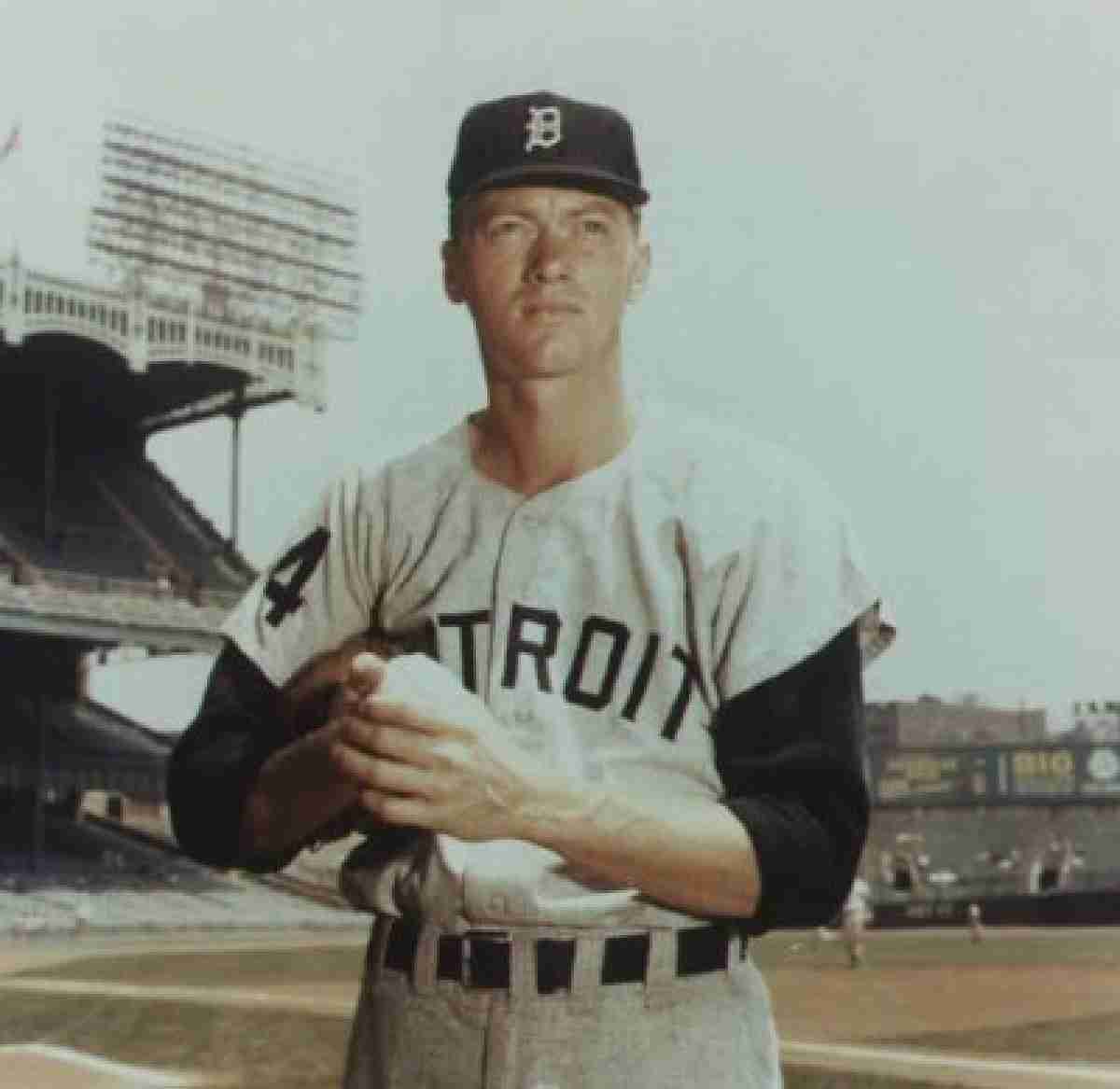



The trajectory of Jim Bunning in Detroit is a study of a specialized technician who arrived as a project and left as an elite hurler. While he is often associated with the perfect game he later threw in Philadelphia, Bunning’s professional foundation was built in the Motor City. For nine seasons, he served as the high-frequency engine of the Tigers' rotation, a sidearm-throwing right-hander whose deceptive delivery and focused intensity made him one of the most difficult matchups in the American League during the late 1950s.
Bunning’s ascent in Detroit began in earnest in 1957, a season that served as his arrival. After a few inconsistent years of seasoning, he reached a definitive level of efficiency by leading the American League with 20 wins and a 2.60 FIP. He possessed a specialized, cross-fire delivery that hid the ball until the last possible second, a style that allowed him to strike out 182 batters and earn the first of five All-Star selections with the club. He proved that a pitcher could become a franchise pillar by mastering the tactical demands of the "inner half," a steady-state approach that kept him at the top of the league's leaderboards for years.
The hallmark of his time in Detroit was a relentless run of high-frequency strikeout totals. In 1959 and 1960, he led the American League in strikeouts both seasons. During this window, he was a model of specialized durability, routinely throwing over 250 innings and maintaining a professional poise even as the Tigers struggled to find a consistent supporting cast. He famously threw a no-hitter against the Red Sox in 1958, signaling his transition into the upper echelon of the game's starters. He wasn't just a "solid contributor"; he was the arm the Tigers relied on to stop every losing streak, eventually amassing 118 wins in a Detroit uniform.
Despite the high-leverage workload, he finished his tenure with 1,406 strikeouts and a winning record in seven of his nine seasons with the club. However, the organization decided to pivot toward youth, trading Bunning to the Phillies following the 1963 season in a move that remains one of the most lopsided in franchise history. He departed as a five-time All-Star and a no-hit hero, a man who arrived as an unheralded prospect and left as a statistical titan of the mound.
The story in Detroit reached its final punctuation in 1996 when Bunning was inducted into the Baseball Hall of Fame. While he chose to wear a Phillies cap on his plaque, his legacy remains deeply rooted in the Motor City as one of the most dominant right-handers in club history.






Comments powered by CComment