

The Pro Football Hall of Fame names its 9 Semi-Finalists Coaches for the 2026 Class

The Pro Football Hall of Fame announced the nine former Coaches who have advanced as Semi-Finalists for the Class of 2026.
The Blue Ribbon Committee will meet virtually on November 18 and select one Finalist.
*Denotes First Year of Eligibility.
*Bill Belichick. With all due respect to this loaded group of candidates, no one can match the resume of Bill Belichick. Beginning his coaching career as a special assistant in Baltimore, Belichick joined the New York Giants in 1979, worked his way up to Defensive Coordinator, and won two Super Bowls in that role. He became Cleveland’s Head Coach, but he posted a winning record in only one of his six years. He received another chance as a Head Coach for New England, and the rest was history. Belichick ushered in the Patriots' dynasty, leading the Pats to six Super Bowl wins, nine Super Bowl appearances (both records as a Head Coach), and presided over the most remarkable run by any Head Coach associated with one team in NFL history. Belichick had a career record of 333-178, a 31-13 playoff record, and also boasts three AP Coach of the Year Awards. He was named to the NFL 100th Anniversary Team.
Tom Coughlin: Coughlin worked his way up the ranks and became the Head Coach of the expansion Jacksonville Jaguars in 1995. He was their Head Coach for eight years, bringing them to two AFC Championship Games, the first of which was in the franchise’s second year. After being fired, he joined the New York Giants, where the stoic leader led the G-Men to two Super Bowl wins (XLII & XLVI). He retired with an overall record of 170-150 and is already a member of the New York Giants Ring of Honor and Pride of the Jaguars.
Mike Holmgren. Holmgren won two Super Bowls with San Francisco, first as a Quarterbacks Coach and then as their Offensive Coordinator, and it propelled him to the Head Coaching job at Green Bay in 1992. He led the Packers to a Super Bowl win at SBXXXI. Holmgren accepted the Seattle Seahawks coaching job and took them to a Super Bowl appearance in 2005. A member of the Green Bay Packers Hall of Fame and Seattle Seahawks Ring of Honor, Holmgren had a career record of 161-111.
Chuck Knox: An Offensive Line Coach with the New York Jets (1963-66) and for Detroit (1967-72), Knox was elevated to the Head Coach for the Los Angeles Rams in 1973, where he won the AP Coach of the Year award in his first season in that role. He later coached Buffalo (1978-82) and Seattle (1983-91), where he won Coach of the Year Awards for both clubs, and he concluded his career with three years back with the Rams. He had an overall record of 186-147.
Buddy Parker: Parker was left off this stage last year after failing to make the Hall as a Finalist in 2024, but he is back where he belongs: in Hall of Fame consideration. An NFL Champion as a player for the Detroit Lions in 1935, Parker became their Head Coach in 1951, and promptly led them to back-to-back NFL Championships in 1952 and 1953. He left to helm the Pittsburgh Steelers in 1957, where he brought them to respectability. He had a 107-76-9 record.
Dan Reeves. Reeves won a Super Bowl as an Assistant Coach in Dallas and was hired by Denver as their Head Coach in 1981. He led the Broncos to three AFC Titles but could not punch their ticket to a Super Bowl win. After he was let go by Denver, he signed with the Giants and won the 1993 AP Coach of the Year. Later, he took over as Atlanta’s Head Coach, leading them to their first Super Bowl appearance —a loss to his former team (Denver) —and earning his second Coach of the Year award. He had an overall record of 190-165-2 and is a member of the Broncos Ring of Honor.
Marty Schottenheimer. Working his way through the Giants and Lions as the Linebackers Coach, Schottenheimer landed the Defensive Coordinator job in Cleveland in 1980 and was promoted to their Head Coach in 1984. He brought Cleveland to the AFC Finals twice but left for Kansas City in 1989 with another (unsuccessful) trip to the AFC Championship Game (1993). Schottenheimer took some time off and was lured back by Washington, but that lasted only one year. He returned the following season for the San Diego Chargers, where he twice took them to the playoffs. He had an overall record of 200-126-1 and is a member of the Kansas City Chiefs Hall of Fame.
George Seifert. Seifert joined the San Francisco 49ers as their Defensive Backs Coach in 1980 and was elevated to Defensive Coordinator in 1983. He won three Super Bowls as an assistant coach, and in 1989 he was again promoted to Head Coach. Here, he led the Niners to two more Super Bowl wins and to five NFC Championship Games overall. He concluded his career with three years as Carolina’s Head Coach and had an overall record of 114-62.
Mike Shanahan. Shanahan joined Denver as their Wide Receivers Coach in 1984, and a year later, he began a three-year stint as their Offensive Coordinator, where he caught the eye of Raiders owner Al Davis, who hired him to replace Tom Flores. That did not last long, and he was back in Denver but was let go due to a dispute between Quarterback John Elway and Dan Reeves. He went to San Francisco, where he won Super Bowl XXIX as the Offensive Coordinator. He returned to Denver in 1995, leading the Broncos to their first two Super Bowl wins (XXXII & XXXIII) during a 14-year run. He finished his career with three years at Washington, posting an overall record of 170-138. He is also a member of the Broncos Ring of Fame.
The three coaches who were cut were Bill Arnsberger, Alex Gibbs, and Clark Shaugnessy.
We congratulate the candidates who have reached this stage.
The Pro Football Hall of Fame names 12 Preliminary Coaches Candidates for the 2026 Class

The Pro Football Hall of Fame announced today that the Coaches Blue-Ribbon Committee has narrowed down a group of 15 candidates to 12.
Following this, the members of the Coaches Blue-Ribbon Committee will receive an additional ballot, which will reduce this group to nine. That will be announced in early November.
Here are the 12 Coaches who have made it to this stage.
*Denotes First Year of Eligibility.
**Denotes that they made it to this stage last year.
**Bill Arnsberger. Arnsberger is one of the most heralded defensive minds in NFL history, having first worked for the Baltimore Colts (1964-69), where his defense brought the Team to Super Bowl III. He would join his Cots Coach, Don Shula, in Miami, where his “No-Name Defense” led the Dolphins to back-to-back Super Bowl wins. He took a shot as a Head Coach with the New York Giants, but after that failed, he returned to Shula and built up another potent defense (The Killer B’s) that won another AFC Title. Afterward, he went to LSU, then Florida, and returned to the NFL with the San Diego Chargers, where, as the Defensive Coordinator again, he helped the Bolts make their first Super Bowl.
*Bill Belichick. With all due respect to this loaded group of candidates, there is nobody who brings a resume with the accomplishments of Bill Belichick. Beginning his coaching career as a special assistant in Baltimore, Belichick joined the New York Giants in 1979, worked his way up to Defensive Coordinator, and won two Super Bowls in that role. He became Cleveland’s Head Coach, but he only achieved a winning record in one of his six years. He received another chance as a Head Coach for New England, and the rest was history. Belichick ushered in the Patriots dynasty, leading the Pats to six Super Bowl wins, nine Super Bowl appearances (both records as a Head Coach), and presided over the greatest run by any Head Coach associated with one team in NFL history. Belichick had a career record of 333-178, a 31-13 playoff record, and also boasts three AP Coach of the Year Awards. He was named to the NFL 100th Anniversary Team.
**Tom Coughlin: Coughlin worked his way up the ranks and became the Head Coach of the expansion Jacksonville Jaguars in 1995. He was their Head Coach for eight years, bringing them to two AFC Championship Games, the first of which was in the franchise’s second year. After being fired, he joined the New York Giants, where the stoic leader led the G-Men to two Super Bowl wins (XLII & XLVI). He retired with an overall record of 170-150 and is already a member of the New York Giants Ring of Honor and Pride of the Jaguars.
**Alex Gibbs. An Assistant Head Coach and/or Offensive Line Coach for 27 years, working for Denver (1984-87, 1995-2003 & 2013), the Los Angeles Raiders (1988-89), San Diego (1990-91), Indianapolis (1992), Kansas City (1993-94), Atlanta (2004-05), Houston (2008-09) and Seattle (2010). He won two Super Bowls with the Broncos.
**Mike Holmgren. Holmgren won two Super Bowls with San Francisco, first as a Quarterbacks Coach and then as their Offensive Coordinator, and it propelled him to the Head Coaching job at Green Bay in 1992. He led the Packers to a Super Bowl win at SBXXXI. Holmgren accepted the Seattle Seahawks coaching job and took them to a Super Bowl appearance in 2005. A member of the Green Bay Packers Hall of Fame and Seattle Seahawks Ring of Honor, Holmgren had a career record of 161-111.
**Chuck Knox: An Offensive Line Coach with the New York Jets (1963-66) and for Detroit (1967-72), Knox was elevated to the Head Coach for the Los Angeles Rams in 1973, where he won the AP Coach of the Year award in his first season in that role. He later coached Buffalo (1978-82) and Seattle (1983-91), where he won Coach of the Year Awards for both clubs, and he concluded his career with three years back with the Rams. He had an overall record of 186-147.
Buddy Parker: Parker was left off this stage last year after failing to make the Hall as a Finalist in 2024, but he is back where he belongs: in Hall of Fame consideration. An NFL Champion as a player for the Detroit Lions in 1935, Parker became their Head Coach in 1951, and promptly led them to back-to-back NFL Championships in 1952 and 1953. He left to helm the Pittsburgh Steelers in 1957, where he brought them to respectability. He had a 107-76-9 record.
**Dan Reeves. Reeves won a Super Bowl as an Assistant Coach in Dallas and was hired by Denver as their Head Coach in 1981. He led the Broncos to three AFC Titles but could not punch their ticket to a Super Bowl win. After he was let go by Denver, he signed with the Giants and won the 1993 AP Coach of the Year. Later, he took over as Atlanta’s Head Coach, leading them to their first Super Bowl appearance, a loss to his former team (Denver), though he did win his second Coach of the Year. He had an overall record of 190-165-2 and is a member of the Broncos Ring of Honor.
**Marty Schottenheimer. Working his way through the Giants and Lions as the Linebackers Coach, Schottenheimer landed the Defensive Coordinator job in Cleveland in 1980 and was promoted to their Head Coach in 1984. He brought Cleveland to the AFC Finals twice but left for Kansas City in 1989 with another (unsuccessful) trip to the AFC Championship Game (1993). Schottenheimer took some time off and was lured back by Washington, but that lasted only one year. He returned the following season for the San Diego Chargers, where he twice took them to the playoffs. He had an overall record of 200-126-1 and is a member of the Kansas City Chiefs Hall of Fame.
**George Seifert. Seifert joined the San Francisco 49ers as their Defensive Backs Coach in 1980 and was elevated to Defensive Coordinator in 1983. He won three Super Bowls as an assistant, and in 1989, he was again promoted to Head Coach. Here, he led the Niners to two more Super Bowl wins and to five NFC Championship Games overall. He concluded his career with three years as Carolina’s Head Coach and had an overall record of 114-62.
**Mike Shanahan. Shanahan joined Denver as their Wide Receivers Coach in 1984, and a year later, he began a three-year stint as their Offensive Coordinator, where he caught the eye of Raiders owner Al Davis, who hired him to replace Tom Flores. That did not last long, and he was back in Denver but was let go due to a dispute between Quarterback John Elway and Dan Reeves. He went to San Francisco, where he won Super Bowl XXIX as their Offensive Coordinator. He returned to Denver in 1995, leading the Broncos to their first two Super Bowl wins (XXXII & XXXIII) during a 14-year run. He finished his career with three years at Washington and had an overall record of 170-138. He is also a member of the Broncos Ring of Fame.
**Clark Shaughnessy. Arguably one of the first great Assistant Coaches in NFL history, Shaughnessy was a very successful college coach (150-117-17) and became the Washington Redskins Advisor in 1944. He later served as the Head Coach for the Rams for two years and as Chicago’s Defensive Coordinator from 1951 to 1962.
Of note, those who were here last year, who did not return to this stage were Jeff Fisher and Richie Petitbon.
We congratulate the candidates who have made it to this stage.
The Pro Football Hall of Fame Revisited Project: 1978 Final VOTE
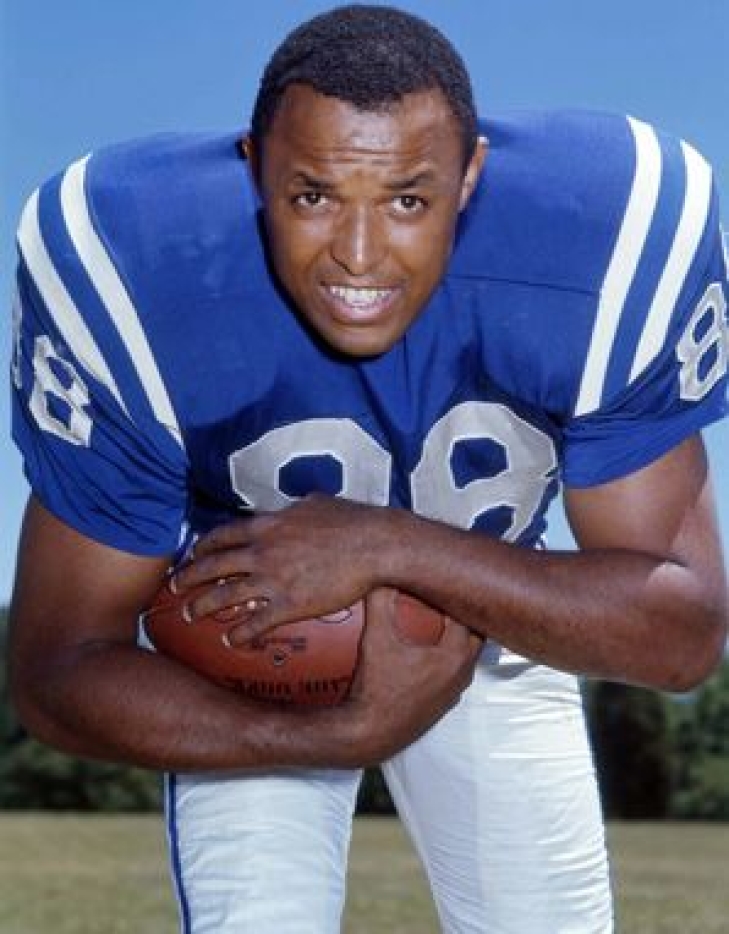
1978 Pro Football Hall of Fame Revisited Project Class.
Here we are! Again!!
If you have been following our Pro Football Hall of Fame Revisited Project, you know we have asked the rhetorical question: What if the PFHOF began in January 1946?
After soliciting and obtaining a passionate group of football fans and historians, we sent out a ballot for a Preliminary Vote, in which we asked each voter to give us 25 names as their semi-finalists and 5 in the Senior Pool. We then asked the group to vote for their 15 Finalists in the Modern Era and 3 in the Senior Category. The final stage was to vote for their five Modern Era inductee and one Senior inductee.
This is the result of the 33rd official class.
Below are the final results of this project based on 33 votes.
Remember that we have reverted back to the top five candidates entering the Hall in the Modern Era
This is for the “Modern Era”
*Bold indicates they have been elected to the Pro Football Hall of Fame Revisited Class of 1978:
|
Player |
Year of Eligibility |
Vote Total |
|
John Mackey TE |
1 |
26 |
|
Herb Adderly DB |
1 |
22 |
|
Lance Alworth FL-WR |
1 |
22 |
|
Ray Nitschke LB |
1 |
21 |
|
Mike Ditka TE |
1 |
18 |
|
Larry Wilson DB |
1 |
17 |
|
Pat Harder FB |
20 |
7 |
|
Eddie Meador DB |
3 |
7 |
|
Jimmy Patton DB |
7 |
6 |
|
Del Shofner E-DB |
6 |
5 |
|
Alan Ameche FB |
13 |
2 |
|
Billy Howton E-FL |
10 |
2 |
|
Joe Fortunato LB |
7 |
2 |
|
Tom Sestak DT |
5 |
2 |
|
Billy Shaw G |
4 |
2 |
This is for the “Senior Era”,
*Bold indicates they have been elected to the Pro Football Hall of Fame Revisited Class of 1978.
|
Whizzer White |
12 |
10 |
|
Buckets Goldenberg |
8 |
8 |
|
Woody Strode |
4 |
8 |
|
None of the Above |
N/A |
7 |
This is for the “Coaches/Contributors”,
*Bold indicates they have been elected to the Pro Football Hall of Fame Revisited Class of 1978.
|
Buddy Parker (COACH) |
9 |
23 |
|
Weeb Ewbank (COACH) |
2 |
8 |
|
Charles Bidwill (OWNER) |
9 |
2 |
|
None of the Above |
N/A |
0 |
About the 1978 Inductees:
John Mackey TE, BAL 1963-71 & SD 1972: Inducted in the Pro Football Hall of Fame Revisited Project in 1978 on his 1st Ballot. Inducted into the actual Pro Football Hall of Fame in 1992.
In the history of professional football, there have been multiple names that have been tagged as someone who “redefined the position”.
John Mackey is one of those guys.
Mackey was a superb athlete whose size and speed set him apart from other Tight Ends in the 1960s. As good a blocker as he was a receiver, Mackey would become a regular target of Johnny Unitas and would collect 5,126 Yards as a Colt. Mackey is best known in Baltimore for his 75-Yard catch in Super Bowl V, which swung the momentum of the game in the Colts’ favor.
Mackey accumulated 5,236 Receiving Yards with 38 Touchdowns, and was the second pure Tight End elected.
Herb Adderley, DB, GNB 1961-69 & DAL 1970-72: Inducted in the Pro Football Hall of Fame Revisited Project in 1978 on his 1st Ballot. Inducted into the actual Pro Football Hall of Fame in 1980.
A five-time Champion with the Green Bay Packers (and a sixth with the Dallas Cowboys), Herb Adderley intercepted 39 passes and twice led the NFL in Interception Return Yards. Adderley was a four-time First Team All-Pro and was also a star Kick Returner who produced over 3,000 Yards. He would tally nine touchdowns overall, an incredible number for someone who didn’t play offense.
Lance Alworth, FL-WR, SD 1962-70 & DAL 1971-72. Inducted in the Pro Football Hall of Fame Revisited Project in 1978 on his 1st Ballot. Inducted into the actual Pro Football Hall of Fame in 1978.
The San Francisco 49ers of the NFL and the Oakland Raiders of the AFL both drafted Lance Alworth, but it was the AFL where Alworth would join after his AFL rights were traded to the San Diego Chargers before his 1962 rookie season. The Chargers gave up three players for Alworth, and it still turned out to be a robbery in favor of the Bolts.
Alworth only played four Games as a rookie due to injuries, but in 1963 he began a seven-year streak where he had at least 1,000 Receiving Yards and was a First Team All-Pro in the first six. Alworth was the AFL's leader in Receiving Yards three times, was a three-time leader in Receiving Touchdowns, and was easily one of the most offensive skill players in the history of the AFL. Alworth helped the Chargers win the 1963 AFL Title, and his yardage from the air was so prolific that he also was a two-time league-leader in Yards From Scrimmage.
Alworth was traded to the Dallas Cowboys for three players before the 1971 season, and he played there for two final seasons before retiring, helping them win Super Bowl VI. With the Chargers, Alworth had 9,584 Receiving Yards, 81 Touchdowns, and an astounding 111 in Approximate Value in the same number of games.
Ray Nitschke, LB, GNB 1958-72. Inducted in the Pro Football Hall of Fame Revisited Project in 1978 on his 1st Ballot. Inducted into the actual Pro Football Hall of Fame in 1978.
Spending his entire professional career with the Green Bay Packers, Linebacker Ray Nitschke was the anchor for the Green Bay defense for fifteen seasons.
Nitschke would lead Green Bay to five Championships while becoming a first-ballot Hall of Famer.
When you think of Pro Football Hall of Famers from the defensive side of the ball, it is next to impossible to come up with a player who is held in higher regard than Ray Nitschke. Bart Starr was the best name ever for a Quarterback, but isn’t Ray Nitschke just as appropriate for a Linebacker?
Mike Ditka, TE, CHI 1961-66, PHI 1967-68 & DAL 1969-72. Inducted in the Pro Football Hall of Fame Revisited Project in 1978 on his 1st Ballot. Inducted into the actual Pro Football Hall of Fame in 1979.
Mike Ditka arguably achieved greater fame as Chicago’s Head Coach, but the generation before knew him as the man who evolved the Tight End position.
Taken from Pitt Fifth Overall in 1961, Ditka was the AP Rookie of the Year, and became the first ever Tight End to have a 1,000 Yard season, redefining what a Tight End could do at the professional level. Ditka never had a four-digit Receiving Yard year again, but Ditka remained the game’s top Tight End over the next four seasons, and he was a key component in Chicago’s 1963 NFL Championship win.
Ditka was traded to Philadelphia by the cost-conscious Bears in 1967, but his style of play caught up with him, and he never produced the same metrics he did as a Bear. Late in his career, Ditka won a Super Bowl with Dallas in Super Bowl XI.
A five-time Pro Bowl Selection, Ditka was the first Tight End to break 5,000 Yards.
Buddy Parker, Head Coach, CRD 1949, DET 1951-56 & PIT 1957-64. Inducted in the Pro Football Hall of Fame Revisited Project in 1978 on his 9th Coaches/Contributor Ballot. Was never inducted into the actual Pro Football Hall of Fame.
Buddy Parker is best known for his time as Detroit’s Head Coach, where he led the Lions to back-to-back NFL Championships in 1951 and 1952. Parker built a potent offense in Detroit, but was best known for his defensive mind. He popularized the 4-3 Defense and used an early version of zone and nickel defenses.
He left Detroit for the Pittsburgh Steelers in 1957, and although he was unable to bring them a championship, he did achieve a winning record, which was better than their previous incarnations.
Parker had an overall record of 104-75-9
Buddy Parker named the Coaches/Contributor Finalist for the 2023 PFHOF Class
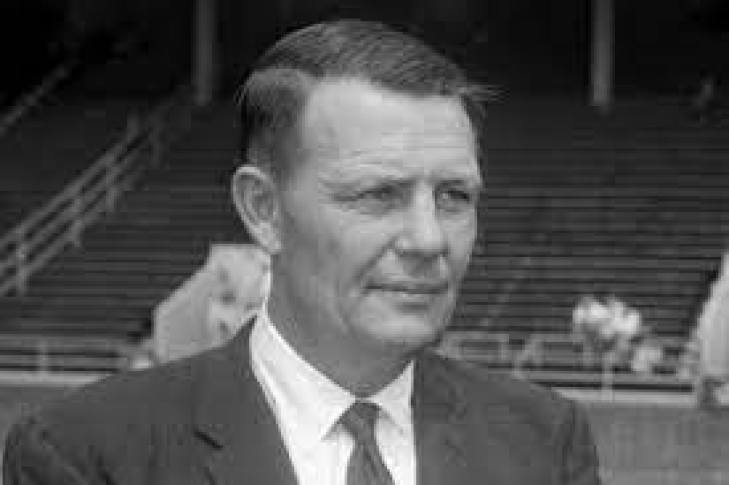
We are in the 2023 National Football League pre-season, and as always it coincides with the Pro Football Hall of Fame announcements of their Senior and Coach/Contributor Finalist. Today, the latter was announced, and it was former Detroit Lions and Pittsburgh Steelers Head Coach, Buddy Parker.
Parker was Detroit’s Head Coach from 1951 to 1955, where he led them to two NFL Championships. He was also Pittsburgh’s Head Coach from 1957 to 1964 and had an overall record of 104-75-9.
This does not mean that Parker is a slam dunk for induction, as he will be put forth towards the 50-person Selection Committee, but history indicates the will likely be elected.
Those who were Semi-Finalists, but did not make the cut were Tom Coughlin, Mike Holmgren, Frank “Bucko” Kilroy, Robert Kraft, Dan Reeves, Art Rooney Jr., Marty Schottenheimer, Mike Shanahan, Clark Shaughnessy, Lloyd Wells and John Wooten
The Pro Football Hall of Fame Announced their Senior and Coach/Contributor Finalists
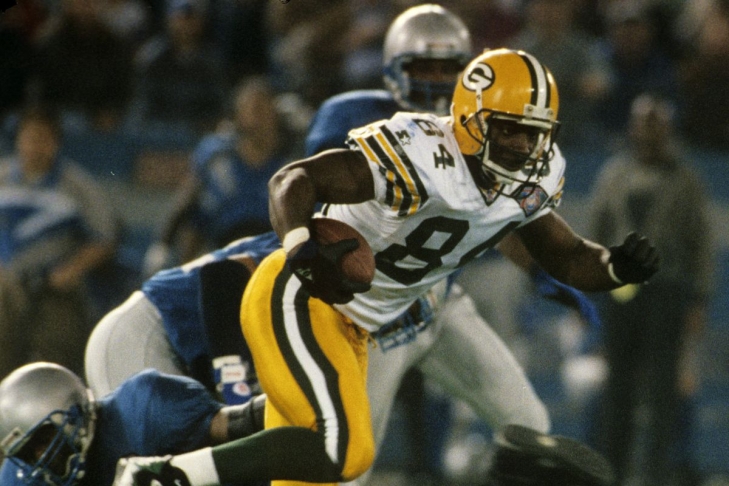
Today, the Pro Football Hall of Fame announced the 12 Finalists in both the Senior and Coach/Contributor categories. The Senior Players were reduced from 31 Semi-Finalists and 29 in the Coach/Contributor category.
The Senior Finalists are:
Ken Anderson: Quarterback, CIN 1971-86: Ranked #8 on Notinhalloffame.com. Anderson is a Finalist once again, and seeks to become the third Bengal to gain enshrinement. He brought the Bengals to their first Super Bowl appearance and was the consensus MVP in 1981. Anderson went to four Pro Bowls, was a one-time First Team All-Pro, and also won the coveted Walter Payton Man of the Year. Statistically, he threw for 32,838 Yards, 197 Touchdowns, led the NFL in Passing Yards twice, and Pass Completion Percentage three times.
Maxie Baughan: Linebacker, PHI 1960-65, LAR 1966-70 & WAS 1972. Ranked #14 on Notinhalloffame.com. Baughan went to nine out of 10 Pro Bowls throughout the 1960s, and was also chosen for one First Team All-Pro and five Second Team All-Pros.
Roger Craig: Running Back, SF 1983-90, RAI 1991 & MIN 1992-93: Ranked #7 on Notinhalloffame.com. A three-time Super Bowl Champion with San Francisco, Craig made history as the game’s first player to obtain for 1,000 Rushing Yards and 1,000 Receiving Yards in the same season. He is a four-time Pro Bowl, one-time First Team All-Pro and was the 1988 Offensive Player of the Year.
Randy Gradishar: Linebacker, DEN 1974-83. Ranked #2 on Notinhalloffame.com. Gradishar was the 1978 Defensive Player of the Year and would collect seven Pro Bowls. He is also a two-time First Tea All-Pro.
Joe Jacoby: Offensive Lineman, WAS 1981-93: Ranked #41 on Notinhalloffame.com. Jacoby won three Super Bowls and was a four-time Pro Bowl and two-time First Team All-Pro.
Albert Lewis: Cornerback, KAN 1983-93 & RAI/OAK 1994-98: Ranked #129 on Notinhalloffame.com. Lewis was a Finalist for the first time in his last year on the modern ballot, and is here on his first Senior ballot. The Defensive Back had 42 Interceptions, four Pro Bowls and two First Team All-Pros.
Steve McMichael: Defensive Tackle & Nose Tackle, NWE 1980, CHI 1981-93 & GNB 1994: Unranked on Notinhalloffame.com. McMichael is a surprise here, as he was not a Semi-Finalist last year. He won a Super Bowl with Chicago and was a two-time Pro Bowl and First Team All-Pro.
Eddie Meador: Cornerback & Safety, RAM 1959-70. Ranked #81 on Notinhalloffame.com. Meador recorded 46 Interceptions and went to six Pro Bowls in the 1960s along with obtaining two First Team All-Pros.
Art Powell: Split End, Defensive Back & Wide Receiver, PHI 1959, NYT 1960-62, OAK 1963-66, BUF 1967 & MIN 1968: Ranked #171 on Notinhalloffame.com. Twice leading the AFL in rushing, Powell was a five-time AFL All-Star and two-time First Team All-Pro.
Sterling Sharpe: Wide Receiver, GNB 1988-94: Ranked #28 on Notinhalloffame.com. Sharpe’s career was cut short due to injury, but still managed five Pro Bowls, three First Team All-Pros and twice led the NFL in Receptions. He also once led the NFL in Touchdown Receptions.
Otis Taylor: Wide Receiver & Flanker, KAN 1965-75: Ranked #13 on Notinhalloffame.com. Taylor is a Super Bowl Champion with the Chiefs and he has an AFL All-Star and two Pro Bowls on his ledger. He was also the NFL’s leading receiver in Yards in 1971.
Al Wistert: Tackle, Guard & Defensive End, 1943-51: Ranked #38 on Notinhalloffame.com. Wistert won two NFL Championships with the Eagles and was honored with four First Team All-Pro Selections.
This means that the following did not advance:
Ottis Anderson: Running Back, STL 1979-86 & NYG 1986-92. Ranked #54 on Notinhalloffame.com.
Carl Banks: Linebacker, NYG 1984-92, WAS 1993, CLE 1994-95. Ranked #253 on Notinhalloffame.com.
Larry Brown: Running Back, WAS 1969-76. Ranked #109 on Notinhalloffame.com.
Mark Clayton: Wide Receiver, MIA 1983-92 & GNB 1993: Ranked #222 on Notinhalloffame.com.
Charlie Conerly: Quarterback, NYG 1948-61: Ranked #23 on Notinhalloffame.com.
Henry Ellard: Wide Receiver, RAM 1983-93, WAS 1994-98 & NWE 1998: Ranked #71 on Notinhalloffame.com.
Lester Hayes: Cornerback, OAK/RAI 1977-86. Ranked #15 on Notinhalloffame.com.
Chris Hinton: Offensive Lineman, BAL/IND 1983-89, ATL 1990-03 & MIN 1994-95. Ranked #152 on Notinhalloffame.com.
Cecil Isbell: Tailback, GNB 1938-42: Ranked #59 on Notinhalloffame.com.
Billy “White Shoes” Johnson: Wide Receiver & Returner, HOU 1974-80, ATL 1982-87 & WAS 1988: Ranked #110 on Notinhalloffame.com
Mike Kenn: Offensive Lineman, ATL 1978-94. Ranked #85 on Notinhalloffame.com.
Bob Kuechenberg: Offensive Lineman, MIA 1970-83: Ranked #35 on Notinhalloffame.com.
George Kunz: Offensive Lineman, ATL 1969-74 & BAL 1975-80: Ranked #98 on Notinhalloffame.com.
Jim Marshall: Defensive End, MIN 1960-79: Ranked #21 on Notinhalloffame.com.
Clay Matthews Jr.: Linebacker, CLE 1978-93 & ATL 1994-96: Ranked #99 on Notinhalloffame.com.
Stanley Morgan: Wide Receiver, NWE 1977-89 & NO 1990: Unranked on Notinhalloffame.com
Tommy Nobis: Linebacker, ATL 1966-76, Ranked #27 on Notinhalloffame.com.
Steve Tasker: Special Teams, HOU 1985-86 & BUF 1986-97: Ranked #112 on Notinhalloffame.com.
Everson Walls: Cornerback, DAL 1981-89, NYG 1990-92 & CLE 1992-93: Ranked #88 on Notinhalloffame.com.
The Coach/Contributor Finalists are:
Tom Coughlin: Coughlin won a Super Bowl with the Giants as an Assistant Coach, and was later Jacksonville’s first Head Coach. After taking the Jaguars to two AFC Championship Games, he would become the Giants Head Coach in 2004, and would win two Super Bowls. He had an overall coaching record of 170-150.
Mike Holmgren: Holmgren coached the Green Bay Packers from 1992 to 1998 and would lead them to a Super Bowl Championship. He later served as Seattle’s Head Coach from 1999 to 2008 and lead them to a Super Bowl Appearance. Holmgren also has two Super Bowl Rings as an Assistant Coach and has an overall record of 151-111.
Bucko Kilroy: Kilroy won three Super Bowls as an executive with New England, and before that he was a scout in the 1960s, helping Philadelphia, Washington and Dallas find talent.
Robert Kraft: Kraft is the long-time owner of the New England Patriots, having bought the team in 1994. Since his acquisition, the Patriots became one of the most successful franchises in Football, winning six Super Bowls.
Buddy Parker: Parker was Detroit’s Head Coach from 1951 to 1955, where he led them to two NFL Championships. He was also Pittsburgh’s Head Coach from 1957 to 1964 and had an overall record of 104-75-9.
Dan Reeves: Reeves was the Head Coach for Denver from 1981 to 1992, and brought them to three Super Bowls, though they were unable to defeat their NFC opponents. He was later the Giants Head Coach (1993-96) and then took over in Atlanta (1997-03) and brought them to their first Super Bowl, though he lost to his former team, Denver. His overall record was 190-165-2.
Art Rooney Jr.: A member of the legendary Rooney family that has always owned the Pittsburgh Steelers, Rooney Jr. is the current Vice President and former Personnel Director.
Marty Schottenheimer: Schottenheimer was the Head Coach for four different teams (Cleveland 1984-88, Kansas City 1989-96, Washington 2001 & San Diego (2002-06), and had an overall record of 200-126-1.
Mike Shanahan: Shanahan was Denver’s Head Coach from 1995 to 2006, and it was under his watch that the Broncos won their first two Super Bowls. He also has a Super Bowl Ring as an Assistant Coach with San Francisco. His overall record was 170-138.
Clark Shaughnessy: Shaughnessy had a long career in both College and the pro ranks, the latter where he was an Assistant Coach and Consultant for Washington, Los Angeles and Chicago.
Lloyd Wells: Wells was football’s first full-time African-American Scout and he focused on HBCUs in a career with the Kansas City Chiefs.
John Wooten: Wooten won two Super Bowls; one with Dallas and one with Baltimore, for his roles as a scouting executive.
This means that Bud Adams Jr., Roone Arledge, C.O. Brocato, Alex Gibbs, Ralph Hay, Eddie Kotal, Elmer Layden, Jerry Markbreit, Virginia McCaskey, Rich McKay, John McVay, Art Modell, Carl Peterson, Jerry Seeman, George Seifert, Seymour Siwoff and Jim Tunney did not advance.
The respective committees will meet next month, and announce their Finalists at a date to be determined.
We here at Notinhalloffame.com would like to congratulate all the Finalists for the 2024 Class of the Pro Football Hall of Fame.
